Manek Chowk & Gujarati Thali: Ahmedabad Food Guide
Explore Ahmedabad street food at Manek Chowk night market and authentic Gujarati thali dining at Agashiye and Vishalla. Timings, dishes, and tips.
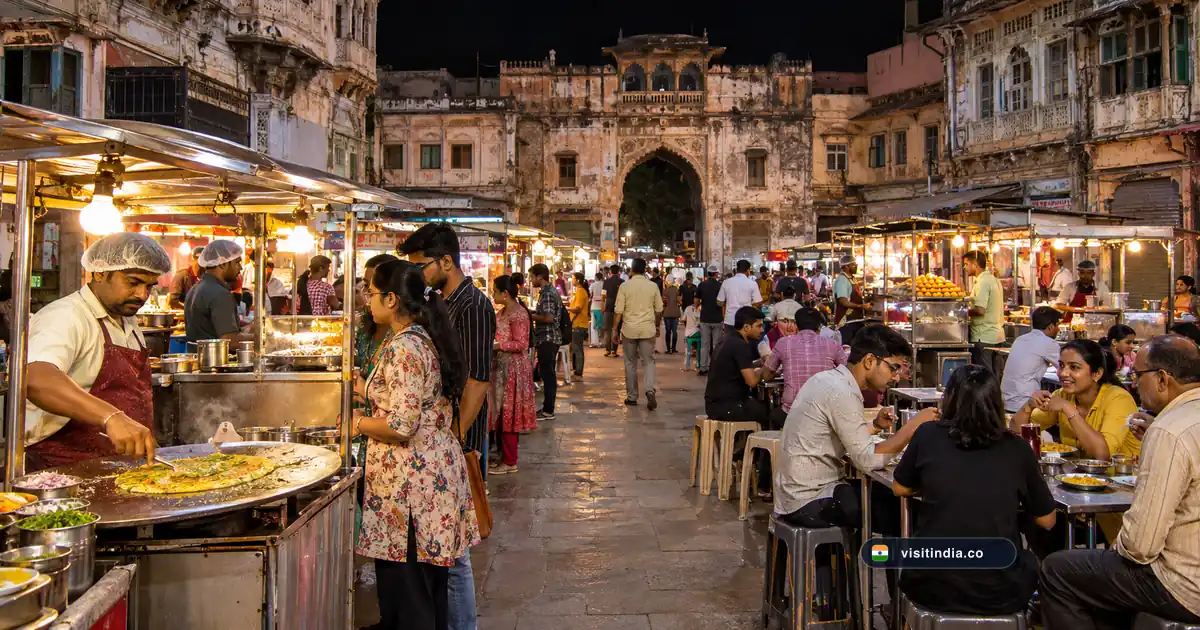
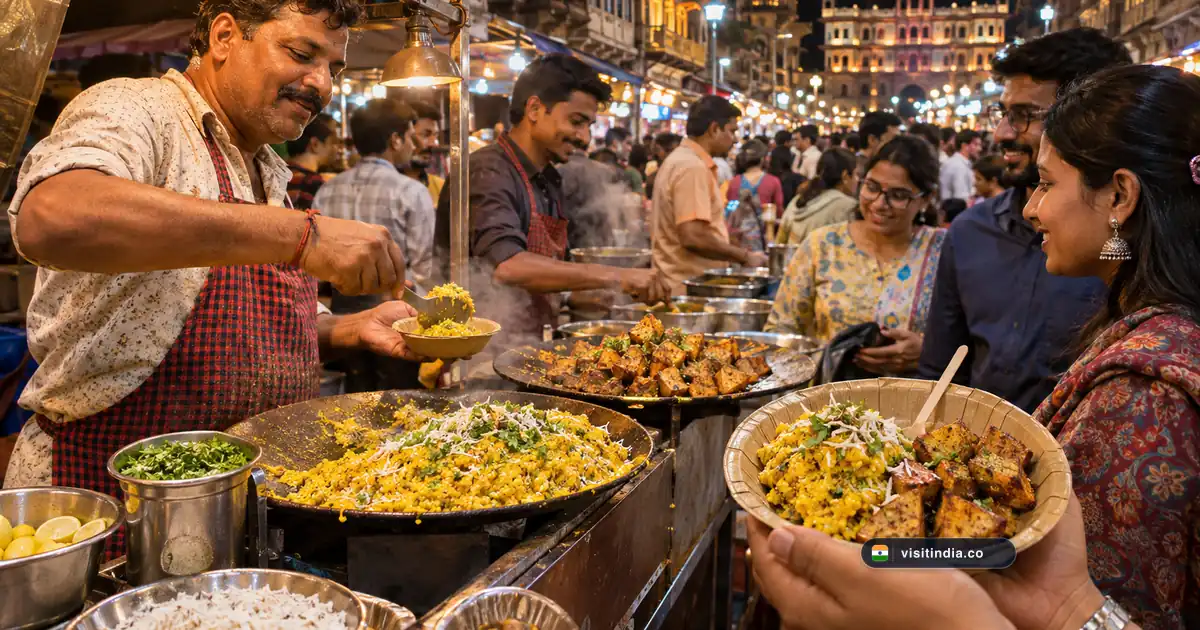
Ahmedabad culinary personality balances deep vegetarian spiritual traditions with enthusiastic late-night indulgence. Planning an exploration of manek chowk ahmedabad night food and thali culture allows travelers to experience two complementary gastronomic institutions: the theatrical midnight street food stalls of the historic Old City, and the refined, multi-course feast of an authentic Gujarati thali served in tranquil heritage havelis.
As India first UNESCO World Heritage City, the metropolis preserves living food heritage inside its centuries-old pol neighborhoods. Whether sampling butter-drenched dosas at midnight or savoring seasonal winter undhiyu on a sunlit rooftop, Ahmedabad treats dining as a community celebration.
Ahmedabad Food & Thali Essentials
- Dual Food Ecosystem: Manek Chowk operates from 9:00 PM to 2:00 AM for late-night street food; traditional Gujarati Thalis are enjoyed during lunch (11:30 AM to 3:30 PM) and dinner (7:00 PM to 10:30 PM) at specialized dining halls.
- Tri-Functional Square: Manek Chowk transforms three times daily: vegetable wholesale market at dawn, gold and jewelry bazaar by day, and food square at night.
- Night Market Icons: Balan Gwalior Dosa (soaked in Amul butter), Chocolate Cheese Sandwiches, Pineapple Cheese Pizza, Ghughra Sandwiches, and Kulfi.
- Top Thali Institutions: Agashiye (The House of MG rooftop in Old City), Vishalla (rustic Vasna village ambiance), and Gordhan Thal.
- Thali Composition: Unlimited courses of steamed farsan, sweet-sour dal, kadhi, four seasonal vegetable shaaks, ghee rotlis, khichdi, chaas, and traditional sweets.
The Dual Culinary Soul of Ahmedabad: Night Street Markets and Heritage Thalis
Ahmedabad culinary identity operates across two distinct realms: the late-night street food revelry of Manek Chowk operating from 9:00 PM to 2:00 AM, and the refined, unlimited daytime dining tradition of authentic Gujarati Thalis served at heritage institutions like Agashiye and Vishalla.
This duality reflects the city historic trade heritage. Mercantile communities spent daylight hours engaged in banking, textile trading, and jewelry manufacturing, eating balanced vegetarian meals at home or in quiet haveli dining rooms. After nightfall, the same business districts relaxed into open-air social spaces where inventive cooks created buttery, indulgent snacks designed for communal gathering.
The UNESCO World Heritage City Dining Matrix
As India first UNESCO World Heritage City, Ahmedabad preserves centuries-old wooden residential pols that house historic food stalls alongside tranquil heritage courtyards.
The Old City was planned with self-contained communal neighborhoods called pols, featuring carved wooden facades, secret connecting alleyways, and central squares. Food vendors here often trace their origins back multiple generations, crafting regional fare that rivals the stepwell circuits at Rani ki Vav in Patan.
Within a short walk, you can move from a quiet Jain temple courtyard into an active food lane where gas stoves illuminate historic stone gateways. Detailed architectural routes are published by the Ahmedabad District Administration.
Street Food Energy vs. Thali Contemplation
While Manek Chowk is high-energy, fast, and adventurous with butter-drenched snacks, a Gujarati Thali is an unhurried, balanced multi-course meal designed around sweet, sour, and savory harmony.
Understanding this distinction prevents common traveler misunderstandings. Visitors who arrive at Manek Chowk at 10:00 PM expecting a traditional Gujarati Thali will find only street carts serving pav bhaji, dosas, and grilled sandwiches. The traditional thali is an elaborate dining ritual reserved for seated family lunches and dinners, where attentive servers ladle hot gravies onto bronze platters in continuous, synchronized rounds.
| Experience Feature | Manek Chowk Night Market | Authentic Gujarati Thali |
|---|---|---|
| Operating Hours | 9:00 PM to 2:00 AM (Late night only) | 11:30 AM – 3:30 PM & 7:00 PM – 10:30 PM |
| Dining Venue | Open-air city square with plastic stools | Heritage haveli terraces or village dining rooms |
| Culinary Focus | Butter dosas, grilled fusion sandwiches, pav bhaji | Farsan, seasonal shaak, sweet-sour dal, kadhi, rotli |
| Service Format | A la carte street food ordering | Unlimited multi-course set thali service |
| Typical Cost | ₹80 to ₹250 per specialty item | ₹350 to ₹950 per person (All-inclusive) |
Manek Chowk: The Historic Tri-Functional Square by Day and Night
Manek Chowk transforms three times daily: a wholesale vegetable market from 6:00 AM to 10:00 AM, central Gujarat bullion and jewelry market from 11:00 AM to 8:30 PM, and an open-air street food square from 9:00 PM to 2:00 AM.
This continuous spatial recycling is unique in urban Indian planning. The exact physical patch of cobblestone where diamond merchants assess carats at 3:00 PM becomes the exact spot where cheese is grated over sizzling griddles at midnight.
Pro Tip
Arrive at Manek Chowk between 9:30 PM and 10:15 PM. Arriving at 8:00 PM means facing locked jewelry shutters and moving handcarts, while arriving after 11:00 PM on weekends results in long waiting lines for tables.
Saint Baba Maneknath and the Royal Tombs
The square is named after 15th-century saint Baba Maneknath, who aided Sultan Ahmed Shah in founding the city, bordered by the historic stone mausoleums of Badshah no Hajiro and Rani no Hajiro.
According to historical lore, Baba Maneknath was a recluse who wove a blanket by day and unwove it at night, mirroring the construction of the Bhadra Fort walls in 1411 CE. Today, his memorial temple stands quietly on the eastern edge of the square.
Flanking the food area are the ornate 15th-century royal tombs of Sultan Ahmed Shah and his queens, creating an atmospheric historic perimeter around the modern food market.
The 9:00 PM Transformation: From Bullion to Sizzling Tawas
As jewelry showroom shutters close at 8:30 PM, mobile vendors quickly wheel in tawas, gas stoves, and plastic dining tables, turning the quiet stone plaza into a busy dining arena within thirty minutes.
The transition is executed with disciplined precision. Porters clear daytime retail waste, while vendors roll out customized carts loaded with Amul butter blocks, shredded processed cheese, and fresh produce.
Within forty-five minutes, rows of folding plastic tables cover the central plaza. The hiss of butter hitting red-hot iron griddles signals that the night market is officially open for business. Travelers exploring the state often make this night visit a highlight of their Gujarat travel guide.
Legendary Manek Chowk Street Food: Gwalior Dosa to Chocolate Sandwiches
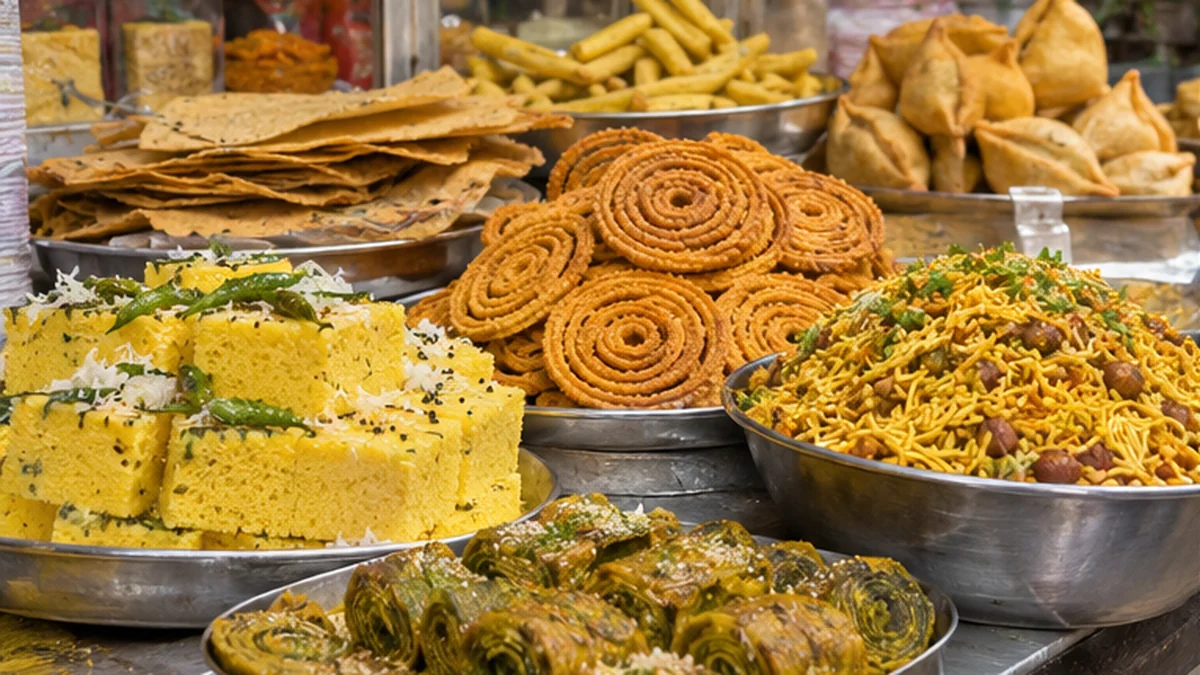
Essential dishes at Manek Chowk include Balan Gwalior Dosa (fried in mounds of Amul butter), decadent Chocolate Cheese Sandwiches, spicy Pineapple Cheese Pizza, Ghughra Sandwiches, and thick Matka Kulfi.
Ahmedabad street cooks are fearless culinary experimenters. Because Gujarat is the historic heartland of India white dairy revolution and home to the Amul cooperative, butter and cheese are treated not merely as garnishes, but as foundational ingredients.
Balan Gwalior Dosa: The Amul Butter Extravaganza
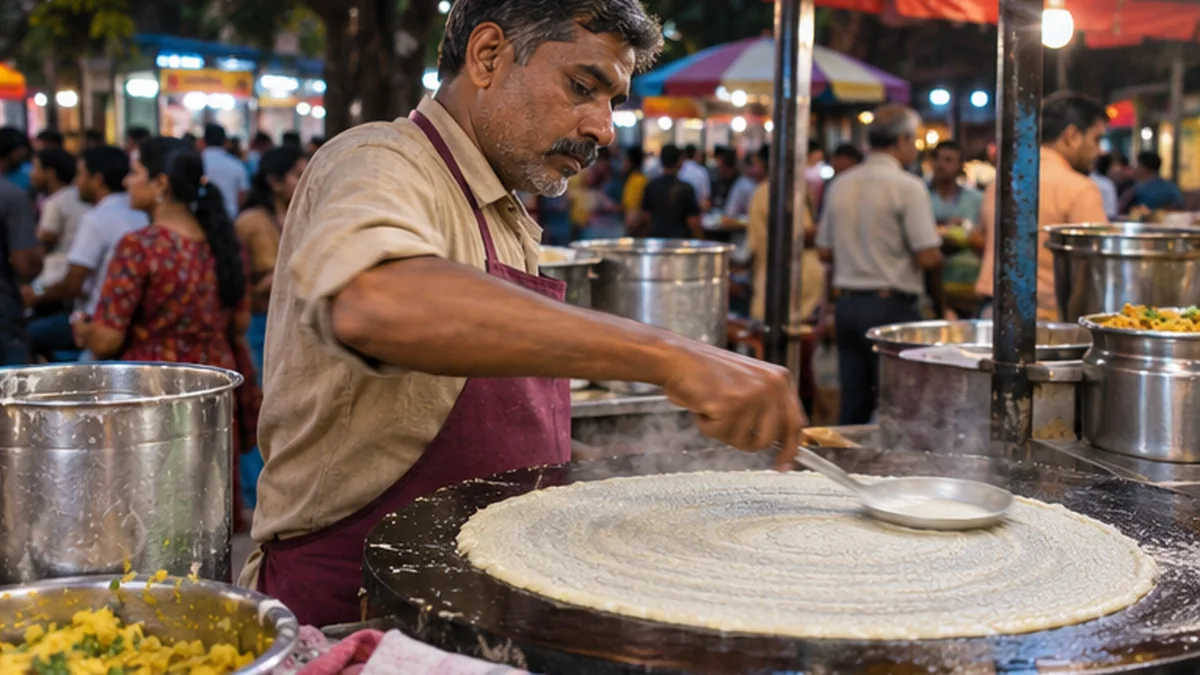
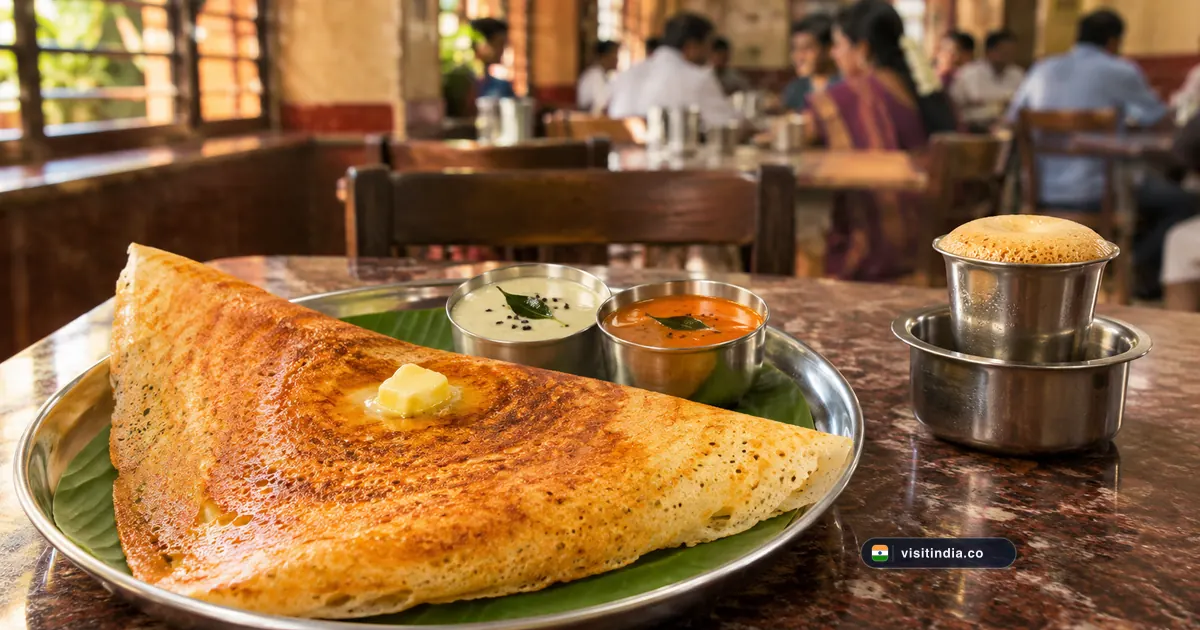
Balan Dosa is renowned for its Gwalior Dosa, where a full block of Amul butter is melted onto a hot cast-iron griddle, frying the crepe to a crackling crisp before topping it with spiced mashed potatoes and cheese.
The Gwalior Dosa bears little resemblance to traditional South Indian crepes. The cook spreads fermented batter across a massive cast-iron tawa, drops a 100-gram slab of salted butter directly onto the surface, and fries the crepe until it is golden brown and crackling.
He then adds a spicy potato and onion bhaji, rolls the crisp cylinder, and slices it into bite-sized segments. Attendants drizzle additional molten butter over the top, serving it with coconut and red garlic chutneys.
The Chocolate Cheese Sandwich and Ghughra Sandwich
Manek Sandwich Center crafts the city famous Chocolate Cheese Sandwich, layering grated chocolate, chocolate syrup, and processed cheddar cheese between butter-toasted white bread slices.
While the combination sounds startling to outsiders, the sweet, rich chocolate and savory, salty cheese melt together into a decadent dessert-snack that has achieved cult status. For savory enthusiasts, the Ghughra Sandwich is mandatory: thick white bread stuffed with finely minced bell peppers, green chillies, onions, and processed cheese, grilled until the crust turns golden and crunchy.
Midnight Coolers: Jamun Shot and Ashrafi Kulfi
Cool down your palate after spicy pav bhaji with Ashrafi Kulfi natural fruit kulfis, featuring rich rabdi, roasted almonds, and refreshing concentrated jamun fruit shots.
No midnight feast in Manek Chowk concludes without dessert. Ashrafi Kulfi, operating for over fifty years, serves traditional matka kulfi infused with saffron, pistachio, and malai. Another popular innovation is the Jamun Shot: pure, chilled wild black plum pulp blended with black salt and spices, served in miniature glasses to aid digestion after a heavy midnight meal.
The Authentic Gujarati Thali Experience: Anatomy of a Sacred Feast
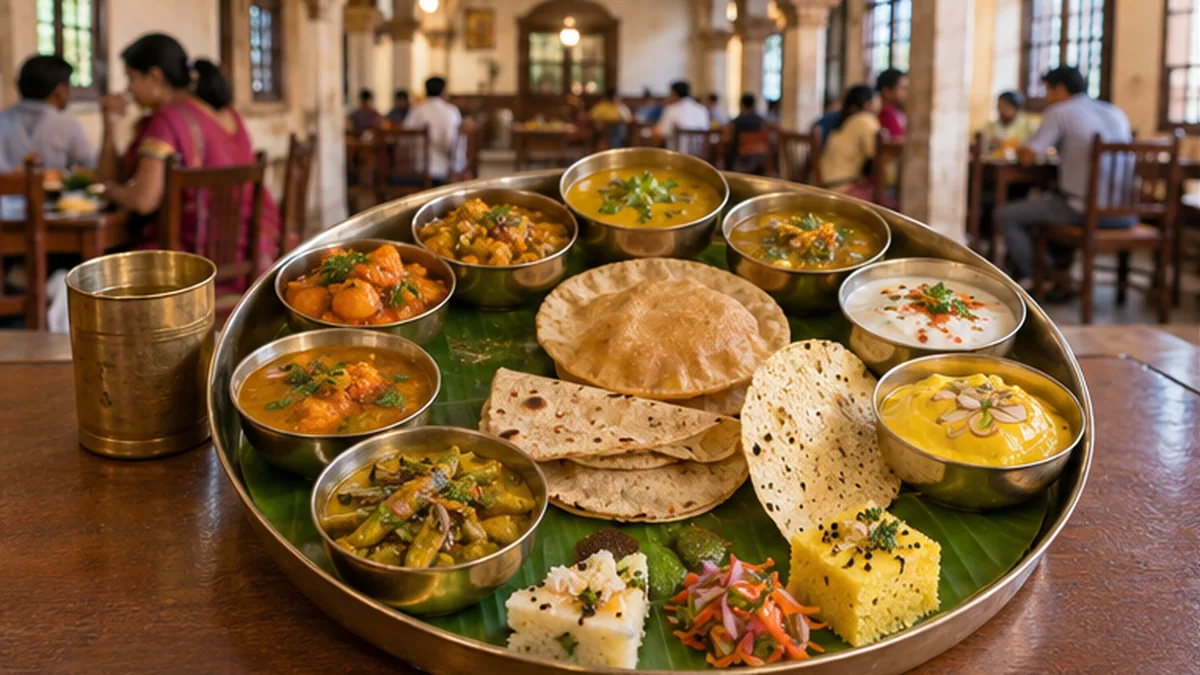
A traditional Gujarati Thali is an unlimited vegetarian spread served on bronze kansa platters, featuring farsan (khaman, khandvi), four seasonal shaaks, sweet-sour Gujarati dal, spiced kadhi, hot phulkas, khichdi with ghee, chaas, and traditional sweets.
The Gujarati Thali is an expression of culinary hospitality rooted in Jain and Vaishnavite vegetarian philosophies. Food is cooked without onion or garlic in many traditional venues, relying instead on asafoetida, ginger, cumin, and fresh coriander for depth.
Farsan Starters: Khaman Dhokla, Khandvi, and Patra
The meal opens with light steamed appetizers including spongy yellow khaman dhokla tempered with mustard seeds and chillies, silky rolled gram flour khandvi, and colocasia leaf patra rolls.
Farsan refers to the savory snacks that begin every festive Gujarati meal. Khaman is prepared from fermented chickpea batter, steamed into airy cakes and tempered with mustard seeds, green chillies, and fresh coriander.
Khandvi requires masterful technique: cooked gram flour batter is spread paper-thin on metal tables, rolled into delicate yellow scrolls, and garnished with grated coconut. Patra features colocasia leaves smeared with spiced gram flour paste, rolled, steamed, and pan-sautéed.
The Sweet-Sour Balance: Gujarati Dal, Kadhi, and Shaak
Gujarati dal combines yellow toor dal with jaggery, peanuts, and dried kokum for a distinct sweet-sour depth, complemented by soothing white yogurt kadhi and seasonal vegetable curries like winter Undhiyu.
The interplay between sweet and sour is the defining hallmark of Gujarati cuisine. Gujarati dal uses simmered pigeon pea lentils sweetened with dark jaggery and sharpened with kokum or lemon juice, enriched with whole peanuts.
The Kadhi is light, prepared from beaten sour yogurt and chickpea flour tempered with cinnamon, cloves, and curry leaves. In winter, every thali features Undhiyu, an aromatic stew of seasonal root vegetables, broad beans, and fenugreek dumplings. Cultural celebrations peak during January harvest festivals like the International Kite Festival in Gujarat.
Rotli, Khichdi, Chaas, and Traditional Sweets
Diners enjoy gossamer-thin phulka rotlis brushed with pure ghee, followed by comforting moong dal khichdi, a tall glass of spiced buttermilk (chaas), and rich sweets like Mohanthal or Shrikhand.
Bread service in a thali is continuous: attendants circulate with small woven baskets delivering warm, paper-thin phulka rotlis brushed with ghee, alongside crisp puris and rustic pearl millet bajra no rotlo in winter. For seasonal travelers planning around cultural events, Kashmiri Wazwan & Srinagar Food highlights details schedules and practical logistics.
The meal concludes with soft yellow moong dal khichdi ladled with warm ghee, accompanied by cold roasted-cumin buttermilk (chaas). Sweets rotate seasonally, from summer mango aamras to rich gram flour mohanthal and strained yogurt shrikhand.
Where to Eat the Best Gujarati Thali: Agashiye and Vishalla
Ahmedabad foremost thali dining rooms include Agashiye on the rooftop terrace of The House of MG in the Old City, and Vishalla, an open-air village museum in Vasna where guests dine on low wooden stools from leaf plates.
Both establishments have elevated regional thali dining into internationally recognized cultural institutions, preserving culinary techniques and dining rituals that modern urban kitchens often lose. Travelers departing Ahmedabad south toward Saurashtra shrines can pair winter visits with our Palitana 3,800 steps timings and doli rate guide.
Note
Booking an online reservation for dinner at Agashiye is highly recommended between October and March. Terrace tables overlooking the Sidi Saiyyed Mosque sell out days in advance during the peak winter season.
Agashiye (The House of MG): Fine Dining on Heritage Terraces
Set atop a 1924 heritage mansion overlooking the historic city, Agashiye serves seasonal menus cooked in pure brass vessels, featuring warm hospitality and brass thali service under starry skies.
Housed inside the former residence of textile magnate Mangaldas Girdhardas, Agashiye (meaning “on the terrace” in Gujarati) offers an aristocratic dining experience. Guests are welcomed with cooling fruit drinks and flower garlands on a wide verandah before being seated at brass-topped tables. Every dish is cooked in small batches in pure brass vessels and served on shining kansa bell-metal plates, accompanied by live instrumental music.
Vishalla: Village Ambiance, Mud Huts, and Utensils Museum
Founded in 1978, Vishalla transports diners to a rustic Gujarati village with lantern lighting, folk musicians, and authentic kathiyawadi dishes served on dry tree leaves (patravli) alongside the Vechaar Utensils Museum.
Located on the southwestern outskirts in Vasna, Vishalla was conceived by architect Surendra Patel to preserve rural Gujarati village culture. Diners sit on low wooden benches (baithak) inside thatched mud pavilions lit by oil lanterns, eating from stitched banyan leaf platters.
The adjoining Vechaar Museum houses over 4,500 historic brass, copper, and bronze kitchen utensils dating back centuries.
Planning Your Ahmedabad Food Tour and Heritage Pol Walks
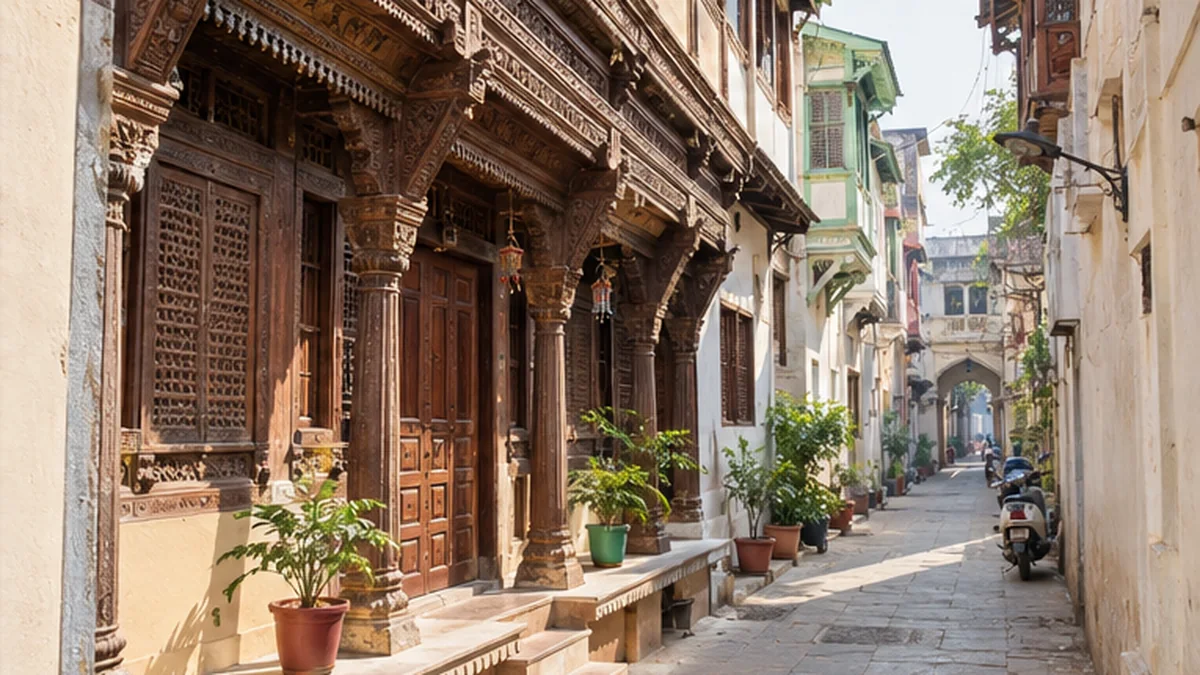
A 24-hour culinary tour starts with 7:00 AM Fafda-Jalebi at Chandravilas, a guided morning heritage walk through the Old City pols, an afternoon thali at Agashiye, and a 10:00 PM midnight street food crawl at Manek Chowk.
Because the Old City street network is dense and primarily pedestrian, pairing food exploration with walking heritage tours is the most rewarding way to experience Ahmedabad living history.
| Schedule | Destination & Venue | Curated Tasting Menu & Cultural Experience |
|---|---|---|
| 07:00 AM – 09:00 AM | Gandhi Road (Chandravilas) | Crisp Fafda with raw papaya sambharo, sweet Jalebi, and chai |
| 09:30 AM – 11:30 AM | Old City Heritage Walk | Kalupur Temple to Jama Masjid through carved wooden pols |
| 12:30 PM – 02:30 PM | The House of MG (Agashiye) | Grand Gujarati Thali feast on the heritage haveli terrace |
| 04:30 PM – 06:30 PM | Sabarmati Riverfront | Sunset stroll along the river promenade and artisan shopping |
| 09:30 PM – 12:30 AM | Manek Chowk Night Market | Gwalior Dosa, Chocolate Cheese Sandwich, Pav Bhaji, Matka Kulfi |
Morning Pol Walk and Chandravilas Fafda-Jalebi
Begin at Kalupur Swaminarayan Temple for the daily heritage walk, ending at 125-year-old Chandravilas for crisp gram-flour fafda paired with sweet syrup jalebis and spicy papaya sambharo.
The official Ahmedabad Municipal Corporation heritage walk winds through the historic pols, pointing out underground rainwater tanks, bird feeders (chabutras), and intricately carved wooden brackets. Conclude your walk along Gandhi Road at Chandravilas, established in 1900. Here, master confectioners fry long yellow ribbons of gram-flour fafda, serving them fresh with sweet spiral jalebis, fried green chillies, and crunchy shredded papaya salad.
Night Food Crawl Logistics and Parking Tips
Vehicular access inside Manek Chowk is restricted after 9:00 PM; park at the multi-level complex near Teen Darwaza and walk five minutes through the illuminated bazaar lanes.
Attempting to drive a car into the Old City at night is frustrating due to narrow lanes and pedestrian congestion. Park your vehicle at the municipal multi-level parking lot near Teen Darwaza or take an auto-rickshaw directly to Manek Chowk.
From there, explore the food plaza entirely on foot. Travelers planning wider regional excursions can pair this culinary city tour with the stone carvings at Sun Temple Modhera. State travel information is featured on the Gujarat Tourism Portal and Incredible India.
Frequently Asked Questions About Ahmedabad Food and Thalis
What are the night market timings at Manek Chowk Ahmedabad?
Manek Chowk night street food stalls begin assembling at 8:30 PM and operate from 9:00 PM to 2:00 AM daily. Peak footfall occurs between 10:00 PM and 12:30 AM after jewelry shops are fully secured.
Can you get traditional Gujarati thalis at Manek Chowk?
No, Manek Chowk is an evening street food market famous for fast snacks like butter dosas, pav bhaji, and grilled sandwiches. Traditional sit-down Gujarati Thalis are served at specialized dining halls like Agashiye and Vishalla.
What are the best places to eat an authentic Gujarati thali in Ahmedabad?
The foremost thali venues are Agashiye on the terrace of The House of MG in the Old City, and Vishalla, an open-air village dining complex in Vasna. Gordhan Thal and Sasuji also offer excellent traditional thalis.
What dishes make up a complete Gujarati Thali?
A full thali includes farsan appetizers (khaman, khandvi), four seasonal shaaks (including winter undhiyu), sweet-sour Gujarati dal, spiced kadhi, phulka rotlis, puris, khichdi, chaas, and traditional sweets like mohanthal.
What is a Gwalior Dosa at Manek Chowk?
Gwalior Dosa is a butter-loaded street crepe popularized by Balan Dosa. A massive slab of Amul butter is melted onto a cast-iron griddle, frying the crepe to a crackling crisp before adding spiced bhaji and cheese.
Why is Manek Chowk called a tri-functional square?
Manek Chowk operates in three distinct 24-hour shifts: a vegetable market at dawn (6:00 AM to 10:00 AM), a jewelry and bullion market by day (11:00 AM to 8:30 PM), and a street food market at night (9:00 PM to 2:00 AM).
Where can I eat traditional Fafda Jalebi in Ahmedabad?
The most iconic spot is Chandravilas on Gandhi Road, operating since 1900. They serve crispy gram-flour fafda with hot sweet jalebis, fried green chillies, and fresh raw papaya sambharo.
What is the best season for food lovers to visit Ahmedabad?
The best time to visit is from October to March when winter temperatures are pleasant between 14°C and 28°C. This period coincides with seasonal winter delicacies like Undhiyu, Ponk, and the International Kite Festival.