India Tourist Visa Guide: Types, Requirements, Fees & Apply
Plan your trip to India with this official tourist visa guide covering 30-day, 1-year, and 5-year e-visas, required documents, fees, and application steps.
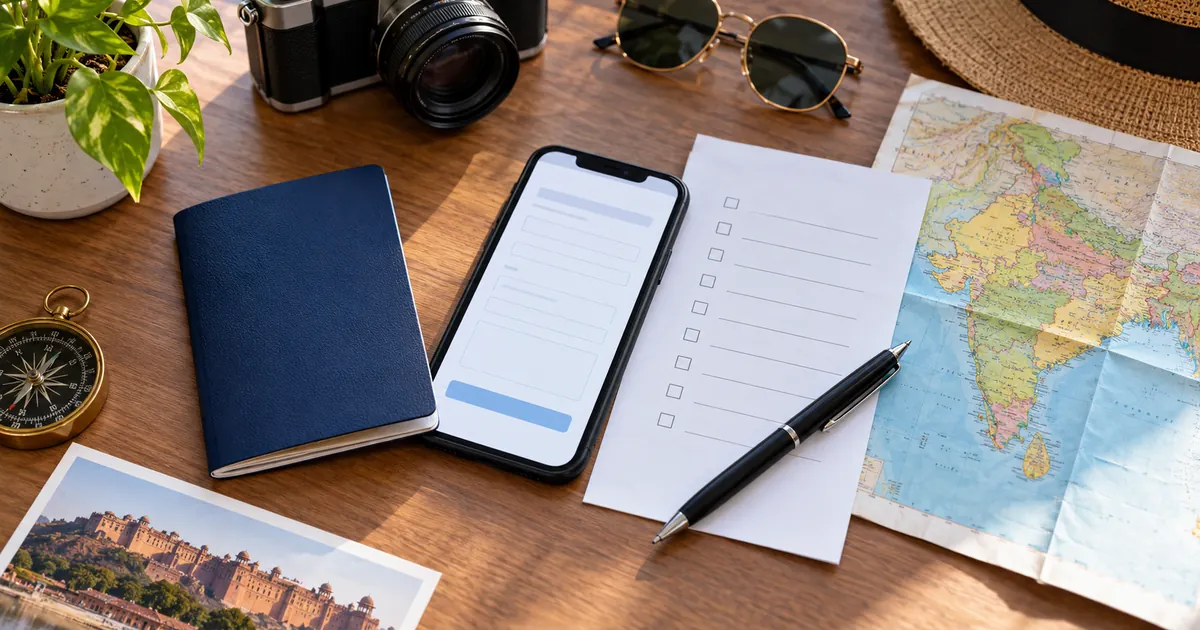
International travelers visiting India must secure an entry permit prior to boarding commercial flights or passenger cruise vessels. India administers an electronic visa system alongside traditional consular paper visas, serving visitors from more than 165 eligible nations worldwide.
Tourist Visa Essentials
- The Government of India issues e-Tourist Visas for durations of 30 days, 1 year, and 5 years to citizens of more than 165 eligible nations.
- Applications must be submitted through the official Ministry of Home Affairs portal at least 4 to 120 days prior to the expected date of arrival.
- Passports must maintain a minimum validity of six months from the date of arrival in India and contain at least two blank immigration stamping pages.
- Processing typically completes within 72 hours, generating an Electronic Travel Authorization delivered directly via email.
Before mapping your itinerary across the top destinations across India, review the visa categories, government documentation standards, fee schedules, and regional permit requirements outlined below.
Types of Indian Tourist Visas Available for International Travelers
India offers multiple tourist visa categories designed to accommodate short vacations, extended backpacking trips, and recurring personal visits. Travelers must select the appropriate category based on the length of stay and planned number of border entries.
| Visa Category | Validity Period | Entries Allowed | Maximum Continuous Stay | Standard Fee (USD) |
|---|---|---|---|---|
| 30-Day e-Tourist Visa (Off-Peak) | 30 Days from Arrival | Double | 30 Days Total | $10 (April to June) |
| 30-Day e-Tourist Visa (Peak) | 30 Days from Arrival | Double | 30 Days Total | $25 (July to March) |
| 1-Year e-Tourist Visa | 365 Days from Issue | Multiple | 180 Days Continuous | $40 |
| 5-Year e-Tourist Visa | 5 Years from Issue | Multiple | 180 Days Continuous | $80 |
| 10-Year Regular Paper Visa | 10 Years from Issue | Multiple | 180 Days per Visit | Mission Specific |
Short-Term 30-Day e-Tourist Visa
The 30-day e-Tourist Visa suits vacationers visiting specific cultural circuits, such as the historic sights in Rajasthan. This visa grants double entry, meaning travelers can take a side excursion to Nepal or Sri Lanka and return to India within the approved 30-day validity window.
The validity window for this specific visa begins on the exact date of your first arrival at an Indian immigration checkpoint. Government fees are structured seasonally, charging approximately ₹850 ($10 USD) during the summer off-peak season between April and June, and approximately ₹2,100 ($25 USD) during the peak tourist season from July through March.
1-Year and 5-Year Multiple-Entry e-Tourist Visas
The 1-year e-visa incurs a fee of approximately ₹3,400 ($40 USD), while the 5-year e-visa costs approximately ₹6,800 ($80 USD). Both categories permit multiple entries into India throughout their designated validity spans. Unlike the 30-day visa, the validity clock for these long-term visas begins on the date the Electronic Travel Authorization is granted, rather than the date of physical arrival.
Holders of 1-year and 5-year visas from the United States, United Kingdom, Canada, and Japan can remain in India for up to 180 days continuously on a single visit without local police registration. Citizens of other qualifying countries may stay up to 90 continuous days per visit.
Regular Paper Sticker Visa (10-Year Option)
Citizens of the United States can apply for a long-duration 10-year regular paper tourist visa through Indian diplomatic missions. Applicants submit paperwork through the Bureau of Immigration Regular Visa Application Portal before scheduling appointments at designated consular processing centers.
While e-visas remain the faster option, the 10-year paper visa eliminates the need to renew electronic authorizations for travelers who visit India every year. Each visit under this category permits a continuous stay of up to 180 days.
Visa-on-Arrival Facility for Eligible Nationals
India maintains a limited Visa-on-Arrival facility exclusively for passport holders from Japan, South Korea, and the United Arab Emirates. For UAE nationals, the facility is accessible only if the traveler previously held an e-visa or regular paper visa for India.
Eligible travelers can complete physical landing cards and pay processing fees at designated international airports including Delhi, Mumbai, Kolkata, Chennai, Bengaluru, and Hyderabad. The permit allows a double-entry stay of up to 60 days.
Eligibility Criteria and Restricted Area Permits
Every foreign national entering India on a tourist visa must hold a machine-readable passport valid for at least six months beyond their intended date of arrival. Passports must also feature at least two completely blank pages for entry and exit rubber stamps applied by immigration officers.
Travelers from Nepal and Bhutan are exempt from visa requirements when traveling by land or air, provided they do not enter via mainland China. Citizens of the Maldives can enter India without a visa for tourism stays up to 90 days.
Protected Area Permit (PAP) and Restricted Area Permit (RAP) Requirements
Certain frontier states and border districts require special security clearances in addition to a standard tourist visa. Overseas tourists visiting remote Himalayan valleys must obtain a Protected Area Permit, as detailed in our travel permit guidelines for Sikkim.
Similar access restrictions apply to parts of Arunachal Pradesh, Manipur, Mizoram, Nagaland, and Jammu and Kashmir near international borders. Designated municipal offices and state resident commissioners issue these clearances upon review of your valid passport and tourist visa.
Mandatory Documents and Photo Specifications for Application
Applying for an Indian e-Tourist Visa requires digital copies of two primary documents: a high-resolution scan of your passport biographical page and a formal digital passport photograph. Submitting non-compliant documents causes the vast majority of application rejections.
Travelers organizing excursions to coastal beach getaways in Goa must ensure their scanned paperwork matches official digital requirements before uploading.
Primary Document Checklist
- Passport Bio-Page: A PDF copy of the biographical page showing your photograph, passport number, expiration date, and personal details. The file size must range between 10 KB and 300 KB.
- Digital Photograph: A square photograph in JPEG format between 10 KB and 1 MB, measuring at least 350 pixels wide by 350 pixels high.
- Return Travel Ticket: An onward or return international flight booking demonstrating planned departure before the visa expiration date.
- Proof of Funds: Access to sufficient financial resources to cover personal living expenses during the stay in India, typically shown through bank statements reflecting at least $1,000 to $2,000 in available reserves.
Digital Photograph Specifications
The uploaded photo must be a recent color picture taken within the past six months against a plain white background. The subject must look directly into the camera with both eyes open, displaying a neutral facial expression with the mouth closed.
Glasses with tinted lenses, sunglasses, and head coverings are prohibited, except for bona fide religious headwear that does not obscure facial contours from the hairline to the chin. Shadows on the face or background will trigger automatic rejection by the portal’s image verification software.
Step-by-Step Online Application Process on the Official Portal
The online application process should only be executed through the official Government of India portal. Commercial third-party intermediary services often charge inflated handling surcharges for identical documents.
Submit your application directly through the Bureau of Immigration Indian Visa Online Portal at least 4 calendar days before your scheduled departure date. The application window accepts submissions up to 120 days in advance for 1-year and 5-year visas.
Completing the Application Form
- Access the Portal: Open the official immigration portal, select “e-Visa Application,” and register your nationality, port of arrival, date of birth, and visa category.
- Enter Personal Details: Provide complete residential information, occupation data, parents’ national origins, and historical travel records.
- Upload Files: Attach the passport biographical PDF and the square JPEG photograph.
- Pay Application Fees: Submit payment of $10 to $80 using international credit cards, debit cards, or electronic wallets through integrated payment gateways.
- Download the ETA: Once approved, print multiple physical copies of the Electronic Travel Authorization letter received by email.
Immigration officers at 29 designated international airports and 5 seaports will inspect your printed ETA, capture biometric fingerprints and facial scans, and stamp an entry sticker into your passport.
Tourist Visa Rules, Permitted Activities, and Extension Policies
Indian tourist visas are intended exclusively for recreation, holiday sightseeing, casual social visits to family or acquaintances, and short-term yoga programs. Foreign nationals may also pursue short-duration medical consultations under Indian systems of medicine.
Travelers exploring the backwaters and hill stations of Kerala must comply with all local tourism registration requirements at hotels and homestays. Accommodations record passport details electronically on official Form C portals.
Official travel advisories and national tourism guidelines are maintained on the Incredible India Official Tourism Portal, which provides state-level safety regulations and seasonal recommendations.
Prohibited Activities
Tourist visa holders are strictly barred from accepting paid employment, engaging in commercial business activities, or enrolling in full-time academic degree programs in India. Conducting formal academic research, documentary journalism, or religious missionary work on a tourist visa violates federal immigration statutes and leads to immediate deportation.
Overstay Consequences and Legal Regulations
Overstaying the authorized duration of an Indian visa constitutes a federal offense punishable by progressive fiscal fines starting at $300 for short delays and reaching $500 or more for prolonged violations alongside travel blacklisting. If an unexpected medical emergency or natural disaster prevents timely departure, travelers must immediately contact regional immigration authorities to formalize exit permits.
The Foreigners Regional Registration Office manages exit permits and emergency visa regularization without requiring travelers to leave their lodging during acute medical incapacity. Applicants must present verified hospital treatment records and revised flight bookings to support exceptional extension requests.
Frequently Asked Questions About India Tourist Visas
How long does an Indian tourist e-visa take to process?
The Bureau of Immigration typically processes online e-Tourist Visa applications within 72 hours of successful payment. Applicants should still submit their applications at least 4 to 7 calendar days before departure to accommodate unexpected biometric or identity verification checks.
Can US citizens get a 10-year tourist visa for India?
Yes, US citizens can apply for a 10-year multiple-entry regular paper tourist visa through authorized consular processing centers. Each individual stay under this 10-year category permits a maximum continuous visit of up to 180 days.
What documents are required for an Indian e-tourist visa?
Applicants must upload a color scan of their passport biographical page in PDF format and a recent square passport-style digital photograph against a plain white background in JPEG format. Travelers must also present a return flight ticket and an approved Electronic Travel Authorization upon landing in India.
Can an Indian tourist visa be extended inside India?
Standard Indian tourist visas are legally non-extendable and non-convertible under normal circumstances. Foreign nationals experiencing severe medical emergencies or border closures must petition regional immigration authorities for an exceptional exit permit before their current visa expires.