Uttar Pradesh Travel Guide: Top Places, Circuits & Itineraries
Plan your trip with our Uttar Pradesh travel guide covering Agra, Varanasi, Ayodhya, Prayagraj, Lucknow heritage circuits, timings, and train routes.
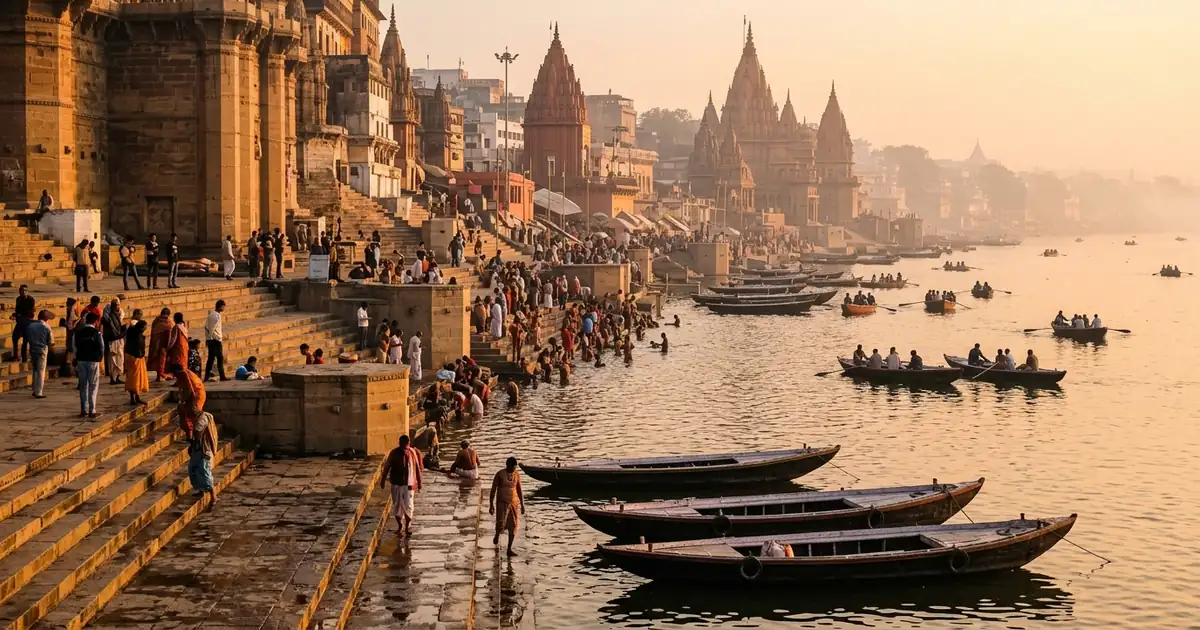
Uttar Pradesh spans 240,928 square kilometers across the fertile Gangetic heartland of northern India, encompassing 75 administrative districts grouped into 18 divisions. Anchored by the sacred rivers Ganga, Yamuna, and Sarayu, this Uttar Pradesh travel guide covers the monuments, pilgrimage corridors, royal kitchens, and high-speed rail networks that define India’s most populous state.
From the white Makrana marble domes of Agra to the ancient sandstone steps of Kashi and the pink sandstone shikhara of Ayodhya, the territory preserves over three millennia of urban civilization. Millions of domestic pilgrims and international travelers arrive each winter to explore UNESCO World Heritage monuments, Buddhist monastic ruins, and riverfront temples.
State Travel & Circuit Essentials
- Uttar Pradesh covers 240,928 square kilometers in northern India across 75 districts and 18 administrative divisions, with Lucknow serving as the state capital.
- Core tourism corridors divide into the Agra-Braj Mughal and Krishna belt in the west, Lucknow and Awadh in the center, and the Kashi-Ayodhya-Prayagraj spiritual triangle in the east.
- Peak travel season runs from October through March, when pleasant winter daytime temperatures stay between 15°C and 28°C across the alluvial plains.
- Major transit gateways include international airports at Lucknow (LKO), Varanasi (VNS), and Ayodhya (AYJ), Vande Bharat Express rail corridors, and the Yamuna, Agra-Lucknow, and Purvanchal expressways.
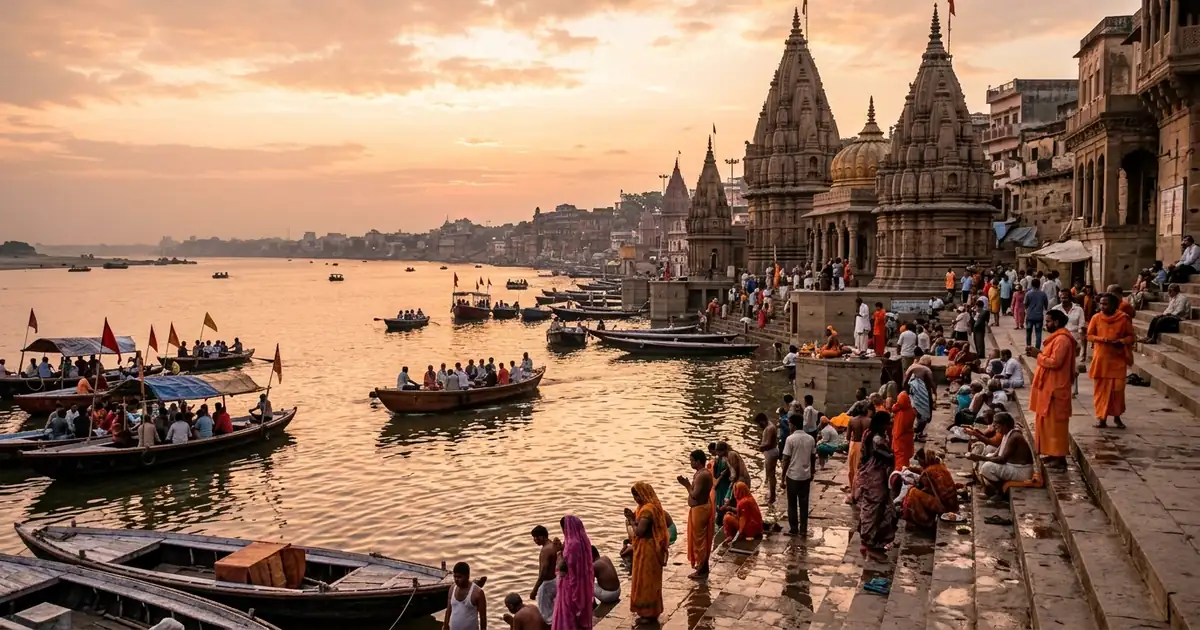
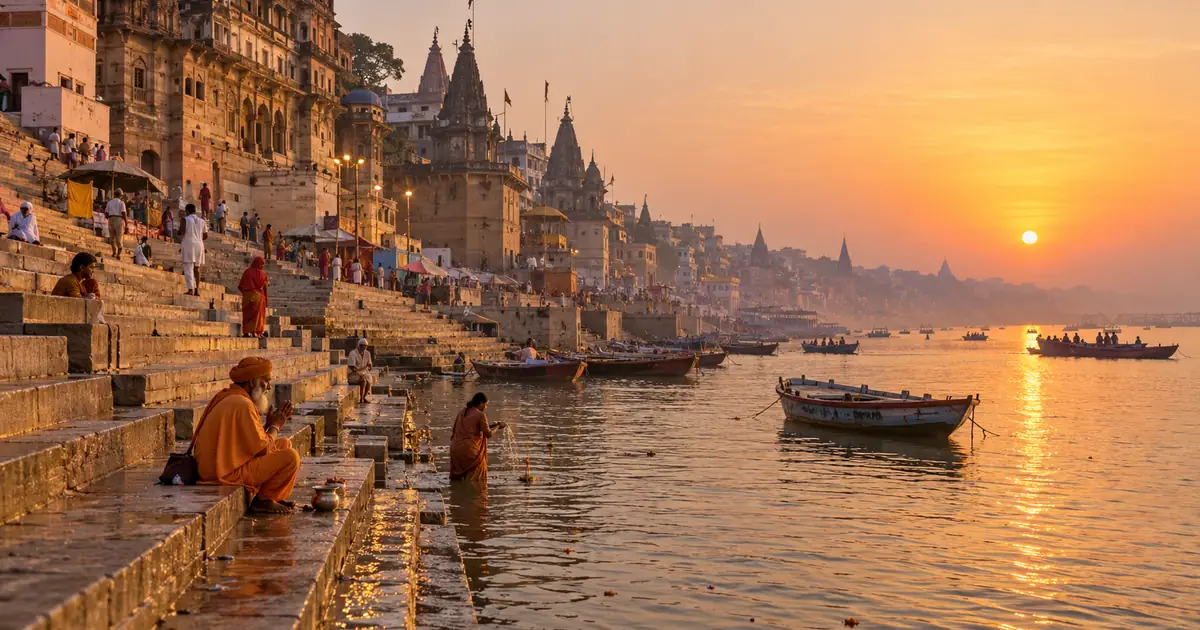
Modern six-lane access-controlled expressways and semi-high-speed trains now link the western Mughal capitals directly to the eastern spiritual riverfronts. First-time visitors often begin their journey by walking along the historic ghats of Varanasi at daybreak before connecting to Ayodhya, Prayagraj, Lucknow, and Agra.
Uttar Pradesh Destinations Master Matrix
Planning an itinerary across Uttar Pradesh requires matching regional clusters with nearby rail and aviation hubs. The following master matrix organizes the state’s ten primary travel regions by administrative division, ideal duration, signature highlights, and transit gateways:
| Destination Region | Division & Cultural Belt | Ideal Duration | Signature Highlights | Primary Transit Gateway |
|---|---|---|---|---|
| Agra & Fatehpur Sikri | Agra Division (Western Doab) | 2 to 3 Days | Taj Mahal, Agra Fort, Itmad-ud-Daulah, Buland Darwaza | Agra Cantt (AGC) / Agra Airport (AGR) |
| Mathura, Vrindavan & Braj | Agra Division (Braj Bhoomi) | 2 Days | Krishna Janmabhoomi, Banke Bihari Temple, Prem Mandir, Vishram Ghat | Mathura Junction (MTJ) / Yamuna Expressway |
| Varanasi & Sarnath | Varanasi Division (Purvanchal) | 3 Days | Kashi Vishwanath Dham, 84 Ganga Ghats, Ganga Aarti, Dhamek Stupa | Varanasi Junction (BSB) / Varanasi Airport (VNS) |
| Ayodhya & Sarayu Basin | Ayodhya Division (Awadh) | 1 to 2 Days | Shri Ram Janmabhoomi Mandir, Hanuman Garhi, Kanak Bhawan, Ram Ki Paidi | Ayodhya Dham (AY) / Ayodhya Airport (AYJ) |
| Prayagraj & Sangam | Prayagraj Division (Purvanchal) | 1 to 2 Days | Triveni Sangam Confluence, Allahabad Fort, Akshaya Vat, Anand Bhavan | Prayagraj Junction (PRYJ) / Prayagraj Airport (IXD) |
| Lucknow Capital Region | Lucknow Division (Central Awadh) | 2 Days | Bara Imambara, Bhool Bhulaiya, Rumi Darwaza, Chota Imambara, Residency | Lucknow Charbagh (LKO) / Lucknow Airport (LKO) |
| Kushinagar & Shravasti | Gorakhpur & Devipatan (Buddhist Trail) | 2 to 3 Days | Mahaparinirvana Temple, Ramabhar Stupa, Jetavana Monastery | Kushinagar Airport (KBK) / Gorakhpur Junction (GKP) |
| Dudhwa & Pilibhit Terai | Lucknow & Bareilly (Himalayan Terai) | 2 to 3 Days | Bengal Tiger Safaris, Swamp Deer (Barasingha), One-Horned Rhinos | Palia Kalan / Pilibhit Junction / Lucknow Airport |
| Jhansi, Chitrakoot & Kalinjar | Jhansi & Chitrakoot (Bundelkhand) | 2 to 3 Days | Jhansi Fort, Ramghat on Mandakini River, Kamadgiri Hill, Kalinjar Fort | Virangana Lakshmibai Jhansi (VGLJ) / Chitrakoot Dham |
| Mirzapur & Vindhyachal | Mirzapur Division (Vindhya Plateau) | 1 to 2 Days | Maa Vindhyavasini Shakti Peetha, Ashtabhuja Temple, Chunar Fort | Vindhyachal Station (BDL) / Varanasi Airport (VNS) |
Geographic Landscape and 18 Administrative Divisions
Uttar Pradesh occupies 240,928 square kilometers of northern India, stretching 650 kilometers from west to east across 75 districts and 18 administrative divisions. Bordered by Nepal and Uttarakhand to the north, the state transitions from sub-Himalayan marshlands across the Gangetic alluvial plain to rocky southern plateaus.
Geographers divide the territory into three distinct physical zones based on river hydrology and elevation. Along the northern frontier with Nepal lies the Bhabar and Terai belt, a band of tall elephant grasslands and dense sal forests stretching from Saharanpur through Lakhimpur Kheri to Kushinagar.
South of the Terai lies the vast Gangetic Plain, accounting for nearly 85 percent of the state’s landmass. Built from deep fertile silt deposited by the Ganga, Yamuna, Ghaghara, Gomti, and Rapti rivers, this flat plain slopes gently southeastward from 300 meters in Saharanpur to 60 meters near Ballia.
Along the southern border with Madhya Pradesh rises the Vindhya and Bundelkhand plateau zone. Here, ancient granite crags, red sandstone escarpments, and seasonal river gorges across Jhansi, Lalitpur, Banda, Chitrakoot, Mirzapur, and Sonbhadra reach elevations between 300 and 600 meters.
Culturally and linguistically, the 18 administrative divisions group into four historic regions that shape local architecture, dialect, and cuisine. Each cultural zone offers travelers a distinct heritage experience:
- Western Uttar Pradesh (Doab and Braj): Encompassing Agra, Mathura, Meerut, Aligarh, Bareilly, and Moradabad between the Ganga and Yamuna rivers, preserving imperial Mughal monuments and Krishna pilgrimage towns.
- Awadh (Central Plains): Centered on Lucknow, Ayodhya, and Sitapur along the Gomti and Sarayu basins, celebrated for Nawabi Indo-Islamic architecture, chikankari embroidery, and slow-cooked dum pukht gastronomy.
- Purvanchal (Eastern Gangetic Basin): Covering Varanasi, Prayagraj, Gorakhpur, Azamgarh, Basti, and Mirzapur divisions, containing Hinduism’s oldest riverfront shrines alongside the core monasteries of the Buddhist circuit.
- Bundelkhand (Southern Crags): Spanning Jhansi and Chitrakoot divisions south of the Yamuna and Betwa rivers, defined by hilltop Chandela and Bundela fortresses and forest hermitages associated with the Ramayana.
Agra and the Mughal Heritage Corridor
Agra sits on the banks of the Yamuna River 210 kilometers south of New Delhi, serving as the imperial capital of the Mughal Empire during the 16th and 17th centuries. The city houses three UNESCO World Heritage monuments within a 40-kilometer radius and anchors India’s Golden Triangle circuit.
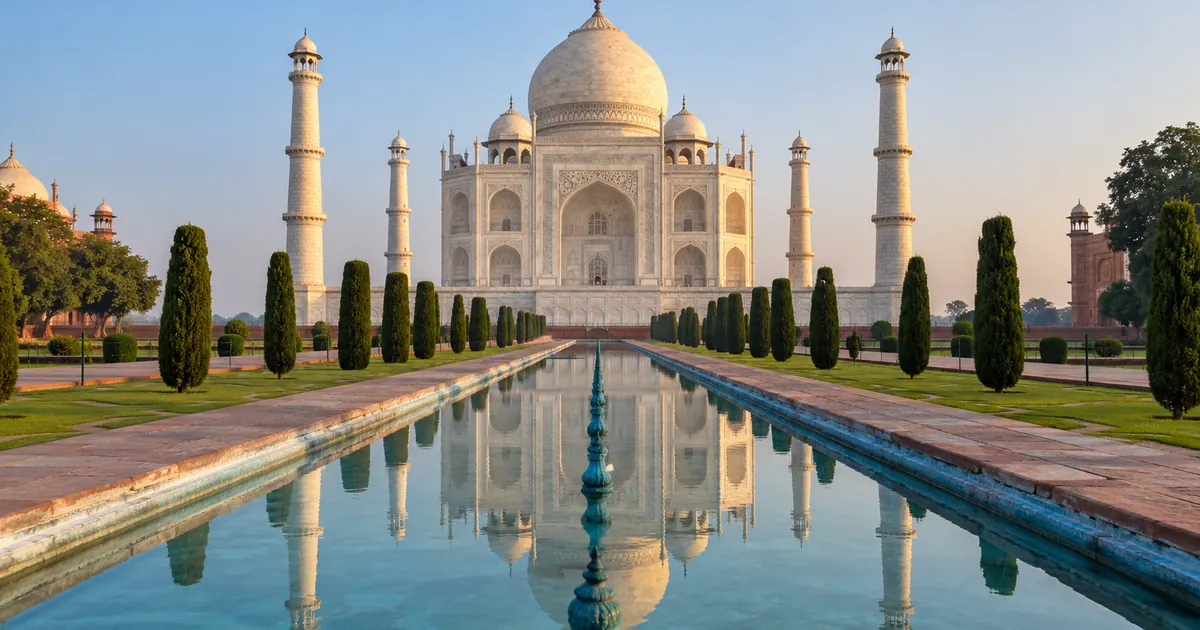
The centerpiece of Agra is the Taj Mahal, commissioned in 1631 by Emperor Shah Jahan as a white Makrana marble mausoleum for Empress Mumtaz Mahal. Rising 73 meters above a four-quadrant Charbagh garden and framed by four 40-meter minarets, the monument displays intricate pietra dura floral inlay crafted from semi-precious stones.
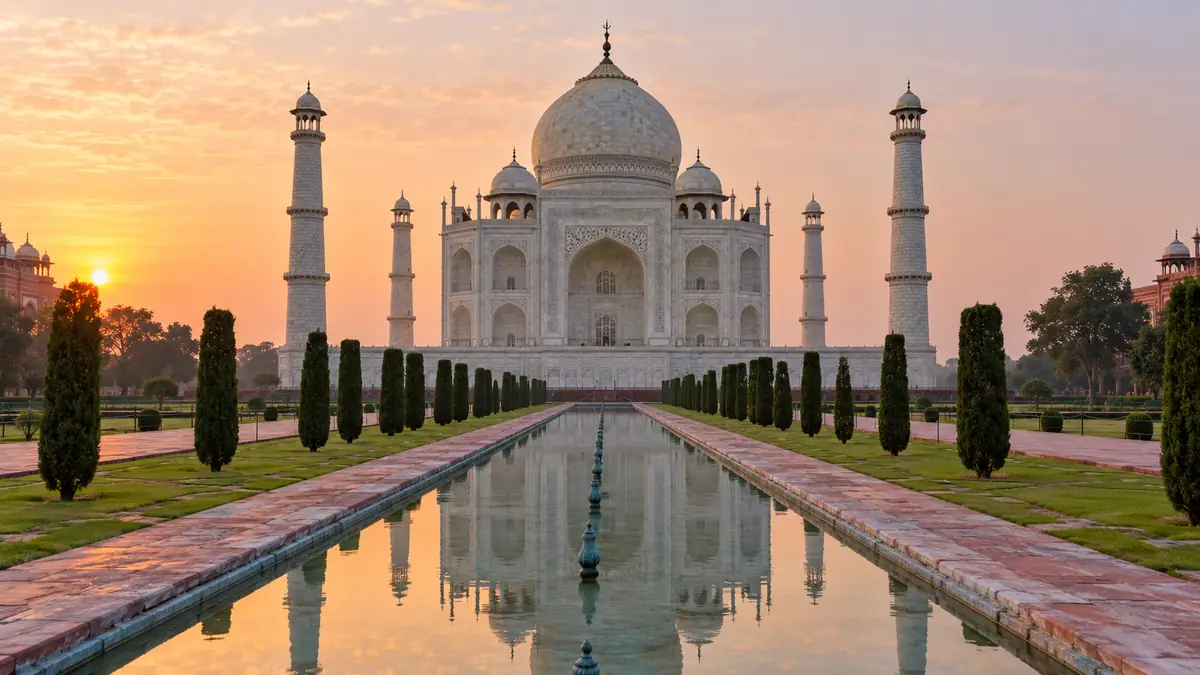
Visiting gates open 30 minutes before sunrise and close 30 minutes before sunset every day except Friday, when the complex closes for congregational prayers. Base entry tickets cost ₹50 for Indian citizens, ₹540 for SAARC and BIMSTEC nationals, and ₹1,100 for foreign tourists, plus ₹200 for the main cenotaph chamber.
Full-moon night viewing operates five nights each month (excluding Fridays and Ramadan) between 8:30 PM and 12:30 AM in eight 30-minute batches of 50 visitors. Detailed gate selection strategies, shoe cover rules, and online booking steps are covered in our Taj Mahal timings and ticket guide.
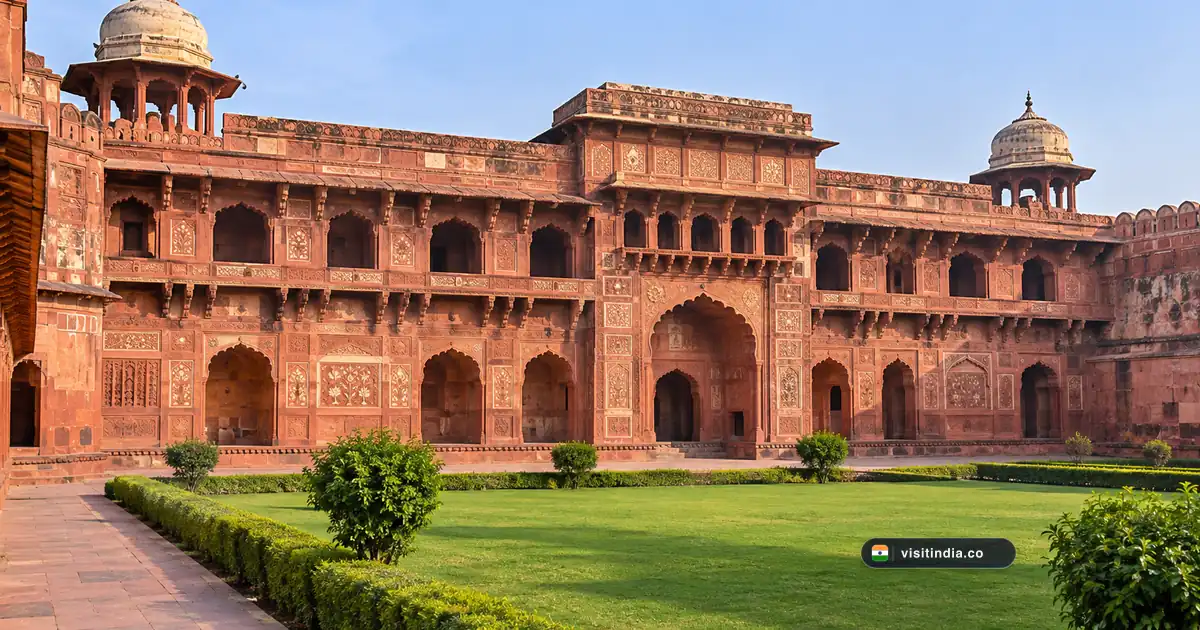
Two kilometers northwest along the Yamuna stands Agra Fort, detailed in our Agra Fort, Mehtab Bagh, and Itimad-ud-Daulah guide, a crescent-shaped citadel enclosed by 2.5 kilometers of double red sandstone ramparts rising 21 meters high. Built by Emperor Akbar beginning in 1565 and expanded in white marble by Shah Jahan, the fort contains the Jahangiri Mahal, Diwan-i-Khas, and Musamman Burj tower.
Across the Yamuna on the eastern bank stands the Tomb of Itmad-ud-Daulah, commissioned between 1622 and 1628 by Empress Nur Jahan for her father Mirza Ghiyas Beg. Known colloquially as the Baby Taj, this garden tomb marked the first Mughal structure built entirely in white marble with carved lattice jali screens.
Directly north of the Taj Mahal on the eastern bank lies Mehtab Bagh, a 25-acre square moonlight garden aligned with the mausoleum across the river. Ten kilometers northwest at Sikandra stands the five-tiered sandstone and marble Tomb of Akbar the Great.
Pro Tip
Agra Gate & Locker Advisory: Enter the Taj Mahal via the East Gate at Shilpgram before 6:00 AM for the shortest security queues. Drone equipment, tripods, chargers, earphones, tobacco, and food packets are strictly prohibited past security and must be deposited in the free cloakrooms.
Visitors can verify updated archaeological ticket rules before arrival. Official monument tariffs, licensed guide fees, and electric golf cart shuttle rules are published on the District Administration Agra Official Tourism Directory.
Fatehpur Sikri and the Braj Heartland of Mathura and Vrindavan
West and north of Agra, the Yamuna corridor links the deserted 16th-century Mughal capital of Fatehpur Sikri with the twin pilgrimage cities of Mathura and Vrindavan. Travelers moving between New Delhi and Agra can combine both heritage zones in a two-day road excursion.
Thirty-seven kilometers west of Agra sits Fatehpur Sikri, founded in 1571 by Emperor Akbar as his royal court before water scarcity forced its abandonment in 1585. Built from locally quarried red sandstone along a rocky ridge, the complex blends Persian court geometry with Hindu and Jain pillar carving.
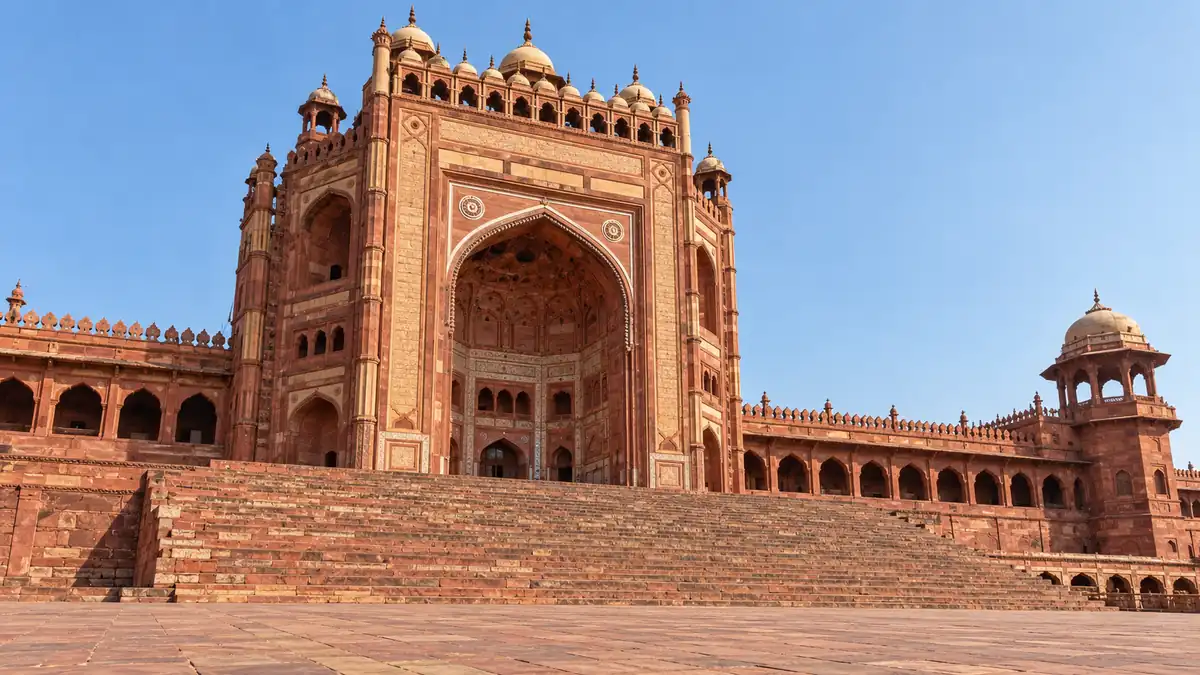
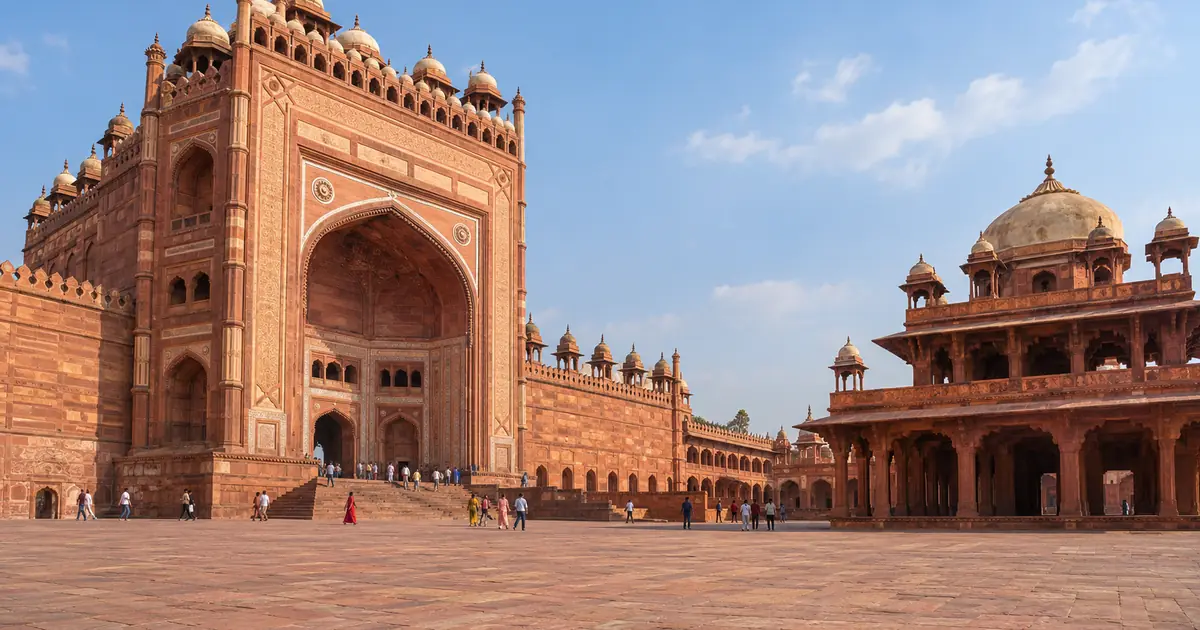
The sacred wing centers on the Jama Masjid and the white marble Dargah of Sufi saint Sheikh Salim Chishti, where pilgrims tie cotton threads to carved lattice screens. Guarding the southern courtyard is the Buland Darwaza, a 54-meter triumphal gateway erected to commemorate Akbar’s Gujarat campaign.
Adjoining the mosque sits the imperial palace enclave, featuring the five-story open pavilion of Panch Mahal, Jodha Bai’s Palace, Birbal’s House, and the Diwan-i-Khas lotus column. Full monument timings, shuttle bus rules from Gulistan parking, and entry tariffs are detailed in our guide to places to visit in Fatehpur Sikri.
Fifty-eight kilometers north of Agra along National Highway 19 lies Mathura, venerated across Hindu tradition as the birthplace of Lord Krishna. The sacred core centers on the Shri Krishna Janmabhoomi Temple complex, where the Garbha Griha shrine marks the ancient prison cell of King Kansa beside Potara Kund.
Along the western bank of the Yamuna in Mathura, 25 stone bathing ghats converge on Vishram Ghat, where morning and evening oil lamp aartis illuminate the water. Two blocks inland stands the 1814 Dwarkadhish Temple, celebrated for its carved sandstone pillars, painted ceiling murals, and brass bell canopies.
Twelve kilometers north of Mathura sits Vrindavan, home to over 5,000 temples dedicated to Radha and Lord Krishna. The town’s spiritual pulse centers on the 1864 Banke Bihari Temple, where priests draw and open a curtain before the black wood deity every few minutes during darshan.
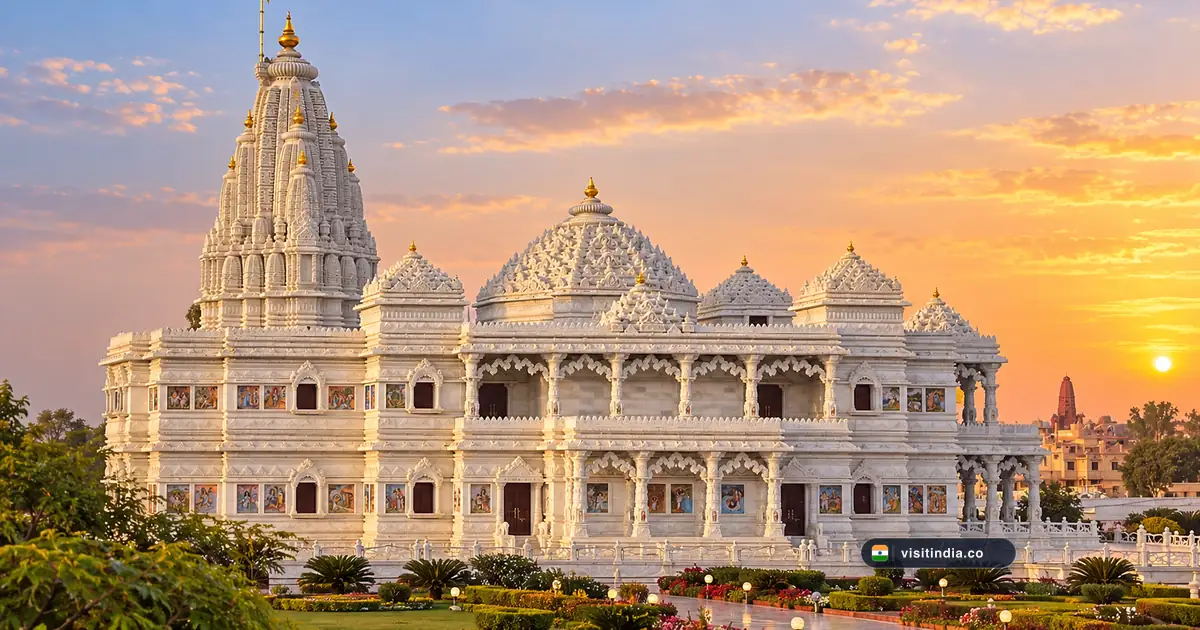
Other major sanctuaries in Vrindavan include the 16th-century red sandstone Govind Dev Ji Temple, Radha Raman Temple, ISKCON Krishna Balaram Mandir, and the illuminated white marble Prem Mandir. Comprehensive darshan timings, temple rules, and circuits are covered in our guide to Vrindavan and Mathura sightseeing guide. Civic pilgrimage schedules, parikrama route maps, and temple timings across the Braj circuit are cataloged by the District Administration Mathura Official Tourism Directory.
Varanasi, Sarnath, and the Ancient Riverfront Ghats
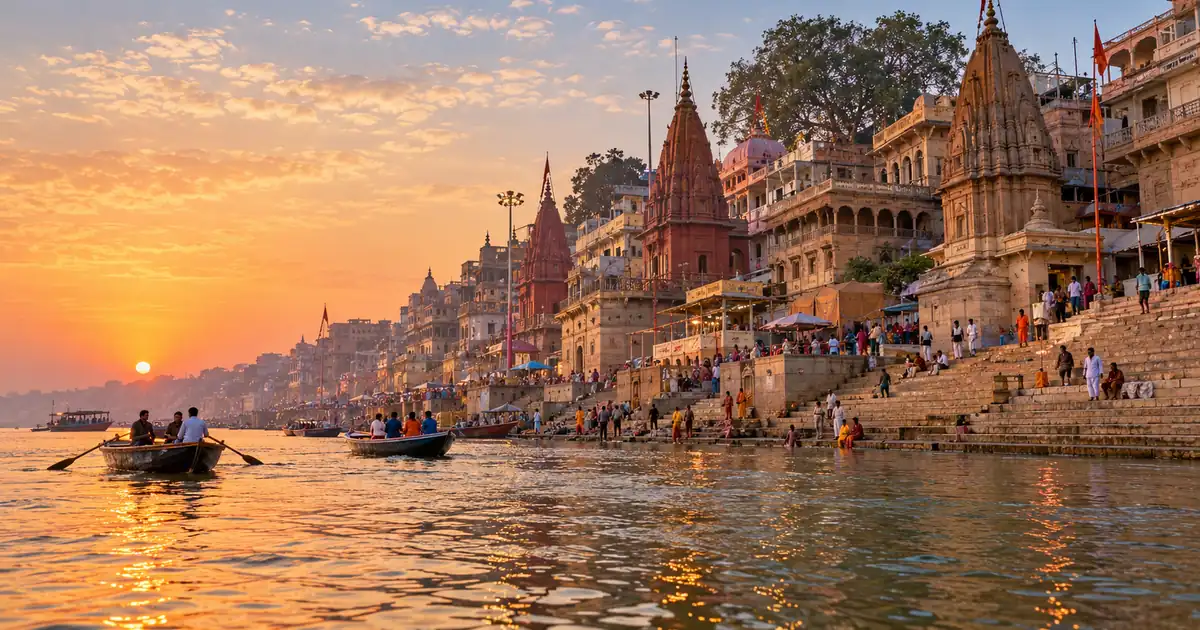
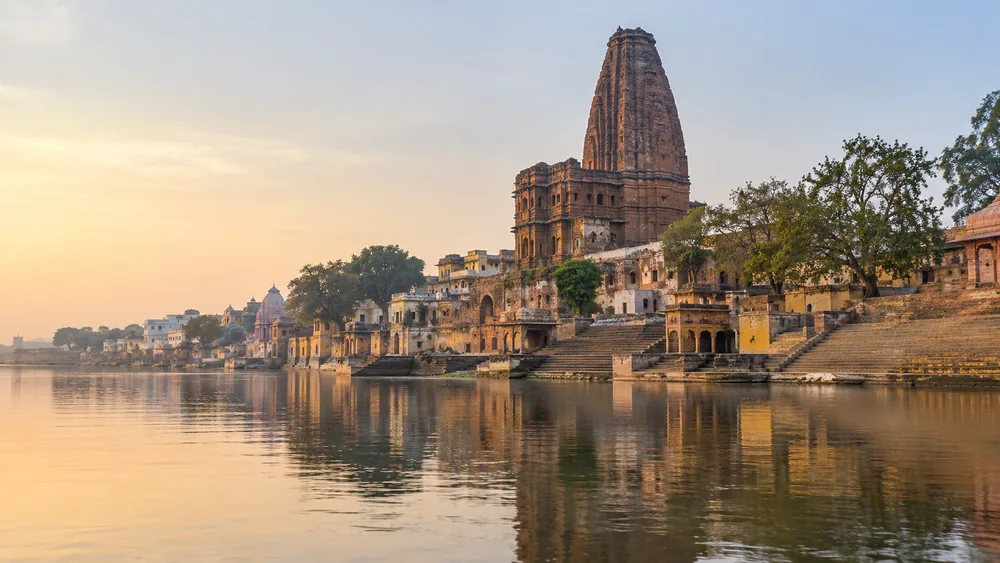
Varanasi (historically Kashi and Banaras) rises along the crescent-shaped western bank of the northward-flowing Ganga River in southeastern Uttar Pradesh, 320 kilometers southeast of Lucknow. Revered as one of the world’s oldest continuously inhabited cities, Varanasi anchors Hindu spiritual life, classical Hindustani music, silk weaving, and Buddhist monastic history.
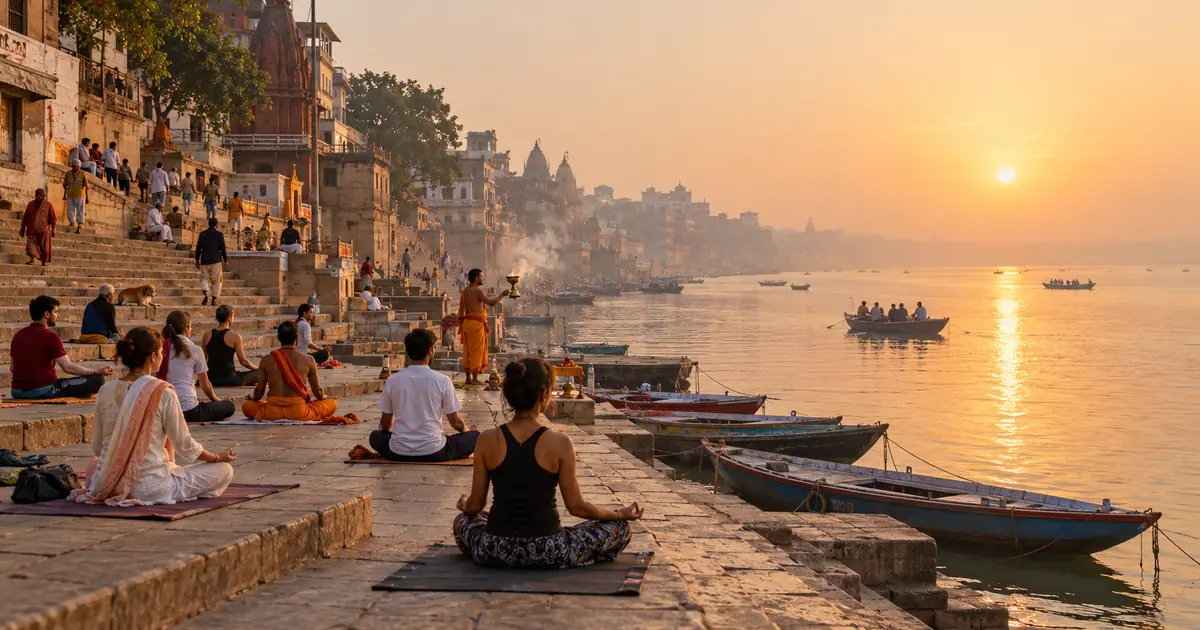
The defining landscape of Varanasi is its 6.5-kilometer arc of 84 stone riverfront ghats descending up to 30 meters from riverside palaces down to the water’s edge. Every morning at dawn, wooden rowboats and CNG passenger boats glide from Assi Ghat northward to Manikarnika Ghat as pilgrims perform solar salutations.
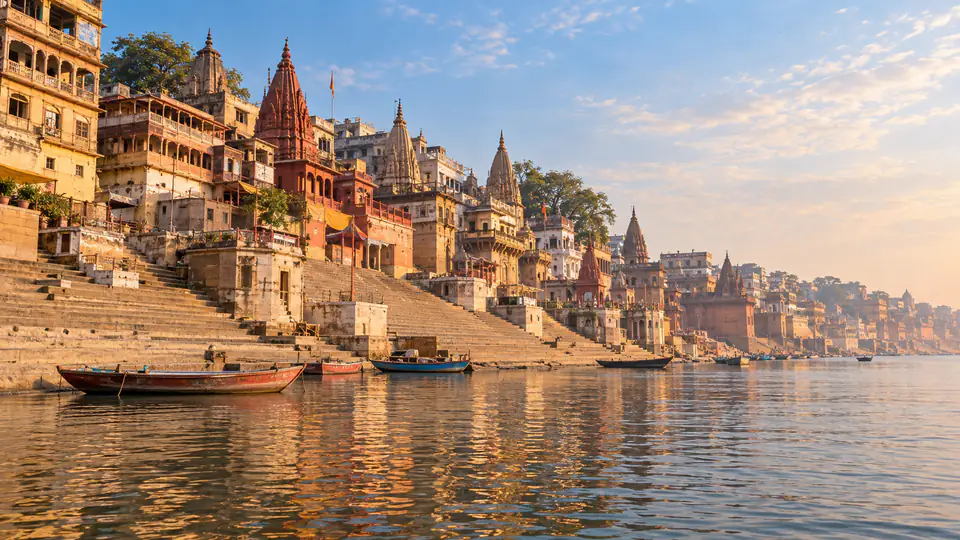
Walking the riverfront reveals centuries of royal patronage and ritual tradition. Six landmark ghats anchor the riverside promenade from south to north:
- Assi Ghat: Marking the southern confluence of the Assi and Ganga streams, hosting the daily Subah-e-Banaras dawn ceremony with Vedic chanting, classical music, and yoga at 5:30 AM.
- Tulsi Ghat and Harishchandra Ghat: Associated with 16th-century poet-saint Goswami Tulsidas and the ancient southern cremation grounds guarded by the Kalu Dom lineage.
- Chet Singh Ghat, Darbhanga Ghat, and Ahilyabai Ghat: Crowned by 18th-century and 19th-century sandstone fort-palaces built by royal families from Bihar, Madhya Pradesh, and Maharashtra.
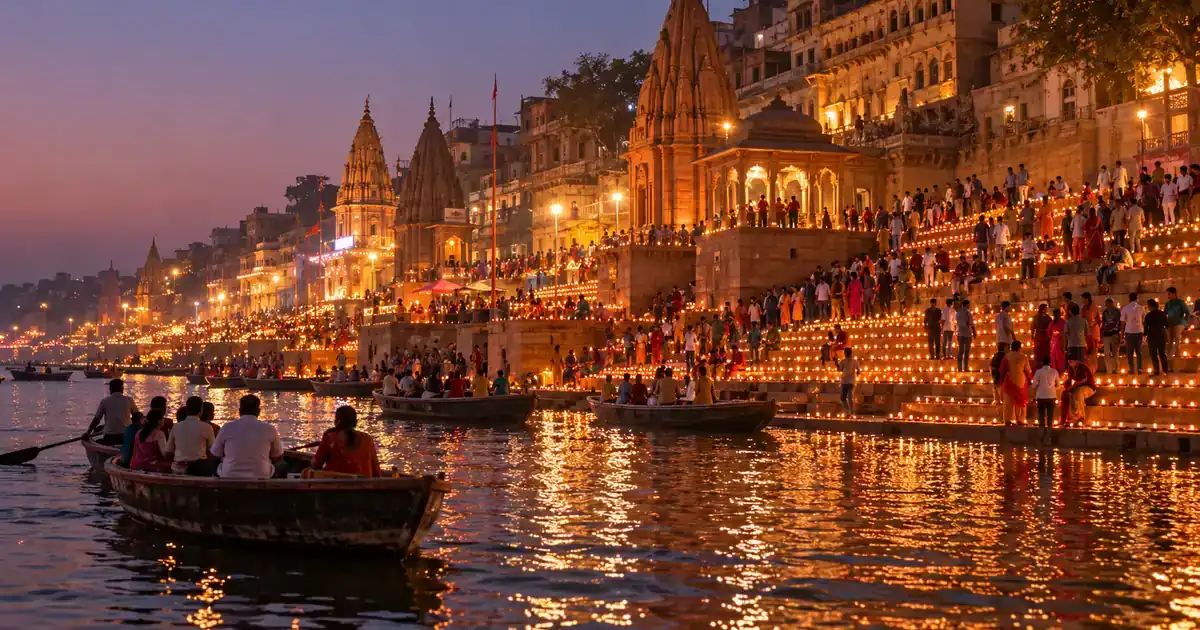
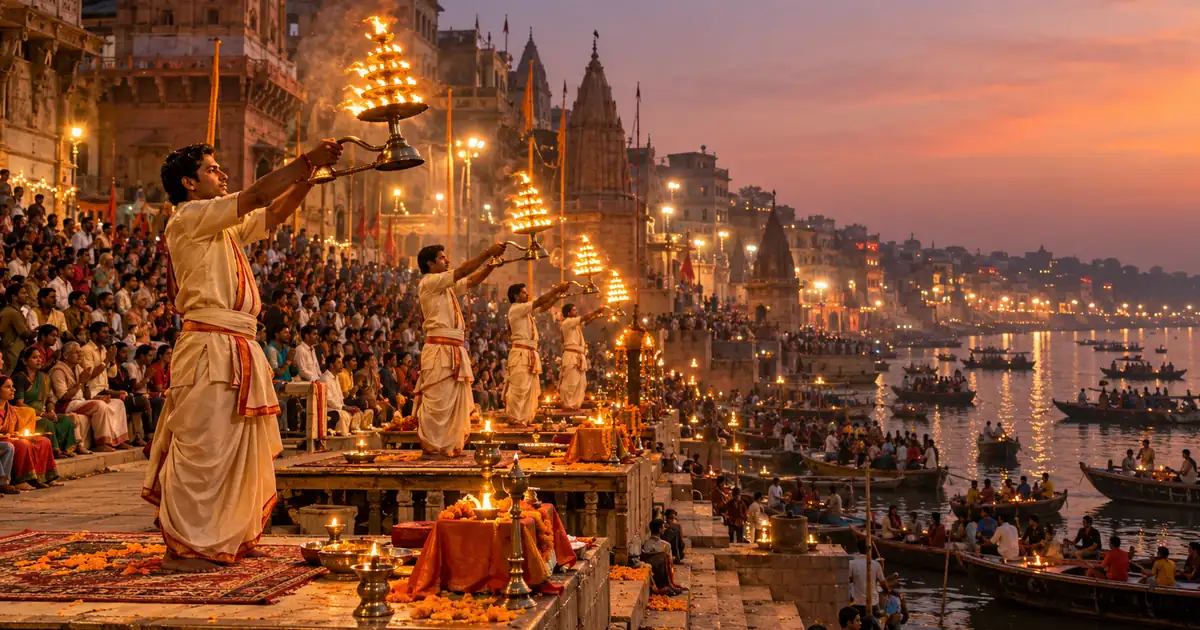
- Dashashwamedh Ghat: The active ritual heart of the riverfront, where seven priests in silk dhotis conduct the synchronized 45-minute Ganga Aarti every evening after sunset.
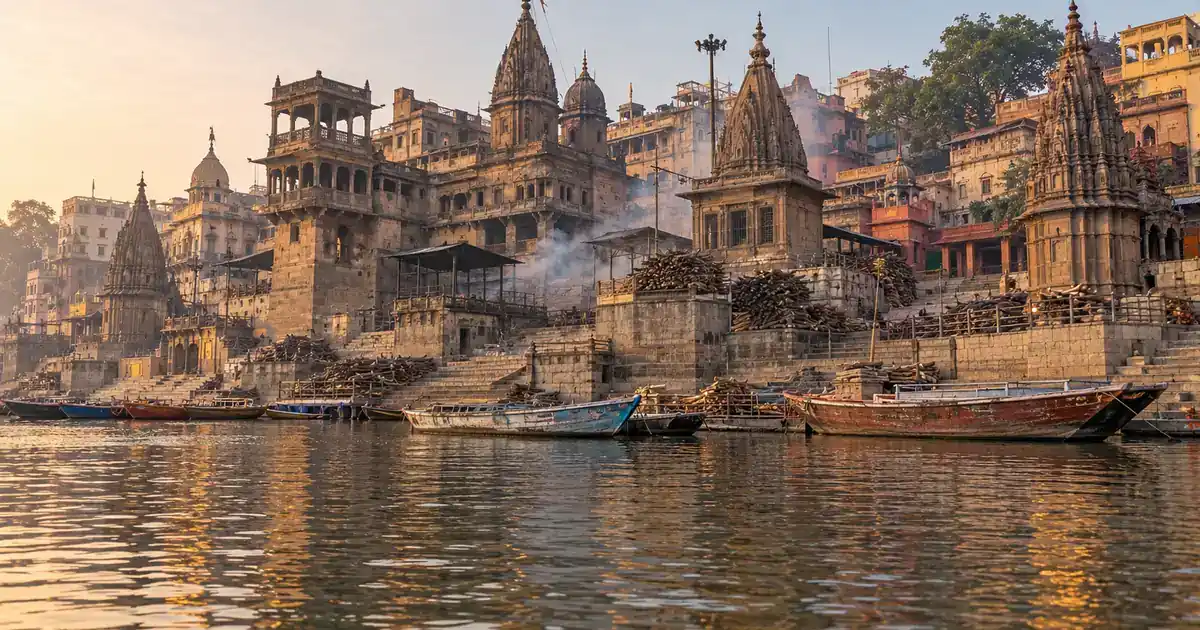
- Manikarnika Ghat: The primary Hindu cremation ground (Mahashmashana), where sacred funeral pyres fueled by eternal fire burn continuously to grant spiritual liberation (moksha).
- Panchganga Ghat and Raj Ghat: The northern historic ghats featuring the Alamgir Mosque above the Bindu Madhav shrine and the archaeological plateau of ancient Kashi.
Across the eastern bank of the Ganga stands the 18th-century Ramnagar Fort, seat of the Kashi Naresh, housing royal palanquins, vintage automobiles, and astronomical clocks. Within the southern city extends the 1,300-acre campus of Banaras Hindu University (BHU), founded in 1916 and centered on the 77-meter New Vishwanath Temple spire.
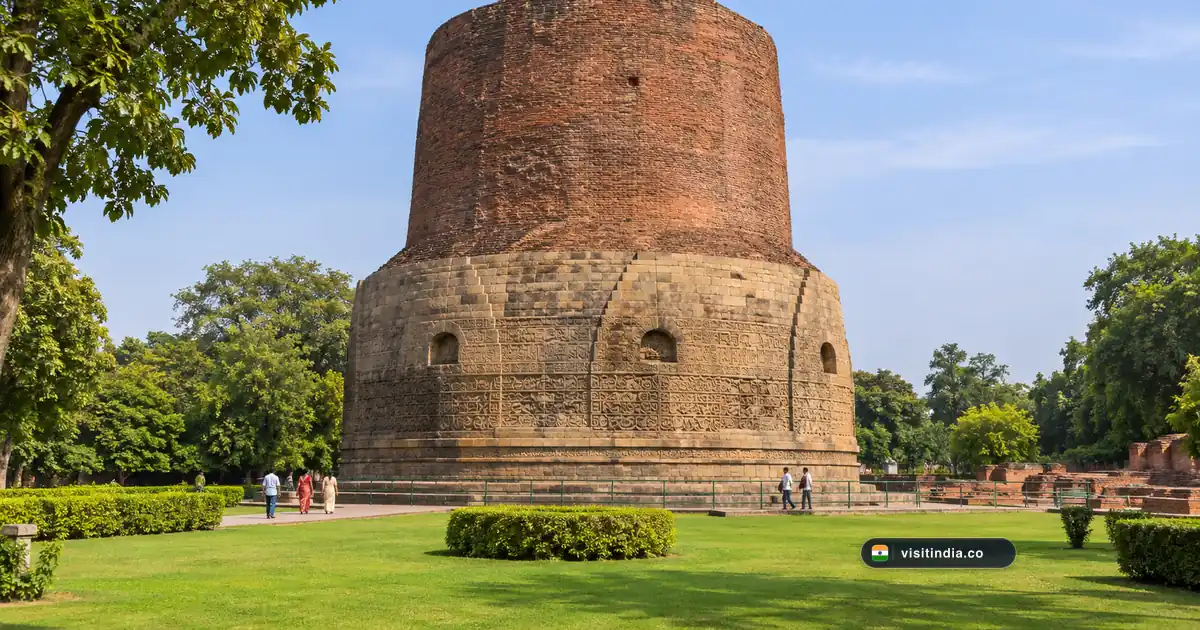
Ten kilometers northeast of Varanasi Junction lies Sarnath, the deer park where Gautama Buddha delivered his first sermon to five ascetic disciples after attaining enlightenment. The archaeological park centers on the cylindrical brick and stone Dhamek Stupa, rising 43.6 meters high and dating back to Emperor Ashoka in 249 BCE.
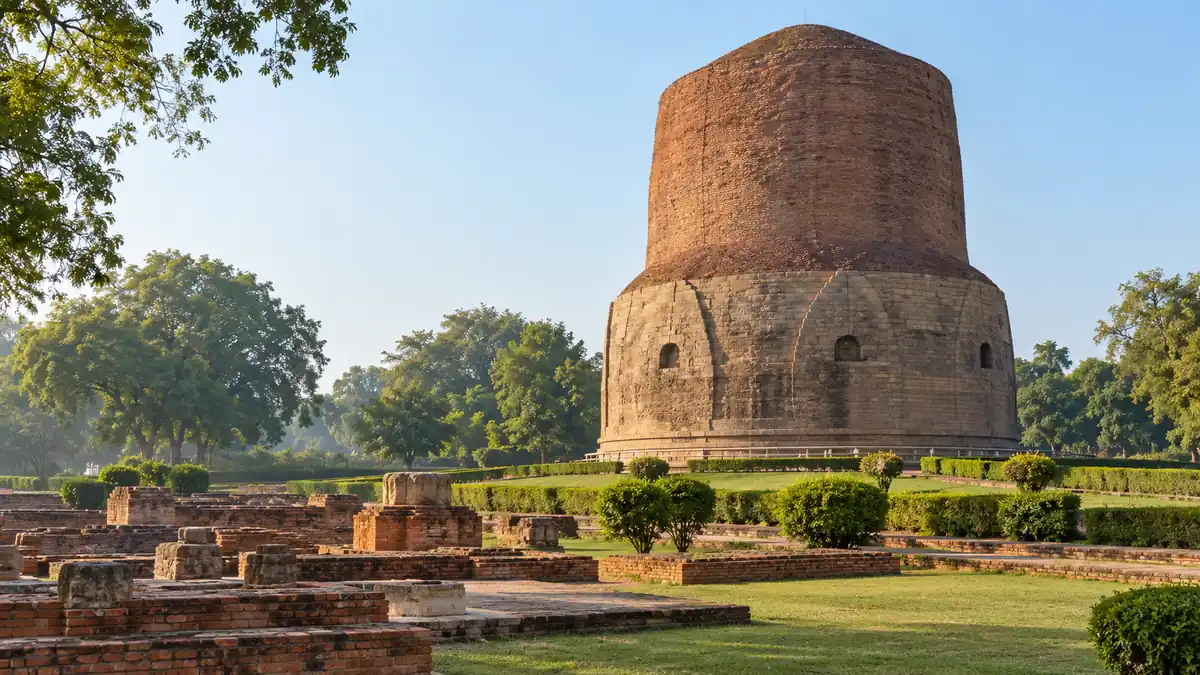
Adjacent to the stupa stand the Dharmarajika Stupa foundations, the inscribed Ashoka Pillar base, Mulagandha Kuti Vihara with 1930s Japanese frescoes, and Chaukhandi Stupa. The Sarnath Archaeological Museum (open 9:00 AM to 5:00 PM, closed Fridays, ₹25 entry) displays the original four-lion polished sandstone Lion Capital of Ashoka. For detailed ticket tariffs, stupa history, and site maps, refer to our comprehensive Sarnath Buddhist monuments guide.
Complete walking routes, boat rental tariffs, and silk weaver quarter tips are covered in our guide to Varanasi visitor itinerary. Official riverfront regulations and Sarnath monument details are maintained by the District Administration Varanasi Official Tourism Directory.
Kashi Vishwanath Dham and Sacred Shaivite Pilgrimages
At the spiritual core of Varanasi stands the Shri Kashi Vishwanath Temple, housing the Vishweshwara Jyotirlinga, the foremost among the twelve sacred Jyotirlinga shrines of Lord Shiva. Reconstructed in 1780 by Maharani Ahilyabai Holkar and plated with 800 kilograms of gold donated by Maharaja Ranjit Singh in 1835, the shrine draws 75,000 pilgrims daily.
The temple’s riverfront approach was transformed by the 500,000-square-foot Shri Kashi Vishwanath Dham Corridor, linking Lalita Ghat and Jalasen Ghat directly to the inner sanctum courtyard. Pilgrims bathe in the Ganga, draw sacred water into a brass vessel, and walk up the Chunar pink sandstone esplanade to offer Jalabhishek.
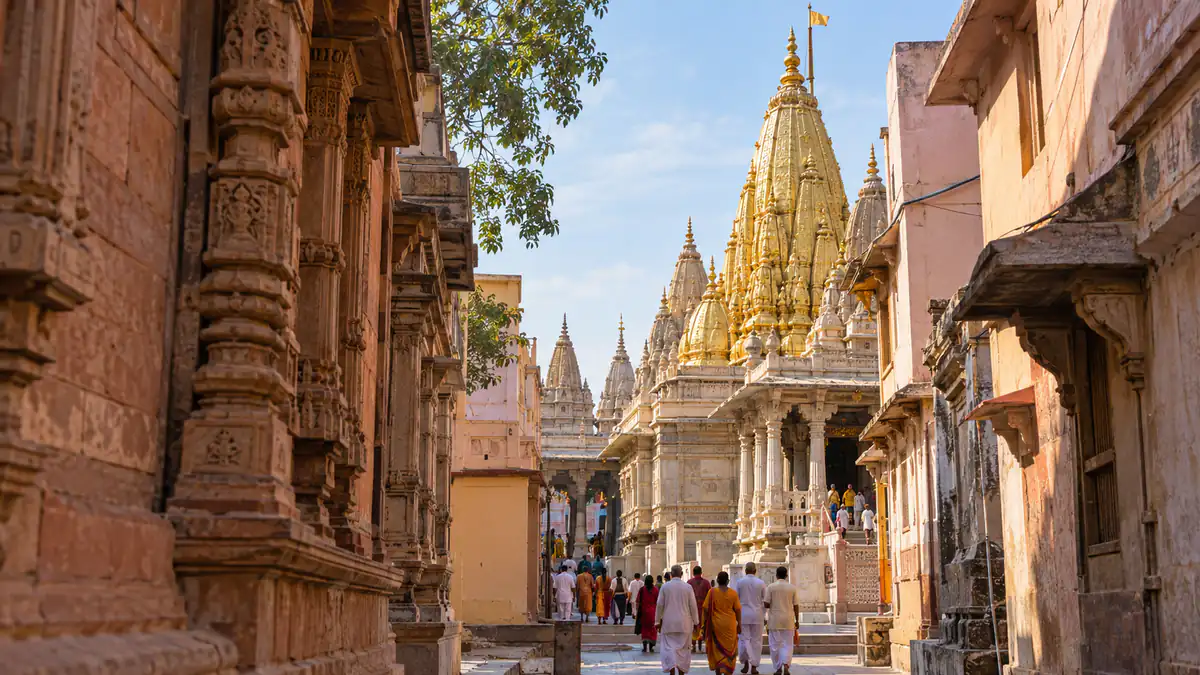
The temple remains open from 3:00 AM until 11:00 PM daily. The liturgical schedule follows five daily ceremonies regulated by the Shri Kashi Vishwanath Temple Trust:
- Mangala Aarti (3:00 AM to 4:00 AM): The pre-dawn awakening ritual; requires an advance online ticket (₹350 to ₹500) and traditional Indian attire.
- Morning General Darshan (4:00 AM to 11:15 AM): Free public queue access; sparsh darshan (touching the Jyotirlinga) is permitted during designated early morning hours.
- Madhyahna Bhog Aarti (11:15 AM to 12:20 PM): Midday food offering ceremony (₹180 ticket).
- Afternoon General Darshan (12:20 PM to 7:00 PM): Free viewing darshan (jhanki darshan) from outside the sanctum doorway.
- Sandhya Aarti (7:00 PM), Shringar Aarti (9:00 PM), and Shayan Aarti (10:30 PM): Evening ornamentation and closing rituals (₹180 ticket for Sandhya and Shringar Aartis).
Travelers seeking faster entry can book a Sugam Darshan priority pass for ₹300 per person online or at Gate 4, reducing wait times to 30 minutes. Mobile phones, smartwatches, cameras, leather belts, pens, and bags are strictly banned inside the perimeter and must be stored in free cloakrooms at Gate 4 or Lalita Ghat.
Beyond the main Jyotirlinga, orthodox pilgrims complete the Kashi spiritual circuit by visiting four guardian shrines across the city. Full online pass booking steps, dress code rules, and locker locations are detailed in our Kashi Vishwanath Temple darshan guide:
- Kaal Bhairav Temple (Visheshwarganj): Revered as the Kotwal (Chief Magistrate) of Kashi, where devotees seek ceremonial permission to reside in or depart the sacred city.
- Annapurna Devi Mandir: Located beside Kashi Vishwanath, dedicated to the Goddess of Nourishment and operating a free daily annakshetra kitchen.
- Sankat Mochan Hanuman Temple: Founded by saint Tulsidas near Assi along the southern forest belt, famous for Tuesday and Saturday besan laddu offerings.
- Vindhyachal Shakti Peetha (Mirzapur, 70 km southwest): Where pilgrims walk the sacred Trikona Parikrama linking Maa Vindhyavasini Temple, Kali Khoh cave shrine, and Ashtabhuja Devi Temple.
Ayodhya Ram Janmabhoomi and the Sarayu River Sanctuaries
Ayodhya sits on the southern bank of the sacred Sarayu River in central-eastern Uttar Pradesh, 135 kilometers east of Lucknow and 200 kilometers northwest of Varanasi. Celebrated across the Valmiki Ramayana as the capital of the ancient Kosala kingdom and the birthplace of Lord Ram, Ayodhya ranks among India’s busiest pilgrimage hubs.
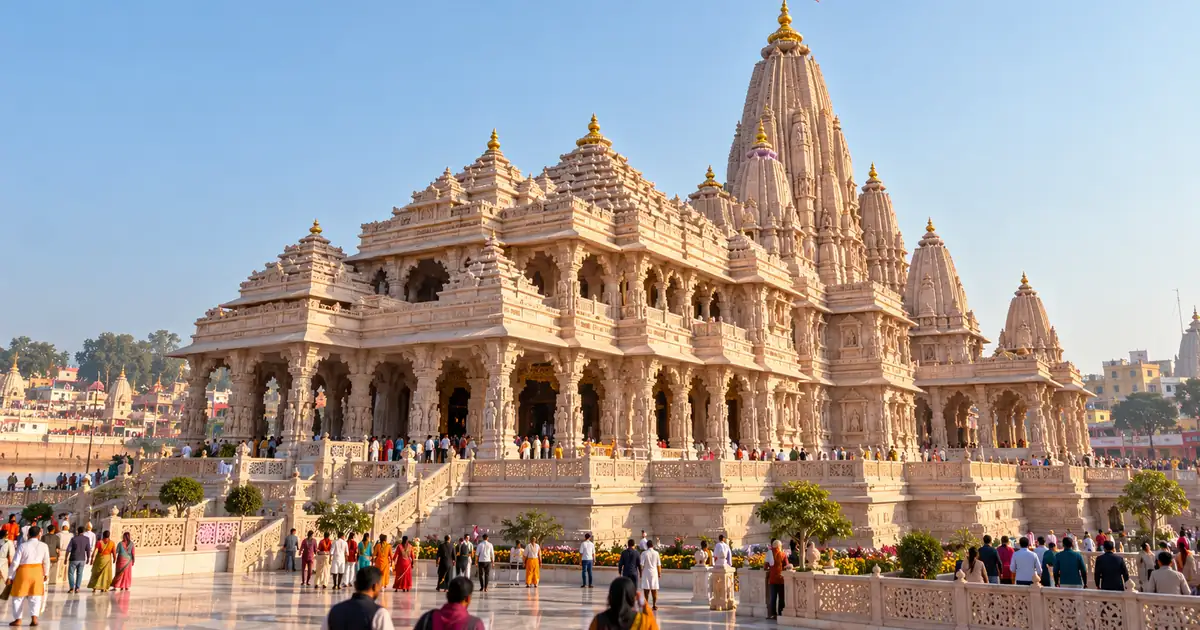
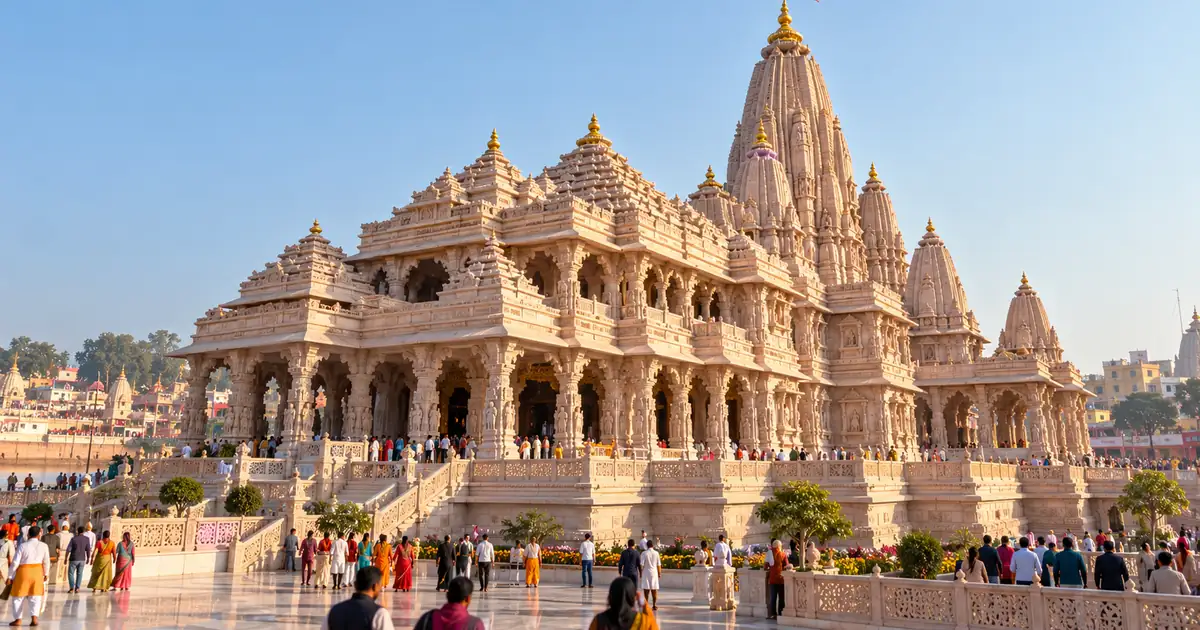
The spiritual centerpiece of the city is the Shri Ram Janmabhoomi Mandir in the Ramkot citadel quarter. Built in the classical Nagara temple style using pink Bansi Paharpur sandstone without structural iron or steel, the three-story complex spans 380 feet in length and rises 161 feet to its main shikhara.
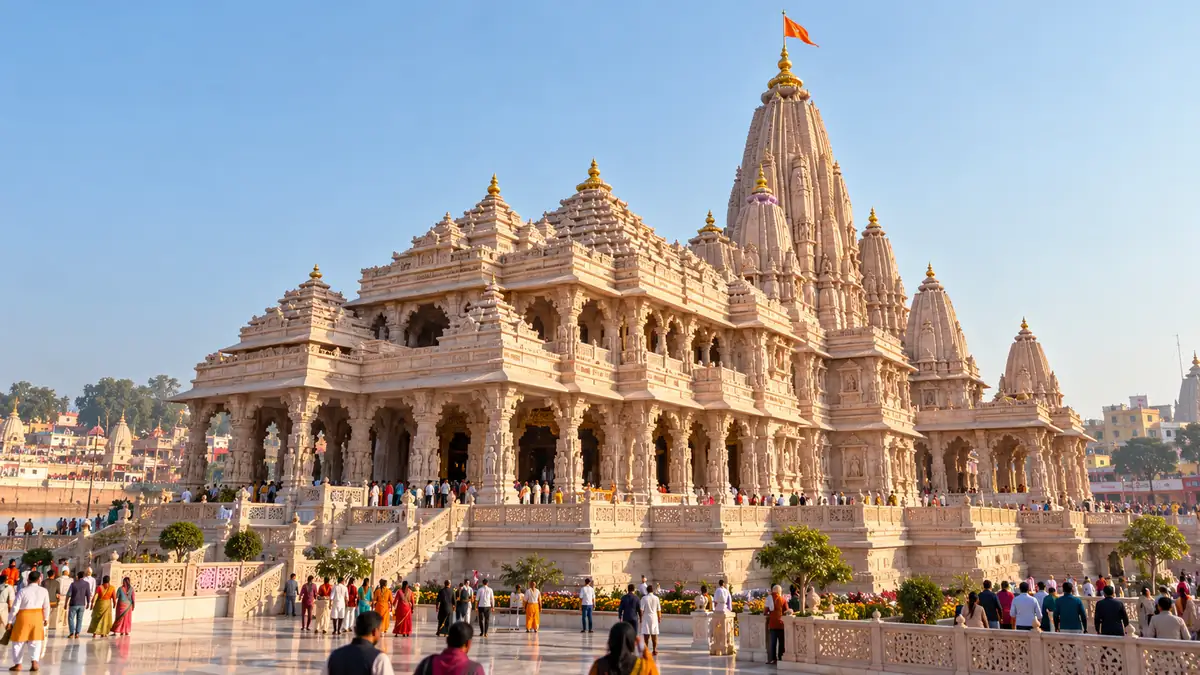
Visitors ascend 32 marble steps at the eastern Singh Dwar entrance and pass through five pillared halls supported by 392 sculpted columns depicting Hindu deities. Inside the ground-floor sanctum sanctorum stands the 51-inch black stone murti of the five-year-old child deity Ram Lalla, sculpted by Arun Yogiraj.
General darshan is completely free of charge and operates daily from 6:30 AM to 12:00 PM and from 2:00 PM to 9:30 PM via Janmabhoomi Path. The shrine trust conducts five daily rituals: Mangala Aarti at 4:30 AM, Shringar Aarti at 6:30 AM, Bhog Aarti at 12:00 PM, Sandhya Aarti at 7:30 PM, and Shayan Aarti at 10:00 PM.
Complimentary Sugam Darshan and aarti passes can be booked online in advance with Aadhaar or passport identification. Mobile phones, cameras, smartwatches, remote keys, and bags are prohibited inside the temple concourse, with free digital token cloakrooms provided along the entry plaza; complete instructions appear in our Ayodhya Ram Mandir timings and aarti booking guide.
Within a two-kilometer radius of Ramkot and along the Sarayu waterfront, pilgrims visit five additional sacred landmarks. Civic traffic maps, e-rickshaw tariffs, and pilgrim tent directories are maintained on the District Administration Ayodhya Official Tourism Directory:
- Hanuman Garhi: Located 500 meters from the Ram Mandir atop a fortified bastion reached by 76 stone steps; custom dictates seeking Lord Hanuman’s blessing here first.
- Kanak Bhawan: Built in 1891 by Queen Vrishbhanu Kunwari of Orchha in Bundela palace style, housing three pairs of gold-crowned idols of Ram and Sita.
- Nageshwarnath Temple: Situated at Ram Ki Paidi, believed to have been established by Lord Ram’s younger son Kusha and drawing massive crowds during Maha Shivratri.
- Ram Ki Paidi and Lata Mangeshkar Chowk: A landscaped series of stepped bathing ghats fed by circulating Sarayu canal waters, anchored by a 40-foot bronze veena sculpture.
- Guptar Ghat: Located 10 kilometers west along the Sarayu bank, featuring peaceful yellow sandstone step-ghats revered as the spot where Lord Ram took Jal Samadhi.
Prayagraj, Triveni Sangam, and the Buddhist Trail
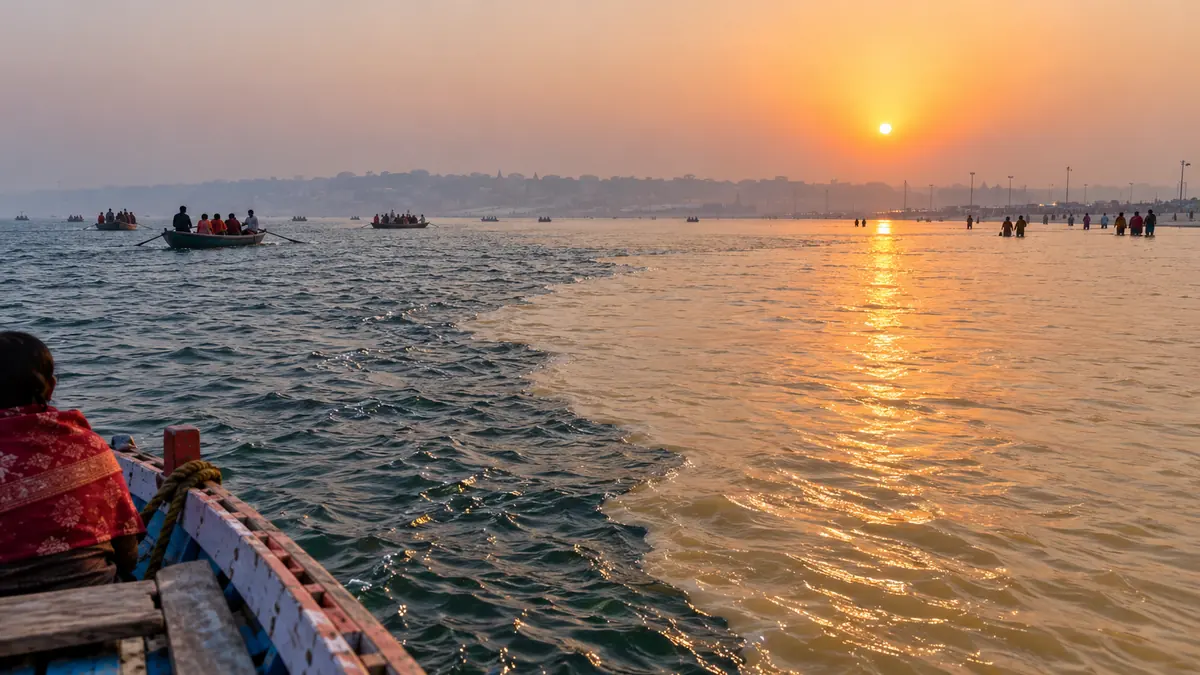
Prayagraj (formerly Allahabad) lies 120 kilometers west of Varanasi and 165 kilometers south of Ayodhya at the sacred confluence known across Hindu scriptures as Tirtharaj. Here, the shallow silt-laden waters of the Ganga meet the deep emerald-green current of the Yamuna and the invisible subterranean stream of the mythical Saraswati River.
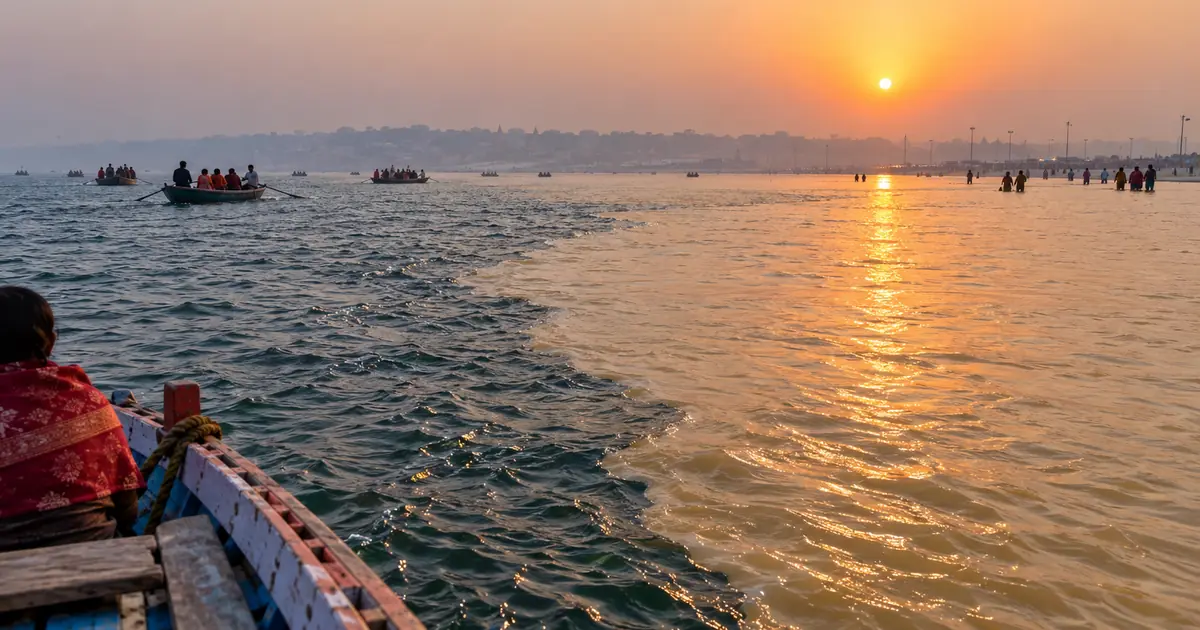
Pilgrims reach the exact confluence midstream by hiring licensed wooden rowboats from Qila Ghat, Boat Club Ghat, or Arail Ghat toward the floating bamboo platforms at the Sangam nose. Even from the boat deck, a sharp line separates the pale brownish Ganga water from the clear green Yamuna before the two currents merge eastward toward Varanasi.
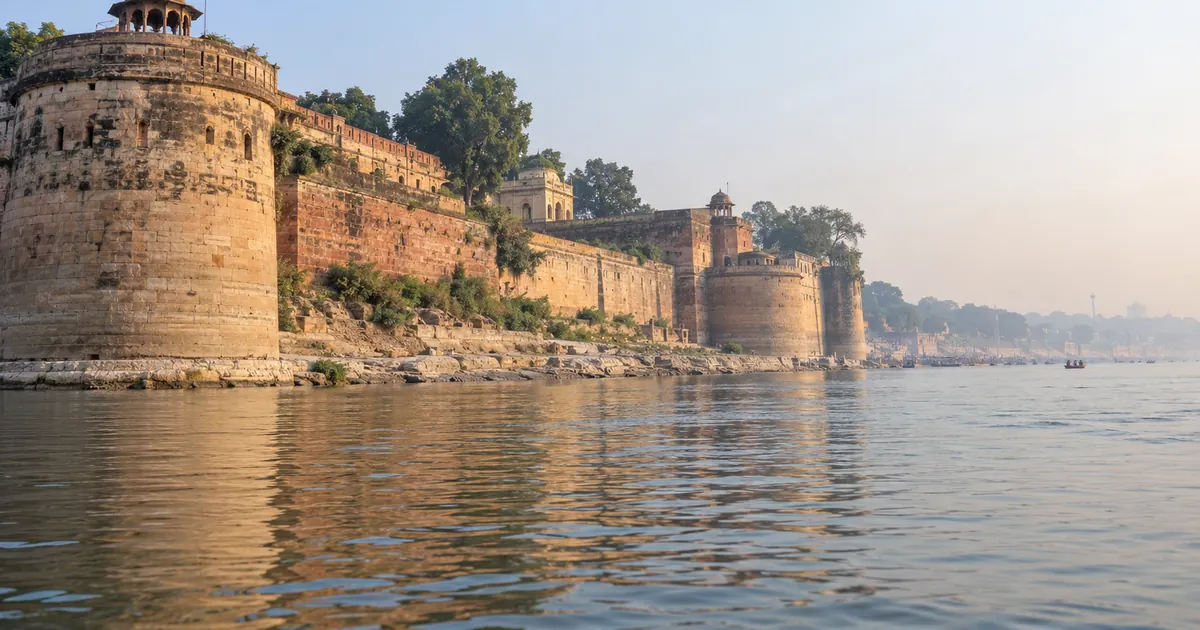
Directly overlooking the confluence stands the massive red sandstone Allahabad Fort, erected by Mughal Emperor Akbar in 1583. While the outer ramparts are administered by the Indian Army, visitors can access the underground Patalpuri Temple, the 3rd-century BCE polished sandstone Ashoka Pillar, and the sacred Akshaya Vat banyan tree.
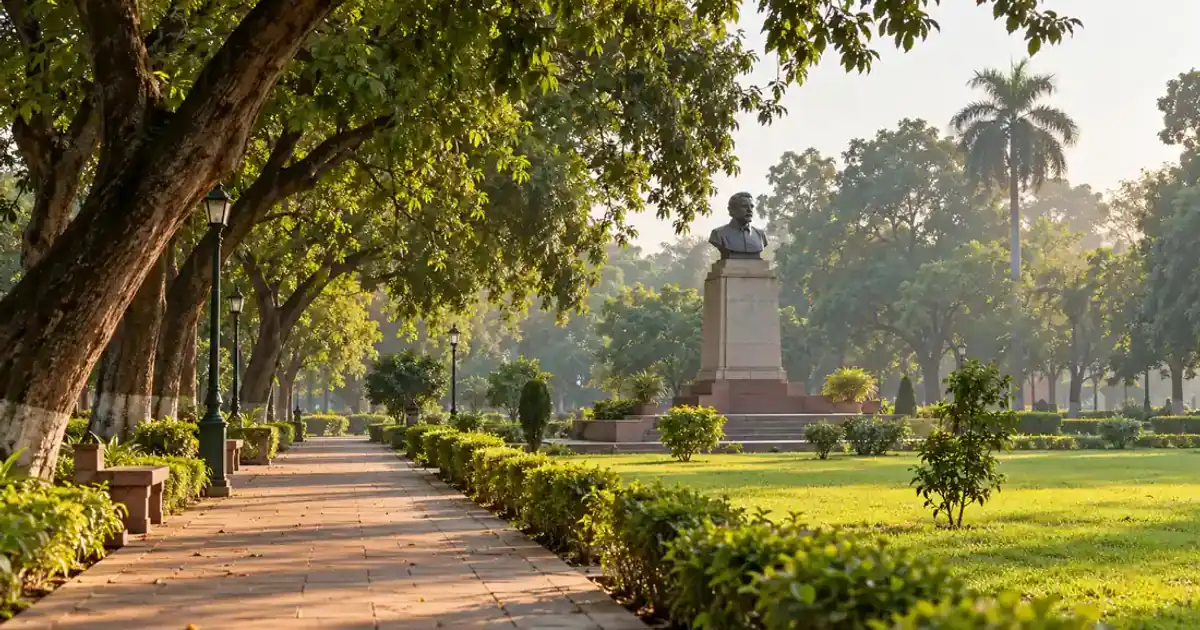
Near the fort embankment rests the reclining Hanuman Mandir, where rising Ganga waters submerge the deity’s feet each monsoon as an auspicious blessing. In the city center, travelers explore the 17th-century Mughal garden tombs of Khusro Bagh, All Saints Cathedral, Chandrashekhar Azad Park, and Anand Bhavan, the historic residence of the Nehru family.
Boat tariffs, bathing safety protocols, and fort entry rules are detailed in our Triveni Sangam Prayagraj visiting guide. Civic facilities and city heritage routes are published on the District Administration Prayagraj Official Tourism Directory.
North and east of Prayagraj and Varanasi extends Uttar Pradesh’s international Buddhist Circuit. These five ancient monastic sites mark where Gautama Buddha spent the majority of his 45-year teaching ministry after his first discourse at Sarnath:
- Kushinagar (53 km east of Gorakhpur): The sacred grove where Lord Buddha attained Mahaparinirvana at age 80 in 483 BCE, housing a 6.1-meter Chunar sandstone Reclining Buddha and the Ramabhar Stupa.
- Shravasti (170 km northeast of Lucknow): Capital of the ancient Kosala kingdom, where the Buddha spent 24 monsoon retreats at Jetavana Monastery alongside the Anandabodhi Tree and Angulimala Stupa.
- Kapilvastu / Piprahwa (Siddharthnagar District): Located along the Nepal border 95 kilometers north of Gorakhpur, preserving the stupa where Brahmi-inscribed soapstone reliquary urns of the Shakya clan were excavated.
- Kaushambi (55 km southwest of Prayagraj): The ancient Vatsa capital on the Yamuna bank, featuring the excavated Ghositarama Monastery, an Ashoka Pillar, and brick fortification ramparts.
- Sankisa (Farrukhabad District): Situated along the Kali River between Agra and Kannauj, revered as the spot where the Buddha descended from the Tushita heaven.
Lucknow Architectural Heritage, Bundelkhand Forts, and Terai Wildlife
Lucknow, the state capital situated along the meandering Gomti River in central Uttar Pradesh, flourished during the 18th and 19th centuries under the Nawabs of Awadh. When Nawab Asaf-ud-Daula shifted the royal court from Faizabad to Lucknow in 1775, the city evolved into a refined seat of Indo-Islamic architecture, Urdu poetry, kathak dance, and chikankari needlecraft.
The architectural heart of Old Lucknow lies in Husainabad, anchored by the Bara Imambara, commissioned by Nawab Asaf-ud-Daula in 1784 as a famine-relief project. Its central vaulted hall measures 50 meters long without a single supporting pillar, crowned by the Bhool Bhulaiya labyrinth of 1,024 narrow rooftop passages and the Shahi Baoli stepwell.
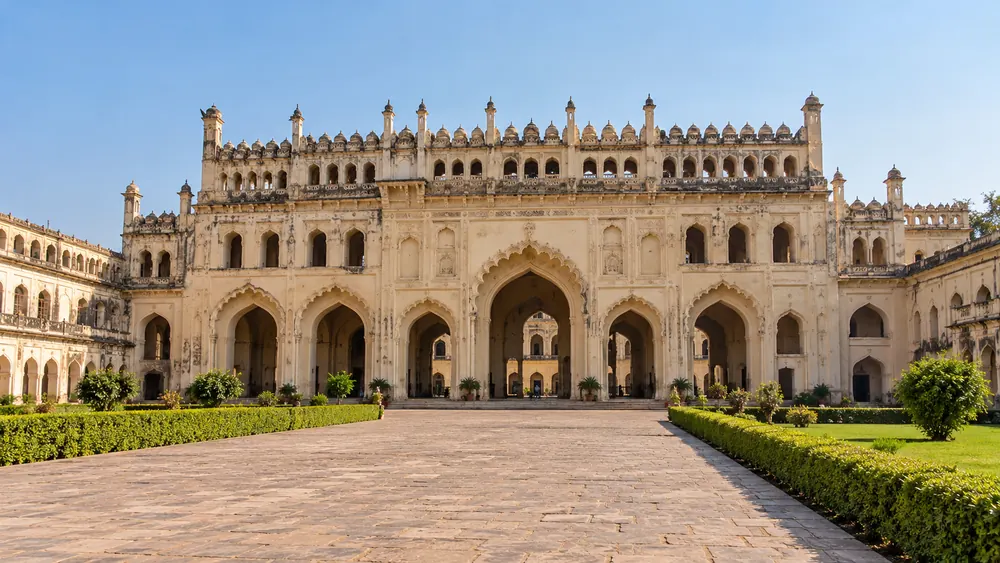
Immediately outside the western courtyard stands the 18-meter Rumi Darwaza, an ornate triple-arched gateway crowned by a lotus turret. One kilometer west along the Husainabad boulevard stands the 1838 Chota Imambara, illuminated by Belgian crystal chandeliers and gilt domes, facing the 67-meter red brick Husainabad Clock Tower.
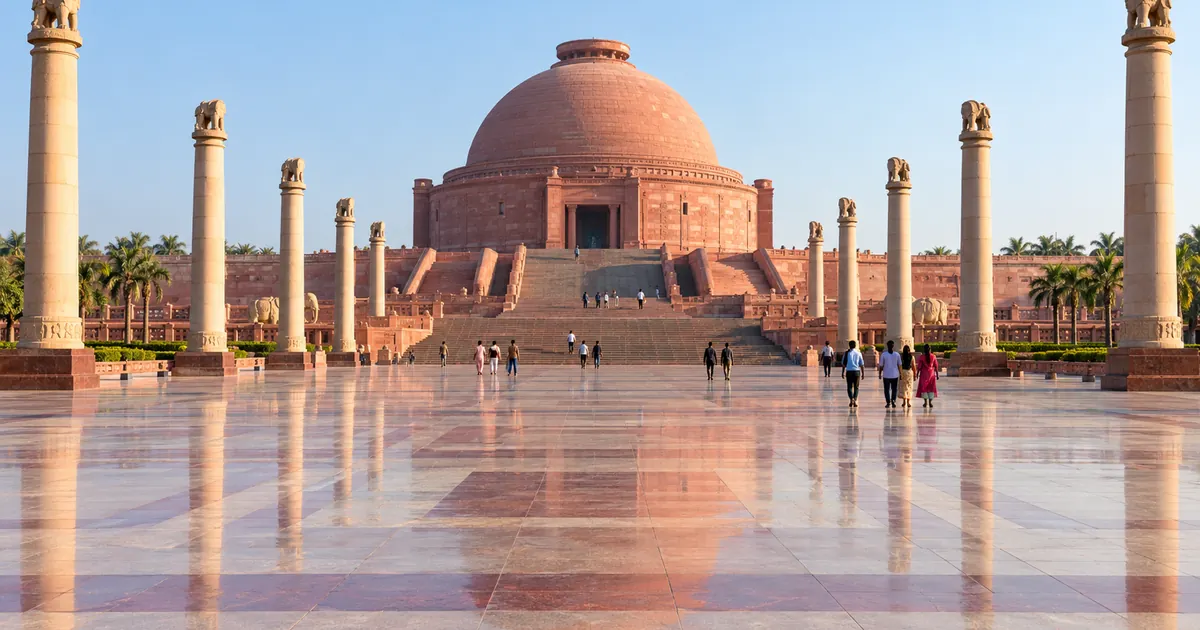
East of Husainabad along the Gomti riverbank extends the 33-acre British Residency complex, where cannon-scarred brick ruins and an onsite museum document the 1857 Siege of Lucknow. In eastern Lucknow, the 107-acre Ambedkar Memorial Park features a 112-foot pink sandstone stupa flanked by 62 carved stone elephants.
Visitors can purchase a composite heritage ticket at Bara Imambara covering Chota Imambara and the Picture Gallery. Official monument combined ticket tariffs and heritage walk bookings are cataloged by the District Administration Lucknow Official Tourism Directory.
Along the southern plateau frontier with Madhya Pradesh, the Bundelkhand circuit features rugged granite fortresses and sacred forest valleys. Along the northern Nepal border, the Terai belt protects wild tiger and rhino sanctuaries:
- Jhansi Fort and Kalinjar Fort (Bundelkhand): The 1613 hilltop bastion of Rani Lakshmibai in Jhansi, paired with the 365-meter Vindhya escarpment of Kalinjar Fort in Banda district housing 10th-century Chandela rock carvings.
- Chitrakoot (Mandakini River Valley): The forested pilgrimage town where Lord Ram spent eleven years of exile; pilgrims bathe at Ramghat, walk the 5-kilometer Kamadgiri parikrama, and visit Gupt Godavari caves.
- Dudhwa National Park and Tiger Reserve (Lakhimpur Kheri): Spanning a 490-square-kilometer core forest, protecting Bengal tigers, over 2,000 swamp deer (barasingha), and one-horned rhinoceroses, with jeep safaris running November 15 to June 15.
- Pilibhit Tiger Reserve and Katarniaghat Sanctuary: Offering high-density tiger tracking around Chuka Beach on the Sharda Sagar Dam and Girwa River boat safaris for gharials and Gangetic dolphins.
- National Chambal Sanctuary (Agra and Etawah): Located 70 kilometers southeast of Agra at Bah along the clear Chambal River ravines, offering motorboat safaris to observe basking gharials, turtles, and Indian skimmers.
Regional Gastronomy: Awadhi Royal Kitchens to Banarasi Street Food
Uttar Pradesh’s culinary landscape splits into three distinct gastronomic traditions: the royal Awadhi dastarkhwan of Lucknow, the temple-influenced sattvic and chaat culture of Varanasi and Prayagraj, and the dairy-rich Braj sweets of Mathura and Agra. Travelers can trace these culinary lineages across centuries-old family kitchens and morning street bazaars.
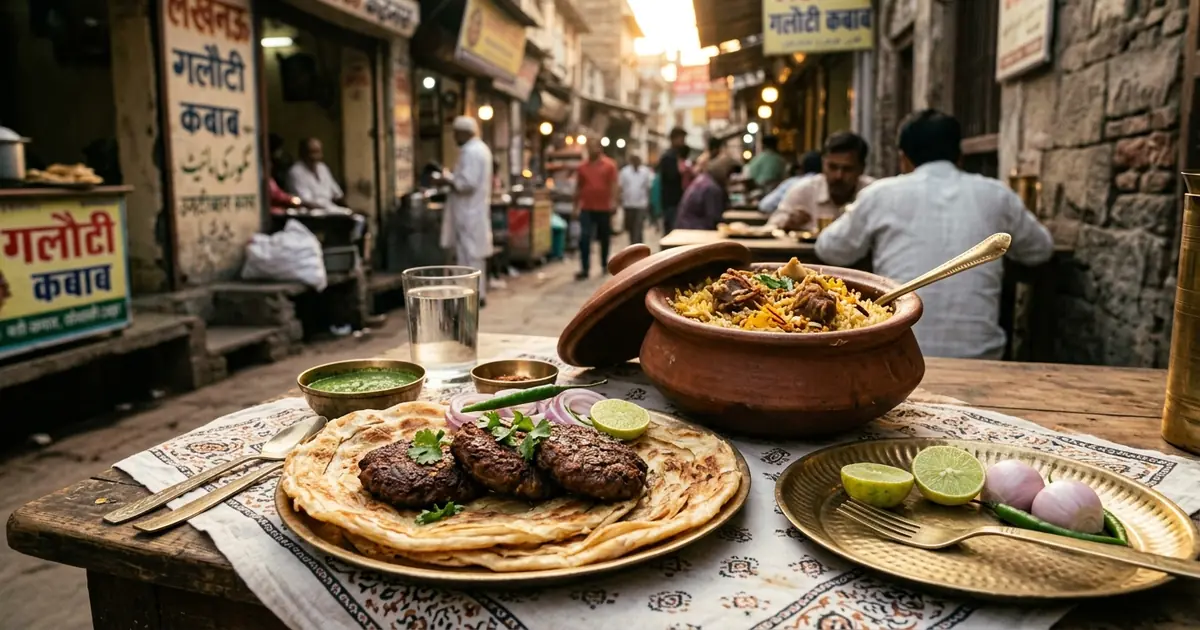
In Lucknow, royal Awadhi cuisine perfected the dum pukht method of sealing meats, saffron, and whole spices inside copper handis over slow charcoal embers. The city’s signature creation is the Galouti Kebab (popularized at Tunday Kababi in Chowk since 1905), minced with raw papaya and over 100 spices so the patty melts on warm paratha.
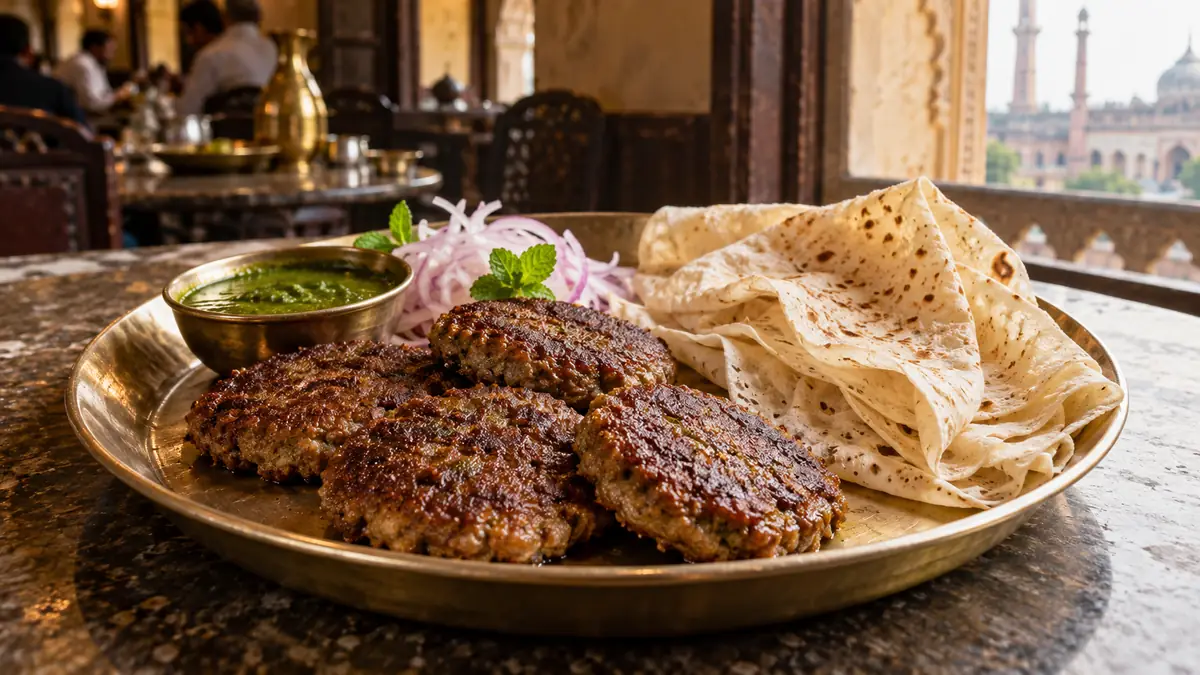
Equally celebrated across Lucknow are charcoal-grilled Kakori Kebabs, fragrant Awadhi Mutton Dum Biryani layered with kewra-scented basmati rice at Idris and Wahid, and overnight slow-simmered Kulcha Nihari at Rahim’s near Akbari Gate. Dessert stops include saffron Sheermal, Royal Cafe’s Basket Chaat, Prakash Ki Kulfi, and winter Makhan Malai; full shop addresses appear in our Lucknow Awadhi food trail.
In Varanasi, culinary life revolves around crisp morning breakfasts, clay-pot dairy drinks, and winter milk foams along the old city alleys. Four signature regional specialties anchor the eastern and western food trails:
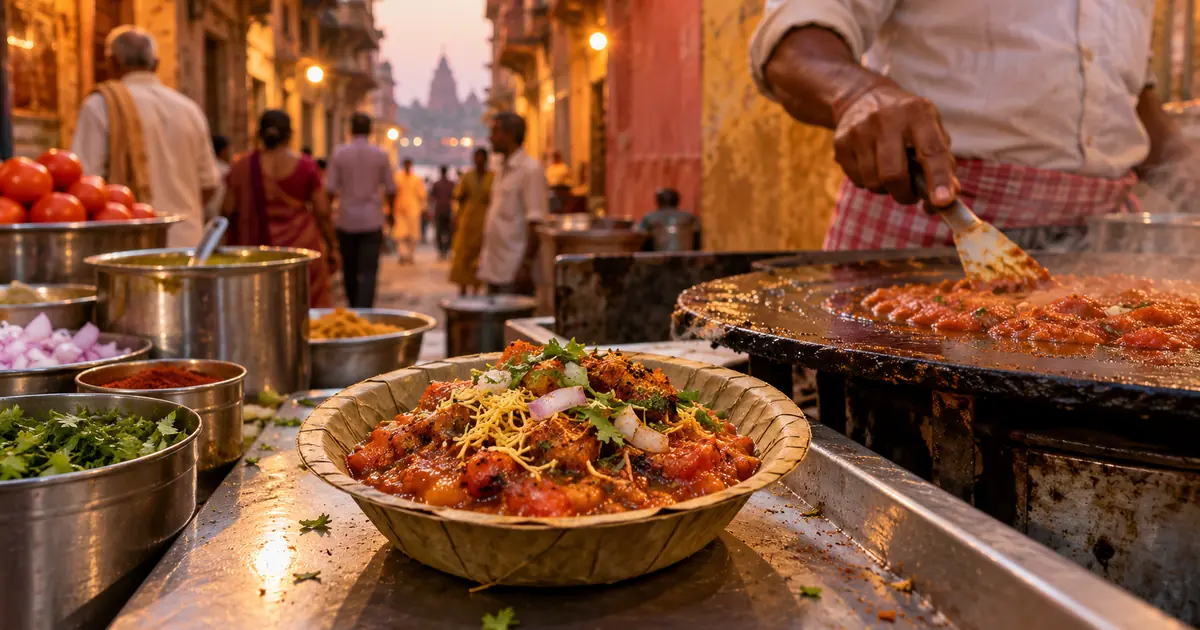
- Banarasi Kachori Sabzi and Jalebi: Deep-fried wheat kachoris stuffed with spiced urad dal paste served in leaf bowls with hing-scented potato-chickpea curry and hot crispy jalebis from 6:30 AM at Kachori Gali.
- Banarasi Tamatar Chaat and Palak Patta Chaat: A warm clay-cup mash of tangy tomatoes, boiled potatoes, ginger, green chilies, poppy seed masala, and sugar syrup topped with crisp namak para at Kashi Chat Bhandar.
- Malaiyyo and Banarasi Paan: Winter saffron-cardamom milk foam churned with river dew and served in earthen kulhads from November to February, followed by GI-tagged Magahi betel-leaf Banarasi Paan.
- Agra Petha, Bedai, and Mathura Peda: Morning spicy Bedai flatbread with pumpkin sabzi in Agra, translucent ash-gourd Agra Petha from Panchhi Petha, and slow-caramelized khoya Mathura Pedas from Brijwasi Mithai Wala.
Signature Festivals, Maha Kumbh Mela, and Cultural Fairs
Uttar Pradesh hosts the largest religious gatherings on earth alongside colorful seasonal festivals that transform riverbanks and temple courtyards across the calendar. Because hotel inventory and train berths sell out months ahead of major festival dates, travelers should align their trip dates with the state’s liturgical calendar.
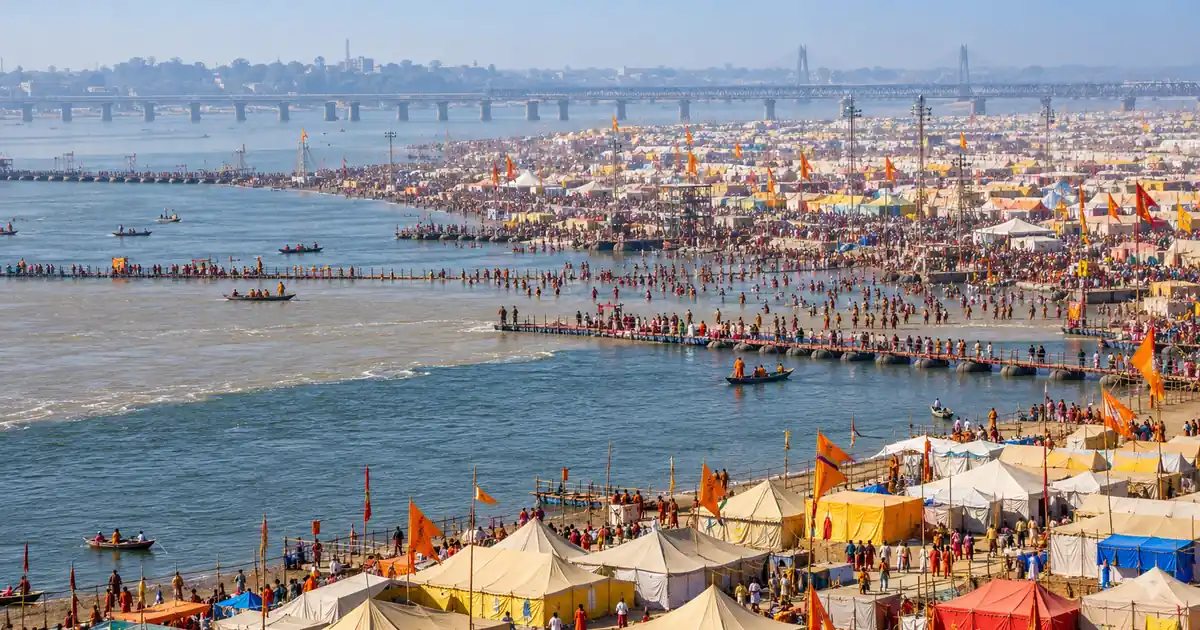
The grandest gathering in human history is the Kumbh Mela at the Triveni Sangam in Prayagraj, inscribed on the UNESCO Intangible Cultural Heritage list. Celebrated as a Maha Kumbh every 12 years, an Ardh Kumbh every 6 years, and an annual 45-day Magh Mela, the festival constructs a temporary riverside city across 4,000 hectares.
Millions of sadhus, akhara orders, and householder pilgrims converge on the Sangam sands for ritual bathing on auspicious new-moon and full-moon dates. Full Shahi Snan (Amrit Snan) dates, pontoon bridge maps, and Swiss tent camp booking logistics are covered in our Maha Kumbh Mela Prayagraj guide.
Fifteen days after Diwali on the full-moon night of Kartik Purnima (November), Varanasi celebrates Dev Deepawali, the Festival of Lights of the Gods. Over one million earthen oil lamps (diyas) illuminate all 84 riverfront ghats from Ravidas Ghat to Raj Ghat, accompanied by a grand Maha Ganga Aarti and laser shows.
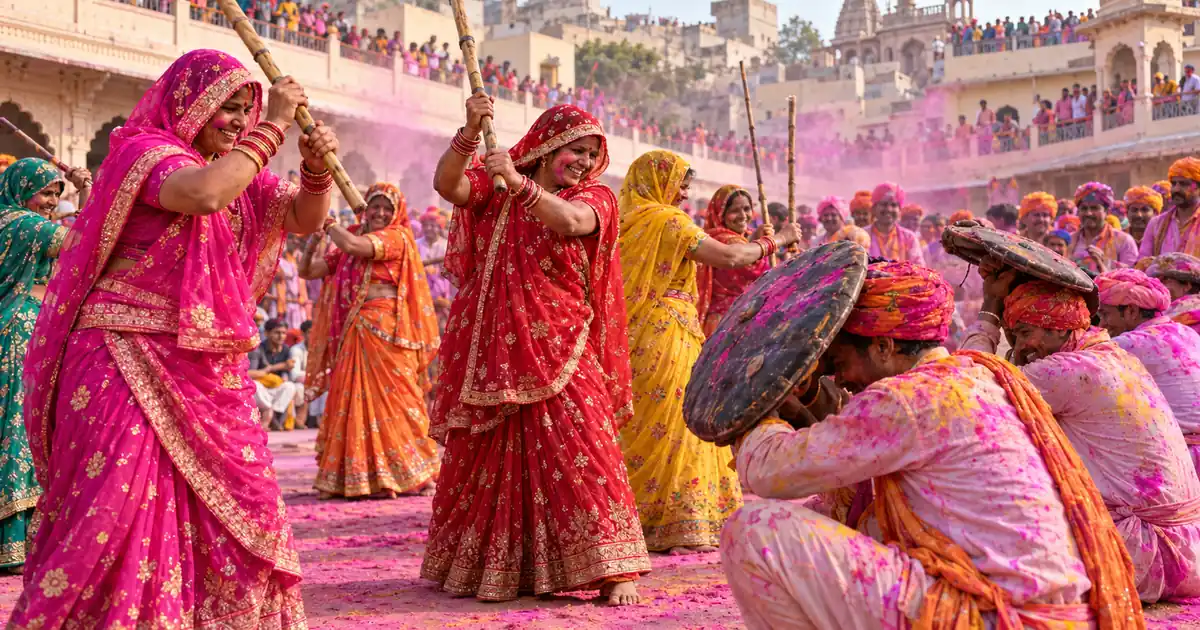
During February and March (Phalguna), the Braj towns of Mathura, Vrindavan, Barsana, and Nandgaon host a 40-day Holi celebration. Festivities progress from Laddu Holi and the spirited Lathmar Holi at Barsana and Nandgaon to Phoolon Wali Holi (flower-petal Holi) at Banke Bihari Temple and Huranga at Dauji Temple.
On Diwali Eve (Chhoti Diwali) in late October or November, Ayodhya stages the state-sponsored Deepotsav along Ram Ki Paidi, lighting over 2.5 million earthen diyas simultaneously alongside international Ramleela performances. Every February (February 18 to 27), Agra hosts the 10-day Taj Mahotsav craft fair at Shilpgram near the Taj Mahal’s East Gate.
Recommended Itineraries and Multi-City Travel Circuits
Because Uttar Pradesh spans 650 kilometers from west to east, attempting to cover the entire state in a single three-day trip leads to exhausting highway transit. Dividing your journey into targeted regional circuits or utilizing overnight trains and afternoon expressways maximizes monument time.
Circuit 1: The 5-Day Sacred Golden Triangle of the East (Varanasi, Ayodhya, and Prayagraj)
This flagship spiritual route links the three great river pilgrimage cities of eastern Uttar Pradesh. For detailed train numbers, taxi fares, and hotel zones across this triangle, consult our dedicated 5-day Kashi Ayodhya Prayagraj Itinerary route breakdown:
- Day 1: Arrival in Varanasi & Evening Ganga Aarti: Arrive at Varanasi Airport (VNS) or Varanasi Junction (BSB). Walk through the Vishwanath Dham Corridor for afternoon darshan at Kashi Vishwanath, then board a wooden boat at Dashashwamedh Ghat for the sunset Ganga Aarti.
- Day 2: Dawn Ghats Boat Ride, Old City Walk & Sarnath: Take a 5:30 AM sunrise boat from Assi Ghat to Manikarnika Ghat, followed by a kachori-jalebi breakfast. Spend the afternoon at Sarnath exploring Dhamek Stupa, Mulagandha Kuti Vihara, and the Ashoka Lion Capital at Sarnath Museum.
- Day 3: Varanasi to Prayagraj (120 km / 2.5 Hours) & Triveni Sangam: Drive west along Six-Lane NH19 to Prayagraj. Take a wooden rowboat from Qila Ghat to the Triveni Sangam confluence, visit the reclining Bade Hanuman Ji Temple, Akshaya Vat, and Anand Bhavan.
- Day 4: Prayagraj to Ayodhya (165 km / 3.5 Hours) & Ram Mandir Darshan: Drive north to Ayodhya and climb the 76 steps of Hanuman Garhi. Complete darshan at Shri Ram Janmabhoomi Mandir, visit Kanak Bhawan, and attend the evening Sarayu Aarti at Ram Ki Paidi.
- Day 5: Departure from Ayodhya or Lucknow: Offer morning prayers along the Sarayu ghats before departing via Maharishi Valmiki International Airport in Ayodhya (AYJ) or driving 135 kilometers west along NH27 to Lucknow Airport (LKO).
Circuit 2: The 7-Day Mughal and Braj Heritage Corridor (Agra, Fatehpur Sikri, Mathura, Vrindavan, and Lucknow)
This western-to-central circuit pairs UNESCO Mughal architecture and Braj Krishna shrines with royal Awadhi heritage in Lucknow. Travelers cover the route smoothly via the Yamuna Expressway and Agra-Lucknow Expressway:
- Day 1: Delhi to Mathura and Vrindavan via Yamuna Expressway (160 km): Drive south from New Delhi to Vrindavan. Visit Banke Bihari Temple, Radha Raman Temple, ISKCON Mandir, and watch the evening illumination at Prem Mandir.
- Day 2: Mathura Birthplace Shrines to Agra (58 km): Visit Shri Krishna Janmabhoomi and Dwarkadhish Temple in Mathura, attend the morning Yamuna ceremony at Vishram Ghat, and drive one hour south to Agra for sunset views from Mehtab Bagh.
- Day 3: Taj Mahal Sunrise & Agra Fort: Enter the Taj Mahal East Gate at 5:45 AM for sunrise over the marble plinth. After breakfast, tour Agra Fort, the Tomb of Itmad-ud-Daulah (Baby Taj), and shop for marble inlay and Agra Petha.
- Day 4: Fatehpur Sikri Excursion & Express Drive to Lucknow: Drive 37 kilometers west to Fatehpur Sikri to explore Buland Darwaza, Salim Chishti Dargah, and Panch Mahal. In the afternoon, drive 330 kilometers east on the six-lane Agra-Lucknow Expressway (4 hours) to Lucknow.
- Day 5: Nawabi Monuments of Old Lucknow & Chowk Food Trail: Explore the pillarless hall and Bhool Bhulaiya labyrinth at Bara Imambara, Rumi Darwaza, and Chota Imambara. Join an evening culinary walk through Chowk for Tunday Galouti Kebabs, Rahim’s Nihari, and Makhan Malai.
- Day 6: British Residency, Ambedkar Park & Hazratganj: Walk the 1857 British Residency ruins and museum in the morning, visit Ambedkar Memorial Park in Gomti Nagar, and spend the evening shopping for chikankari embroidery along Hazratganj.
- Day 7: Departure from Lucknow: Catch a morning flight from Chaudhary Charan Singh International Airport (LKO) or board the Shatabdi or Tejas Express back to New Delhi.
Circuit 3: The 12-Day Grand Uttar Pradesh Heartland Odyssey
This cross-state route connects the western Mughal monuments, Terai tiger forests, Awadh capital, and eastern spiritual hubs. It suits travelers dedicating nearly two weeks to northern India:
- Days 1-2 (Mathura, Vrindavan & Agra): Cover Krishna Janmabhoomi, Vrindavan temples, sunrise at the Taj Mahal, Agra Fort, and Fatehpur Sikri.
- Day 3 (Chambal River Safari to Lucknow): Take a morning boat safari at National Chambal Sanctuary (Bah) to spot gharials and river dolphins, then travel via the Agra-Lucknow Expressway to Lucknow.
- Days 4-5 (Lucknow to Dudhwa National Park): Tour Bara Imambara, Rumi Darwaza, and the Residency in Lucknow, then drive 215 kilometers north to Dudhwa Tiger Reserve for morning and afternoon open-jeep safaris tracking tigers, barasingha swamp deer, and one-horned rhinos.
- Days 6-7 (Dudhwa to Ayodhya & Shravasti): Drive southeast via Shravasti’s Jetavana Buddhist monastery to Ayodhya for Hanuman Garhi, Shri Ram Janmabhoomi Mandir darshan, and Sarayu Aarti.
- Day 8 (Ayodhya to Prayagraj): Drive south to Prayagraj for a midstream boat ride at Triveni Sangam, Allahabad Fort’s Akshaya Vat, and Anand Bhavan.
- Days 9-11 (Varanasi, Sarnath & Vindhyachal): Transfer east to Varanasi for Kashi Vishwanath Dham darshan, dawn and dusk Ganga boat rides, Sarnath’s Dhamek Stupa and museum, a Banarasi silk weaving workshop, and a half-day trip to Vindhyachal.
- Day 12 (Kushinagar or Varanasi Departure): Fly home directly from Varanasi International Airport (VNS) or extend two hours north to Kushinagar International Airport (KBK) after visiting the Mahaparinirvana Temple.
Seasonal Weather and Best Time to Visit Uttar Pradesh
Because Uttar Pradesh sits across the subtropical interior of the northern Indian plains, seasonal temperatures swing from near-freezing winter mornings to scorching 45°C summer afternoons. The following comparison table evaluates weather conditions, crowd patterns, and travel suitability across the four seasons:
| Season | Calendar Months | Temperature Range | Weather & Transit Conditions | Ideal Travel Circuits & Activities |
|---|---|---|---|---|
| Autumn & Early Winter | October to November | 16°C to 30°C | Clear blue skies, pleasant sun, zero fog delays | Peak window for Taj Mahal, Varanasi ghats, Dev Deepawali, Ayodhya Deepotsav |
| Mid-Winter Peak | December to January | 6°C to 22°C | Crisp days, cold nights; morning dense fog can delay trains/flights | Magh/Kumbh Mela in Prayagraj, Dudhwa tiger safaris, Varanasi Malaiyyo trail |
| Late Winter & Spring | February to March | 14°C to 31°C | Mild breezy mornings, warm afternoons, clear visibility | Braj Lathmar Holi in Mathura-Vrindavan, Taj Mahotsav in Agra, Buddhist trail |
| Summer Heat | April to June | 28°C to 45°C | Dry hot loo winds across plains; intense midday sun on stone courtyards | Dawn-only monument visits (5:30 AM to 9:30 AM), early morning Dudhwa safaris |
| Monsoon Season | July to September | 25°C to 35°C | High humidity and heavy rains; Ganga rises high along Varanasi ghats | Shravan pilgrimage at Kashi Vishwanath, Janmashtami in Mathura, Bundelkhand falls |
The six-month cool window from October through March represents the best time to visit Uttar Pradesh. October, November, February, and March offer the highest comfort across all 75 districts, combining mild daytime sunshine with clear visibility for sunrise photography at the Taj Mahal and boat rides along the Ganga.
Travelers visiting between December 20 and January 20 should prepare for chilly nights (dropping to 5°C to 7°C) and dense radiation fog across the Indo-Gangetic belt. Because morning fog can delay overnight trains and early flights by two to four hours, winter visitors should book afternoon flights or midday Vande Bharat trains.
In late February or March, spring blossoms coincide with the color festivities documented in our Mathura and Vrindavan Holi festival guide. During the monsoon from July to September, swollen currents temporarily suspend wooden rowboat operations on the Ganga in Varanasi, though Devdari, Rajdari, and Wyndom waterfalls in Mirzapur and Chandauli reach peak flow.
Transportation Logistics: Airports, Vande Bharat Trains, and Expressways
Uttar Pradesh operates the largest railway network and longest access-controlled expressway grid of any Indian state. Four international airports and five domestic terminals link the state’s heritage corridors directly to major Indian metropolitan centers.
Commercial Airports and International Gateways
Nine operational airports across Uttar Pradesh connect the state’s heritage hubs directly to New Delhi, Mumbai, Bengaluru, Hyderabad, Kolkata, Chennai, and Ahmedabad. Travelers can fly into one regional gateway and depart from another without backtracking:
- Chaudhary Charan Singh International Airport, Lucknow (LKO): Located 14 kilometers from central Hazratganj and connected directly to the city center via the Lucknow Metro Red Line, operating over 120 daily flights.
- Lal Bahadur Shastri International Airport, Varanasi (VNS): Situated at Babatpur, 26 kilometers northwest of Varanasi Junction, handling direct flights from all major Indian metros and Kathmandu.
- Maharishi Valmiki International Airport, Ayodhya (AYJ): Located 10 kilometers from the Ram Janmabhoomi complex, offering daily non-stop flights from Delhi, Mumbai, Bengaluru, Ahmedabad, and Chennai.
- Prayagraj Airport, Bamrauli (IXD): Situated 12 kilometers west of Civil Lines and 18 kilometers from Triveni Sangam, serving daily flights from Delhi, Mumbai, Bengaluru, and Bhubaneswar.
- Agra Airport (AGR) & Kushinagar International Airport (KBK): Providing regional domestic and Buddhist charter links, supplemented by airports at Gorakhpur (GOP), Kanpur (KNU), and Bareilly (BEK).
High-Speed Rail Hubs and Vande Bharat Corridors
Managed primarily by Northern Railway, North Central Railway, and North Eastern Railway, the state’s broad-gauge rail corridors feature India’s fastest passenger trains. Booking AC Chair Car or Executive Class seats two to four weeks ahead is recommended:
- New Delhi to Varanasi Vande Bharat Express (22436 / 22416): Two daily semi-high-speed services cover the 759-kilometer corridor from New Delhi to Varanasi Junction in strictly 8 hours, stopping at Kanpur Central (CNB) and Prayagraj Junction (PRYJ).
- Gatimaan Express (12050) & Rani Kamalapati Vande Bharat (20172): Connect Hazrat Nizamuddin (Delhi) to Agra Cantt (AGC) in 95 to 100 minutes at speeds reaching 160 kilometers per hour, ideal for same-day Taj Mahal returns.
- Anand Vihar to Ayodhya Cantt Vande Bharat Express (22426): Links Delhi directly to Kanpur Central, Lucknow Charbagh (LKO), and Ayodhya Cantt in 8 hours 20 minutes.
- Pandit Deen Dayal Upadhyaya Junction (DDU): Located 18 kilometers east of Varanasi (formerly Mughal Sarai), serving as an essential alternative railhead whenever direct trains to Varanasi Junction (BSB) or Banaras (BSBS) are waitlisted.
Six-Lane Expressways and National Highways
Road travelers driving from Delhi NCR or between UP cities benefit from four high-speed, access-controlled toll expressways. FastTag electronic toll collection is mandatory across all expressway plazas:
- Yamuna Expressway (165.5 km): Six-lane concrete corridor linking Greater Noida (Pari Chowk) to Kuberpur in Agra via Jewar and Mathura in 2 to 2.5 hours.
- Agra-Lucknow Expressway (302 km): Connects the Yamuna Expressway ring road at Agra directly to Lucknow via Firozabad, Etawah, Kannauj, and Unnao in 3.5 to 4 hours.
- Purvanchal Expressway (340.8 km): Extends from Chand Sarai in Lucknow eastward through Sultanpur (with a link to Ayodhya) and Azamgarh to Ghazipur, cutting Lucknow-to-Varanasi road travel to 4.5 hours.
- Bundelkhand Expressway (296 km): Connects the Agra-Lucknow Expressway near Etawah southward through Jalaun, Hamirpur, and Banda to Bharatkoop in Chitrakoot district in 3.5 hours.
Frequently Asked Questions About Uttar Pradesh
How many days are required to explore the top places in Uttar Pradesh?
A focused itinerary covering the eastern spiritual circuit of Varanasi, Ayodhya, and Prayagraj or the western Mughal belt of Agra, Fatehpur Sikri, and Mathura requires five to six days. Travelers wishing to combine Agra, Lucknow, Ayodhya, Prayagraj, and Varanasi in a single comprehensive journey should allocate ten to twelve days.
What is the best time of year to visit Uttar Pradesh?
The winter season from October through March offers the most comfortable weather across Uttar Pradesh, with daytime temperatures ranging between 15°C and 28°C. October, November, February, and March provide clear skies without the dense morning fog that occasionally slows trains in late December and early January.
How can travelers connect Agra, Lucknow, Ayodhya, and Varanasi in one trip?
The fastest overland route links Agra to Lucknow in 3.5 hours via the six-lane Agra-Lucknow Expressway or overnight express trains from Agra Fort and Tundla stations. From Lucknow, travelers can drive 2 hours east to Ayodhya along National Highway 27 before continuing to Prayagraj and Varanasi by highway or Vande Bharat Express.
Are mobile phones and cameras allowed inside Kashi Vishwanath and Ayodhya Ram Mandir?
No, mobile phones, digital cameras, smartwatches, earphones, and electronic car keys are strictly banned inside the inner security perimeters of both Kashi Vishwanath Temple and Ayodhya Ram Mandir. Both temple trusts operate complimentary numbered cloakroom lockers outside the entry gates where visitors can safely deposit electronics, bags, and footwear.
Which wildlife reserves in Uttar Pradesh offer tiger and river safaris?
Dudhwa National Park and Pilibhit Tiger Reserve along the northern Nepal Terai border offer open-jeep safaris from November 15 to June 15 to spot Bengal tigers, swamp deer, and one-horned rhinos. For aquatic wildlife, the National Chambal Sanctuary near Agra and Katarniaghat Wildlife Sanctuary operate motorboat safaris to view endangered gharial crocodiles and Gangetic river dolphins.