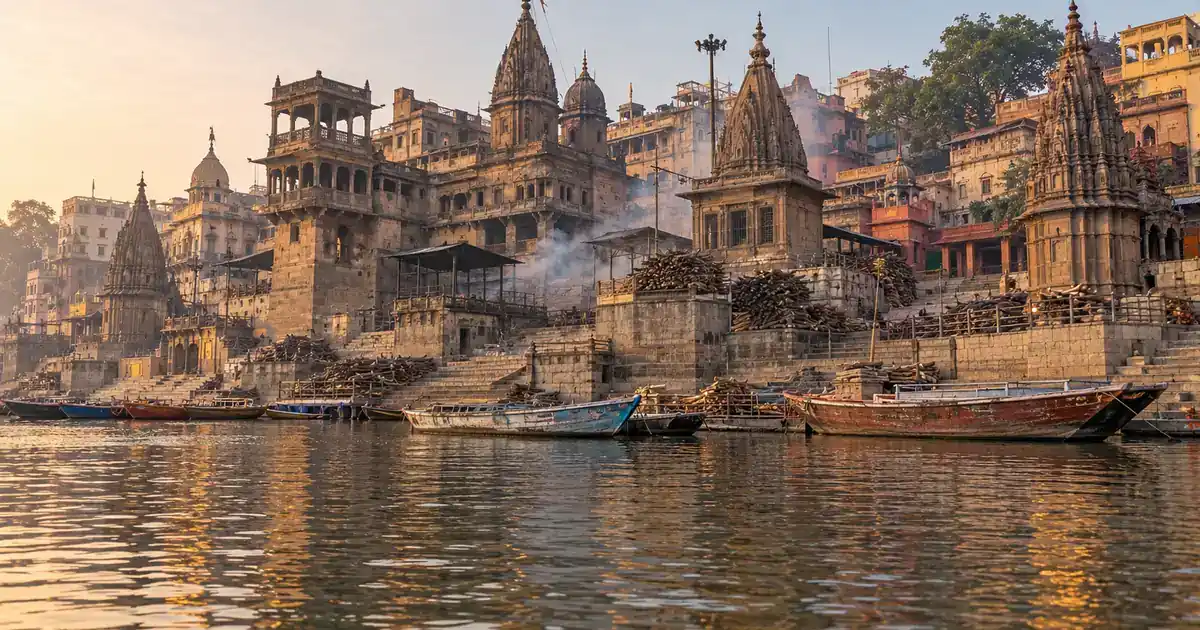
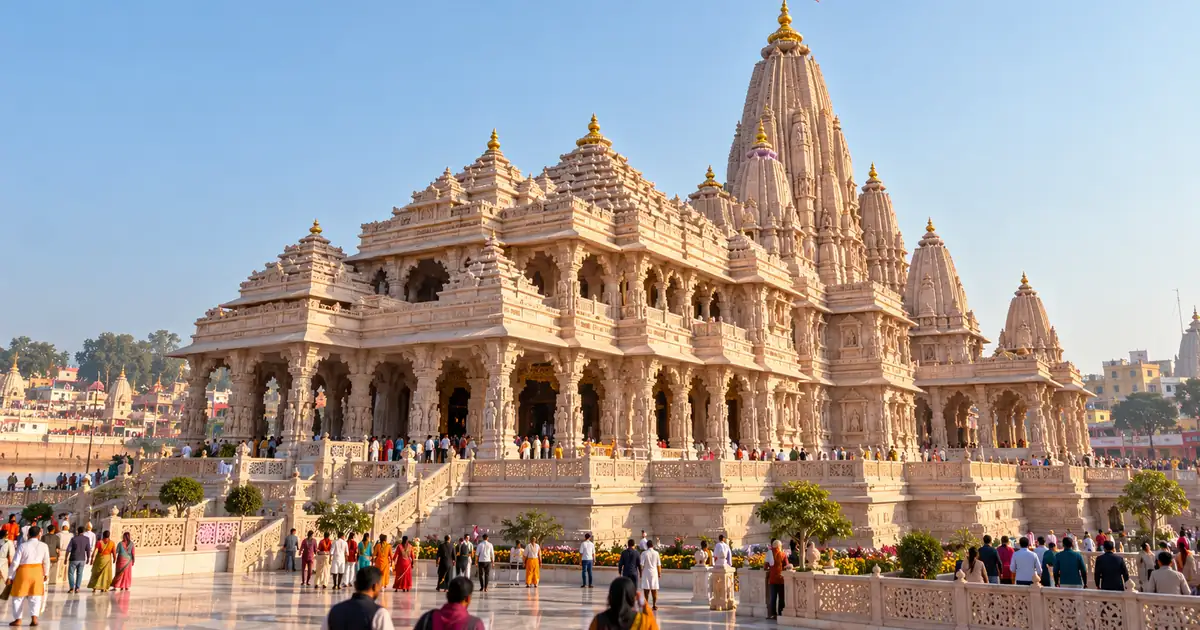
Varanasi Ganga Aarti Guide: Dashashwamedh & Assi Ghat Timings
Complete Varanasi Ganga Aarti guide covering Dashashwamedh and Assi Ghat timings, boat ride fares (₹150–₹4,000), Subah-e-Banaras, and ghat etiquette.
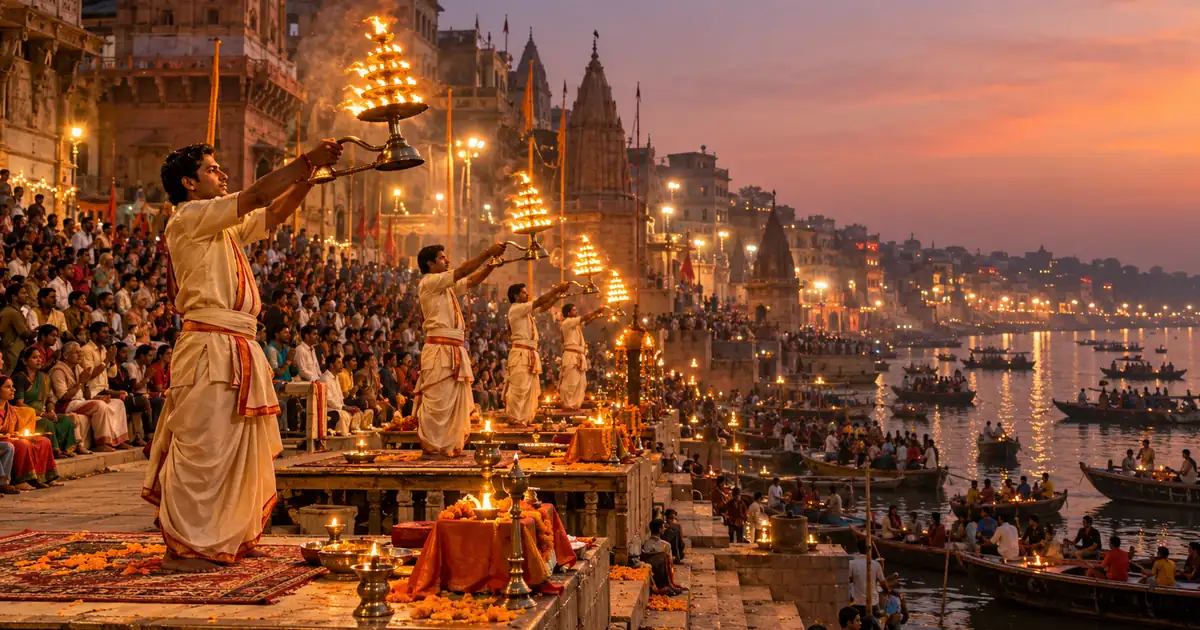
Every dusk along the crescent riverfront of Kashi, synchronized bells, conch shells, and towering multi-tiered brass oil lamps light up the Ganga Aarti in Varanasi for thousands of gathered pilgrims and riverside boats. Knowing exact seasonal sunset shifts between winter and summer, avoiding fake step-ticket touts, and timing shared versus private boats makes watching this timeless ceremony effortless.
Plan at a Glance
- Grand Evening Aarti (Dashashwamedh): 6:00 PM to 6:45 PM in winter (Oct–Mar); 6:45 PM / 7:00 PM to 7:45 PM in summer (Apr–Sep).
- Dawn Aarti (Assi Ghat): Subah-e-Banaras begins around 5:00 AM (summer) to 5:30 AM (winter), blending Vedic hymns, classical ragas, and sunrise lamps.
- Ghat Entry Cost: Watching from public stone steps is always 100% free; ignore touts selling unauthorized “VIP passes” on approach alleys.
- Arrival & Boat Windows: Reach ghat steps at least 60 minutes early (by 5:00 PM winter), or board a riverside boat by 4:45 PM–5:45 PM.
Dashashwamedh vs Assi Ghat Ganga Aarti Daily Timings
Synchronized closely with solar dusk and sunrise cycles across northern Uttar Pradesh, Kashi’s ceremonies shift roughly 45 to 60 minutes between winter fog and bright June evenings. Official city heritage calendars are shared via the Varanasi district culture portal.
| Ceremony Site | Ritual Type | Winter Timing (Oct–Mar) | Summer & Monsoon Timing (Apr–Sep) | Recommended Arrival Time |
|---|---|---|---|---|
| Dashashwamedh Ghat | Grand Evening Aarti (Ganga Seva Nidhi) | 6:00 PM – 6:45 PM | 6:45 PM / 7:00 PM – 7:45 PM | 60–75 min before start |
| Sheetla Ghat (Adjacent) | Simultaneous Evening Aarti | 6:00 PM – 6:45 PM | 6:45 PM / 7:00 PM – 7:45 PM | 45 min before start |
| Assi Ghat (Morning) | Subah-e-Banaras Dawn Aarti & Music | ~5:30 AM – 6:15 AM | ~5:00 AM – 5:45 AM | 20 min before sunrise |
| Assi Ghat (Evening) | Intimate Evening Ganga Aarti | ~6:15 PM | ~7:00 PM | 30 min before start |
Rainy monsoon floods between late July and early September frequently submerge the lower ceremonial stone altars at Dashashwamedh, prompting priests to move brass pedestals smoothly onto elevated upper terrace rooftops overlooking the river without ever cancelling a single day’s ritual.
Why Timing Shifts Weekly
Rather than sticking to a rigid year-round clock hour, temple trusts align dusk lamps closely with civil twilight, creeping five minutes earlier each autumn week until mid-December before slowly receding back toward 7:00 PM by May.
Dashashwamedh Ghat Main Evening Ceremony and Seating Tips
Hosted nightly by seven young priests dressed in crisp silk dhotis and kurtas standing atop crimson-carpeted wooden platforms, the Dashashwamedh Ghat production delivers Varanasi’s largest, most choreographed spectacle. For roughly 45 minutes, ritual aartis progress through incense burners, giant camphor lamps (dhoop and aarti thalis), peacock-feather fans, and yak-tail chamar whisks swaying rhythmically to recorded drums and temple bells.
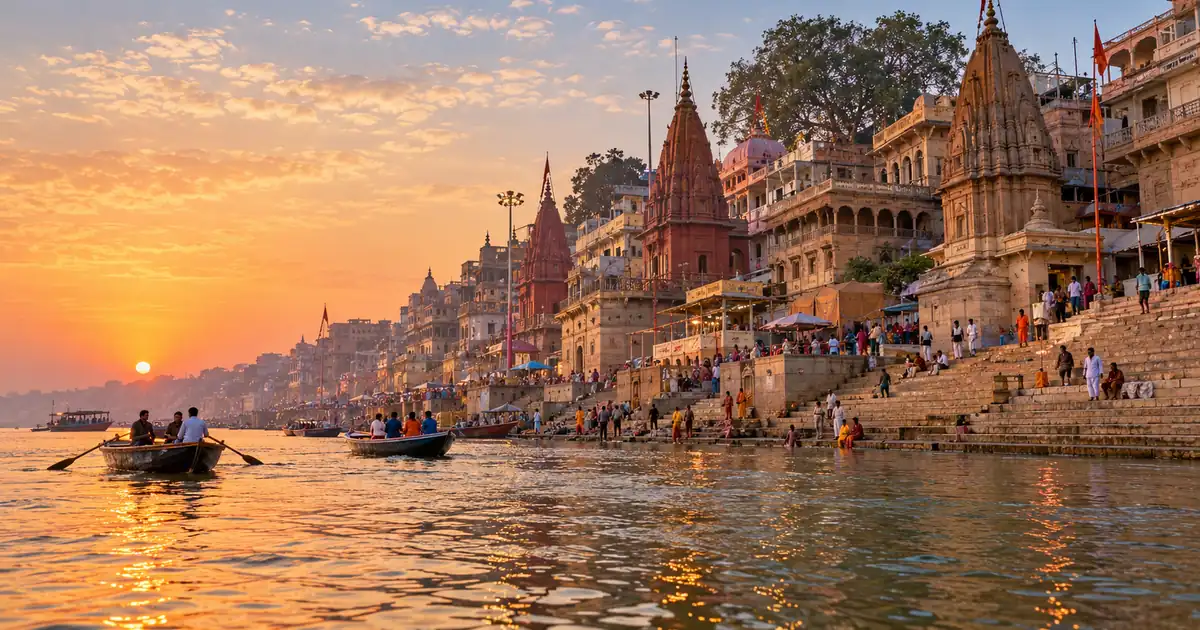
Stone terraces facing the wooden stages fill rapidly well ahead of dusk, making the middle tiers slightly right or left of the priests ideal for clear unobstructed views without elbow crowding. Read complete gate access notes inside our Dashashwamedh Ghat riverside step layout walkthrough.
Watching Free vs Ghat Balcony Hospitality
No official entry ticket exists for sitting along public stone steps beside the water, though private riverside guesthouses and rooftop cafés sell paid terrace balcony seating (often ₹300–₹800 with tea/snacks) strictly on private balconies behind the ghat steps. Avoid handing cash to lane hawkers offering “front row passes” onto the public stones.
Assi Ghat Subah-e-Banaras Dawn Rituals and Morning Aarti
If evening Dashashwamedh feels overwhelming with tour crowds and shouting hawkers, walk south to the confluence of the Assi stream and the Ganga at dawn. Starting at 5:00 AM in summer or 5:30 AM in winter, Assi Ghat celebrates Subah-e-Banaras, uniting traditional Vedic chanting, havan fire offerings, morning lamp worship, classical bansuri flute or sitar recitals, and free guided riverside yoga under fading stars.
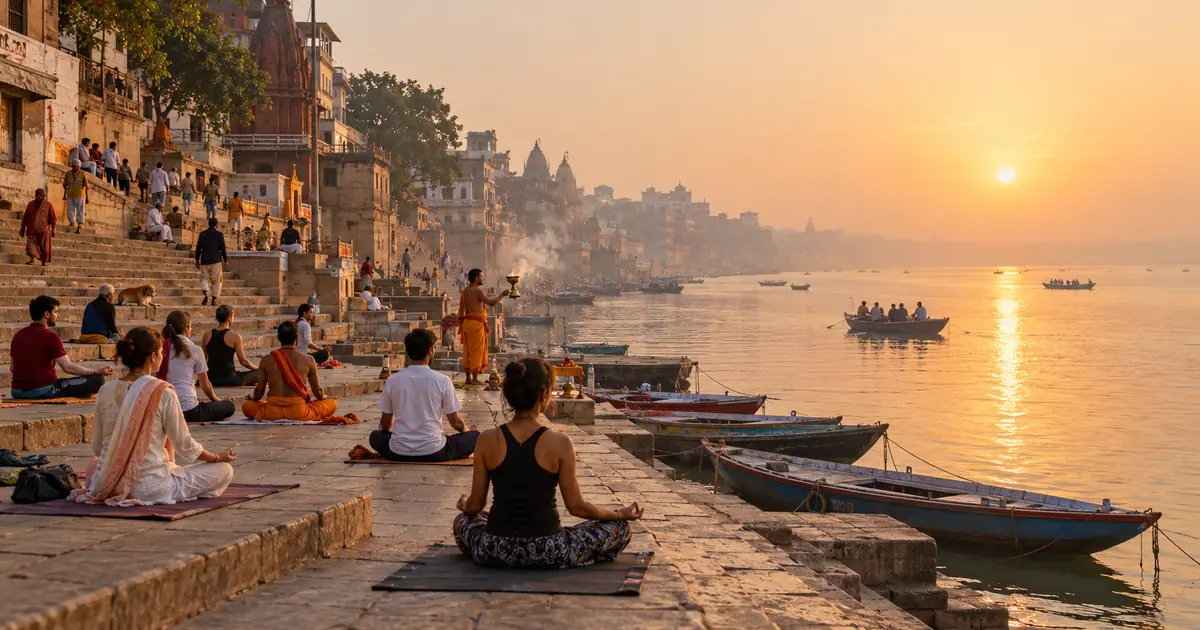
Local university students, morning walkers, and families sit quietly across broad sunlit steps sipping clay-cup ginger chai as soft orange light spills off the opposite sandy bank. Assi also conducts a warm, far less congested evening Ganga Aarti roughly around sunset for travellers preferring calm breathing room over dense central traffic.
Photography Light Advantage at Dawn
Dawn rituals at Assi bathe priests’ silk robes and brass incense plumes in gentle soft sunlight rather than harsh floodlights, making Assi consistently easier for crisp handheld portrait and river photography.
Varanasi Boat Ride Prices, Shared Ferries, and Ghat Etiquette
Watching the evening lamps reflect off rippling river currents from the water remains one of Kashi’s signature highlights, letting guests bypass crowded stone stairs while capturing wide views of the seven priests framed behind swaying lamps.
Board early around 4:45 PM (winter) or 5:45 PM (summer) so your oarsman glides past the historic stone ghats of Varanasi from Assi or Rajghat before mooring cleanly inside the anchored evening arc at Dashashwamedh.
| Boat Type | Typical Capacity | Morning Rate | Evening Aarti View Rate | Notes |
|---|---|---|---|---|
| Shared Ghat Ferry | 15–30 passengers (per seat) | ₹150 – ₹350 per person | ₹250 – ₹500 per person | Budget seat-by-seat departure from Assi/Dashashwamedh |
| Small Manual Rowboat | 2 to 4 persons (private) | ₹800 – ₹1,200 total | ₹1,000 – ₹1,500 total | Peaceful quiet oars; no loud engine noise |
| Medium Motor / Wooden Boat | 5 to 8 persons (private) | ₹1,500 – ₹2,000 total | ₹1,800 – ₹2,500 total | Covers Assi to Manikarnika before anchoring |
| Large CNG Family Motorboat | 10 to 12 persons (private) | ₹2,500 – ₹3,500 total | ₹3,499 – ₹4,000 full group | All-ghats ~2 hr tour + shaded viewing |
| Alaknanda / Luxury Cruise | Ticketed deck seats | ~₹750–₹1,200+ / seat | ~₹900–₹1,500+ / seat | AC cabin + upper deck buffet cruise |
Confirm clearly before stepping aboard whether quoted prices cover two full hours including stationary anchoring throughout the 45-minute ceremony, and wear provided orange life jackets carefully throughout river crossings. Consult verified city visitor details on the Varanasi district tourism directory.
Etiquette Near Burning Ghats
When cruising past Manikarnika or Harishchandra cremation ghats prior to anchoring at Dashashwamedh, keep cameras and phones lowered strictly out of respect for grieving families conducting traditional last rites.
Dev Deepawali Full Moon Spectacle and Peak Crowd Dates
Fifteen days after Diwali on the full moon night of Kartik Purnima (October or November), Varanasi stages Dev Deepawali, when locals, temple trusts, and civic volunteers light more than a million earthen diyas lining every stone step, spire, and terrace across all 84 river ghats simultaneously. Priests conduct a massively expanded 21-brahmin Maha Aarti amid laser projections, flower garlands, and floating lamp offerings along the current.
Accommodation rates and private boat charters multiply threefold to fourfold during that single lunar weekend, requiring hotel and ferry reservations months ahead. Plan smoothly by checking our dedicated Dev Deepawali earthen-lamp festival across Kashi ghats timetable before locking November flights, alongside official state updates on Incredible India’s Varanasi portal.
Winter Fog vs Peak Holiday Windows
Weekdays in February and March match crisp cool river breezes with noticeably lighter crowd pressure along Godowlia bazaar lanes, whereas long festival weekends and Shravan Mondays pack main pedestrian arteries tightly from noon onward.
How to Reach the Ghats, Walking Lanes, and Temple Pairings
Old Kashi narrows quickly into stone pedestrian alleys closed to cars and auto-rickshaws roughly 800 metres shy of Dashashwamedh Ghat. Smart arrivals drop bags via e-rickshaw at Godowlia Crossing or Maidagin and walk the final brick promenade stress-free.
- By Air: Lal Bahadur Shastri International Airport (VNS) lies 25 km northwest (50–65 minutes by cab to Godowlia/Assi drop zones).
- By Rail: Varanasi Junction Cantt (BSB, 4.5 km), Banaras Station / Manduadih (BSBS, 4.5 km), and Pandit Deen Dayal Upadhyaya Junction (DDU, 16 km east) receive superfast Vande Bharat and Rajdhani trains nationwide.
- Last-Mile Tip: Assi Ghat stays directly accessible right up to the ghat plaza by autos and cabs, making it an easy starting pier for boat rides downstream to Dashashwamedh without battling Godowlia traffic.
Devotees frequently link dusk lamps along the river with morning darshan inside the Kashi Vishwanath temple corridor, whose massive granite Vishwanath Dham promenade opens straight down toward Manikarnika and Lalita ghats. Check official temple darshan schedules directly via the Shri Kashi Vishwanath Trust portal.
| Ghat Location | Atmosphere & Crowd Level | Best Ritual Time | Accessibility from Main Road |
|---|---|---|---|
| Dashashwamedh Ghat | Grand, choreographed, high density | Dusk (~6:00 PM / 7:00 PM) | 800 m pedestrian walk past Godowlia |
| Assi Ghat | Calm, scholarly, music & meditation | Dawn (~5:00–5:30 AM) & Dusk | Direct road auto/cab drop-off |
| Panchganga / Namo Ghat | Spacious, family-friendly open decks | Sunrise & late afternoon strolls | Direct highway cab loop (north) |
Frequently Asked Questions About Varanasi Ganga Aarti
What time does the evening Ganga Aarti start in Varanasi?
At Dashashwamedh Ghat, the evening ceremony starts around 6:00 PM to 6:45 PM in winter (October–March) and shifts to roughly 6:45 PM / 7:00 PM to 7:45 PM during brighter summer months (April–September).
Is there any ticket or booking fee to watch Ganga Aarti?
No. Watching the ceremony from public stone steps at Dashashwamedh Ghat, Sheetla Ghat, or Assi Ghat is 100% free; ignore touts selling unauthorized passes on approach alleys, though private rooftop cafés and boats charge separately.
How much does a boat ride cost to see the Varanasi Ganga Aarti?
Shared ferry seats cost roughly ₹150 to ₹500 per person depending on trip duration. Private manual rowboats (for 2–4 guests) cost ₹1,000–₹1,500 in the evening, while larger family CNG motorboats range from ₹3,499 to ₹4,000.
Should I go to Dashashwamedh Ghat or Assi Ghat?
Choose Dashashwamedh Ghat at dusk for the iconic seven-priest choreographed grand spectacle, and visit Assi Ghat at dawn (5:00–5:30 AM) for peaceful Vedic chanting, live classical ragas, and soft sunrise views.
Does Ganga Aarti happen every day even during monsoon rain?
Yes. Ganga Aarti has taken place continuously every single evening; when monsoon waters flood lower stone steps, priests simply conduct the exact same full ritual from dry elevated rooftop terraces at Dashashwamedh Ghat.