Dev Deepawali Varanasi: Ghat Timings, Boats & Viewpoints
Complete guide to Dev Deepawali in Varanasi: lighting schedule across 84 ghats, private boat booking rates, Maha Aarti timings, and prime photography spots.
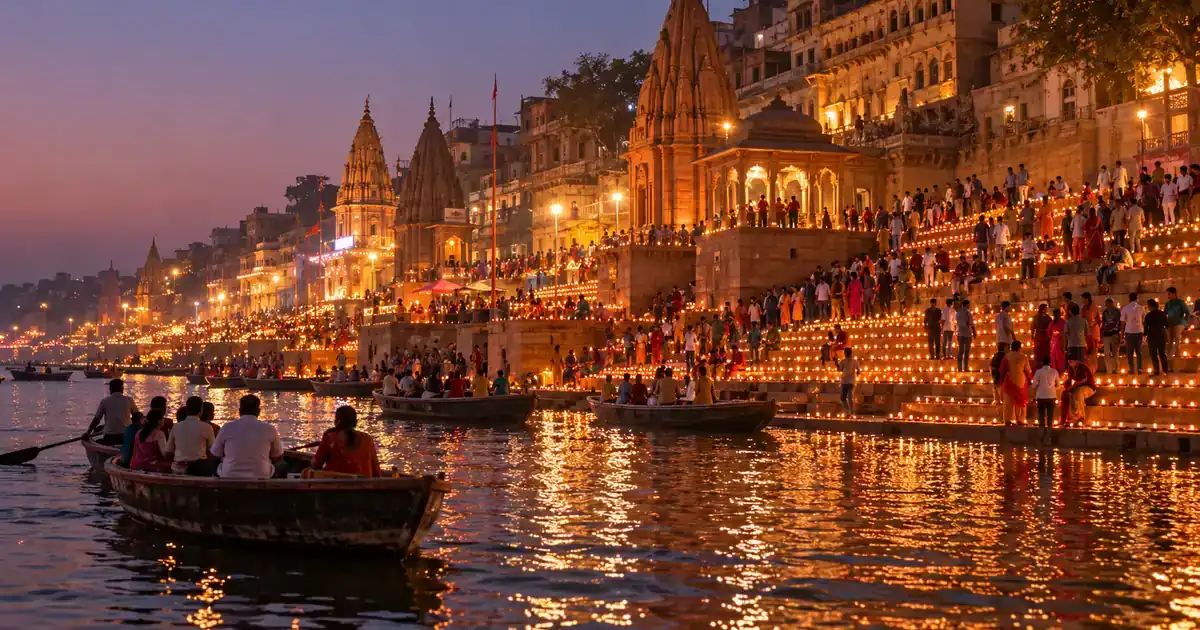
Dev Deepawali, celebrated in the holy city of Varanasi, stands as one of the most visually stunning cultural spectacles in India. Known as the “Diwali of the Gods,” the festival takes place exactly fifteen days after traditional Diwali on the full moon night of Karthik Purnima.
As twilight descends over the ancient riverfront, over one million earthen clay lamps (diyas) are ignited across all eighty-four stone ghats. This transforms the curved crescent bank of the sacred Ganges River into a radiant amphitheater of flickering gold.
Dev Deepawali Quick Travel Essentials
- Festival Date: Karthik Purnima (full moon night of the Hindu month of Kartika, typically falling in November).
- Core Geographic Setting: All 84 crescent riverfront ghats stretching from Assi Ghat in the south to Raj Ghat in the north.
- Ghat Lighting Window: Oil lamps are ignited starting at 05:15 PM, reaching maximum brilliance between 05:45 PM and 08:30 PM.
- Grand Maha Aarti: Performed simultaneously at Dashashwamedh Ghat and Rajendra Prasad Ghat from 06:15 PM to 07:30 PM.
- Boat Ride Rates: Private wooden rowboats cost ₹15,000 to ₹35,000, while motor launches range from ₹40,000 to ₹85,000 on festival night.
- Advance Planning: Book hotel rooms and private boat charters at least three to four months in advance.
Understanding Dev Deepawali in Varanasi: The Festival of the Gods
According to ancient Hindu scripture recorded in the Shiva Purana, the demon king Tripurasura conquered the three cosmic realms of earth, heaven, and the netherworld. After enduring centuries of tyranny, the gods appealed to Lord Shiva for divine intervention. Using a single celestial arrow mounted upon the cosmic chariot, Lord Shiva vanquished the demon and destroyed his three flying iron, silver, and gold citadels.
The celestial deities (Devas) rejoiced across the heavens and descended to the sacred city of Kashi to celebrate Shiva’s ultimate victory. To welcome the gods and express cosmic gratitude, the citizens of Varanasi lined the stone steps of the Ganga with hundreds of thousands of oil lamps.
Devotees believe that on every Karthik Purnima night, the gods descend from heaven to bathe in the holy waters of the Ganges. Pilgrims from across India travel here to take a sacred twilight bath (Karthik Snan), perform ancestral offerings (Deepdan), and participate in widespread prayers.
The festival also incorporates a poignant patriotic dimension known as Pavitra Smaran. At Dashashwamedh and Rajghat, military brass bands and local dignitaries light ceremonial lamps at the Amar Jawan Jyoti memorial installations to honor fallen Indian armed forces martyrs.
Travelers exploring northern India often plan extended cultural loops to discover the wider regional landmarks among the places to visit in Varanasi, combining riverfront festivities with centuries-old temples, Buddhist stupas at Sarnath, and royal sandstone palaces.
Ghat Lighting Schedule and the Grand Maha Aarti Timings
Experiencing Dev Deepawali requires a clear understanding of the evening schedule. The lighting process is an immense community effort managed by local volunteers, ashram disciples, boatman guilds, and municipal authorities who begin arranging clay lamps along the stone steps as early as 03:00 PM.
Official cultural itineraries and heritage event calendars published on the Incredible India Varanasi Portal highlight the ceremonial programs organized along the riverfront each year.
The Sunset Lighting Wave
At approximately 05:15 PM, as the sun dips below the western horizon, volunteers pour mustard oil into the clay cups and light the cotton wicks. Within thirty minutes, a continuous wave of yellow flame sweeps along four kilometers of riverbank steps, stone balustrades, temple spires, and palace facades.
By 05:45 PM, the entire riverbank is ablaze with light. Millions of tiny floating leaf boats (donas) carrying marigold petals and small candles drift outward onto the river current, turning the dark water into a shimmering field of stars.
The Dashashwamedh Ghat Maha Aarti
The centerpiece ritual of the evening is the extended Maha Aarti staged at Dashashwamedh Ghat. While the regular daily evening service features seven priests, the Dev Deepawali ceremony expands to twenty-one white-robed Vedic scholars accompanied by twenty-four young women disciples who perform choreographed fire rituals.
The ritual commences promptly at 06:15 PM with the sounding of conch shells, the rhythmic beating of brass bells, and Sanskrit hymns chanted through public speaker systems. Priests lift massive multi-tiered brass lamps containing up to one hundred and eight burning wicks, rotating them in sweeping circular arcs before the holy river.
Spectators seeking detailed background on the daily ritual schedule can consult our complete guide to the Ganga Aarti ceremony at Dashashwamedh Ghat, which outlines priest lineages, prime seating platforms, and seasonal evening start times.
| Evening Timeline | Ceremonial Activity | Primary Location | Visitor Recommendations |
|---|---|---|---|
| 03:30 PM - 04:30 PM | Diya placement along steps | All 84 riverside ghats | Arrive early to secure stone step seating |
| 05:15 PM - 05:45 PM | Simultaneous lamp lighting | Assi to Raj Ghat | Board pre-booked boats before river traffic halts |
| 05:45 PM - 06:15 PM | Floating Deepdan offerings | River water surface | Release eco-friendly clay diyas into current |
| 06:15 PM - 07:30 PM | 21-Priest Grand Maha Aarti | Dashashwamedh Ghat | View from river boats or upper palace roofs |
| 07:30 PM - 08:15 PM | Multimedia Laser & Light Show | Chet Singh Fort | Best viewed from middle river channel |
| 08:30 PM - 09:30 PM | Green fireworks display | Sandbank opposite Raj Ghat | Watch illuminated reflections on water |
Boat Booking Rates, Government Caps, and River Cruise Logistics
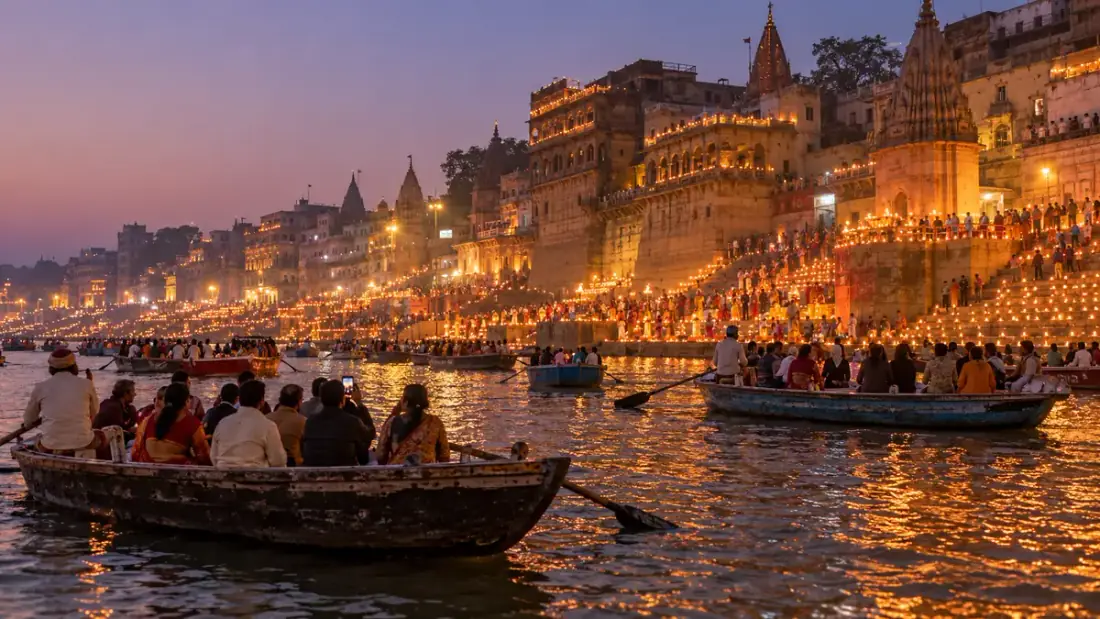
The most impressive vantage point for Dev Deepawali is undoubtedly from the water, where you can gaze inward at the entire glowing crescent riverfront without fighting ground-level crowds. However, river logistics on festival night are exceptionally tight, and boat prices increase dramatically.
Understanding Boat Types and Pricing Realities
Under standard operating conditions, hiring a private wooden rowboat in Varanasi costs roughly ₹800 to ₹1,500 per hour. On the night of Dev Deepawali, rates increase five-fold to ten-fold due to extraordinary demand from domestic and international travelers.
- Small Hand-Rowed Boats (4 to 6 persons): Typically cost between ₹15,000 and ₹25,000 for a three-hour evening charter (05:00 PM to 08:00 PM).
- Medium Wooden Motorboats (10 to 18 persons): Command rates from ₹35,000 to ₹55,000 for the evening.
- Large Double-Decker Wooden Launches (30 to 50 persons): Rent for ₹60,000 to ₹95,000, often hired by extended tour groups or corporate parties.
- Government Luxury Catamarans & Electric Barges: Operators like the Alaknanda Cruise and Ro-Ro passenger vessels sell individual ticketed seats ranging from ₹3,500 to ₹7,500 per head, which include onboard vegetarian snacks, folk music, and safety jackets.
The Varanasi District Administration Tourist Portal publishes official guidelines on boat safety standards, maximum passenger limits, and mandatory life jacket enforcement to safeguard festival visitors.
Essential Boat Booking Rules
- Never Rely on Spot Booking: Attempting to negotiate with boatmen on the afternoon of Dev Deepawali is a recipe for disappointment. Over 95% of all boats are reserved weeks in advance.
- Book Directly with Boatmen Guilds: Reserve your boat through certified hotel concierges or directly with established boat families at Assi or Dashashwamedh Ghat at least sixty days before Karthik Purnima. Always obtain a written receipt or WhatsApp confirmation specifying the boat number, captain contact, boarding ghat, and boarding time.
- Board by 04:30 PM: The river police strictly halt boat boarding from central ghats after 05:00 PM to prevent water collisions. Arrive at your agreed boarding point no later than 04:30 PM.
- Mandatory Life Jackets: Uttar Pradesh Water Police strictly enforce that every passenger wear an approved life vest throughout the river cruise. Boats caught carrying unjacketed passengers face immediate seizure and fines.
Prime Photography Spots and Ghat Viewpoint Strategy
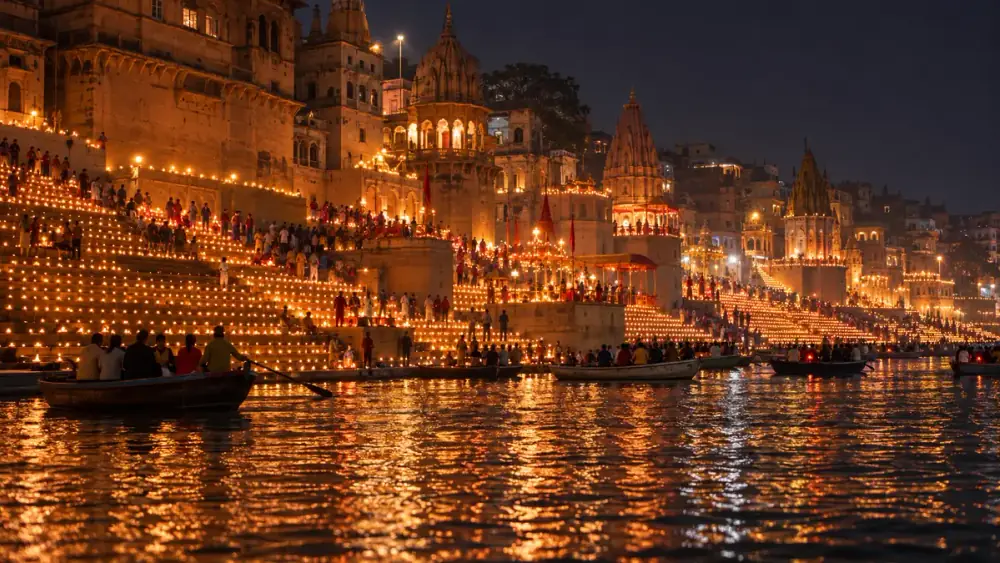
Photographing Dev Deepawali requires strategic planning because thousands of spectators crowd the riverfront steps, making tripod usage difficult on lower landings. Choosing the right vantage point depends on whether you photograph from land or water.
Devotees interested in tracing the complete architectural history of each landing stage can study our comprehensive directory of the historic ghats of Varanasi, which maps out thirty prominent historic landings from Assi to Adi Keshava.
1. Chet Singh Fort Ghat (Laser Show and Massive Stone Bastions)
Chet Singh Ghat features the majestic eighteenth-century fortified palace of Raja Chet Singh, complete with stone turrets and towering crenelated battlements. During Dev Deepawali, the state tourism department projects a high-definition 3D laser projection and musical sound show across the massive palace walls, recounting the mythological origin of Kashi and Lord Shiva’s victory over Tripurasura.
The best vantage point is from a boat positioned roughly fifty meters offshore directly opposite the fort gates between 07:15 PM and 08:15 PM.
2. Dashashwamedh and Rajendra Prasad Ghats
This sector offers the highest visual density of human devotion, brass fire cauldrons, and elaborate floral backdrops. However, the stone steps here are packed shoulder-to-shoulder with thousands of devotees.
For ground-based photographers, booking an upper-floor terrace table at a riverfront guesthouse (such as BrijRama Palace or Ganpati Guest House) provides an unobstructed high-angle shot overlooking the twenty-one aarti platforms and the sea of floating river lamps below.
3. Panchganga Ghat (The Towering Hazara Lamps)
Panchganga Ghat, where five mystical subterranean rivers are believed to meet, is home to ancient stone Dharahara towers. Devotees raise elevated bamboo poles holding wicker lanterns (Akash Deep) high into the evening sky to guide the souls of departed ancestors toward heaven.
The steps here are steep and wide, creating dramatic diagonal lighting tiers that contrast beautifully with the dark night sky. It is considerably less chaotic than Dashashwamedh, making it a favorite for cultural portraiture.
4. Namo Ghat and Raj Ghat (Spacious Modern Platforms)
Located at the northern terminus near Malviya Bridge, Namo Ghat features monumental bronze sculptures of hands joined in greeting (Namaste). The wide pedestrian promenade, dedicated food plazas, and parking lots make it far more accessible for elderly travelers and families with strollers. A massive laser show and floating fireworks display are staged on the open sandbank directly across the water.
| Photography Location | Perspective | Best Time Window | Recommended Camera Setup |
|---|---|---|---|
| Middle River Channel | Water-level wide panoramic | 05:45 PM - 07:00 PM | 24-70mm lens, fast ISO 1600-3200, fast shutter |
| Chet Singh Ghat | Architectural facade & laser show | 07:15 PM - 08:15 PM | 70-200mm telephoto lens for architectural details |
| Dashashwamedh Terraces | Elevated high-angle downward | 06:15 PM - 07:30 PM | Wide-angle 16-35mm lens, handheld stabilization |
| Panchganga Ghat Steps | Atmospheric bamboo lantern rows | 05:30 PM - 06:45 PM | Fast prime 35mm or 50mm f/1.4 or f/1.8 lens |
Crowd Control, Traffic Restrictions, and Walking Route Maps
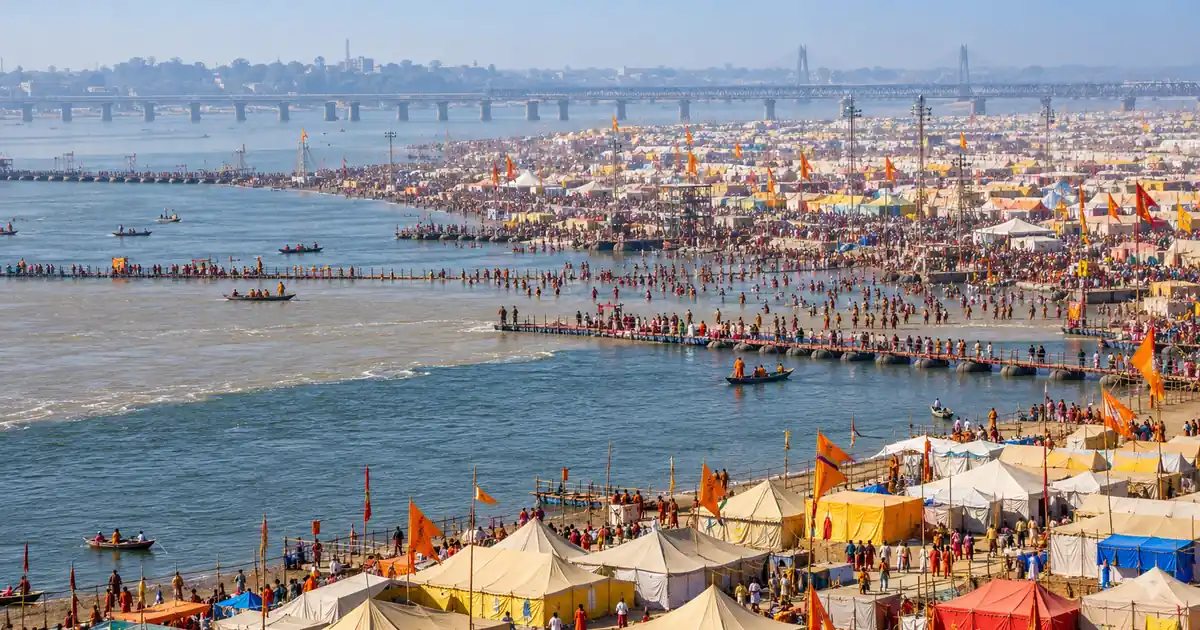
Dev Deepawali attracts between five hundred thousand and eight hundred thousand visitors into Varanasi within a single 24-hour window. To prevent gridlock, the city administration enforces strict vehicular cordons.
Traffic Cordon Zones
From 12:00 PM on festival day until 01:00 AM past midnight, all private cars, auto-rickshaws, and app taxis are banned from entering Godowlia, Maidagin, Sonarpura, and Bhelupur. These central roads become strictly pedestrian-only zones.
Visitors must walk or hire pedal-rickshaws from police barricades located up to two kilometers outside the old quarter. If your hotel is located inside the riverside alleys, ensure you check in before 11:00 AM on festival morning to avoid hauling luggage on foot through packed streets.
Pedestrian Movement Strategy
Walking between ghats along the riverbank steps is the most authentic way to absorb the festive energy. However, walking through central bottleneck points like Dashashwamedh Ghat between 06:00 PM and 08:00 PM becomes extremely slow due to dense crowds.
A smart walking strategy begins at Assi Ghat at 04:30 PM. Walk northward along the riverbank through Tulsi, Harishchandra, and Kedar Ghats as the oil lamps are ignited.
When approaching Dashashwamedh, divert inward through the cobblestone alleys of Godowlia to bypass the main crush, then rejoin the riverbank at Scindia or Panchganga Ghat to continue toward Rajghat.
Pilgrims combining festival viewing with temple worship can exit the riverbank at Lalita Ghat to enter the modern Kashi Vishwanath Temple corridor, where special pedestrian queues operate under police supervision throughout the festival night.
How to Reach Varanasi by Air, Rail, and Road
Varanasi features dependable national and international transit infrastructure, making it easily accessible from all major metropolitan cities across India. Travelers arriving in November two weeks earlier can also witness Chhath Puja along the exact same stone riverfront before Kartik Purnima.
By Air
Lal Bahadur Shastri International Airport (Airport Code: VNS) at Babatpur sits 26 kilometers northwest of the city center. The airport operates direct daily flights connecting New Delhi, Mumbai, Bengaluru, Hyderabad, Kolkata, Ahmedabad, and Chennai. International flights link Varanasi directly with Bangkok and Kathmandu.
Pre-paid taxis and electric airport buses take 45 to 60 minutes to reach central Cantt via the four-lane NH56 highway. During Dev Deepawali week, flight ticket fares surge sharply; booking your airfare three months in advance is strongly advised.
By Train
Varanasi is served by three major railway junctions:
- Varanasi Junction (BSB / Cantt): Centrally located 4 km from Godowlia, receiving fast express trains including multiple Vande Bharat Express routes from New Delhi and Patna, along with the Shiv Ganga Express.
- Banaras Railway Station (BSBS, formerly Manduadih): A clean, modern terminal located 4 km west of the ghats, handling superfast services from New Delhi, Mumbai, and Pune.
- Pt. Deen Dayal Upadhyaya Junction (DDU): Located 16 km east across the river, this major mainline junction on the Delhi-Kolkata corridor handles dozens of daily long-distance trains.
Confirmed train tickets can be booked online through the official IRCTC portal.
By Road
Varanasi connects to Lucknow, Prayagraj, and Patna via four-lane National Highway 19 and National Highway 31. The State Road Transport Corporation operates frequent air-conditioned Janrath and Scania express buses connecting Varanasi with Lucknow (6 hours) and Prayagraj (2.5 hours).
Where to Stay and Hotel Booking Advice for Dev Deepawali Week
Securing accommodation during Dev Deepawali requires exceptional foresight. Hotels, heritage riverfront palaces, and budget guesthouses throughout Varanasi operate at 100% occupancy during festival week, with tariffs tripling or quadrupling above off-season rates.
Heritage Riverfront Havelis (Premium Atmosphere)
Staying directly on the ghats provides unmatched convenience, allowing you to watch the lighting ceremony from private balconies without battling street traffic.
- BrijRama Palace (Darbhanga Ghat): An eighteenth-century Maratha stone palace offering luxury suites, private boat piers, and rooftop views of the central ghats.
- Amritara Suryauday Haveli (Shivala Ghat): A meticulously restored nineteenth-century haveli built by the royal family of Nepal, featuring tranquil courtyards and direct river access.
- Guleria Kothi (Guleria Ghat): A boutique sandstone palace built from sandstone blocks in the eighteenth century, situated close to the Kashi Vishwanath corridor.
City Center Business Hotels (Logistical Convenience)
For travelers who prefer quiet sleeping environments and reliable road access away from festive crowds, staying in the Cantonment (Cantt) neighborhood is recommended. Located four kilometers west of the ghats, Cantt features established properties like the Taj Ganges, Radisson Hotel Varanasi, and Hotel Clarks. Taxis can drop guests within walking distance of Godowlia before the noon traffic curfew.
Booking Guidelines
- Reserve by July or August: Premium riverfront rooms are routinely booked out four to five months before November.
- Inquire About Boat Inclusions: Many heritage hotels maintain their own private wooden motor launches and offer bundled packages that guarantee boat seats for registered guests.
- Verify Road Access: If traveling with senior citizens, avoid booking guesthouses situated deep inside narrow maze-like alleys where walking over one kilometer with luggage is mandatory.
Frequently Asked Questions About Dev Deepawali Varanasi
What is the exact date of Dev Deepawali in Varanasi?
Dev Deepawali is celebrated on Karthik Purnima, the full moon day of the Hindu month of Kartika, which occurs exactly fifteen days after traditional Diwali. It generally falls in the month of November.
What is the difference between Diwali and Dev Deepawali?
Diwali honors Lord Rama’s triumphant return to Ayodhya following his victory over Ravana. Dev Deepawali commemorates Lord Shiva’s victory over the demon Tripurasura, representing the day when the celestial gods descended to earth to celebrate in Kashi. While Diwali is celebrated across homes, Dev Deepawali is focused along the riverfront ghats of Varanasi.
How much does a boat ride cost on Dev Deepawali night?
On festival night, private wooden rowboat rates range between ₹15,000 and ₹25,000, while motor launches cost ₹35,000 to ₹55,000 for a three-hour cruise. Individual tickets on government catamarans cost approximately ₹3,500 to ₹7,500 per person.
Which is the best ghat to witness Dev Deepawali?
Dashashwamedh Ghat offers the most elaborate twenty-one-priest Maha Aarti, Chet Singh Ghat provides the grand laser light show against stone battlements, and Panchganga Ghat features traditional suspended bamboo lanterns (Akash Deep). The best overall view is gained by cruising along the river between Assi and Raj Ghat.
Can tourists participate in lighting the diyas?
Yes, visitors and tourists are warmly welcomed to assist local residents and volunteer groups in placing and lighting earthen oil lamps on the stone steps starting around 04:30 PM. Devotees can also purchase small marigold-and-candle leaf cups (donas) for ₹20 to float on the holy river.