Varanasi Street Food Guide: Best Chaat, Kachori & Lassi Trail
Explore the ultimate Varanasi street food trail with timings, iconic stalls, Tamatar Chaat, winter Malaiyyo, Kachori Gali breakfast, and hygiene tips.
The centuries-old alleys of Varanasi harbor one of northern India’s most extraordinary culinary landscapes. Deep within the ancient pedestrian galis that wind between the holy Ganga riverfront and the city center, generations of halwais and chaat makers prepare specialty dishes found nowhere else on the subcontinent.
Unlike the meat-heavy Awadhi cooking of nearby Lucknow or the historic lanes mapped in our local dishes and food walks in Old Delhi Street Food, traditional street food in Kashi is strictly vegetarian. Rooted in ancient sattvic culinary customs, local snacks feature pure desi ghee, freshly ground spices, roasted cumin, and pungent asafoetida without relying on onions or garlic.
Varanasi Street Food Trail Essentials
- Breakfast Schedule: Morning kachori-sabzi and jalebi stalls in Kachori Gali and Chowk operate from 7:00 AM to 10:30 AM before selling out.
- Chaat Operating Window: Famous hot chaat griddles at Godowlia Crossing fire up at 4:30 PM and serve continuously until 10:30 PM.
- Winter Exclusive Dish: Delicate saffron Malaiyyo froth is strictly available from November through February between 7:00 AM and 11:00 AM.
- Vegetarian Purity: Authentic Banarasi street gastronomy is entirely vegetarian, prepared in pure desi ghee without onion or garlic in old temple precincts.
- Daily Food Budget: A comprehensive walking food trail costs approximately ₹200 to ₹350 per person across four to five specialty stalls.
Eating your way through Varanasi requires understanding the rhythm of the city. Certain delicacies, such as the dew-churned winter froth called Malaiyyo, vanish the moment the midday sun heats the streets, while legendary chaat griddles only come alive as dusk falls over the ghats.
This field guide breaks down the essential morning, afternoon, and evening food trails, mapping exact stall locations, operating windows, and practical hygiene advisories.
| Culinary Dimension | Details & Practical Reality |
|---|---|
| Primary Gastronomic Hubs | Godowlia Crossing, Thatheri Bazaar, Kachori Gali, Bangali Tola, Lanka |
| Dietary Classification | 100% Pure Vegetarian (Sattvic preparations dominant in old city galis) |
| Cooking Medium | Pure Cow and Buffalo Milk Desi Ghee, Mustard Oil for savories |
| Breakfast Window | 7:00 AM to 10:30 AM (Ram Bhandar sells out by 10:00 AM) |
| Evening Chaat Window | 4:30 PM to 10:30 PM (Peak crowds between 6:30 PM and 8:30 PM) |
| Winter Signature Food | Malaiyyo / Makhan Malai (Strictly November to February mornings) |
| Typical Dish Pricing | ₹30 to ₹70 per serving (Chaat, Kachori, Lassi, Malaiyyo) |
| Serving Medium | Biodegradable dried leaf donas and terracotta clay kulhads |
The Banarasi Breakfast Circuit: Kachori, Jalebi, and Malai Toast
In Varanasi, the morning meal is treated as an invigorating ritual following sunrise prayers at the riverfront. By 7:00 AM, giant iron cauldrons filled with bubbling desi ghee or mustard oil release aromas of roasted spices across the narrow alleyways.
The undisputed cornerstone of this morning circuit is kachori-sabzi paired with syrupy jalebis, followed by charcoal-toasted bread slathered with freshly churned white butter.
Kachori Gali and Ram Bhandar in Thatheri Bazaar
The most famous breakfast corridor is Kachori Gali, a narrow winding pathway branching off from the main approach to the sacred Kashi Vishwanath Temple. Here, local halwais serve two distinct varieties of kachori:
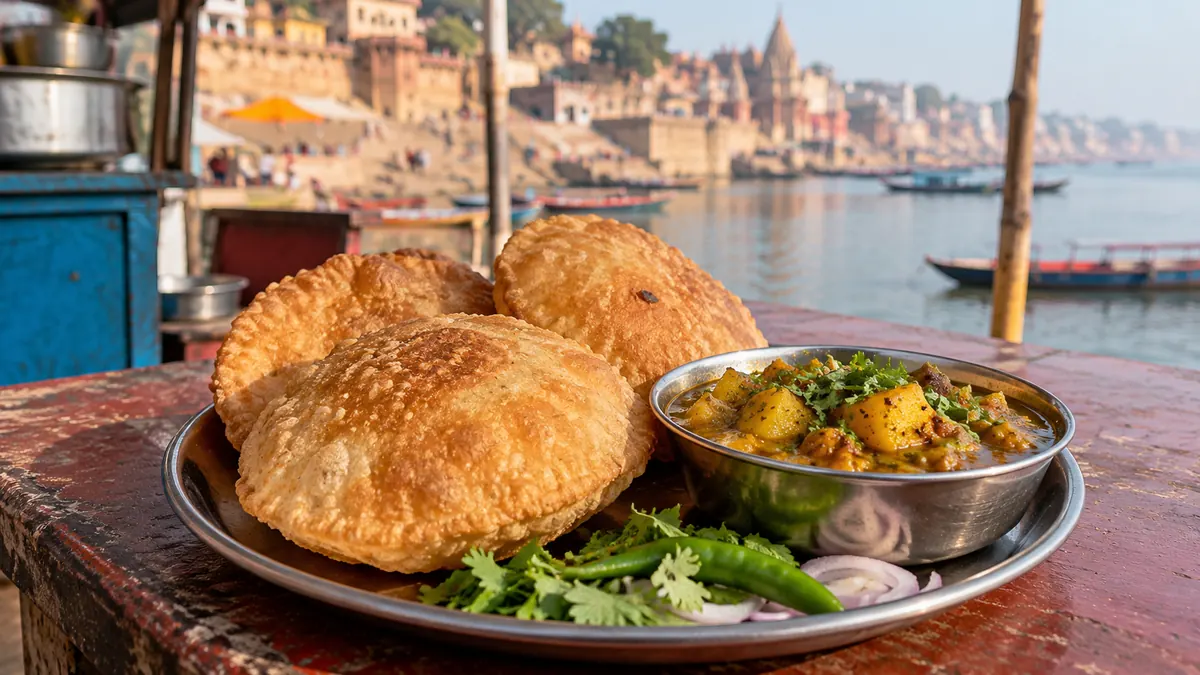
- Badi Kachori: A thick, flaky whole-wheat bread stuffed with a spiced paste of urad dal (black gram). The dough is rolled thick, fried until crisp and golden brown, and broken into pieces inside an earthen clay bowl.
- Choti Kachori: A smaller, spherical, super-crispy puffed puri made from refined flour and stuffed with a fragrant blend of lentils, fennel seeds, and black pepper.
Both varieties are submerged under a generous ladle of piping-hot sabzi. The curry is an aromatic gravy made with boiled potatoes, whole chickpeas (chana), tomatoes, and green chillies, heavily seasoned with roasted cumin and asafoetida.
For the pinnacle experience, navigate to Ram Bhandar in Thatheri Bazaar. Open since the late nineteenth century, this tiny shop prepares a limited batch of kachori-sabzi that sells out completely by 10:00 AM every morning. Pair your spicy kachori with two spiral discs of hot, saffron-orange jalebis freshly pulled from boiling syrup to balance the intense spices.
Safed Makkhan, Malai Toast, and Kulhad Chai at Laxmi Chai Wale
For travelers seeking a lighter morning bite or a second breakfast, Laxmi Chai Wale in Chowk provides a legendary tea-stall experience. Operating out of a compact open-front counter, the stall is famous for its charcoal-toasted white butter bread:
- Safed Makkhan Toast: Slices of thick bakery bread are toasted over red-hot charcoal embers until crisp, then generously slathered with unpasteurized, hand-churned white butter (safed makkhan) sprinkled with a pinch of black salt and roasted cumin.
- Malai Toast: A sweeter alternative where crispy charcoal toast is topped with a dense layer of clotted buffalo milk cream (malai) and finished with a dusting of granulated sugar.
- Kulhad Chai: Strong Assam tea slow-brewed with crushed fresh ginger, green cardamom, and rich buffalo milk, served steaming hot in porous terracotta clay cups that impart an earthy aroma to every sip.
| Breakfast Landmark | Exact Location | Signature Item | Operating Hours |
|---|---|---|---|
| Ram Bhandar | Thatheri Bazaar, Chowk | Badi Kachori with Dum Aloo and Desi Ghee Jalebi | 7:00 AM to 10:00 AM |
| Madhur Milan | Dashashwamedh Road | Choti Kachori Sabzi and Gulab Jamun | 7:30 AM to 11:30 AM |
| The Chachi Ki Kachori | Sankat Mochan Road, Lanka | Crispy round kachoris and khoya sweets | 7:30 AM to 11:00 AM |
| Laxmi Chai Wale | Chowk, Near Vishwanath Gali | Malai Toast and Ginger Kulhad Chai | 6:00 AM to 11:00 PM |
Winter’s Fleeting Marvel: The Art of Banarasi Malaiyyo
If you visit Varanasi between November and February, you have access to one of the most delicate culinary preparations on Earth: Malaiyyo (also known in neighboring regions as Nimish or Makhan Malai).
This seasonal sweet is not cooked over fire, but coaxed into existence through an intricate balance of winter atmospheric moisture and skilled morning labor.
The Dew-Churning Craft of Saffron Milk Foam
The production of authentic Malaiyyo follows an age-old artisanal sequence:
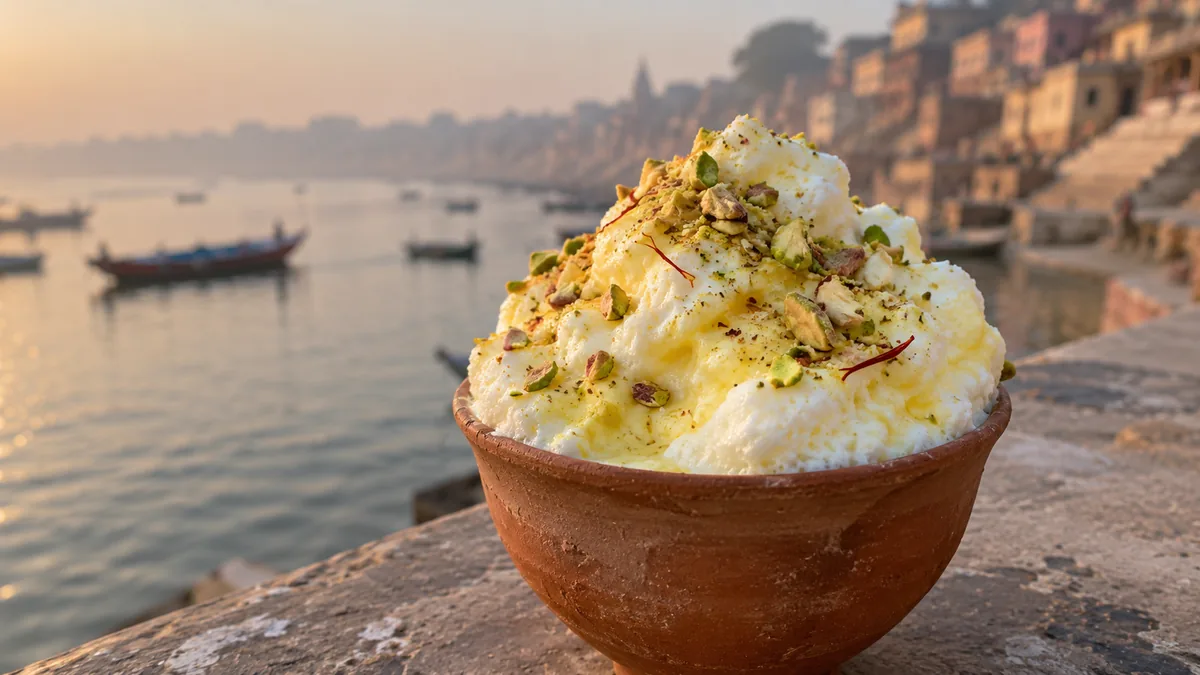
- Evening Boiling: Pure cow or buffalo milk is boiled in massive wide iron cauldrons until condensed, then infused with Kashmiri saffron, green cardamom, and cane sugar.
- Night Exposure to Winter Dew: The warm milk is transferred into broad terracotta pots and placed on outdoor rooftops or open courtyards overnight. Exposure to the dense winter fog (shabnam) and crisp nighttime cold causes the milk fats to crystallize and capture micro-droplets of dew.
- Pre-Dawn Churning: At approximately 4:00 AM, master artisans churn the chilled milk using long wooden whisks. The combination of chilled dew and surface fat creates a voluminous, cloud-like foam that rises above the pot.
- Presentation: The airy froth is scooped into miniature terracotta kulhads and garnished with finely sliced pistachios, almonds, and real silver leaf (vark).
When spooned into the mouth, Malaiyyo possesses virtually no structural weight. It dissolves across the tongue within seconds, leaving behind the fragrant essence of saffron, cardamom, and cold sweet cream. At the bottom of the cup remains a small pool of concentrated saffron milk, which you drink directly from the clay vessel.
Top Malaiyyo Stalls and Morning Availability
Because the foam relies entirely on cold morning air, warm afternoon temperatures cause the bubbles to collapse into liquid. Consequently, Malaiyyo stalls only operate between 7:00 AM and 11:00 AM.
The most celebrated locations to taste authentic winter Malaiyyo include:
- Shreeji Sweets and Milk: Located in Chaukhamba near the sacred Gopal Mandir, this family-run shop has prepared authentic batches of Malaiyyo for over seventy years.
- Neelkanth Chauraha Vendors: A cluster of traditional vendors operating around Neelkanth crossing in Chowk, displaying giant brass platters heaped high with bright yellow saffron foam.
- Thatheri Bazaar Alley Corners: Open morning counters positioned along the metalworkers’ lane, serving fresh kulhads for ₹40 to ₹60.
Detailed regional cultural history is curated through the official Varanasi District Administration Cultural Heritage.
The Evening Chaat Trail: Tamatar Chaat, Palak Patta, and Chura Matar
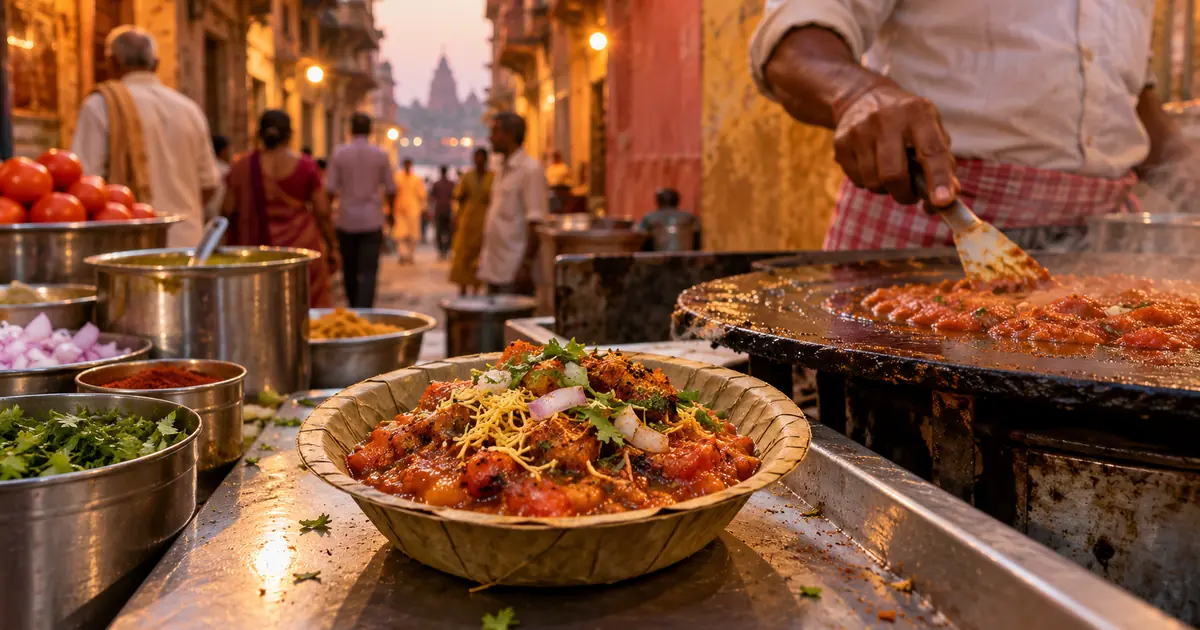
As afternoon fades into evening and pilgrims return from the riverbank, the energy of Varanasi shifts toward its legendary chaat shops. Centered around the Godowlia intersection and Dashashwamedh Road, these culinary counters feature massive convex iron griddles (tawas) glowing over gas burners.
Unlike anywhere else in India, chaat in Varanasi is characterized by hot, stewed savory components rather than cold yogurt and raw potatoes alone.
Tamatar Chaat at Kashi Chaat Bhandar and Deena Chaat
The crown jewel of Banarasi street gastronomy is Tamatar Chaat, an indigenous recipe created by the city’s halwais that cannot be found in Lucknow, Delhi, or Kolkata.
The preparation on the hot iron griddle is fascinating to observe:
- The Tomato Reduction: Fresh, ripe red tomatoes are stewed on the tawa alongside boiled mashed potatoes, green peas, grated ginger, and chopped green chillies. The mixture is fried down in copious amounts of fragrant desi ghee.
- The Spice Blend: The halwai vigorously mashes the tomatoes with a heavy flat pestle, incorporating black salt, garam masala, and toasted cumin.
- The Signature Finish: The bubbling red mash is ladled into a small clay cup (kulhad or dona), doused with a warm, spiced sugar-cumin syrup (jeera chashni), squeezed with fresh lime juice, and crowned with a handful of crispy, savory namakpare (fried pastry strips).
The resulting flavor profile hits every sensory note: tart from the stewed tomatoes, intensely savory from the desi ghee and spices, crunchy from the namakpare, and delightfully sweet from the warm cumin glaze.
The two undisputed masters of Tamatar Chaat are located within a five-minute walk of each other:
- Kashi Chaat Bhandar (Godowlia Crossing): Open since 1968, this is the most famous chaat address in Varanasi. Expect dense crowds from 5:00 PM onward, but service is rapid and exceptionally organized.
- Deena Chaat Bhandar (Gol Ganj, near Dashashwamedh): Slightly quieter than Kashi Chaat, Deena delivers an equally sublime Tamatar Chaat with an extra dash of lemon and coriander.
Seasonal Chura Matar and Crispy Palak Patta Chaat
Beyond Tamatar Chaat, evening chaat explorers should not miss two other regional specialties:
- Chura Matar (Winter Specialty): Varanasi’s unique take on flattened rice (poha). Thick flattened rice is soaked in fresh milk and water, then slow-braised in desi ghee with tender winter green peas, ginger, black pepper, and garam masala. It is finished with roasted cashews and lemon juice, creating a comforting, creamy savory snack.
- Palak Patta Chaat: Whole, fresh spinach leaves are lightly coated in a seasoned gram-flour (besan) batter and fried until glass-brittle. They are arranged in a bowl and drizzled with chilled sweet curd, tangy tamarind-jaggery sonth chutney, spicy green mint sauce, and pomegranate arils.
- Dahi Golgappe (Puchka): Crisp, hollow semolina puris filled with boiled chickpeas and potatoes, drenched in thick sweetened yogurt, spiced chutneys, and roasted cumin powder.
After sampling evening chaats, travelers often stroll down the illuminated avenue to witness the world-renowned ritual ceremonies at Dashashwamedh Ghat.
| Chaat Destination | Landmark Address | Must-Order Dishes | Average Price |
|---|---|---|---|
| Kashi Chaat Bhandar | Godowlia Crossing | Tamatar Chaat, Palak Patta Chaat, Dahi Puri | ₹40 - ₹60 |
| Deena Chaat Bhandar | Gol Ganj, Dashashwamedh | Tamatar Chaat, Chura Matar, Gulab Jamun | ₹40 - ₹60 |
| Rajendra Chaat Bhandar | Chowk Precinct | Aloo Tikki Chaat, Pani Ke Golgappe | ₹30 - ₹50 |
| Kesari Chaat | Vishwanath Gali | Dahi Bhalla, Papdi Chaat | ₹35 - ₹55 |
The Legendary Lassi Counters of Kashi
Lassi in Varanasi is fundamentally different from the frothy, liquid yogurt drinks commonly served across Punjab. In Kashi, lassi is dense, velvety, and served as a rich dessert eaten with a flat wooden spoon from an unglazed clay cup.
Traditional dahi makers ferment whole buffalo milk in massive earthenware tubs. When churned by hand with chilled sugar, the yogurt develops a thick, custard-like texture that supports heavy garnishes without sinking.
Blue Lassi Shop Near Manikarnika Ghat
Established in 1925, the Blue Lassi Shop is an iconic culinary landmark hidden within the labyrinthine alleyways leading toward the ancient burning ghat of Manikarnika Ghat.
Occupying a charming tiny shop painted in bright blue and covered wall-to-wall with thousands of passport photos and handwritten notes from global travelers, Blue Lassi has transformed the humble yogurt drink into an artisanal craft:
- The Churning Method: Every single order is churned to order in small wooden bowls using wooden hand whisks, without the use of electric blenders.
- The Diverse Menu: While traditionalists order saffron and plain sweet lassi, the shop offers over thirty variations featuring freshly hand-crushed fruits, including pomegranate, banana-blueberry, mango-coconut, and mixed dry fruits.
- The Signature Presentation: Each clay cup is filled with thick, flavored curd, topped with seasonal fruits, and finished with a dense slab of milk rabri and crushed pistachios.
Classical Malai-Topped Pahalwan Lassi
For travelers who prefer classical, unadorned Banarasi lassi without fruit toppings, Pahalwan Lassi near the Lanka intersection (close to Banaras Hindu University) represents the gold standard.
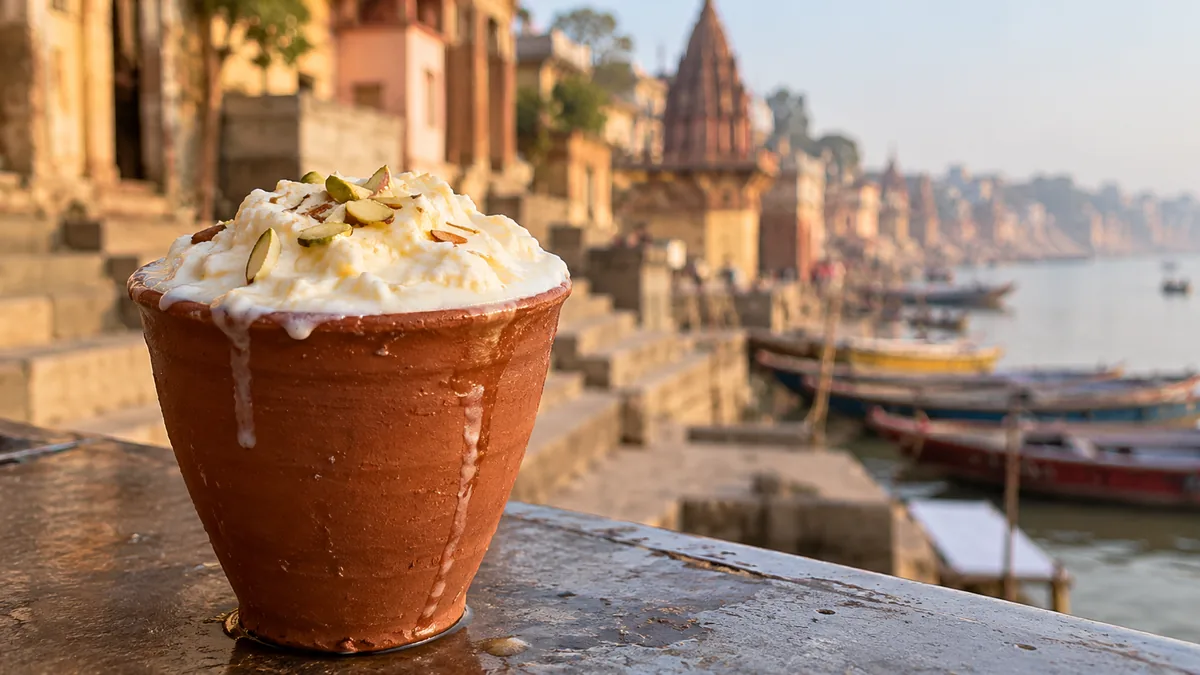
Here, the lassi is served in large clay kulhads, flavored gently with rosewater and crushed green cardamom, and topped with a generous, two-finger-thick layer of solid clotted malai that must be broken with a spoon before drinking. It is an energizing, deeply satisfying refreshment after hours of exploring temple complexes.
Cultural Climax: The Ritual of Banarasi Meetha Paan
No culinary journey through Varanasi is considered complete without the ceremonial chewing of Banarasi Paan. Immortalized in Indian classical music, literature, and cinema, the consumption of paan in Kashi is a revered social art form and digestive tradition dating back thousands of years.
The hallmark of authentic Banarasi Paan is that it requires no rigorous chewing. A properly crafted paan should dissolve gently in the mouth within minutes:
- The Leaf Variety: Masters of the craft use the delicate Maghai betel leaf, prized for its pale green hue, thin texture, and subtle peppery sweetness. The leaves are tenderized through careful moisture curing.
- The Filling: In traditional sweet paan (meetha paan), the leaf is lightly painted with slaked lime (chuna) and catechu (kattha), then stuffed with rose-petal preserve (gulkand), candied fennel seeds (saunf), cardamom seeds, grated coconut, and fragrant menthol extracts. It contains zero tobacco or harmful chemicals.
For the definitive experience, visit Keshav Tambul Bhandar near the Ravindrapuri area. Open for over six decades, this tiny stall is revered by local scholars, artists, and visiting dignitaries for its perfectly balanced meetha paan wrapped in delicate silver leaf. Another reliable option is Rajendra Chaurasia Tambul, positioned right beside the Godowlia auto stand.
Statewide heritage and travel routes are documented on the Uttar Pradesh Tourism Varanasi Cultural Guide.
Practical Street Food Logistics: Navigation, Timing, and Hygiene
Navigating Varanasi’s ancient street food galis is rewarding, but requires advance planning to avoid peak crowds, navigation confusion, and digestive discomfort.
Walking Routes and Neighborhood Hubs
The old city of Varanasi is largely pedestrianized due to the narrow width of the ancient alleyways. The best way to organize your culinary itinerary is by dividing your exploration into two separate walking circuits:
- Morning Circuit (7:30 AM to 10:30 AM): Begin at Dashashwamedh Ghat, walk through Vishwanath Gali to Kachori Gali, visit Ram Bhandar in Thatheri Bazaar, and finish with winter Malaiyyo at Chaukhamba and Chowk.
- Evening Circuit (5:00 PM to 8:30 PM): Start at Godowlia Crossing, feast on hot Tamatar Chaat and Palak Patta Chaat at Kashi Chaat Bhandar, stroll along the pedestrian market toward Bangali Tola for evening lassi, and finish with a meetha paan near Godowlia.
When planning broader excursions across the state, consult our detailed resource on Places to Visit in Varanasi for comprehensive city transit connections and seasonal tips.
Food Safety and Digestive Health Advisories
Travelers exploring street food in northern India should follow these practical health advisories:
- Eat Piping Hot: Only consume fried items (such as kachoris and jalebis) and griddle chaats that are prepared fresh and bubbling before your eyes. Avoid items that have been sitting uncovered on display counters.
- Stick to Clay Kulhads: Traditional unglazed clay cups and dried leaf plates are single-use, naturally hygienic, and biodegradable.
- Drink Packaged Water Only: Never drink tap water or unverified pitcher water at street stalls. Carry your own sealed mineral water bottle for hydration throughout the day.
- Pace Your Digestion: Banarasi food relies heavily on pure desi ghee and potent warming spices. Limit yourself to one or two tasting portions per stall rather than full meals, allowing your system to sample multiple flavors comfortably.
- Cash and UPI Payments: While nearly every food stall in Varanasi accepts instant mobile UPI payments via QR code, narrow alleys often have poor mobile data reception. Always carry ₹200 to ₹300 in small cash notes (₹10, ₹20, and ₹50) for hassle-free transactions.
Civic infrastructure advisories and transit regulations are maintained on the Varanasi District Tourism Portal.
Pairing Food Walks with Kashi Heritage Sights
A street food tour through Varanasi pairs naturally with the spiritual and cultural landmarks that define the sacred city along the sacred river:
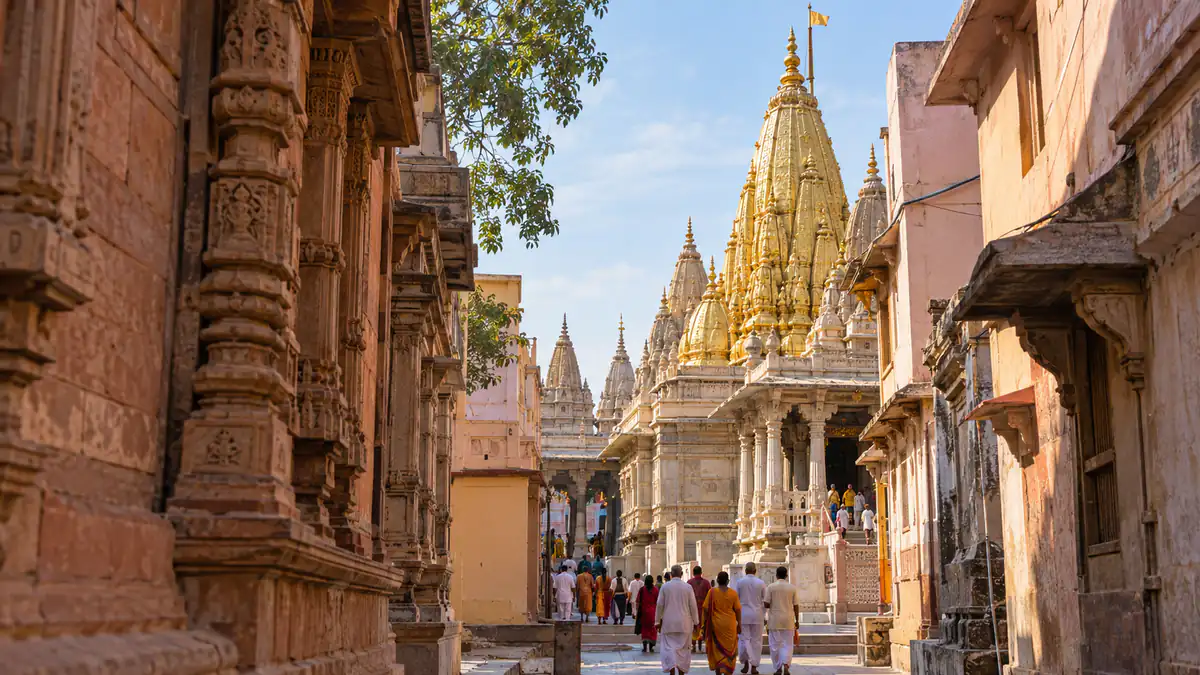
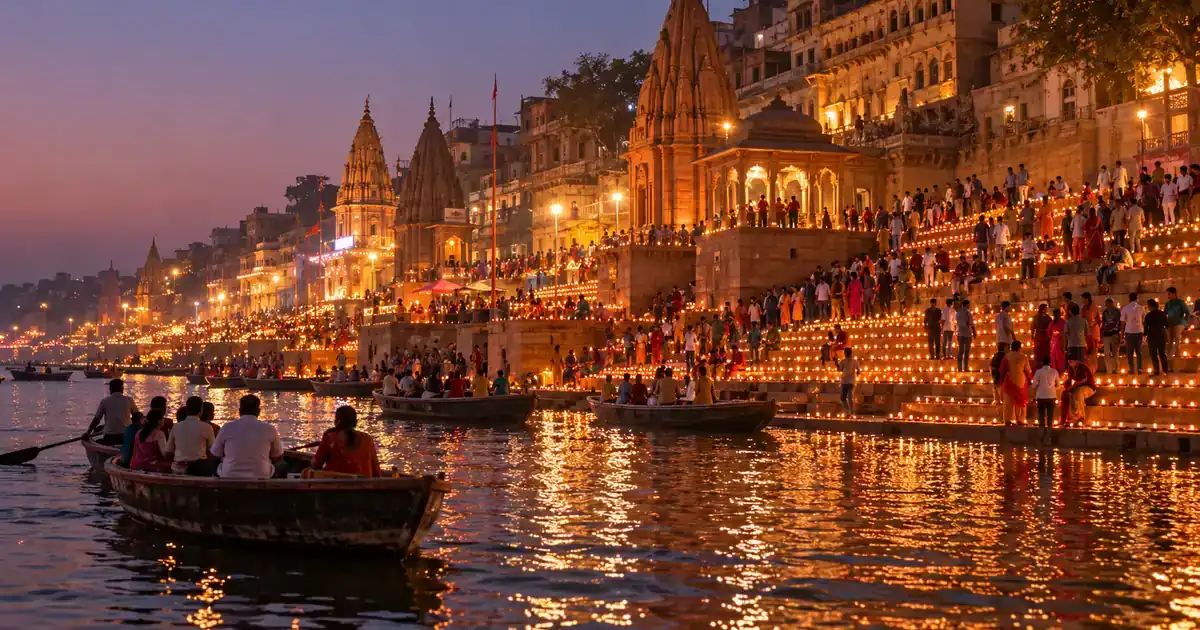
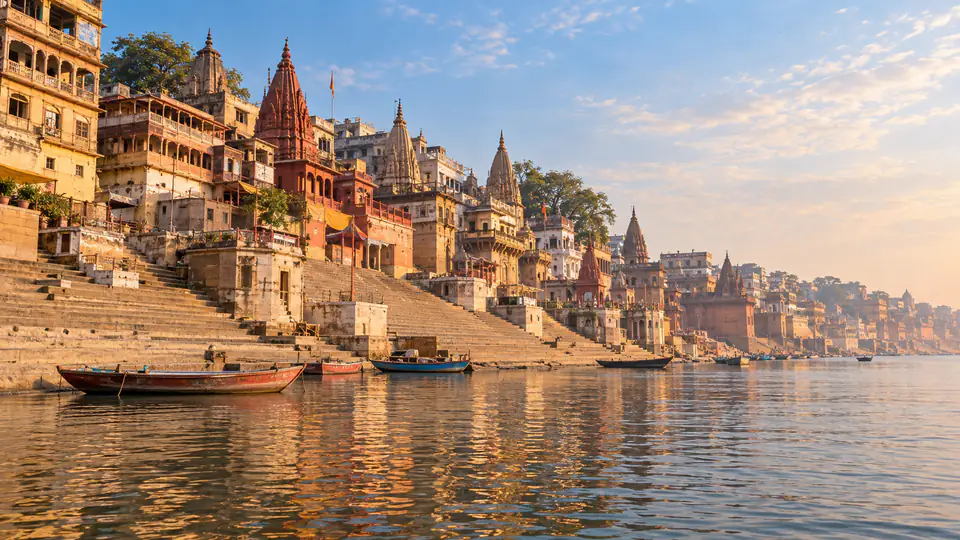
- Sunrise Boat Excursion: Begin your day with a peaceful dawn boat row along the Ghats of Varanasi, watching morning bathers and prayers from Assi Ghat to Panchganga Ghat before heading inland for breakfast kachori.
- Temple Darshan Transition: Schedule morning visits to Kashi Vishwanath Temple or Annapurna Mandir just before breakfast, as morning darshan lines are shortest between 6:00 AM and 7:30 AM.
- Evening Ganga Aarti Coordination: Secure a riverside seat for the spectacular evening Ganga Aarti ceremony at Dashashwamedh Ghat by 6:00 PM, then walk three hundred meters into Godowlia for a warm chaat dinner by 7:30 PM.
| Time Window | Activity | Recommended Culinary Pairing |
|---|---|---|
| 6:00 AM - 7:30 AM | Sunrise river boat ride along Assi and Dashashwamedh | Hot ginger kulhad chai and malai toast at Laxmi Chai |
| 8:00 AM - 10:00 AM | Temple darshan in Vishwanath Gali | Badi kachori, sabzi, and hot jalebi at Ram Bhandar |
| 10:00 AM - 11:00 AM | Exploring heritage alleys of Chaukhamba | Saffron-infused winter Malaiyyo in clay kulhad |
| 4:30 PM - 6:00 PM | Shopping for Banarasi silk in Thatheri Bazaar | Artisanal fruit and rabri lassi at Blue Lassi Shop |
| 6:30 PM - 7:30 PM | Attending evening Ganga Aarti at the ghats | Warm Tamatar Chaat and Palak Patta at Kashi Chaat Bhandar |
| 8:00 PM - 9:00 PM | Leisurely stroll through illuminated Godowlia | Melting Banarasi Meetha Paan at Keshav Tambul |
Frequently Asked Questions About Varanasi Street Food
What is the most famous street food to try in Varanasi?
Tamatar Chaat is the most unique and celebrated street dish exclusive to Varanasi, made by mashing spiced tomatoes in desi ghee and finishing with cumin syrup. Other iconic delicacies include morning kachori-sabzi, winter Malaiyyo, and thick rabri-topped lassi.
Where can visitors find the best Tamatar Chaat in Varanasi?
Kashi Chaat Bhandar and Deena Chaat Bhandar near Godowlia Crossing serve the city’s finest Tamatar Chaat. Their griddles fire up daily at 4:30 PM and draw eager crowds through 10:30 PM.
What is Malaiyyo and when is it available in Varanasi?
Malaiyyo is an airy, saffron-infused milk foam prepared by churning chilled milk exposed to winter night dew. It is sold exclusively during the winter months from November to February between 7:00 AM and 11:00 AM.
Is the street food in Varanasi completely vegetarian?
Nearly all historic street food in old Varanasi is 100% pure vegetarian, prepared according to traditional sattvic customs without meat, onions, or garlic in the temple galis. Visitors can enjoy local kachoris, chaats, and sweets with complete confidence.
What is the best time of day for a Varanasi food walk?
The best schedule splits into two windows: mornings from 7:30 AM to 10:00 AM for fresh kachori, jalebi, and Malaiyyo, followed by evenings from 5:00 PM to 8:30 PM for hot chaats, lassi, and Banarasi paan.