Gujarat Travel Guide: Top Places, Circuits & Itineraries
Plan your trip with our Gujarat travel guide covering Rann of Kutch, Somnath, Dwarka, Gir Asiatic lions, Statue of Unity, stepwells, and road circuits.
Gujarat covers 196,024 square kilometers along India’s western coastline, anchoring over 1,600 kilometers of Arabian Sea shoreline. This comprehensive Gujarat travel guide outlines the state’s historic architectural landmarks, sacred pilgrimage corridors, wildlife sanctuaries, and road travel routes.
The territory blends ancient Harappan dockyards, ornate medieval stepwells, coastal Jyotirlinga shrines, and the vast salt desert of Kutch. Travelers arrive throughout autumn and winter months to witness cultural celebrations, explore royal palaces, and observe Asiatic lions in their native forest habitats.
State Travel & Circuit Essentials
- Gujarat encompasses 196,024 square kilometers along India’s western coastline across 33 administrative districts, with Gandhinagar serving as the state capital.
- The territory divides into four distinct geographic realms: the vast salt desert of Kutch, the Saurashtra coastal peninsula, mainland central Gujarat, and southern tribal hill corridors.
- Peak holiday travel runs from October through March, when pleasant daytime temperatures range between 15°C and 29°C across desert, coastal, and inland plains.
- Primary transit gateways include Sardar Vallabhbhai Patel International Airport in Ahmedabad, Western Railway express hubs, and access-controlled expressways like the NE-1.
Modern expressways, semi-high-speed Vande Bharat trains, and domestic regional airports connect Ahmedabad to heritage towns across the peninsula. Visitors can coordinate multi-day itineraries that link ancient maritime ports with forest reserves and desert craft hamlets.
Gujarat Destinations Master Matrix
The following master matrix categorizes the primary travel regions of Gujarat by geographic belt, ideal visit length, signature sights, and primary transit gateways. Travelers can use this regional overview to structure multi-day driving itineraries across the state.
| Destination Region | Division & Geographic Belt | Ideal Duration | Signature Highlights | Primary Transit Gateway |
|---|---|---|---|---|
| Ahmedabad & Gandhinagar | Central Gujarat (Sabarmati Basin) | 2 to 3 Days | Sabarmati Ashram, Sidi Saiyyed Mosque, Adalaj Stepwell, Akshardham | Ahmedabad Airport (AMD) / Ahmedabad Junction (ADI) |
| Patan & Modhera | North Gujarat (Patan & Mehsana) | 1 to 2 Days | Rani ki Vav Stepwell, Patola Silk Weaving, Modhera Sun Temple | Mehsana Junction / Ahmedabad Airport (AMD) |
| Great Rann of Kutch & Bhuj | Kutch Division (White Desert) | 3 to 4 Days | Dhordo Tent City, White Rann Sunset, Kala Dungar, Artisan Villages | Bhuj Airport (BHJ) / Bhuj Railway Station |
| Dwarka & Bet Dwarka | Saurashtra Coast (Devbhumi Dwarka) | 2 Days | Dwarkadhish Temple, Sudarshan Setu Bridge, Gomti Ghat, Rukmini Shrine | Dwarka Railway Station / Jamnagar Airport (JGA) |
| Nageshwar & Okha Port | Saurashtra Coast (Devbhumi Dwarka) | 1 Day | Nageshwar Jyotirlinga, Gopi Talav, Okha Marine Coast, Coastal Temples | Dwarka Railway Station / Okha Terminus |
| Somnath & Veraval | Saurashtra Coast (Gir Somnath) | 1 to 2 Days | First Somnath Jyotirlinga, Triveni Sangam, Bhalka Tirth, Prabhas Museum | Veraval Junction / Diu Airport (DIU) |
| Gir National Park & Sasan | Saurashtra Peninsula (Junagadh & Gir) | 2 to 3 Days | Asiatic Lion Safaris, Devalia Safari Park, Kamleshwar Dam, Birding | Junagadh Junction / Rajkot Airport (RAJ) |
| Vadodara & Statue of Unity | Central & East Gujarat (Narmada Basin) | 2 to 3 Days | Statue of Unity, Laxmi Vilas Palace, Sardar Sarovar Dam, Champaner | Vadodara Junction (BRC) / Ekta Nagar Station |
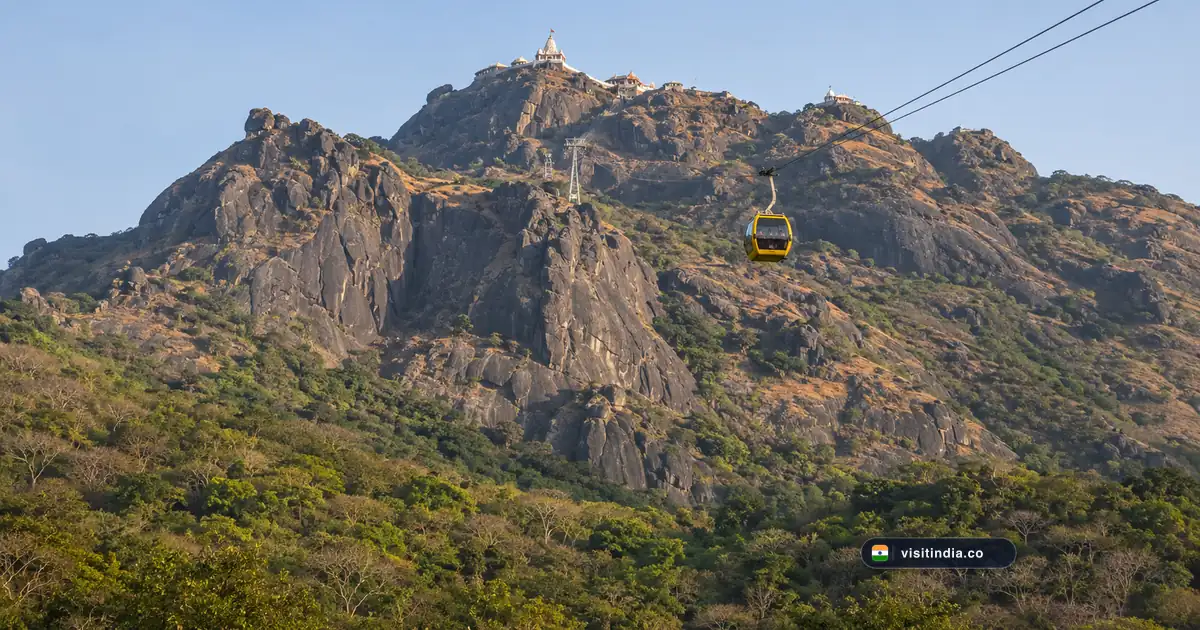
| Junagadh & Mount Girnar | Saurashtra Heartland (Junagadh) | 2 Days | Girnar Ropeway, Uparkot Fort, Mahabat Maqbara, Ashoka Rock Edicts | Junagadh Junction / Rajkot Airport (RAJ) |
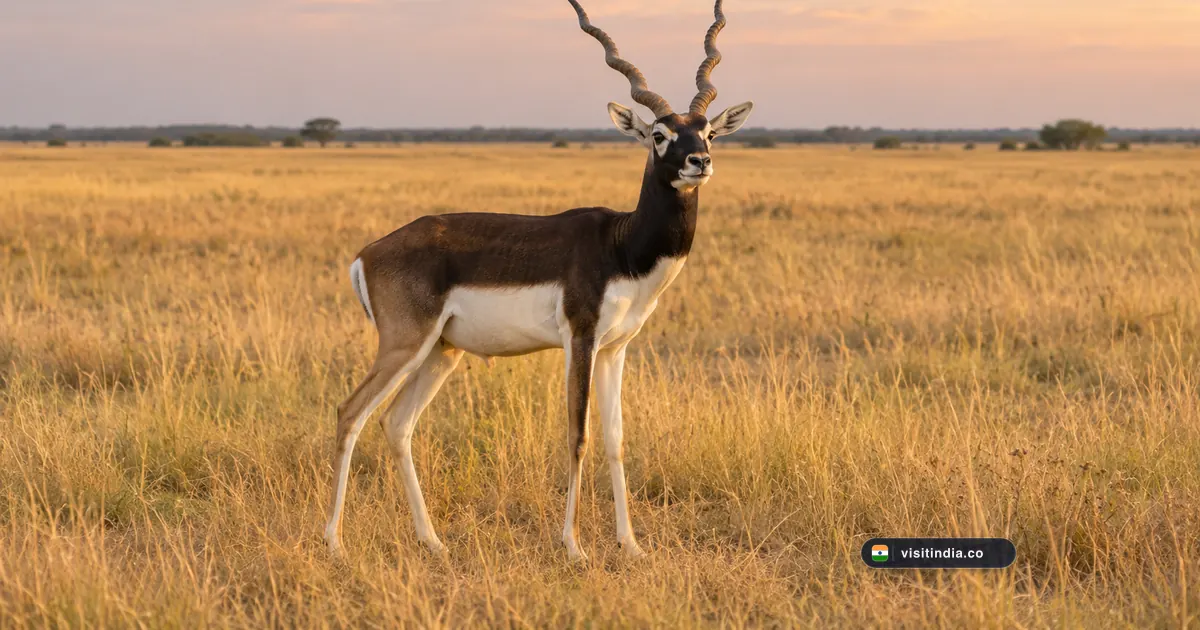
| Palitana & Bhavnagar | Southeastern Saurashtra (Bhavnagar) | 1 to 2 Days | Shatrunjaya Hill Jain Temples, Takhteshwar Temple, Blackbuck National Park | Bhavnagar Terminus / Ahmedabad Airport |
Each destination cluster features distinct cultural traditions, landscape forms, and culinary habits. Selecting adjacent regions ensures travelers spend less time driving and more time exploring local monuments and sanctuaries. Travelers planning Saurashtra hill circuits can consult our Girnar Ropeway and Uparkot Fort Junagadh guide for cabin fares, step milestones, and monument timings.
Geographic Landscape and Four Distinct Travel Zones
Gujarat displays a diverse geographical profile characterized by arid salt pans, volcanic hill ranges, fertile river plains, and a sweeping coastal perimeter. Geographers partition the state into four distinct physical regions based on landforms, climate patterns, and river basins.
The northernmost zone comprises the district of Kutch, the largest administrative district in India. This arid expanse contains the Great Rann of Kutch to the north and the Little Rann of Kutch to the east. Seasonal tides flood these basins before winter sunshine dries the surface into salt crystals. Wildlife enthusiasts can explore these salt flats and the endangered Khur habitat via our comprehensive Velavadar and Little Rann wild ass safari guide.
South of Kutch lies the Saurashtra peninsula, bordered by the Gulf of Kutch and the Gulf of Khambhat. Saurashtra features dry deciduous woodlands, volcanic crags around Mount Girnar, and ancient coastal fishing towns. The region forms the exclusive global sanctuary for wild Asiatic lions in the Gir forest.
The central mainland zone extends across alluvial plains fed by the Sabarmati, Mahi, and Narmada rivers. This flat corridor houses major economic hubs, including Ahmedabad, Gandhinagar, and Vadodara. The landscape consists of productive agricultural fields, medieval stepwells, and active commercial networks.
The southern region extends from Bharuch and Surat to the forested slopes of the Dangs and Valsad. Bordering Maharashtra, this belt receives the highest rainfall in the state, supporting teak forests and river rapids. Travelers can review statewide route maps coordinated by the District Administration Ahmedabad Official Tourism Directory when planning journeys.
Ahmedabad World Heritage City and Sabarmati Riverfront
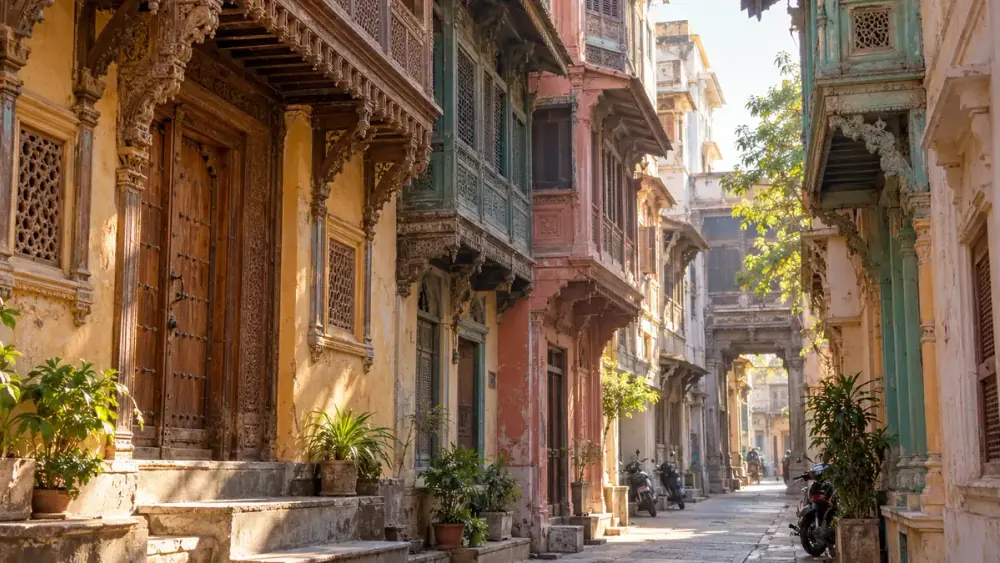
Ahmedabad was designated as India’s first UNESCO World Heritage City in 2017, recognized for urban settlements dating back to 1411 CE. The historic quarter on the eastern bank of the Sabarmati River preserves traditional neighborhoods called pols. These residential clusters feature gated lanes, shared courtyards, and communal bird feeders known as chabutras.
Carved wooden facades define the architecture of pol havelis, displaying intricate brackets, balconies, and floral friezes. Beneath the houses, private rainwater harvesting cisterns called tankas supplied freshwater throughout hot summer months. Walking tours through the Old City lead visitors past stone mosques, Jain shrines, and spice markets.
The Sidi Saiyyed Mosque, constructed in 1573, stands near the historic Bhadra Fort. The structure is world-renowned for its delicate sandstone lattice work screens, particularly the famous Tree of Life jali. The stone tracery features intertwining branches and foliage carved with geometric precision from solid yellow sandstone.
On the western bank of the river stands the Sabarmati Ashram, founded by Mahatma Gandhi in 1917. Gandhi directed the Indian independence movement from this quiet riverside compound for twelve years, launching the historic Salt March in 1930. Visitors can walk through Hriday Kunj, Gandhi’s modest cottage, which displays his spinning wheel and desk.
North of Ahmedabad lies Gandhinagar, the planned capital city situated amid extensive green tree canopies. Gandhinagar hosts the monumental Swaminarayan Akshardham complex, built from pink Rajasthani sandstone with carved pillars and gardens. Nearby, the Adalaj Stepwell features five underground storeys of Solanki craftsmanship designed to shelter travelers from desert heat.
Rani ki Vav and the Stepwells of Northern Gujarat
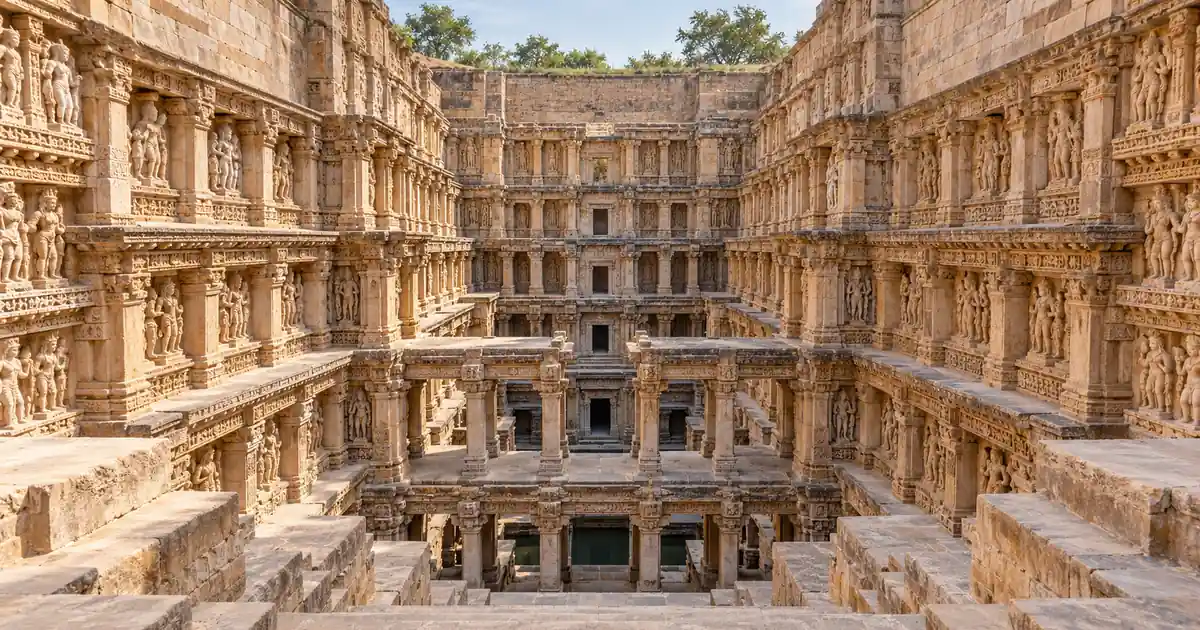
Located in Patan, Rani ki Vav ranks among the most sophisticated subterranean stepwells in South Asia. Queen Udayamati commissioned this underground monument in the late 11th century to honor her late husband, King Bhima I. The structure served both as a spiritual sanctuary and a community water reservoir on the Saraswati River.
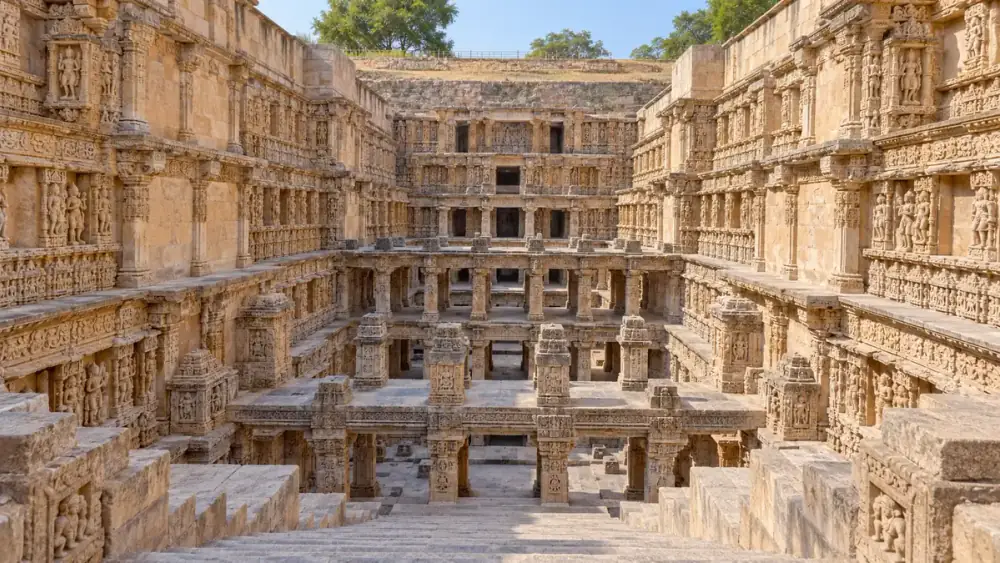
Rani ki Vav represents an inverted temple design, stepping downward through seven distinct terraced levels to an underground well shaft. Over eight hundred major sculptures and fifteen hundred minor carvings adorn the inner retaining walls and pillared pavilions. Fine stone panels depict the avatars of Lord Vishnu, celestial apsaras, and guardian deities.
The central masterpiece of the stepwell depicts Lord Vishnu reclining upon the thousand-headed serpent Sheshanaga on the deepest wall level. Silt deposits from the shifting Saraswati River buried the monument for centuries, preserving its sandstone carvings from weathering. Today, the site operates under conservation guidelines cataloged on the Archaeological Survey of India World Heritage Sites registry.
Stepwells provided cool rest houses for merchants traveling ancient caravan routes across Gujarat. Travelers can examine architectural details, access roads, and visitor guidelines in our dedicated guide to Rani ki Vav Patan highlights and timings. Visitors can also explore local family workshops to observe master weavers crafting genuine double ikat Patola silk sarees.
Master artisans in Patan demonstrate the ancient double ikat silk weaving technique.
Modhera Sun Temple and Solanki Architectural Masterpieces
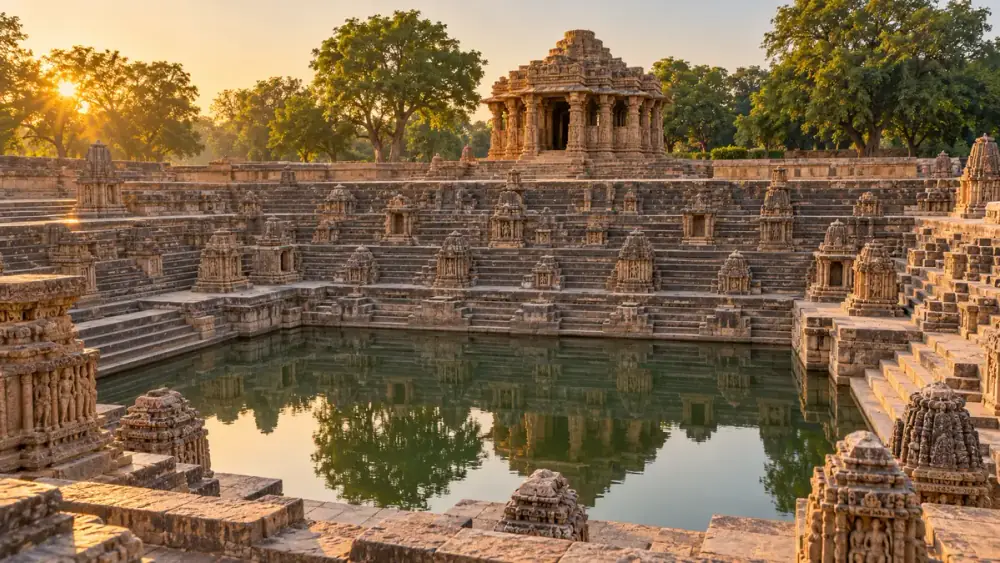
The Sun Temple at Modhera stands 25 kilometers south of Patan along the tranquil banks of the Pushpavati River. Commissioned in 1026 CE during the reign of King Bhima I, the temple pays homage to the solar deity Surya. The complex remains an outstanding model of the Solanki school of temple architecture.
The complex divides into three distinct components: the Surya Kund water tank, the Sabha Mandapa assembly hall, and the Guda Mandapa sanctum. The eastern entrance aligns so that rising sunbeams illuminated the golden image of Surya during the equinoxes. Outer sandstone walls feature ornate carvings detailing solar deities, mythological guardians, and seasonal cycles.
In front of the main temple structure lies the rectangular Surya Kund, an elaborate stepped tank containing 108 miniature shrines along its terraces. Intricately carved stone steps form symmetrical geometric patterns descending to the water line. The adjacent Sabha Mandapa rests upon 52 carved pillars, each representing a week in the solar year.
Every January, the monument provides the backdrop for the Uttarardh Mahotsav, a classical dance festival organized by the state cultural council. Renowned Indian classical dancers perform Bharatanatyam, Kathak, and Odissi under floodlights against ancient carved stone facades. Travelers can explore entry tickets, camera regulations, and day-trip routes in our comprehensive guide to the Sun Temple at Modhera.
The Great Rann of Kutch and Dhordo White Desert
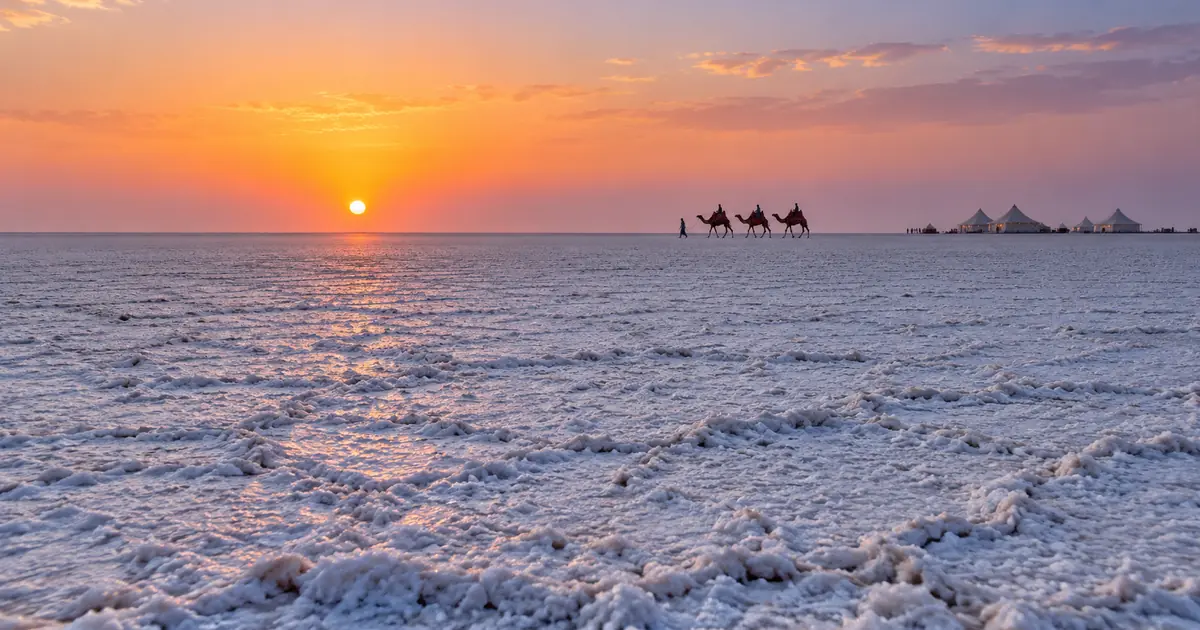
The Great Rann of Kutch covers over 7,500 square kilometers across northern Gujarat, forming one of the largest seasonal salt flats in the world. During the summer monsoon, coastal tides and seasonal river floods submerge the flat basin under shallow seawater. As winter sets in, intense solar evaporation leaves behind billions of tons of crystalline white salt.
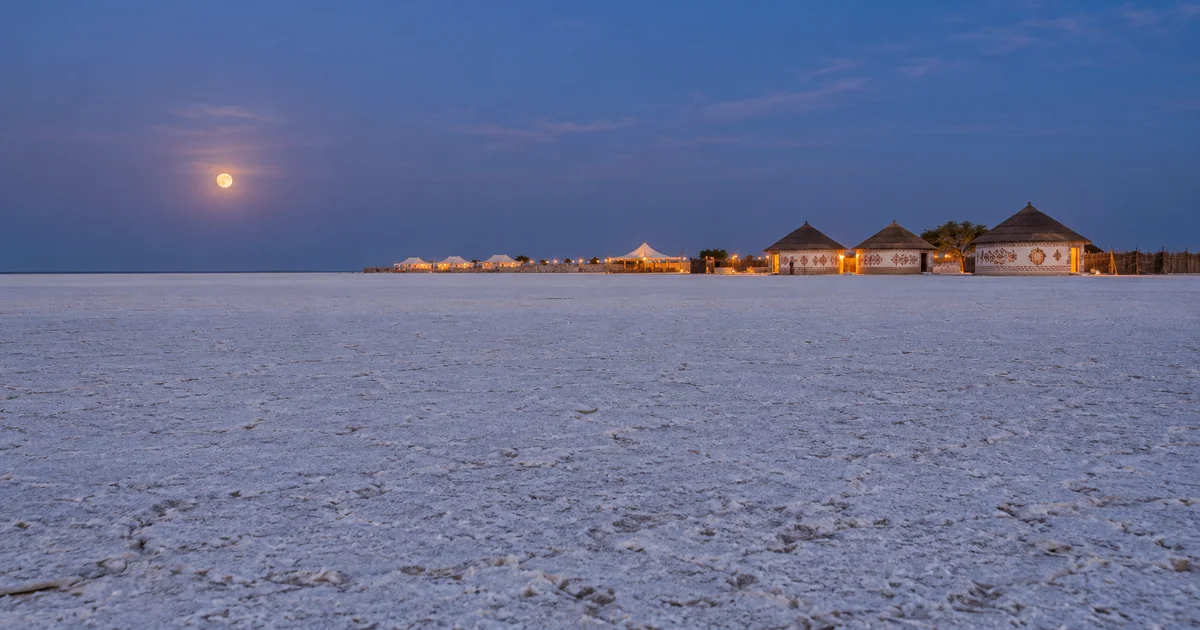
This vast desert expanse turns blindingly white under the winter sun, stretching to an unbroken horizon without vegetation. During full moon nights from November to February, the salt crust reflects moonlight in silver tones across the desert plain. Visitors arrive from around the globe to walk on the hardened salt floor and watch evening sunsets.
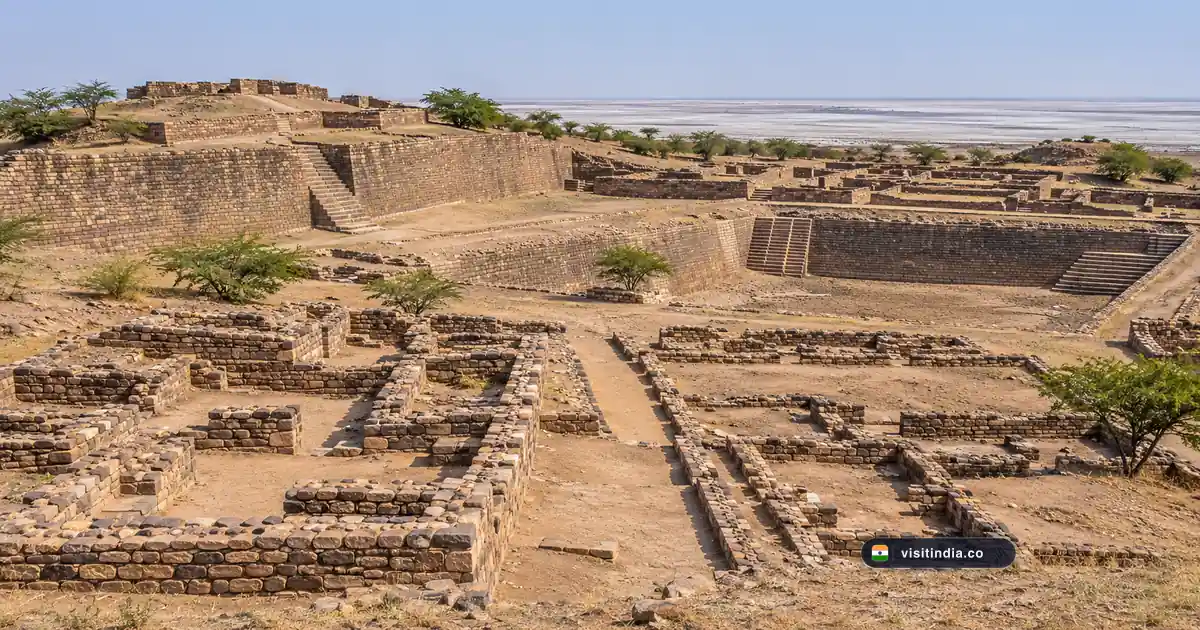
Near Dhordo village, the annual Rann Utsav festival establishes a sprawling tent city featuring comfortable accommodations, dining halls, and folk performance arenas. Traditional camel carts transport travelers from parking gates across the salt flats to wooden observation towers. Visitors planning a winter journey can review permit rules, packing recommendations, and transport options in our complete Rann Utsav Kutch highlights and timings, or drive across the salt flats causeway to the UNESCO Harappan city documented in our Dholavira Road to Heaven guide.
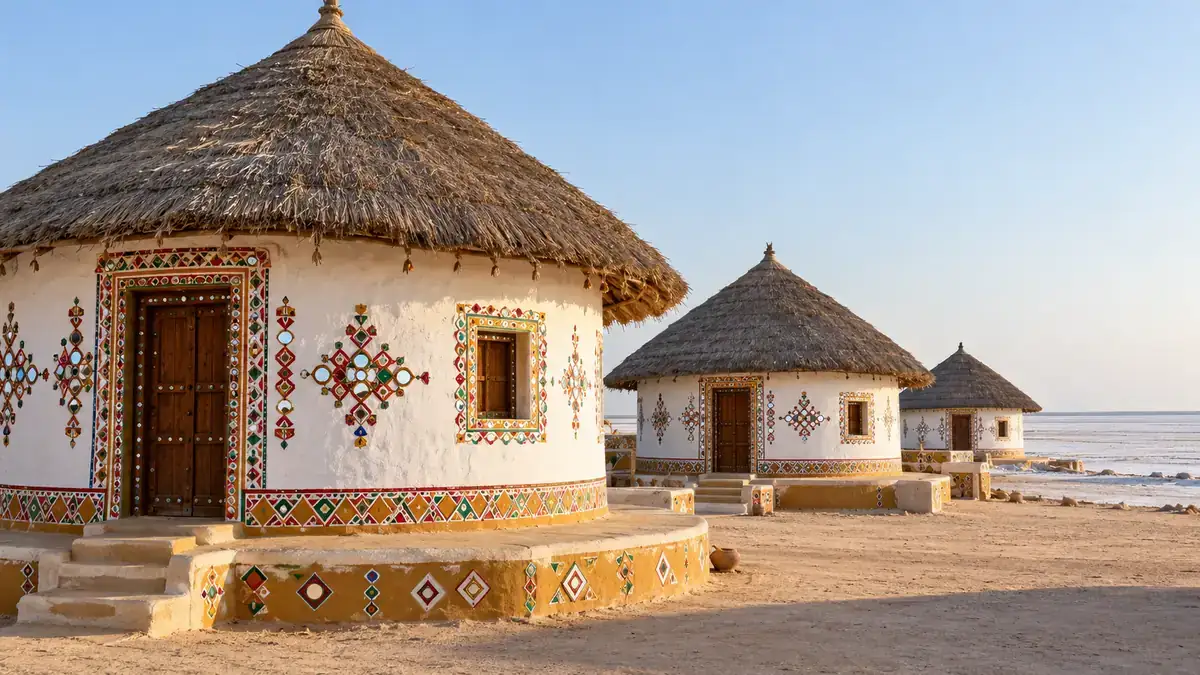
Beyond the white desert, Kutch preserves ancient artisan villages where pastoral communities practice distinctive craft traditions. Hamlets like Nirona display Rogan art painted with castor seed oil, alongside copper bell making and lacquer woodcarving. Regional border zone access rules and artisan routes are maintained by the District Administration Kachchh Official Tourism Directory.
Dwarkadhish Temple and the Sacred Kingdom of Dwarka
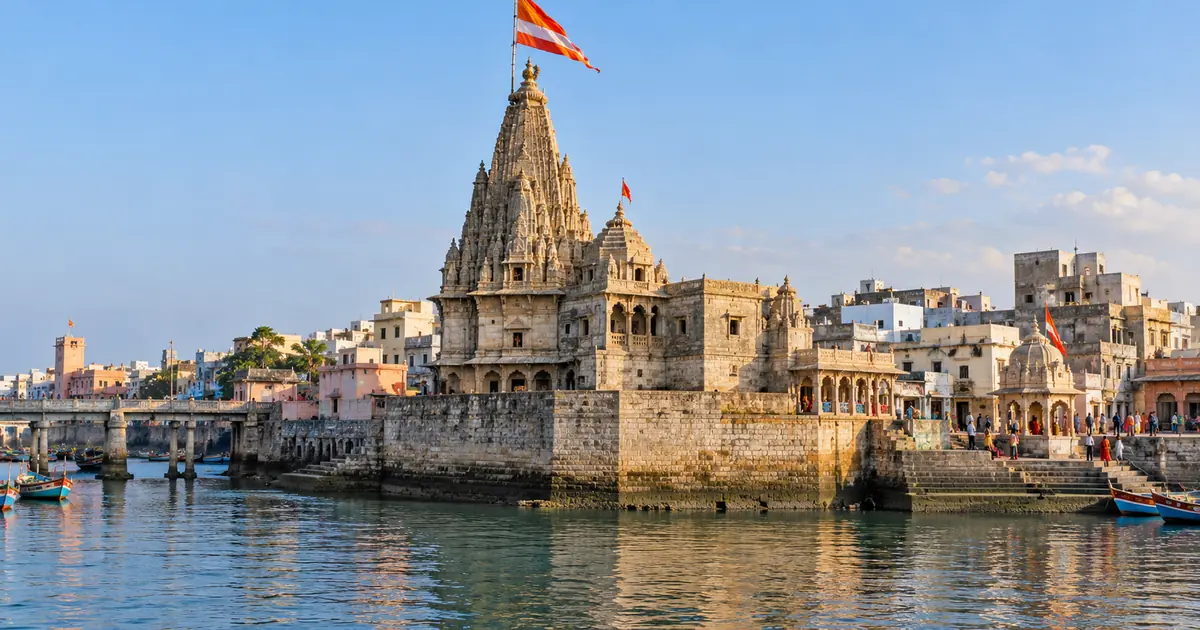
Dwarka sits on the westernmost tip of the Saurashtra peninsula where the Gomti River empties into the Arabian Sea. Revered as the historic capital of Lord Krishna, Dwarka forms the western pillar of the sacred all-India Char Dham pilgrimage network. Devotees also honor the holy town as one of the seven ancient Sapta Puri cities believed to grant liberation.
The spiritual focal point of the town is the Dwarkadhish Temple, known locally as Jagat Mandir. Rising over 78 meters into the coastal sky, the main spire is constructed from golden-brown limestone supported by 72 carved sandstone pillars. The sanctum enshrines a dark stone image of Lord Krishna depicted in royal splendor as Trivikrama.
A notable ritual at the temple is the Dhwajarohan ceremony, during which a 52-yard silk flag is raised atop the main spire. Priests ascend the tower five times daily to replace the flag with banners displaying sun and moon emblems. The 52 yards symbolize the fifty-two gates of ancient Dvaravati alongside fifty-two administrative departments of Krishna’s mythological court.
Pilgrims enter the temple through Moksha Dwara on the north and exit down 56 stone steps through Swarga Dwara leading to Gomti Ghat. The riverbank features small temples, bathing steps, and views of local ferry boats heading out to the open sea. Complete darshan timings, aarti procedures, and seasonal festival crowds are documented in our dedicated guide to Dwarkadhish Temple.
Nageshwar Jyotirlinga and Bet Dwarka Coastal Shrines
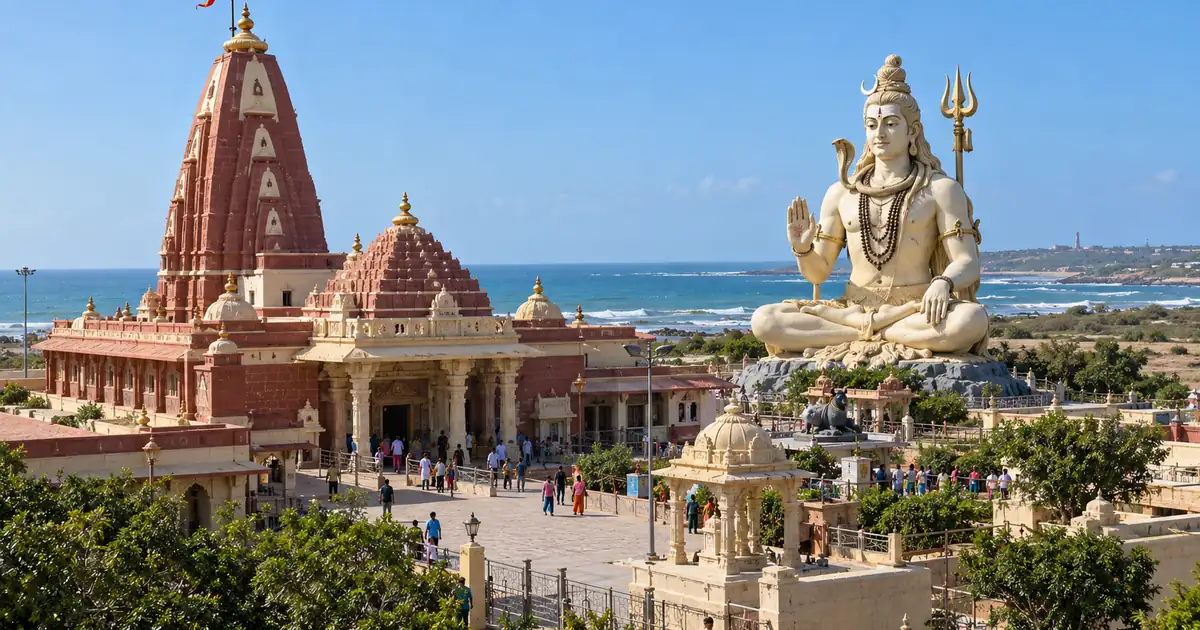
Located 17 kilometers northeast of Dwarka along the coastal highway stands Nageshwar Mahadev Temple. The shrine is revered as one of the twelve sacred Jyotirlingas, representing Lord Shiva as the conqueror of venom and earthly fears. Sacred texts identify this arid region with the ancient forest of Darukavana, where Shiva manifested as an infinite pillar of light.
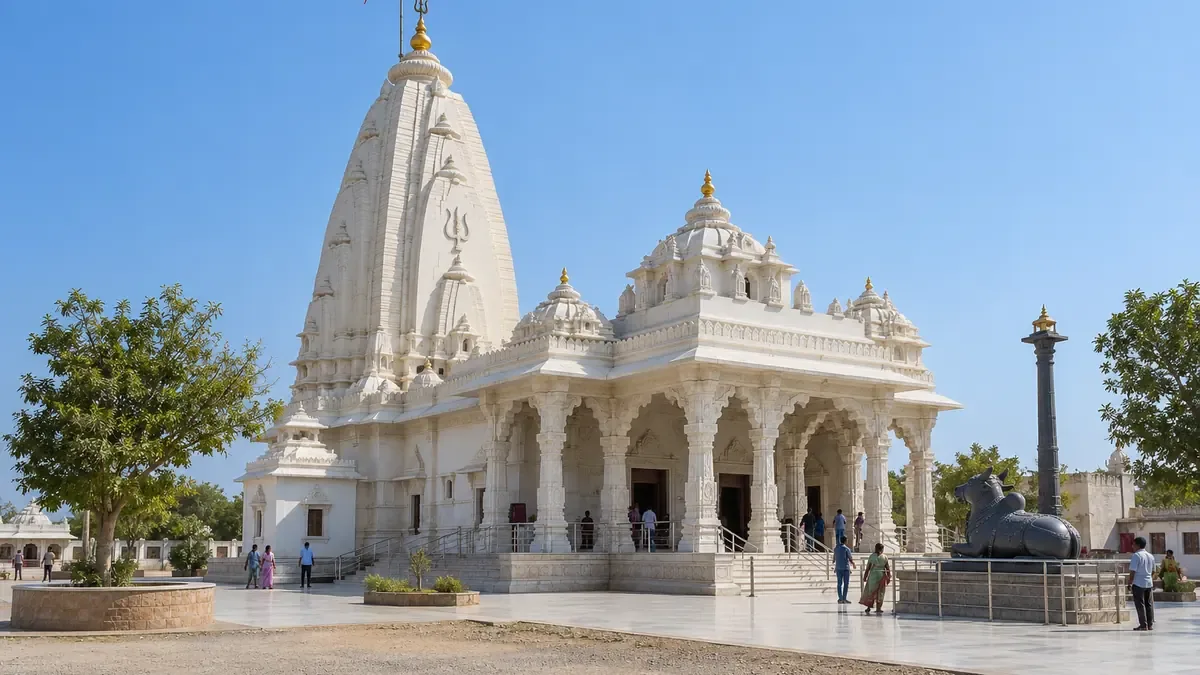
The temple courtyard features a monumental 25-meter statue of Lord Shiva seated in meditative posture, visible across the flat Saurashtra countryside. Inside the underground marble sanctum, the primary lingam sits level with the floor, facing south contrary to standard northern temple alignments. Devotees can offer jal and bilva leaves directly upon the sacred stone during morning prayer hours.
North of Nageshwar lies the port town of Okha, the departure point for Bet Dwarka island. According to regional mythology, Bet Dwarka served as the personal residence of Lord Krishna and the meeting place where he received his childhood companion Sudama. The island shrine preserves quiet courtyards where devotees traditionally offer grain to commemorate Sudama’s gift of beaten rice.
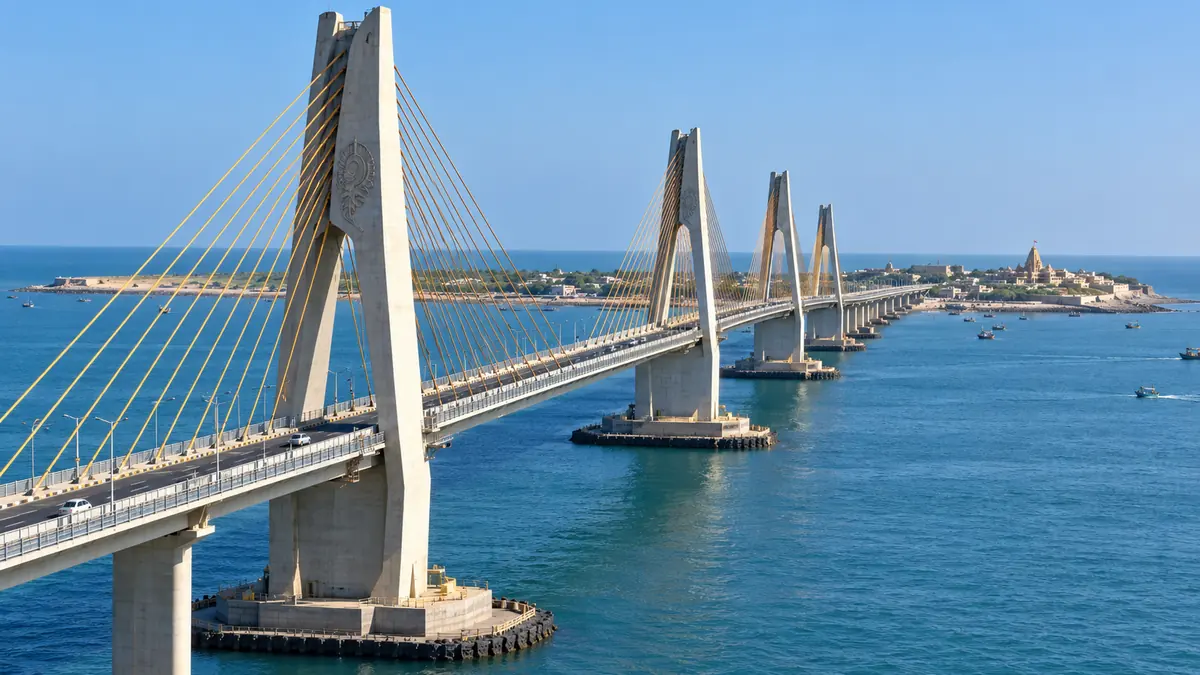
Travelers no longer rely solely on crowded ferry boats to reach the island sanctuary. The newly completed Sudarshan Setu, a 2.32-kilometer cable-stayed bridge, now connects the mainland at Okha directly to Bet Dwarka. Travelers planning an excursion to both coastal shrines can check driving routes and darshan rituals in our Nageshwar Jyotirlinga guide.
Somnath Temple and the Sacred Arabian Sea Coastline
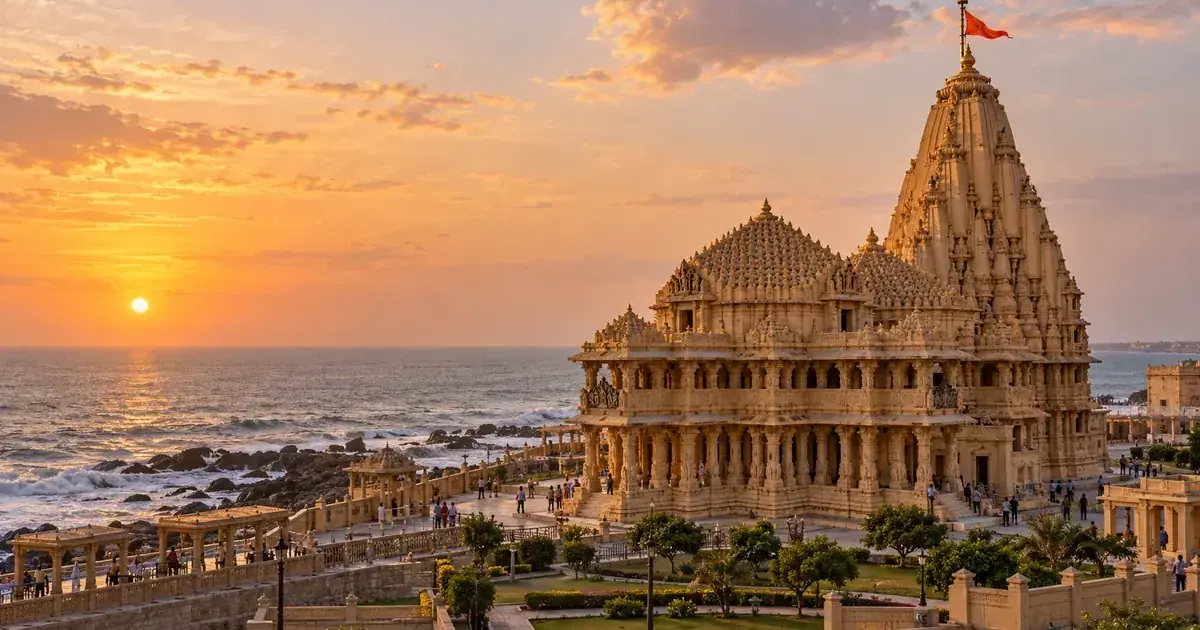
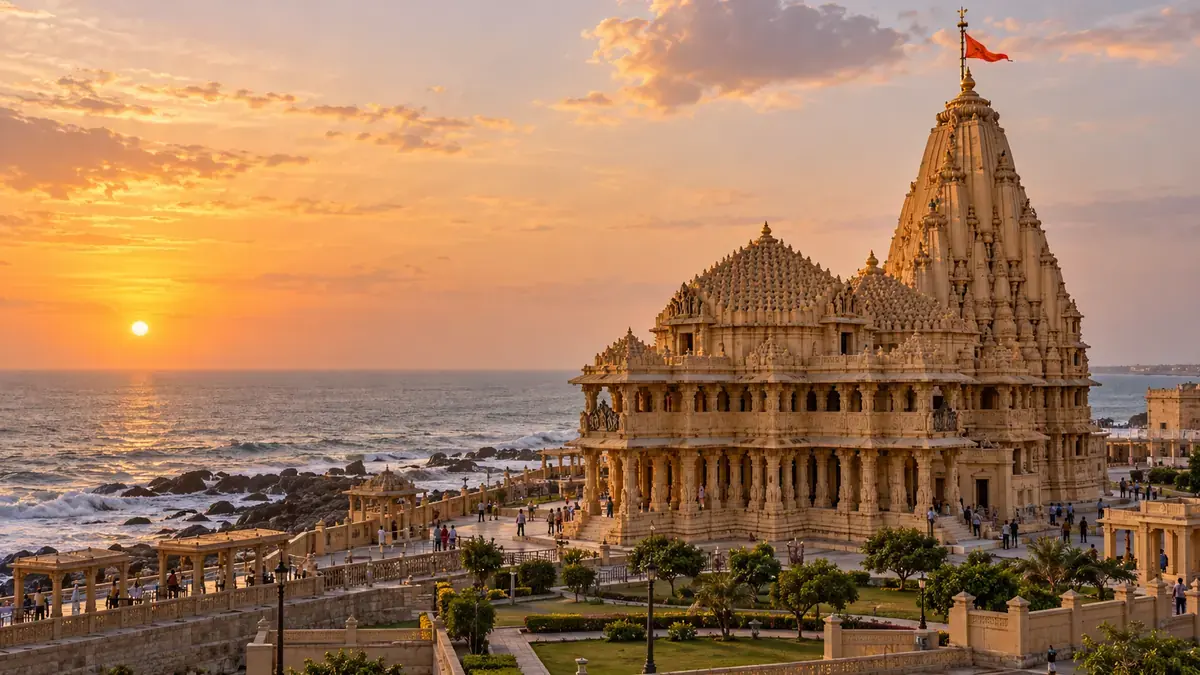
Somnath Temple rises on the southern coast of Saurashtra in Prabhas Patan, overlooking the Arabian Sea. Revered across Hindu scripture as the foremost of the twelve Dwadasha Jyotirlingas, the shrine holds supreme historical and spiritual prominence. Ancient scriptures record that the moon god Chandra worshipped Lord Shiva here to cure a debilitating curse and regain his cosmic brilliance.
The present temple stands built in the grand Kailash Mahameru Prasad architectural style from honey-colored Porbandar sandstone. Sardar Vallabhbhai Patel initiated the reconstruction of the shrine in 1947, completing the sanctum in 1951 with traditional Hindu temple proportions. The structure features an imposing seven-tiered shikhara rising 50 meters high, topped with a massive kalasha spire and flag.
On the sea-facing promenade stands the ancient Baan Stambh, or Arrow Pillar, bearing an extraordinary astronomical inscription. The carved Sanskrit text states that an unimpeded sea path extends southward from this pillar directly to the South Pole without touching land. Modern cartographers confirm this geographic fact, demonstrating the advanced maritime and astronomical knowledge of ancient Indian scholars.
Every evening, the temple walls provide the backdrop for an open-air light and sound show narrating the dramatic history of the shrine. Nearby, the Triveni Sangam marks the sacred confluence where the Hiran, Kapila, and Saraswati rivers meet the Arabian Sea. Coastal pilgrimage facilities and temple guest houses are coordinated through the District Administration Gir Somnath Official Tourism Directory.
Devotees can review darshan rules, security locker procedures, and railway links in our comprehensive guide to Somnath Temple. Morning aartis and evening oceanfront views offer memorable spiritual experiences along this historic shore.
Gir National Park and the Asiatic Lion Wilderness
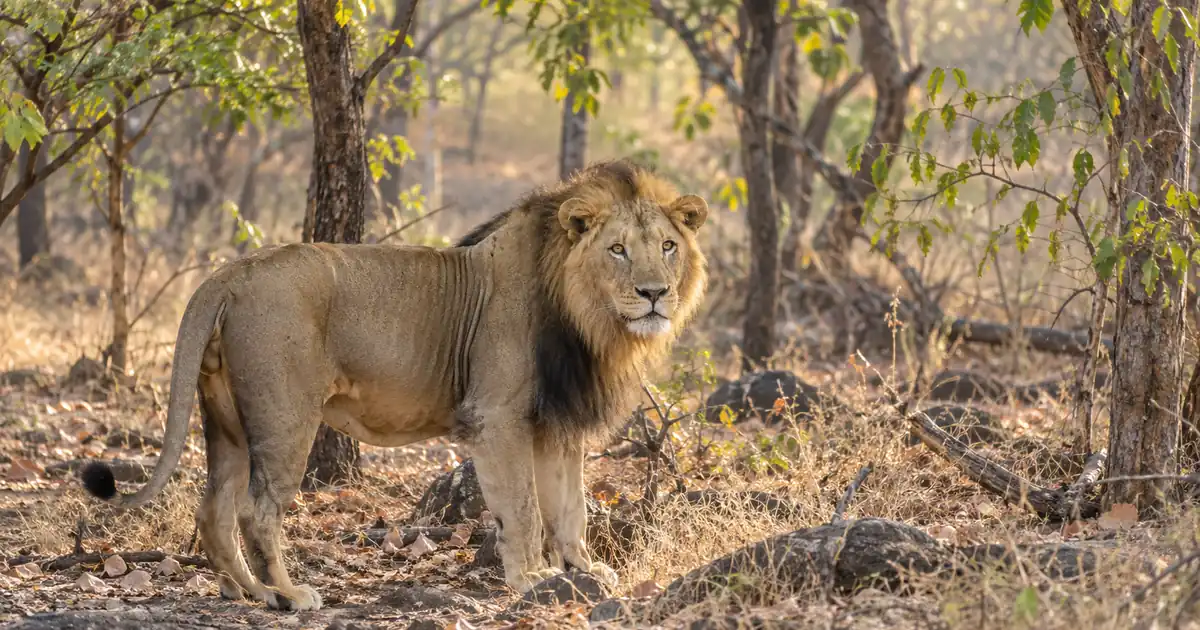
Gir National Park and Wildlife Sanctuary spans 1,412 square kilometers across the southern hills of Saurashtra. Established in 1965, the reserve protects the last remaining wild population of the Asiatic lion (Panthera leo persica) on Earth. The park’s hilly terrain comprises dry deciduous teak forests, thorny acacia scrub, and perennial rivers that support rich wildlife communities.
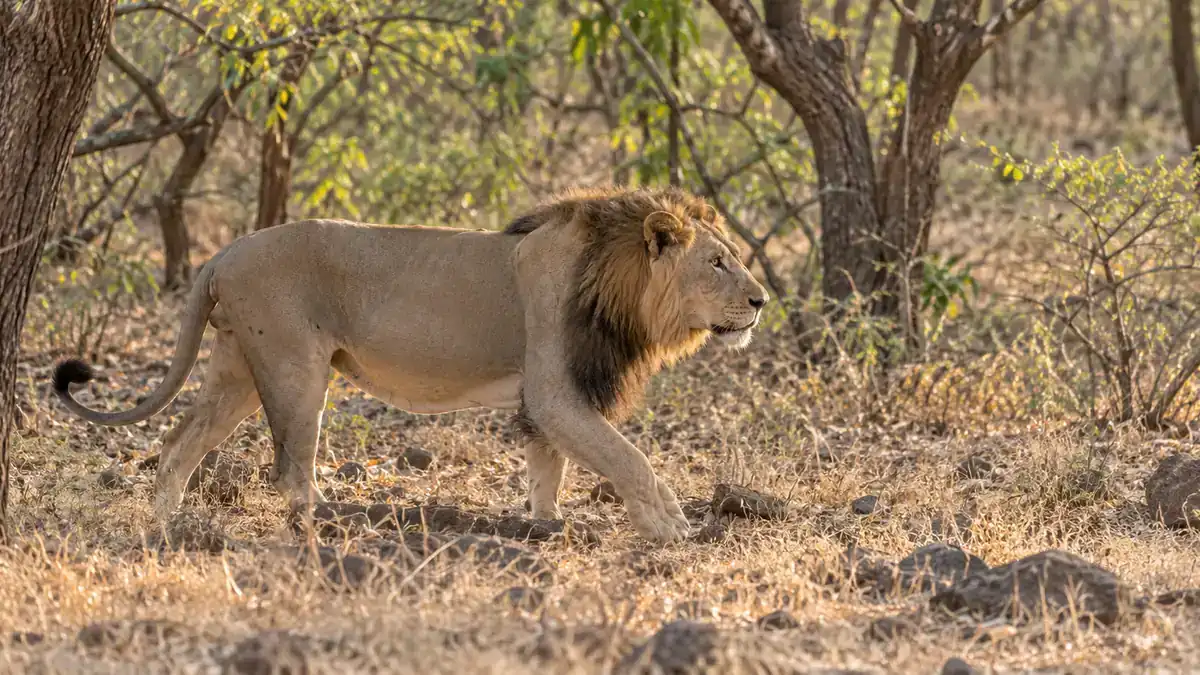
Intensive conservation efforts by the Gujarat Forest Department have helped the lion population rebound from fewer than twenty individuals in the early 20th century to over six hundred seventy animals today. Asiatic lions differ from their African counterparts with slightly smaller bodies, sparser manes, and a distinct longitudinal fold of skin running along their bellies.
In addition to lions, the reserve protects over three hundred Indian leopards, forming one of the densest leopard populations in the country. The forest supports large herds of chital (spotted deer), sambar, nilgai, four-horned antelopes (chousingha), and wild boars. The marshy waters of the Kamleshwar reservoir inside the park harbor over three hundred mugger crocodiles and resident raptors.
Jeep safaris operate daily from the reception center at Sasan Gir, following designated wilderness tracks under official supervision. To protect wildlife habitats, the state government strictly regulates vehicle quotas across morning and afternoon shifts. Travelers can check wildlife safari timings, route details, and gypsy rules in our dedicated guide to Gir National Park.
Visitors should schedule at least three game drives over two days to maximize chances of spotting lions roaming across dry riverbeds. District transit connections and eco-tourism circuit advisories are published by the District Administration Junagadh Official Tourism Directory.
Statue of Unity and the Narmada River Corridor
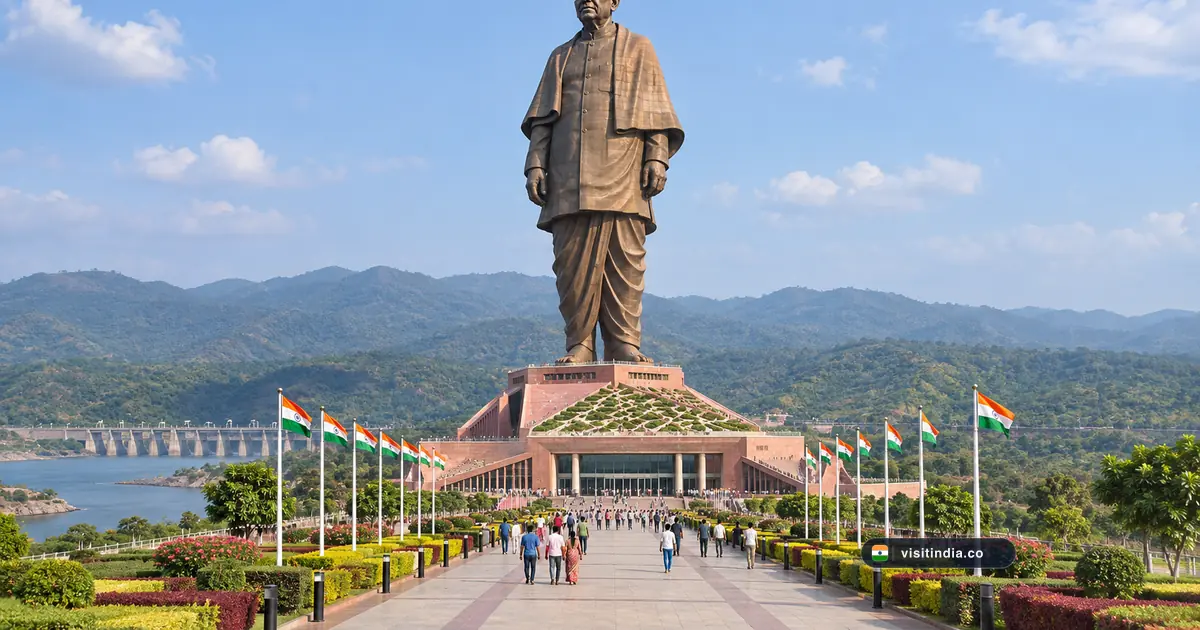
Rising 182 meters above the waters of the Narmada River in Ekta Nagar, the Statue of Unity is the tallest monument in the world. Dedicated to Sardar Vallabhbhai Patel, the visionary leader who unified over 560 princely states into modern India, the bronze-clad colossus stands twice the height of New York’s Statue of Liberty.
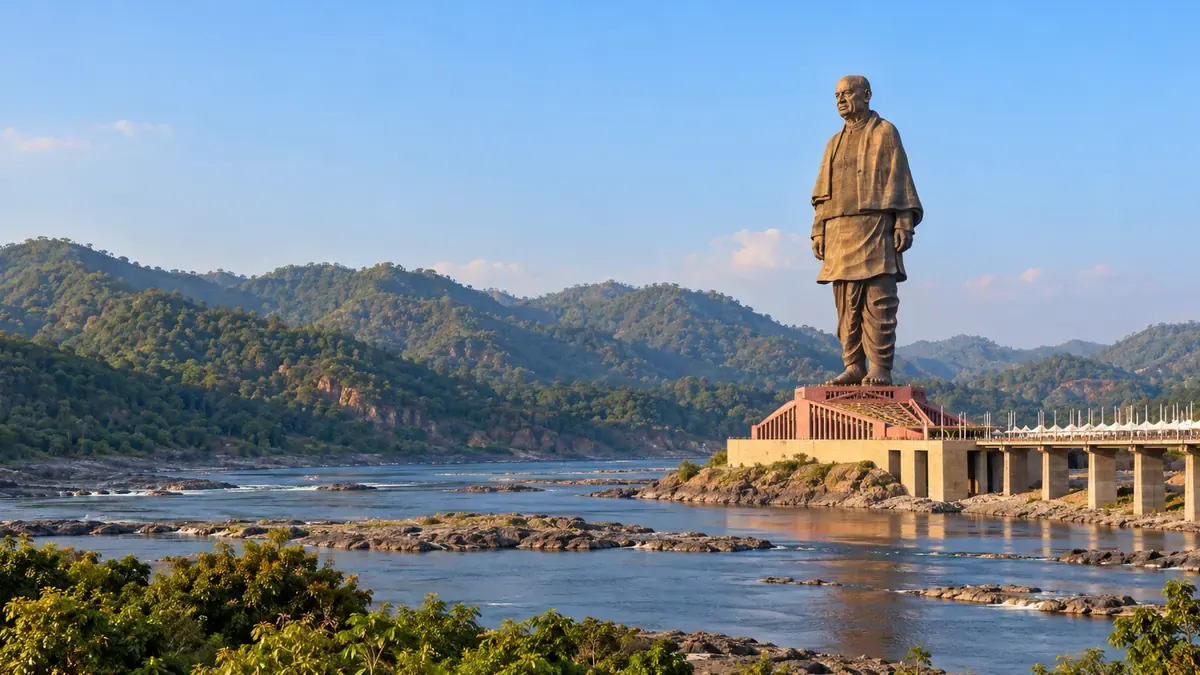
The monument rests upon Sadhu Bet island facing the massive concrete ramparts of the Sardar Sarovar Dam. Built from structural steel, reinforced concrete, and thousands of cast bronze plates, the statue can withstand earthquakes and severe wind gusts. High-speed passenger elevators ascend inside the monument’s legs in forty seconds to an observation gallery located at an elevation of 153 meters.
The viewing gallery accommodates up to two hundred visitors at a time, offering wide views of the Narmada river valley, the dam reservoirs, and forested mountain ranges. At the base of the statue, an expansive museum hall houses interactive audiovisual exhibits documenting Patel’s life and the diplomatic process of national unification.
Curated surrounding attractions include the Valley of Flowers, a riverside Butterfly Garden, an exotic Cactus Greenhouse, and the Arogya Van wellness park. In the evening, tourists gather to watch the Sardar Sarovar projection mapping show. Travelers can review advance viewing gallery slots, elevator tiers, and rail connections in our dedicated Statue of Unity ticket booking and Ekta Nagar guide. Visitors can explore riverside walking trails and boat cruises along the reservoir to admire the engineering scale of the dam project.
Signature Festivals, Navratri Garba, and Uttarayan
Gujarat hosts spirited cultural celebrations characterized by enthusiastic community participation, folk rhythms, and colorful attire. The most prominent celebration is Navratri, the nine-night autumn festival honoring Goddess Durga. Towns and cities across the state transform into open-air dance arenas illuminated by floodlights and decorative fabrics.
During Navratri, thousands of dancers gather in traditional chaniya cholis and embroidered kediyus. Participants move in concentric circles to perform Garba and Dandiya Raas to the rhythmic pulse of dhol drums. Venues like United Way in Vadodara and the GMDC grounds in Ahmedabad host tens of thousands of dancers each evening.
The energy and discipline of the dancers make Navratri one of India’s most memorable cultural spectacles for visiting tourists. Visitors can watch dancers spin gracefully under starlit canopies while listening to devotional folk poetry.
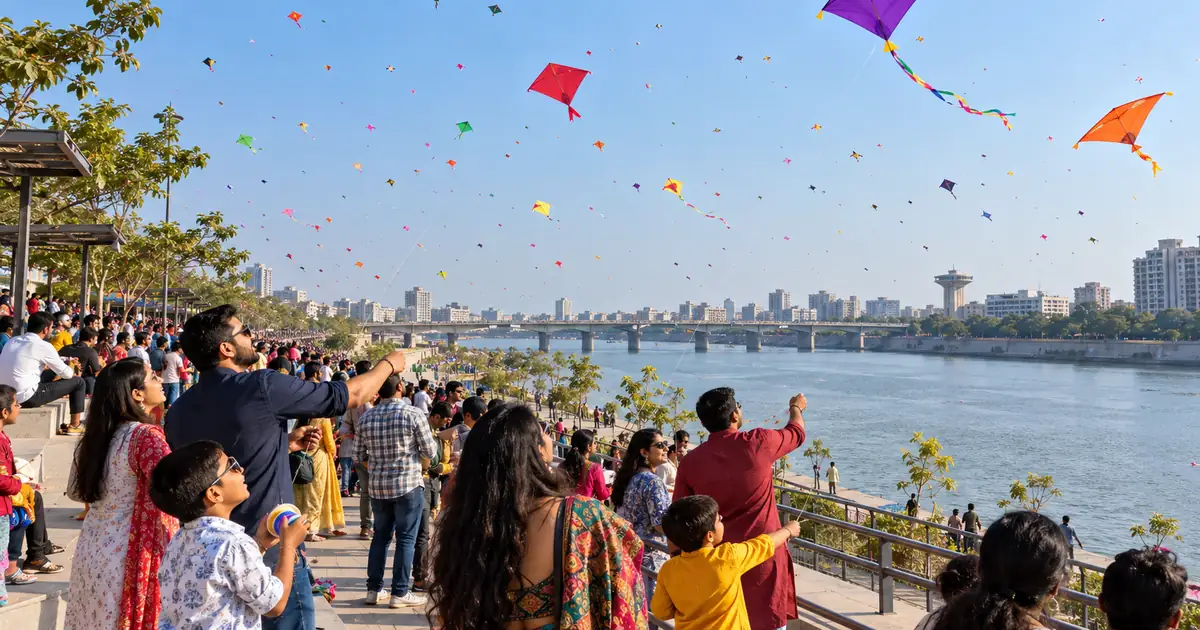
Uttarayan marks the world-famous celebration held every January 14 and 15 for Makar Sankranti. Millions of residents across Ahmedabad, Surat, and Vadodara take to rooftops to fly colorful paper kites in friendly aerial battles. Travelers can learn about rooftop competitions, night lantern flights, and Sabarmati workshops in our complete guide to the attending International Kite Festival Gujarat.
Other notable gatherings include the Bhavnath Mahadev Fair held at the foot of Mount Girnar during Maha Shivratri, famous for the procession of Naga sadhus. In western Saurashtra, the Madhavpur Ghed cultural fair celebrates the mythological wedding of Lord Krishna and Rukmini with traditional dance troupes from northeastern India.
Gujarati Gastronomy: Thali Traditions and Street Delicacies
Gujarati cuisine represents one of the oldest and most sophisticated vegetarian culinary traditions in the world. Rooted in Vaishnava and Jain philosophies of non-violence, the cuisine balances sweet, salty, and sour flavors with subtle spice blends. A typical household meal relies on freshly ground grains, yogurt, lentils, and seasonal vegetables tempered with mustard seeds and curry leaves.
The centerpiece of the regional culinary heritage is the Gujarati Thali, an elaborate multi-course meal served on a round brass platter. A traditional thali includes several vegetarian curries (shaak), sweet-and-sour Gujarati dal, cooling yogurt-based kadhi, and paper-thin wheat flatbreads called rotli or puran poli. The meal is accompanied by steamed rice, roasted papad, spicy pickles, and cooling chaas (buttermilk).
Farsan snack foods play an indispensable role in daily food rituals across Gujarat. Popular specialties include spongy steamed khaman made from fermented gram flour and tempered with mustard seeds and green chilies. Other favorites include thin khandvi rolls garnished with fresh coconut, crispy thepla, and savory fafda served alongside green papaya sambharo and sweet jalebis.
Regional cooking traditions vary significantly across geographic zones. In Saurashtra, Kathiawadi cuisine features spicy dishes like sev tameta nu shaak and roasted baingan bharta served with thick bajra rotla and jaggery. In the southern city of Surat, food lovers savor winter specialties like undhiyu, a slow-cooked casserole of winter root vegetables, fenugreek dumplings, and green beans cooked in earthen pots.
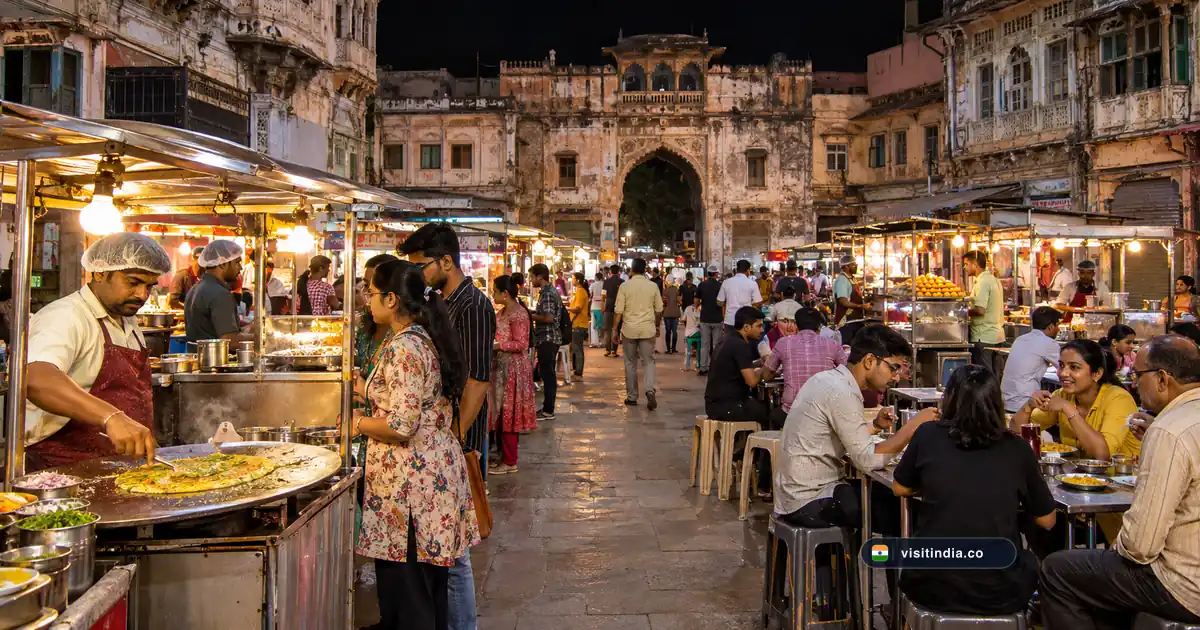
Ahmedabad’s historic night food market at Manek Chowk transforms the daytime jewelry bazaar into an outdoor dining hub after dark. Diners sample butter dosas, pav bhaji, cold kulfi, and fusion sandwiches until the early hours of the morning, detailed in our Manek Chowk and Gujarati thali food guide. In Vadodara, spicy sev usal topped with crunchy farsan and spring onions remains a beloved breakfast favorite.
Recommended Itineraries and Multi-Day Travel Circuits
Planning an efficient journey through Gujarat requires selecting logical highway and rail corridors that connect complementary travel destinations. The following three curated travel circuits cater to different vacation lengths and traveler interests:
The 5-Day Golden Heritage Express focuses on central and northern Gujarat. Days one and two explore the UNESCO streets of Ahmedabad, the Sabarmati Ashram, and the Adalaj Stepwell. Day three covers the Modhera Sun Temple and Patan, while days four and five explore the Statue of Unity in Ekta Nagar before returning to Ahmedabad.
The 8-Day Saurashtra Spiritual and Wildlife Route combines coastal temples with wilderness game drives. Beginning in Jamnagar, travelers spend two days exploring Dwarkadhish Temple, Nageshwar Jyotirlinga, and Bet Dwarka. The route continues south to Somnath for coastal aarti, followed by two days of lion safaris in Gir National Park and heritage sightseeing in Junagadh.
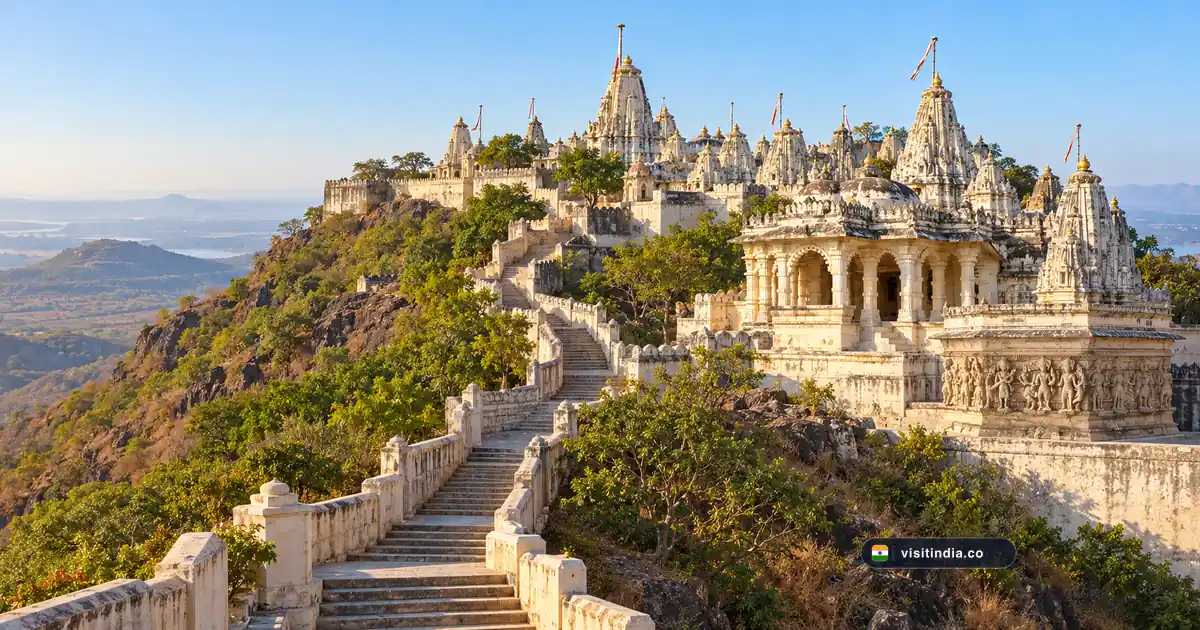
The 12-Day Grand Gujarat Expedition provides an exhaustive loop across all major regions. The journey begins in Ahmedabad and travels north to Patan before entering Kutch for three days of desert exploration. From Kutch, travelers drive south across Saurashtra to Dwarka, Somnath, Gir National Park, and Mount Shatrunjaya’s 863 marble shrines outlined in our Palitana Jain temple 3800 steps timings guide, concluding with a scenic drive to the Statue of Unity and Vadodara.
Seasonal Weather and Best Time to Visit Gujarat
Gujarat experiences a subtropical climate marked by three distinct seasons: mild winter, intense summer, and humid monsoon. Planning travel dates around temperature trends ensures comfortable sightseeing across outdoor desert plains and coastal temple complexes.
The seasonal comparison table below outlines monthly weather patterns, temperature averages, and travel conditions across Gujarat. Travelers can evaluate these metrics to choose the most suitable window for desert camping and wildlife safaris.
| Season | Calendar Months | Temperature Range | Road Conditions | Recommended Activities |
|---|---|---|---|---|
| Winter Peak | October to March | 12°C to 28°C (Pleasant and dry) | Excellent; highways fully open and dry | Rann Utsav desert walks, Gir lion safaris, temple pilgrimages, heritage walks |
| Summer Heat | April to June | 32°C to 44°C (Intense dry heat) | Clear roads; extreme midday heat | Early morning temple visits, indoor museum tours, quiet wildlife waterhole tracking |
| Monsoon Rain | July to September | 24°C to 33°C (Humid with rainfall) | Wet surfaces; waterlogging in low-lying coastal belts | Saputara hill station visits, Polo forest trekking, viewing seasonal waterfalls |
The winter season from October through March represents the prime window for traveling anywhere in Gujarat. Daytime temperatures remain comfortable for walking through open archaeological complexes and exploring wildlife reserves. This period coincides with cultural celebrations, including the Rann Utsav in Kutch, the International Kite Festival in Ahmedabad, and the Modhera Dance Festival.
The summer season from April through June brings scorching heat, with inland temperatures regularly exceeding 40°C in Ahmedabad, Kutch, and central plains. Outdoor sightseeing becomes difficult during midday hours, though wildlife enthusiasts often visit Gir forest because animals congregate around drying waterholes. Travelers visiting in summer must carry sun protection, lightweight cotton clothing, and ample hydration fluids.
The monsoon season from July through September delivers moderate rainfall across southern Gujarat and lighter showers across northern plains. While the salt flats of Kutch flood and close to tourists, the hill station of Saputara turns green with waterfalls and mist. The Polo Forest in Sabarkantha district flourishes, attracting hikers to ruined medieval temples and flowing streams.
Transportation Logistics: Airports, High-Speed Rail, and Highways
Gujarat maintains an advanced transport network that facilitates efficient movement across major commercial centers, pilgrimage towns, and remote desert districts. Travelers can combine air, rail, and highway routes to reach every corner of the state with ease.
Aviation gateways provide convenient regional access. Sardar Vallabhbhai Patel International Airport (AMD) in Ahmedabad operates direct flights to international destinations across Europe, the Middle East, Southeast Asia, and North America. Modern domestic airports in Surat (STV), Vadodara (BDQ), Rajkot Hirasar (RAJ), and Bhuj (BHJ) provide daily air connections to New Delhi, Mumbai, Bengaluru, and Hyderabad.
The rail network is managed by Western Railway, offering frequent broad-gauge connections across the state. Modern semi-high-speed trains connect Gandhinagar and Ahmedabad to Mumbai in just over five hours, stopping at Vadodara and Surat. Travelers can review high-speed schedules and onboard amenities in our comprehensive Vande Bharat Express tourist routes guide.
Highway infrastructure in Gujarat is among the finest in the country. The National Expressway 1 (NE-1) connects Ahmedabad and Vadodara, while sections of the Delhi-Mumbai Expressway pass through eastern Gujarat. State-run GSRTC buses and private luxury coaches connect all districts, offering reliable point-to-point connections for road trippers.
Frequently Asked Questions About Gujarat Travel
How many days are needed to explore Gujarat comfortably?
A comprehensive holiday covering Ahmedabad, the Great Rann of Kutch, Dwarka, Somnath, and Gir National Park requires ten to twelve days. Travelers with five to seven days should focus either on the Saurashtra spiritual and wildlife circuit or the northern heritage route covering Ahmedabad, Modhera, Patan, and Kutch.
Which months offer the best weather for traveling in Gujarat?
The ideal period to visit Gujarat runs from October through March when daytime temperatures remain mild and pleasant across the desert and coastal regions. This winter window also coincides with major cultural festivals including the Rann Utsav, the International Kite Festival, and the Modhera Dance Festival.
How do travelers combine Somnath and Dwarka in one trip?
Travelers can easily combine both shrines by driving along the 230-kilometer Saurashtra coastal highway, which takes approximately five hours via Porbandar. Regular express trains also connect Dwarka and Veraval railway stations, allowing pilgrims to complete darshan at both sacred sites over three days.
Are advance permits mandatory for Gir National Park and the White Rann of Kutch?
Yes, visitors must obtain electronic permits in advance through official government portals to enter the protected wildlife tracks of Gir and the border salt zone of the Great Rann. Gir safari permits should be reserved online several weeks ahead, while Rann of Kutch permits can be booked online or acquired at the Bhirandiyara village checkpoint.
What clothing is appropriate for temples and desert areas in Gujarat?
Visitors should wear modest attire covering shoulders and knees when visiting major temples such as Dwarkadhish, Somnath, and Akshardham. For winter travel to the Great Rann of Kutch, travelers need light daytime cottons paired with warm jackets or shawls for cold desert evenings when temperatures drop sharply.