Velavadar Blackbuck & Little Rann Safari Guide: Gujarat Wildlife
Book Velavadar Blackbuck safari permits and Little Rann of Kutch wild ass jeep tours. Complete guide to Bhavnagar savannahs, salt flats, and harriers.
Western India offers dramatic open-country wilderness across Gujarat, contrasting dense southern jungles with expansive golden savannahs and sun-baked salt deserts. Arranging a velavadar blackbuck national park safari booking allows nature enthusiasts to explore two distinct ecosystems: the rolling yellow grasslands of Bhavnagar where thousands of antelopes roam, and the cracked mudflats of the Little Rann of Kutch where the last wild asses on earth gallop across shimmering horizons.
These arid sanctuaries preserve specialized species adapted to extreme environmental conditions, from solitary Indian wolves hunting in low brush to millions of migratory raptors settling into seasonal communal roosts. Securing permits, coordinating four-wheel-drive safari vehicles, and planning around seasonal shifts between monsoon rains and winter dryness ensure a successful wildlife expedition.
Key Takeaways & Safari Planning Essentials
- Dual Arid Ecosystems: Combines the 34-square-kilometer tall savannah grasslands of Velavadar in Bhavnagar with the 4,953-square-kilometer saline mudflat desert of the Little Rann of Kutch in Surendranagar.
- Endangered Flagship Species: Shelters over 3,000 Indian blackbucks, breeding packs of Indian grey wolves, striped hyenas, and the only surviving population of the Indian Wild Ass (Equus hemionus khur).
- Global Raptor Spectacle: Houses the world’s largest communal winter roost of Montagu’s and pallid harriers, drawing ornithologists between late October and February.
- Booking Mechanisms: Velavadar vehicle entry permits require advance reservation via the Gujarat Forest Department portal girlion.gujarat.gov.in, while Little Rann jeep safaris are coordinated locally through desert safari lodges in Dasada and Bajana.
- Strict Monsoon Closures: Velavadar is completely closed to visitors from June 16 to October 15 each year due to waterlogging in heavy black cotton soil, while the Little Rann converts into an impassable tidal basin.
Understanding Gujarat’s Arid Sanctuaries: Velavadar Savannah and Little Rann Salt Flats
Velavadar Blackbuck National Park encompasses thirty-four square kilometers of open savannah grassland in Bhavnagar, while the Little Rann of Kutch covers nearly five thousand square kilometers of saline desert, preserving India’s most important arid wildlife species under strict state protection.
Unlike the moist deciduous tiger reserves of central India or the evergreen hill forests of the Western Ghats, Gujarat preserves extraordinary semi-arid and wetland habitats. The Bhal region near the Gulf of Khambhat and the desert margins of the Rann support high-speed herbivores, dry-country predators, and massive flocks of migratory waterbirds that rely on open horizons rather than thick forest canopies.
Velavadar National Park: The 34-Sq-Km Bhal Grassland Ecosystem
Established in 1976 on the former royal pasturelands of Bhavnagar’s princely state, Velavadar preserves short open grassland, salt spray flats, and coastal wetlands bordering the Gulf of Khambhat.
The park is situated on flat alluvial plains characterized by deep black cotton soil, which cracks heavily during hot summers and turns into thick clay during the monsoon. The landscape is dominated by native grasses such as Dichanthium annulatum and Sporobolus, interspersed with thorny Prosopis juliflora shrubs.
According to records from the Bhavnagar District Administration, the Maharaja of Bhavnagar originally conserved this tract as a royal grassland (Vidi) to graze royal horses and preserve blackbucks. This historic protection created an island of biodiversity amid modern agricultural expansion.
The Little Rann of Kutch: 4,953 Sq Km of Cracked Salt Desert
Designated as the Indian Wild Ass Sanctuary in 1972, the Little Rann transforms from a vast shallow monsoon estuary into an immense dried mudflat during winter.
Spanning portions of Surendranagar, Banaskantha, and Patdi, the sanctuary encompasses a desiccated seabed that dries into hexagonal cracked clay pans under the hot sun. Rising above these flat expanses are dozens of higher elevated islands known as bets, vegetated with thorny scrub that provide refuge and forage for wildlife during high seasonal tides.
According to the Surendranagar District Administration, the sanctuary represents the only remaining natural home on earth for the Indian wild ass. It also preserves critical wintering marshes that host thousands of flamingos and pelicans.
| Sanctuary Feature | Velavadar Blackbuck National Park | Little Rann of Kutch (Wild Ass Sanctuary) |
|---|---|---|
| District & Region | Bhavnagar District, Bhal Region | Surendranagar, Patdi & Dasada Margins |
| Total Protected Area | 34.08 sq km (National Park) | 4,953.70 sq km (Wildlife Sanctuary) |
| Primary Habitat Type | Tall Savannah Grassland & Coastal Mudflats | Saline Mudflats, Cracked Salt Pans & Scrub Bets |
| Flagship Mammals | Blackbuck, Indian Wolf, Striped Hyena | Indian Wild Ass (Khur), Desert Fox, Nilgai |
| Ornithological Claim | World’s Largest Communal Harrier Roost | Breeding Flamingo Marshes & Cranes |
| Best Base Town | Vallabhipur (15 km) or Bhavnagar (45 km) | Dasada (15 km) or Bajana (20 km) |
Velavadar Blackbuck Safari Booking: Permits, Gypsy Hire, and Timings
Safaris at Velavadar require an official vehicle entry permit booked through the Gujarat Forest Department portal girlion.gujarat.gov.in, supplemented by local open Gypsy hire and a certified guide hired directly at the park reception checkpost.
Securing entry permits for Velavadar operates on a similar digital framework as Gir National Park, utilizing the centralized state wildlife portal. Independent travelers must distinguish between the forest department entry permit, which grants park access, and the local vehicle and guide fees, which are paid on-site prior to departure.
Gujarat Forest Department Online Booking via Gir Lion Portal
Advance permits are issued through girlion.gujarat.gov.in up to ninety days ahead, costing four hundred rupees on weekdays and five hundred rupees on weekends per vehicle carrying up to six travelers.
To book online, visitors register an account on the Gujarat Forest Department booking system, select Velavadar National Park, choose the desired safari date and shift, and enter identity details for every passenger. Foreign visitors pay an entry permit fee of 40 USD equivalent in rupees.
Printouts of the approved permit together with original identity proofs must be presented at the Velavadar Forest Department checkpost at least thirty minutes before the shift begins.
Safari Slot Timings and Seasonal Gate Shifts
Morning safaris operate from 6:30 AM to 11:30 AM in winter and 6:00 AM to 11:00 AM in summer, while afternoon shifts run until sunset, maximizing predator activity.
Because blackbucks and wolves are most active during the cooler transition hours of dawn and dusk, visitors should enter the gates promptly as the morning opens. Midday temperatures in Saurashtra quickly climb, causing antelopes to retreat into tall scrub and wolves to seek shelter in shaded burrows.
The afternoon safari, concluding between 6:00 PM and 7:00 PM depending on the month, provides ideal conditions for observing predatory birds returning to their nocturnal grassland roosts.
Vehicle Hire, Guide Tariffs, and Gate Procedures
Visitors hire registered safari Gypsies at the main reception gate for approximately 4,500 rupees per session, with mandatory eco-guides assigned at standard government rates.
Private personal vehicles are allowed inside designated tourist tracks upon payment of a vehicle entry fee, but private cars lack the high ground clearance and open sightlines necessary for wildlife tracking in deep rutted grass.
Hiring an authorized forest Gypsy ensures access to experienced local drivers who understand wolf pack territories and harrier flight corridors. A local naturalist guide (₹500 to ₹700 per shift) is assigned sequentially at the gate to assist with bird identification and enforce park regulations.
| Safari Component | Domestic Visitor Tariff (INR) | International Visitor Tariff (INR) | Booking Location |
|---|---|---|---|
| Park Entry Permit (Weekday) | ₹400 (per vehicle, up to 6 persons) | ₹3,200 (approx. $40 USD) | Online via girlion.gujarat.gov.in |
| Park Entry Permit (Weekend) | ₹500 (per vehicle, up to 6 persons) | ₹4,000 (approx. $50 USD) | Online via girlion.gujarat.gov.in |
| Authorized 4x4 Gypsy Hire | ₹4,200 to ₹4,800 per safari | ₹4,200 to ₹4,800 per safari | Velavadar Park Reception Gate |
| Mandatory Eco-Guide Fee | ₹500 to ₹700 per safari | ₹500 to ₹700 per safari | Velavadar Park Reception Gate |
| Professional Still Camera | ₹200 per camera (above 500mm) | ₹500 per camera | Park Gate Checkpost |
Wildlife of Velavadar: 3,000 Blackbucks, Indian Wolves, and Roosting Harriers
Velavadar is world-renowned for its thriving population of over 3,000 Indian blackbucks, endangered Indian grey wolves, elusive striped hyenas, and the planet’s largest communal winter roost of migratory harriers.
The open grassland landscape enables exceptional visibility, allowing travelers to observe predator-prey dynamics and herd behavior across wide expanses that would be completely obscured in dense jungle environments. Photographers can capture clean animal silhouettes against vast horizon lines and golden grass seed heads.
Blackbuck Lekking and High-Speed Antelope Displays
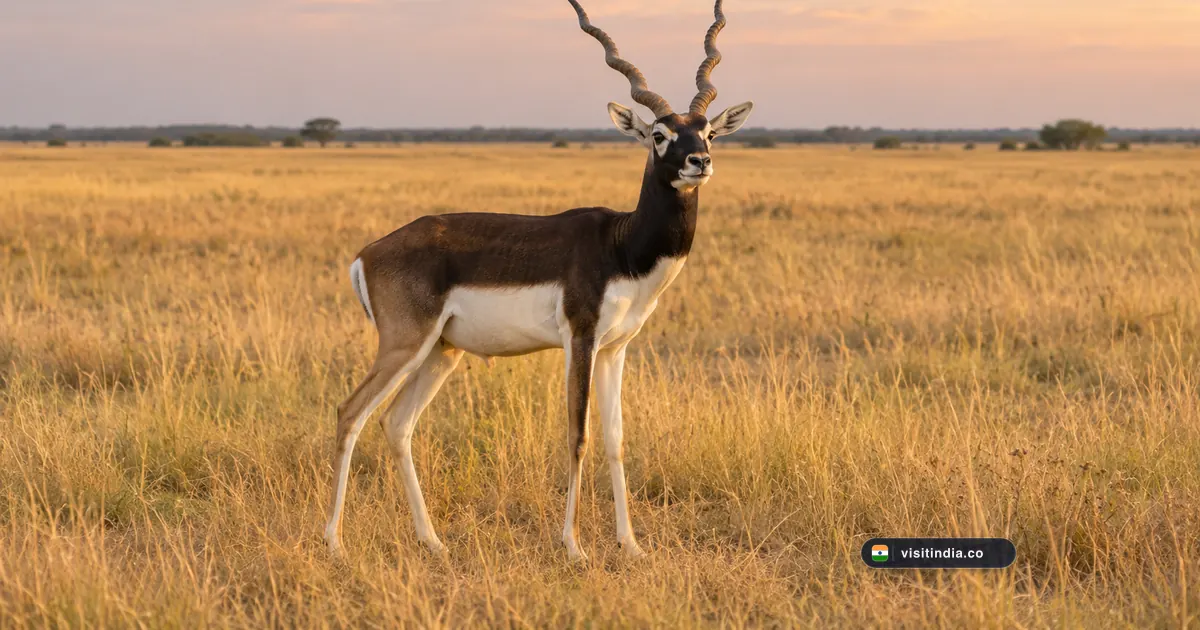
Male blackbucks display striking spiral horns and dark coats while defending compact mating territories called leks, leaping horizontally across open grass at speeds exceeding eighty kilometers per hour.
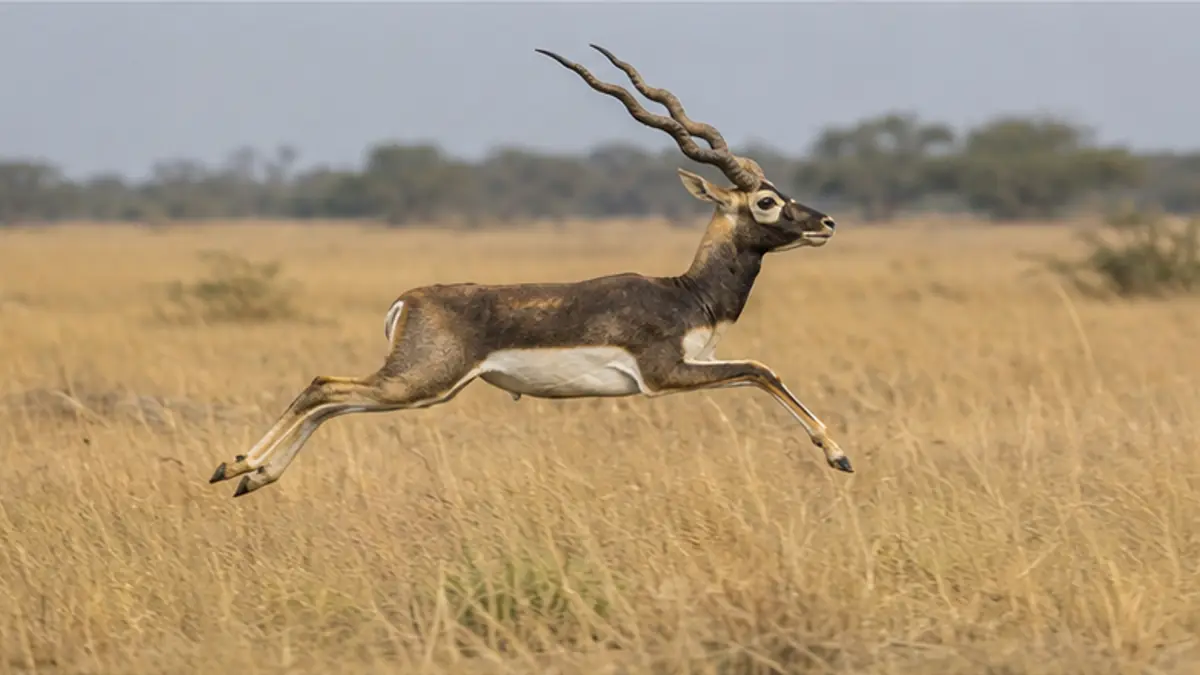
The Indian blackbuck (Antilope cervicapra) is an elegant gazelle-like antelope native to the Indian subcontinent. Adult territorial males develop coal-black coats with white eye rings and white underbellies, crowned by long ringed horns that spiral gracefully upward.
During peak breeding periods from October to February, dominant bucks establish lekking territories on open ground, grunting loudly and strutting with heads arched to attract female harems. When alarmed by predators, the herd launches into high arching bounds before accelerating into rapid sustained runs across the plain.
The Indian Grey Wolf and Striped Hyena Predator Guild
The park supports a resident breeding clan of Indian grey wolves that stalk antelopes across flat scrub, alongside solitary nocturnal striped hyenas that scavenge dry thorn washes.
The Indian grey wolf (Canis lupus pallipes) is smaller and more slender than northern wolves, sporting a short sandy-grey coat adapted to hot arid climates. Velavadar is one of the few places in Asia where wild wolves hunt openly during daylight hours, using subtle ground depressions and acacia shrubs to stalk young fawns.
Striped hyenas (Hyaena hyaena) inhabit deep earthen dens dug into dry banks, emerging at twilight to scavenge animal remains and patrol the perimeter roads. Golden jackals, jungle cats, and Indian foxes complete the rich carnivore guild.
The World’s Largest Communal Harrier Roost
Between late October and February, over two thousand Montagu’s harriers, pallid harriers, and marsh harriers gather each dusk to settle together into the dense grassland beds.
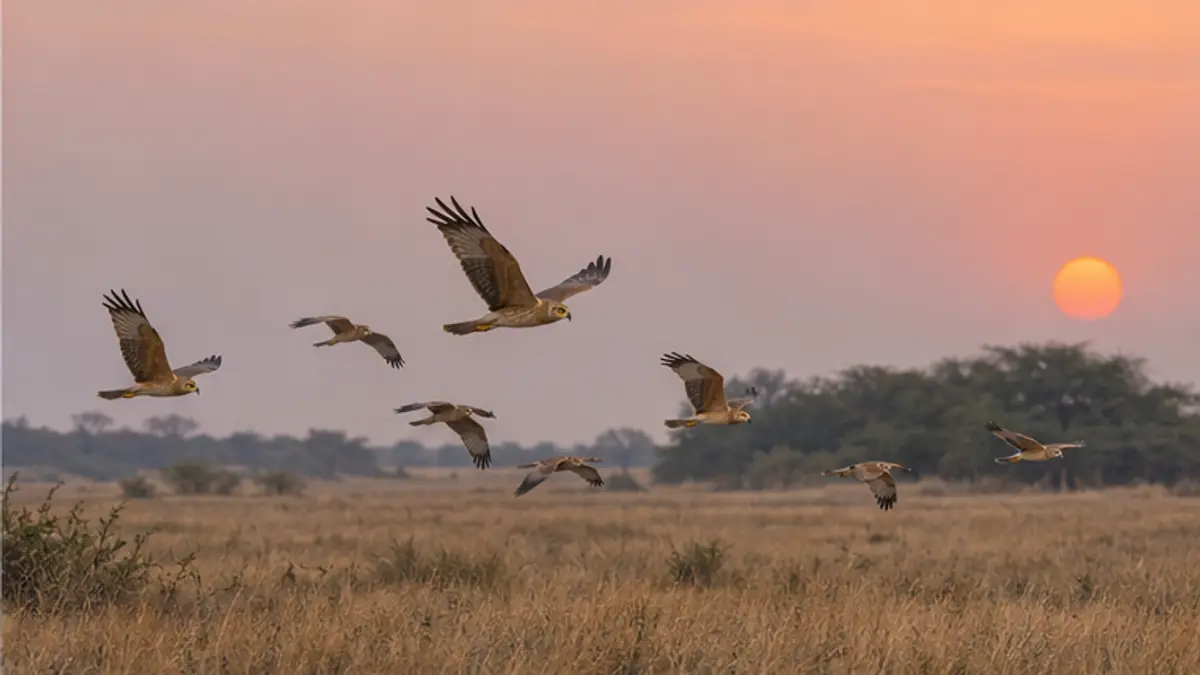
Ornithological surveys confirm that Velavadar hosts the dense concentration of wintering harriers recorded anywhere on earth. These slender, long-winged raptors spend their daylight hours quartering agricultural fields across Saurashtra for locusts, grasshoppers, and small lizards.
As the sun sinks below the flat horizon between 5:15 PM and 5:45 PM, hundreds of birds arrive simultaneously from every compass direction, circling in graceful aerial movements before dropping into the protective cover of tall grassland clumps for the night.
Field Checklist: Priority Wildlife of Velavadar Grasslands
- Mammalian Herbivores: Indian Blackbuck (3,000+ individuals), Nilgai (Blue Bull), Indian Hare.
- Carnivores: Indian Grey Wolf (resident breeding pack), Striped Hyena, Golden Jackal, Jungle Cat, Bengal Fox.
- Wintering Raptors: Montagu’s Harrier, Pallid Harrier, Western Marsh Harrier, Hen Harrier, Steppe Eagle, Greater Spotted Eagle, Short-toed Snake Eagle.
- Savannah Specialists: Lesser Florican (monsoon breeding visitor), Stolickza’s Bushchat, Sirkeer Malkoha, Chestnut-bellied Sandgrouse.
Little Rann of Kutch Wild Ass Safari: Exploring the Khur Habitat
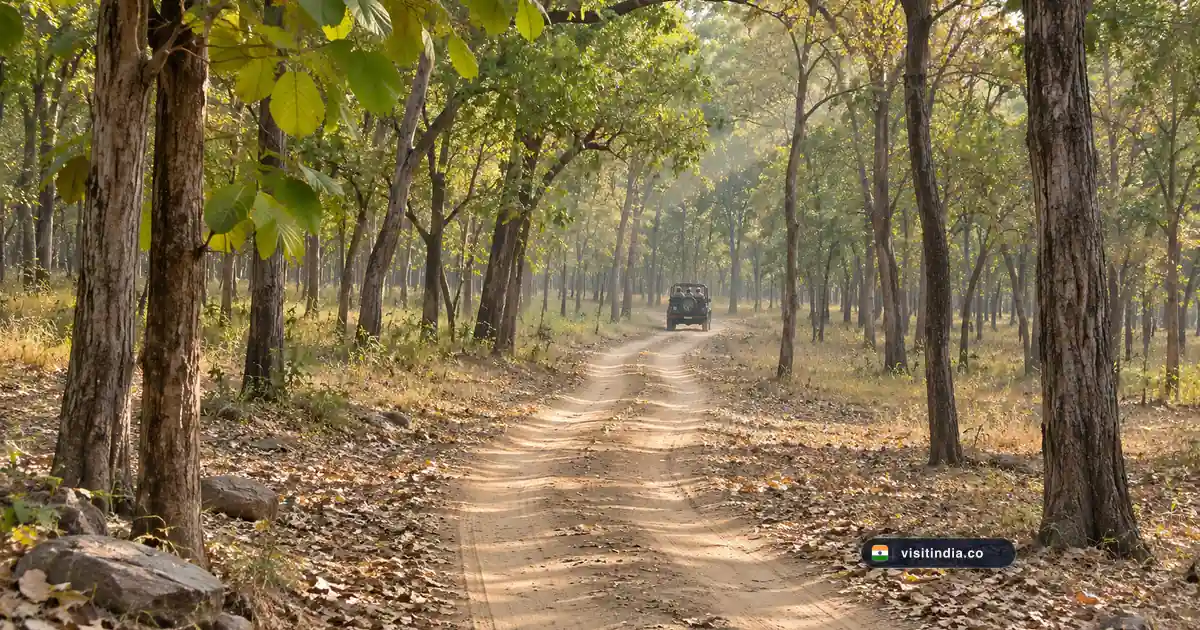
Safaris into the Little Rann of Kutch depart from Dasada or Bajana in custom four-wheel-drive jeeps, crossing vast barren mudflats to observe wild asses galloping across shimmering salt crusts.
While the Great Rann of Kutch is famous for cultural festivities highlighted in the Rann Utsav guide, the Little Rann of Kutch is an untouched ecological wilderness focused purely on desert wildlife and ancient salt-harvesting heritage. The terrain consists of blinding white expanses where mirages distort distance, making distant herds appear to hover above the horizon.
The Indian Wild Ass (Khur): Biology and 50 km/h Salt Flat Gallops
The Indian wild ass, known locally as the Khur, is an endangered equus subspecies capable of sustaining speeds of fifty kilometers per hour across scorched salt flats without losing footing.
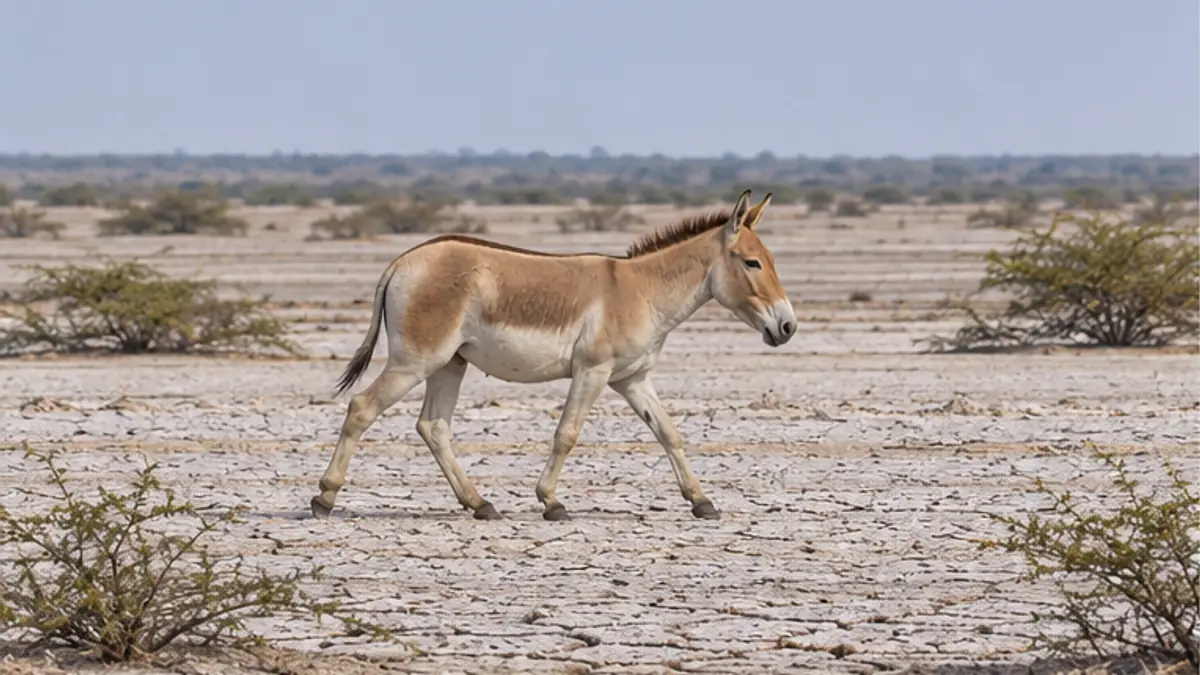
Standing around twelve hands high at the shoulder, the Khur (Equus hemionus khur) possesses an attractive sandy-chestnut coat, a dark dorsal stripe running from its erect mane to its tail, and pale white legs and belly.
These powerful animals have evolved hard, broad hooves that prevent them from sinking into dried alkaline mud, allowing them to outrun any natural predator. Once widespread across northwest India, diligent state protection has successfully restored the wild population to over 6,000 animals spread across the Rann margins.
Dasada and Bajana Safari Bases and Open Jeep Excursions
Safari jeeps are arranged through heritage desert camps in Dasada or Bajana, operating three-to-four-hour expeditions across the dried salt pans for approximately 2,500 to 3,500 rupees per vehicle.
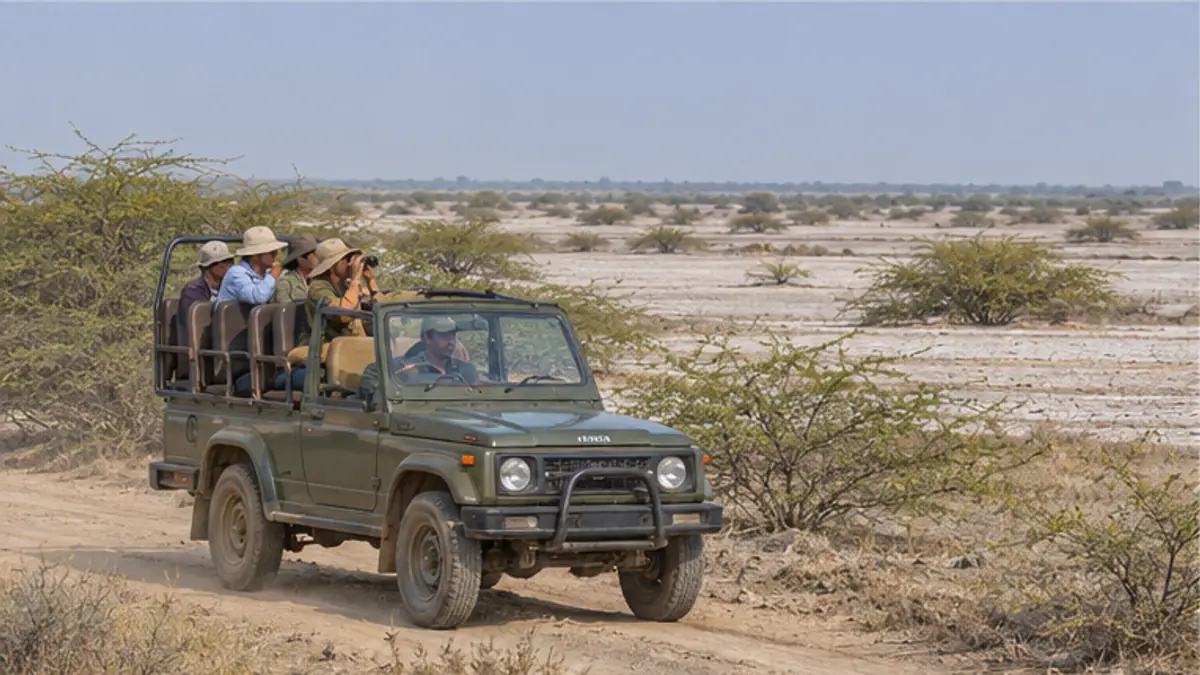
Because the Little Rann spans thousands of square kilometers without marked roads or cellular connectivity, exploring independently in private vehicles is prohibited and dangerous. Desert safari excursions are conducted in modified open Mahindra 4x4 jeeps driven by expert trackers from local communities.
Vehicles enter via forest checkposts near Dasada, Patdi, or Bajana, driving across cracked clay flats and approaching wild ass herds with respectful caution to avoid causing herd panics or unnecessary distress.
Wetland Birding at Bajana and the Agariya Salt Pan Communities
Winter waterbodies along the southern rim host thousands of greater and lesser flamingos, pelicans, and demoiselle cranes, while Agariya families harvest pure inland salt from subterranean brine.
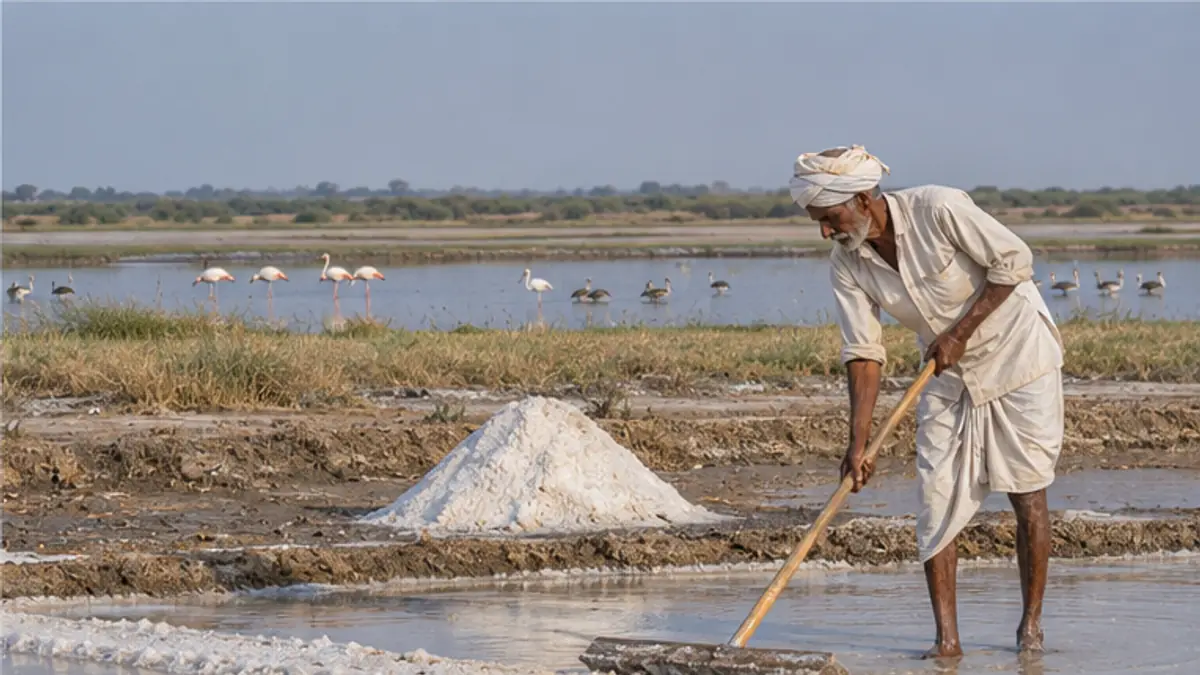
During winter, extensive brackish lakes formed along the edges of the sanctuary attract immense concentrations of aquatic birds. Visitors can view dense pink ribbons of greater and lesser flamingos, Dalmatian pelicans, bar-headed geese, and thousands of common cranes feeding in shallow waters.
Within the interior pans, travelers encounter the Agariya community, indigenous salt farmers who live in temporary thatch huts for eight months each year, pumping underground brine into shallow pans to produce crystalline inland salt using traditional wooden rakes.
| Safari Feature | Dasada Safari Base | Bajana Safari Base |
|---|---|---|
| Sanctuary Entrance | Dasada & Patdi Forest Range Gates | Bajana Southern Rim Checkpost |
| Primary Landscape | Deep Cracked Mudflats & Shrubby Bets | Expansive Seasonal Wetlands & Waterbodies |
| Key Wildlife Highlights | Indian Wild Ass, Desert Fox, Houbara Bustard | Flamingos, Pelicans, Cranes, Wild Ass |
| Typical Safari Duration | 3.5 to 4.5 Hours per shift | 3.0 to 4.0 Hours per shift |
| Recommended Accommodation | Eco-resorts and heritage desert lodges | Budget guesthouses and local homestays |
| Distance to Viramgam Junction | 35 km (45 minutes drive) | 30 km (40 minutes drive) |
Combining Velavadar and Little Rann: Optimal Itineraries and Road Routes
Travelers can pair Velavadar and the Little Rann into a four-day wildlife loop starting and ending at Ahmedabad Airport, experiencing dramatic grassland predator encounters and open desert vistas.
Combining both parks creates an exceptional natural history journey that highlights Gujarat’s unique biodiversity. The driving routes connect Saurashtra’s agricultural plains with the salt deserts of north Gujarat, allowing travelers to include cultural landmarks such as ancient stepwells and carved shrines along the way.
The 4-Day Ahmedabad Wildlife Circuit Itinerary
The circuit spends two days in Velavadar for morning and evening grassland drives, followed by two days based in Dasada for wild ass tracking and sunset salt flat photography.
- Day 1: Ahmedabad to Velavadar Grasslands: Depart early from Ahmedabad or Bhavnagar, driving 140 kilometers to Velavadar. Check into your lodge by midday. Take an afternoon safari from 3:00 PM to 6:00 PM to locate blackbuck herds and witness thousands of roosting harriers at sunset.
- Day 2: Velavadar Wolf Tracking to Dasada: Take a dawn safari starting at 6:30 AM to track Indian wolves and striped hyenas along waterhole circuits. After breakfast, check out and drive 180 kilometers northwest across Viramgam to Dasada, arriving in time for an evening desert walk.
- Day 3: Full-Day Little Rann Exploration: Venture out on an early morning 4x4 expedition into the cracked salt flats to observe Indian wild asses gallop across the clay pans. In the afternoon, explore the seasonal birding wetlands at Bajana Lake to photograph flamingos, pelicans, and demoiselle cranes.
- Day 4: Salt Pans, Modhera En Route, and Ahmedabad Return: Take an optional early morning desert safari to photograph the Agariya salt communities at sunrise. Check out and drive toward Ahmedabad, visiting the nearby 11th-century Sun Temple at Modhera before arriving at Ahmedabad Airport by late evening.
Transit, Road Logistics, and Driving Distances from Ahmedabad
Velavadar lies 140 kilometers south of Ahmedabad via National Highway 47, while Dasada is located 95 kilometers west via Viramgam along smooth four-lane state highways.
According to the official Incredible India Gujarat Portal, Ahmedabad functions as the primary international gateway for all central and western Gujarat wildlife tours. The highways connecting Ahmedabad, Dholka, Bhavnagar, and Surendranagar are well-maintained toll expressways with ample fuel stations and clean rest stops.
Travelers arriving by train can also alight at Bhavnagar Terminus (45 km from Velavadar) or Viramgam Railway Junction (35 km from Dasada), hiring private taxis for the final transfers.
| Route Segment | Highway Route | Distance (km) | Driving Time | Road Condition |
|---|---|---|---|---|
| Ahmedabad to Velavadar | NH 47 & Bhavnagar Highway via Dholka | 140 km | 3.0 to 3.5 Hours | Smooth 4-lane & 2-lane asphalt |
| Bhavnagar to Velavadar | SH 6 via Vallabhipur Road | 45 km | 1.0 Hour | Excellent rural state highway |
| Velavadar to Dasada | Via Dhandhuka, Limdi & Viramgam | 185 km | 4.0 Hours | Multi-lane state corridor |
| Ahmedabad to Dasada | Ahmedabad-Viramgam-Dasada Highway | 95 km | 2.0 to 2.5 Hours | Smooth 4-lane expressway |
| Dasada to Modhera | Dasada-Patan Road via Shankheshwar | 55 km | 1.0 to 1.5 Hours | Well-paved regional highway |
Best Season, Monsoon Closure, and Photography Equipment Guidelines
The ideal period for both reserves is November through March when pleasant temperatures draw migratory raptors and wetland birds, while strict monsoon closures shutter Velavadar from mid-June to mid-October.
Timing your expedition is essential because the open savannah and flat mudflats offer zero canopy shade. Planning your travel around seasonal migrations ensures optimal bird counts and comfortable outdoor safari drives.
Winter Roosting vs Summer Grazing: When to Visit
Winter offers cool mornings and massive harrier roosts, whereas March and April bring intense dry heat that forces wolves and blackbucks around dwindling watering points.
Between November and February, daytime temperatures range between a pleasant 20°C and 28°C, dropping to 10°C to 14°C at dawn, requiring light fleece jackets during open Gypsy drives. This is the prime window for birdwatchers, as migratory harriers, cranes, and wetland waterfowl populate the sanctuaries.
From March to May, temperatures soar past 40°C. While the heat is intense, summer thins the grassland cover, increasing the odds of spotting elusive wolves, jackals, and hyenas gathering around designated water holes.
Strict Monsoon Closures and Seasonal Access Bans
Velavadar closes completely from June 16 to October 15 due to heavy waterlogging in black cotton soil, and the Little Rann becomes an impassable shallow sea.
During the southwest monsoon, torrential rains turn the fine black cotton soil of Velavadar into sticky, impassable mud that immobilizes even four-wheel-drive vehicles. Furthermore, blackbucks undergo their primary fawning period in late summer and monsoon, requiring complete sanctuary seclusion.
In the Little Rann of Kutch, seawater driven by monsoon winds mixes with inland river runoff to submerge the entire desert under two to four feet of water, creating a vast temporary inland lake that halts all vehicular transit until late October. Visitors traveling during shoulder periods can pair wildlife watching with historical detours like the UNESCO-listed planning a visit to Rani ki Vav Patan.
Dust Management, Lens Selection, and Heat Precautions
Telephoto zooms ranging from 100-400mm or 200-600mm are essential for shy antelopes and raptors, alongside protective dust sleeves against fine alkaline salt particles.
Open-vehicle safaris across dry grasslands and cracked clay produce substantial fine airborne dust. Photographers should carry protective neoprene covers or plastic rain sleeves to safeguard camera bodies and avoid changing lenses in the field.
A long telephoto lens is indispensable because blackbucks maintain a flight distance of 50 to 100 meters, while wild asses are best photographed during lateral gallops across the salt flats. Polarizing filters help cut through the blinding white glare of the salt crusts during midday sun.
| Equipment / Preparation | Recommended Gear Specification | Operational Purpose in Arid Reserves |
|---|---|---|
| Primary Telephoto Lens | 100-400mm f/4.5-5.6 or 200-600mm f/5.6-6.3 | Capturing skittish blackbucks, wolves, and distant raptors |
| Secondary Wide Lens | 24-70mm f/2.8 or 16-35mm f/4 | Sunset landscapes over salt flats and grassland horizons |
| Dust & Sensor Protection | Sealed camera rain covers and blower bulbs | Shields gear against fine alkaline salt and black cotton dust |
| Optical Glare Cutters | Circular Polarizer (CPL) filter | Cuts harsh midday glare off reflective white salt crusts |
| Clothing Layers | Earth-toned fleece jacket and cotton shirts | Dawn temperatures drop to 10°C; midday rises to 30°C+ |
| Sun Protection | Broad-brimmed safari hat, sunglasses, SPF 50 | Total lack of forest canopy creates intense UV exposure |
Practical Travel Guide: Eco-Resorts, Forest Rest Houses, and Gate Tips
Accommodation options range from luxury tented safari lodges and Gujarat Forest Department rest houses near Velavadar to heritage desert camps in Dasada and Zainabad.
Booking lodging near sanctuary gates minimizes transit time before dawn safaris. Whether travelers are completing a focused wildlife loop or expanding their journey across southern monuments like the Statue of Unity, choosing eco-friendly resorts with certified local naturalists enhances the safari experience.
Where to Stay: Velavadar Forest Lodges vs Dasada Safari Camps
Stay at the Blackbuck Lodge or Forest Rest House in Velavadar for gate proximity, and choose Rann Riders or Desert Courtyard near Dasada for authentic Kutchi hospitality.
At Velavadar, the foremost private accommodation is The Blackbuck Lodge, situated along the park boundary, offering luxury stone cottages with glass walls overlooking private waterholes where antelopes graze throughout the day.
Budget travelers can apply for rooms at the Gujarat Forest Department Rest House located directly at the park reception gate, which provides clean, basic rooms subject to availability. Near Dasada and Zainabad in the Little Rann, heritage eco-camps like Rann Riders and Desert Courtyard feature traditional circular mud cottages (bhungas) decorated with mirror work, offering home-cooked Gujarati buffet meals and organized safari departures.
Essential Field Etiquette and Conservation Rules
Maintain strict speed limits, remain inside authorized vehicles at all times, avoid disturbing salt pan workers, and never pursue running wild asses off established desert paths.
Both reserves protect delicate habitats that are highly vulnerable to vehicular damage. In the Little Rann, drivers must strictly follow established tracks across the salt crust, as veering into untracked terrain can break the thin surface crust, trapping vehicles in deep subterranean mud.
Chasing wild asses or wolves to provoke running photographs is strictly prohibited under the Wildlife Protection Act and causes fatal capture myopathy in high-speed herbivores. Travelers should also interact respectfully with the Agariya salt workers, seeking permission before photographing family living quarters.
Responsible Wildlife Viewing Guidelines
- Zero Litter Policy: Bring all plastic wrappers, water bottles, and snack packaging back to your hotel; winds rapidly carry trash across open grasslands.
- No Off-Road Driving: Never encourage your driver to drive off designated tracks to pursue animals; tire tracks destroy fragile vegetation and micro-habitats.
- Maintain Silent Observation: Keep voices low during sightings; excessive noise causes antelopes to spook and raptors to abandon their hunting perches.
- Dress in Natural Tones: Wear khaki, beige, olive green, or tan clothing to blend into the dry savannah grass and dusty desert flats.
Frequently Asked Questions About Velavadar and Little Rann Safaris
How do I book a safari permit for Velavadar Blackbuck National Park?
You must reserve your vehicle entry permit in advance through the official Gujarat Forest Department booking portal at girlion.gujarat.gov.in. Once the online entry permit is confirmed, you hire an authorized open Gypsy and a certified forest guide upon arrival at the park reception checkpost.
When does Velavadar National Park close for the monsoon?
Velavadar is completely closed to visitors every year from June 16 to October 15 during the monsoon season. Heavy rains turn the black cotton soil into impassable mud, while blackbucks require privacy during their primary fawning period.
What is the best time of year to see the harrier roost at Velavadar?
The peak period to witness the world’s largest communal harrier roost is between late October and February. Over two thousand migratory harriers return to the grassland beds each evening at sunset after feeding in surrounding fields throughout the day.
How do I reach the Little Rann of Kutch from Ahmedabad?
The Little Rann of Kutch is easily reached by road, located approximately 95 kilometers west of Ahmedabad via Viramgam to the safari base of Dasada. The drive takes around two to two and a half hours along well-maintained state highways.
Can I drive my own private car inside the Little Rann of Kutch?
Driving private personal vehicles inside the Little Rann of Kutch is strongly discouraged and strictly regulated. The desert mudflats feature treacherous salt crusts where vehicles can become dangerously mired, making it essential to hire a local four-wheel-drive safari jeep with an experienced tracker.
How fast can the Indian wild ass run?
The Indian wild ass (Khur) can maintain sustained speeds of approximately 50 kilometers per hour across the flat, cracked clay expanses of the Little Rann. Their specialized wide, hard hooves provide superior traction on desert salt pans.
How many days are needed to visit both Velavadar and the Little Rann of Kutch?
A well-paced wildlife itinerary requires four days to explore both reserves comfortably from Ahmedabad. This timeframe allows for two safari shifts in Velavadar to observe blackbucks, wolves, and harriers, followed by two safari excursions into the Little Rann for wild asses and wetland birding.