Pench and Satpura Safari Booking Guide: Gates & Permits
Complete guide to Pench and Satpura safari booking on MPOnline. Learn Turia vs Madhai gate selection, walking safaris, Denwa boat crossing, and transit.
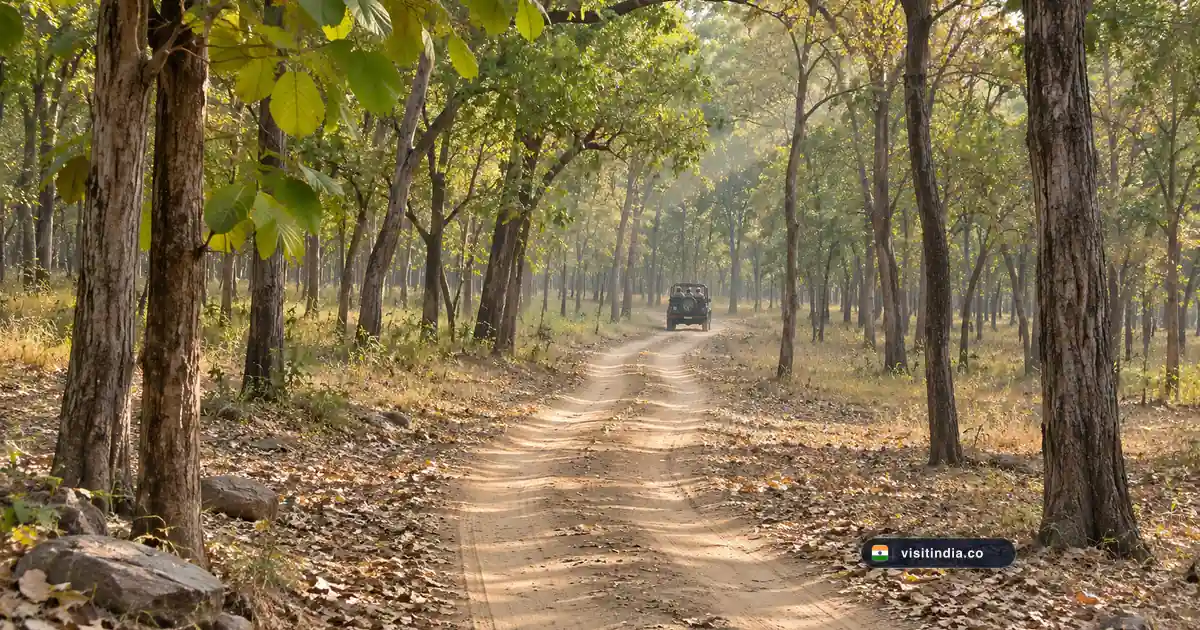
Deep in the heart of Central India, two iconic wilderness sanctuaries preserve vastly different faces of the subcontinent’s natural heritage. Securing an official pench and satpura national park safari booking through the state forest portal allows wildlife travelers to experience both the open teak forests that inspired Rudyard Kipling and the rugged sandstone ravines of the Mahadeo Hills.
While Pench is celebrated for high-density tiger tracking along sun-dappled woodland tracks, Satpura delivers an experiential wilderness found nowhere else in Central India. From crossing the wide Denwa River by motorboat to undertaking sensory walking safaris on foot alongside armed naturalists, combining both reserves creates an unmatched wildlife expedition.
Pench & Satpura Safari Essentials
- Primary Geographic Bases: Turia Gate (Pench, Seoni district) and Madhai Gate (Satpura, Narmadapuram district), Madhya Pradesh.
- Official Permit Engine: Bookings open up to 120 days in advance exclusively via the MPOnline Forest portal.
- Core Vehicle Tariffs: Forest entry permits cost ₹1,500 to ₹2,400 per vehicle, with local gypsy hire (₹2,500 to ₹3,500) and guide fees (₹600 to ₹800) settled at the gate.
- Wednesday Closure Rule: Afternoon safaris in all core zones across both parks are closed every Wednesday.
- Seasonal Park Access: Core zones operate from October 1 through June 30; buffer zones remain accessible year-round.
Understanding Pench and Satpura: Landscapes and Ecological Roles
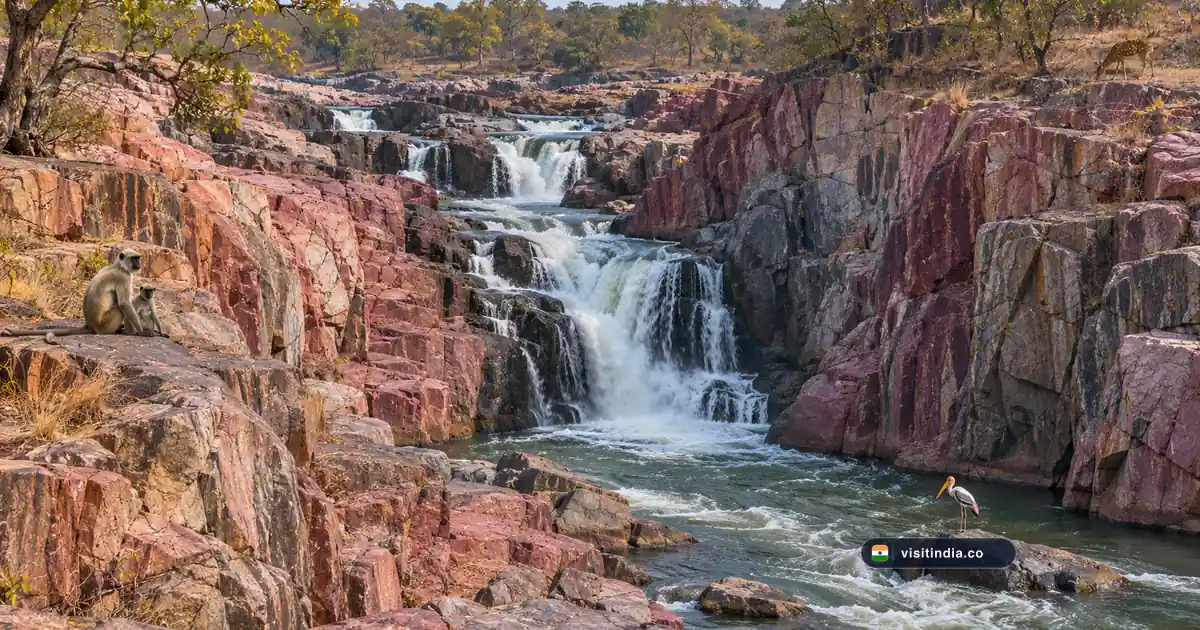
Pench features undulating teak and mahua woodlands along the southern Madhya Pradesh border that inspired Rudyard Kipling’s The Jungle Book. In contrast, Satpura encompasses towering sandstone ridges, deep ravines, and the sprawling Denwa River reservoir in the central Mahadeo Hills.
Together, these protected reserves form vital anchors in the Central Indian tiger landscape. Because they protect contrasting elevations and vegetation zones across Madhya Pradesh, pairing them in a single journey exposes visitors to a complete spectrum of deciduous forest flora and specialized fauna.
Pench: Kipling’s Living Jungle Book Territory
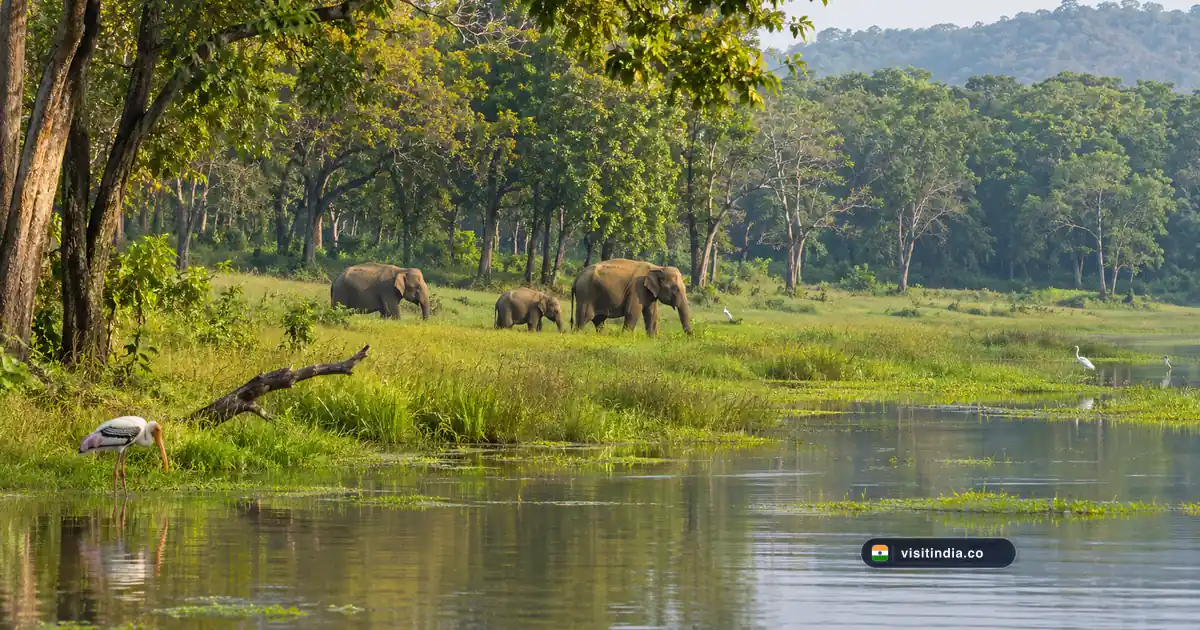
Straddling Seoni and Chhindwara districts, Pench’s open teak forest and seasonal riverbed provided the exact geographical setting for Mowgli, Bagheera, and Shere Khan. The reserve is named after the Pench River, which meanders from north to south, bisecting the national park into eastern and western sectors.
The dominant vegetation consists of southern tropical dry deciduous teak forests interspersed with bamboo brakes, white kulu ghost trees, and flowering mahua stands. The open understory grants exceptional horizontal visibility, allowing photographers to track predators through the trees from considerable distances.
Satpura: Sandstone Gorges and the Denwa Basin
Satpura Tiger Reserve spans over 2,133 square kilometers of rugged highland terrain, harboring diverse habitats from moist sal valleys to dry scrub plateaus. Unlike the gentle rolling hills of Pench, Satpura is characterized by sheer sandstone escarpments, narrow gorges, and perennial mountain waterfalls rising to 1,352 meters atop Dhoopgarh peak.
The landscape was permanently shaped by the construction of the Tawa Dam reservoir, which submerged lowland valleys and created the wide Denwa River basin around the Madhai entry sector. This immense water body buffers the core wilderness, restricting vehicle access to boat crossings and preserving extraordinary wilderness tranquility.
MPOnline Safari Booking Process: Core Gates and Reservation Steps
Permits for both parks must be booked through the official portal forest.mponline.gov.in up to 120 days ahead. Travelers select the park, entry date, morning or afternoon shift, and specific gate before submitting mandatory government identification details.
Madhya Pradesh manages all wildlife admissions through a centralized digital system to ensure transparency and prevent overtourism. Booking directly on the government portal guarantees genuine departmental rates without private intermediary surcharges.
| Safari Component | Booking Method | Approximate Cost | Payment Timeline |
|---|---|---|---|
| Park Entry Permit | MPOnline Forest Department Portal | ₹1,500 to ₹2,400 per vehicle | Paid online 120 days to 24 hours prior |
| Registered 4x4 Gypsy | Park gate gypsy association counter | ₹2,500 to ₹3,500 per drive | Paid in cash/card on arrival at entry gate |
| Eco-Guide Fee | Park gate reception counter | ₹600 to ₹800 per vehicle | Handed to allocated guide after safari |
| Denwa River Boat Shuttle | Madhai reception jetty (Satpura) | ₹50 to ₹100 per person round-trip | Paid at boat boarding point before entry |
Step-by-Step Portal Navigation and ID Verification
To reserve permits, register on the MPOnline Forest Department Portal as a tourist user, select national park booking, and choose either Pench or Satpura from the reserve list. Specify your entry date, vehicle type (open 4x4 Gypsy), and desired operational gate before checking slot availability.
Every passenger’s original government identification number (Aadhaar card, Voter ID, Driver’s License, or Passport for foreign travelers) must be entered into the portal during checkout. Park rangers strictly cross-reference these physical documents at the entry checkpost; any spelling or numbering discrepancy will result in immediate permit cancellation.
Fee Structure: Permit, Gypsy Hire, and Forest Guide Charges
The total cost of a safari in Madhya Pradesh is split between the digital government permit and on-site operational services. The online permit covers park entry taxes and departmental conservation levies.
Upon arriving at the gate reception thirty minutes before departure, visitors hire an authorized 4x4 Gypsy from the local drivers’ cooperative and receive an assigned department-certified eco-guide. These on-site operational costs are fixed by district forest authorities, preventing arbitrary overcharging.
The Wednesday Afternoon Closure Rule
All core safari gates across Madhya Pradesh national parks close every Wednesday afternoon to give wildlife and forest trails a compulsory rest from tourist traffic. This conservation regulation applies uniformly to Pench, Satpura, Kanha, and Bandhavgarh.
Visitors planning itineraries should utilize Wednesday afternoons for inter-park transit, village walks, or buffer zone drives. Buffer sectors like Telia in Pench or Parsapani in Satpura remain operational on Wednesday afternoons, providing valuable alternative tracking options.
Gate Selection Architecture: Turia vs Karmajhiri and Madhai vs Churna
Turia is Pench’s most famous core gate, offering the highest density of resorts and tiger sightings, while Karmajhiri provides quieter northern forest tracks. In Satpura, Madhai serves as the primary riverfront entrance, while distant Churna penetrates deep interior sal forests.
Selecting the appropriate gate dictates your choice of lodging, driving times, and overall wildlife focus. Booking a hotel near one gate while holding a permit for another can lead to difficult two-hour road commutes across unpaved rural tracks before dawn.
| National Park | Entry Gate | Zone Classification | Best Known For | Nearest Transit Hub |
|---|---|---|---|---|
| Pench MP | Turia Gate | Core Zone | High tiger encounter rate, lake clearings, luxury resorts | Nagpur (90 km, 2 hrs via NH-44) |
| Pench MP | Karmajhiri Gate | Core Zone | Deep teak woods, northern streams, tranquil drives | Seoni (45 km, 1 hr) |
| Pench MP | Jamtara Gate | Core Zone | Secluded western forest, fewer vehicles, birdlife | Chhindwara (75 km, 2 hrs) |
| Pench MP | Telia Gate | Buffer Zone | Night safaris, wolf tracking, waterhole staking | Turia resort cluster (4 km) |
| Satpura | Madhai Gate | Core Zone | River crossing, walking trails, canoeing, leopards | Sohagpur (18 km) / Bhopal (140 km) |
| Satpura | Churna Gate | Core Zone | Dense sal forests, sloth bears, remote full-day drives | Madhai (approx. 50 km internal track) |
| Satpura | Parsapani Gate | Buffer Zone | Night drives, leopard stalking on crags, night birds | Madhai base (10 km) |
Pench Core and Buffer Gates: Turia, Karmajhiri, and Telia
Turia gate is the primary hub of Pench tourism, situated along the southern edge of Seoni district near the Maharashtra border. Over eighty percent of the park’s wilderness lodges are grouped within five kilometers of this gate, providing immediate access to productive hunting grounds like Baghin Nala and Junewani waterhole.
Karmajhiri gate sits on the northern side of the reserve and offers a quieter wilderness experience with fewer safari vehicles. For visitors seeking nocturnal exploration, the adjacent Telia buffer zone permits nighttime drives to search for Indian wolves, jungle cats, and civets. Travelers entering through Seoni can reference official administrative advisories on the Seoni District Administration Pench Guide portal.
Satpura Gates: Madhai Riverfront and Deep Churna Core
Madhai is the central heartbeat of Satpura Tiger Reserve, perched where the Denwa River broadens into a vast lake. Visitors park their private cars at the mainland boat jetty, board a departmental motorboat to cross the clear waters, and enter waiting 4x4 Gypsies on the protected forest bank.
Churna gate penetrates deep into the heart of the national park, surrounded by massive sal trees and bamboo thickets. Reaching Churna from Madhai requires booking a full-day safari permit or staying overnight at the historic forest rest house located deep inside the core zone. Those exploring central Madhya Pradesh can also link these forest drives with ancient heritage around Sanchi Stupa and Bhimbetka rock shelters.
Exclusive Satpura Activities: Walking Safaris, Canoeing, and Night Drives
Satpura is the only tiger reserve in Central India that permits guided walking safaris on foot inside protected forest trails. Visitors can also paddle silent canoes along the Denwa reservoir shoreline and participate in regulated nocturnal buffer drives.
These non-motorized activities offer an intimate connection with the wilderness that noisy engine drives cannot match. By leaving the vehicle behind, travelers tune their senses to the subtle signs of the jungle.
Pro Tip
The Walking Safari Experience: Walking on foot in tiger territory sharpens your senses dramatically. Listen to dry leaves crunching underfoot, examine fresh claw scratches on tree trunks, and follow the pungent scent of a leopard’s territory marking carried on the morning breeze.
Guided Walking Safaris on Foot: Protocols and Sensory Tracking
Accompanied by an armed forest guard and an expert naturalist, groups of up to six walk along designated dirt tracks to inspect pugmarks, dung, and birds on foot. Walking safaris operate in designated core and buffer sectors where visibility is clear, allowing safe observation of herbivores and smaller woodland creatures.
Rather than chasing big-cat sightings, foot safaris focus on tracking techniques, medicinal plants, butterfly identification, and recognizing bird warning calls. Walking quietly through the forest often brings travelers face-to-face with grazing Indian gaurs or foraging wild boars at eye level.
Denwa River Canoeing and Boating Dynamics
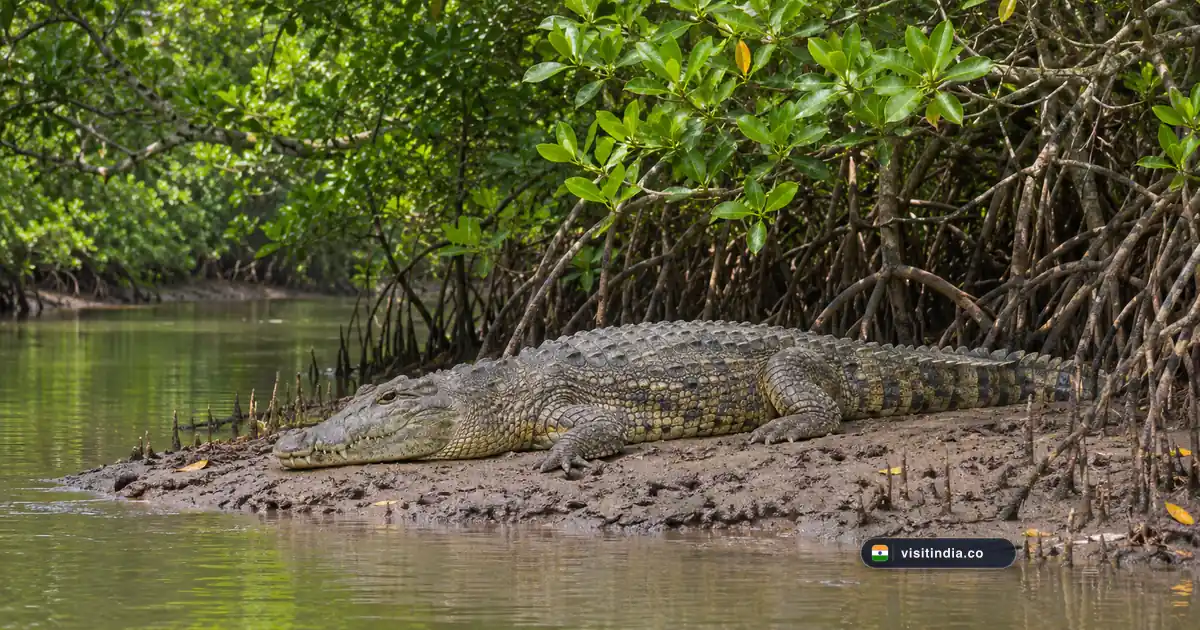
Silent twin-seater canoes glide along reed-lined riverbanks, offering intimate photography of marsh crocodiles, river lapwings, and herds of spotted deer drinking at dusk. Local rowers paddle silently through shallow coves where motorboats are prohibited.
Canoeing is exceptionally rewarding for birdwatchers seeking rare winter visitors, including bar-headed geese, ruddy shelducks, osprey, and black-bellied terns. Floating inches above the water surface provides unique low-angle perspectives of drinking animals against the backdrop of the rugged Pachmarhi hills.
Nocturnal Buffer Safaris: Spotting Elusive Night Fauna
Night safaris in the Parsapani and Jamani Dev buffer zones deploy searchlights to track leopards, rusty-spotted cats, Indian pangolins, and flying squirrels. These three-hour drives depart immediately after sunset and explore rocky escarpments and scrub hills.
Experienced trackers illuminate animal eyes reflected in the darkness, allowing travelers to view nocturnal predators active during their natural hunting hours. Sloth bears and striped hyenas are frequently observed foraging along dry stream beds under starlight. Nature travelers pairing this stop with a forest reserve can check Keoladeo Bharatpur & Chambal Gharial Safari safari zones and timings for safari zones, seasons, and permit rules.
Wildlife Profiles: Bengal Tigers, Sloth Bears, and Indian Wild Dogs
Pench is renowned for thriving Bengal tiger families and large dhole packs that hunt chital along open meadows. Satpura stands out as India’s primary park for sloth bear encounters, leopard sightings on sandstone crags, and rare Indian giant squirrels.
The ecological contrast between the two parks ensures that travelers experience a diverse cross-section of Indian wildlife without repetitive sightings.
Important
Bear Safety Etiquette: Satpura sustains one of India’s highest densities of sloth bears. When observing a mother bear carrying cubs on her back, drivers must cut the vehicle engine and maintain a respectful fifty-meter distance, as surprise encounters can trigger defensive charges.
Tiger and Dhole Dynamics in Pench
Pench supports a healthy tiger population that hunts among the open teak groves. The park achieved fame through Collarwali, the legendary tigress who raised twenty-nine cubs during her lifetime and established Pench as a vital nursery for Bengal tigers in Central India, rivaling predator corridors near Bandhavgarh National Park.
In addition to tigers, Pench hosts robust packs of Asiatic wild dogs (dholes). These whistling hunters cooperate in coordinated packs of ten to twenty individuals, pursuing spotted deer and sambar across open forest clearings with incredible speed and stamina.
Sloth Bears and Sandstone Leopards of Satpura
Satpura’s rocky hills and extensive termite mounds create an ideal refuge for the Indian sloth bear. Visitors frequently encounter these shaggy, long-snouted omnivores digging for termites along roadside clearings or feeding on fallen mahua blossoms in the early morning.
Leopards in Satpura have adapted to the rugged sandstone terrain, using narrow cliff fissures and rock overhangs as daytime vantage points. The canopy is also home to the Malabar giant squirrel, whose deep maroon coat and two-foot tail stand out against the pale bark of arjun trees.
Seasonal Planning: Best Months and Weather Variations
The optimal period to visit both parks is from October through May. Winter from November to February brings pleasant days and crisp morning drives, while dry summer months from March to May yield the highest big-cat and sloth bear sighting frequencies near waterholes.
Seasonal shifts radically transform Central Indian forests, changing foliage density, water availability, and animal movement patterns.
| Season | Months | Climate & Conditions | Wildlife Sighting Highlights | Recommended Clothing |
|---|---|---|---|---|
| Post-Monsoon | October to November | Lush green forest, mild days (25°C), cool nights | Forest in full bloom, abundant water, active birdlife | Light layers, insect repellent |
| Crisp Winter | December to February | Chilly dawns (6°C to 12°C), sunny days (24°C) | Migratory waterbirds, daytime rock basking | Heavy fleece, windproof jacket, gloves |
| Dry Summer | March to May | Hot days (36°C to 43°C), warm evenings | Exceptional tiger & bear sightings at water points | Breathable cotton, wide hat, sunglasses |
| Monsoon | July to September | Heavy rain, core closed; buffer open | Rejuvenated streams, lush green landscapes, zero crowds | Waterproof poncho, sturdy boots |
Transit Connectivity, Route Planning, and Combining Both Parks
Pench is reached via Nagpur Airport (90 km south, 2 hours), while Satpura is accessed via Bhopal Airport (140 km north, 3.5 hours). Driving directly between Turia (Pench) and Madhai (Satpura) takes approximately six to seven hours covering 280 kilometers across the Satpura Range.
Planning an integrated circuit requires coordinating airport arrivals and highway connections across southern and central Madhya Pradesh.
Connecting Pench and Satpura: Highway Driving Route
To drive between the two reserves, depart Turia after a morning safari and follow National Highway 44 north to Seoni. Turn west along State Highway 26 through Chhindwara and the scenic Tamia Ghat, before joining National Highway 46 near Hoshangabad to reach Madhai. Local district transport alerts can be monitored via the Narmadapuram District Administration Travel Guide portal.
This scenic route crosses the spine of the Satpura Range, passing through tribal Gond villages and forested ravines. Hiring a dedicated private chauffeur from Nagpur or Bhopal ensures comfortable travel over mountain ghat curves.
Combining with Kanha and Regional Circuits
A popular seven-day itinerary begins with two nights in Pench (four safaris at Turia gate), continues with a four-hour drive northeast to Kanha National Park for two nights of sal forest tiger tracking, and concludes with two nights in Satpura for walking safaris and canoeing along the Denwa River.
Travelers can fly into Nagpur Dr. Babasaheb Ambedkar International Airport (NAG) to begin the circuit and depart from Bhopal Raja Bhoj Airport (BHO), eliminating backtracking and optimizing precious field hours in the wild.
Frequently Asked Questions About Pench and Satpura Safari
How do I book a safari for Pench and Satpura online?
You can book permits online through the official Madhya Pradesh Forest Department portal forest.mponline.gov.in up to 120 days in advance. Select the specific national park, entry gate, and safari shift, then enter the required government photo identification details for all travelers before paying the permit fee.
Which gate is best for tiger sightings in Pench National Park?
Turia Gate is the most popular and productive core entrance for tiger sightings in Pench, featuring open teak woods and established waterholes like Baghin Nala and Junewani. Karmajhiri Gate is also an excellent core alternative that provides quieter tracks on the northern side of the park.
Can you do a walking safari on foot in Satpura National Park?
Yes, Satpura is the only tiger reserve in Central India that permits guided walking safaris inside protected forest tracts. Groups of up to six visitors walk along designated wilderness paths accompanied by an armed forest guard and an experienced departmental naturalist.
Why are afternoon safaris closed on Wednesdays in Madhya Pradesh?
The Madhya Pradesh Forest Department enforces a mandatory closure of all core safari gates every Wednesday afternoon to give wildlife, forest tracks, and field staff a necessary rest from tourist vehicle traffic. Buffer zone gates remain operational on Wednesday afternoons for travelers seeking alternative tracking options.
What is the best way to travel between Pench and Satpura?
The most convenient route between Pench and Satpura is a six-to-seven-hour private taxi drive covering roughly 280 kilometers via Seoni, Chhindwara, and National Highway 46 to Madhai. This direct road link allows travelers to complete a morning safari in Pench and reach Satpura in time for dinner.
How do visitors enter Satpura National Park at Madhai Gate?
Visitors traveling to Madhai park their private vehicles at the mainland river reception, board an authorized departmental motorboat to cross the Denwa River, and transfer into waiting 4x4 forest Gypsies stationed on the opposite bank. This short river crossing preserves tranquility by keeping external highway traffic away from the core reserve.