Panna Tiger Safari & Raneh Falls Guide: Khajuraho Day Trip
Complete guide to Panna national park safari booking and Raneh Falls canyon. Compare Madla vs Hinauta gates, Ken River gharials, and Khajuraho day routes.
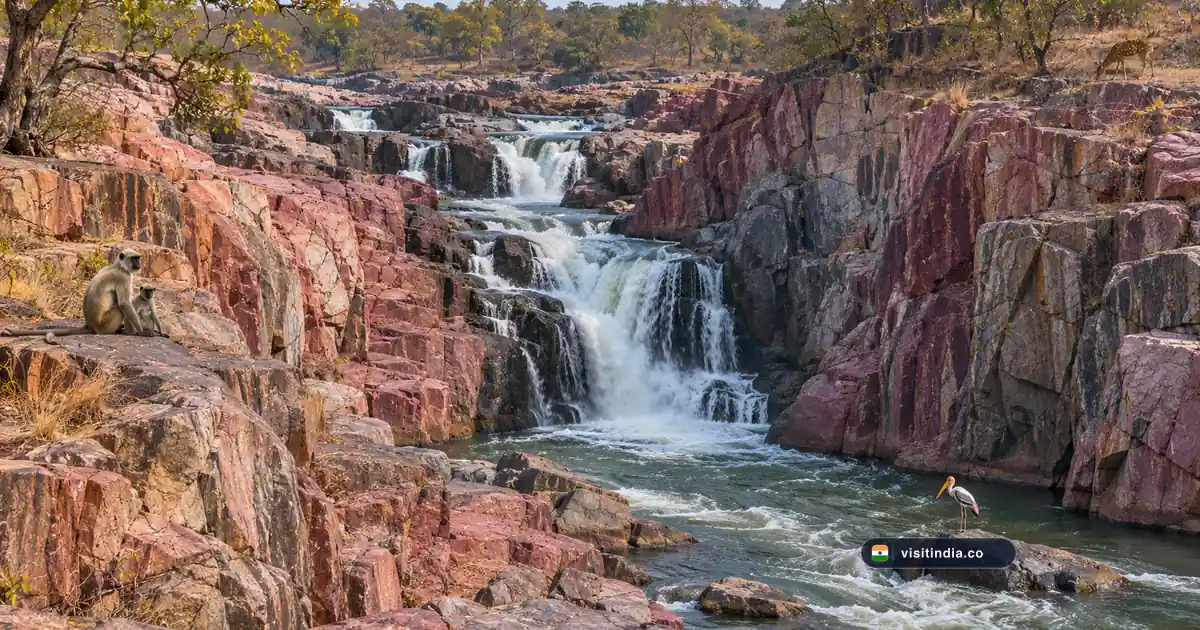
Along the northern escarpments of the Vindhyan Range in Central India, dramatic sandstone cliffs plunge into the emerald waters of the Ken River. Planning an integrated panna national park safari and raneh falls excursion allows travelers to witness one of the most celebrated wildlife restoration achievements in modern history, located just thirty minutes from the UNESCO temple complex of Khajuraho.
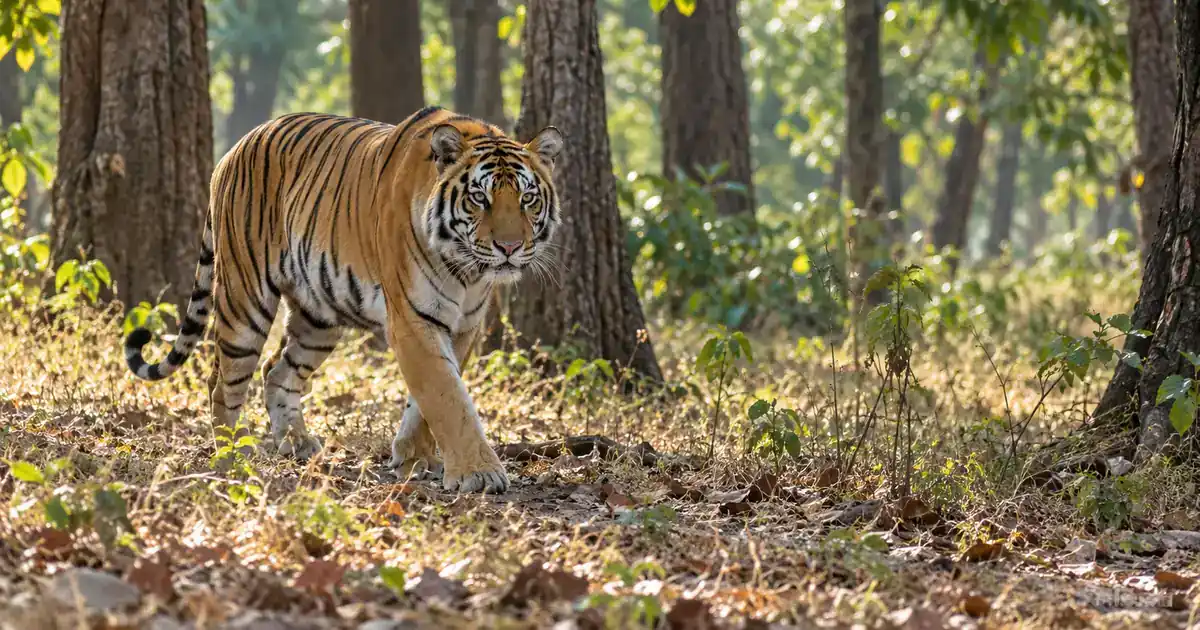
Panna Tiger Reserve offers a compelling combination of rich dry-deciduous wildlife drives and striking geological marvels. Visitors can track thriving Bengal tiger families and sloth bears in the morning through the Madla gate, drift across the Ken River on authorized forest boats to observe wild gharials, and marvel at the thirty-meter multi-hued granite canyon of Raneh Falls in the afternoon.
Panna & Raneh Falls Essentials
- Primary Geographic Bases: Madla Gate (Panna, 25 km from Khajuraho) and Hinauta Gate (Panna plateau), Madhya Pradesh.
- Official Permit Engine: Bookings open up to 120 days in advance via the official MPOnline Forest Department portal.
- Core Vehicle Tariffs: Online entry permits cost ₹1,500 to ₹2,400 per vehicle; on-site 4x4 Gypsy hire (₹2,500 to ₹3,500) and guide fees (₹600 to ₹800) are settled at the gate.
- Wednesday Closure Rule: Afternoon safaris in all core zones are closed every Wednesday; Raneh Falls remains open outside the core gate.
- Unique Co-Attractions: Raneh Falls multi-coloured granite gorge, Ken Gharial Sanctuary, Pandav Falls, and seven nesting vulture species.
Understanding Panna Tiger Reserve: The Great Conservation Triumph
Panna Tiger Reserve covers 542 square kilometers along the Ken River in northern Madhya Pradesh, celebrated worldwide for rebuilding its wild tiger population from zero in 2009 to over sixty thriving individuals today through scientific reintroduction.
The reserve represents an ecological crossroads where the southern edge of the Gangetic plains meets the dry deciduous tablelands of Madhya Pradesh. The riverine corridor carved by the Ken River sustains rich biodiversity across both Panna and Chhatarpur districts, making it an essential wildlife jewel in the Bundelkhand region.
The 2009 Extirpation and Founder Tiger Translocation
After organized poaching wiped out Panna’s native tigers in 2009, the Madhya Pradesh Forest Department relocated founder females from Kanha and a male from Bandhavgarh to trigger a remarkable breeding resurgence. Wildlife biologists fitted translocated tigers with satellite radio collars, closely monitoring territorial bonding, mating, and dispersal.
Against formidable odds, the translocated tigers adapted rapidly to the Vindhyan gorges. The legendary founder tigress T1 established a permanent territory near the Ken River, raising multiple litters of healthy cubs. Today, dozens of tigers roam the park’s core and buffer tracts, demonstrating the power of habitat protection and intensive field patrolling.
Vindhyan Gorge Topography and the Ken River Lifeline
The reserve is sculpted by the northern escarpments of the Vindhyan Range, where dry deciduous teak forests drop steeply into the deep, rocky gorge of the Ken River. Perennial natural springs, seasonal cataracts, and sandstone ledges break the landscape into distinct topographical shelves.
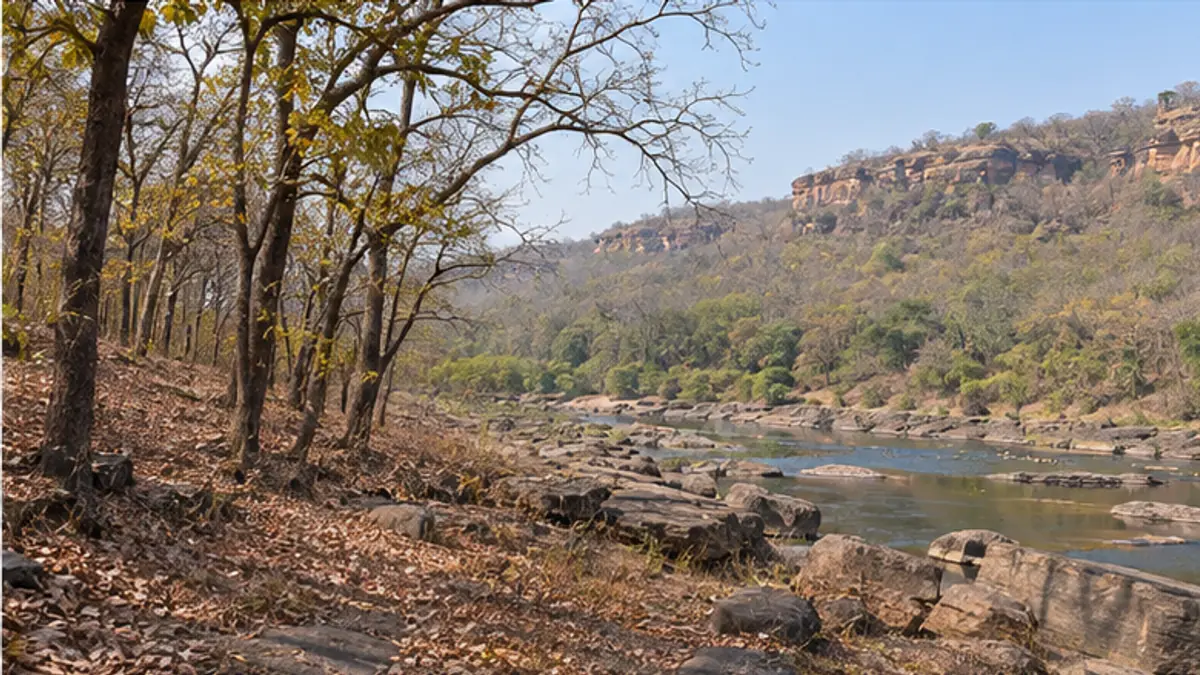
The Ken River serves as the ecological aorta of the park, running for over fifty kilometers through the core wilderness. Its clean, unpolluted waters provide drinking pools for ungulates, deep resting pools for fish-eating reptiles, and lush riverine forests of jamun, arjun, and mahua trees.
Panna National Park Safari Booking: Madla vs Hinauta Gates and MPOnline
Safaris must be booked through forest.mponline.gov.in up to 120 days in advance. Madla Gate is the best entrance for travelers staying in Khajuraho, while Hinauta Gate provides access to rugged plateaus and sloth bear habitats.
Reserving permits early on the official government website ensures official departmental rates and avoids commercial broker markups. Travelers can select their preferred gate, safari shift, and vehicle type during booking.
| Safari Parameter | Madla Gate (Core Zone) | Hinauta Gate (Core Zone) |
|---|---|---|
| Distance from Khajuraho | 25 km (approx. 30 minutes via NH-39) | 45 km (approx. 60 minutes via Panna town) |
| Dominant Landscape | Ken River frontage, teak groves, open meadows | High sandstone plateaus, rocky ravines, dry scrub |
| Flagship Wildlife | Bengal tigers, leopards, spotted deer, wild boars | Sloth bears, Indian leopards, chinkaras, nilgai |
| Resort Proximity | 90% of luxury wilderness lodges within 5 km | Limited rustic homestays; requires driving from Madla |
| Ken River Boat Safari | Direct access at Madla river boarding point | Remote from river cruise embarkation points |
Madla Gate: Proximity to Khajuraho, Riverfront Loops, and Tiger Focus
Located just twenty-five kilometers from Khajuraho along the Ken River, Madla gate provides immediate access to major waterholes, teak groves, and river safari boarding points. Over ninety percent of visitors base themselves in Khajuraho or near Madla village due to the concentration of eco-lodges.
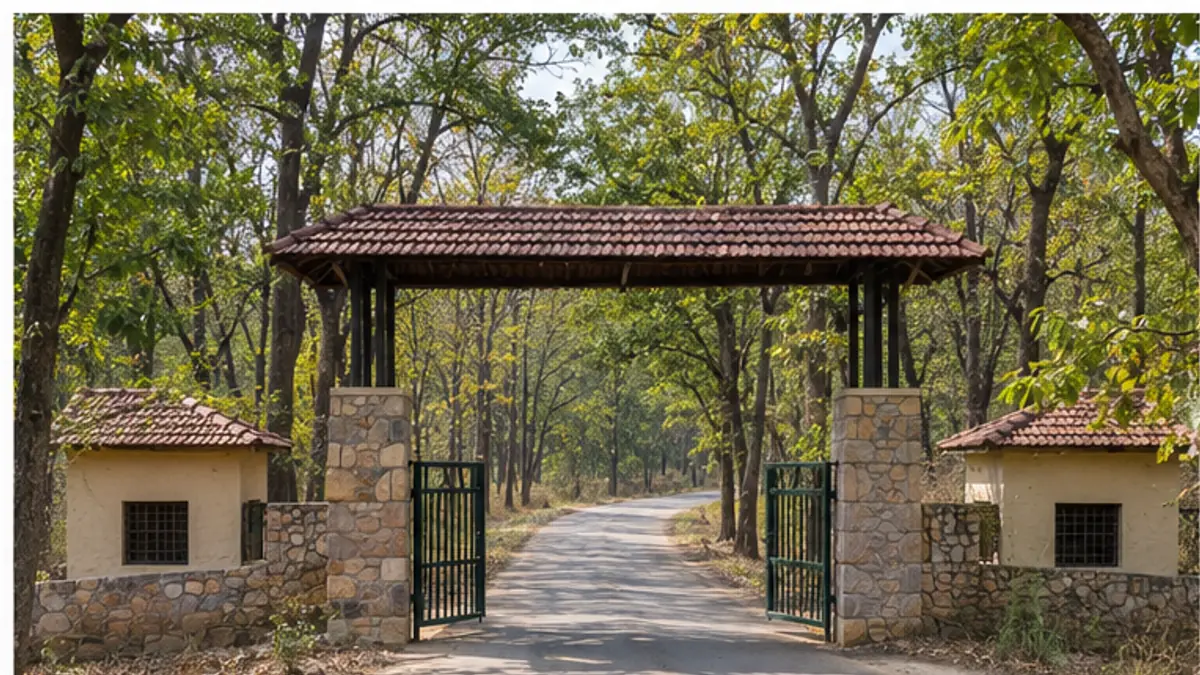
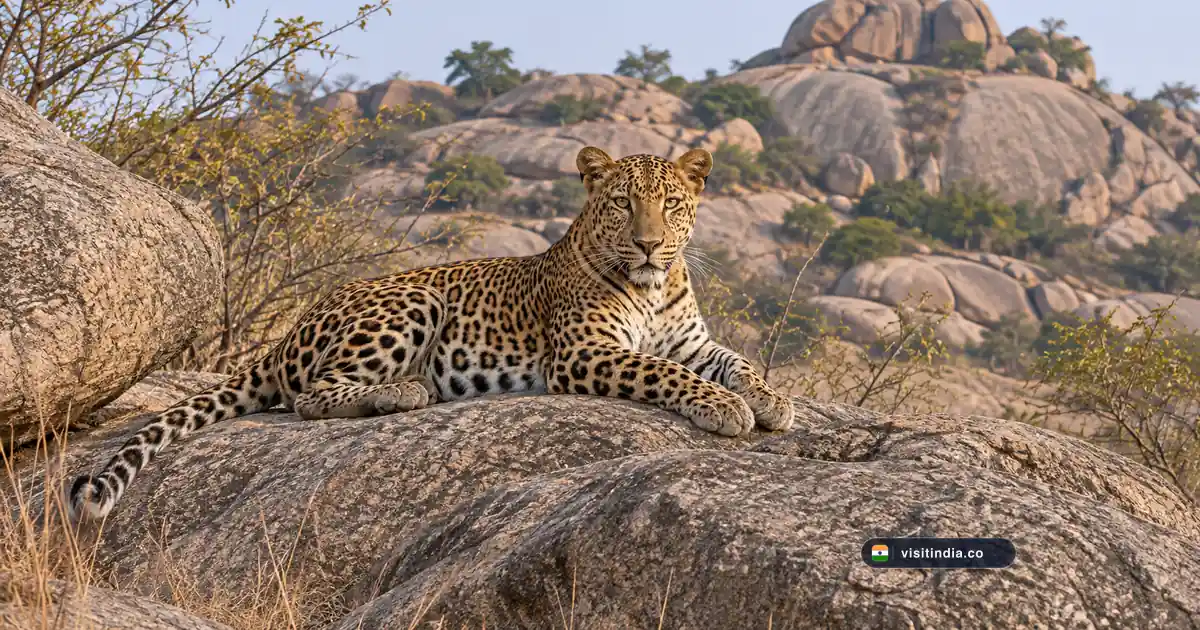
Drives entering through Madla quickly reach prime feline territories along the river, where tigers frequently cross open gravel tracks. The route winds through tall grasses and shaded forest depressions where spotted deer assemble in large herds.
Hinauta Gate: Sandstone Plateaus, Sloth Bears, and Gorge Vistas
Situated forty-five kilometers from Khajuraho on the eastern plateau, Hinauta features rocky scrub, deep sandstone canyons, and elevated viewpoints favored by leopards and sloth bears. The terrain at Hinauta is dramatically rugged, with exposed stone escarpments that capture the harsh beauty of Bundelkhand.
Hinauta is renowned for its maternal sloth bear encounters, as bears forage among extensive termite mounds and fallen mahua fruits. The higher plateau also offers sweeping panoramas of the gorge below, where vultures soar on thermal updrafts, creating an experience reminiscent of the rocky crags around Bandhavgarh National Park.
Safari Costs, Vehicle Hire, and Guide Allocations
The MPOnline Forest Department Portal permit costs ₹1,500 to ₹2,400 per vehicle, while registered open Gypsies (₹2,500 to ₹3,500) and mandatory eco-guides (₹600 to ₹800) are paid at the gate checkpost. Foreign travelers pay standard differential entry fees mandated by the state government.
Visitors must report to their designated gate reception thirty minutes before departure with original government photo identification. Rangers verify that visitor names exactly match the digital permit manifest before releasing the authorized 4x4 vehicle.
Raneh Falls: The Multi-Coloured Granite Canyon of the Ken River
Located twenty kilometers from Khajuraho, Raneh Falls is a natural wonder featuring a 30-meter-deep canyon carved through pure crystalline granite in shades of pink, green, red, and grey, where the Ken River plunges in seasonal cascades.
Situated just outside the main tiger reserve core, Raneh Falls represents one of the world’s most unique geological phenomena. The canyon stretches for five kilometers along the Ken River, bordered by ancient igneous formations.
Pro Tip
Canyon Photography Timing: Visit Raneh Falls between 03:00 PM and 05:00 PM when the afternoon sun shines directly into the canyon fissures. The golden angle accentuates the vivid pink, green, and red granite layers against the deep blue water pools below.
Geological Rarity: Five Shades of Crystalline Granite
Volcanic activity millions of years ago pushed molten magma into vertical fissures, creating distinct bands of pink granite, greenish dolomite, grey quartz, and black basalt rock. As the relentless currents of the Ken River carved downward through the stone over millennia, it exposed these colorful volcanic dykes in sheer vertical walls.
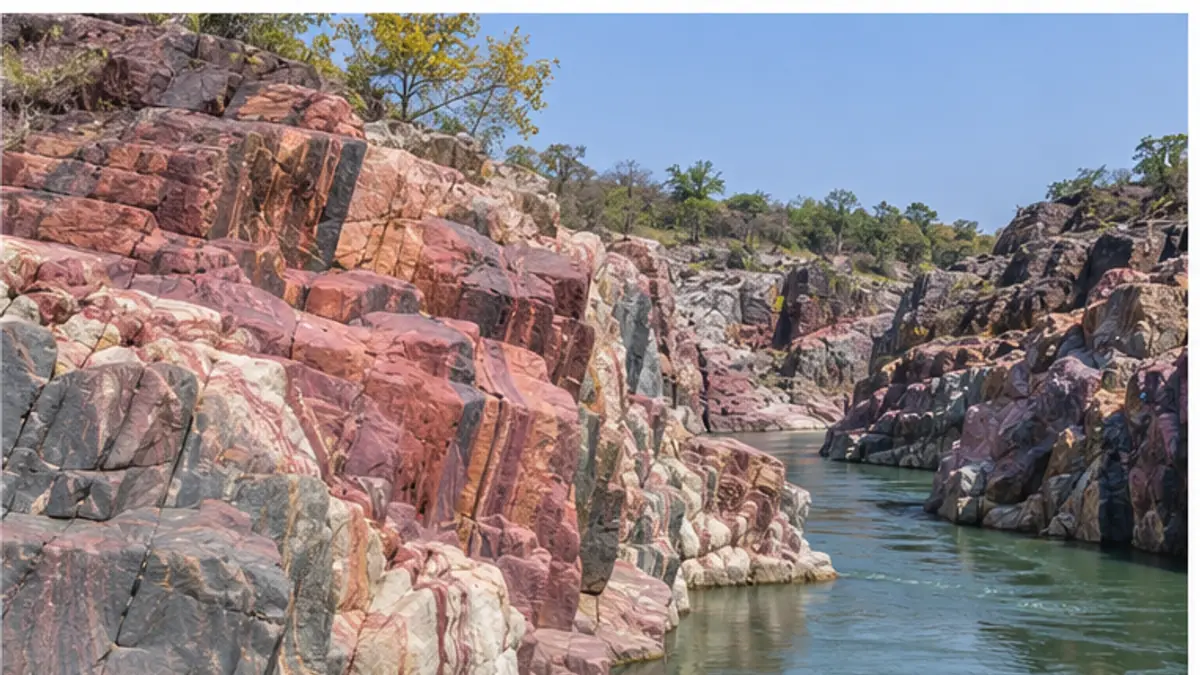
Unlike standard sedimentary gorges, Raneh Canyon is composed of hard plutonic granite polished to a smooth finish by annual river surges. Potholes carved into the canyon floor by spinning river pebbles resemble giant stone cauldrons up to ten feet wide.
Seasonal Dynamics: Monsoon Torrents vs Winter Canyon Clearings
During the monsoon from July to September, the Ken River swells into a roaring torrent that submerges the canyon, while winter reveals crystal pools and exposed granite cliffs. During peak monsoon floods, a dozen separate waterfalls plunge simultaneously over the canyon rim, shaking the viewing pavilions with deafening thunder.
By November, the floodwaters recede to expose the multi-hued granite walls. The river slows into tranquil emerald pools where visitors can observe fish swimming through deep channels from secure clifftop railings.
Ken Gharial Sanctuary and Riverboat Safari Dynamics
The Ken Gharial Sanctuary protects a 45-kilometer river stretch near the confluence of the Ken and Khudar rivers, offering designated cliff watchtowers and riverboat rides to observe wild fish-eating gharials and marsh crocodiles basking on sandbanks.
Established in 1981 to safeguard the critically endangered freshwater gharial (Gavialis gangeticus), the sanctuary provides an essential aquatic refuge bordered by forested cliffs.
Observing the Long-Snouted Gharial Along Sandy Shores
Unlike broad-snouted mugger crocodiles, critically endangered gharials possess needle-thin snouts adapted exclusively for catching river fish, basking peacefully on mid-river sand spits. Gharials are remarkably specialized reptiles that cannot move easily on land, relying on shallow sandy river margins to absorb solar warmth.
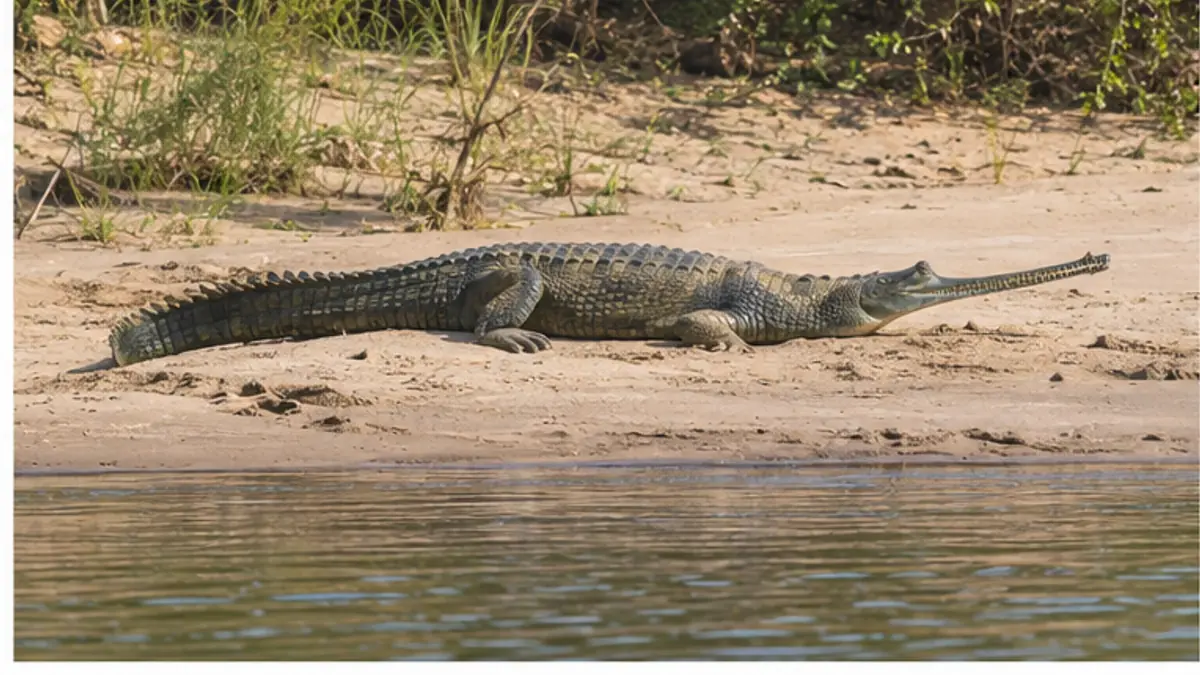
From elevated observation platforms perched atop the canyon cliffs, visitors use binoculars to view adult gharials lying side-by-side with marsh muggers. Mature males display the distinctive bulbous ghara growth on the tip of their snout, used to produce courtship bubbles and acoustic hums during the winter breeding season.
Ken River Boat Rides and Forest Department Permissions
Department-operated motorboats cruise quiet deep pools along the Ken River inside the park, giving visitors intimate views of basking reptiles, river otters, and freshwater turtles. Departing from the Madla river jetty, these thirty-minute boat excursions glide beneath overhanging fig and jamun branches.
The boat ride provides a calm, reflective break between terrestrial jeep safaris. Naturalists point out river lapwings foraging on sandbars, while osprey and crested serpent eagles watch from towering snags overhead.
Vulture Conservation and Pandav Falls Escapes
Panna is a critical sanctuary for seven species of vultures nesting along sheer Vindhyan cliffs. Inside the park boundary, Pandav Falls plunges thirty meters into a heart-shaped pool surrounded by legend and lush forest.
While veterinary pharmaceutical toxicity decimated vulture numbers across South Asia, Panna’s secluded rocky escarpments remained an uncontaminated refuge, preserving healthy breeding populations across Central Indian wildlife corridors.
Cliff-Nesting Vulture Stronghold
While veterinary diclofenac decimated vultures across India, Panna’s isolated cliffs shelter thriving colonies of long-billed, white-rumped, king, and migratory Himalayan griffon vultures. The park protects over two thousand resident vultures that nest on inaccessible rock shelves overlooking the river gorge.
Vulture viewpoints along the Hinauta plateau allow visitors to observe these majestic scavengers launching from cliff faces and riding thermal air currents high into the sky. Their vital ecological role in disposing of animal carcasses keeps the wilderness ecosystem hygienic and disease-free.
Pandav Falls and Mythological Forest Caves
Situated twelve kilometers from Madla gate along the highway toward Panna, Pandav Falls cascades into a shaded emerald basin where local lore holds that the Pandava brothers sheltered during their forest exile. A natural spring plunges thirty meters down a semi-circular rock face into a deep, clear pool surrounded by ferns and caves.
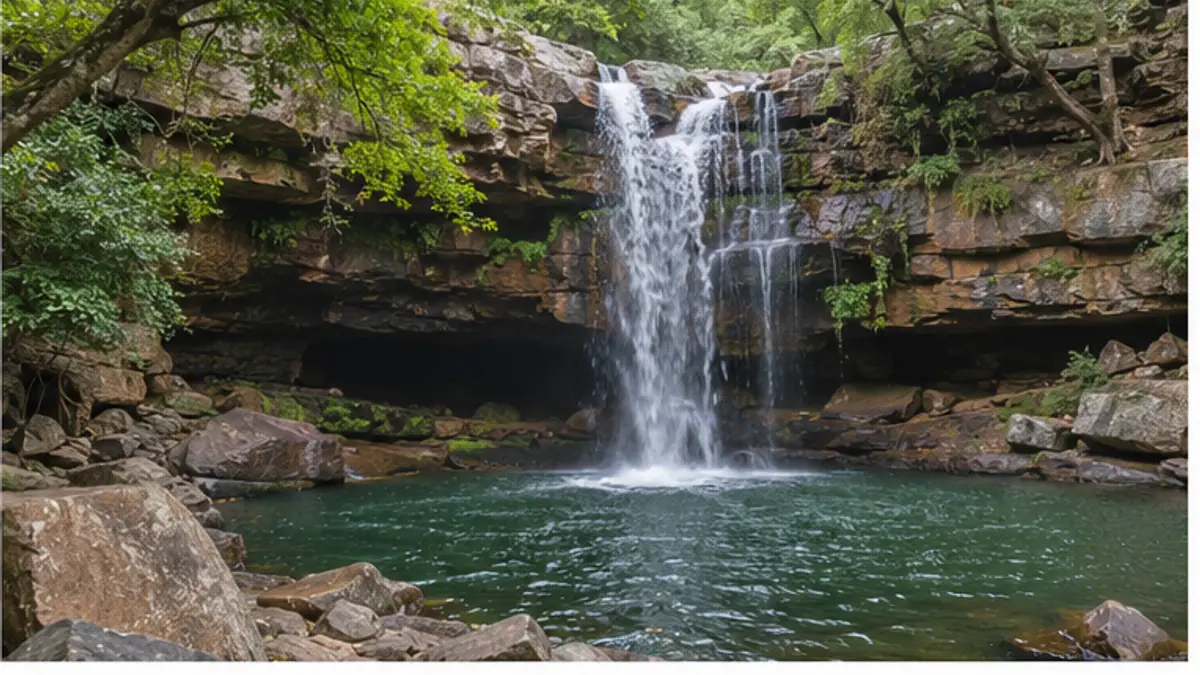
Visitors descend stone stairways to view ancient rock-cut meditation cells carved into the sandstone cliff behind the curtain of falling water. The tranquil forest pool provides a refreshing natural retreat during warm Bundelkhand afternoons.
Seasonal Planning, Operational Rules, and Wednesday Closures
Panna core zones remain open from October 1 to June 30, with peak big-cat sightings occurring between March and May. All core gates close every Wednesday afternoon, and the entire core reserve is closed from July 1 to September 30 during the monsoon.
Structuring your visit around seasonal wildlife activity and mandatory departmental schedules ensures an optimal holiday experience.
| Season | Months | Climate & Conditions | Wildlife & Landscape Highlights | Best Activity |
|---|---|---|---|---|
| Post-Monsoon | October to November | Lush green forests, mild days (24°C) | Raneh Falls waterfalls flowing, rivers full, active birdlife | Sightseeing & photography |
| Winter (Peak) | December to February | Crisp dawns (8°C to 12°C), sunny days | Migratory vultures, pleasant game drives, daytime basking | Morning & evening safaris |
| Dry Summer | March to June | Hot days (36°C to 44°C), dry scrub | High tiger & bear concentration along Ken River pools | Waterhole tracking drives |
| Monsoon | July to September | Heavy rain, core closed; buffer open | Roaring Raneh Falls cascades, verdant green gorges | Waterfall & canyon viewing |
Important
Wednesday Afternoon Field Strategy: Because all core gates across Madhya Pradesh shut every Wednesday afternoon, plan your itinerary so Wednesday afternoon is spent touring the world-famous UNESCO temples of Khajuraho or enjoying the festive folk performances of the annual Khajuraho Dance Festival.
Transit Logistics: Combining Khajuraho with Panna in 2 to 3 Days
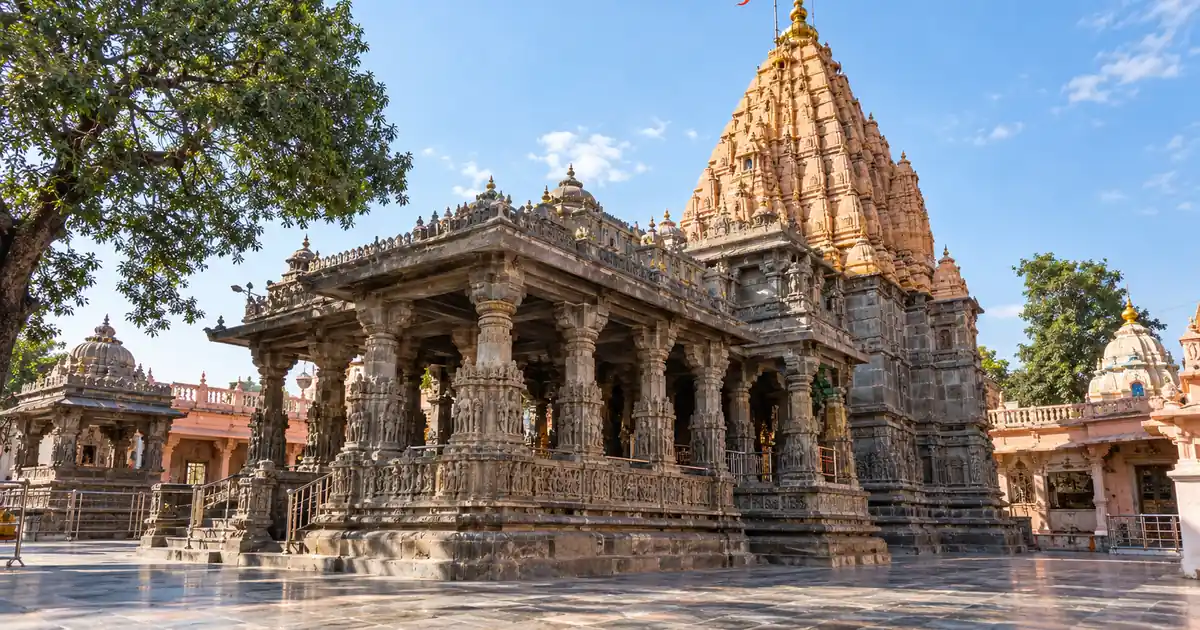
Panna’s Madla gate is situated just twenty-five kilometers southeast of Khajuraho Airport along NH-39, a smooth thirty-minute drive. A three-day itinerary combines the UNESCO Chandela temples of Khajuraho with morning tiger safaris and afternoon Raneh Falls excursions.
Khajuraho serves as the ultimate hospitality and transport hub for exploring the Panna wilderness, offering heritage hotels, luxury resorts, and reliable airport connections.
Khajuraho as the Primary Base: Taxis, Flights, and Trains
Khajuraho Airport operates flights to Delhi and Varanasi, while Khajuraho Railway Station links to Delhi and Agra; private cabs to Madla gate cost ₹1,200 to ₹1,500 one-way. Taxis can be hired on a day-rate basis to handle temple transfers, safari drop-offs, and canyon excursions.
Travelers arriving via major rail lines can also disembark at Satna Junction (90 km east) or Jhansi Junction (175 km west), both connected to Khajuraho by well-paved national highways. Local transport and administrative resources can be cross-referenced on the Panna District Administration portal and the Chhatarpur District Administration portal.
Curated 3-Day Heritage & Wildlife Circuit
A balanced three-day itinerary allows travelers to explore both architectural monuments and natural wilderness without rushing:
- Day 1: UNESCO Temples of Khajuraho: Spend the morning touring the intricate stone carvings of the Western Group, highlighted in our comprehensive Khajuraho temples guide, followed by the Eastern Jain temples and evening light-and-sound show.
- Day 2: Panna Tiger Safaris: Take a morning jeep safari through Madla gate (06:00 AM to 11:00 AM), enjoy lunch at a riverside lodge, and take an afternoon drive or Ken River boat cruise.
- Day 3: Raneh Falls & Pandav Falls: Drive twenty kilometers to Raneh Falls to photograph the multi-coloured granite canyon and visit the Ken Gharial Sanctuary, stopping at Pandav Falls on the return journey.
Frequently Asked Questions About Panna and Raneh Falls
How far is Panna National Park from Khajuraho?
Panna’s main core entrance, the Madla Gate, is located approximately twenty-five kilometers southeast of Khajuraho along National Highway 39. Driving between central Khajuraho and Madla Gate takes roughly thirty minutes by private taxi or rental car.
Which gate is best for tiger sightings in Panna National Park?
Madla Gate is the most popular and productive core gate for tiger encounters, featuring teak forests, open river meadows, and high concentrations of prey along the Ken River. Hinauta Gate offers rugged plateau landscapes with excellent records for sloth bears and leopards.
What is unique about the Raneh Falls canyon?
Raneh Falls features a dramatic five-kilometer-long, thirty-meter-deep canyon carved through pure crystalline granite displaying five distinct colors: pink, green, red, grey, and black basalt volcanic dykes. It is considered one of the most remarkable igneous rock formations in Asia.
Can you see wild gharials near Khajuraho and Panna?
Yes, the Ken Gharial Sanctuary, situated twenty kilometers from Khajuraho near Raneh Falls, protects wild fish-eating gharials and marsh crocodiles. Visitors can view basking gharials from clifftop watchtowers or take department-operated motorboat rides along the Ken River inside Panna Tiger Reserve.
Why are Panna safaris closed on Wednesday afternoons?
The Madhya Pradesh Forest Department mandates that all core national park safari gates close every Wednesday afternoon to give wildlife, forest tracks, and patrolling staff a scheduled rest from tourist vehicles. Buffer zones and peripheral attractions like Raneh Falls remain open on Wednesday afternoons.
Are Panna core safari zones open during the monsoon season?
No, the core safari zones of Panna National Park close annually from July 1 to September 30 for the monsoon breeding season and road maintenance. However, Raneh Falls and Pandav Falls remain open during the monsoon, offering dramatic views of roaring swollen waterfalls.