Jammu and Kashmir Travel Guide: Top Places & Itineraries
Plan your trip with our Jammu and Kashmir travel guide covering Srinagar Dal Lake, Gulmarg Gondola, Pahalgam valleys, Sonmarg, and Vaishno Devi yatra.
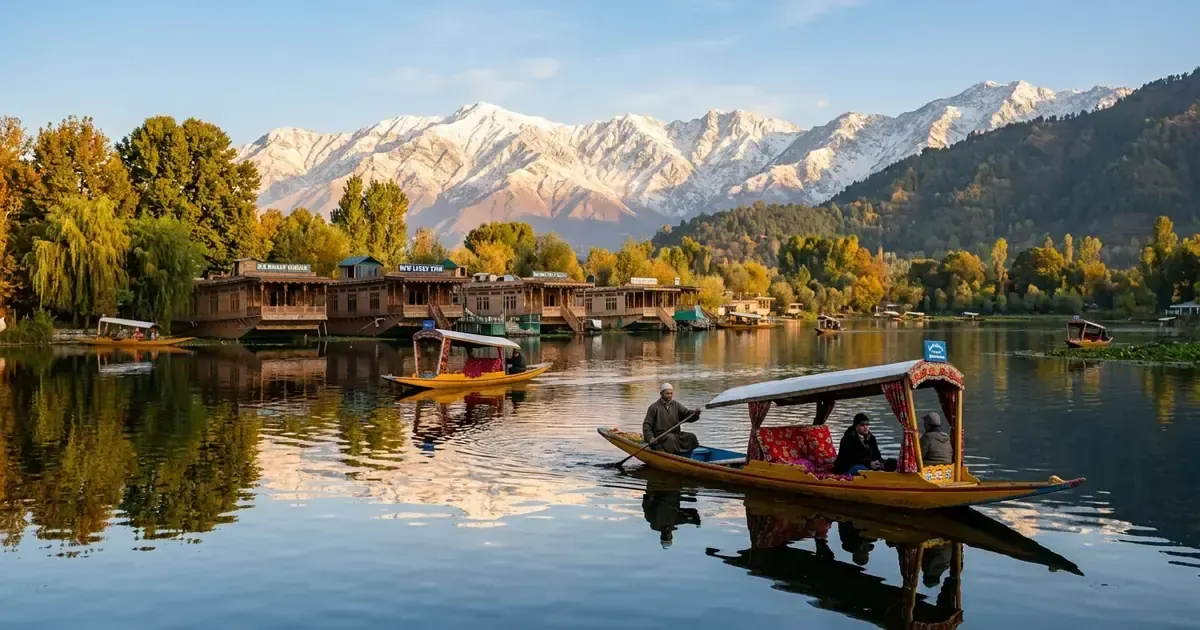
Jammu and Kashmir spans 42,241 square kilometers across northern India, rising from the subtropical Shivalik plains of Jammu to the glaciated Himalayan crests framing the Kashmir Valley. Partitioned into 20 administrative districts across two divisions, the territory links sacred foothill shrines with alpine lakes, Mughal gardens, and high-altitude ski bowls.
This Jammu and Kashmir travel guide details transit corridors, seasonal weather shifts, permit rules, and route plans across both divisions. The southern Jammu division centers on Dogra heritage forts and the Trikuta pilgrimage of Vaishno Devi, while the northern Kashmir division encompasses Srinagar, Gulmarg, Pahalgam, and Sonmarg.
State Travel & Circuit Essentials
- Jammu and Kashmir encompasses 42,241 square kilometers across 20 administrative districts, divided equally into 10 districts in the Jammu division and 10 districts in the Kashmir division.
- The Union Territory maintains dual seasonal capitals: Srinagar functions as the summer capital from May to October, and Jammu serves as the winter capital from November to April.
- Peak travel windows run from April to October for blooming gardens, alpine meadow walks, and houseboat stays, and from December to February for winter skiing in Gulmarg.
- Primary transit gateways include Sheikh ul-Alam International Airport in Srinagar (SXR), Jammu Airport (IXJ), express rail hubs at Jammu Tawi (JAT) and Katra (SVDK), and National Highway 44.
Jammu and Kashmir Destinations Master Matrix
The following master matrix categorizes the primary tourist regions of Jammu and Kashmir by administrative division, altitude, recommended duration, signature highlights, and nearest transit hub. Use these durations to align flight arrivals with mountain highway transfers:
| Destination Region | Division & District | Altitude | Ideal Duration | Signature Highlights | Primary Transit Gateway |
|---|---|---|---|---|---|
| Srinagar & Dal Lake | Kashmir (Srinagar District) | 1,585 m | 3 to 4 Days | Dal Lake Shikara Rides, Cedar Houseboats, Mughal Gardens, Shankaracharya Hill | Srinagar Airport (SXR) / Srinagar Station |
| Gulmarg & Apharwat | Kashmir (Baramulla District) | 2,650 m to 4,390 m | 2 to 3 Days | Two-Stage Gondola Ropeway, Winter Powder Skiing, Alpather Lake, Drung Waterfall | Srinagar Airport (56 km via Tangmarg) |
| Pahalgam & Lidder Valley | Kashmir (Anantnag District) | 2,130 m to 2,700 m | 2 to 3 Days | Betaab Valley, Aru Valley, Baisaran Pine Meadows, Lidder Trout Streams | Srinagar Airport (90 km via NH 44) |
| Sonmarg & Sindh Gorge | Kashmir (Ganderbal District) | 2,730 m to 3,528 m | 1 to 2 Days | Thajiwas Glacier Sledding, Zero Point Zoji La, Krishansar Lake Trek Base | Srinagar Airport (80 km via NH 1) |
| Katra & Vaishno Devi | Jammu (Reasi District) | 750 m to 1,585 m | 2 to 3 Days | Holy Cave Sanctum Pindis, Ardhkuwari Garbhjun Cave, Bhairon Ghati Ropeway | Katra Railway Station (SVDK) / Jammu (IXJ) |
| Jammu City & Patnitop | Jammu (Jammu & Udhampur) | 327 m to 2,024 m | 2 Days | Raghunath Temple, Bahu Fort, Amar Mahal Palace, Nathatop Paragliding Ridge | Jammu Tawi Station (JAT) / Jammu Airport |
| Doodhpathri & Yusmarg | Kashmir (Budgam District) | 2,396 m to 2,730 m | 1 to 2 Days | Shaliganga River Pastures, Nilnag Forest Lake, Doodhganga Pine Trails | Srinagar Airport (42 km to 47 km) |
| Gurez & Bangus Valleys | Kashmir (Bandipora & Kupwara) | 2,400 m to 3,000 m | 2 to 3 Days | Habba Khatoon Peak, Kishanganga River Log Villages, Razdan Pass | Srinagar Airport (125 km via Bandipora) |
Geographic Landscape and Dual Administrative Divisions
Jammu and Kashmir exhibits sharp topographic transitions across three major mountain systems: the outer Shivalik foothills, the Pir Panjal range of the Lesser Himalayas, and the Great Himalayan divide. Elevations climb from 300 meters along the Tawi plains in Jammu to over 5,400 meters atop Kolahoi and Haramukh.
The Jammu division comprises ten districts: Jammu, Samba, Kathua, Udhampur, Reasi, Rajouri, Poonch, Doda, Ramban, and Kishtwar. Lowland border districts experience a humid subtropical climate, whereas the Chenab Valley districts of Doda, Ramban, and Kishtwar feature steep river gorges and deodar forests.
North of the Pir Panjal barrier lies the oval-shaped Kashmir Valley, stretching 135 kilometers in length and 32 kilometers in width. The Kashmir division includes the ten districts of Srinagar, Budgam, Ganderbal, Baramulla, Bandipora, Kupwara, Anantnag, Kulgam, Pulwama, and Shopian.
Fed by alpine glaciers, the Jhelum River originates at Verinag Spring in Anantnag and flows northwestward through Srinagar and Wular Lake into Baramulla. Official district directories, houseboat classifications, and trekking advisories are published on the Jammu and Kashmir Official Tourism Portal.
Srinagar Summer Capital: Dal Lake, Houseboats, and Old City Heritage
Srinagar rests at an altitude of 1,585 meters (5,200 feet) in the center of the Kashmir Valley, serving as the summer capital and aviation gateway. Bisected by the Jhelum River and framed by the Zabarwan hills, the city pairs lakefront living with medieval wooden shrines.
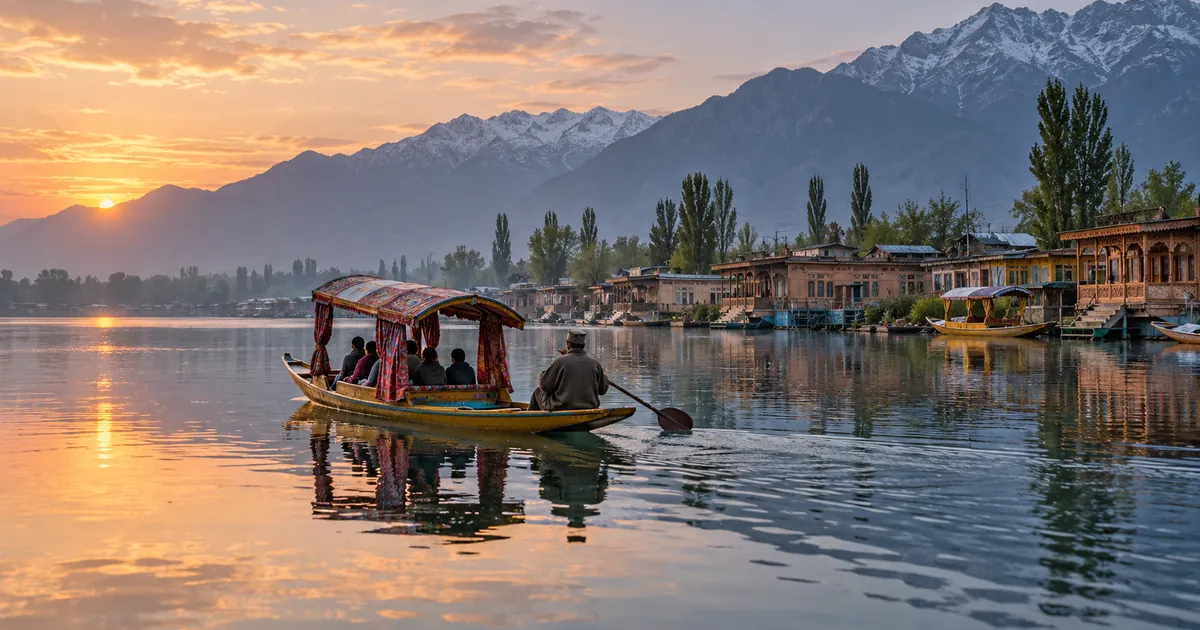
Dal Lake covers 18 square kilometers on the eastern side of Srinagar and anchors city sightseeing. Wooden shikara boats depart from numbered Boulevard Road ghats between 6:00 AM and 8:00 PM at regulated tariffs of ₹500 to ₹1,200 per hour.
Dawn shikara rides at 5:00 AM reach the Gudder floating vegetable market, where farmers trade lotus stems (nadru) and fresh produce from narrow skiffs. Along Dal Lake and quieter Nigeen Lake, carved cedar houseboats provide overnight stays priced between ₹3,500 and ₹14,000 per night.
Above the southern shore rises Shankaracharya Hill to 335 meters above the valley floor, crowned by a ninth-century stone Shiva temple reached via 240 steps. In the historic downtown of Shehr-e-Khas, the Jamia Masjid features 378 deodar cedar pillars built in 1400 CE, while the lakeside Hazratbal Shrine preserves the sacred Moi-e-Muqqadas relic.
Complete monument timings, shikara ghat rates, and houseboat booking advice are detailed in our guide to what to see in Srinagar. Visitors can also verify municipal boat rate cards through the Srinagar District Administration Tourism Portal.
Mughal Terraced Gardens and Spring Tulip Blossoms in Srinagar
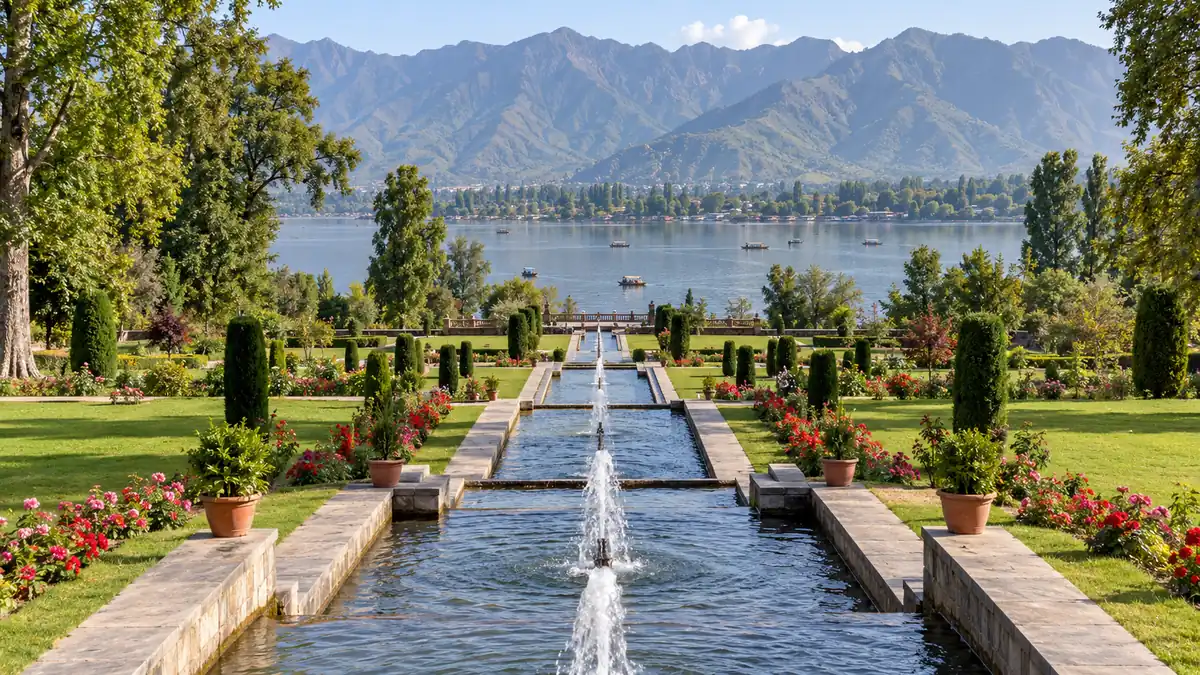
During the sixteenth and seventeenth centuries, Mughal emperors built Persian-style Charbagh gardens along the Zabarwan slopes overlooking Dal Lake. Fed by mountain springs and stone water chutes, these terraced parks open daily from 9:00 AM to 7:00 PM with adult entry tickets costing ₹24.
Shalimar Bagh, commissioned by Emperor Jahangir in 1619 for Empress Nur Jahan, rises across three chinar-shaded terraces around a black marble pavilion. Four kilometers south, Nishat Bagh ascends twelve zodiac terraces built in 1633 by Asif Khan with direct views across Dal Lake toward the Pir Panjal peaks.
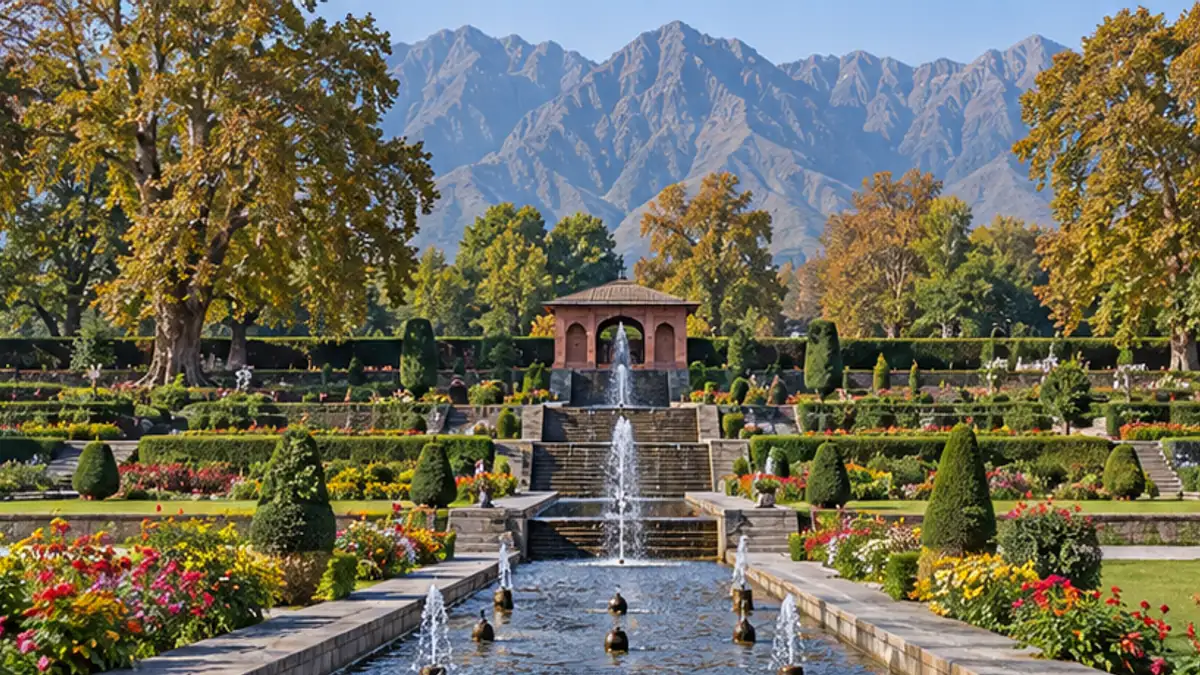
Higher on the ridge at 1,700 meters, Chashme Shahi encloses a natural spring built in 1632, while the seven-terraced arches of Pari Mahal sit directly above. Heritage trail profiles for these royal gardens are cataloged on the Incredible India Jammu and Kashmir Portal.
Every spring between late March and late April, the Indira Gandhi Memorial Tulip Garden opens across 30 hectares beside Dal Lake. Over 1.5 million tulip bulbs across 68 varieties bloom across seven terraces; see our guide to the Tulip Garden in Srinagar for ₹60 entry tickets and blooming dates.
Gulmarg Alpine Bowl and High-Altitude Skiing Slopes
Situated 51 kilometers southwest of Srinagar in Baramulla district, Gulmarg occupies an alpine bowl at 2,650 meters (8,694 feet) in the Pir Panjal range. Renamed the Meadow of Flowers in the sixteenth century, the town shifts from a summer golf pasture to India’s top winter ski resort.
Between late December and mid-March, western disturbances blanket Mount Apharwat in deep powder snow. Beginners train on nursery slopes beside the golf course, while advanced skiers descend Kongdoori runs and backcountry chutes from 4,390 meters using ₹800 to ₹1,500 daily gear rentals.
Registered ski instructors, rental rate cards, and winter highway rules are listed in the Baramulla District Administration Gulmarg Directory. From May to September, visitors play the 1911 18-hole golf course and walk the Circular Road past the 1902 St. Mary’s Church and Maharani Shiva Temple.
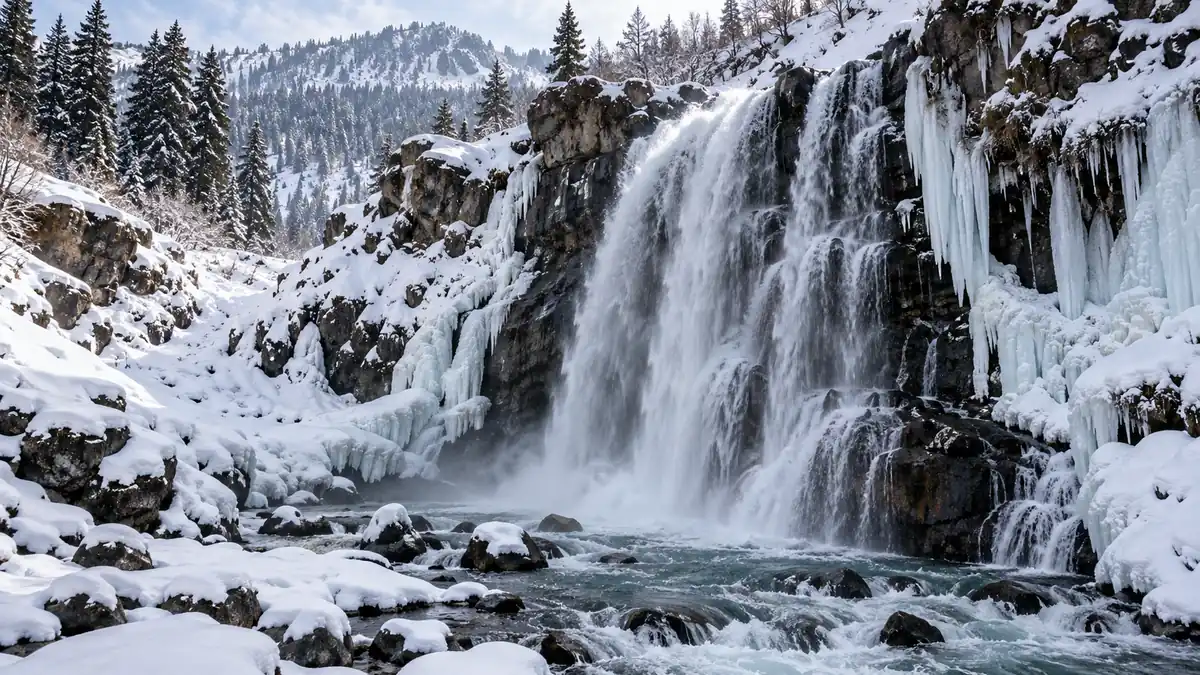
Thirteen kilometers downhill at Tangmarg lies Drung Waterfall, where a cliffside cascade freezes into massive icicle pillars each winter. Complete seasonal sightseeing loops and Tangmarg snow-chain taxi transfers are covered in our guide to what to see in Gulmarg.
Gulmarg Gondola Cable Car and Apharwat Peak Ascent
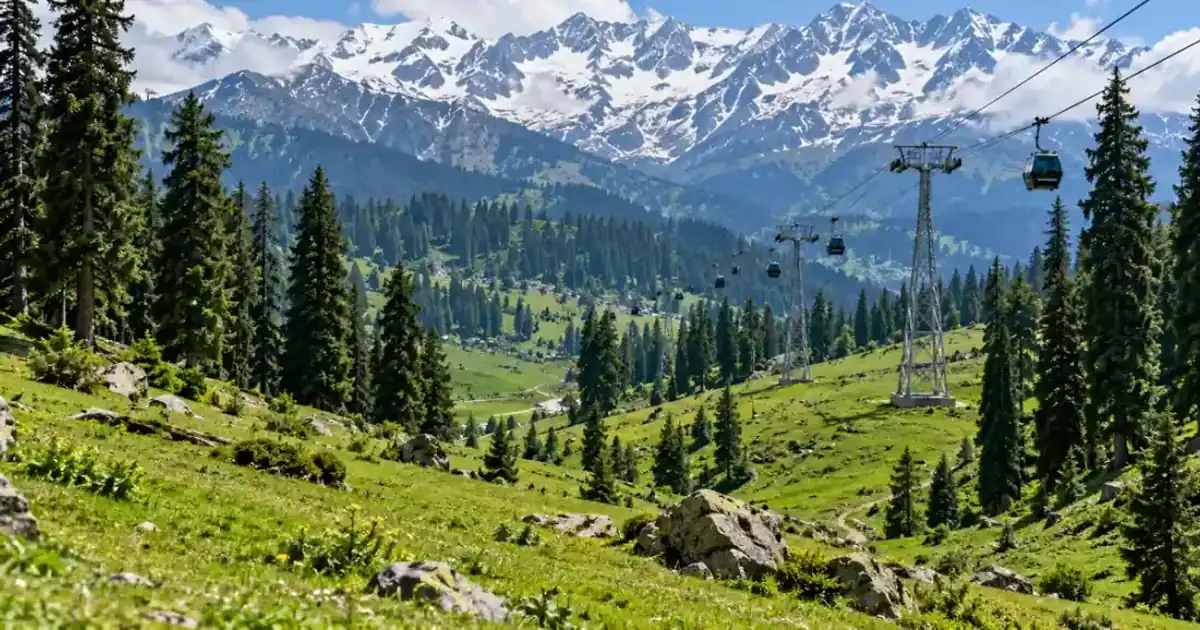
The Gulmarg Gondola is one of the world’s highest operating cable cars, lifting passengers from 2,650 meters to 4,390 meters (14,403 feet) in two stages. Operating daily from 9:00 AM to 5:00 PM subject to wind speeds, the six-seater cabins transport 600 passengers per hour.
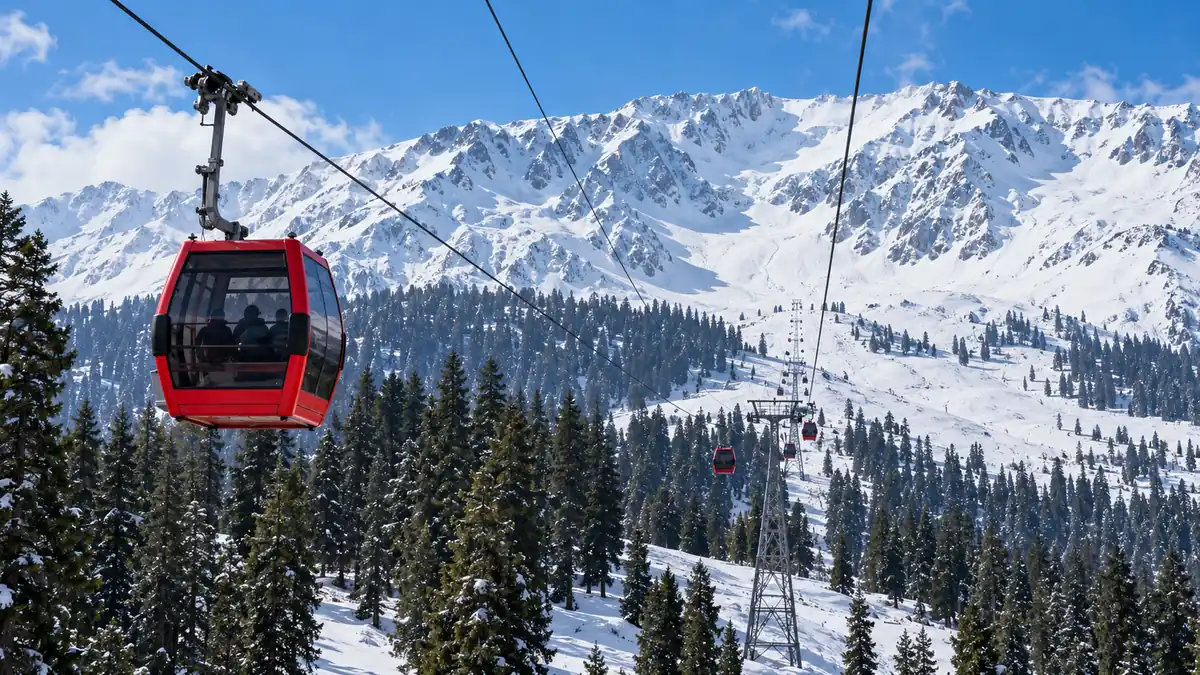
Phase 1 climbs from Gulmarg base (2,650 meters) to Kongdoori bowl (3,050 meters) in nine minutes for ₹810 round-trip, providing access to sledding slopes, snowmobiles, and cafes. Phase 2 ascends from Kongdoori to Apharwat Peak at 4,390 meters in twelve minutes for ₹1,060, revealing clear morning views of Nanga Parbat (8,126 meters).
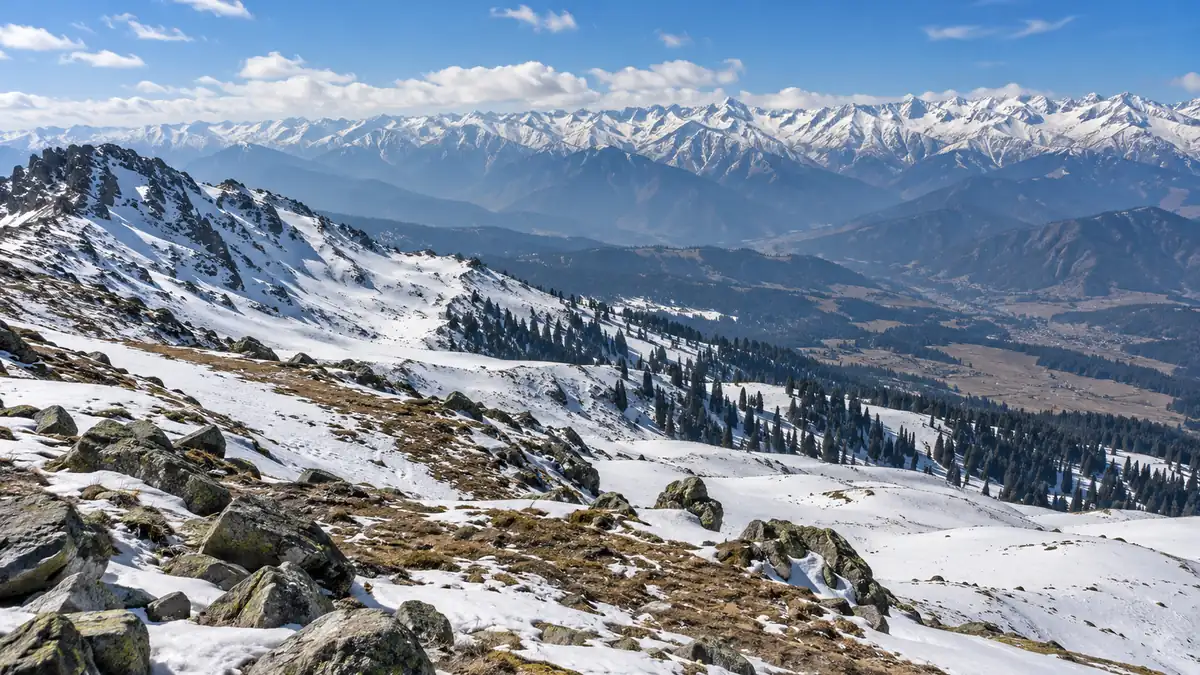
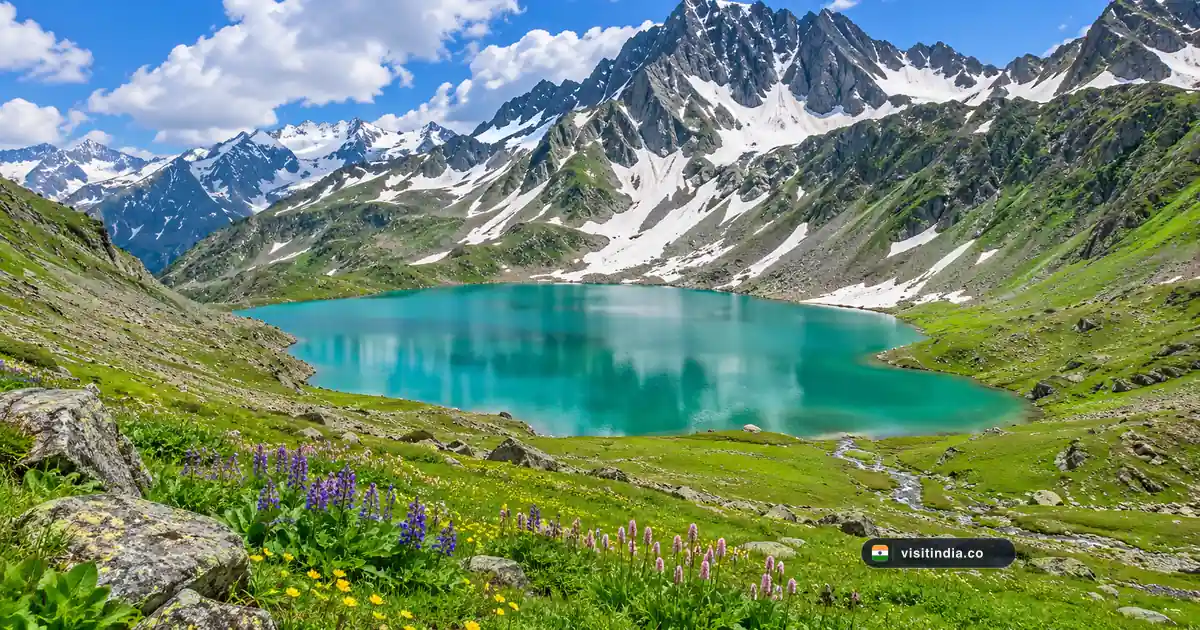
From the Phase 2 station, summer hikers walk 1.5 kilometers to Alpather Lake, an alpine tarn that stays frozen into June, while the Mary’s Shoulder chairlift costs ₹300. Because counter sales do not exist on site, review online slot reservations in our key details for Gulmarg Gondola Booking.
Pahalgam and the Lidder River Valley Corridor
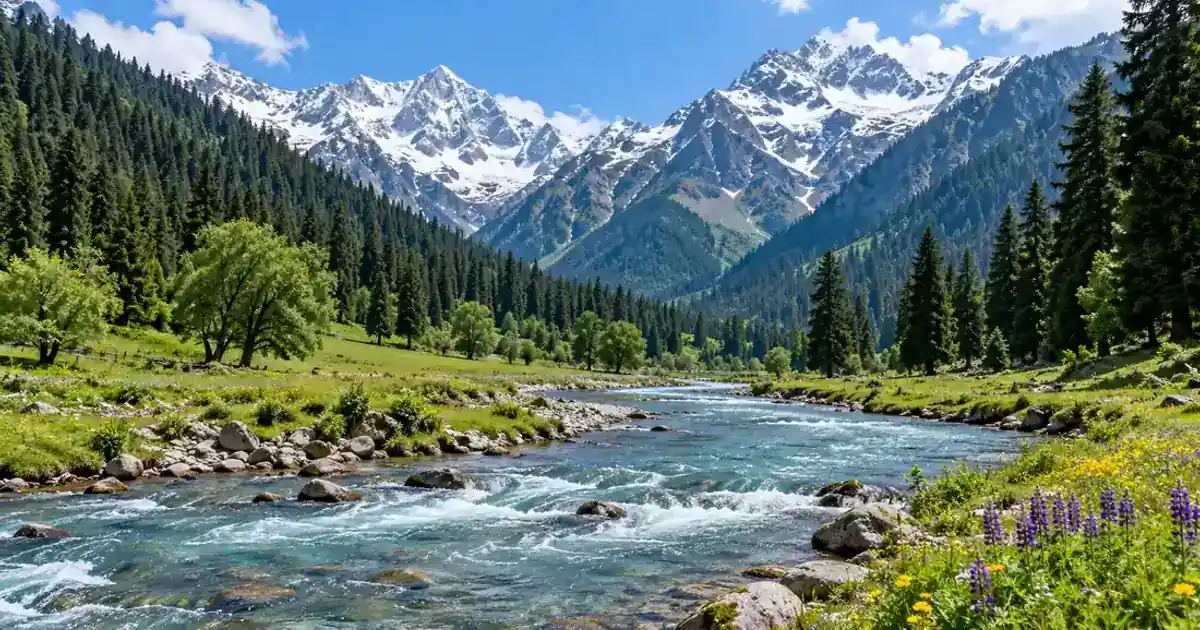
Located 90 kilometers southeast of Srinagar in Anantnag district, Pahalgam sits at 2,130 meters (6,988 feet) at the confluence of the East and West Lidder rivers. The highway from Srinagar passes Pampore saffron fields, ninth-century Avantipur temple ruins, and Bijbehara apple orchards.
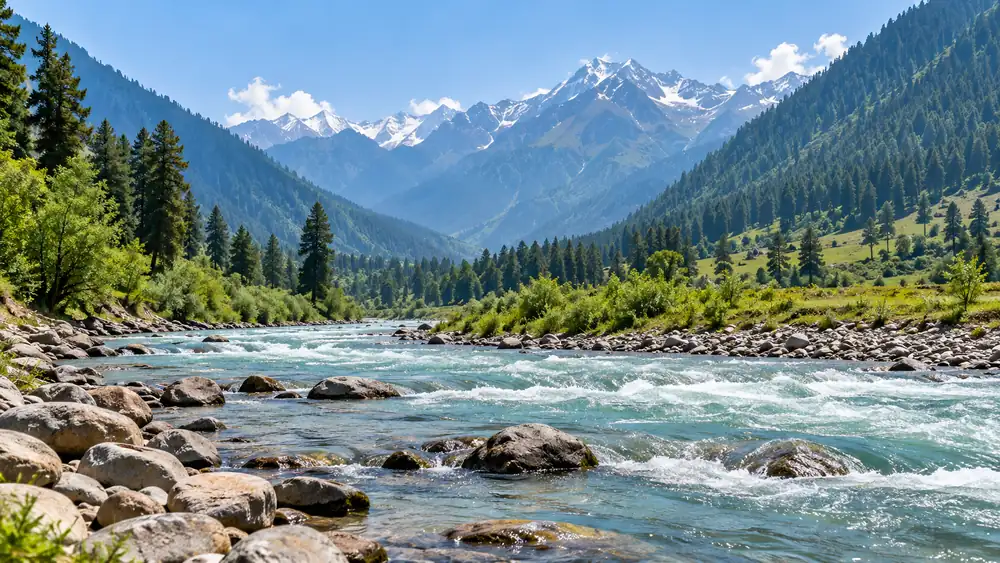
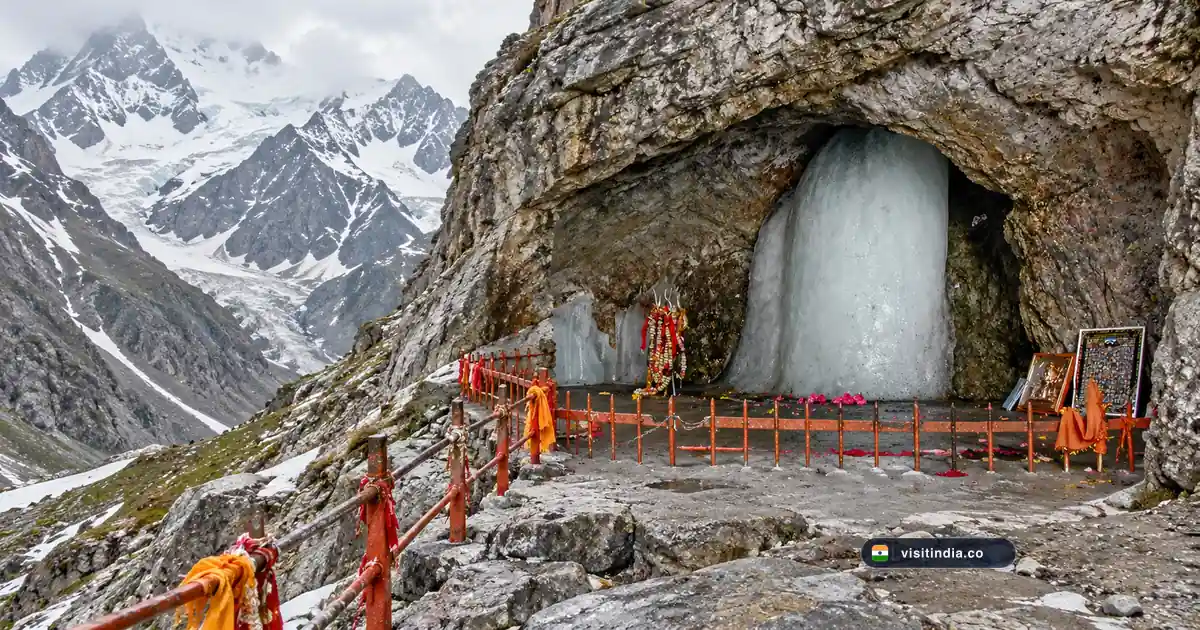
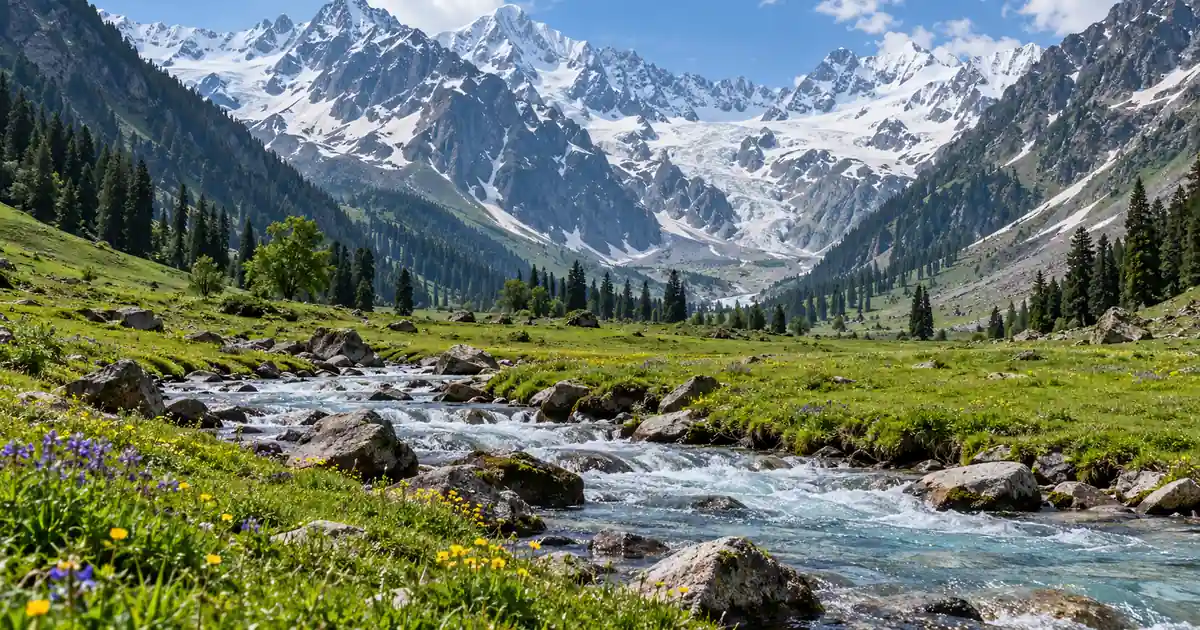
Between May and September, the Lidder River hosts grade-two and grade-three white-water rafting runs from Lidder Joy Ride point to Yanner Bridge alongside licensed brown trout angling. In July and August, Pahalgam also serves as the southern base camp for the trek from Chandanwari to the Shri Amarnathji Cave (3,888 meters). Comprehensive permit guidelines, medical clearances, and trail choices are detailed in our dedicated Amarnath Yatra registration and route guide.
Because outside Srinagar taxis can only drop guests at Pahalgam hotels, local sightseeing requires hiring a registered Pahalgam Taxi Union cab for ₹2,200 to ₹3,200. Complete valley tariffs and rafting tips are detailed in our guide to what to see in Pahalgam, with official notices on the Anantnag District Administration Tourism Directory.
Betaab Valley and Chandanwari Snow Point
Located 7 kilometers northeast of Pahalgam along the Chandanwari road, Hagan Valley was renamed Betaab Valley after the 1983 Hindi film shot across its pastures. Set at 2,395 meters, the valley features deodar and pine forests framing the crystal-clear Lidder River.
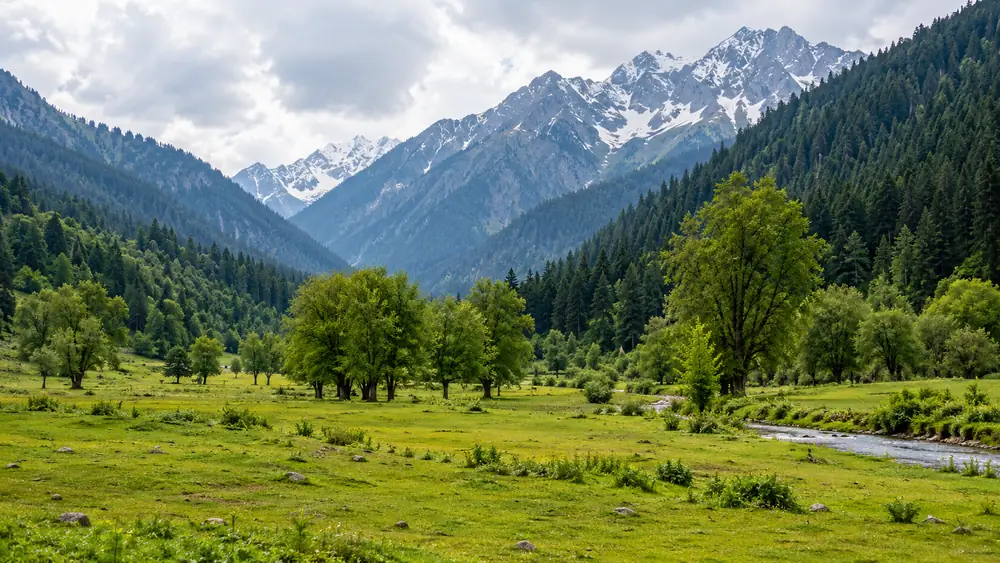
Pedestrian timber bridges cross the river channels to link manicured lawns, stone pavilions, and tea kiosks. The park opens daily from 8:00 AM to 6:00 PM with a ₹100 admission ticket; see our dedicated guide to Betaab Valley for walking trails and seasonal timings.
Nine kilometers further uphill lies Chandanwari at 2,895 meters, where compacted snow bridges span the river gorge well into June. Visitors rent wooden sledges for ₹300 to ₹500 to slide down the snow slopes beside the glacial meltwater.
High-Altitude Treks and Grazing Pastures in Aru and Baisaran
Twelve kilometers northwest of Pahalgam along the West Lidder stream lies the timber village of Aru at 2,414 meters inside the Overa-Aru Biosphere Reserve. Overlooked by Kolahoi Peak (5,425 meters), the reserve protects Himalayan brown bears, musk deer, and Kashmir stag across birch and fir woods.
Aru serves as the base trailhead for multi-day treks to the Kolahoi Glacier (36 kilometers round-trip) and the twin alpine basins of Tarsar and Marsar Lakes. Day visitors walk the village meadows, ride ponies to Green Top, or consult our guide to wildlife spotting at Aru Valley Pahalgam for camping permits and homestays.
Five kilometers uphill from Pahalgam town center, Baisaran Meadow sits on a pine-ringed plateau at 2,438 meters (8,000 feet). Because motor vehicles cannot access the meadow, visitors hike 90 minutes up the forest path or hire a registered pony from Pahalgam for ₹1,500 to ₹2,500 round-trip.
Sonmarg Sindh Valley, Thajiwas Glacier, and Zoji La Gateway
Located 80 kilometers northeast of Srinagar along National Highway 1 in Ganderbal district, Sonmarg rests at 2,730 meters (8,956 feet) in the Sindh River gorge. Framed by Amarnath, Sirbal, and Kolahoi peaks, the valley remains open from May to December before heavy winter snow closes the upper road.
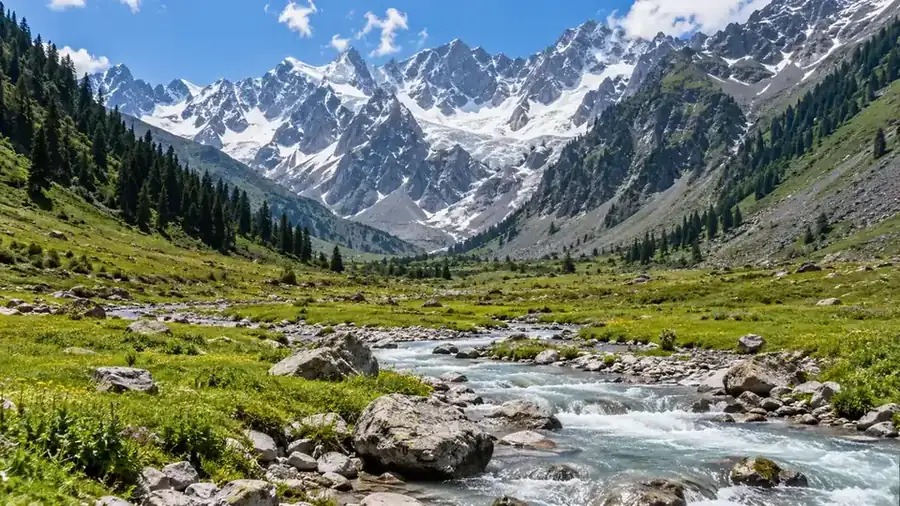
Three kilometers south of the town market lies Thajiwas Glacier at 3,000 meters, reached via a 45-minute hike or a ₹1,200 round-trip pony ride. Twenty-five kilometers east, local union SUVs (₹3,500 to ₹5,000) climb the cliffside switchbacks of Zoji La Pass (3,528 meters) to Zero Point for summer snow sledding.
Sonmarg also anchors the 72-kilometer Kashmir Great Lakes Trek across Nichnai Pass (4,114 meters) and Gadsar Pass (4,190 meters) past Vishansar and Gangabal lakes. Complete union cab rates and Baltal helipad logistics are covered in our guide to places to visit in Sonmarg.
Jammu Winter Capital and Shri Mata Vaishno Devi Pilgrimage in Katra
Perched at 327 meters above the Tawi River, Jammu city serves as the winter capital and rail gateway to the territory. Key heritage landmarks include the seven-spired Raghunath Temple (built 1835 to 1860), cliffside Bahu Fort with its Kali shrine, and the red sandstone Amar Mahal Palace Museum.
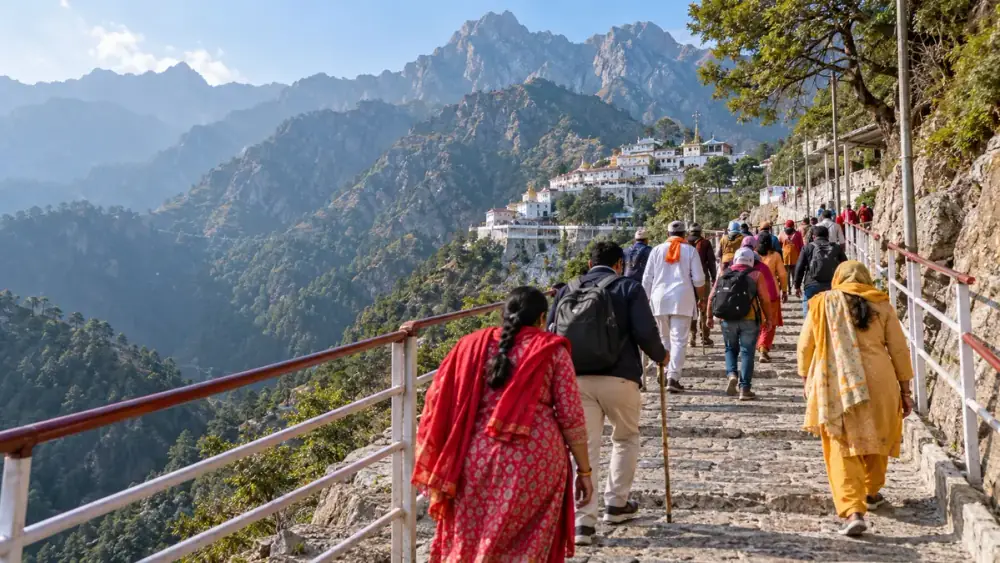
Forty-eight kilometers north in Reasi district lies Katra (750 meters), base camp for the climb to Shri Mata Vaishno Devi at 1,585 meters in the Trikuta Hills. Every pilgrim must collect a free mandatory RFID Yatra Access Card in Katra before entering the 12-kilometer Banganga track or 13-kilometer pony-free Tarakote Marg.
Eight-minute helicopter flights link Katra to Sanjichhat for ₹2,100 one-way, electric battery cars run from Ardhkuwari to Bhawan for ₹354 uphill, and the Bhairon Ghati cable car costs ₹100. Book slots 60 days ahead on the Shri Mata Vaishno Devi Shrine Board Official Portal and read our Vaishno Devi Katra Yatra temple overview.
Dachigam National Park and High-Altitude Wildlife Sanctuaries
Located 22 kilometers northeast of Srinagar in the Zabarwan range, Dachigam National Park spans 141 square kilometers between 1,700 meters and 4,200 meters. Preserved in 1910 around the Harwan Reservoir catchment, the park is the last refuge of the critically endangered Kashmir stag or Hangul (Cervus hanglu hanglu).
Lower Dachigam shelters Hangul herds, Himalayan black bears, yellow-throated martens, and Koklass pheasants across deep riverine ravines and oak groves. Visitors must secure an advance entry permit from the Wildlife Warden Office or Forest Department portal 48 hours ahead, with peak viewing between May and November.
Across the northwest valley floor, Hokersar Wetland Reserve and Wular Lake (spanning up to 189 square kilometers in Bandipora) host over 500,000 migratory waterfowl from Siberia between November and February. Birdwatchers spot greylag geese, northern pintails, mallards, and common pochards from lakeside bunds.
Kashmiri Wazwan Gastronomy, Saffron Kahwa, and Dogra Cuisine
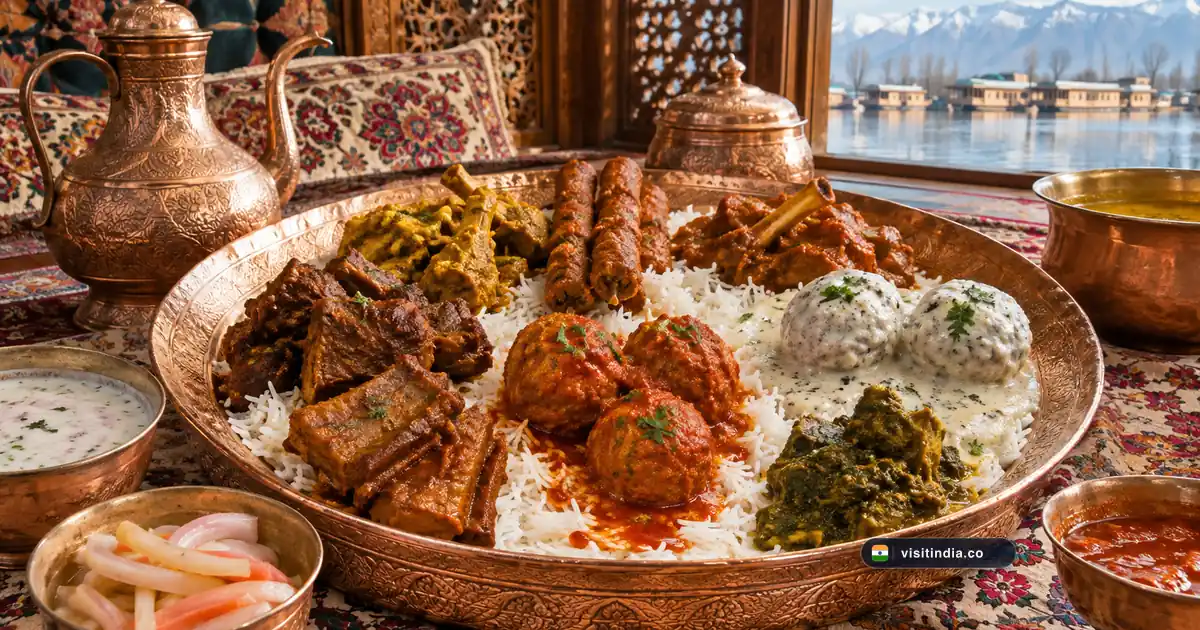
The culinary traditions of Jammu and Kashmir pair the slow-cooked mutton banquets of the Kashmir Valley with the vegetarian and cheese specialties of the Dogra foothills. In Kashmir, festive dining centers on the Wazwan, a multi-course feast cooked overnight in copper vessels over wood fires by master chefs called Wazas:
- Rogan Josh: Tender lamb braised in a crimson gravy colored naturally with dried cockscomb flowers (mawal) and Kashmiri chilies.
- Gushtaba and Rista: Hand-pounded mutton meatballs; Rista simmers in red paprika gravy, while Gushtaba cooks in spiced yogurt sauce.
- Yakhni and Tabak Maaz: Mutton simmered in a yogurt-mint broth alongside twice-cooked lamb ribs crisped in clarified butter.
- Nadru Yakhni and Dum Aloo: Dal Lake lotus stem slices cooked in yogurt gravy paired with spiced baby potatoes.
Neighborhood Kandur bakeries in Srinagar bake sesame-crusted Tsot flatbreads and Lavasa each morning to accompany pink salted Noon Chai or saffron Kahwa. In the Jammu division, Dogra food stalls serve pan-seared Kaladi Kulcha, Khatta Meat, and Bhaderwah Rajma Chawal. Explore courses, bakery walks, and heritage dining halls in our Kashmiri Wazwan and Srinagar food guide.
Recommended Jammu and Kashmir Itineraries and Travel Circuits
Designing an efficient route across Jammu and Kashmir depends on whether your trip focuses on the Kashmir Valley or combines the Vaishno Devi yatra with alpine sightseeing. The three circuits below minimize highway driving hours and follow gradual altitude progression:
Circuit 1: The 5-Day Classic Kashmir Valley Express
This five-day route serves families and short-break travelers flying directly into Srinagar. The schedule balances Dal Lake houseboat stays with day trips to Gulmarg and an overnight halt in Pahalgam:
- Day 1: Srinagar Arrival: Land at Srinagar Airport (SXR), check into a Dal Lake cedar houseboat, and take an evening shikara ride.
- Day 2: Mughal Gardens & Old City: Visit Shankaracharya Temple, Nishat Bagh, Shalimar Bagh, Chashme Shahi, and Jamia Masjid before sunset at Pari Mahal.
- Day 3: Gulmarg Gondola Excursion: Drive 51 kilometers to Gulmarg (2,650 meters), ride Gondola Phase 1 and Phase 2 (4,390 meters), and return to Srinagar.
- Day 4: Srinagar to Pahalgam: Drive 90 kilometers south on NH 44 past Pampore saffron fields and Avantipur ruins to a riverside hotel in Pahalgam.
- Day 5: Pahalgam Valleys & Departure: Tour Betaab Valley and Aru Valley, or ride a pony to Baisaran Valley before departing from Srinagar Airport.
Circuit 2: The 7 to 8-Day Complete Kashmir Alpine Loop
This eight-day valley circuit adds overnight stays in Gulmarg and Pahalgam alongside a full-day glacier excursion to Sonmarg. Overnight halts at each mountain base eliminate rushed return drives to Srinagar:
- Day 1: Nigeen Lake Arrival: Arrive at Srinagar Airport, check into a quiet Nigeen Lake houseboat, and take a sunset shikara paddle.
- Day 2: Floating Market & Heritage: Board a 5:00 AM shikara to the Gudder vegetable market, then tour Shalimar Bagh, Nishat Bagh, and Hazratbal Shrine.
- Day 3: Sonmarg Day Trip: Drive 80 kilometers along the Sindh River to Sonmarg (2,730 meters), hike to Thajiwas Glacier, or visit Zero Point at Zoji La.
- Day 4: Srinagar to Gulmarg: Drive to Gulmarg, check into a resort beside the golf course, and walk past St. Mary’s Church and Maharani Temple.
- Day 5: Gondola Ascent to Pahalgam: Ride the morning Gondola slot to Apharwat Peak, stop at Drung Waterfall, and drive 140 kilometers south to Pahalgam.
- Day 6: Pahalgam Three-Valley Tour: Explore Betaab Valley, Chandanwari snow bridges, and Aru Valley via a registered Pahalgam union vehicle.
- Day 7: Baisaran & Return to Srinagar: Ride a pony up to Baisaran Meadow, then drive back to Srinagar via the Martand Sun Temple ruins.
- Day 8: Srinagar Departure: Shop for Pampore saffron, Kashmiri walnuts, and GI-tagged Pashmina shawls before transferring to Srinagar Airport.
Circuit 3: The 10-Day Grand Jammu, Vaishno Devi, and Kashmir Circuit
This ten-day cross-divisional journey combines the sacred Vaishno Devi yatra in Katra with Patnitop hill station and the Kashmir Valley. Travelers enter via Jammu or Katra by train and depart by flight from Srinagar:
- Day 1: Katra Arrival: Arrive at Jammu Airport (IXJ) or Katra Railway Station (SVDK) via Vande Bharat Express and collect your mandatory RFID Yatra Card.
- Day 2: Vaishno Devi Darshan: Trek 12 kilometers via Banganga or 13 kilometers via Tarakote Marg (or fly to Sanjichhat) for Bhawan darshan and Bhairon Ropeway.
- Day 3: Katra to Patnitop: Drive 85 kilometers north through the Chenani-Nashri Tunnel to Patnitop (2,024 meters) and visit Nathatop and Sanasar Lake.
- Day 4: Patnitop to Pahalgam: Drive 130 kilometers north on NH 44 through the 8.45-kilometer Banihal-Qazigund Navyug Tunnel into Pahalgam.
- Day 5: Pahalgam Valleys: Tour Betaab Valley, Aru Biosphere Reserve, and Chandanwari snow bridges using a local Pahalgam union cab.
- Day 6: Pahalgam to Gulmarg: Drive 140 kilometers past Awantipora ruins and Pampore saffron stores to ascend the Tangmarg road into Gulmarg.
- Day 7: Gulmarg to Srinagar: Ride both phases of the Gulmarg Gondola to 4,390 meters and drive 51 kilometers east to a Dal Lake houseboat.
- Day 8: Srinagar Gardens & Old City: Visit Shankaracharya Temple, Nishat Bagh, Shalimar Bagh, Chashme Shahi, and Jamia Masjid.
- Day 9: Sonmarg Glacier Excursion: Take a day trip to Sonmarg and Thajiwas Glacier, returning to Srinagar for a Wazwan dinner.
- Day 10: Srinagar Departure: Transfer to Sheikh ul-Alam International Airport (SXR) three hours before departure.
Seasonal Weather Calendar and Best Time to Visit
Jammu and Kashmir offers distinct four-season travel experiences across the calendar year, from spring tulip displays and summer alpine treks to autumn chinar foliage and winter ski powder. The comparison matrix below summarizes monthly conditions across both divisions:
| Season Window | Calendar Months | Kashmir Valley Temp | Jammu & Katra Temp | Highway & Pass Status | Prime Seasonal Experiences |
|---|---|---|---|---|---|
| Spring Bloom | March to April | 8°C to 20°C | 18°C to 32°C | NH 44 open; Zoji La clearing in April | Tulip Garden festival, almond blossoms, Chaitra Navratri at Katra |
| Summer Peak | May to June | 14°C to 30°C | 26°C to 40°C | All valleys and high passes open | Dal Lake houseboats, Gondola rides, Lidder rafting, meadow hikes |
| Monsoon & Alpine | July to August | 16°C to 31°C | 24°C to 34°C (Rains) | Occasional NH 44 rain halts; alpine trails clear | Kashmir Great Lakes trek, Amarnath Yatra, Sonmarg glacier walks |
| Autumn Gold (Harud) | September to November | 6°C to 23°C | 15°C to 29°C | Crystal clear skies; stable dry roads | Crimson chinar foliage, Pampore saffron harvest, Sharad Navratri |
| Winter Snow (Chillai Kalan) | December to February | -8°C to 10°C | 6°C to 20°C | Heavy snow in Gulmarg; Sonmarg upper road closed | Apharwat powder skiing, frozen Drung waterfall, winter snow trains |
Spring from late March through April awakens the Kashmir Valley with almond blossoms at Badamwari and 1.5 million blooming tulips at the Indira Gandhi Memorial Tulip Garden. Summer from May through June marks the peak family escape when all meadows in Pahalgam, Gulmarg, Sonmarg, and Doodhpathri enjoy daytime highs between 20°C and 28°C.
From July through August, the Pir Panjal range shields the Kashmir Valley from heavy monsoon downpours, creating prime conditions for the Kashmir Great Lakes trek and Amarnath Yatra. Autumn (Harud) from September to November brings crisp blue skies, golden-red chinar leaves in Nishat and Shalimar gardens, and the late-October Pampore saffron harvest.
Winter from December through February includes the 40-day sub-zero period of Chillai Kalan (December 21 to January 30), covering Gulmarg and Pahalgam in deep snow. Skiers descend Mount Apharwat, while Vaishno Devi pilgrims in late January often gain access to the original natural cave tunnel in Katra.
Transportation Logistics, Rail Bridges, and Highway Tunnels
Infrastructure upgrades across the Pir Panjal range, including all-weather highway tunnels and the Udhampur-Srinagar-Baramulla Rail Link (USBRL), have transformed year-round connectivity into Jammu and Kashmir. Travelers can enter the territory via direct flights, high-speed trains, or four-lane mountain highways.
Commercial Airports and Aviation Gateways
Two civil airports handle scheduled domestic passenger flights across the Union Territory. Both terminals maintain prepaid tourist taxi counters and direct highway connections to nearby hill stations:
- Sheikh ul-Alam International Airport, Srinagar (IATA: SXR): Located 12 kilometers south of Lal Chowk, operating over 35 daily direct flights from New Delhi, Mumbai, Bengaluru, Hyderabad, Kolkata, Chandigarh, and Jammu. Passengers must arrive three hours early for security screening.
- Jammu Civil Enclave Airport (IATA: IXJ): Situated 8 kilometers from Jammu city center and 50 kilometers south of Katra, connecting directly to New Delhi, Srinagar, Mumbai, Leh, and Chandigarh with prepaid taxis and JKRTC buses to Katra.
Railway Connectivity and the Chenab Rail Corridor
Indian Railways operates two interconnected railway networks linking the northern plains with the Himalayan foothills and the Kashmir Valley. High-speed express trains and heated valley coaches serve key passenger terminals year-round:
- Shri Mata Vaishno Devi Katra (SVDK) and Jammu Tawi (JAT): Linked to New Delhi in 8 hours via two daily Vande Bharat Express trains (22439/22440 and 22477/22478), alongside overnight AC sleeper services including the Jammu Rajdhani and Shri Shakti Express.
- Srinagar (SINA), Banihal (BAHL), and Baramulla (BRML): Spans 135 kilometers across the Kashmir Valley from Banihal through Qazigund, Anantnag, and Srinagar (Nowgam) to Baramulla with heated Vistadome coaches.
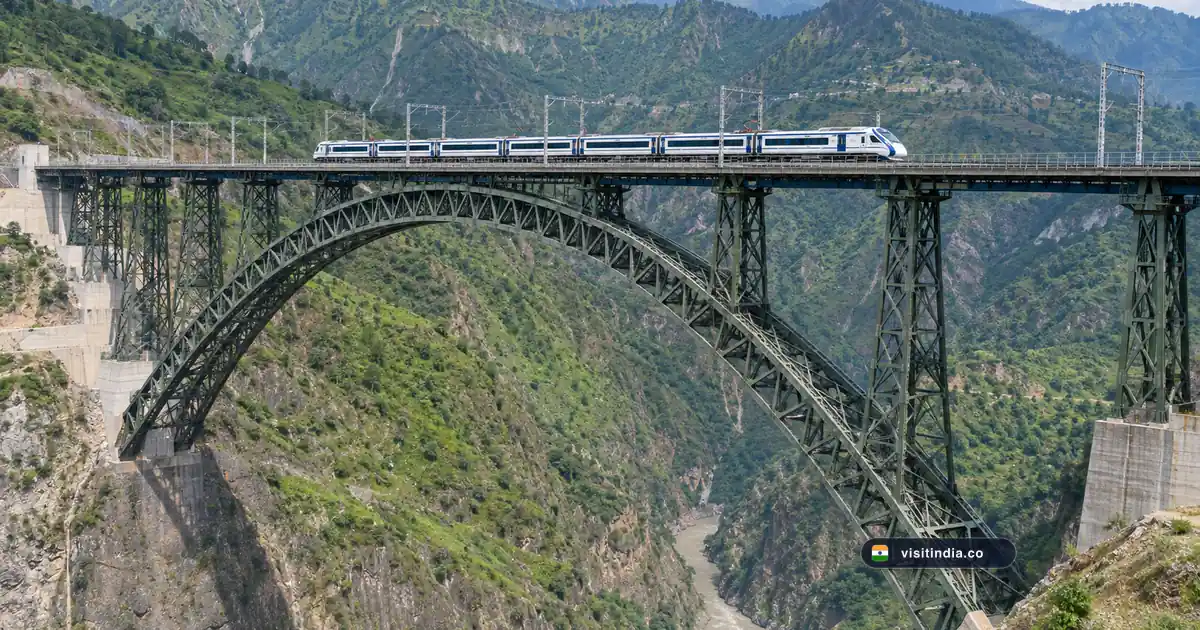
- Udhampur-Srinagar-Baramulla Rail Link (USBRL): Crosses the Reasi gorges via the world’s highest railway arch bridge (the Chenab Rail Bridge rising 359 meters above the Chenab River) and the Anji Khad Bridge, connecting Katra directly with Srinagar as detailed in our Kashmir Vande Bharat Katra to Srinagar guide.
All-Weather National Highways and Mountain Tunnels
Road travel between Jammu and Srinagar follows the upgraded four-lane National Highway 44 (NH 44), reducing transit times between the two capitals to roughly 5.5 hours. Modern twin-tube mountain tunnels bypass steep snow passes throughout the winter months:
- Dr. Syama Prasad Mookerjee Tunnel (Chenani-Nashri Tunnel): A 9.28-kilometer highway tunnel bypassing the snow-prone ridges of Patnitop and cutting 30 kilometers off the Jammu-Ramban drive.
- Navyug Tunnel (Banihal-Qazigund Road Tunnel): An 8.45-kilometer twin-tube all-weather tunnel passing beneath the Pir Panjal range at 1,790 meters to deliver vehicles directly into Qazigund.
- Mughal Road and Sinthan Top: Seasonal mountain highways connecting Poonch and Rajouri to Shopian via Pir Ki Gali (3,485 meters) and linking Kishtwar to Anantnag via Sinthan Top (3,748 meters) from May to November.
Essential Traveler Permits, Prepaid SIM Cards, and Local Taxi Rules
Travelers should prepare for three important administrative and logistical rules before arriving in Jammu and Kashmir. Observing these local regulations prevents communication gaps and transport delays across mountain checkpoints:
- Mobile SIM Card Regulations: Out-of-state prepaid mobile SIM cards automatically lose signal upon entering Jammu and Kashmir. Carry an active postpaid SIM on Airtel, Jio, or BSNL from home, or buy a local Aadhaar-verified SIM card in Srinagar, Jammu, or Katra.
- Local Taxi Union Jurisdictions: A tourist cab hired in Srinagar can drop you at your hotel in Gulmarg, Pahalgam, or Sonmarg, but local valley sightseeing (Betaab Valley, Aru Valley, or Zero Point) requires hiring a local town taxi union vehicle.
- Border Zone Security and ID Checks: Indian citizens do not require an Inner Line Permit for Srinagar, Gulmarg, Pahalgam, Sonmarg, or Vaishno Devi, though original photo ID is mandatory for army checkpoints in Gurez and Bangus valleys.
Frequently Asked Questions About Jammu and Kashmir
How many days are needed for a complete trip to Jammu and Kashmir?
A classic holiday covering the Kashmir Valley highlights of Srinagar, Gulmarg, Pahalgam, and Sonmarg requires six to seven full days to travel comfortably without rushed highway drives. Travelers combining the Shri Mata Vaishno Devi pilgrimage in Katra with the Kashmir Valley should allocate nine to ten days.
When is the best time to visit Jammu and Kashmir for snow and flowers?
The best window for heavy snowfall and winter skiing in Gulmarg and Pahalgam runs from late December through early March. For blooming flowers and pleasant sightseeing weather, visit between late March and April for the Srinagar Tulip Garden or from May to October for green alpine meadows and golden autumn chinar trees.
Do regular Indian prepaid mobile SIM cards work in Jammu and Kashmir?
No, prepaid mobile SIM cards purchased in other Indian states do not receive network connectivity inside Jammu and Kashmir due to regional telecom security rules. Visitors must either carry an active postpaid SIM card on Jio, Airtel, or BSNL from home or buy a verified local SIM card upon arrival in Srinagar, Jammu, or Katra.
Is advance online booking mandatory for the Gulmarg Gondola and Vaishno Devi?
Yes, Gulmarg Gondola cable car tickets are sold exclusively online through the official Jammu and Kashmir Cable Car portal and frequently sell out two to three weeks in advance. Similarly, every Vaishno Devi pilgrim must register for a free mandatory RFID Yatra Access Card before entering the Katra trail and book helicopter or battery car slots up to 60 days ahead on the Shrine Board portal.
What is the best route to combine Vaishno Devi with the Kashmir Valley?
The most efficient itinerary begins by taking the Vande Bharat Express or a direct flight to Jammu and Katra to complete the Vaishno Devi darshan over two days. From Katra, travelers can either board a short connecting flight from Jammu Airport to Srinagar or drive five hours north via the Chenani-Nashri and Banihal-Qazigund tunnels on National Highway 44 directly into Pahalgam and Srinagar.