Kashmir Vande Bharat Katra to Srinagar: Train & Chenab Bridge
Plan your journey on the Kashmir Vande Bharat Katra to Srinagar train. Explore Chenab Rail Bridge crossing, ticket fares, IRCTC schedules, and winter travel.
Carving a historic path through the formidable granite ridges of the Pir Panjal mountain range, the kashmir vande bharat katra to srinagar train represents the most ambitious mountain railway engineering triumph in independent India. By bridging the steep river chasms of the Chenab Valley, this semi-high-speed express transforms an unpredictable eight-hour mountain road ordeal into an effortless three-hour railway journey.
Travelers boarding at the sacred foothills of Katra cross high-altitude viaducts and peer into deep river canyons from climate-controlled panoramic coaches. Understanding train schedules, seat classes, winter heating capabilities, and security screening requirements helps passengers plan a scenic journey across the roof of India.
Kashmir Vande Bharat & Chenab Rail Bridge Essentials
- Primary Route: Shri Mata Vaishno Devi Katra (SVDK) to Srinagar Railway Station (SINA).
- Journey Time: Approximately 3 hours to 3 hours 10 minutes, cutting road travel by over five hours.
- Key Engineering Marvels: Crosses the 359-metre-high Chenab Arch Bridge and the Anji Khad cable-stayed bridge.
- Fare Categories: AC Chair Car (CC) from ₹665 to ₹720; Executive Chair Car (EC) from ₹1,280 to ₹1,330.
- Operating Schedule: Two daily departures from Katra operating six days a week, bookable via the official IRCTC portal.
What to Expect on the Kashmir Vande Bharat Express
The Kashmir Vande Bharat Express connects Shri Mata Vaishno Devi Katra to Srinagar across the Pir Panjal range in just three hours. Running along the historic USBRL project, the journey crosses the world-record Chenab Arch Bridge, navigating dramatic gorges and snowy mountain passes.
As highlighted in our Jammu and Kashmir travel guide, regional transit historically suffered from frequent winter highway closures and seasonal monsoon landslides. The introduction of this all-weather rail corridor establishes a reliable surface lifeline, connecting the plains of Jammu with the heart of the Kashmir Valley.
The USBRL Project: Engineering the Himalayan Rail Link
Spanning 272 kilometres across formidable seismic zones, the Udhampur-Srinagar-Baramulla Rail Link integrates dozens of deep rock tunnels and viaducts to establish India’s first all-weather railway corridor into the Kashmir Valley, documented in detail through the Jammu-Baramulla railway line engineering record.
Supervised by Northern Railway and Konkan Railway Corporation engineers, the route required cutting through complex Himalayan geology comprising thrust faults and fractured dolomites. Over eighty percent of the track between Katra and Banihal runs inside tunnels, including the landmark Pir Panjal railway tunnel that pierces eleven kilometres through mountain rock.
Journey Time vs the Treacherous NH-44 Highway
While driving the NH-44 highway between Jammu, Katra, and Srinagar routinely takes 8 to 10 hours amid rockfalls and winter blizzards, the train journey cuts travel time down to an effortless, puncture-proof 3 hours.
During intense winter storms, heavy snowfall near the Jawahar Tunnel and landslide mudslides around Ramban often strand vehicular traffic on the highway for days. The rail corridor eliminates this vulnerability completely, running through deep bedrock tunnels unaffected by surface snow accumulations or road blockades.
| Transit Feature | Vande Bharat Express Rail | NH-44 Mountain Highway |
|---|---|---|
| Typical Travel Time | 3 Hours to 3 Hours 10 Minutes | 8 to 11 Hours (Weather Permitting) |
| Weather Reliability | 99% All-Weather Operation | Vulnerable to Landslides & Snow Closures |
| Highest Point Crossed | 359m Elevation over Chenab River | 2,200m Mountain Passes |
| Onboard Comfort | Climate-Controlled Heated Coaches | Mountain Bends & High Traffic Density |
| Average One-Way Cost | ₹665 (Chair Car) / ₹1,280 (Executive) | ₹3,500 to ₹5,500 (Shared/Private Cab) |
Crossing the Chenab Rail Bridge: Engineering and Views
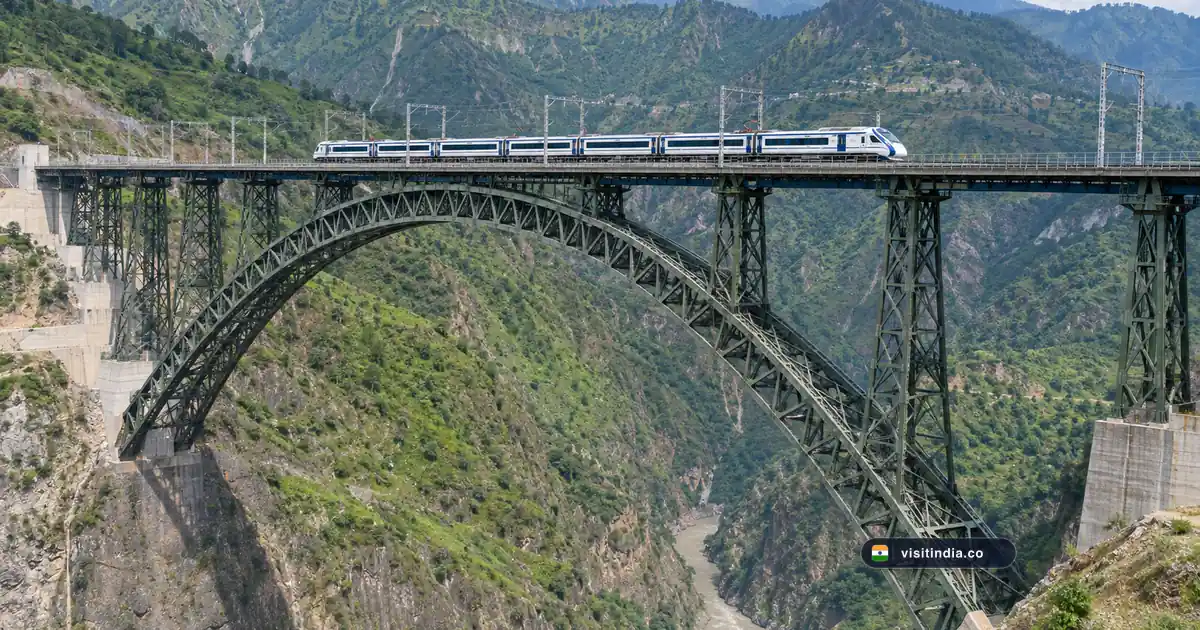
Towering 359 metres above the Chenab River, the Chenab Arch Bridge is the world’s highest railway bridge, standing 35 metres taller than Paris’s Eiffel Tower. Spanning 1,315 metres between Bakkal and Kauri, the steel arch provides sweeping vistas of rugged Himalayan canyons.
As travelers who explore Vande Bharat Express scenic tourist routes discover, crossing this bridge is an unforgettable visual milestone. Passengers look down into the turquoise river winding hundreds of metres below while mountain cliffs rise steeply on both flanks of the coach.
World’s Highest Rail Arch: Height, Steel, and Blast Resistance
Engineered with special blast-proof steel capable of withstanding seismic tremors up to Zone V and gale winds reaching 266 km/h, the bridge utilizes 28,000 tonnes of steel fabricated to endure extreme sub-zero temperatures.
The monumental steel arch spans 467 metres across the river chasm without intermediate river piers. Structural monitoring systems, internal rust-inhibiting paint coats, and automated anemometers continuously measure wind speeds, ensuring absolute safety for trains crossing the gorge, as recorded in the Chenab Rail Bridge structural engineering record.
Anji Khad Bridge: India’s First Cable-Stayed Rail Wonder
Located just south of the Chenab crossing, the Anji Khad Bridge features a single central pylon rising 331 metres above the riverbed, supported by 96 stay cables in an asymmetrical harp configuration.
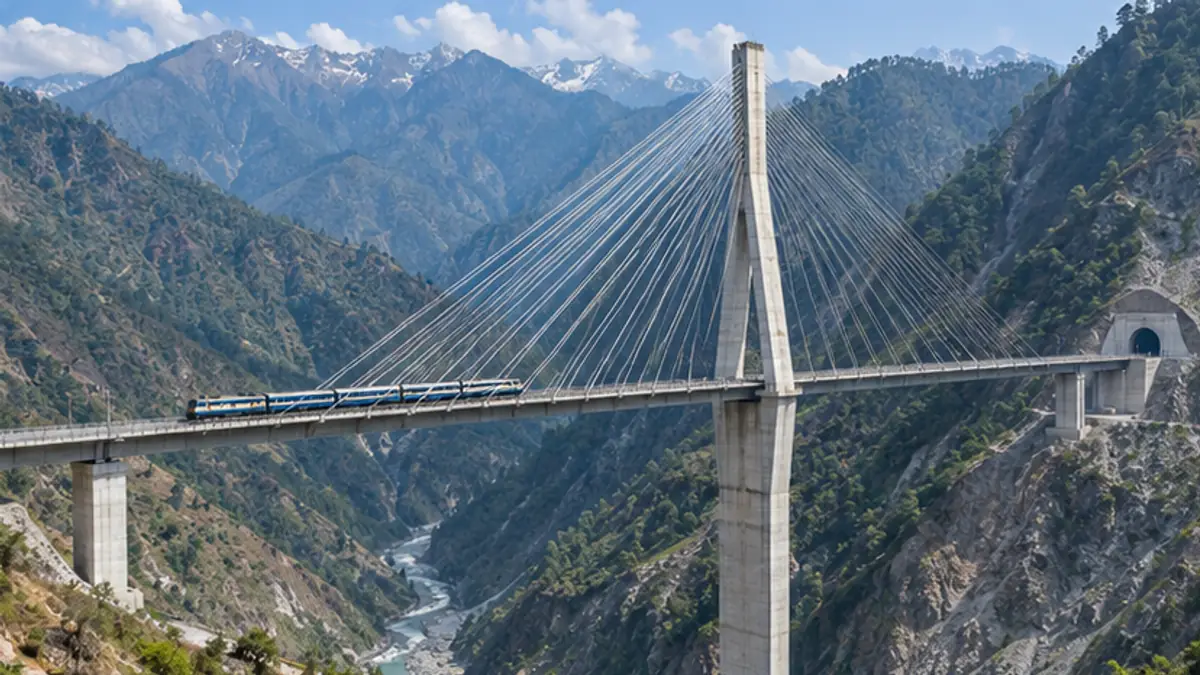
Built across a narrow geological fault line where an arch bridge was technically unfeasible, Anji Khad demonstrates cutting-edge structural innovation. Its slender steel-concrete pylon anchors high-tensile stay cables that stabilize the rail deck against fierce valley crosswinds.
Note
Regional tourist spots and district infrastructure updates are maintained on the District Administration Reasi Tourism Directory, covering public viewpoints and transit access in the Chenab Valley.
Kashmir Vande Bharat Katra to Srinagar Train Schedule and Fares
The Kashmir Vande Bharat operates two daily departures from Shri Mata Vaishno Devi Katra: a morning service at 08:10 AM reaching Srinagar at 11:10 AM, and an afternoon service at 02:55 PM arriving at 06:05 PM. Fares start around ₹665 for AC Chair Car.
This predictable timetable allows pilgrims who have completed their darshan with our Vaishno Devi Katra yatra guide to step directly from their base hotels onto the train and arrive in Srinagar in time for lunch.
Daily Departure Timetable and Intermediate Stations
Operating six days a week, the train stops at major transit points including Reasi, Banihal, and Qazigund. The rapid timetable enables travelers to make morning transfers from Jammu Tawi straight to Srinagar by midday.
The morning service departs Katra at 08:10 AM, crossing the Chenab Bridge around 08:45 AM, emerging from the Pir Panjal tunnel into the valley around 10:15 AM, and pulling into Srinagar station at 11:10 AM. The afternoon train follows the same route, departing at 02:55 PM and reaching Srinagar at 06:05 PM.
| Train Number | Origin | Departure | Destination | Arrival | Operating Days |
|---|---|---|---|---|---|
| Train 26401 | Katra (SVDK) | 08:10 AM | Srinagar (SINA) | 11:10 AM | 6 Days/Wk (Except Tue) |
| Train 26402 | Srinagar (SINA) | 11:45 AM | Katra (SVDK) | 02:45 PM | 6 Days/Wk (Except Tue) |
| Train 26403 | Katra (SVDK) | 02:55 PM | Srinagar (SINA) | 06:05 PM | 6 Days/Wk (Except Wed) |
| Train 26404 | Srinagar (SINA) | 06:40 PM | Katra (SVDK) | 09:45 PM | 6 Days/Wk (Except Wed) |
AC Chair Car vs Executive Chair Car Fare Tiers
AC Chair Car tickets are priced at approximately ₹665 to ₹720, while Executive Chair Car costs between ₹1,280 and ₹1,330. Both classes include complimentary catering, wide panoramic windows, and ergonomic reclining seats.
The Chair Car configuration provides comfortable 3x2 seating with fold-down meal trays and charging ports under every armrest. The Executive Chair Car offers luxurious 2x2 seating with rotatable chairs that can turn 180 degrees to face the river canyons outside the panoramic windows.
Step-by-Step IRCTC Ticket Booking Protocol
Bookings open on the IRCTC portal under train numbers 26401 and 26403 using station codes SVDK (Katra) and SINA (Srinagar). Given massive passenger interest, securing reservations at opening booking windows is essential.
Passengers must log in to their IRCTC account, enter SVDK as the boarding station and SINA as the destination, select their preferred class, and complete payment. Quotas open up to 60 days in advance, with instant digital confirmation sent via SMS and email.
Winter-Proof Engineering and On-Board Passenger Amenities
The Kashmir Vande Bharat features specialized anti-freeze technology, including heated water tanks, temperature-controlled bio-vacuum plumbing, heated driver windshields, and heavy-duty interior climate control designed to operate reliably at -20°C.
Himalayan winters in the Kashmir Valley regularly drop well below freezing, challenging standard rail rolling stock. Indian Railways engineers incorporated specialized sub-zero modifications developed in collaboration with research institutes across Europe and India.
Heated Windshields, Anti-Freeze Plumbing, and Braking Systems
To prevent ice blockages during freezing Himalayan winters, all water pipes, brake lines, and exterior doors are fitted with electrical heating coils. Automatic de-icing systems keep driver windshields completely transparent.
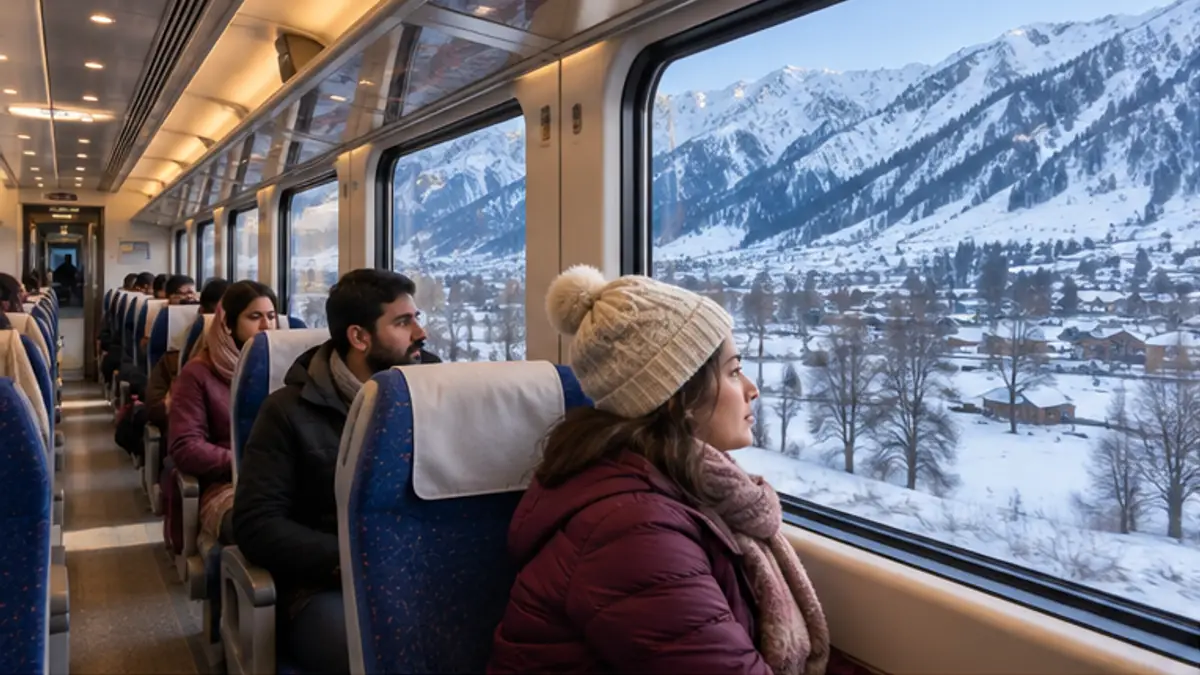
Bio-vacuum toilets feature heated collection tanks to prevent waste freezing during sub-zero overnight layovers. The pneumatic brake lines utilize heated air dryers to ensure instant brake responsiveness across icy mountain descents.
Panoramic Sealed Windows and On-Board Catering
Double-glazed acoustic sealed glass windows prevent condensation, ensuring clear views of snow-draped pines and river valleys. On-board menus feature hot Kashmiri kahwa alongside regional morning breakfast options.
The interior climate control maintains a comfortable cabin temperature of 21°C regardless of freezing outside weather. Flight-style overhead reading lights, modular luggage bins, and touch-free automated sliding doors enhance the modern travel ambiance.
Pro Tip
Book window seats on the right side of the train when traveling north from Katra to Srinagar for the most expansive valley views as the train crosses the Chenab Bridge.
Station Logistics: Katra Boarding and Srinagar Arrival Advice
Passengers must report to Shri Mata Vaishno Devi Katra Station at least 45 minutes before departure to complete multi-tiered security screening and baggage X-ray checks. In Srinagar, prepaid taxi counters and local bus shuttles provide transfers to Dal Lake and city hotels.
Understanding station layouts and security checkpoints ensures a relaxed boarding experience, especially for families with luggage or senior citizens. Both terminal stations feature modern passenger facilities and clear signage.
Security Checks and Luggage Scanning at Katra Station
Due to heightened frontier security protocols across Jammu and Kashmir, all passengers and luggage undergo physical metal detection and scanner checks at Katra terminal gates before accessing the platform concourse.
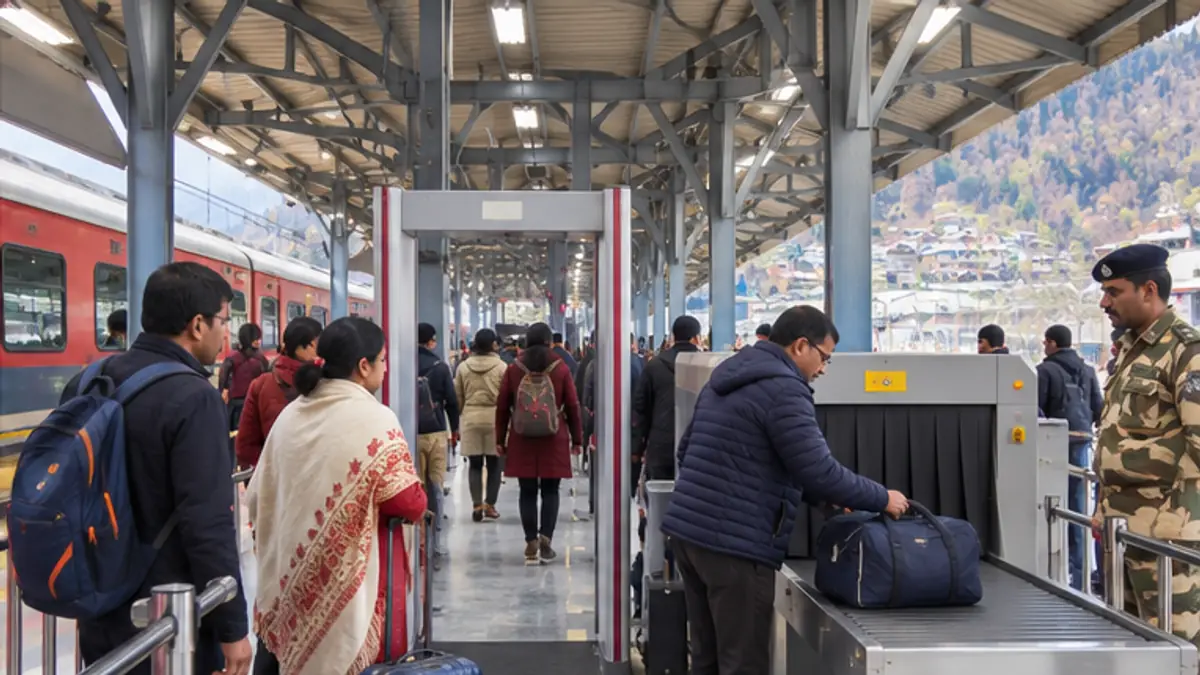
Carry a valid government identity card such as an Aadhaar card, passport, or voter ID alongside your digital IRCTC ticket. Travelers should avoid packing sharp tools, lighters, or explosive materials in their hand baggage to expedite clearance through security checkpoints.
Srinagar Nowgam Station to Dal Lake and City Centers
Srinagar Railway Station is located in Nowgam, roughly 12 km from Lal Chowk and 15 km from Boulevard Road along Dal Lake. Pre-paid airport-style taxi stands offer fixed government tariffs for city transfers.
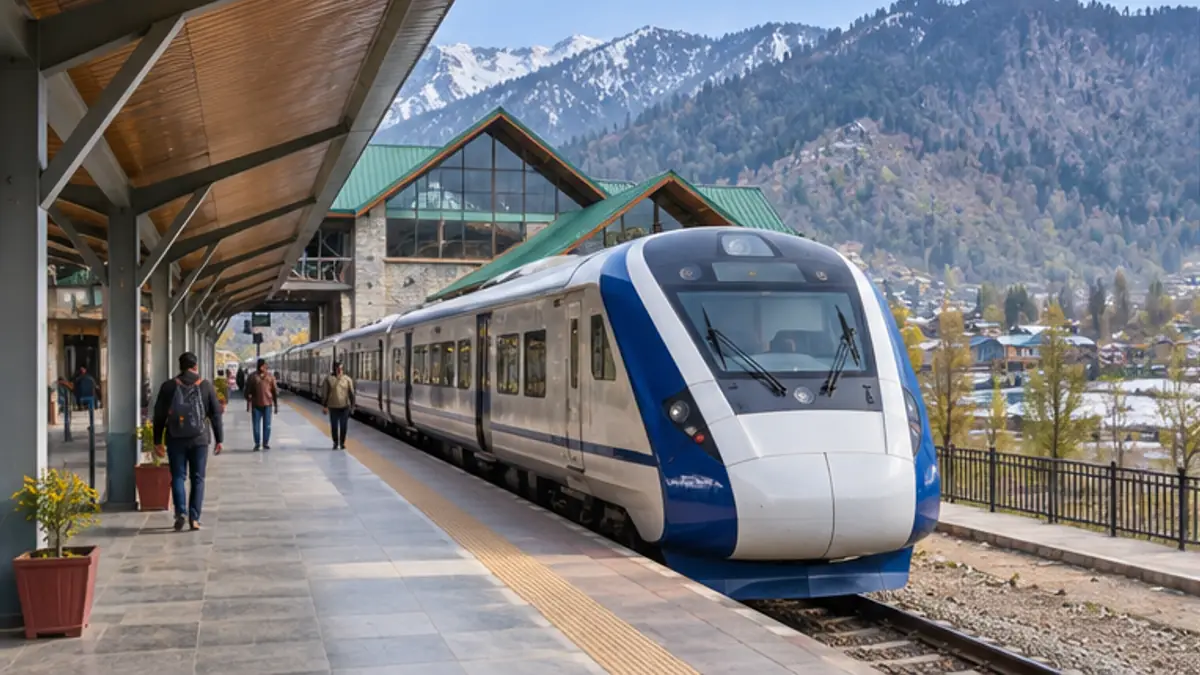
Upon arrival, travelers heading to renowned places to visit in Srinagar can hire registered prepaid cabs directly outside the station portico. Verified district travel facilities and guest house directories are published on the District Administration Srinagar Tourism Directory. Fixed taxi fares range between ₹600 and ₹900 depending on your final destination along Dal Lake, Nigeen Lake, or the historic Old City.
Pairing Vaishno Devi Pilgrimage with a Kashmir Vacation
With the Katra-Srinagar rail corridor open, travelers can complete their Vaishno Devi yatra in Katra and board the morning Vande Bharat to reach Srinagar by lunch, uniting two of India’s most celebrated northern travel destinations into a single week-long circuit.
This rail connection completely alters vacation planning in northern India. Rather than treating Vaishno Devi and Kashmir as separate journeys requiring domestic flights or long cab drives, tourists can combine spiritual devotion with alpine leisure without exhausting road transfers.
Practical Itinerary: Bhawan Darshan to Shikara Ride
Descend from the Vaishno Devi Bhawan to Katra base by evening, spend the night resting at a hotel near the station, and catch the 08:10 AM train to enjoy an afternoon shikara ride on Dal Lake the following day.
After arriving in Srinagar at 11:10 AM, check into a traditional wooden houseboat, enjoy a fresh Kashmiri wazwan lunch, and glide across Dal Lake during the golden sunset hour. The rapid transit eliminates the physical fatigue typically associated with mountain road journeys.
Seasonal Windows: Autumn Foliage, Snow Season, and Tulip Blooms
The rail line operates continuously across all four seasons. September to November features golden Chinar foliage, December to February brings magical snowfall, and March to April brings Asia’s largest tulip blooms.
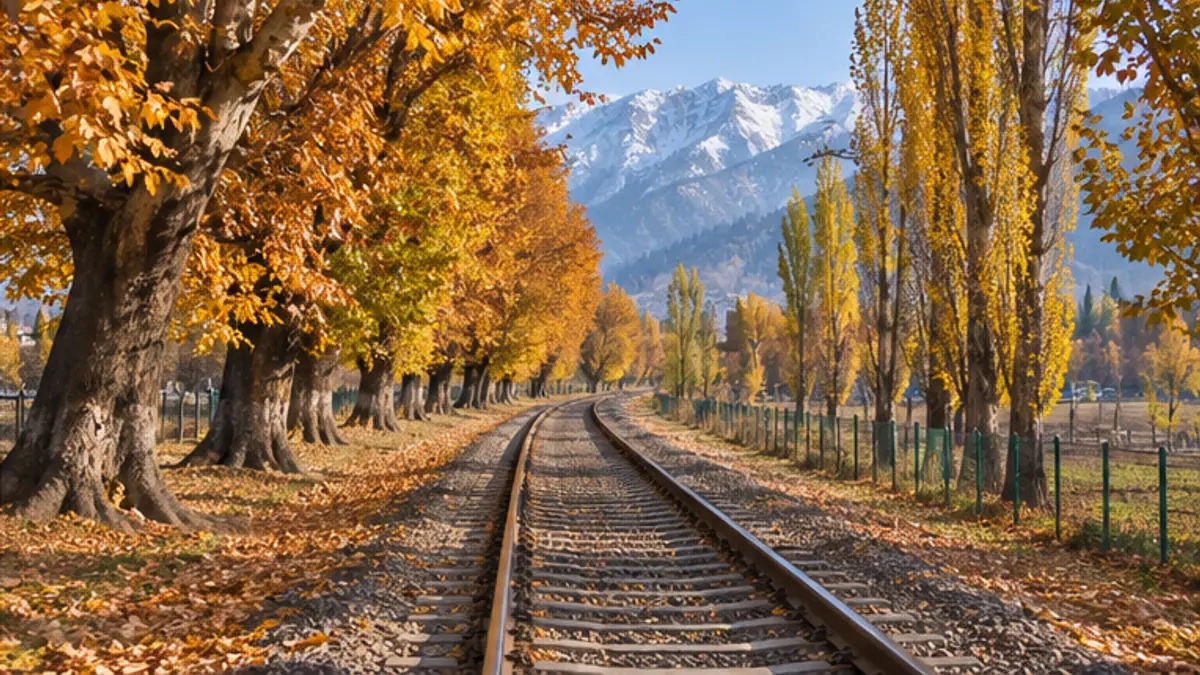
Winter tourists can continue their journey onward to high-altitude ski slopes outlined in our guide to places to visit in Gulmarg, while spring visitors can explore the historic Mughal gardens along the banks of Dal Lake.
Frequently Asked Questions About the Kashmir Vande Bharat
How long does the Kashmir Vande Bharat take from Katra to Srinagar?
The Vande Bharat Express covers the journey between Shri Mata Vaishno Devi Katra and Srinagar in approximately 3 hours to 3 hours and 10 minutes. This cuts down road travel time by over six hours compared to the mountain highway.
Does the Kashmir Vande Bharat train cross the Chenab Rail Bridge?
Yes, the train crosses directly over the 359-metre-high Chenab Arch Bridge between Bakkal and Kauri in Reasi district. Passengers enjoy sweeping views of the deep river gorge from large panoramic carriage windows.
What is the ticket price for the Katra to Srinagar Vande Bharat Express?
Fares start at approximately ₹665 to ₹720 for AC Chair Car (CC) and range between ₹1,280 and ₹1,330 for Executive Chair Car (EC). Exact fares and catering options can be booked directly through the official IRCTC portal.
How high is the Chenab Rail Bridge compared to other world monuments?
The Chenab Rail Bridge stands at an elevation of 359 metres above the riverbed, making it the highest railway bridge in the world. It is 35 metres taller than the Eiffel Tower in Paris.
What time does the Vande Bharat leave Katra for Srinagar?
There are two scheduled daily departures from Katra: a morning train departing at 08:10 AM (reaching Srinagar at 11:10 AM) and an afternoon train departing at 02:55 PM (reaching Srinagar at 06:05 PM). Both services run six days a week.
How does the Kashmir Vande Bharat operate during heavy winter snowfall?
The train is fitted with anti-freeze heating coils along water lines and brake equipment, heated driver windshields, and heavy-duty climate control. These specialized winter adaptations ensure safe operation in sub-zero conditions down to -20°C.
How far in advance should I arrive at Katra station before train departure?
You should arrive at Shri Mata Vaishno Devi Katra Railway Station at least 45 minutes prior to departure. This allows sufficient time to complete mandatory airport-style security baggage scans and passenger identification checks.