27 Best Places to Visit in Srinagar: Dal Lake, Gardens & Stays
Discover top places to visit in Srinagar with Dal Lake shikara timings, Mughal gardens, Shankaracharya Temple, houseboat stays, and transport tips.
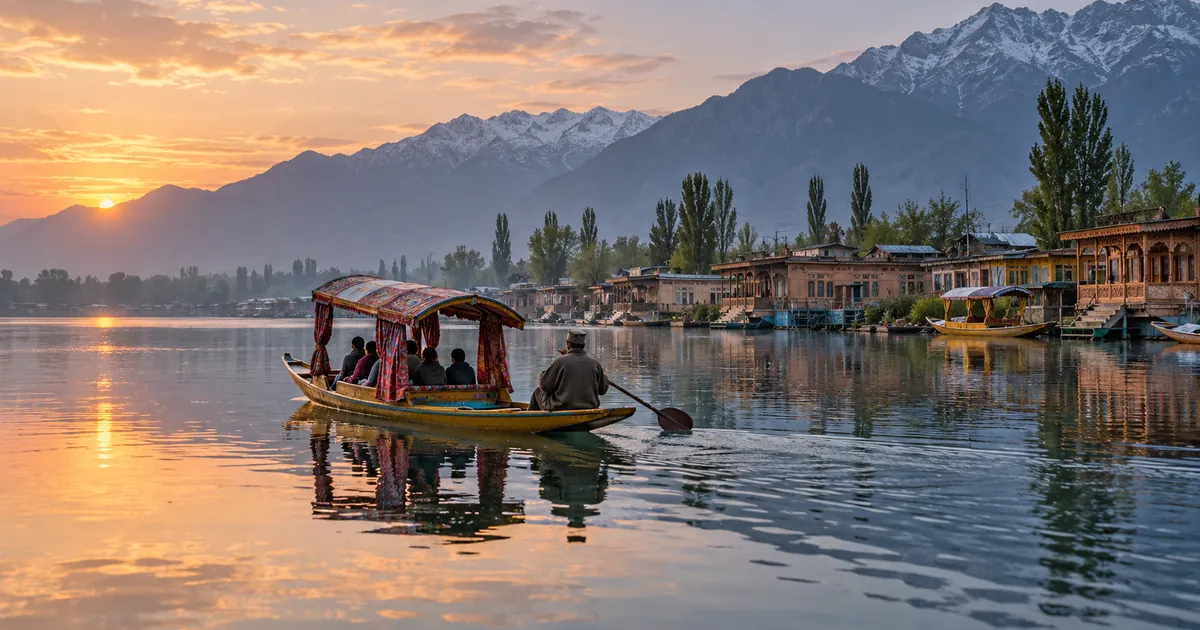
Srinagar serves as the summer capital of Jammu and Kashmir, resting along the banks of the Jhelum River in the Kashmir Valley. Elevated at 1,585 meters above sea level, the historic city connects travelers to ancient terraced gardens, sprawling alpine waterways, and centuries-old wooden shrines. Travelers visit throughout the year to experience its distinct seasonal rhythms, from springtime tulip blossoms to autumn chinar foliage.
Visitor Essentials
- Srinagar is situated in central Kashmir, 295 kilometers north of Jammu along National Highway 44.
- Dal Lake and Nigeen Lake feature cedar houseboats and traditional wooden shikaras operating daily from dawn to dusk.
- Historic Mughal gardens such as Shalimar Bagh, Nishat Bagh, and Chashme Shahi open daily from 9:00 AM to 7:00 PM with entry tickets starting at ₹24 per person.
- Sheikh Ul-Alam International Airport connects the Kashmir Valley to major Indian metropolitan hubs with direct flights.
Top Heritage Attractions and Sightseeing Spots in Srinagar
Srinagar features a diverse collection of historic monuments, hillside shrines, and water-based cultural hubs spread across the urban valley. Most primary landmarks cluster around Boulevard Road, the Zabarwan mountain foothills, and the old historic downtown of Shehr-e-Khas.
| Landmark Name | Location / District | Typical Timings | Entry Fee / Fare |
|---|---|---|---|
| Dal Lake Shikara Ride | Boulevard Road, Srinagar | 6:00 AM – 8:00 PM | ₹500 – ₹1,200 per hour |
| Shalimar Bagh Mughal Garden | Foreshore Road, Shalimar | 9:00 AM – 7:00 PM | ₹24 adults, ₹12 children |
| Nishat Bagh (Garden of Bliss) | Boulevard Road, Nishat | 9:00 AM – 7:00 PM | ₹24 adults, ₹12 children |
| Shankaracharya Temple | Shankaracharya Hill | 7:00 AM – 8:00 PM | Free admission |
| Tulip Memorial Garden | Cheshma Shahi Road | 9:00 AM – 7:00 PM (March-April) | ₹60 adults, ₹25 children |
| Pari Mahal (Palace of Fairies) | Zabarwan Range | 9:30 AM – 7:30 PM | ₹24 adults, ₹12 children |
| Hazratbal Shrine | Hazratbal, Dal Lake | 5:00 AM – 9:00 PM | Free admission |
Travelers can cross-check ticketing schedules and public access updates through the Srinagar District Administration Portal. The municipal administration maintains registered taxi counters and regulated boat boarding docks along the lakefront to protect visitors from arbitrary fare hikes. Visitors planning multi-city itineraries across the territories can also consult our complete Jammu and Kashmir highlights and timings.
Dal Lake and Nigeen Lake: Shikara Rides and Floating Markets
Dal Lake spans approximately 18 square kilometers and forms the cultural centerpiece of Srinagar travel. Gondola-style wooden watercraft known as shikaras glide along marked tourist corridors connecting Boulevard Road ghats to floating handicraft stores and lotus channels.
Dawn shikara rides provide direct access to the famous floating vegetable market near Gudder. Local farmers gather on small skiffs between 5:00 AM and 7:00 AM to trade freshly harvested lotus roots, greens, and water chestnuts.
Nigeen Lake sits immediately northwest of Dal Lake, separated by a narrow causeway. Nigeen offers quieter waters, fewer motorcraft, and shaded willow banks favored by travelers seeking slow-paced morning paddles.
Travelers organizing multi-day valley circuits often pair these morning lake cruises with alpine ski trips by reviewing Gulmarg travel highlights. Private taxis make the two-hour drive to Gulmarg base stations directly from Srinagar city hotels.
Iconic Mughal Gardens: Shalimar Bagh, Nishat, and Chashme Shahi
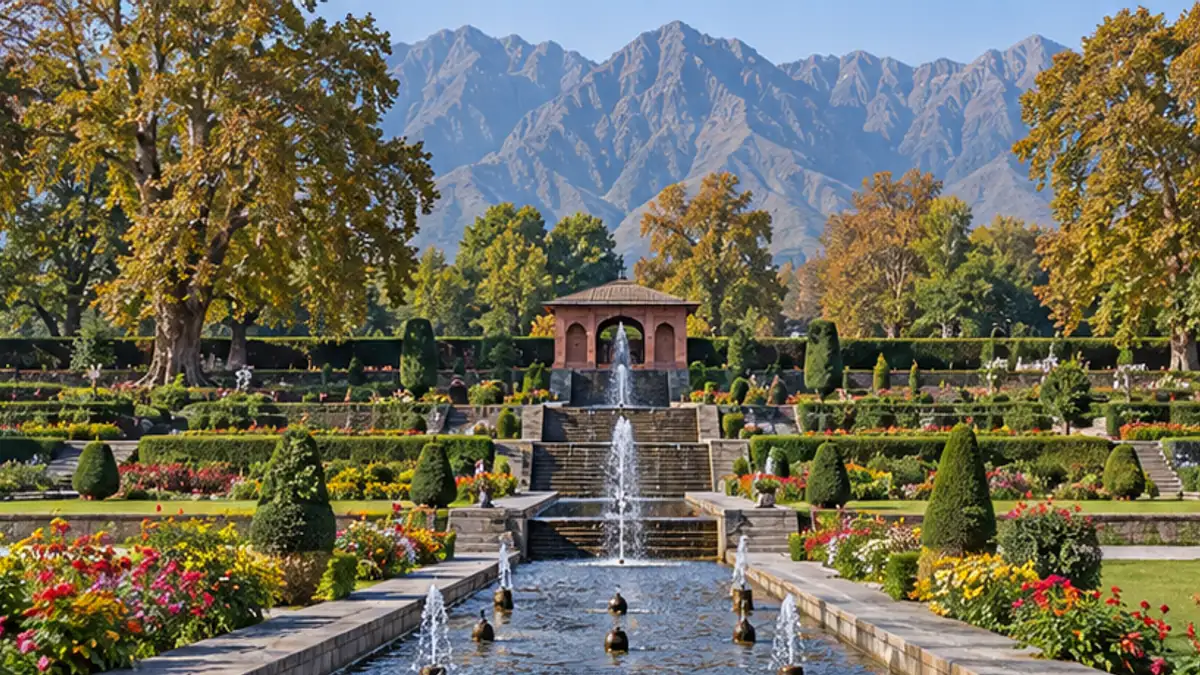
Mughal horticultural design reached its peak in the Kashmir Valley during the sixteenth and seventeenth centuries. Emperor Jahangir laid out Shalimar Bagh in 1619 for his wife Nur Jahan, constructing three ascending terraces fed by water channels originating from Harwan reservoir.
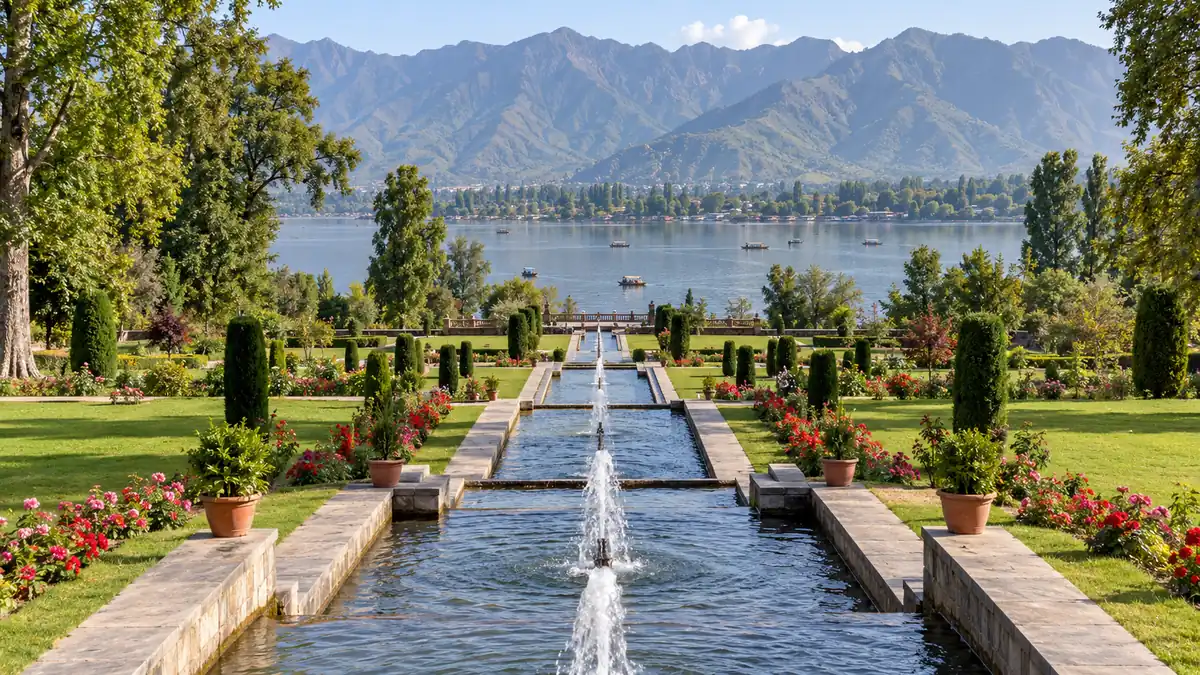
Carved black marble pillars stand within the uppermost Diwan-e-Khas pavilion, surrounded by stone cascades and rows of chinar trees. Water runs down polished stone chutes into fountain basins that once cooled the royal court.
Nishat Bagh spans twelve grand terraces rising up the Zabarwan hills, offering direct lines of sight across Dal Lake to the Pir Panjal mountain range. Built in 1633 by Asif Khan, Nishat features grand central waterways lined with pansies, roses, and cypress trees.
Further south, Chashme Shahi encloses a natural cold-water mountain spring discovered around 1632. Official garden profiles documented on the Jammu & Kashmir Tourism Srinagar Heritage Portal highlight the mineral-rich springs that supplied drinking water to Mughal governors.
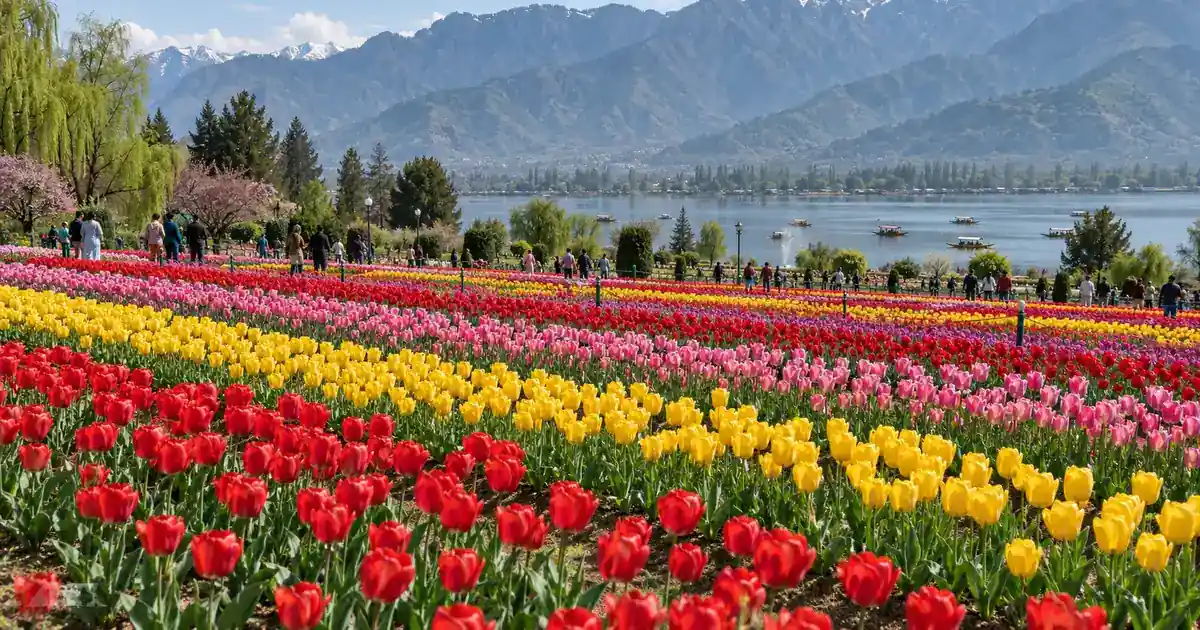
Directly adjacent to Chashme Shahi lies the sprawling Indira Gandhi Memorial Tulip Garden, where over 1.5 million bulbs bloom across seven terraces each spring; review our detailed Tulip Garden Srinagar guide for opening dates, festival highlights, and ticket tariffs.
Spiritual Landmarks: Shankaracharya Temple, Hazratbal, and Jama Masjid
Shankaracharya Temple crowns the summit of Gopadari Hill at an elevation of 335 meters above the valley floor. Dedicated to Lord Shiva, the ancient stone sanctum rests upon a high octagonal plinth constructed during the ninth century.
Devotees climb approximately 240 stone stairs to reach the sanctum, where Adi Shankaracharya is believed to have meditated during his travels. Strict security rules prohibit cameras, mobile phones, and bags beyond the lower checkpoint.
Hazratbal Shrine stands along the northern bank of Dal Lake, recognized by its white marble dome and single minaret. The sacred shrine preserves the Moi-e-Muqqadas, a revered holy relic of the Prophet Muhammad displayed during annual Islamic festivals.
In the old city, Jama Masjid displays remarkable Indo-Saracenic wooden architecture completed under Sultan Sikandar in 1400 CE. Its vast courtyard features 378 monumental deodar pillars carved from whole tree trunks.
Devotees traveling along regional religious trails often link their Srinagar visits with the Lidder Valley by checking key landmarks and neighborhoods in Pahalgam. Pahalgam serves as the traditional starting base for the sacred annual Amarnath cave pilgrimage.
Houseboat Accommodations on Dal Lake and Nigeen Lake
Living aboard a handcrafted cedarwood houseboat provides an authentic immersion into Kashmiri lake heritage. British residents developed these floating homes in the late nineteenth century after local land laws restricted foreign property purchases in Kashmir.
Each vessel features intricate walnut wood carvings, hand-woven Kashmiri carpets, a front viewing veranda, and dedicated kitchen quarters staffed by a resident host family.
Modern houseboats range from standard heritage units to luxury suites complete with cedar bathtubs and traditional bukhari wood-stoves for winter warmth. Rates typically range between ₹3,000 and ₹12,000 per night, which includes breakfast and shikara crossings to Boulevard Road.
The Incredible India Srinagar Travel Guide advises reserving houseboats through licensed operators to guarantee heating, warm water supply, and certified sanitary waste disposal systems.
Travelers looking for dramatic scenic valley excursions beyond the houseboats often explore Betaab Valley, famous for its mountain meadows and deodar forests.
Best Time to Visit Srinagar Across All Four Seasons
Srinagar transforms dramatically through every season, presenting distinct weather conditions and landscape colors for travelers. Springtime spans from March to early May, marked by pleasant daytime temperatures between 15°C and 22°C and thirty hectares of blooming flowers at the Tulip Garden.
Summer lasts from late May through August, offering cool mountain escapes with daytime highs around 28°C. This period marks the peak family travel season when shikara rides, lake markets, and high-altitude hiking trails operate without disruption.
Autumn arrives between September and November, turning millions of chinar leaves into brilliant gold and crimson shades across the Mughal gardens. Clear skies and daytime temperatures near 18°C make autumn ideal for heritage photography and old town shopping.
Winter blankets the valley in snow from December through February, bringing sub-zero temperatures and frozen lake fringes. Travelers venturing north to snowy high passes can read our guide on places to visit in Sonmarg to plan winter meadow safaris.
How to Reach Srinagar by Air, Rail, and Mountain Highways
Sheikh Ul-Alam International Airport in Srinagar operates daily flights linking the city to Delhi, Mumbai, Bengaluru, and Chandigarh. The airport lies 12 kilometers southwest of the city center, with prepaid taxis readily available outside the arrivals terminal.
Passengers should arrive at least three hours before departure due to multi-tier security screenings mandated across Jammu and Kashmir civil aviation hubs.
Rail travelers can journey to Jammu Tawi or Udhampur railway stations, located roughly 260 kilometers south along National Highway 44. The newly constructed railway line across the Chenab Bridge will provide direct broad-gauge train service into Srinagar Railway Station at Nowgam. Pilgrims entering the region often disembark at Katra first; check our visiting Vaishno Devi Katra Yatra for helicopter slots, RFID registration, and trail logistics.
Road travelers navigate National Highway 44 via the Chenani-Nashri and Banihal Qazigund tunnels, which cut through steep mountain passes. Hikers planning onward mountain treks can also research the alpine routes of Aru Valley for extended wilderness expeditions.
Frequently Asked Questions About Places to Visit in Srinagar
What is the best month to visit Srinagar for good weather?
April through October offers the most pleasant weather, with comfortable daytime temperatures suitable for lake sightseeing and garden walks. Travelers wanting to see snow should plan their trip between late December and mid-February.
How much does a shikara ride cost on Dal Lake?
Standard government-approved shikara rates range from ₹500 to ₹1,200 per hour depending on the route and passenger count. Travelers should confirm prices and route duration with the boatman at registered Boulevard Road ghats before boarding.
Is it safe to stay in a houseboat in Srinagar?
Yes, licensed houseboats on Dal Lake and Nigeen Lake provide secure accommodations staffed by experienced local families and registered tourist police. Visitors should ensure their boat is certified by the Jammu and Kashmir Tourism Department for safety and sanitation compliance.
When does the Indira Gandhi Memorial Tulip Garden open?
The Tulip Garden opens annually for approximately four to five weeks between late March and late April, depending on weather conditions. It hosts over 1.5 million blooming tulip bulbs across sixty distinct varieties during this brief flowering window.
How many days are needed to explore Srinagar properly?
A three to four-day itinerary allows travelers to visit the major Mughal gardens, experience Dal Lake and Nigeen Lake, and explore old downtown markets. Additional days allow convenient day trips to nearby alpine hubs like Gulmarg, where visitors can reserve cable car passes via our detailed planning a visit to Gulmarg Gondola Booking.