Tulip Garden Srinagar: Opening Dates, Festival, Tickets & Blooms
Complete guide to Indira Gandhi Memorial Tulip Garden in Srinagar: opening dates, 1.5 million bulbs, 68 varieties, festival timings, tickets, and travel tips.
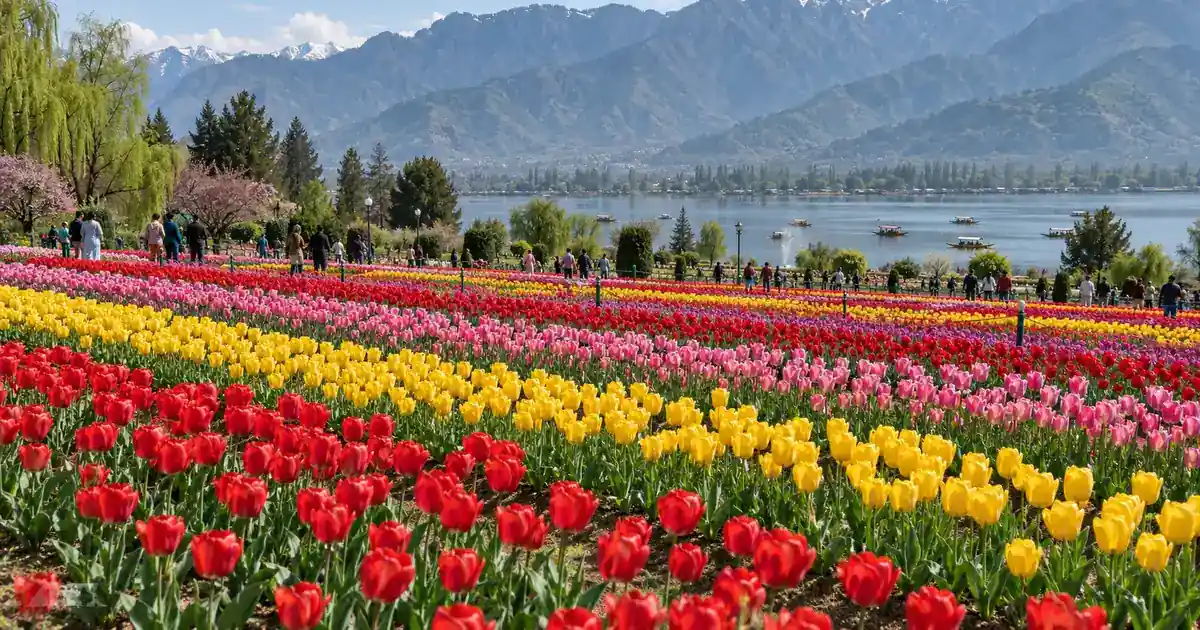
The Indira Gandhi Memorial Tulip Garden in Srinagar is the largest tulip garden in Asia. Spanning over thirty hectares on the gentle lower slopes of the Zabarwan Mountain Range, this botanical park overlooks the sparkling waters of Dal Lake.
Every spring from late March to late April, the garden transforms the Kashmir Valley into an extraordinary sea of floral color. More than 1.5 million tulip bulbs belonging to approximately 68 cultivars burst into synchronized bloom across seven terraced levels.
Srinagar Tulip Garden Visitor Highlights
- Official Name: Indira Gandhi Memorial Tulip Garden (formerly known as Siraj Bagh).
- Geographic Setting: Foothills of the Zabarwan Range along Cheshma Shahi Road, overlooking Dal Lake.
- Garden Dimensions: 30 hectares (74 acres); recognized as Asia’s largest curated tulip sanctuary.
- Floral Density: 1.5 to 1.7 million bulbs encompassing 68 tulip cultivars, alongside daffodils and hyacinths.
- Annual Flowering Window: 25 to 35 days, typically commencing around March 23 and concluding by April 25.
- Entry Fee: ₹60 for Indian adults, ₹25 for children under 12, and ₹150 for foreign passport holders.
- Daily Visiting Timings: 09:00 AM to 07:00 PM throughout the seasonal opening period.
For travelers visiting northern India, witnessing the spring bloom in Srinagar marks the grand opening of Kashmir’s tourism season. The table below outlines the primary garden features, operational parameters, and transit metrics.
| Feature & Parameter | Operational Metric | Field Description & Visitor Significance |
|---|---|---|
| Terraced Levels | 7 terraced tiers | Stepped layout designed to mirror classical Mughal canal architecture |
| Total Bulb Count | 1,500,000+ bulbs | Imported primarily from the Netherlands and cultivated locally in Kashmir |
| Cultivar Diversity | 68 recognized varieties | Standard, double bloom, fringed, parrot, and lily-flowering tulips |
| Companion Floriculture | 4 companion species | Daffodils, fragrant hyacinths, ranunculus, and muscari grape hyacinths |
| Peak Bloom Period | First two weeks of April | Optimal color saturation across early, mid, and late-season varieties |
| Transit Distance | 9 km from Lal Chowk | 20 to 25 minutes road drive along the Boulevard and Dal Lake shoreline |
Indira Gandhi Memorial Tulip Garden: Asia’s Largest Floral Sanctuary
Opened to the public in 2007, the Indira Gandhi Memorial Tulip Garden was conceived to advance Kashmir’s spring tourism season by a full month. Before the park was established, leisure tourism in Srinagar began only in mid-May when summer heat arrived in the plains.
The garden occupies a scenic natural amphitheater between Dal Lake and the rugged cliffs of the Zabarwan range. The terraced design ensures that visitors walking along any gravel pathway enjoy uninterrupted views of flowering beds framed by snow-capped Himalayan ridges.
Travelers planning a comprehensive seasonal itinerary across northern destinations can consult our master guide to best places to visit in India for high-altitude packing advice and weather timelines.
Conceptual Origins: From Fruit Research Center to Siraj Bagh
The site where the tulip garden now flourishes was originally known as Siraj Bagh. In earlier decades, the land operated as an experimental fruit nursery and floriculture research facility under the Jammu and Kashmir Department of Agriculture.
Floriculture scientists recognized that the microclimate of the Zabarwan basin provided ideal conditions for bulbous perennial flowers. The soil retains natural mountain moisture from winter snowmelt, while the surrounding peaks shelter the slopes from harsh spring windstorms.
In 2006, horticultural specialists imported dozens of select tulip cultivars from Keukenhof in the Netherlands. By planting bulbs across sloping terraces equipped with automated drip and sprinkler systems, Jammu and Kashmir created an international floral destination rivaling European estates.
Terraced Architecture Mimicking Mughal Water Channels
The garden’s architectural layout draws direct inspiration from historic Mughal pleasure gardens like Nishat and Shalimar. The grounds are divided into seven distinct horizontal terraces linked by central stone waterways, bubbling fountains, and paved walkways.
Water drawn from cold mountain springs cascades down stepped chutes called chadhars, creating soothing sounds throughout the grounds. Wide green lawns, weeping willow trees, and flowering cherry and almond groves border the floral plots.
Because the beds are planted in crisp geometric rows that follow the contours of the hill, visitors looking downhill enjoy an extraordinary vantage point where bright flowers appear to flow directly into Dal Lake.
Seasonal Opening Dates, Blooming Cycles & Tulip Festival Schedule
Because tulips are delicate cold-climate bulbs, the garden cannot remain open year-round. The park welcomes visitors for only four to five weeks annually during early spring.
The Department of Floriculture closely monitors soil temperatures throughout February and early March to set the official public opening date each year.
Official opening announcements, security advisories, and municipal shuttle services are published on the District Srinagar Official Tourist Portal.
| Spring Phase | Typical Calendar Window | Flowering Stage & Flower Condition | Photography & Crowd Insights |
|---|---|---|---|
| Phase 1: Early Emergence | March 20 to March 31 | Early single tulips open; 30% to 50% garden coverage | Crisp green stems, smaller crowds, clean morning views |
| Phase 2: Full Peak Bloom | April 01 to April 15 | 85% to 95% full bloom; double-flowered and fringed varieties open | Maximum color saturation, Kashmir Tulip Festival cultural events |
| Phase 3: Late Bloom Transition | April 16 to April 25 | Late-season Darwin hybrids active; early varieties begin dropping petals | Warmer afternoons, gentle spring breezes, thinning crowds |
| Phase 4: Seasonal Closure | Late April (approx. April 28) | Petals shed; bulbs entered into dormancy for lifting | Garden gates close to prepare soil for next winter |
Factors Affecting Annual Opening: Soil Temperatures & Snowmelt
Tulip bulbs require a prolonged winter chilling period known as vernalization, where soil temperatures remain below 7°C for at least twelve weeks. This cold dormancy triggers the biochemical processes needed for root formation and spring flower buds.
If winter temperatures in Srinagar stay unusually cold into early March, flower shoots emerge slowly, shifting the opening date toward the final week of March. Conversely, an early warm spell causes bulbs to shoot upward rapidly, advancing the bloom by a week.
On average, the gates open around March 23. The entire garden reaches peak flowering between April 5 and April 15, creating an optimal ten-day window for landscape photographers and holidaymakers.
Annual Kashmir Tulip Festival: Folk Music, Handicrafts & Kashmiri Cuisine
During the peak bloom in early April, the Jammu and Kashmir Tourism Department organizes the annual Kashmir Tulip Festival within the garden complex.
The festival celebrates the rich artistic traditions of the valley. Open-air wooden kiosks set up along the garden perimeter present live demonstrations by master artisans producing hand-knotted silk carpets, walnut wood carvings, and fine Pashmina shawls.
Visitors can enjoy traditional Kashmiri folk music, including energetic Rouff dance performances and Chakri instrumental concerts played on the sarangi and tumbaknari. Food stalls serve steaming copper samovars of sweet saffron Kehwa tea alongside hot lotus stem fritters (nadur monje) and saffron-scented halwa, offering a delicious preview of our Kashmiri Wazwan and Srinagar food guide.
Botanical Varieties: 1.5 Million Bulbs, Early to Late Bloom Cultivars
The floral display at Srinagar’s Tulip Garden is planned with scientific precision. By mixing early-flowering, mid-season, and late-blooming tulip varieties, horticulturists ensure that the park remains covered in colorful blooms throughout the entire month of April.
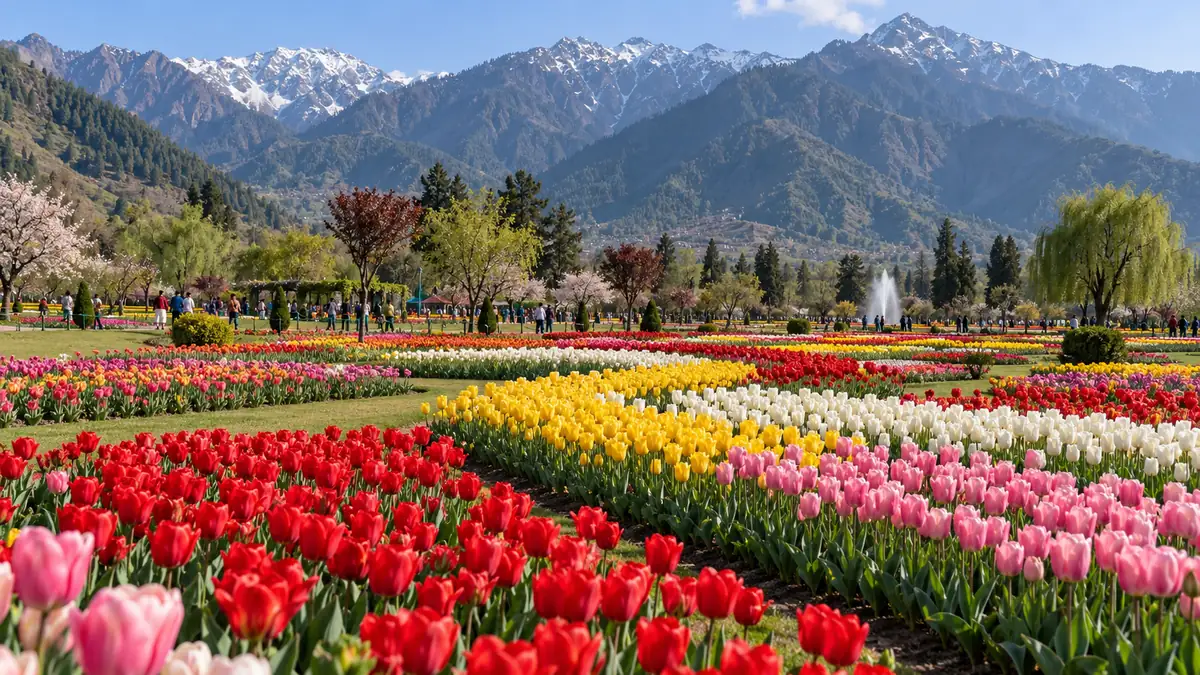
Each variety is planted in sweeping ribbons of single, contrasting colors, producing broad color-blocked bands of ruby red, deep violet, pure white, sunny yellow, apricot, and salmon pink.
Detailed horticultural conservation guidelines, seasonal floriculture maps, and state heritage tours are published on the Incredible India Jammu and Kashmir Portal.
| Tulip Classification | Key Varieties Planted | Visual Characteristics | Bloom Timing |
|---|---|---|---|
| Single Early Tulips | Christmas Marvel, Apricot Beauty | Cup-shaped six-petal flowers on sturdy 30 cm stems | Late March to Early April |
| Triumph Tulips | Strong Gold, Leen van der Mark | Hardy mid-height blooms with distinct contrasting margins | Early to Mid April |
| Darwin Hybrid Tulips | Apeldoorn, Golden Parade, Pink Impression | Enormous pyramidal blossoms standing 60 cm tall on wind-resistant stems | Mid to Late April |
| Double Late (Peony) Tulips | Angelique, Mount Tacoma | Multi-layered petals resembling fluffy peony flowers | Mid to Late April |
| Fringed & Parrot Tulips | Fancy Frills, Rococo, Black Parrot | Feathered, ruffled edges with deeply textured two-tone petals | Mid April |
| Lily-Flowering Tulips | Ballerina, West Point | Slender pointed petals that arch elegantly outward | Mid to Late April |
Early Bloomers vs Late Bloomers: Ensuring Month-Long Flowering
If all 1.5 million tulips bloomed simultaneously, the visual spectacle would last only seven to ten days. To extend the season, garden managers divide each terraced bed into three successive planting tiers.
- Early Tier: Species tulips and Single Early cultivars emerge first, handling cold morning ground frosts without petal damage.
- Mid-Season Tier: Triumph tulips and Darwin Hybrids open next, producing massive flower heads that provide the dense color displays seen in tourist photographs.
- Late-Season Tier: Peony-flowered doubles and fringed cultivars bloom last, maintaining colorful flower beds even as early petals begin to drop.
In addition to tulips, the garden features thousands of fragrant Dutch hyacinths, bright yellow daffodils (Narcissus), and blue grape hyacinths planted along border edges to create rich botanical contrast.
Life Cycle of a Kashmir Tulip: Autumn Planting to Summer Bulb Lifting
Maintaining Asia’s largest tulip garden requires disciplined year-round horticultural labor. The life cycle follows a rigorous annual schedule:
- October to November (Soil Preparation and Planting): In late autumn, gardeners till the soil, blending mountain river silt with well-aged organic manure. Bulbs are planted by hand at a depth of fifteen centimeters with five-centimeter spacing.
- December to February (Winter Chilling): Bulbs remain buried beneath winter snowpacks, developing hardy root systems in freezing darkness.
- March to April (Sprouting and Bloom): Rapid green growth leads to flower bud development and public exhibition.
- May to June (Bulb Lifting and Curing): After petals drop, foliage is allowed to wither naturally, returning nutrients to the bulb. Workers carefully dig up millions of bulbs, sort them by size, dry them in shaded curing barns, and store them in temperature-controlled cold rooms at 4°C until autumn replanting.
Ticket Tariffs, Online Booking & Daily Visiting Hours
Visiting the Indira Gandhi Memorial Tulip Garden is budget-friendly. Ticket prices are regulated by the Jammu and Kashmir Department of Floriculture to ensure the park remains accessible to local families, students, and travelers.
Visitors can purchase paper entry tokens at the physical ticket counters located outside the main security gate, or book electronic passes online to skip long morning queues.
Verified city bus timings, airport taxi stands, and registered houseboat counters are detailed in our comprehensive guide to key landmarks and neighborhoods in Srinagar.
| Visitor Category | Physical Ticket Counter Fee | Online E-Ticket Fee | Valid Identification Required |
|---|---|---|---|
| Indian Adult (Ages 12 and above) | ₹60 per person | ₹60 per person + convenience fee | Aadhaar, Voter ID, Driving License |
| Indian Child (Ages 5 to 11) | ₹25 per child | ₹25 per child | School ID or Birth Certificate |
| Children Under Age 5 | Free entry | Free entry | Not required |
| Foreign Passport Holders | ₹150 per person | ₹150 per person | Valid Passport and Visa |
| Still Camera (Personal) | Free entry | Free entry | Included in standard admission |
| Commercial Video / Movie Camera | ₹500 to ₹1,000 | Prior departmental permit required | Identity proof and security clearance |
Physical Ticket Counter Logistics vs Official JK Tourism Online Portal
During the peak Tulip Festival weeks, ticket counters at the main entrance can see long lines between 10:30 AM and 02:00 PM. Waiting times can reach 30 to 45 minutes on sunny weekend afternoons.
Travelers can avoid waiting by purchasing tickets through the official Jammu and Kashmir Floriculture Department online booking link. E-tickets contain a scannable QR code that allows direct entry through automated turnstiles at the main gate.
Print your digital receipt or save an offline screenshot on your mobile phone, as cellular data networks outside the garden gates can experience congestion during high-attendance festival days.
Golden Hour Photography Tips & Drone Camera Restrictions
The garden offers extraordinary creative opportunities for amateur and professional photographers alike. To capture the finest images, plan your visit during the golden hours:
- Morning Golden Light (09:00 AM to 10:30 AM): Arrive right at the 09:00 AM gate opening. The morning sun rises over the Zabarwan ridges, casting a warm glow across dew-kissed petals with the calm mirror surface of Dal Lake in the background.
- Late Afternoon Light (04:30 PM to 06:30 PM): As the sun descends behind the Pir Panjal range across Dal Lake, the light softens into warm amber tones, reducing harsh midday flower shadows.
- Strict Drone Prohibition: Unmanned aerial vehicles (drones) are strictly prohibited across all of Srinagar and the Dal Lake basin due to strict aviation security laws. Security personnel at the entrance checkbags will confiscate unauthorized drones. Handheld DSLR cameras and mobile gimbals are permitted without restriction.
How to Reach Tulip Garden from Dal Lake, Airport & Lal Chowk
The Tulip Garden is located along Cheshma Shahi Road in the Nishat-Cheshma Shahi tourist zone, approximately 9 kilometers east of Srinagar’s commercial center at Lal Chowk.
Because Boulevard Road traces the scenic shoreline of Dal Lake, traveling to the garden is one of the most delightful scenic drives in Kashmir.
District tourism infrastructure, municipal guidelines, and road route details can be cross-checked on the Incredible India Srinagar Destination Portal.
| Transport Mode | Boarding Point | Typical Fare Range | Travel Duration | Best Use Case |
|---|---|---|---|---|
| Pre-Paid Taxi / Cab | Lal Chowk or Dal Lake Ghats | ₹500 to ₹800 (One-way) / ₹1,800 (Full-day) | 20 to 25 minutes | Families, groups, and photographers carrying camera gear |
| Auto Rickshaw | Dalgate / Boulevard Road | ₹200 to ₹350 (Negotiated) | 25 to 30 minutes | Solo travelers and couples staying along Dal Lake |
| Electric Smart City Bus | Lal Chowk / TRC Tourist Center | ₹20 to ₹35 per seat | 35 to 45 minutes | Budget backpackers seeking economical green transport |
| Shikara Ride + Short Walk | Houseboat / Boulevard Ghat | ₹700 to ₹1,000 per hour + 15 min walk | 45 min boat + 15 min walk | Scenic leisurely arrival across Dal Lake to Nehru Park dock |
| Airport Pre-Paid Taxi | Sheikh ul-Alam Airport (SXR) | ₹1,200 to ₹1,500 direct | 45 to 60 minutes | Direct transit for travelers landing during festival weeks |
Scenic Drive via Boulevard Road and Foreshore Road
The most popular route from central Srinagar follows Boulevard Road north along the eastern shore of Dal Lake. The drive passes iconic lake landmarks including Dalgate, Nehru Park, and the Royal Springs Golf Course before turning uphill toward Cheshma Shahi.
During the peak two weeks of the Tulip Festival, traffic police implement a one-way circulation plan around Dal Lake to prevent gridlock. Under this traffic plan:
Vehicles approach the garden via Boulevard Road and Cheshma Shahi Road, and exit eastward toward Foreshore Road and Hazratbal. Drivers should follow electronic message signs posted by the Srinagar Traffic Police.
Designated Visitor Parking Bays and Traffic Advisory
A designated multi-acre parking ground is situated approximately 300 meters below the main entrance gates. Private cars, tourist taxis, and tourist coaches must park in these marked parking slots.
From the parking grounds, visitors take a gentle five-minute uphill walk along a paved tree-lined footpath to reach the security screening gates. Free battery-operated golf carts are available to assist elderly travelers and visitors with mobility challenges.
To avoid traffic bottlenecks along Boulevard Road, leave your hotel by 08:30 AM to arrive as gates open, or schedule your visit for a weekday morning between Monday and Thursday.
Nearby Botanical & Mughal Attractions: Chashme Shahi, Pari Mahal & Botanical Garden
Because exploring the Tulip Garden takes between two and three hours, most visitors combine their morning garden walk with other historic Mughal and botanical landmarks located within a three-kilometer radius.
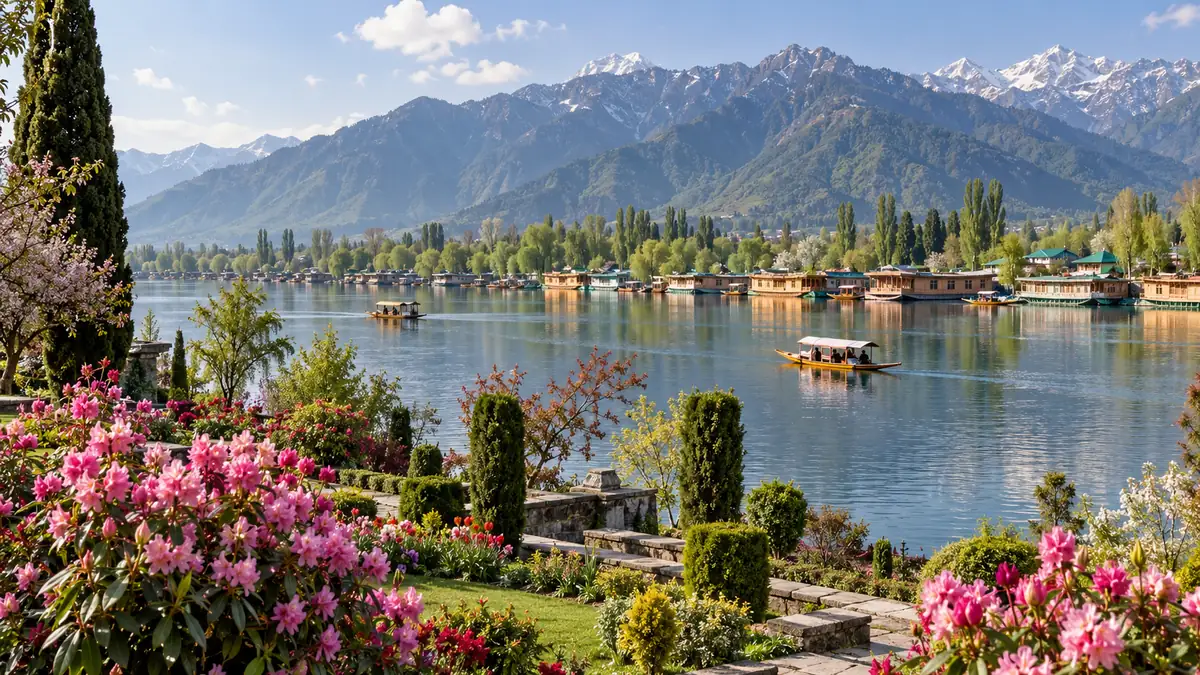
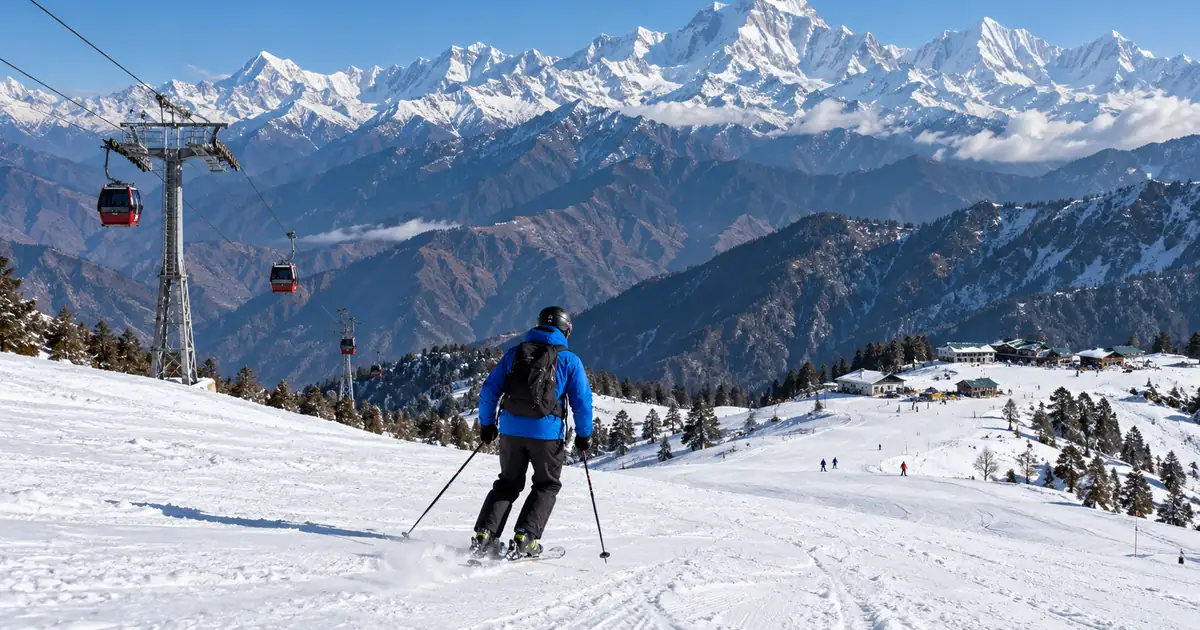
Travelers pairing their spring Kashmir holiday with alpine snow adventures can review cable car boarding procedures in our Gulmarg Gondola Booking highlights and timings.
| Nearby Landmark | Distance from Tulip Garden | Elevation | Key Highlights & Architectural Style | Typical Visit Duration |
|---|---|---|---|---|
| Jawaharlal Nehru Botanical Garden | 400 meters south | 1,600 m | 50 hectares of cedar woodland, tranquil lake, azalea collections | 1 to 1.5 hours |
| Chashme Shahi Mughal Garden | 1.5 km uphill | 1,630 m | Natural freshwater mineral spring, three-tiered Mughal pavilion | 45 to 60 minutes |
| Pari Mahal (Palace of Fairies) | 3.5 km mountain drive | 1,780 m | Six-terrace 17th-century Mughal astronomy school overlooking Dal Lake | 1 to 1.5 hours |
| Nishat Bagh (Garden of Bliss) | 4.0 km north | 1,595 m | Twelve-terrace Mughal grand garden with ancient chinar trees and lake vistas | 1.5 to 2 hours |
| Shalimar Bagh (Abode of Love) | 7.5 km north | 1,595 m | Emperor Jahangir’s four-terrace royal pleasure garden with black marble pavilion | 1.5 to 2 hours |
Jawaharlal Nehru Memorial Botanical Garden
Located directly adjacent to the Tulip Garden, the Jawaharlal Nehru Memorial Botanical Garden offers a tranquil natural retreat. Established in 1969, this 50-hectare park features over 300 species of trees, ornamental shrubs, and alpine flora.
A peaceful man-made lake sits at the center of the grounds, bordered by weeping willows and wooden footbridges. In spring, the botanical garden’s cherry blossoms, camellias, and pink azaleas bloom in quiet contrast to the crowded tulip paths next door.
The botanical garden features paved running trails and quiet grassy lawns, making it an ideal spot for an afternoon picnic beneath the deodar trees.
Chashme Shahi Spring and the Terraces of Pari Mahal
A short drive up the winding mountain road behind the Tulip Garden leads to Chashme Shahi, the smallest and most exquisite of Srinagar’s Mughal gardens. Built by governor Ali Mardan Khan in 1632 under Emperor Shah Jahan, the garden encloses a pure mountain spring revered for its sweet mineral-rich drinking water.
Continuing two kilometers further uphill brings visitors to Pari Mahal (The Palace of Fairies). Built around 1650 by Prince Dara Shikoh, the eldest son of Emperor Shah Jahan, Pari Mahal functioned as an observatory and school of classical astrology and Sufi philosophy.
Perched high on the spur of the Zabarwan mountain, Pari Mahal’s six stepped terraces offer the most dramatic panoramic sunset views over Dal Lake, the Hari Parbat fortress, and the city of Srinagar.
Frequently Asked Questions About Srinagar Tulip Garden
When does the Indira Gandhi Memorial Tulip Garden open in 2026?
The garden typically opens annually between March 20 and March 25, depending on weather and snowmelt conditions. The 2026 season opens in the fourth week of March and continues through the fourth week of April, offering approximately 25 to 30 days of public viewing.
How many varieties of tulips can be seen in the garden?
The garden features over 1.5 million blooming bulbs across approximately 68 distinct tulip cultivars. Visitors can view Single Early tulips, double-flowered peony tulips, fringed cultivars, parrot tulips, and Darwin hybrid varieties, alongside daffodils and hyacinths.
What is the entry ticket price for the Srinagar Tulip Garden?
The entry ticket costs ₹60 for Indian adults, ₹25 for Indian children under 12, and ₹150 for foreign nationals. Children under 5 years enter for free. Personal still photography cameras are permitted at no extra charge.
How much time is needed to explore the Tulip Garden?
Most visitors spend between two and three hours exploring the seven terraced levels, taking photographs, and enjoying the cultural performances and handicraft stalls at the Kashmir Tulip Festival.
Can normal civilian vehicles reach the garden easily?
Yes, the garden is situated directly along Cheshma Shahi Road off Boulevard Road, just nine kilometers from central Lal Chowk. Paved double-lane roads provide easy access for private cars, taxis, auto rickshaws, and electric Srinagar Smart City buses.
Can a spring visit to the Tulip Garden be combined with snow trips in Kashmir?
Yes, spring in Kashmir allows travelers to enjoy blooming tulips in Srinagar and deep snow sports in the mountains on the same holiday; explore our key landmarks and neighborhoods in Gulmarg guide for winter ski slopes, snowmobiling, and high-altitude mountain passes located just fifty kilometers away.