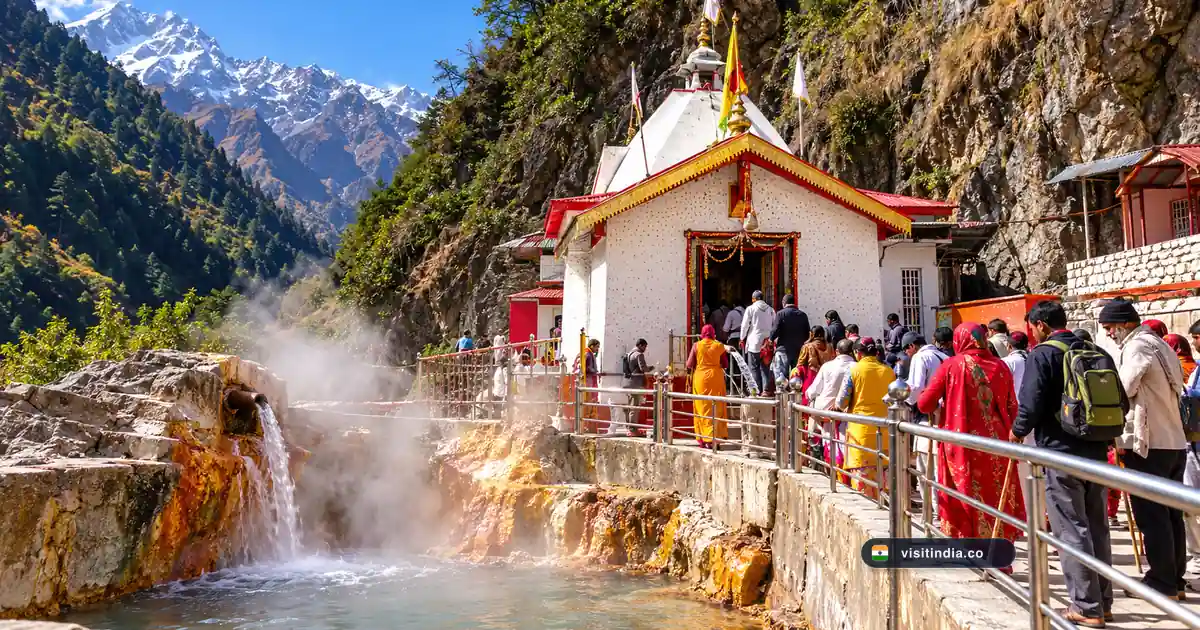
Amarnath Yatra Registration and Route Guide: Full Plan
Complete Amarnath Yatra registration and route guide with SASB medical forms, RFID card rules, helicopter booking, and Pahalgam vs Baltal treks.
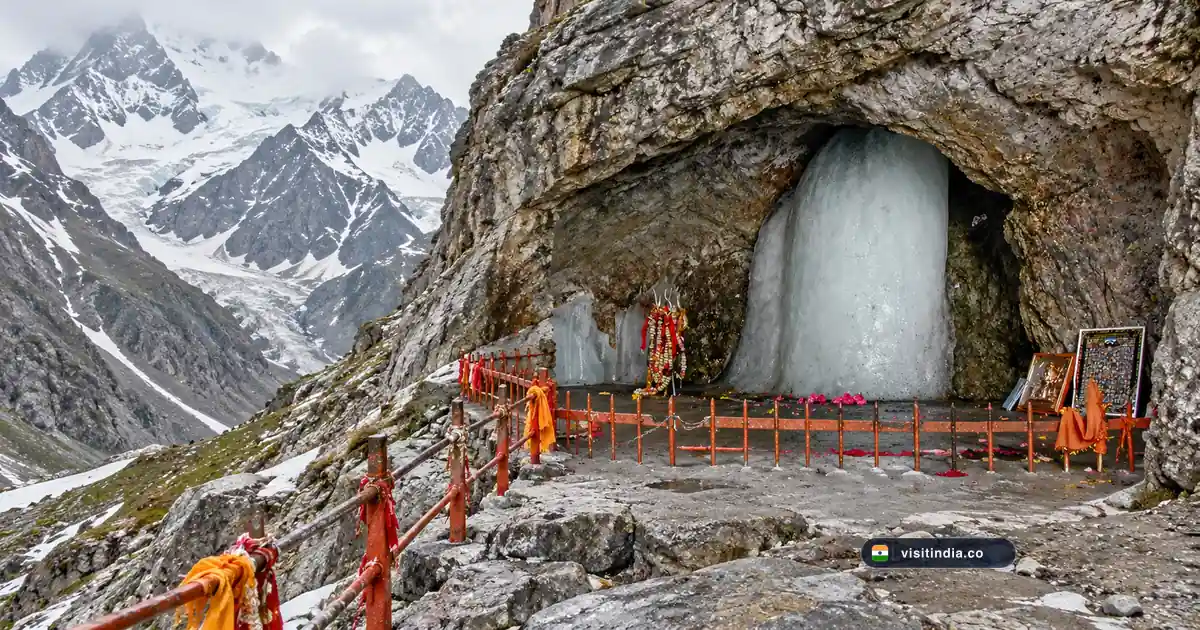
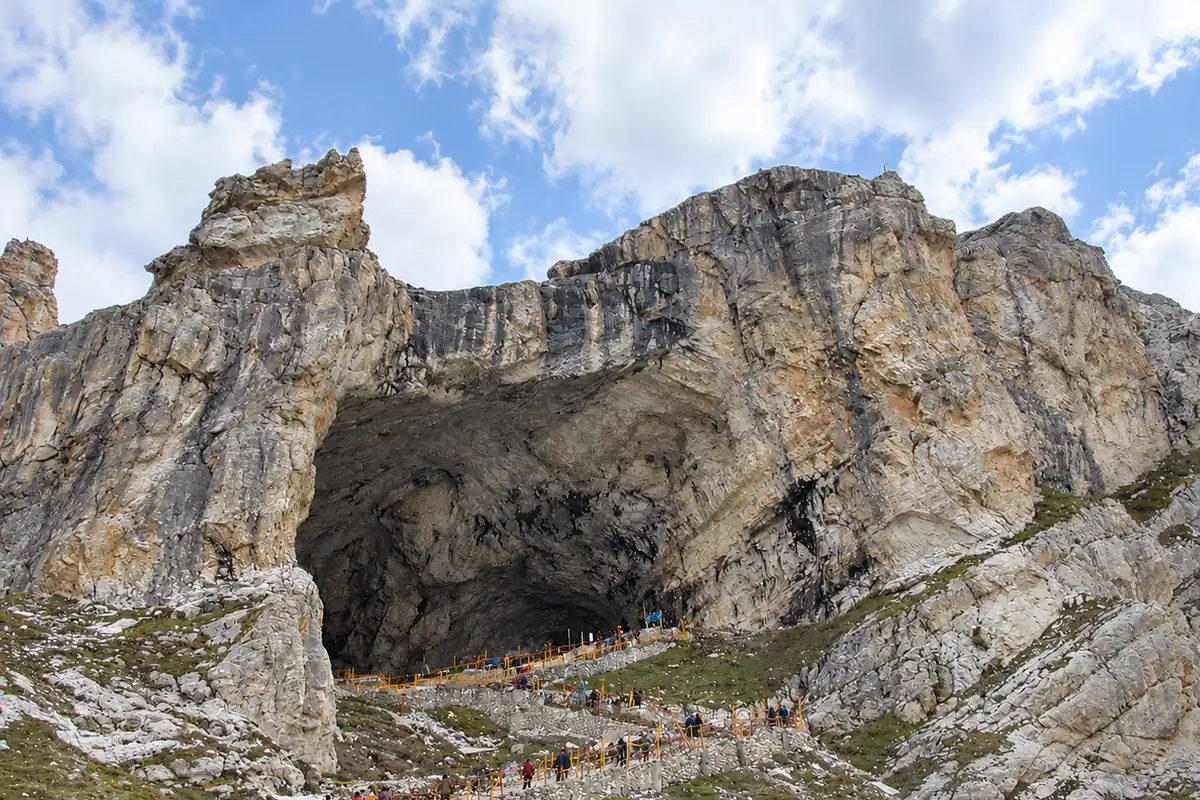
Perched inside a narrow glacial gorge at an elevation of 3,888 meters in the Lidder Valley, the holy Amarnath Cave is one of the most revered mountain shrines in India. The natural cave houses a naturally formed stalagmite ice Shiva Lingam that waxes and wanes with the moon cycles during the high summer months.
Completing the pilgrimage demands physical stamina and strict regulatory preparation. Understanding this complete Amarnath Yatra registration and route guide helps travelers obtain medical clearances, secure RFID tracking cards, and choose between the traditional Pahalgam trail and the steeper Baltal axis.
Every summer, over 400,000 devotees undertake this demanding high-altitude journey across glacial moraines and snowy passes. Because high mountain weather can shift from bright sunshine to icy torrential rains within minutes, advance planning and administrative compliance are essential for a safe pilgrimage.
Yatra & Registration Essentials
- Shrine Location: Amarnath Cave, Anantnag District, Jammu and Kashmir (3,888 meters above sea level).
- Operating Window: Annual 45 to 60-day window during July and August (Hindu month of Shravan).
- Mandatory Formalities: Compulsory Health Certificate (CHC) signed by an authorized physician, SASB Registration Yatra Permit, and physical RFID card.
- Base Camp Choices: Pahalgam (traditional 48 km route over 3 to 4 days) or Baltal (steeper 14 km single-day ascent).
- Helicopter Option: Flights operate from Baltal and Pahalgam to the Panchtarni helipad, followed by a 6 km uphill walk or pony ride to the holy cave.
Mandatory SASB Registration: Medical Certificate and RFID Cards
The Shri Amarnathji Shrine Board (SASB) strictly controls access to the mountain trail through a multi-tiered permit system. No pilgrim is permitted past the security gates at Domail or Chandanwari without a valid Yatra Permit slip and a physically worn Radio Frequency Identification (RFID) card.
Registration protects pilgrim safety by establishing a daily quota of approximately 7,500 devotees per route. Following the registration process step-by-step prevents disappointment or forced turnarounds at military checkpoints.
Step 1: Securing the Compulsory Health Certificate (CHC)
Because the trail climbs well above 3,500 meters where atmospheric oxygen levels drop significantly, the SASB mandates that every applicant obtain a Compulsory Health Certificate (CHC). This medical clearance must be issued by an authorized physician or government hospital designated by your home state health department.
The physical examination tests cardiovascular endurance, blood pressure stability, and pulmonary health. Applicants must be between the ages of 13 and 70 years, and pregnant women beyond six weeks are strictly prohibited from registering. Base district medical requirements are outlined through the Anantnag District Administration Tourism Directory.
Step 2: Online Registration and Designated Bank Branches
Once your CHC form is stamped and signed, you can complete registration through official board channels or visit designated bank branches across India. Participating banks typically include Punjab National Bank, State Bank of India, and Jammu and Kashmir Bank.
The registration fee is ₹150 per pilgrim when booked in advance online, or ₹250 at designated on-spot counters in Jammu and Srinagar. You must upload a scanned passport photograph, your signed CHC form, and government-issued photo identification to receive a barcoded provisional Yatra Permit.
Step 3: Mandatory RFID Card Collection and Tracking
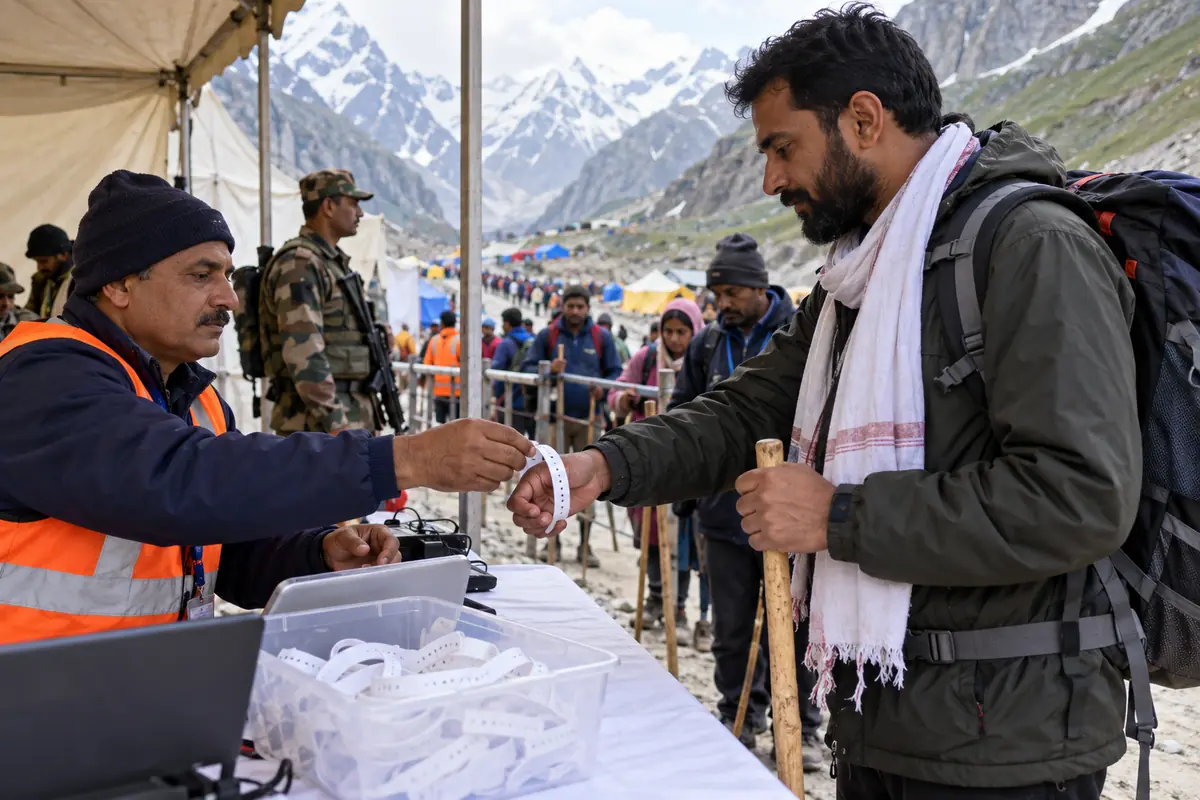
Upon arrival in Jammu or Srinagar, every pilgrim must exchange their provisional registration voucher for a physical RFID tracking card. Collection counters operate at the Bhagwati Nagar Base Camp in Jammu, TRC Srinagar, and the twin baseheads at Pahalgam and Baltal.
The RFID card must be worn around your neck throughout the trek. Integrated automated gates track your progress past key transit points like Sheshnag, Mahagunas Pass, and Panchtarni, allowing rescue teams to pinpoint your location in the event of flash floods or landslides.
Route Comparison: Pahalgam Traditional vs Baltal Direct
Pilgrims can choose between two distinct geographical routes into the holy cave sanctuary. Your choice should align with your physical fitness, available travel days, and personal acclimatization needs.
The traditional Pahalgam route provides gentle, progressive elevation gain, whereas the Baltal route offers a direct, grueling single-day ascent.
| Route Feature | Pahalgam Axis (Traditional) | Baltal Axis (Short & Steep) |
|---|---|---|
| Total Distance (One Way) | 48 kilometers | 14 kilometers |
| Trek Duration | 3 to 4 days (gradual climb) | 1 to 2 days (intense climb) |
| Trail Gradient | Gentle valleys with moderate passes | Extremely steep zig-zags along rocky cliffs |
| Starting Roadhead | Chandanwari (16 km from Pahalgam) | Baltal Base Camp (near Sonmarg) |
| Highest Point on Route | Mahagunas Pass (4,270 meters) | Sangam Top (3,650 meters) |
| Pony & Palki Availability | Abundant with fixed union rates | Readily available with fixed union rates |
| Best Suited For | First-time trekkers, families, and seniors | Fit trekkers and time-constrained visitors |
Day-by-Day Trek Itinerary via the Traditional Pahalgam Axis
The Pahalgam route traces the ancient mythological trail followed by Lord Shiva and Goddess Parvati. It allows the human body to acclimatize progressively across several mountain camps, drastically reducing the risk of Acute Mountain Sickness (AMS).
Travelers can extend their Lidder Valley exploration using our dedicated guide to Pahalgam visitor itinerary.
Day 1: Pahalgam to Chandanwari and Sheshnag (12 km)
Board a local shared taxi from Pahalgam town to Chandanwari (2,895 meters), where the official trek begins through army checkpoints. The trail climbs steadily beside the roaring Lidder River through pine woodlands before tackling the steep ascent of Pissu Top.
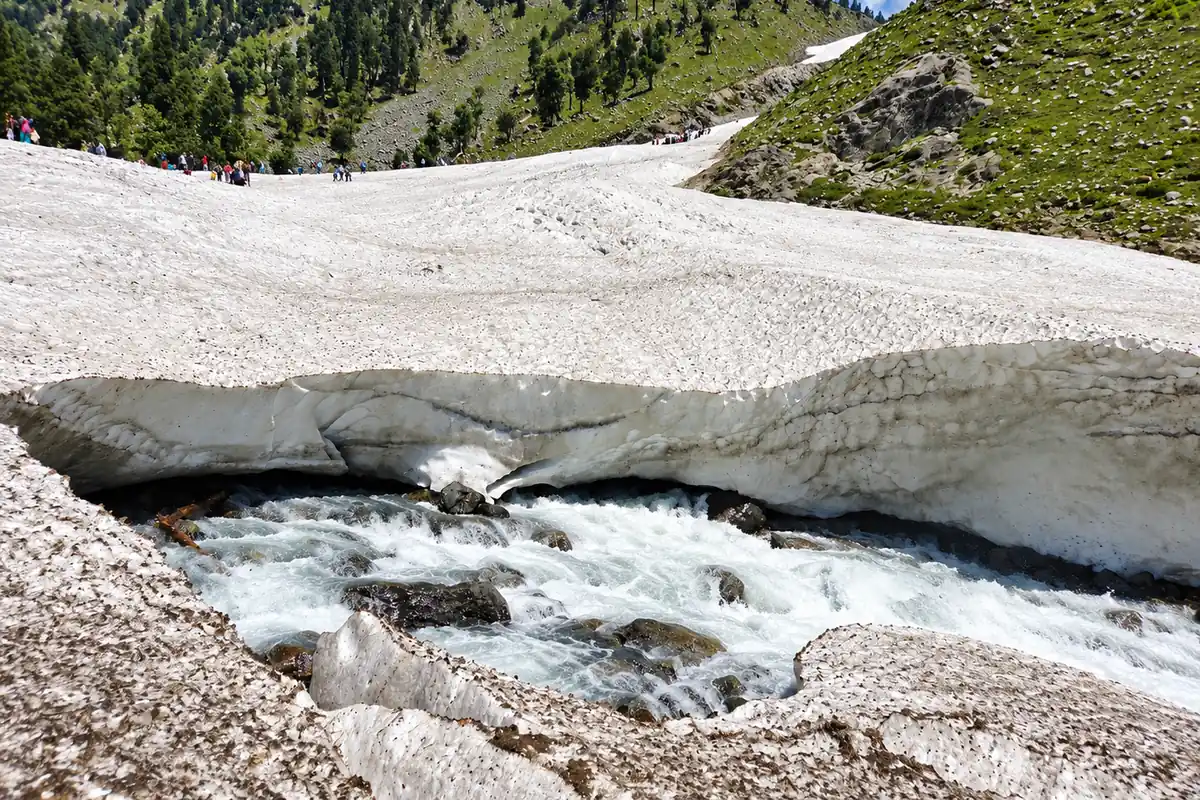
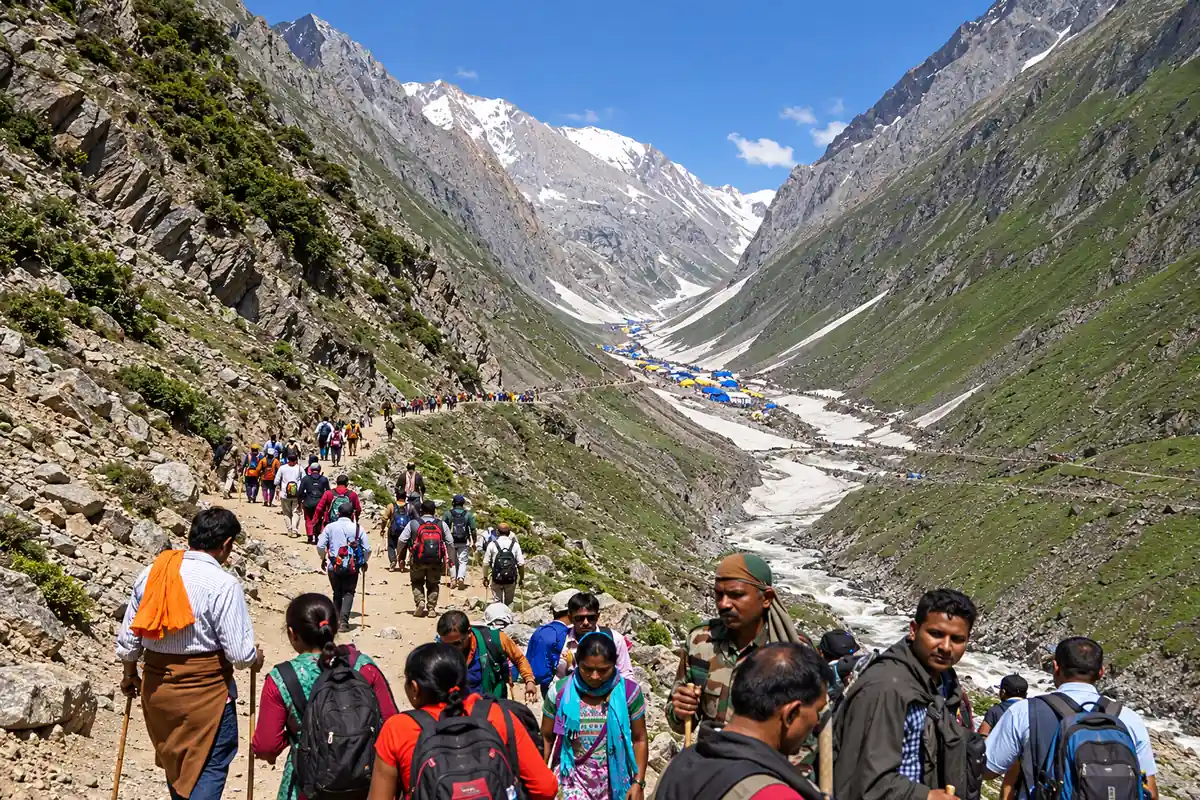
According to Hindu tradition, the gods crushed demons at Pissu Top to secure passage into the holy valley. Beyond Pissu Top, the path levels across alpine meadows to Sheshnag Lake (3,574 meters), an emerald glacial tarn surrounded by snow-covered peaks. Camp overnight in pre-pitched canvas tents provided by private operators or shrine camps.

Day 2: Sheshnag across Mahagunas Pass to Panchtarni (14 km)
Day 2 presents the most challenging physical stretch of the Pahalgam route, beginning with a long uphill climb toward the windy crest of Mahagunas Pass (4,270 meters). The thin air requires a steady, rhythmic walking pace with regular water sips.
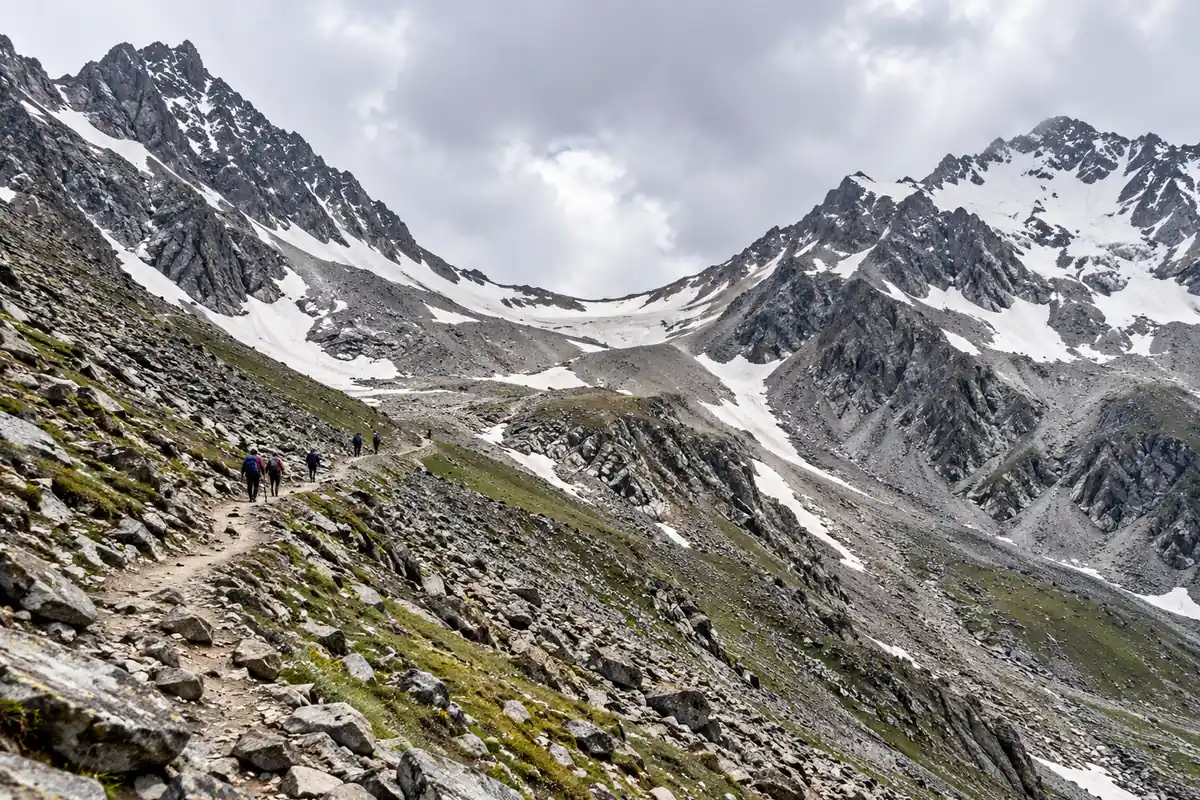
After crossing the pass, the trail drops into the broad, rocky basin of Panchtarni (3,657 meters), named after the five glacial streams that converge here. Panchtarni functions as an active tent city equipped with army medical units, langar dining halls, and an organized passenger helipad.
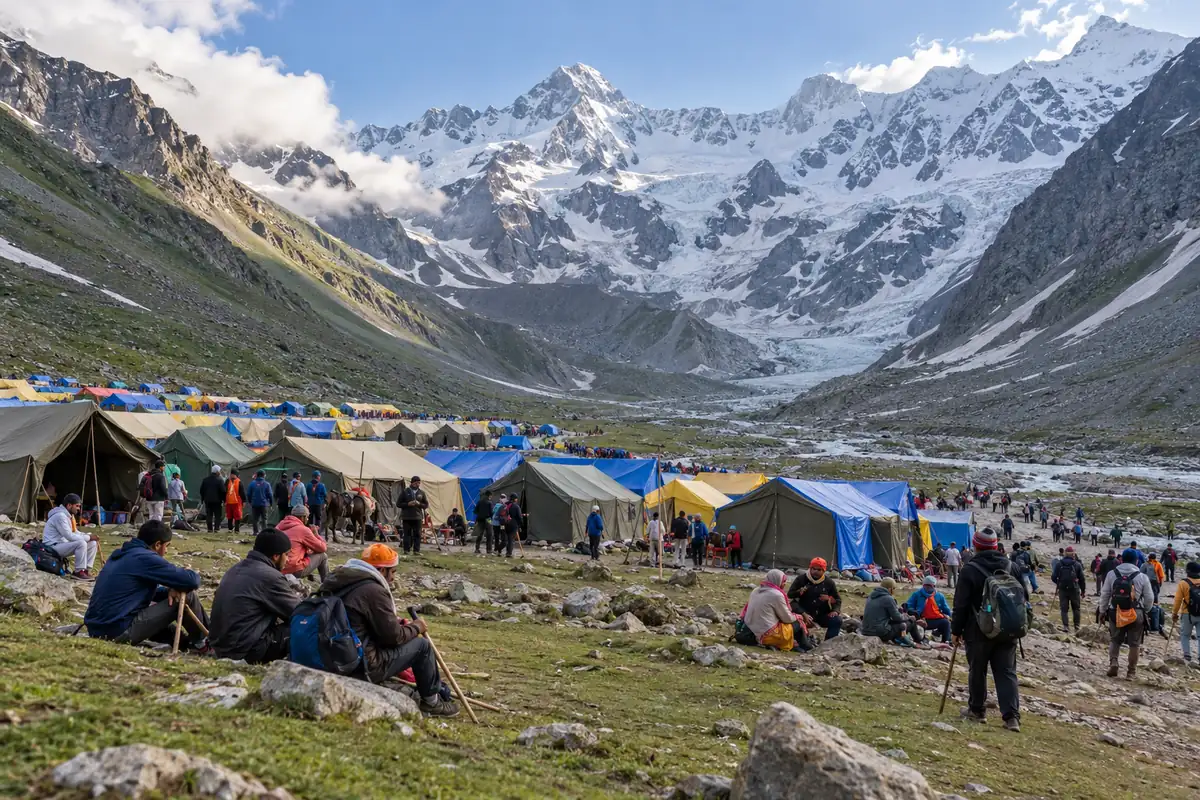
Day 3: Panchtarni to the Holy Cave and Darshan (6 km)
Depart Panchtarni at 5:00 AM to beat the mid-morning crowd buildup at the cave stairs. The trail winds along narrow rocky ledges before meeting the Baltal route at Sangam.
From Sangam, a steady climb brings you to the cave perimeter, where steel queue railings guide pilgrims toward the sanctum. After offering prayers before the natural ice lingam, devotees can either walk down to Baltal in five hours or return to Panchtarni to retrace their steps toward Pahalgam.
The Rapid Baltal Axis: Same-Day Darshan and Logistics
The northern route begins at Baltal, located near the golden meadows detailed in our guide to places to visit in Sonmarg. Spanning merely 14 kilometers, this route is favored by athletic hikers and pilgrims aiming to complete the entire trek within a single day.
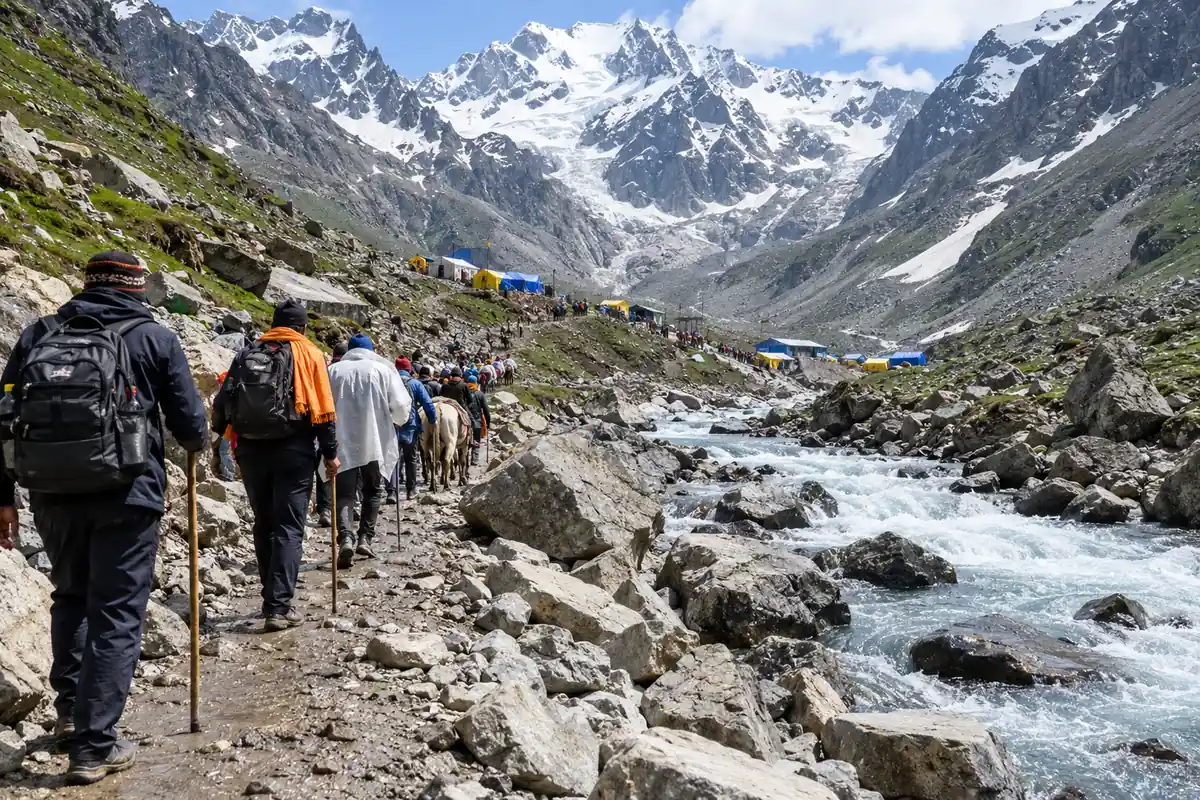
However, the steepness of the trail demands exceptional cardiovascular fitness and sure-footed balance. Route conditions are coordinated through the Ganderbal District Administration Tourism Directory.
Navigating Domail, Barari Marg, and Sangam
The trek departs Baltal Base Camp (2,743 meters) and passes through the military verification checkpoint at Domail. The path immediately starts climbing via relentless rocky switchbacks toward Barari Marg.
The trail along this section is narrow, with vertical mountain drops on one side and frequent pony traffic on the other. Trekkers must always walk on the inner mountain side of the trail to avoid being bumped by passing pack horses.
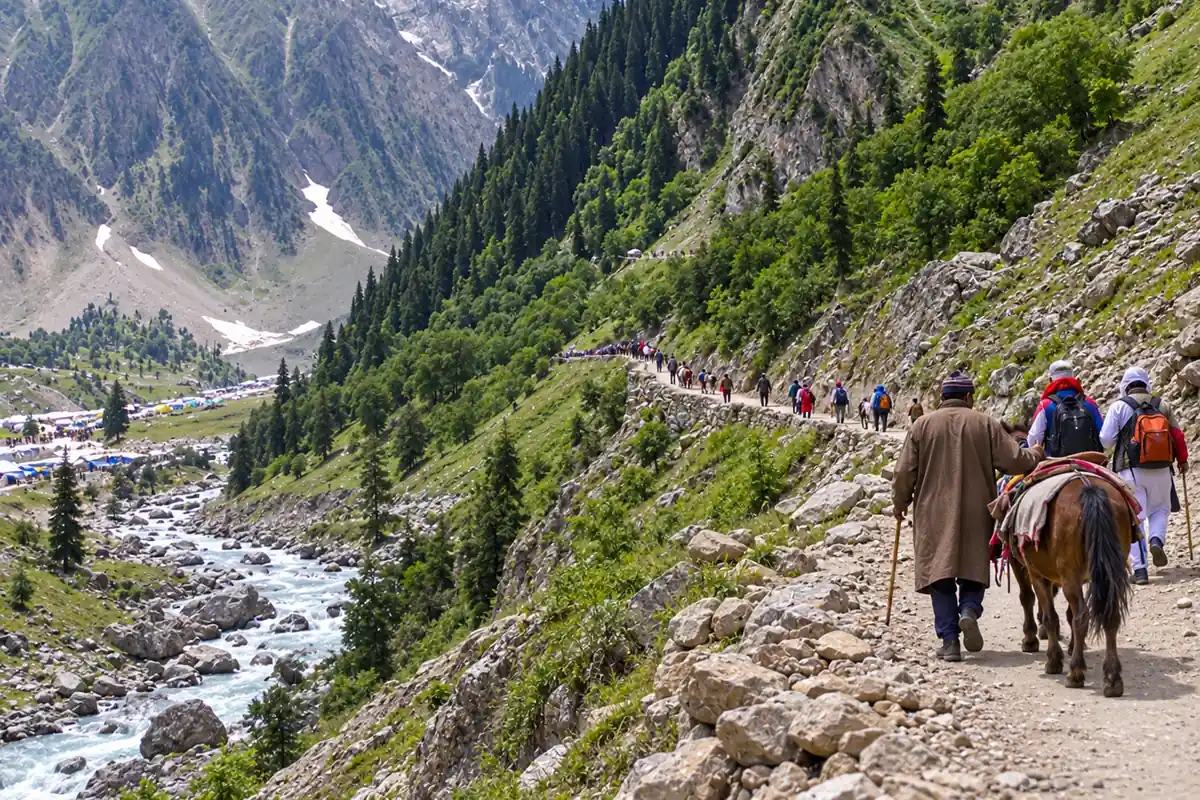
At Sangam, the path joins the wider trail arriving from Panchtarni, leading directly to the base of the holy cave stairs.
Safety Protocol for Same-Day Return Hikes
Trekkers attempting the same-day return must leave Baltal between 4:00 AM and 5:00 AM. Reaching the cave by 10:30 AM allows two hours for security lines and darshan.
You must begin your descent by 1:00 PM at the absolute latest. Walking down steep, rocky terrain in failing afternoon light carries severe slip-and-fall hazards, particularly if afternoon mountain drizzle makes the stone steps slick.
Pro Tip
If you walk the Baltal route, carry sturdy trekking poles with carbide tips. They absorb nearly 30% of the downhill impact on your knees and provide crucial balance along narrow cliff edges.
Helicopter Booking, Fares, and Helipad Locations
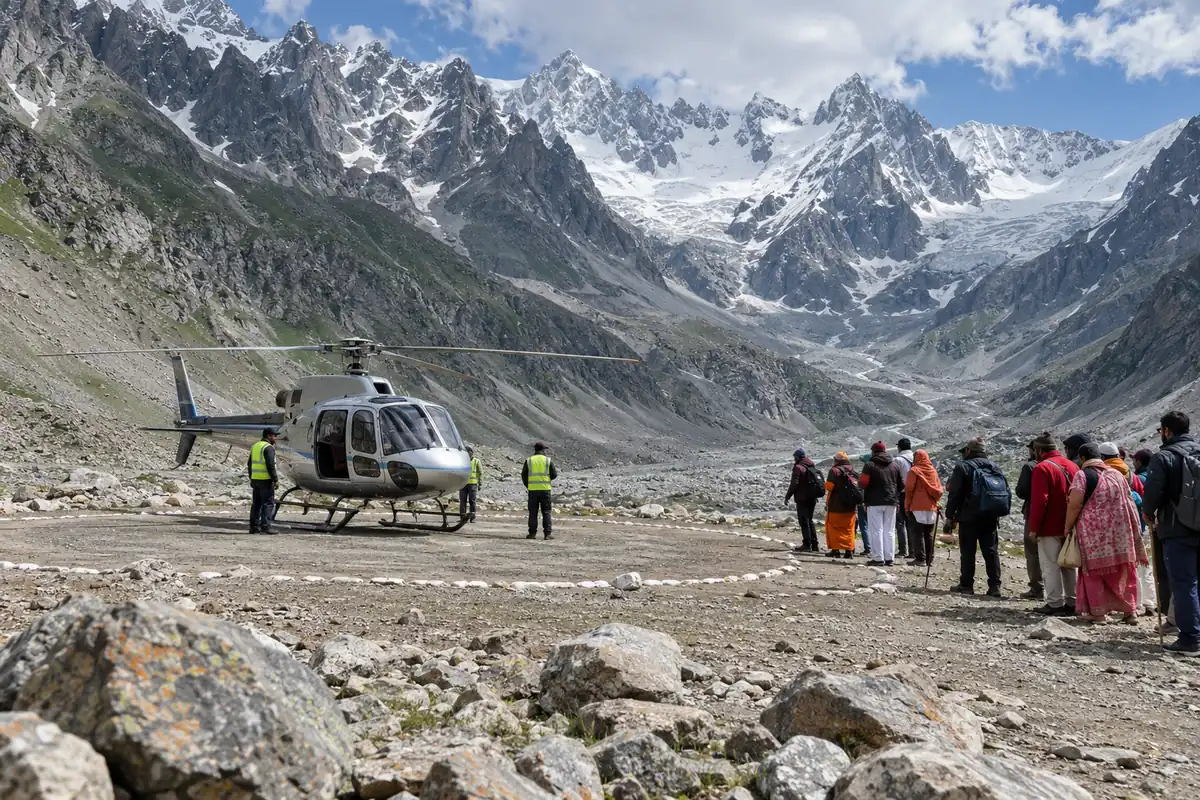
For senior citizens, families with young children, and travelers with limited time, passenger helicopter shuttles provide rapid air transit into the high mountains. Flights operate weather permitting from two separate valley terminals.
All helicopter tickets include automatic electronic registration, eliminating the need to obtain a separate Yatra Permit slip (though the CHC medical form remains mandatory).
| Helipad Sector | Flight Operator | Approximate Return Fare (INR) | Flight Duration |
|---|---|---|---|
| Baltal to Panchtarni | Global Vectra / Pawan Hans | ₹5,600 - ₹6,000 | 8 to 10 minutes |
| Pahalgam to Panchtarni | Himalayan Heli / Heritage | ₹8,400 - ₹9,200 | 12 to 15 minutes |
Important Helicopter Booking Rules
Helicopter tickets can only be booked through the official IRCTC Amarnath Helicopter portal. Private agents and unauthorized travel websites do not possess direct seat allocations.
Beware of counterfeit ticket scams circulating online during the spring months. Passengers must present their physical booking voucher, government identity proof, and original CHC certificate at the helipad counter to receive boarding passes.
From the Panchtarni helipad, all passengers must still complete the remaining 6 km journey to the holy cave on foot, on horseback, or via a four-person palanquin (palki).
High-Altitude Acclimatization, Gear Packing, and Weather Realities
The Amarnath Yatra takes place in an extreme alpine environment where night temperatures hover near freezing and sudden squalls can drop heavy sleet. Proper personal equipment is essential for survival and comfort.
Acute Mountain Sickness (AMS) can affect any traveler regardless of age or physical conditioning if ascent is rushed.
Preventing and Managing Altitude Sickness
Symptoms of AMS include throbbing headaches, nausea, dizziness, and loss of appetite. Prevent altitude sickness by drinking at least 4 liters of clean water daily and maintaining a slow, deliberate walking pace.
Free medical aid posts operated by the Indian Army, ITBP, and state health departments are positioned every 2 km along both routes. If severe symptoms or shortness of breath develop, stop ascending immediately and report to the nearest medical station for supplemental oxygen.
Essential Personal Packing Checklist
Your daypack should contain essential gear designed for sudden temperature swings:
- Thermal Base Layers: Synthetic moisture-wicking tops and thermal bottoms.
- Waterproof Outer Shell: Heavy-duty raincoat, poncho, or waterproof jacket with a hood.
- Footwear: Broken-in waterproof trekking boots with deep tread and thick woolen socks.
- Sun & Wind Protection: UV-blocking sunglasses, SPF 50 sunscreen, and woolen beanies.
- Personal Medical Kit: Diamox (for altitude acclimatization after medical consultation), pain relief tablets, bandage strips, and blister care pads.
How to Reach the Base Camps: Srinagar and Jammu Connectivity
Reaching the Amarnath trailheads requires traveling through the central transit corridors of Jammu and Kashmir. Travelers can coordinate rail, road, and air links depending on their route selection.
The broader logistics of traveling across the union territory are detailed in our master guide to Jammu and Kashmir.
By Air via Srinagar International Airport
Sheikh ul-Alam International Airport in Srinagar (code: SXR) is the closest commercial airport, operating non-stop flights from New Delhi, Mumbai, Bengaluru, and Chandigarh.
From Srinagar airport, shared taxis and private tourist cabs take 3 hours (95 km) to reach Pahalgam or 3.5 hours (90 km) to reach Baltal via Sonmarg.
By Train via Jammu Tawi and Udhampur
Jammu Tawi (code: JAT) and Shri Mata Vaishno Devi Katra (code: SVDK) are the primary northern rail terminals, served by regular superfast trains and the high-speed New Delhi-Katra Vande Bharat Express.
From Jammu, government-escorted security convoys depart Bhagwati Nagar Base Camp every morning at 4:00 AM, carrying pilgrims across the Banihal Pass to Pahalgam and Baltal in 8 to 10 hours.
Base transport options are detailed on the District Administration Anantnag Pahalgam Guide.
Practical Pilgrim Guidelines: Langars, Tents, and Porters
The Amarnath Yatra features remarkable voluntary service and community hospitality. Non-profit charitable organizations known as Langar committees set up free kitchen facilities along the entire length of the trail.
These langars serve warm, nutritious vegetarian meals, fresh fruit, herbal teas, and milk around the clock to all pilgrims without charge. Devotees frequently combine this pilgrimage with the sacred cave shrine detailed in our pilgrimage planning for Vaishno Devi Katra Yatra.
Important
Always hire registered ponies, porters (pithus), and palanquins (palkis) through official government union counters at Chandanwari or Baltal. Note down the unique brass badge number and mobile phone of your porter before setting off on the trail.
Tent Accommodations and Sanitation Standards
Thousands of large waterproof canvas tents operate at Sheshnag, Panchtarni, and Baltal Base Camp. Beds are equipped with clean mattresses, heavy quilts, and wool blankets for ₹300 to ₹600 per night per bed.
Pre-fabricated mobile toilet blocks and hot water bucket stations (₹50 to ₹100 per bucket) operate at all designated camp sites. Carry personal toilet paper, biodegradable wet wipes, and hand sanitizer for trail hygiene.
Frequently Asked Questions About Amarnath Yatra
What is the age limit for undertaking the Amarnath Yatra?
The Shri Amarnathji Shrine Board permits pilgrims between the ages of 13 and 70 years to register for the trek. Children under 13, senior citizens above 70, and women more than six weeks pregnant are not permitted to register.
How much does the advance registration fee cost for Amarnath Yatra?
The advance online registration fee through the official SASB portal is ₹150 per pilgrim. On-spot counter registrations in Jammu or Srinagar cost approximately ₹250 per applicant upon verification of a valid health certificate.
What is a Compulsory Health Certificate and where do I get it?
A Compulsory Health Certificate is a mandatory medical clearance form certifying an applicant’s fitness for high-altitude trekking. It must be issued and signed by a government-authorized hospital or designated medical practitioner in your home state.
Which route is better for first-time Amarnath pilgrims: Pahalgam or Baltal?
The traditional Pahalgam route is recommended for first-time pilgrims and families because its gradual incline allows for better acclimatization over three to four days. The Baltal route is steep and rocky, making it better suited for experienced, athletic hikers.
Can helicopter tickets be booked through local agents in Srinagar?
Helicopter tickets for Amarnath Yatra cannot be purchased through local private agents and must be booked directly through the official IRCTC portal. Any private vendor claiming to sell confirmed offline helicopter seats is operating an unauthorized scam.
Is an RFID card mandatory for all Amarnath pilgrims?
Wearing an official RFID card issued by the Shrine Board is mandatory for every pilgrim throughout the entire duration of the trek. The electronic card tracks movement across high mountain checkpoints and ensures safety monitoring by security forces.