Ujjain Mahakal Mandir Guide: Darshan, Bhasma Aarti & Timings
Plan your pilgrimage to Ujjain Mahakal Mandir with Bhasma Aarti booking, darshan timings, ticket prices, Mahakal Lok corridor, and travel tips.
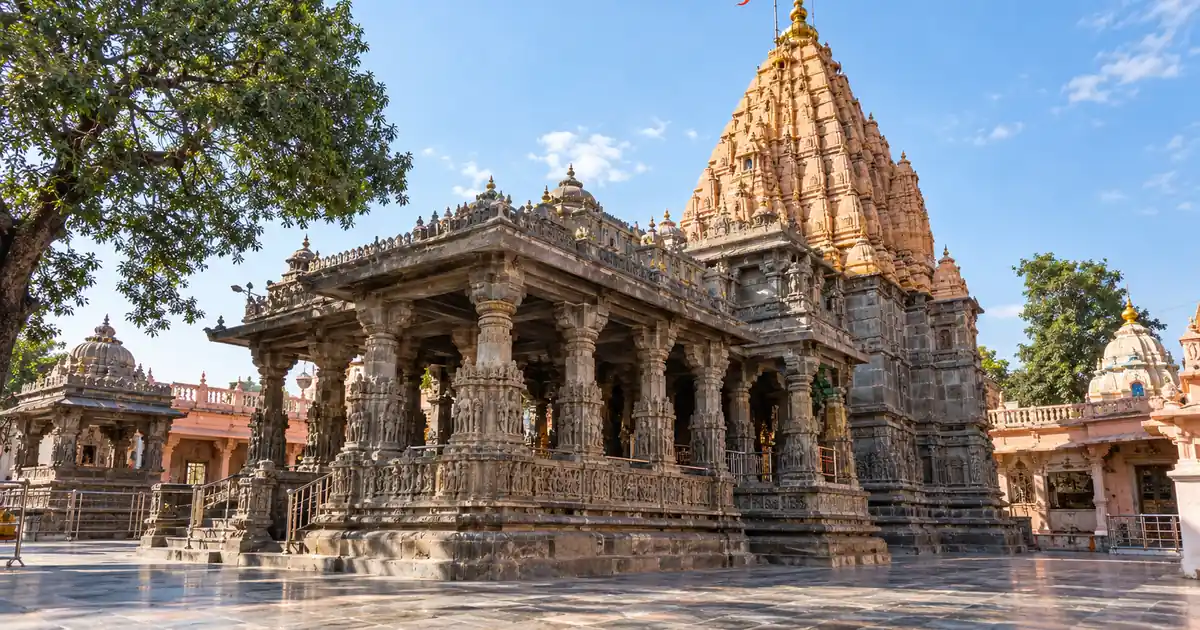
Ujjain Mahakal Mandir stands on the banks of the holy Shipra River in the historic city of Ujjain, Madhya Pradesh. Revered as one of the twelve sacred Jyotirlingas, the temple enshrines Lord Shiva as Mahakaleshwar, the master of time, death, and dissolution. It is celebrated as the only south-facing (Dakshinmukhi) swayambhu Jyotirlinga in India, believed to possess immense spiritual energy that protects devotees from untimely death.
Darshan Essentials
- Ujjain Mahakal Mandir sits along the sacred Shipra River in Ujjain, Madhya Pradesh, enshrining the only south-facing (Dakshinmukhi) Jyotirlinga in India.
- The world-renowned Bhasma Aarti takes place daily between 4:00 AM and 6:00 AM, requiring advance digital registration via the temple portal.
- General darshan runs continuously from 4:00 AM to 11:00 PM without fee, while Sheeghra Darshan fast-track passes cost ₹250 per devotee.
- The newly developed 900-meter Mahakal Lok corridor features 108 grand sandstone pillars, mural murals, and sculptures depicting Shiva lore.
Daily Darshan Schedule, Aarti Timings, and Temple Routine
Ujjain Mahakal Mandir operates an uninterrupted daily routine spanning nineteen hours of continuous worship. The day begins during pre-dawn darkness with the Bhasma Aarti and concludes late at night with the Shayan Aarti.
General darshan queues move through covered barricades in the outer sabha mandap. During major festival days, authorities open extended holding lines to manage tens of thousands of visiting pilgrims. Devotees planning regional pilgrimage itineraries across the state can consult our comprehensive Madhya Pradesh travel guide.
| Ritual / Darshan Session | Daily Timings | Pilgrim Access & Procedures |
|---|---|---|
| Bhasma Aarti (Morning Ash Ritual) | 4:00 AM – 6:00 AM | Advance registered ticket holders only |
| General Jalabhishek & Darshan | 6:00 AM – 7:30 AM | Free general queues through Nandi Hall |
| Morning Doodh Aarti (Naivedya Aarti) | 7:30 AM – 8:15 AM | Milk offering and morning prayer chimes |
| Afternoon Madhyanha Bhog Aarti | 10:30 AM – 11:15 AM | Midday cooked food offering to the deity |
| Sandhya Aarti (Evening Incense & Lamps) | 7:00 PM – 7:45 PM | Grand evening musical prayer ceremony |
| Shayan Aarti & Night Gate Closure | 10:30 PM – 11:00 PM | Floral decoration, lullaby singing, and closure |
Devotees can verify real-time temple updates and token availabilities on the Shri Mahakaleshwar Temple Management Portal. Pilgrims must avoid carrying electronic devices, luggage, and leather items inside the inner complex, utilizing free clock rooms situated at the main entry plaza.
Bhasma Aarti Online Booking Process, Rules, and Dress Code
The sacred Bhasma Aarti serves as the spiritual centerpiece of the pilgrimage to Ujjain Mahakal Mandir. Performed between 4:00 AM and 6:00 AM every morning, the ritual involves offering fresh sacred ash to the swayambhu lingam to signify the impermanence of mortal life and Shiva’s mastery over death.
The ceremony is conducted by the chief temple priests in the presence of thousands of silent devotees gathered across three viewing halls: Nandi Mandapam, Ganesh Mandapam, and Kartikey Mandapam.
Pilgrims combining their visit with other sacred sites in Madhya Pradesh can coordinate their travel with the Omkareshwar Jyotirlinga Temple, located 140 kilometers south along the Narmada River.
To attend Bhasma Aarti, pilgrims must reserve seats online via the official portal, with reservations opening thirty days in advance at 8:00 AM daily. A fee of ₹200 applies for online registration, and devotees must upload verified government photo identity documents.
| Ticket Category | Entry Price | Booking Window | Primary Privilege |
|---|---|---|---|
| General Free Darshan | Free | Walk-in counter | Standard queue through outer darshan corridors |
| Sheeghra Darshan (Fast-Track) | ₹250 per person | Online or counter | Dedicated express queue bypassing general holding lines |
| Garbhagriha Jalabhishek Entry | ₹750 – ₹1,500 | Online slot | Direct inner sanctum access during designated non-rush hours |
| Bhasma Aarti Advance Pass | ₹200 per person | 30 days in advance | Seated viewing in Nandi or Kartikey Mandapam at 4:00 AM |
Strict dress codes apply for all devotees entering the Bhasma Aarti and the inner garbhagriha. Men must wear traditional unstitched white or saffron dhotis with a shoulder angavastram, removing western shirts and vests. Women must wear traditional sarees.
Sacred Significance of the South-Facing Dakshinmukhi Lingam
Among all twelve sacred Jyotirlinga shrines in India, Mahakaleshwar holds the distinction of facing south, the cardinal direction traditionally ruled by Yama, the lord of death. In ancient Hindu esoteric philosophy, only Lord Shiva possesses the supreme cosmic power to conquer mortality and ward off premature demise, giving rise to the epithet Mahakal.
Devotees can explore the complete geographic circuit of these twelve sacred shrines through our detailed overview of the 12 Jyotirlingas in India.
Ujjain itself occupies a central place in ancient Indian cosmology. Ancient geographers established Ujjain as the prime meridian of longitude, regarding the city as the navel of the earth where time was mathematically measured.
King Vikramaditya patronized scholarship here, while astronomer Varahamihira compiled planetary treaties near the riverbanks.
Mahakal Lok Corridor and Three-Tiered Temple Architecture
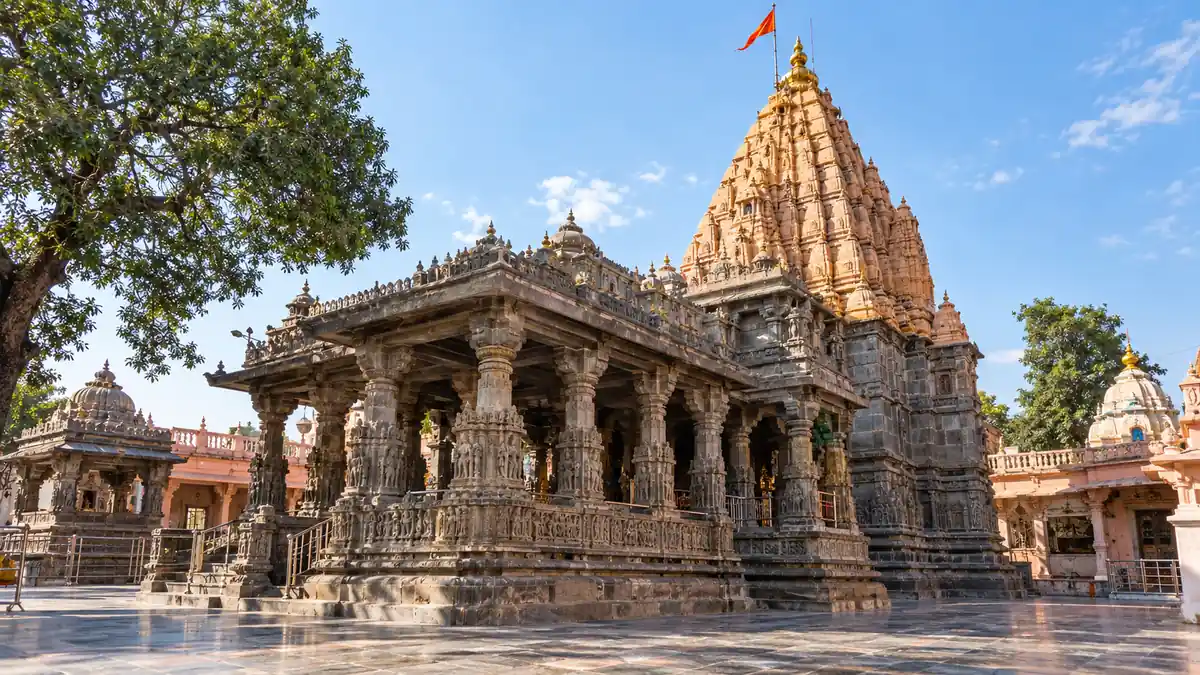
The architecture of Ujjain Mahakal Mandir features an imposing three-tiered stone structure that reflects centuries of historical development and Maratha reconstruction. The lowest level houses the Mahakaleshwar Jyotirlinga submerged within a subterranean stone sanctum.
The middle tier enshrines an idol of Omkareshwar, while the uppermost level preserves the sanctum of Nagchandreshwar, opened to the public exclusively once a year on Nag Panchami.
Pilgrims interested in broad temple infrastructure developments can compare this complex with recent sacred corridors like the Ayodhya Ram Mandir.
The Madhya Pradesh Tourism Ujjain Destination Guide details the expansive 900-meter Mahakal Lok corridor. Built along the historic Rudrasagar Lake, this modern pedestrian plaza features 108 intricately carved red sandstone pillars, twenty-foot-high murals illustrating Shiva legends, fountains, and illuminated night plazas.
Nearby Temples and Holy Attractions Around Ujjain
Ujjain preserves an extensive heritage of historic shrines and astronomical monuments beyond the Mahakal compound. Ram Ghat lies just one kilometer away along the banks of the Shipra River, hosting evening aarti ceremonies and bathing rituals during the massive Simhastha Kumbh Mela.
Kal Bhairav Temple stands five kilometers north, renowned for its ancient custom of offering liquor to the guardian deity of the city.
Travelers exploring regional art and dance traditions can also plan journeys to the celebrated Khajuraho Dance Festival in central Madhya Pradesh.
Other notable stops in Ujjain include the ancient rock-cut Bhartrihari Caves, where the philosopher-king composed spiritual verses, and the historic Vedh Shala (Jantar Mantar) observatory built by Maharaja Sawai Jai Singh II in 1725.
Chintaman Ganesh Temple, situated seven kilometers outside the city, houses a self-manifested Ganesha idol dating back to the Paramara period.
How to Reach Ujjain Mahakal Mandir by Train, Flight, and Road
Ujjain Junction serves as a major railway junction with direct broad-gauge trains arriving from Delhi, Mumbai, Kolkata, Chennai, Jaipur, and Bengaluru. The station sits just two kilometers from the temple complex, with e-rickshaws and auto-rickshaws operating round the clock.
Pilgrims organizing broad national religious journeys can connect these transit hubs with the routes outlined in our guide to the Char Dham Yatra in India.
The nearest commercial airport is Devi Ahilyabai Holkar International Airport in Indore, located 55 kilometers south of Ujjain. A four-lane access-controlled expressway connects the airport to Ujjain in roughly one hour by prepaid taxi, making it convenient to combine temple darshan with our Indore Sarafa Bazaar and Chhappan Dukan food guide.
The Ujjain District Administration Portal highlights that state transport buses run every fifteen minutes between Indore’s Sarwate bus stand and Ujjain Central Bus Stand. Paved four-lane bypasses allow travelers arriving by private automobile to access authorized parking lots near the Mahakal Lok corridor.
Frequently Asked Questions About Ujjain Mahakal Mandir
How can I book tickets for Bhasma Aarti at Ujjain Mahakal Mandir?
Bhasma Aarti tickets can be booked online through the official Shri Mahakaleshwar temple portal thirty days in advance at 8:00 AM daily. A quota of tickets is also released via an offline token counter at the temple administrative office on a first-come, first-served basis.
What is the dress code for Bhasma Aarti and sanctum entry?
Men attending the Bhasma Aarti or entering the inner sanctum must wear a traditional cotton or silk dhoti with an angavastram, with shirts and vests removed. Women must wear a traditional saree, while salwar kameez and western garments are strictly prohibited.
What is Sheeghra Darshan and how much does it cost?
Sheeghra Darshan is a priority ticket priced at ₹250 per devotee that provides access to a fast-track queue, bypassing standard general holding lines. It can be purchased online or at computerized counters within the temple complex.
How far is Ujjain Mahakal Mandir from Indore Airport?
Ujjain Mahakal Mandir is located approximately 55 kilometers north of Devi Ahilyabai Holkar International Airport in Indore. The drive takes around one hour via the four-lane Indore-Ujjain Highway.
Why is the Mahakaleshwar Jyotirlinga called Dakshinmukhi?
Mahakaleshwar is called Dakshinmukhi because the sanctum’s swayambhu lingam faces directly south toward the cardinal realm of Yama, the deity of death. In Hindu belief, this orientation grants Lord Shiva the divine power to protect worshippers from untimely demise.