Ayodhya Ram Mandir Pran Pratishtha: Timings, Rituals & Darshan
Explore the Ayodhya Ram Mandir Pran Pratishtha consecration rituals, Ram Lalla murti facts, Nagara architecture, daily darshan timings, and pass booking.
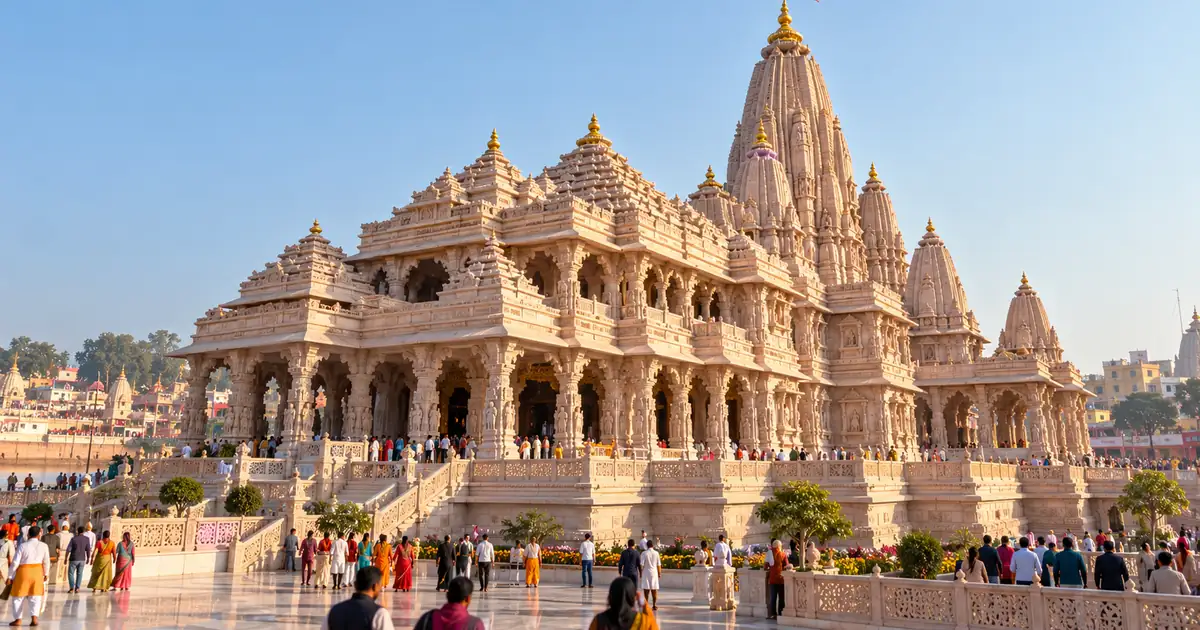
The consecration of the Shri Ram Janmabhoomi Mandir in Ayodhya marks a defining cultural milestone in modern India. Situated on the holy banks of the Saryu River, the sanctuary honors the sacred birthplace of Lord Rama. Devotees visit from across the globe to witness an ancient heritage expressed through intricate stone craftsmanship and Vedic liturgy.
The Pran Pratishtha ceremony formally infused divine life into the consecrated deity of Ram Lalla within the inner sanctum. The ongoing operations of the temple complex now establish Ayodhya as a major spiritual destination. Understanding the ceremonial sequence, architectural brilliance, and practical visiting protocols ensures a well-planned pilgrimage.
Pran Pratishtha and Temple Essentials
- Consecration Window: Consecrated in history on January 22, 2024, during an auspicious 84-second Abhijeet Muhurat.
- Deity Dimensions: 51-inch dark Krishna Shila granite sculpture portraying five-year-old Ram Lalla by sculptor Arun Yogiraj.
- Architectural Tradition: Three-storeyed Gujara-Chalukya Nagara design featuring 392 stone pillars and five mandaps without structural steel.
- Visiting Schedule: Morning darshan runs from 6:30 AM to 12:00 PM; afternoon sessions operate from 2:00 PM to 10:00 PM daily.
- Arrival Gateways: Located 1.5 kilometres from Ayodhya Dham Junction railway station and 10 kilometres from Maharishi Valmiki International Airport.
Historic Pran Pratishtha Rituals and Auspicious Timings
The consecration ceremony reached its peak on January 22, 2024, marking a milestone in temple history when the inner sanctum received divine invocation. Head priest Acharya Laxmikant Dixit led eighty-four Vedic scholars through liturgical steps prescribed in classical scriptural texts.
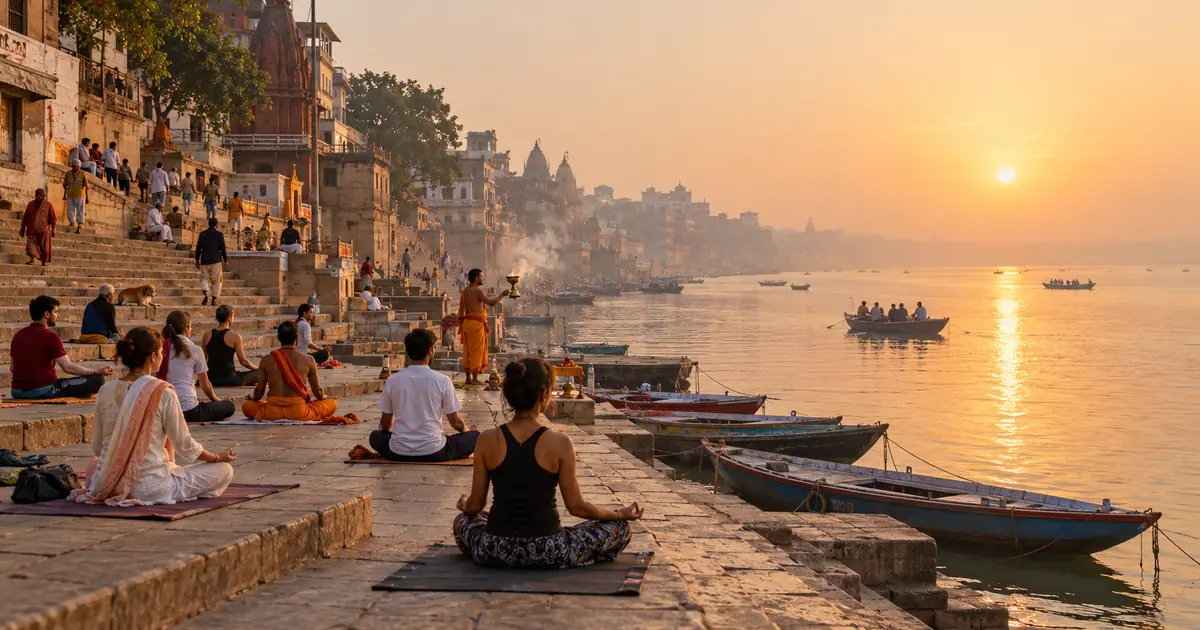
Chants from all four Vedas resonated throughout the newly carved stone halls. The atmosphere matched the devotional grandeur witnessed during evening Ganga Aarti ceremonies along the sacred riverfronts of Uttar Pradesh.
The 84-Second Abhijeet Muhurat Consecration
The central consecration window spanned precisely eighty-four seconds, lasting from 12:29:08 PM to 12:30:32 PM. Astrological calculations identified this moment during the Mrigashira Nakshatra on Paush Shukla Dwadashi as an unblemished planetary alignment.
During this brief window, priests removed the silk eye-blind from the deity and applied sacred anjana collyrium with a golden stylus. Chants of divine invocation filled the air as conch shells and temple bells announced the sanctification.
Seven-Day Vedic Ritual Sequence
The Pran Pratishtha followed seven days of preparatory rituals recorded in history since January 16, 2024. These rites included a ceremonial bath using water collected from consecrated rivers across India, followed by Kalash Puja and Navagraha Havan.
Subsequent rituals featured Anna-adhivas, Jal-adhivas, Sugandh-adhivas, and Shaiya-adhivas. During these stages, the murti rested in grain, holy water, and medicinal herbs to absorb sanctified energies before final placement in the garbha griha.
Ram Lalla Murti: Craftsmanship, Symbolism, and Sacred Stone
The consecrated idol inside the sanctum depicts Lord Rama as a five-year-old prince (Balak Ram) standing atop a lotus base. Measuring 51 inches in height and weighing approximately 1.5 tonnes, the murti balances sovereign dignity with childlike gentleness.
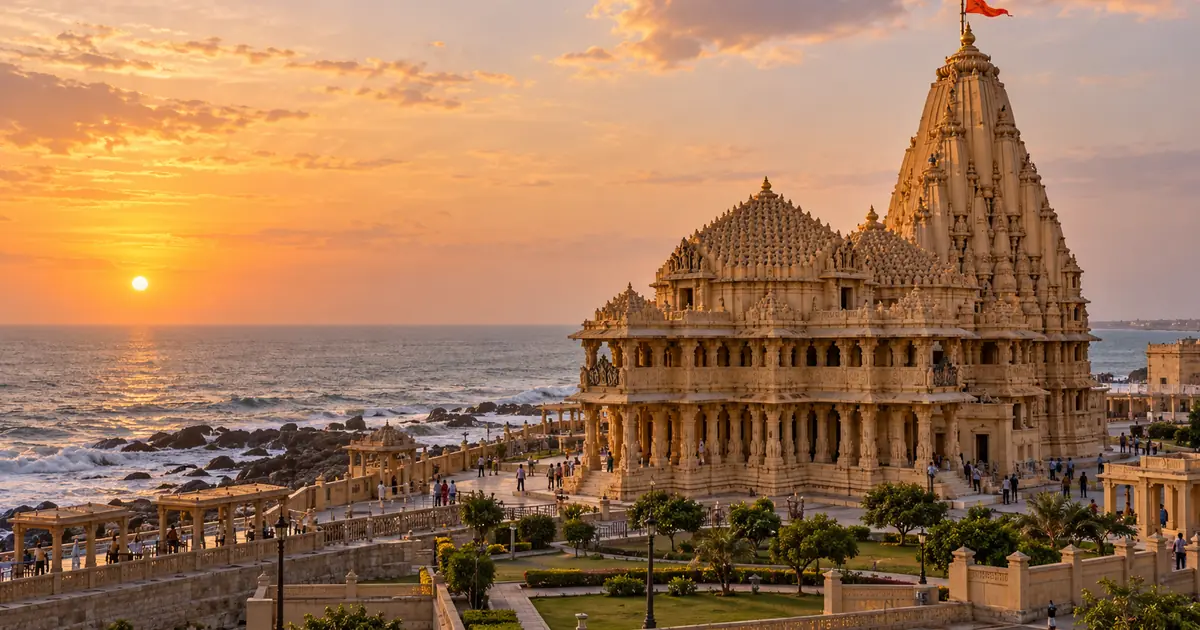
Sculptor Arun Yogiraj of Mysuru spent months carving the figure according to the strict proportional guidelines of Shilpa Shastra. Master artisans have historically carved sacred shrines in similar stone styles, including the coastal sanctum at Somnath temple.
Krishna Shila Granite and Structural Durability
The idol is carved from three-billion-year-old dark schistose rock known as Krishna Shila, quarried from Gujjegowdanapura near Mysuru in Karnataka. This dense, non-porous granite is completely impervious to chemical decay from daily abhishek offerings.
Geological testing confirms that the stone withstands prolonged contact with milk, curd, honey, ghee, and sanctified water. This physical durability guarantees that fine facial carvings remain unmarred across centuries of worship.
Iconographical Details and Ten Avatars of Vishnu
An intricately sculpted stone arch framing the divine figure represents the cosmic order. The arch depicts the ten Dashavatara incarnations of Lord Vishnu: Matsya, Kurma, Varaha, Narasimha, Vamana, Parashurama, Rama, Krishna, Buddha, and Kalki.
Flanking the lower base are carvings of Lord Hanuman on the right and Garuda on the left. The sun god Surya adorns the topmost crest, symbolizing the Suryavanshi lineage of Lord Rama while he holds a golden bow and arrow.
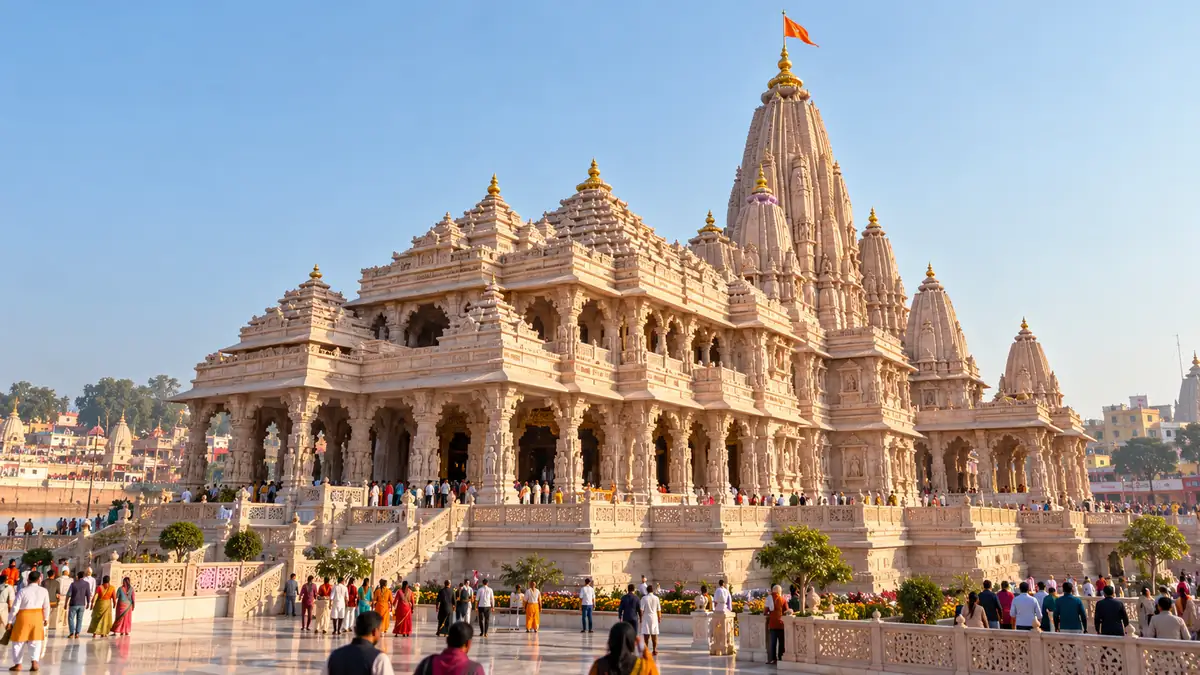
Nagara Architectural Grandeur of Ram Janmabhoomi Mandir
Constructed in the classical Gujara-Chalukya tradition of North Indian Nagara architecture, the Ram Janmabhoomi Mandir is engineered entirely without structural steel or iron. Master architect Chandrakant Sompura drafted the blueprint alongside his sons Nikhil and Ashish Sompura.
Devotees seeking deeper structural analysis can consult our comprehensive Ayodhya Ram Mandir complex guide. The entire complex embodies age-old temple engineering principles designed for exceptional endurance.
The building rests on an engineered 14-metre-thick foundation of roller-compacted concrete simulating artificial bedrock. Above this foundation rises a 21-foot-high solid granite plinth that supports pink Bansi Paharpur sandstone walls and pillars assembled with tongue-and-groove stone joinery.
| Parameter | Architectural & Ritual Detail | Logistical Specification |
|---|---|---|
| Total Complex Area | 70 acres of landscaped grounds | Master complex boundary |
| Main Temple Footprint | 2.7 acres covered area | 380 feet length by 250 feet width |
| Superstructure Height | 161 feet from ground level | Three-storey structural frame |
| Architectural Style | Gujara-Chalukya Nagara tradition | Designed by Chandrakant Sompura |
| Supporting Pillars | 392 carved stone columns | 166 on ground floor level |
| Entrance Portals | 44 carved teakwood gates | Inlaid with Makrana white marble |
| Deity Murti Height | 51 inches carved child form | Dark Krishna Shila granite stone |
| Consecration Window | 12:29:08 PM to 12:30:32 PM | Auspicious Abhijeet Muhurat opened in January 2024 |
Five Sacred Mandaps and Elevated Sanctum
The main temple features five sequential pillared pavilions: Nritya Mandap, Rang Mandap, Sabha Mandap, Prarthana Mandap, and Kirtan Mandap. Rising across three storeys, each pavilion displays sculpted brackets, celestial dancers, and floral friezes.
Pilgrims ascend thirty-two steps from the eastern entrance through the Singh Dwar to reach the elevated plinth. This architectural design creates an orderly queue flow through wide stone corridors surrounding the central sanctum.
Makrana Marble Inlays and Carved Teakwood Gates
The interior pavilions feature white Makrana marble flooring, keeping walkways comfortable even during warm summer afternoons. Forty-four heavy gates constructed from Maharashtra teakwood secure the sanctum corridors.
Artisans from Rajasthan overlaid these doors with beaten brass panels and gold leaf filigree. The ornamental metalwork depicts protective guardians, sacred kalash vessels, and traditional auspicious floral patterns.
Daily Darshan Schedule, Aarti Timings, and Passes
The temple administration operates a systematic timetable to accommodate thousands of pilgrims each day. General darshan requires no advance ticket, but visiting outside peak noon hours reduces waiting times considerably.
Devotees can review updated local district administrative arrangements through the official Ayodhya District Administration tourist portal. Planning ahead helps pilgrims navigate queue complexes effortlessly.
Many travelers combine morning worship at Ram Mandir with a holy dip at the Triveni Sangam in Prayagraj during regional pilgrimage circuits. Both sites offer deeply moving spiritual rituals.
Daily Aarti Timetable
The temple performs four primary aarti services throughout each day, each holding specific liturgical significance:
- Mangala Aarti (04:30 AM): Performed to awaken the deity; requires early morning pass verification by 04:00 AM.
- Shringar Aarti (06:30 AM): Ornate dressing of the deity before general morning darshan begins.
- Bhog Aarti (12:00 PM): Afternoon food offering during which the sanctum closes for fifteen minutes.
- Sandhya Aarti (07:30 PM): Evening twilight prayer accompanied by Vedic chants and musical bells.
- Shayan Aarti (10:00 PM): Final evening night prayer before temple gates close until the next dawn.
Securing Aarti Passes and Sugam Darshan
Aarti passes and Sugam Darshan for elderly pilgrims and visitors with disabilities are issued free of charge through the official trust portal and on-site counters. Applicants must submit valid government-issued photo identity documents during booking.
Because pass quotas fill weeks ahead during major festive seasons, travelers should reserve slots well before their journey. Dedicated staff members assist elderly visitors with wheelchair transport at the main gate.
Pilgrim Security, Cloakrooms, and Dress Guidelines
Maintaining security across a 70-acre complex requires adherence to strict safety rules. Security personnel screen all visitors at multi-tier electronic checkpoints before admitting them to the main sanctum approach.
Devotees can also check adjacent sacred shrines on the Ayodhya District Administration Hanuman Garhi portal. Regional guidelines ensure a smooth, dignified journey.
Prohibited Belongings and Digital Cloakrooms
Security regulations prohibit several personal items beyond the inner barrier:
- Mobile phones, smartwatches, cameras, and portable recording devices
- Leather belts, leather wallets, and footwear
- Tobacco products, matchboxes, and lighters
- Large backpacks, metallic luggage, and personal charging banks
The temple trust provides an automated Pilgrim Facility Centre near the primary gate. Pilgrims deposit electronic devices and bags into secure lockers at no cost, receiving a scannable barcode token for rapid collection after darshan.
Dress Etiquette and Footwear Storage
Modest traditional Indian clothing is strongly recommended for all devotees. Men generally wear kurtas, pyjamas, or dhotis, while women choose sarees, salwar kameez, or modest long dresses.
Short clothing, sleeveless tops, and footwear are barred past the security pavilions. Devotees deposit their shoes at organized free storage kiosks before entering the marble perimeter.
How to Reach Ayodhya and Plan Regional Travel
Ayodhya connects smoothly through modern rail links, four-lane expressways, and a dedicated airport. The city serves as an ideal base for pilgrims exploring the broader religious heritage of eastern Uttar Pradesh.
The central government highlights cultural circuit connections through the Incredible India official Ayodhya heritage portal. Many pilgrims choose to book a structured Kashi Ayodhya Prayagraj pilgrimage circuit to link these sacred destinations.
Arriving by Air, Rail, and Road
Maharishi Valmiki International Airport (AYJ) operates direct daily flights from Delhi, Mumbai, Bengaluru, and Ahmedabad. Taxis and prepaid auto-rickshaws stationed outside the terminal reach the temple within thirty minutes.
Ayodhya Dham Junction railway station (AY) features ornate temple-inspired architecture and sits 1.5 kilometres from the shrine. High-speed Vande Bharat and Amrit Bharat express trains connect the station directly to major metropolitan hubs.
Ayodhya Cantt station (AYC) is situated eight kilometres away, providing additional connectivity for long-distance express routes. National Highway 27 offers wide four-lane road access from Lucknow and Gorakhpur.
Connecting Ayodhya with Varanasi and Regional Shrines
Pilgrims easily connect Ayodhya with nearby holy centers through efficient transport networks. State transport corporations run air-conditioned express buses that cover the 220 kilometres to Varanasi in approximately four hours.
This route allows travelers to combine their reverence for Lord Rama with visits to historic shrines across the Gangetic plains. Smooth highway connectivity makes multi-city pilgrimage circuits convenient for families and senior travelers alike.
Frequently Asked Questions About Ayodhya Ram Mandir Pran Pratishtha
When was the Ayodhya Ram Mandir Pran Pratishtha ceremony held?
The Pran Pratishtha ceremony was conducted on January 22, 2024, as the temple opened in ceremony during an auspicious 84-second Abhijeet Muhurat. Public darshan opened to devotees worldwide the following morning on January 23, 2024.
Is there an admission fee for entering the Ram Janmabhoomi Mandir?
General darshan inside the temple complex is completely free of charge for all domestic and international pilgrims. Pre-booked passes are mandatory only for attending specific daily aarti services, which the temple trust also issues free of cost.
Can pilgrims carry mobile phones inside the Ayodhya Ram Mandir?
Mobile phones, smartwatches, cameras, and leather items are strictly barred past the security screening pavilions. Devotees must store all electronic devices and personal bags inside the free digital lockers operated at the Pilgrim Facility Centre.
What stone was used to sculpt the Ram Lalla deity?
The deity was sculpted from three-billion-year-old dark Krishna Shila granite quarried in Karnataka by master artisan Arun Yogiraj. This specialized stone resists weathering from milk, curd, honey, and water during daily abhishek offerings.
What are the daily darshan timings at Ram Mandir Ayodhya?
The temple sanctum opens for morning darshan from 6:30 AM to 12:00 PM and resumes afternoon and evening worship from 2:00 PM to 10:00 PM. Darshan pauses briefly for fifteen minutes during the afternoon Bhog offering at noon.
Which railway station provides the closest access to Ram Mandir?
Ayodhya Dham Junction is the closest railway station, situated approximately 1.5 kilometres from the entrance of the temple complex. Ayodhya Cantt railway station is situated eight kilometres away and handles several long-distance express trains.