Ayodhya Ram Mandir: Timings, Aarti, Booking & Travel Guide
Plan your visit to Ayodhya Ram Mandir with updated darshan timings, free Sugam Darshan and aarti pass booking, rules, security, and rail connections.
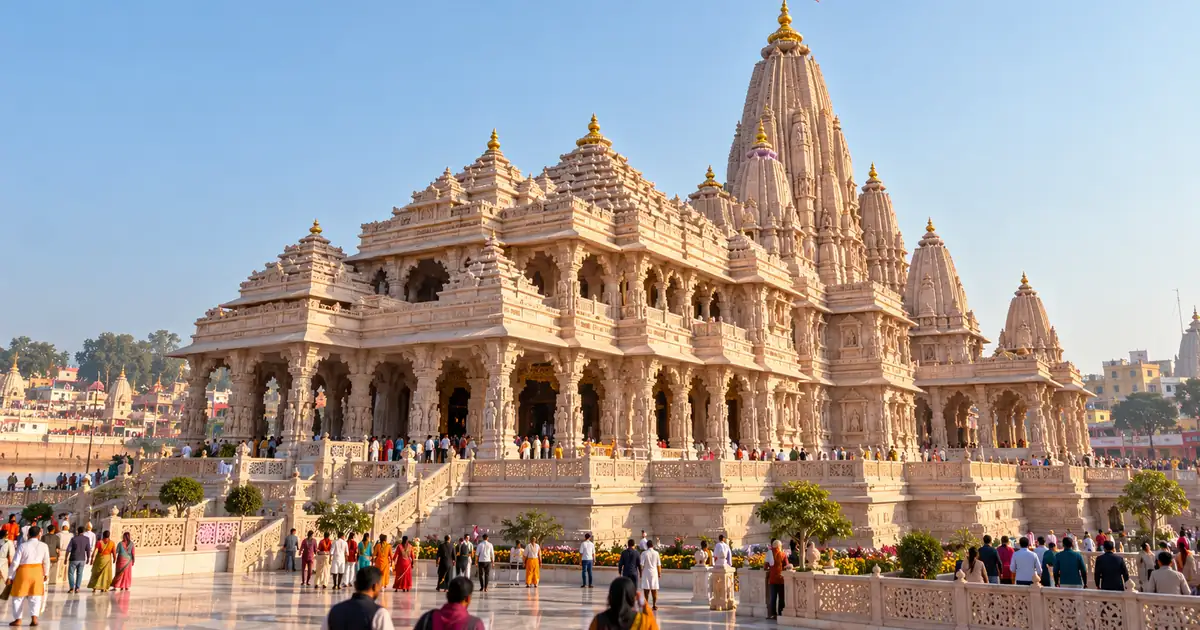
Visiting Shri Ram Janmabhoomi Mandir in Ayodhya requires clear advance planning because daily footfall regularly crosses tens of thousands of devotees, rising steeply during Ekadashi, Ram Navami, and Deepotsav. Knowing exact darshan slots, free pass rules, and strict electronics bans keeps your queue time under an hour.
Plan at a Glance
- Darshan Hours: 7:00 AM to 12:00 PM and 1:30 PM to 8:30 PM daily (closed midday 12:00 PM–1:30 PM).
- Pass Fees: Every General Darshan, Sugam Darshan, and Aarti pass is 100% free on the official booking portal.
- Mandatory Rules: Phones, smartwatches, cameras, bags, and leather items stay outside in free lockers; carry your original government photo ID.
- Fastest Arrivals: Alight at Ayodhya Dham Junction (1.8 km from Ram Path) or Maharishi Valmiki International Airport (9 km).
Ayodhya Ram Mandir Darshan and Aarti Schedule
Shri Ram Janmabhoomi Teerth Kshetra Trust operates temple entry in two structured blocks separated by a strict midday sanctum recess for Rajbhog and ritual rest. Pilgrims walking in through the main Ram Path corridor can enter general queues without any prior registration during open slots.
| Service or Ritual | Daily Timing Window | Pass Requirement | Fee |
|---|---|---|---|
| Mangal Aarti | 4:30 AM to 5:00 AM | Advance E-Pass Required | Free |
| Shringar Aarti | 6:30 AM to 7:00 AM | Advance E-Pass Required | Free |
| Morning General Darshan | 7:00 AM to 12:00 PM | Open Queue / Sugam E-Pass | Free |
| Bhog & Midday Recess | 12:00 PM to 1:30 PM | Sanctum Closed to Public | Free |
| Evening General Darshan | 1:30 PM to 8:30 PM | Open Queue / Sugam E-Pass | Free |
| Shayan Aarti | 9:30 PM to 10:00 PM | Advance E-Pass Required | Free |
General Darshan queues stay broken into manageable two-hour bands (7:00 AM–9:00 AM, 9:00 AM–11:00 AM, 11:00 AM–12:00 PM, 1:30 PM–3:00 PM, 3:00 PM–5:00 PM, 5:00 PM–7:00 PM, and 7:00 PM–8:30 PM). During major festivals such as Ram Navami, the Trust often adjusts midday closure windows to accommodate overflow crowds.
Morning vs Evening Darshan Experience
Early morning visits right at 7:00 AM bring cooler courtyard stone temperatures across Ram Kot and shorter security lines before tour buses arrive from Lucknow and Varanasi. Evening visits between 6:30 PM and 8:00 PM reward travellers with golden floodlighting across the pink sandstone pillars and rhythmic bhajans inside the Nritya Mandap.
Free Sugam Darshan and Aarti Pass Booking Guide
Both Sugam Darshan (priority slot queue) and the three restricted Aarti passes are issued solely through the Shri Ram Janmabhoomi Teerth Kshetra Trust without any service charge. Neither middlemen nor tour operators hold paid VIP quotas, and the Trust regularly warns pilgrims against fraudulent websites demanding money.
Passes open online up to 90 days before your travel date across staggered release intervals (90, 62, 30, 14, 7, 3, and 1 day ahead, alongside a small same-day Tatkal release). Register with an Indian mobile OTP on online.srjbtkshetra.org, enter every pilgrim’s name, age, and government ID number, and download your QR pass.
Reporting Protocol for Pass Holders
Arrive at the pilgrim facilitation counter along Ram Path at least 45 to 60 minutes ahead of your allotted Sugam Darshan or Aarti window. Staff scan your digital QR pass against your physical Aadhaar card, passport, voter ID, or driving licence before issuing an entry wristband. You can read how the complex reached consecration in the Ayodhya Ram Mandir Pran Pratishtha architectural timeline.
Nagara Architecture and Ram Lalla Sanctum Design
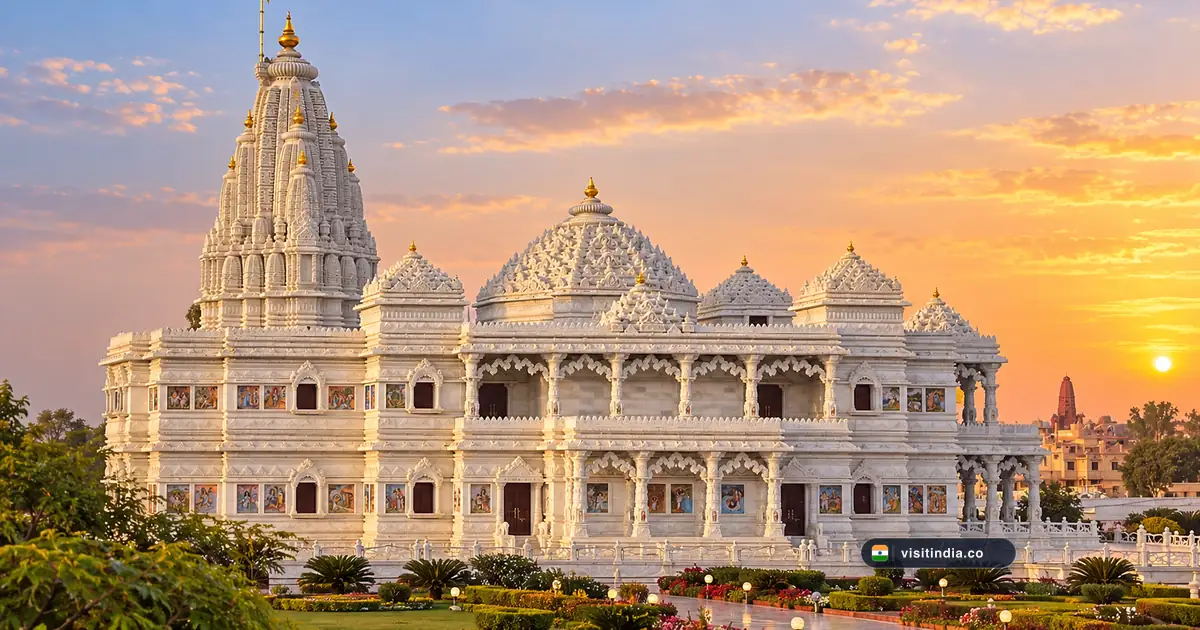
Constructed in classical North Indian Nagara style out of pink Bansi Paharpur sandstone from Rajasthan, the three-storey monument uses interlocking stone blocks and copper pins with zero structural steel or iron. Inside the sanctum sanctorum, Arun Yogiraj’s 51-inch black-stone sculpture of five-year-old Balak Ram stands on a gilded lotus pedestal fashioned in white Makrana marble.
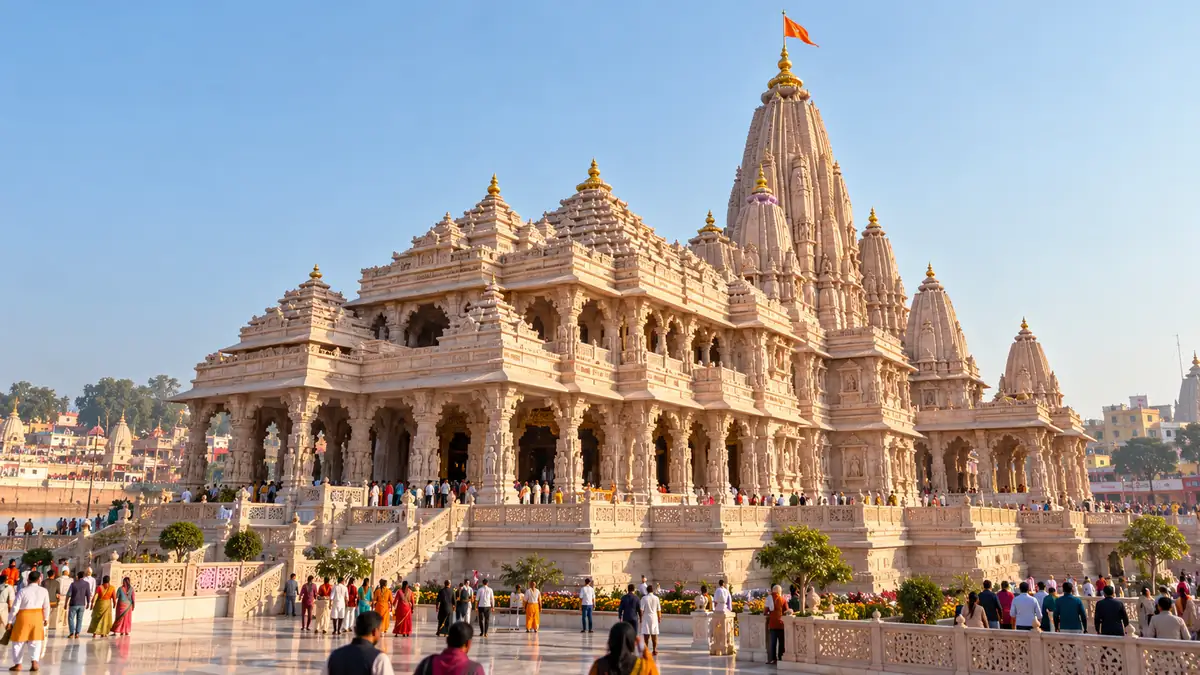
Five sequentially aligned pavilions lead toward the central spire: Nritya Mandap, Rang Mandap, Gudh Mandap, Kirtan Mandap, and Prarthana Mandap. Altogether, 392 hand-carved pillars and 44 teakwood doors frame narrative reliefs depicting episodes from the Ramayana alongside shrines inside the outer rectangular parkota wall dedicated to Surya, Bhagwati, Ganesha, and Shiva.
Structural Scale and Courtyard Layout
Rising 161 feet from the base plinth to the crowning golden kalash, the shrine sits inside an expansive sandstone complex spanning more than two and a half acres of built plinth across a 70-acre campus in eastern Uttar Pradesh. Dedicated shaded pathways and granite floor mats protect pilgrims’ feet during intense summer afternoons between April and June.
Security Rules, Cloakrooms, and Visitor Etiquette
Strict Central Industrial Security Force screening keeps queue movement fast, provided you deposit prohibited items before entering the security lane. Free automated locker counters at the Pilgrim Facilitation Centre operate efficiently and return tokens in a few minutes after darshan concludes.
- Banned Electronics: Leave mobile phones, cameras, smartwatches, earphones, power banks, and tripods in the free lockers before clearing gate scanning.
- Prohibited Personal Items: Leather belts, wallets containing leather strips, large backpacks, steel water bottles, and tobacco products cannot enter the inner perimeter.
- Footwear & Dress: Remove shoes and socks at the designated stands outside Ram Path; wear modest ethnic or knee-to-shoulder covering attire out of respect for temple decorum.
- Assistance & Trust Helpdesk: Senior citizens and wheelchair users can request free Trust wheelchairs and battery shuttle assistance right near the outer entry desk, or verify alerts on
05278-292000.
Photography Alternatives Inside Ayodhya
Because zero photography is permitted past the outer gatehouse, take wide exterior portraits from Ram Path or the Saryu promenade before entering. Devotees continuing on a multi-city temple itinerary frequently pair this visit with Kashi Vishwanath in Varanasi, where similarly tight locker protocols protect the inner Dham corridor.
How to Reach Ayodhya Ram Mandir by Air, Rail, and Road
Ayodhya connects effortlessly across northern India following sweeping highway expansions, double-track electrification, and modernized railway terminals. Pilgrims flying or riding express trains step out within 15 to 25 minutes of Ram Kot.
- By Air: Maharishi Valmiki International Airport (AYJ) stands 9 km southwest of the temple along NH-27, handling direct flights from Delhi, Mumbai, Bengaluru, Ahmedabad, and Kolkata; metered e-autos and cabs take 20 minutes to Ram Path.
- By Rail: Ayodhya Dham Junction (AY) lies just 1.8 km from the temple gate and welcomes Vande Bharat Express trains from Anand Vihar Delhi and Gorakhpur, alongside Ayodhya Cantt (AYC) 7 km west.
- By Road: Four-lane expressways link Lucknow (135 km, 2.5 hours), Prayagraj (165 km, 3.5 hours), and Varanasi (215 km, 4.5 hours), with municipal e-buses dropping travellers at Naya Ghat and Tedhi Bazaar parking zones.
Last-Mile E-Rickshaws on Ram Path
During peak weekend darshan windows, private four-wheelers stop at designated parking lots roughly 1.5 km from the complex, where fixed-fare municipal e-rickshaws and battery golf carts ferry passengers toward the Birla Dharamshala gate. Official district transport updates are posted on the Ayodhya district tourism page. Travellers heading south toward Varanasi can also time dawn rituals around the Assi Ghat Subah-e-Banaras ceremony.
Nearby Shrines and Eastern UP Pilgrimage Loop
Before or after darshan at Ram Kot, set aside half a day to walk Ayodhya’s historic shrines within a compact three-kilometre radius. Most visitors start early on the banks of the Saryu River before turning toward hilltop temples and ancient Jain and Buddhist sites.
Hanuman Garhi, perched atop 76 broad stone steps just 600 metres from Ram Mandir, remains an indispensable stop because local tradition holds that pilgrims seek Hanuman’s blessing before visiting Ram Lalla. Five minutes farther stands Kanak Bhawan, famed for its silver-framed sanctum, followed by Nageshwarnath Temple and sunset aarti at Ram Ki Paidi ghats along the Saryu.
Expanding Across the Purvanchal Circuit
Regional itinerary planners combine two nights in Ayodhya with riverfront ghats in Varanasi and Sangam in Prayagraj using the six-day Kashi, Ayodhya, and Prayagraj pilgrimage loop. Heritage highlights across the state are also catalogued on Incredible India’s Ayodhya portal.
Comparing Morning vs Evening Darshan Windows
Choosing the right entry window hinges on whether you prioritise fast queue turnover, mild stone courtyard floors, or evening temple illumination. Weekdays between Tuesday and Thursday consistently record half the crowd volume of Saturday and Sunday surges.
- 4:30 AM to 7:00 AM (Low Crowd, Pass Holders Only): Reserved strictly for Mangal and Shringar Aarti devotees on cool stone floors.
- 7:00 AM to 9:30 AM (Moderate Crowd, Comfortable Heat): Best morning slot for first-time general visitors seeking brisk, orderly queues.
- 10:30 AM to 12:00 PM (High Crowd, Warm Courtyards): Peak midday bus-group arrival right ahead of the Bhog recess.
- 1:30 PM to 4:30 PM (Moderate Crowd, Hot in Summer): Immediate reopening window ideal for winter afternoons.
- 6:30 PM to 8:30 PM (Moderate to High Crowd, Cool Air): Floodlit sandstone facades paired with evening bhajans and Sandhya hymns.
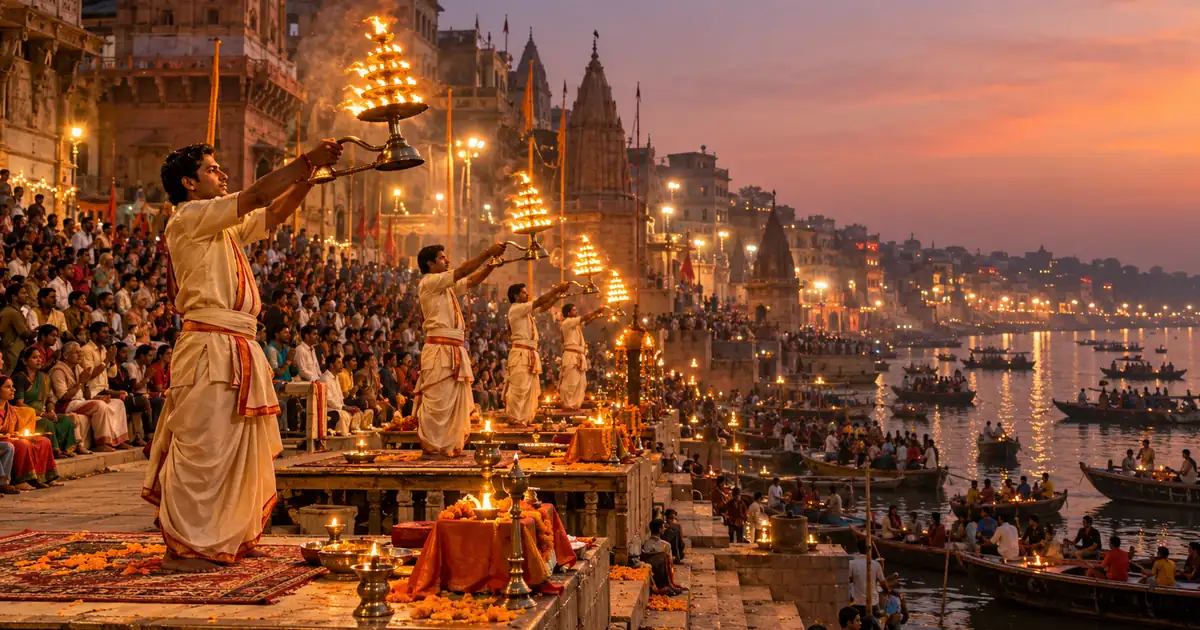
For effortless planning, aim for the 7:00 AM general reopening after Shringar Aarti finishes, leaving time to reach Hanuman Garhi by mid-morning. Travellers wrapping up Purvanchal temple circuits often cap their trip watching the Dashashwamedh Ghat Ganga Aarti along the Ganga in Varanasi.
Frequently Asked Questions About Ayodhya Ram Mandir
What is the fee for Ayodhya Ram Mandir Darshan and Aarti passes?
Every General Darshan, Sugam Darshan, Mangal Aarti, Shringar Aarti, and Shayan Aarti pass is 100% free of cost. Shri Ram Janmabhoomi Teerth Kshetra Trust does not charge any booking fee or authorize paid VIP agents.
What are the exact opening and closing hours of Ram Mandir?
General darshan runs from 7:00 AM to 12:00 PM and again from 1:30 PM to 8:30 PM daily. The sanctum remains closed to public queues between 12:00 PM and 1:30 PM for midday Bhog and ritual rest.
How can I book Sugam Darshan online before reaching Ayodhya?
Visit online.srjbtkshetra.org, verify an Indian mobile number via OTP, choose your preferred date and two-hour slot up to 90 days ahead, enter Aadhaar or passport details, and download the free QR pass.
Are mobile phones or cameras allowed inside the Ram Mandir complex?
No. Mobile phones, smartwatches, cameras, leather belts, wallets, and large bags are strictly banned inside security gates. Free Trust-operated locker counters outside Ram Path safeguard belongings until you exit.
What should I wear when visiting Shri Ram Janmabhoomi Mandir?
Modest clothing covering shoulders and knees is strongly recommended for all visitors. Traditional Indian wear such as kurtas, salwar suits, or sarees blends smoothly with temple etiquette and stone courtyard seating.