Dashashwamedh Ghat Varanasi: Ganga Aarti Time & Guide
Complete guide to Dashashwamedh Ghat in Varanasi. Ganga Aarti evening timings, boat ride prices, rituals, nearby temples, history, and visitor tips.
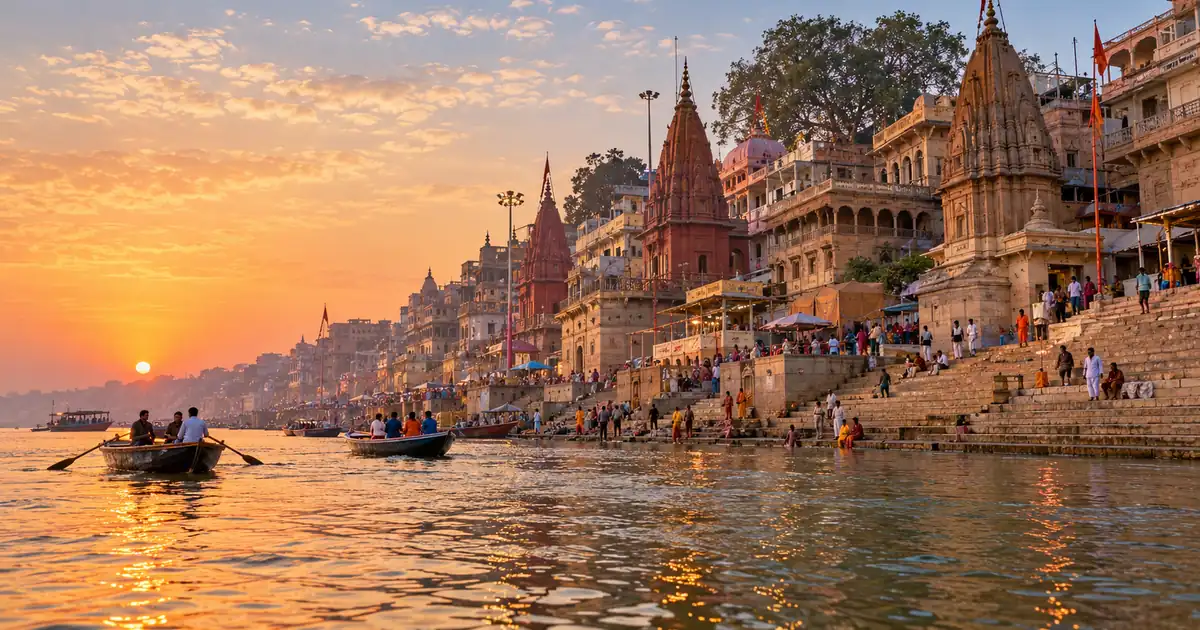
Dashashwamedh Ghat anchors the central riverfront of Varanasi along the sacred Ganges River, connecting the historic old city alleys with the open water. Recognized as the most prominent of Kashi’s eighty-four stone embankments, the ghat serves as the primary stage for daily river worship, ritual bathing, and holy gatherings.
Pilgrims and international travelers converge on the ghat each evening to witness the synchronized choreography of the Maha Aarti, an essential ritual detailed in our comprehensive guide to the ghats of Varanasi. Wide sandstone steps lead directly from the active Godowlia bazaar down to the river landing.
Ghat & Aarti Essentials
- Dashashwamedh Ghat is the central waterfront of Varanasi on the Ganges River, situated directly adjacent to the Kashi Vishwanath Corridor.
- The famous evening Maha Aarti ceremony occurs daily from 6:30 PM to 7:15 PM in winter and 7:00 PM to 7:45 PM in summer.
- Viewing the Aarti from the stone ghat steps is free of charge, while shared spectator boat seats cost between ₹150 and ₹300 per passenger.
- According to mythology, Lord Brahma performed the Dasa-Ashwamedha (ten-horse sacrifice) here for Lord Shiva, establishing its revered ritual status among the eighty-four ghats.
Dashashwamedh Ghat Aarti, Boating, and Ritual Cost Matrix
The following matrix outlines regular timings, spectator arrangements, and standard costs for key riverfront activities at Dashashwamedh Ghat. To understand broader spiritual customs, explore our review of the daily rituals of Ganga Aarti in Varanasi.
| Activity / Experience | Operating Window | Standard Cost per Person | Seating & Location | Operational Advice |
|---|---|---|---|---|
| Evening Ganga Aarti | 6:30 PM (Winter) / 7:00 PM (Summer) | Free on steps; ₹150 - ₹300 on boats | Stone steps or anchored wooden boats | Arrive 45 minutes early for front row |
| Morning Sunrise Row Boat | 5:30 AM - 7:30 AM | ₹150 - ₹250 (Shared) / ₹1,000 (Private) | Riverfront boat landing | Covers Assi to Manikarnika circuit |
| Motorized Bajra Charter | 5:00 AM - 8:30 PM | ₹2,500 - ₹4,500 per boat | Floating boat jetty | Accommodates 15 to 30 passengers |
| Holy Snan (River Dip) | 4:30 AM - 10:00 AM | Free | Central stone bathing ghat | Change rooms available near kiosks |
| Ancestral Shradh Pooja | 7:00 AM - 12:00 PM | ₹500 - ₹2,100 (Pandit dakshina) | Upper ghat platforms | Bring family gotra details |
| Dev Deepawali Festival | Kartik Purnima (Nov) | Free (Boats ₹1,500 - ₹3,000) | Full ghat expanse | Book boat reservations months ahead |
Evening Ganga Aarti Timings, Ritual Sequence, and Viewing Locations
The evening Ganga Aarti commences at 6:30 PM during the winter months from October to March, and shifts to 7:00 PM during the hot summer season from April to September. The ceremony takes place every single evening throughout the year without interruption, lasting approximately forty-five minutes.
Conducted by seven saffron-robed priests from the Ganga Seva Nidhi, the worship involves rhythmic conch blowing, incense censers, and multi-tiered brass lamps weighing over four kilograms each. Priests face the holy river from elevated wooden platforms adorned with flower garlands, bells, and brass ritual trays.
Official administrative advisories and riverfront safety rules are cataloged on the Varanasi District Administration Dashashwamedh Ghat Portal. Spectators who wish to secure unobstructed views from the stone steps should arrive by 5:45 PM before crowd density peaks.
Morning Sunrise Boat Rides, Fares, and River Circuits
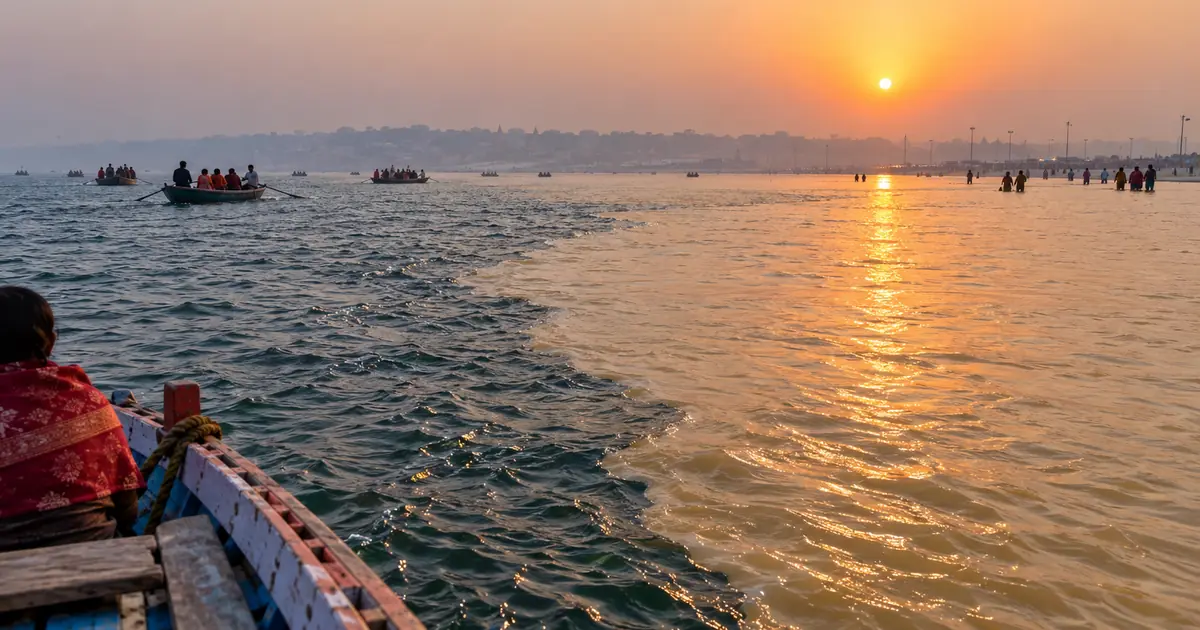
Taking a traditional wooden rowing boat at sunrise provides an unmatched vantage point for viewing the monumental stone architecture and morning pilgrim baths across the river arc. While travelers enjoy morning tranquility at Assi Ghat, Dashashwamedh provides the central launching point for comprehensive river cruises.
Standard ninety-minute boat circuits depart upstream past Harishchandra Ghat before gliding downstream past Manikarnika Ghat to Panchganga. Shared hand-rowed boats charge regulated tariffs between ₹150 and ₹250 per seat, while private rowing boats cost approximately ₹1,000 for couples and small families.
Motorized wooden vessels known as bajras charge between ₹2,500 and ₹4,000 for large groups seeking private charters. Negotiate fares clearly before boarding, verify that life jackets are onboard, and confirm whether the price includes return drop-off at your starting landing.
Pro Tip
Book an unpowered wooden rowing boat rather than a diesel motor vessel for the evening Aarti. Hand-rowed boats can anchor close to the central platform without engine vibration or exhaust fumes obstructing the prayer chants.
Mythological Origins: Lord Brahma’s Ten-Horse Sacrifice
Hindu scriptural lore links the foundation of Dashashwamedh Ghat to Lord Brahma, the cosmic creator deity. According to ancient Puranic accounts, Lord Brahma performed the grand Dasa-Ashwamedha sacrifice (the ritual offering of ten sacred horses) here to celebrate Lord Shiva’s triumphal return to Kashi from exile.
Another legend recounts that Brahma created this bathing embankment specifically to welcome King Divodasa back to the city under divine reconciliation. Exploring these sacred legends helps travelers contextualize the numerous heritage sightseeing places in Varanasi.
Because the original horse sacrifice sanctified every drop of water along this shoreline, bathing here is believed to grant the spiritual merit of performing ten Vedic sacrifices. Pilgrims believe the riverfront cleanses negative karma and accelerates the path toward spiritual liberation.
Historic Reconstruction by Peshwa Balaji Baji Rao and Ahilyabai Holkar
The current stone architecture of Dashashwamedh Ghat represents major 18th-century reconstruction initiatives undertaken by prominent Maratha rulers. Following centuries of river erosion and regional warfare, Peshwa Balaji Baji Rao commissioned the massive stone steps and defensive revetments in 1748.
In 1774, Queen Ahilyabai Holkar of Indore expanded the riverfront, financing the construction of adjoining residential hospices, stone platforms, and retaining walls. Heritage restoration programs and cultural tourism circuits are overseen by the Uttar Pradesh Tourism Official Varanasi Guide.
Today, the ghat features robust stone stairways that withstand heavy monsoon currents while offering broad terraces for vendors, pilgrims, and evening musicians. The historic Maratha styling remains evident in the high fortress walls that support adjoining palaces and temple spires.
Sacred Landmarks Nearby: Kashi Vishwanath and Manikarnika
Dashashwamedh Ghat functions as the primary water gate connecting directly to the Kashi Vishwanath Temple corridor. The expanded heritage pathway allows pilgrims to take a holy dip in the Ganges and walk directly into the Golden Temple complex within five minutes.
Walking north along the contiguous stone embankments brings visitors to the sacred burning ghat at Manikarnika within ten minutes. To the south lies the peaceful Darbhanga Ghat, crowned by an imposing 20th-century Maratha palace constructed from red Chunar sandstone.
Vishwanath Gali, the historic covered bazaar leading from the ghat up toward Godowlia Crossing, features hundreds of brass shops, silk emporiums, and sweet stalls. Stop here to sample traditional Banarasi lassi served in earthen kulhads alongside iconic culinary stops featured in our comprehensive Varanasi Street Food tasting route.
How to Reach Dashashwamedh Ghat from Varanasi Cantt Station
Dashashwamedh Ghat is located 4.5 kilometers southeast of Varanasi Junction (Cantt) railway station and 26 kilometers south of Lal Bahadur Shastri International Airport in Babatpur. Travel advisories and passenger transit corridors are published on the Incredible India Official Varanasi Pilgrimage Directory.
Auto-rickshaws and battery-operated e-rickshaws provide constant transit between Varanasi Cantt railway station and Godowlia Crossing, charging ₹30 for shared rides and ₹150 for private hires. Municipal traffic regulations prohibit motorized four-wheelers from entering the Godowlia to Dashashwamedh corridor after 9:00 AM.
From Godowlia Crossing, travelers complete the final 500 meters down to the river landing on foot, from where boatmen also ferry pilgrims northward toward the cremation rituals of Manikarnika Ghat. Pre-paid airport taxis take forty to sixty minutes to reach Godowlia via the direct national highway bypass, with standard fares ranging from ₹900 to ₹1,400.
Frequently Asked Questions About Dashashwamedh Ghat
What time does the evening Ganga Aarti start at Dashashwamedh Ghat?
The evening Ganga Aarti begins at 6:30 PM during the winter months from October to March, and at 7:00 PM during the summer months from April to September. The entire choreographed ritual lasts approximately forty-five minutes and runs every day of the year.
Is entry to Dashashwamedh Ghat free for tourists?
Access to the ghat and open seating on the riverside stone steps is completely free of charge for all visitors. Travelers only pay if hiring private boats or booking reserved raised chairs arranged by private riverside establishments.
How much does a boat ride cost at Dashashwamedh Ghat?
Shared wooden rowing boats charge between ₹150 and ₹250 per passenger for a ninety-minute sunrise or evening aarti cruise. Private hand-rowed boats typically cost between ₹1,000 and ₹1,500, while motorized boats charge ₹2,500 to ₹4,000 depending on group size.
How far is Dashashwamedh Ghat from the Kashi Vishwanath Temple?
Dashashwamedh Ghat connects directly to the southern gateway of the Kashi Vishwanath Temple corridor via a short five-minute walk through paved pilgrim alleys. Visitors can enter the temple directly from the riverfront without navigating heavy city traffic.