Keoladeo Bharatpur & Chambal Gharial Safari Guide: Rajasthan
Complete guide to Bharatpur bird sanctuary timings, cycle rickshaw fares, and National Chambal gharial boat safaris. Plan day trips from Agra and Jaipur.
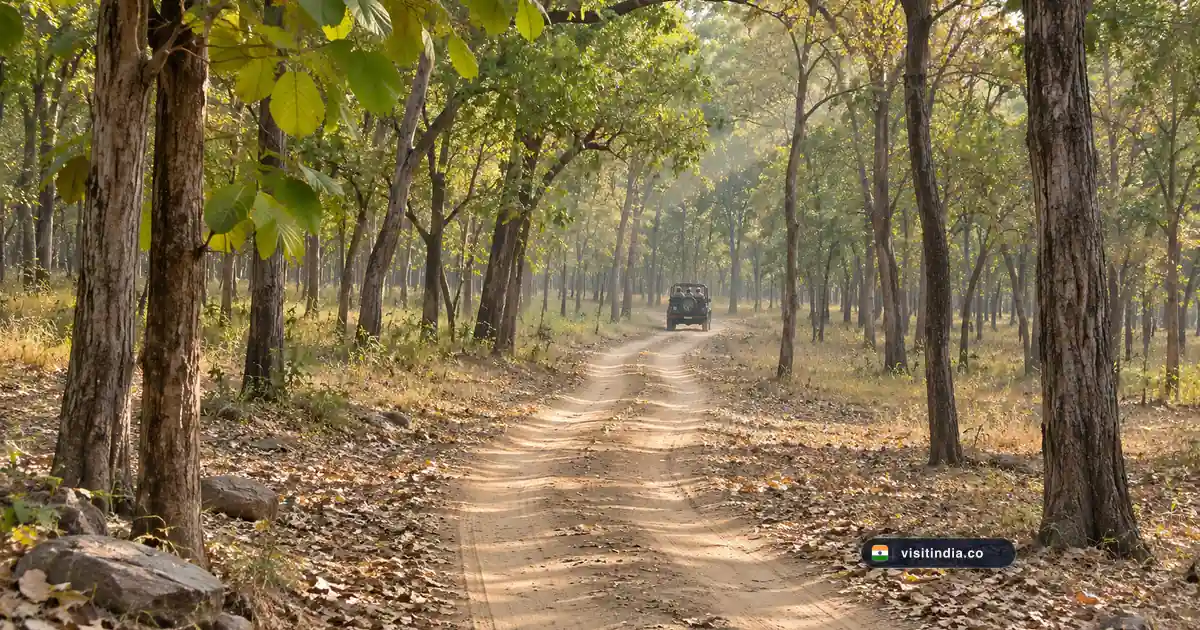
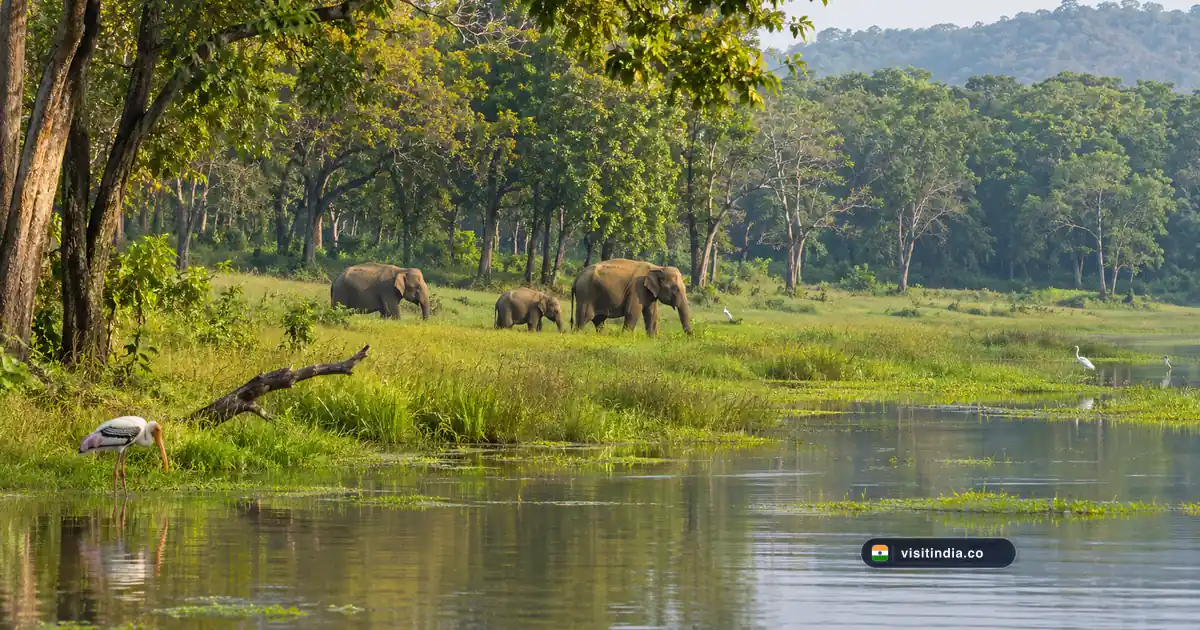
Along the eastern borderlands of Rajasthan where agricultural plains meet protected wetlands and sandstone ravines, two extraordinary wildlife habitats preserve rare aquatic ecosystems. Checking current bharatpur bird sanctuary timings rickshaw fare rules allows nature enthusiasts to smoothly explore the celebrated UNESCO wetlands of Keoladeo Ghana and pair the visit with a wild river safari along the National Chambal Sanctuary.
Keoladeo National Park is globally renowned for its eco-friendly transport model, where motorized private vehicles are strictly excluded in favor of silent cycle rickshaws pulled by certified local bird guides. Just ninety kilometers south, the clean currents of the Chambal River offer an exhilarating contrast, where visitors board small motorized boats to observe critically endangered gharials, freshwater dolphins, and rare Indian skimmers.
Bharatpur & Chambal Safari Essentials
- Primary Geographic Bases: Keoladeo Ghana National Park (Bharatpur) and National Chambal Sanctuary (Dholpur), Rajasthan.
- Operational Hours: Keoladeo opens daily from sunrise to sunset (06:30 AM to 05:00 PM in winter; 06:00 AM to 06:00 PM in summer); Chambal boats operate 08:00 AM to 05:00 PM.
- Eco-Transport Fares: Certified cycle rickshaws cost ₹600 to ₹800 for a 3-hour guided tour; bicycle rentals cost ₹60 to ₹100 per day.
- Chambal Boat Costs: Motorboat safaris at Rajghat or Pali Ghat cost approximately ₹1,500 to ₹3,000 per boat for a 1 to 2-hour river trip.
- Regional Connectivity: Situated 55 kilometers west of Agra and easily accessible via Bharatpur Junction on the Delhi-Mumbai rail mainline.
Understanding Keoladeo Ghana and the Chambal River Ecosystem
Keoladeo National Park in Bharatpur is a 29-square-kilometer man-made wetland recognized as a UNESCO World Heritage site, while the National Chambal Sanctuary in Dholpur protects a 400-kilometer clean river corridor home to rare gharials and Gangetic dolphins.
These two contrasting sanctuaries illustrate different facets of aquatic conservation across eastern Rajasthan. While Keoladeo represents an artificially engineered shallow freshwater marsh designed to catch monsoon runoff, the Chambal River represents an untamed, free-flowing riverine wilderness that cuts deep ravines through rocky plateaus.
Keoladeo: The 1850 Maharaja Suraj Mal Wetland Creation
Constructed in the 1850s by Maharaja Suraj Mal using the Ajan Bund dam to capture monsoon runoff from the Gambhir and Banganga rivers, Keoladeo evolved into Asia’s primary bird congregation hub. Originally developed as a duck-shooting preserve for royal rulers and British viceroys, the marshland was declared a bird sanctuary in 1956 and earned UNESCO World Heritage status in 1985.
The landscape features shallow water bodies divided into dykes by earthen mounds called bunds, surrounded by scrub woodland, acacia groves, and grassy meadows. During post-monsoon months, these engineered dykes hold regulated water levels, creating optimal foraging depths for long-legged wading birds and floating aquatic fowl.
National Chambal Sanctuary: Deep Ravines and River Ecology
Established in 1979 across the borders of Rajasthan, Madhya Pradesh, and Uttar Pradesh, the Chambal River remains free of industrial dams, preserving crystal waters and steep sand ravines. Legendary folklore surrounding the Chambal badlands kept modern industrial development away from the river valley for decades.
This historical isolation inadvertently preserved an unspoiled freshwater ecosystem where crystal-clear waters support thriving fish populations. The river’s sandy banks and mud spits serve as essential basking, nesting, and courtship territories for ancient reptiles that have vanished from other north Indian river basins.
Bharatpur Bird Sanctuary Timings Rickshaw Fare: Transport Architecture
Keoladeo opens daily from sunrise to sunset (06:30 AM to 05:00 PM in winter; 06:00 AM to 06:00 PM in summer). Private motor vehicles are banned; certified cycle rickshaws with trained bird guides cost approximately ₹600 to ₹800 for a three-hour tour.
The prohibition of private motorcars ensures that the sanctuary remains tranquil, free of exhaust fumes, and completely safe for walking and cycling, unlike the open motor vehicle drives found across southern Rajasthan in our Jawai leopard safari guide. The park gate administration enforces transparent, fixed government rates for all internal transport options.
| Transport Mode | Hourly / Daily Tariff | Seating Capacity | Key Advantages |
|---|---|---|---|
| Cycle Rickshaw (with Guide) | ₹600 to ₹800 (for 3 hrs) / ₹250 per addl hr | 2 Adults (+ 1 small child) | Puller is a certified bird guide with spotting scope & binoculars |
| Rental Bicycle | ₹60 to ₹100 per day | 1 Rider | Complete independent mobility along paved causeway paths |
| Authorized E-Rickshaw | ₹1,000 to ₹1,200 (for 3 hrs) | Up to 4 Adults | Quiet battery-powered option for senior citizens and families |
| Walking on Foot | Free (Included in entry pass) | Self-guided | Slow sensory exploration of narrow side bunds and earthen trails |
Gate Opening Hours, Morning Sunrise Advantage, and Entry Passes
Arriving at the entrance gate at dawn allows visitors to catch morning wetland awakening and soft light as thousands of painted storks and egrets take flight. Entry passes are purchased at the ticketing counter outside the main gate, costing ₹75 to ₹175 for Indian citizens and ₹500 to ₹1,056 for foreign nationals.
During winter, the gates open at 06:30 AM when thick morning mist still blankets the water bodies. As the sun burns through the fog around 07:15 AM, the marsh comes alive with bird calls, fluttering wings, and active hunting chases in the shallows.
Authorized Cycle Rickshaws with Trained Naturalist Pullers
Rickshaw pullers undergo rigorous ornithology training by the forest department and carry spotting scopes, field guides, and binoculars to pinpoint elusive owls and warblers. These rickshaw pullers are legendary among global birdwatchers; each driver wears a yellow departmental uniform with a registered brass badge.
Many pullers can identify hundreds of avian species by their calls alone, pointing out well-camouflaged nightjars, scops owls roosting in tree cavities, and rare winter migrants that general visitors would overlook. Their smooth, silent progress along the paved path allows passengers to approach within yards of feeding storks without causing alarm.
Bicycle Rentals, Battery E-Rickshaws, and Walking Trails
Travelers can rent single-speed bicycles for ₹60 to ₹100 per day at the entry gate, hire approved battery e-rickshaws, or explore paved wetland causeways entirely on foot. Renting a bicycle offers complete freedom to peddle deep into the quiet southern blocks around Sapan Mori and Koladahar.
Walking is also exceptionally popular, as visitors can branch off the paved central road onto raised earthen dykes where vehicles cannot follow. Walking slowly along these narrow dykes reveals resting Indian rock pythons, monitor lizards, and shy waterbirds feeding among water lilies.
Avian Wealth of Keoladeo: Migratory Flyways and Resident Heronries
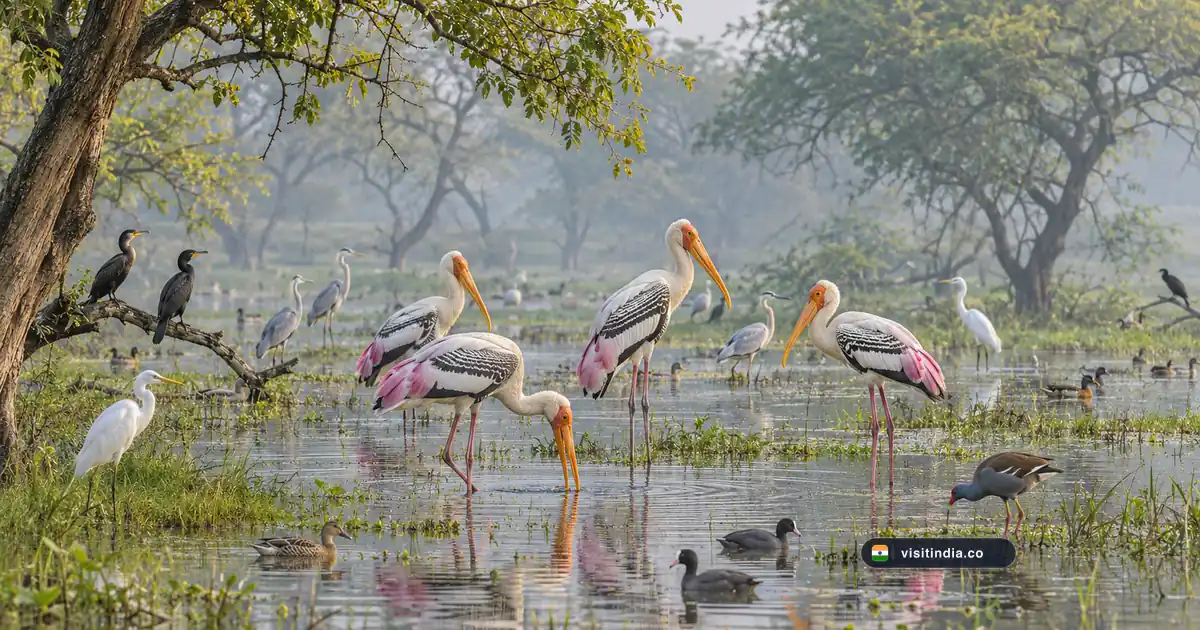
Keoladeo hosts over 375 avian species, including resident breeding colonies of painted storks and sarus crane pairs, alongside winter migrants such as bar-headed geese, northern pintails, pelicans, and raptors flying along the Central Asian Flyway.
The sanctuary functions as a crucial staging and wintering ground for trans-Himalayan birds fleeing the frozen conditions of Siberia, Mongolia, and Tibet, making it an essential detour on a classic key milestones along the Golden Triangle India Itinerary. The rich biomass of aquatic weeds, mollusks, insects, and fish provides sustenance for millions of visiting waterfowl.
Pro Tip
Field Equipment Strategy: For bird photography at Keoladeo, an 8x42 binocular and a telephoto zoom lens (100-400mm or 150-600mm) are ideal. Because you can stop your rickshaw right beside water pools, you will frequently capture close-up behavioral shots without requiring extreme super-telephoto tripod setups.
Sarus Crane Pairs and Painted Stork Breeding Trees
Towering acacia trees submerged in central marshes host thousands of nesting painted stork pairs, while five-foot-tall sarus cranes perform elaborate courtship dances across flooded pastures. The sarus crane is the world’s tallest flying bird, recognized for its slate-grey plumage, scarlet red head, and lifelong monogamous bonding.
Between August and November, painted storks, Eurasian spoonbills, Asian openbills, and grey herons build crowded colonial nests atop submerged babool trees. Watching thousands of parent storks return at dusk with crop full of fish to feed screeching chicks is a defining spectacle of the park.
Winter Migratory Influx: Waterfowl, Pelicans, and Eagles
From November to February, northern wetlands teem with thousands of gadwalls, garganeys, common teals, Dalmatian pelicans, and hunting greater spotted eagles. Large flocks of bar-headed geese, which fly over the highest peaks of the Himalayas at altitudes exceeding 25,000 feet, graze peacefully on submerged marsh grasses.
Raptor enthusiasts can observe imperial eagles, steppe eagles, marsh harriers, and peregrine falcons circling overhead, targeting weak waterfowl or scavenging along mudbanks. The reed beds also hide rare passerines, including Siberian rubythroats, bluethroats, and numerous species of bush warblers.
National Chambal Sanctuary Gharial Boat Safari: Dholpur Ghats
Chambal River boat safaris depart from Rajghat near Dholpur and Pali Ghat, using motorized river boats that cost ₹1,500 to ₹3,000 per vessel for a one to two-hour cruise. Safaris offer close views of wild gharials, muggers, and Gangetic river dolphins.
Located ninety kilometers south of Bharatpur, the National Chambal Sanctuary provides an exceptional ecological companion to Keoladeo. The river safari brings travelers onto a wide, fast-flowing river bordered by sandy islands and towering mud cliffs.
| Parameter | Keoladeo Ghana (Bharatpur) | National Chambal Sanctuary (Dholpur) |
|---|---|---|
| Habitat Type | Man-made shallow freshwater wetland & scrub | Clean, free-flowing perennial river & sandy ravines |
| Primary Exploration | Silent cycle rickshaw, bicycle, or walking | Motorized river boat safari |
| Flagship Wildlife | Sarus cranes, painted storks, migratory ducks | Fish-eating gharials, muggers, Gangetic dolphins |
| Safari Duration | Half-day to full-day (3 to 6 hours) | 1 to 2-hour river cruise |
| Standard Cost | ₹600 to ₹800 per rickshaw (2-3 hrs) | ₹1,500 to ₹3,000 per boat (private hire) |
The Critically Endangered Gharial and Mudbank Basking
Characterized by elongated narrow snouts and a bulbous nasal ghara in adult males, wild gharials haul themselves onto sandy Chambal riverbanks during sunny midday hours. The gharial (Gavialis gangeticus) is uniquely adapted for catching fish with its rows of interlocking needle-sharp teeth, presenting zero danger to humans.
Adult male gharials grow up to eighteen feet in length, displaying the cartilaginous ghara atop their snout that modifies vocal sounds into deep resonance hums. Watching these prehistoric reptiles slide effortlessly into clear green river water from sandy sunning spots is an unforgettable sight.
Gangetic River Dolphins and Rare Indian Skimmers
The unpolluted Chambal River is one of the final strongholds of the freshwater Gangetic river dolphin, alongside black-and-white Indian skimmers that skim the river surface with scissor-like bills. The Gangetic dolphin is virtually blind, relying on sophisticated echolocation clicks to navigate and hunt fish in river channels.
Indian skimmers nest in colonies on exposed mid-river sandbanks during low water season. These unique birds feature an elongated lower bill that cuts through the water surface as they fly low, snapping shut the instant it touches a swimming minnow.
Boat Safari Booking Channels and Dholpur Boarding Points
Boat safaris can be booked through the local forest department checkpost at Rajghat bridge near Dholpur or organized through heritage properties like Raj Niwas Palace in Dholpur. The forest checkpost provides lifejackets and assigns an authorized boatman for each departure.
Safaris are scheduled during daytime between 08:00 AM and 05:00 PM, with mid-morning hours (09:00 AM to 11:30 AM) delivering the best reptile basking sightings as temperatures climb. Booking through official channels guarantees compliance with wildlife speed limits and buffer distances.
Step-by-Step Walking and Rickshaw Route Through Keoladeo
The primary visitor route follows the paved central metalled road from the Shanti Kutir barrier past the Keoladeo Shiva Temple to the Python Point marshlands, spanning approximately eleven kilometers round-trip with elevated watchtowers.
Understanding the internal geography of the park ensures travelers distribute their time efficiently between central heronries and remote birding bunds before continuing westward to the royal monuments of Jaipur.
Important
Wetland Code of Conduct: Remain on designated paved causeways and marked dirt bunds. Never wade into water bodies, never use artificial audio playback calls to flush birds, and never throw food scraps to feral boars or spotted deer along the path.
Main Central Road: Shanti Kutir to Keoladeo Temple
This paved causeway is flanked by shallow marshes on both sides, providing constant close-up sightings of feeding spoonbills, black-necked storks, and spotted deer. Starting from the Shanti Kutir checkpost, the road passes through dry scrub woodland before reaching the expansive waters of the central wetland.
At the four-kilometer mark stands an ancient temple dedicated to Lord Shiva, known as Keoladeo, which gives the sanctuary its historic name. A canteen and restroom facility near the temple offers a convenient rest stop where visitors can enjoy tea while watching parakeets and barbets in surrounding neem trees.
Sapan Mori, Python Point, and Elevated Watchtowers
Sapan Mori offers peaceful side bund trails, while Python Point features underground burrows where giant Indian rock pythons emerge to bask on sunny winter afternoons. These raised wooden watchtowers provide panoramic views across miles of shimmering water and reeds.
Between December and February, park guides regularly spot ten to twelve-foot rock pythons warming themselves in dry grass clearings near Sapan Mori. Continuing south toward Koladahar leads into quiet grasslands favored by blackbucks, nilgai antelopes, and grazing wild boars.
Seasonal Planning: Winter Migratory Windows and Weather
The best time to visit both Bharatpur and Chambal is from October through March. Winter brings over two hundred species of migratory birds to Keoladeo and creates ideal basking weather for Chambal’s cold-blooded gharials and freshwater turtles.
Planning your trip according to seasonal migration dates ensures you experience peak avian concentrations and pleasant weather, which pairs easily with exploring the Mughal riverside monuments of Agra Fort and Mehtab Bagh.
| Travel Window | Park Conditions | Avian & Reptilian Activity | Recommended Daily Timing |
|---|---|---|---|
| Oct to Nov | Post-monsoon filled marshes, lush greenery | Resident breeding heronries, early duck arrivals | 06:30 AM to 11:00 AM & 03:00 PM to 05:00 PM |
| Dec to Feb (Peak) | Cool sunny days (18°C–25°C), morning fog | Peak migratory waterfowl, sarus dancing, gharials basking | 07:00 AM to 04:30 PM (Midday ideal for reptiles) |
| March to April | Warming days (28°C–35°C), receding waters | Migrants departing, turtle nesting, skimmer activity | 06:00 AM to 09:30 AM & 04:00 PM to 06:00 PM |
| May to June | Hot summer (38°C–44°C), dry marsh beds | Resident desert birds, low water, intense heat | Early morning 06:00 AM to 08:30 AM only |
Transit Connectivity, Route Planning, and Golden Triangle Circuits
Bharatpur is located 55 kilometers west of Agra on NH-21 and 185 kilometers east of Jaipur, with direct express trains connecting Bharatpur Junction. Dholpur lies 90 kilometers south of Bharatpur along NH-123 or 55 kilometers south of Agra along NH-44.
Its location along the Golden Triangle highway makes it easy to integrate both wildlife sanctuaries into a broader cultural holiday across northern India.
Road and Rail Routes from Delhi, Agra, and Jaipur
Reach Bharatpur in three hours from Delhi via the Yamuna Expressway or in under an hour from Agra via NH-21, with frequent superfast trains stopping at Bharatpur Junction. The railway station is connected by daily Vande Bharat, Shatabdi, and Rajdhani express trains running on the Delhi-Mumbai trunk line.
From Jaipur, private taxis or express buses take approximately three and a half hours via National Highway 21, passing through Dausa and Mahwa. Roads are well-paved four-lane expressways with frequent roadside dining amenities.
Pairing with Fatehpur Sikri and Golden Triangle Heritage
Bharatpur sits just 22 kilometers west of the red sandstone Mughal capital of Fatehpur Sikri, allowing travelers to combine world heritage architecture with wetland birding in a single day. A popular two-day itinerary involves exploring the Taj Mahal and Agra Fort on Day 1, touring Buland Darwaza at Fatehpur Sikri early on Day 2, and spending the afternoon birdwatching from a cycle rickshaw in Keoladeo.
On Day 3, travelers drive south to Dholpur for a morning boat safari on the Chambal River before returning to Delhi or continuing onward to Jaipur. Travelers can verify regional road and heritage tourism routes on the Incredible India Bharatpur Guide, the Incredible India Dholpur Guide, and the Incredible India Rajasthan Portal.
Frequently Asked Questions About Bharatpur and Chambal Safari
What are the entry timings and cycle rickshaw fares at Bharatpur Bird Sanctuary?
Keoladeo opens daily from sunrise to sunset, operating from 06:30 AM to 05:00 PM in winter and 06:00 AM to 06:00 PM in summer. Authorized cycle rickshaws with trained naturalist guides cost approximately ₹600 to ₹800 for a standard three-hour tour (roughly ₹150 to ₹250 for each additional hour).
Can private cars or taxis drive inside Keoladeo National Park?
No, private motorized automobiles are strictly prohibited inside the sanctuary beyond the main entry barrier to prevent noise pollution and exhaust emissions. Visitors explore the park using authorized cycle rickshaws, rental bicycles, approved battery e-rickshaws, or by walking on foot.
How do I book a boat safari in the National Chambal Sanctuary near Dholpur?
Boat safaris can be arranged on arrival at the forest department checkpost near Rajghat bridge in Dholpur or booked in advance through local heritage properties like Raj Niwas Palace. Private motorized boat hires typically cost between ₹1,500 and ₹3,000 per boat for a one to two-hour river cruise.
What is the best season to visit Bharatpur and Chambal together?
The optimal travel window runs from November through February when thousands of migratory birds congregate in Keoladeo and pleasant daytime weather encourages wild gharials to bask on sunny Chambal sandbanks. December and January offer the highest variety of avian migrants.
How far is National Chambal Sanctuary from Bharatpur and Agra?
The National Chambal Sanctuary boarding point near Dholpur is situated approximately 90 kilometers south of Bharatpur (a two-hour drive via NH-123) and 55 kilometers south of Agra (a one-hour drive via NH-44). Its proximity allows easy day-trip excursions from either heritage city.
What rare wildlife can you see in the Chambal River besides gharials?
Beyond critically endangered gharials, the Chambal River supports marsh mugger crocodiles, freshwater Gangetic river dolphins, eight species of freshwater turtles, and rare bird species such as Indian skimmers, black-bellied terns, and sarus cranes.