Kabini Safari Booking & Black Panther Zone Guide: Nagarhole
Plan your Kabini safari booking across Zone A and Zone B. Compare Forest Department canters and Jungle Lodges jeeps to track the famous black panther.
The southern banks of the Kabini River cradle one of the richest wildlife habitats in the Western Ghats, where dense teak canopies meet sprawling open backwaters. Organizing a successful kabini safari booking black panther zone expedition requires understanding the nuanced zoning regulations and vehicle allocations enforced by the Karnataka Forest Department across Nagarahole Tiger Reserve.
Unlike standard national park loops, Kabini pairs thrilling big-cat tracking with unique riverine ecology. Whether you aim to spot Saya, the internationally celebrated melanistic leopard, or witness massive elephant congregations along the receding waterline, securing the right safari gate and vehicle permit determines your overall wildlife encounter.
Kabini Safari & Wildlife Essentials
- Core Geographic Base: Kakanakote Safari Gate (Dammankatte), southern sector of Nagarahole Tiger Reserve, Karnataka.
- Operational Safari Shifts: Morning drive from 06:30 AM to 09:30 AM; afternoon drive from 03:00 PM to 06:00 PM daily.
- Official Booking Engine: Advance vehicle slots via Karnataka Forest Department and overnight safari packages through Jungle Lodges & Resorts.
- Zone Segregation Rules: Canters access interconnecting routes across zones; open 4x4 Gypsies are randomly assigned to either Zone A or Zone B.
- Mandatory Gate Protocols: Physical government-issued photo ID required; personal smartphones strictly prohibited inside core safari vehicles.
Understanding Kabini and Nagarahole Tiger Reserve Geography
Kabini represents the southern tourism sector of Nagarahole Tiger Reserve, situated along the Kabini River reservoir in Karnataka’s Mysuru and Kodagu districts. It forms a critical ecological corridor within the Nilgiri Biosphere Reserve connecting Bandipur, Wayanad, and Mudumalai national parks.
Covering over 843 square kilometers, Nagarahole encompasses a diverse ecological spectrum transitioning from moist deciduous interior woodlands to dry deciduous scrublands and expansive wetlands. The creation of the Kabini Dam across the Beechanahalli tributary in 1974 permanently altered the landscape, creating a perennially fertile river basin that acts as a vital oasis during parched pre-monsoon months across southern Karnataka.
The Nilgiri Biosphere Corridor and River Ecology
The Kabini sector acts as a biological bottleneck where animals move freely across state boundaries and contiguous forest divisions. Ancient migration trails link these woodlands directly with the protected sanctuaries of southern India.
Towering rosewood, mathi, silver oak, and teak trees dominate the interior ridgelines, creating thick multi-tiered canopies that filter sunlight into soft dappled shafts. As interior natural springs run dry by late February, herbivore herds converge onto the moist grasses exposed along the receding riverbed, pulling predators into predictable daily hunting circuits.
Why Kabini Stands Out Among South Indian Safari Circuits
Predator density in Kabini ranks among the highest across South Asia, boasting thriving populations of Bengal tigers, Indian leopards, and Asiatic wild dogs known as dholes. The high biomass of spotted deer and sambar stags ensures abundant prey availability year-round.
Beyond the regular presence of apex carnivores, Kabini earned global wildlife acclaim due to the documented residency of melanistic leopards. These rare black panthers carry an agouti gene mutation that produces excess dark pigment while retaining faint underlying rosette patterns visible in direct sunlight.
Kabini Safari Booking Black Panther Zone Architecture: Zone A vs Zone B
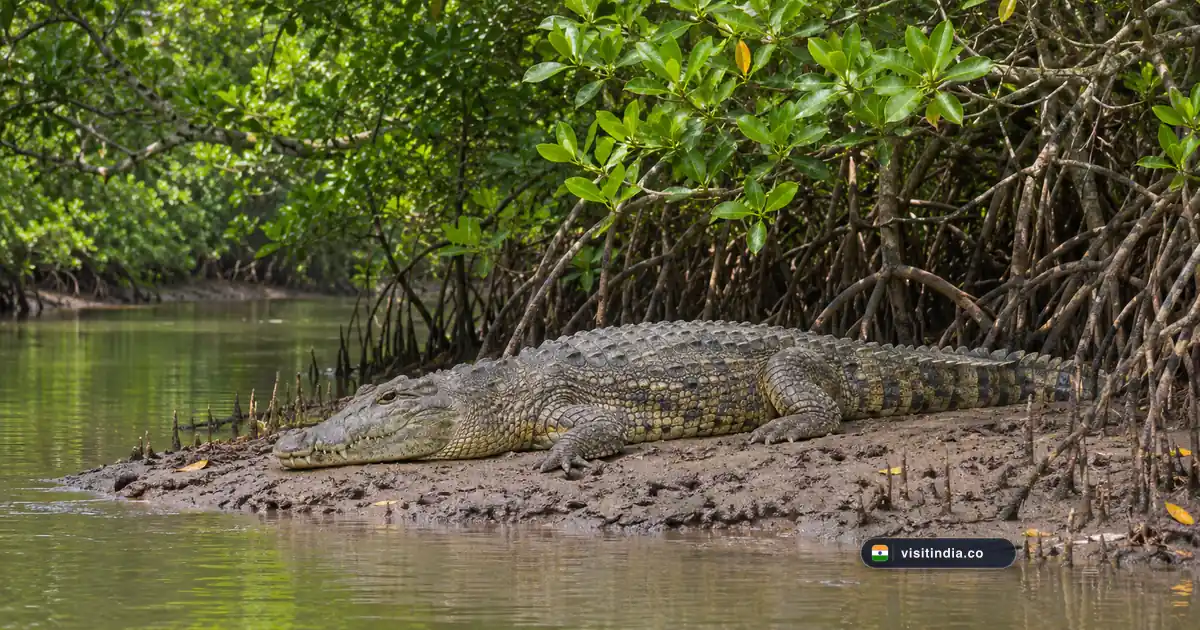
Kabini divides its safari terrain into Zone A (dense interior forest) and Zone B (reservoir water’s edge). Melanistic leopards primarily frequent the dense canopies and rocky undergrowth of Zone A, whereas Zone B offers open vistas for massive elephant herds and marsh crocodiles.
The zoning system was introduced by wildlife administrators to prevent vehicle bunching, minimize environmental pressure on forest trails, and distribute tourist traffic equitably across distinct eco-types. Knowing how each zone behaves across different seasons allows travelers to set realistic tracking expectations.
| Parameter | Zone A (Interior Forest) | Zone B (Riverine Backwaters) |
|---|---|---|
| Dominant Landscape | Dense teak forest, bamboo thickets, rocky outcrops | Open shoreline meadows, marsh banks, deadwood stumps |
| Flagship Predators | Black panther (Saya), dominant leopards, Bengal tigers | Bengal tigers, marsh crocodiles, smooth-coated otters |
| Herbivore Sightings | Chital, sambar deer, barking deer, Indian gaur | Asian elephant herds, wild boars, water monitors |
| Birdlife Highlights | Malabar pied hornbill, crested serpent eagle | Osprey, grey-headed fish eagle, woolly-necked stork |
| Tracking Style | Audio alarm calls, tree branch canopy scanning | Waterhole staking, meadow cruising, shoreline sweeping |
Zone A: Dense Interior Forests and Leopard Territory
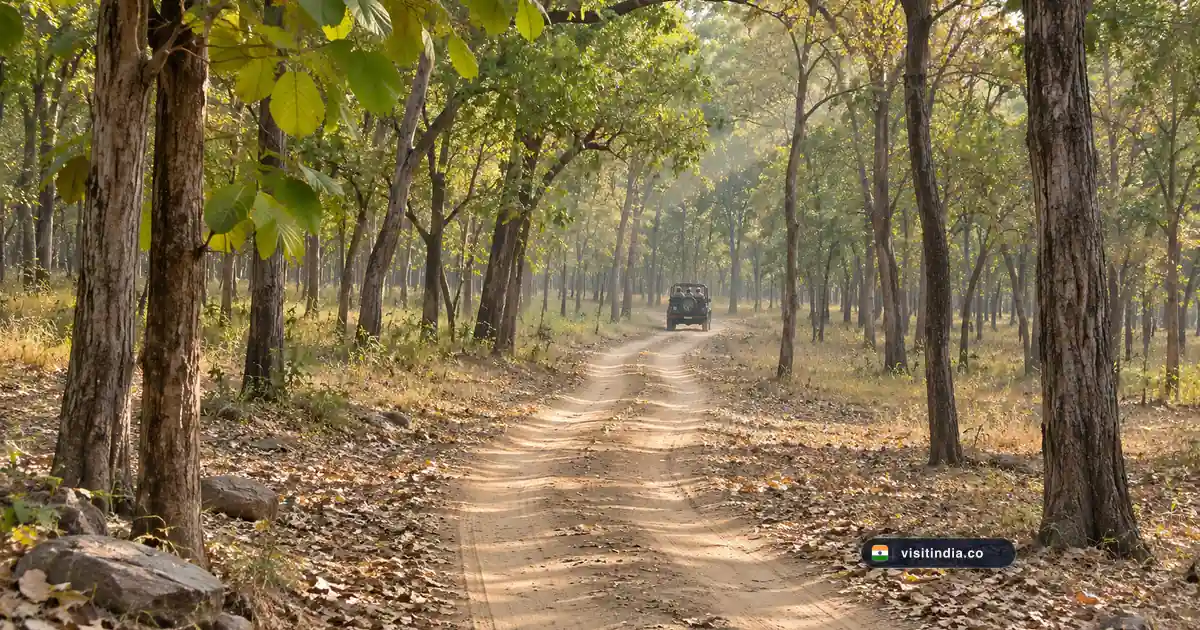
Zone A encompasses the Mastigudi, Balle, and Karapura wooded sectors where towering terminalia and teak trees provide elevated perches for arboreal big cats. Leopards use horizontal boughs ten to twenty feet above ground level to evade ground-level tiger confrontations and survey grazing deer herds.
This dense woodland serves as the primary home territory of Kabini’s melanistic panthers. Because the deep undergrowth limits visibility to fifty meters on either side of the forest track, drivers and naturalists rely heavily on animal alarm calls to track movements through the thickets.
Zone B: Riverine Meadows, Elephant Herds, and Backwaters
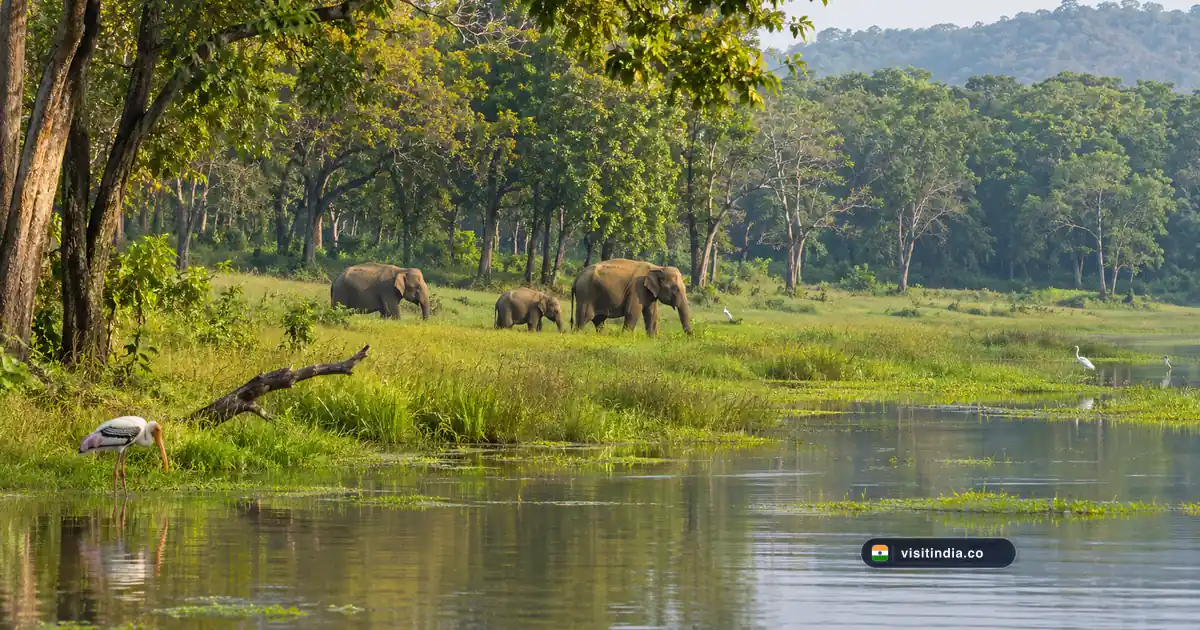
Zone B hugs the curving banks of the Kabini reservoir, creating sweeping panoramas dotted with weathered tree stumps that emerge as water levels recede. This open shoreline provides unobstructed natural light for wildlife photography.
During peak summer from March through May, Zone B transforms into an extraordinary congregation ground where several hundred Asiatic elephants assemble to bathe, graze on fresh shoots, and socialize. Tigers also frequent these banks to cool down in shaded muddy wallows during mid-afternoon heat.
Zone Assignment Mechanics: Jeep vs Canter Rules
The allocation of zones is governed by strict digital dispatch algorithms at the Kakanakote checkpost to prevent favoritism. When a 4x4 open Gypsy enters the gate, the forest range officer assigns the vehicle to either Zone A or Zone B for the entire three-hour duration.
In contrast, twenty-passenger Forest Department canter buses operate under broader route permissions, allowing them to travel along connector corridors that bridge interior forest tracts with shoreline clearings. While canters sacrifice maneuverability and close-range photography angles, their higher seating elevation offers panoramic visibility over dense roadside brush.
Official Safari Booking Process: Online Portal vs JLR Packages
Travelers can book Kabini safaris via the official Karnataka Forest Department portal nagaraholetigerreserve.com fifteen days in advance, or secure guaranteed jeep drives by reserving accommodation at the state-owned Kabini River Lodge managed by Jungle Lodges and Resorts.
Understanding the administrative division between standalone gate permits and all-inclusive jungle resort packages prevents expensive booking errors. Independent travelers basing their holiday around regional heritage sites such as Mysore Palace must secure their own vehicle seats through the government portal well before arrival.
| Booking Channel | Vehicle Type | Advance Booking Window | Approximate Cost | Best Suited For |
|---|---|---|---|---|
| KFD Official Portal | 20-Seater Canter Bus | 15 days prior at 00:01 AM | ₹1,000 to ₹1,600 per seat | Day visitors & budget travelers |
| KFD Official Portal | 6-Seater 4x4 Gypsy | 15 days prior (limited slots) | ₹1,500 to ₹2,500 per seat | Independent photographers |
| Jungle Lodges & Resorts | 4x4 Gypsy / Boat | Part of stay package (months ahead) | ₹9,500 to ₹16,000+ per room/night | Luxury seekers & serious trackers |
| Kakanakote Offline Counter | Canter Bus Standby | Same-day morning / afternoon | Base tariff + entry fees | Unplanned spontaneous visits |
Karnataka Forest Department Portal (Kakanakote Gate)
The Nagarahole Tiger Reserve Official Portal handles direct bookings for safaris departing from the Kakanakote Safari Point near Dammankatte. Booking slots for specific dates unlock precisely fifteen days in advance at midnight Indian Standard Time.
To complete a booking, users must input accurate government photo ID numbers (Aadhaar, Voter ID, Driver’s License, or Passport for foreign travelers) for every passenger. Tickets are non-transferable, and gate rangers match name and photo credentials against vehicle manifests before boarding.
Jungle Lodges & Resorts (JLR) Safari Inclusion Model
The state-run Kabini River Lodge holds historical safari concession rights within the reserve. Guests staying at this colonial-era former hunting lodge receive designated seats on exclusive open 4x4 safari Gypsies accompanied by veteran departmental naturalists.
A typical full-board overnight stay includes afternoon tea, an evening jeep or boat safari, a wildlife documentary screening, dinner, a morning forest safari, and breakfast. Because JLR guests bypass the daily portal scramble, this remains the most reliable path for travelers committed to multi-day tracking.
Offline Counter Booking Realities and Standby Queues
A modest quota of canter tickets is reserved for on-the-spot booking at the Kakanakote counter to accommodate local rural visitors and last-minute travelers. The ticket window opens at 5:30 AM for the morning departure and 1:30 PM for the afternoon shift.
During weekends, public holidays, and festive seasons, travelers begin queuing outside the checkpost hours before sunrise. Securing an offline ticket during peak months is never guaranteed, making advance digital booking essential for anyone traveling from afar.
Daily Safari Timings, Shifts, and Boat Safari Dynamics
Kabini conducts two daily safari shifts: the morning drive from 06:30 AM to 09:30 AM and the afternoon drive from 03:00 PM to 06:00 PM. Visitors must report to the Kakanakote gate thirty minutes prior to scheduled departure for identity verification.
Safari durations extend for roughly two and a half to three hours, maximizing exposure during golden hours when forest lighting is soft and animals are actively foraging or seeking water.
| Safari Slot | Gate Reporting Time | Departure Time | Return Time | Lighting & Wildlife Conditions |
|---|---|---|---|---|
| Morning Drive | 06:00 AM | 06:30 AM | 09:30 AM | Crisp dawn air, rising mist, nocturnal cats returning |
| Afternoon Drive | 02:30 PM | 03:00 PM | 06:00 PM | Intense heat cooling into dusk, waterhole activity |
| Boat Safari (Morning) | 06:15 AM | 06:45 AM | 09:15 AM | Mirror-calm waters, marsh birds, river otters |
| Boat Safari (Evening) | 03:00 PM | 03:30 PM | 06:00 PM | Dramatic shoreline sunsets, elephant bath sessions |
Morning Safari Window: 06:30 AM to 09:30 AM
The morning safari begins in cool, crisp air as the forest awakens. As ground temperatures rise, morning mist lifts off the Kabini reservoir, creating ethereal backdrops through the bamboo corridors.
Leopards that hunted through the night often linger on warm tarmac stretches or sunbathe atop elevated tree forks during the initial ninety minutes. Early morning is also prime time for identifying fresh tiger pugmarks pressed into soft dust along the motorable tracks.
Afternoon Safari Window: 03:00 PM to 06:00 PM
The afternoon shift starts while temperatures remain elevated, prompting big cats to stay hunkered down in deep undergrowth near natural forest depressions called vayas. As shadows lengthen past 4:30 PM, the forest undergoes a noticeable surge in movement.
Deer herds step out from dense thickets into riverside clearings, and mother elephants guide young calves down to water shallows. The final hour before park closure provides dramatic golden backlight that illuminates dust kicked up by passing herds.
Kabini River Boat Safari Experience
Motorized boat safaris depart along the reservoir perimeter, granting quiet water-level views of swimming elephants, smooth-coated otters, and marsh crocodiles. Unlike noisy terrestrial tracks, cruising on water allows naturalists to approach grazing wildlife without triggering panic responses.
Boat safaris are particularly rewarding for ornithologists seeking nesting osprey pairs, darter birds, river terns, and white-bellied sea eagles perched upon exposed deadwood branches. While feline sightings from boats are rare, watching an entire wild elephant family swim across the river is an unforgettable spectacle.
Tracking the Black Panther: Field Strategies and Seasonal Patterns
Tracking Kabini’s melanistic leopard relies on reading alarm calls of spotted deer and langurs, checking habitual branch roosts in Zone A, and timing visits during the dry summer months from March to May when foliage thins significantly.
Melanism does not alter a leopard’s intrinsic habits; it remains an elusive, stealthy ambush predator that prefers solitary hunting. Finding one in hundreds of square kilometers of jungle requires patience, experienced driver-trackers, and an understanding of forest acoustic cues, much like hiking the dense valley forests near Iruppu Falls.
Pro Tip
The Acoustic Tracking Secret: In dense teak woods, do not scan every bush with binoculars. Instead, watch the faces of gray langurs sitting on upper branches. When a monkey detects a stalking leopard, it emits an unmistakable staccato hack that directs every guide toward the cat’s exact coordinate.
Reading Animal Alarm Calls and Tree Perches
Langurs enjoy an aerial vantage point denied to ground dwellers, making them the jungle’s most reliable sentinels. Their sharp coughing alarms signal immediate feline presence beneath their canopy perches.
On the forest floor, spotted deer emit high-pitched barks while stamping their hooves in the direction of moving predators. When both tree-dwelling primates and ground herbivores synchronize their alarm vocalizations, guides immediately position the safari vehicle along prospective crossing paths.
Best Season for Big Cat Sightings: March to May
While Nagarahole remains open to visitors throughout the year, seasonal weather shifts dramatically alter sighting probabilities. Post-monsoon months from October through January feature lush emerald foliage, high reservoir water levels, and pleasant weather, but dense leaves make spotting camouflaged leopards challenging. Travelers can also link this journey to the neighboring Nilgiri Biosphere reserves using our Bandipur and Mudumalai safari circuit guide.
As summer sets in from March to May, humidity drops and ground foliage withers under intense afternoon heat. Forest pools evaporate, forcing wildlife to concentrate along perennial riverfronts. With visibility dramatically enhanced across open woodland floors, big-cat sighting frequencies reach their annual zenith.
Visitor Guidelines, Strict Regulations, and Equipment Rules
Karnataka Forest Department strictly enforces a total ban on mobile phones inside safari vehicles to curb noise disruption. Visitors must carry original identification, wear subdued earth-toned attire, and respect wildlife distance regulations at all times.
The administrative rules enforced across Nagarahole adhere to regional conservation policies monitored by the Mysuru District Administration and the Kodagu District Administration. Violating park regulations results in steep fines, immediate safari cancellation, and possible vehicle confiscation.
Mobile Phone and Electronic Device Restrictions
Smartphones are strictly banned inside all safari vehicles operating out of Kakanakote. Visitors must leave their phones at their hotel or store them inside dedicated lockers at the checkpost before boarding.
This rule was implemented after repeated incidents of ringtones disrupting wildlife and tourists hanging out of vehicles to capture video calls. Professional DSLR and mirrorless cameras are permitted, subject to applicable departmental equipment ticket charges.
Photography Regulations, Lens Guidelines, and Safari Etiquette
Wildlife photographers should prepare focal lengths ranging from 100-400mm or 200-600mm to capture distant tree-perched leopards and canopy birds without disturbing subjects. Monopods or beanbags rested against vehicle railings provide essential stabilization over uneven dirt terrain.
Important
Forest Code of Ethics: Never wear bright red, yellow, or white clothing that catches an animal’s eye; select olive green, khaki, brown, or beige clothing. Maintain complete silence when approaching sightings, never use artificial flash units, and never urge drivers to move closer than the mandated twenty-meter buffer zone.
Transit Connectivity, Route Planning, and Nearby Wildlife Circuits
Kabini is located 80 kilometers southwest of Mysuru Junction via the HD Kote Handpost road and 260 kilometers from Bengaluru International Airport via the NH-275 Mysore Expressway. It seamlessly integrates into wider Nilgiri wildlife circuits including Bandipur and Wayanad.
Reaching Kakanakote requires driving through rural agrarian landscapes before entering forested buffer tracts along the border of Karnataka and Kerala.
Road Routes from Mysuru and Bengaluru
Travelers arriving from Bengaluru should follow the six-lane Bengaluru-Mysuru Expressway (NH-275) to the Mysuru ring road, a smooth journey requiring approximately two and a half hours. From Mysuru, turn southwest along State Highway 33 toward HD Kote Handpost, passing through Antarasante to reach Kakanakote in another ninety minutes.
Taxis and private self-drive rentals are readily available across Mysuru. While state buses connect Mysuru with HD Kote, hiring a private vehicle is strongly recommended due to odd early-morning safari departure timings.
Extending the Circuit: Wayanad and Regional Corridors
Because Kabini anchors the northern flank of the Nilgiri Biosphere, wildlife enthusiasts can link multiple national reserves into a comprehensive safari circuit. Crossing the southern state boundary into northern Kerala leads directly into the rainforests and sanctuaries of Wayanad within sixty kilometers.
This cross-border highway connection allows travelers to experience both the dry-deciduous predator territory of Nagarahole and the high-altitude evergreen plantations of Kerala in a single five-day driving itinerary.
Frequently Asked Questions About Kabini Safari
How do I book a Kabini safari for the black panther zone?
You can book tickets online via the official Karnataka Forest Department portal nagaraholetigerreserve.com fifteen days in advance or reserve an all-inclusive stay at Jungle Lodges Kabini River Lodge. While bookings do not guarantee a specific zone upfront, vehicles entering Zone A provide the highest statistical probability of encountering the melanistic leopard.
What is the difference between Zone A and Zone B in Kabini?
Zone A comprises deep interior deciduous forest and rocky teak woods that serve as the primary territory of leopards and black panthers. Zone B stretches along the open reservoir shoreline and backwater meadows, making it exceptional for viewing massive elephant herds, marsh crocodiles, and waterbirds.
Can day visitors take a jeep safari in Kabini without staying at Jungle Lodges?
Day visitors can book select 4x4 Gypsy slots and 20-seater canter bus seats directly through the official Karnataka Forest Department booking portal. However, Gypsy slots are extremely limited, so most non-resident day visitors secure seats on the departmental canter bus.
Why are mobile phones banned during Kabini safaris?
The Karnataka Forest Department strictly prohibits smartphones inside safari vehicles to prevent loud ringtones and careless passenger behavior from disturbing wildlife. Dedicated DSLR and mirrorless cameras remain permitted for photography upon paying applicable equipment fees.
What is the best season to spot the black panther in Kabini?
The dry pre-monsoon months from March through May provide the highest chances of spotting leopards and the black panther due to thinned foliage and dried waterholes. Winter months from October to February offer pleasant weather and verdant scenery, but dense leaves make spotting arboreal cats more challenging.
How far is Kabini from Bangalore and Mysore?
Kabini is situated approximately 80 kilometers southwest of Mysuru, requiring roughly two hours of driving via HD Kote Handpost. From Bengaluru, the distance is around 260 kilometers, which takes four and a half to five hours using the Bengaluru-Mysuru Expressway.