Surfing in India Guide: Best Spots in Mulki, Varkala & Kovalam
Discover the best surfing places in India. Explore top surf schools in Mulki, Varkala, Kovalam, and Covelong Point, plus swell seasons and lesson fees.
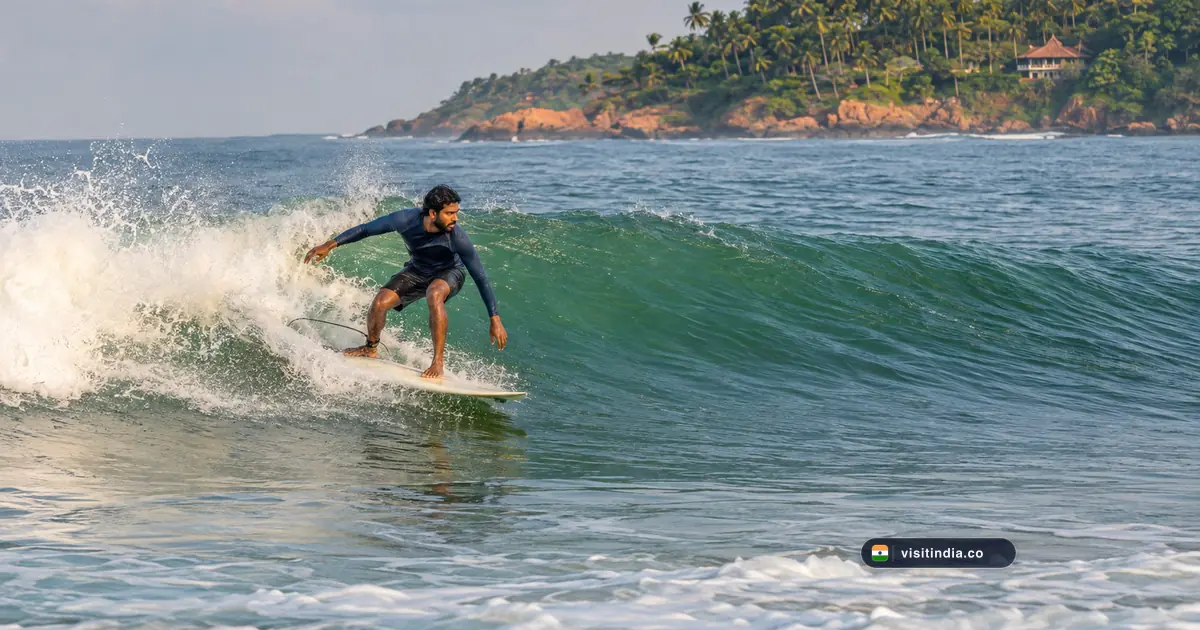
Fringing thousands of kilometers of tropical peninsula where rolling ocean groundswells meet sandbars and rocky headlands, India has quietly emerged as an extraordinary frontier for wave riders. Identifying the best surfing places in india mulki varkala corridor and beyond connects travelers with world-class surf schools, warm ocean water, and remarkably uncrowded wave lineups.
From the tranquil river estuaries of coastal Karnataka to the dramatic cliff breaks of southern Kerala and the historic point breaks of Tamil Nadu, Indian surfing combines ocean athletics with cultural immersion. Surfers catching their first waist-high white water roller or seeking powerful pre-monsoon point breaks discover an authentic and affordable alternative to crowded international surf destinations.
Surfing in India Essentials
- Top Beginner Surf Enclaves: Mulki (Karnataka), Kovalam (Kerala), and Covelong Point (Tamil Nadu).
- Peak Beginner Season: October through April for clean, manageable 2-to-4-foot peeling waves with light morning offshore winds.
- Monsoon Swell Season: May through September for advanced surfers seeking heavy 6-to-12-foot waves along the Arabian Sea.
- Typical Course Tariffs: Single discovery session ₹2,000 to ₹2,500; complete 3-day beginner certificate course ₹6,500 to ₹9,000.
- Governing Body: Surfing Federation of India (SFI) provides standardized safety, athlete development, and school accreditation.
The Rise of Indian Surfing: Coastlines, Swells, and Wave Anatomy
With over 7,500 kilometers of coastline spanning the Arabian Sea, Bay of Bengal, and Indian Ocean, India has emerged as South Asia’s foremost wave-riding hub. Anchored by pioneer surf communities in Karnataka, Kerala, and Tamil Nadu, the sport offers uncrowded lineups and certified coaching.
The growth of local board riding has turned quiet coastal fishing villages into thriving water sports enclaves. Surfers traveling between regional hubs often integrate their ocean holidays with wider Karnataka coastal and heritage attractions, exploring ancient stone temples and coastal spice plantations between morning tide sessions.
Peninsular Geography and Shifting Ocean Currents
India’s tapered peninsula catches dual oceanic swell windows, receiving powerful Southern Ocean groundswells along the southwest coast and seasonal cyclonic waves along the eastern Coromandel shores. This dual exposure guarantees rideable waves somewhere along the coastline during almost every month of the year.
The western Arabian Sea coast features sandy river mouth sandbars and rocky reef shelves that shape long, peeling rights and lefts. Meanwhile, the eastern Bay of Bengal coast features sand-bottom point breaks where swell wraps around harbor groynes and natural headlands.
Surfing Federation of India (SFI) and Accreditation Standards
Formed to regulate surf safety and athlete training, the Surfing Federation of India accredits top coastal schools with International Surfing Association (ISA) certified instructors and standardized rescue protocols. SFI sanctions national championships and enforces strict student-to-instructor ratios.
Choosing an SFI-accredited school ensures that instructors possess verified ocean rescue and first-aid qualifications. Accredited centers provide well-maintained soft-top foam boards for beginners, secure storage lockers, and structured lesson progressions that prioritize ocean safety.
| Surf Region & Hub | Primary Break Type | Typical Wave Height | Skill Level Suitability | Nearest Airport Gateway |
|---|---|---|---|---|
| Mulki (Karnataka) | Sandbar river mouth | 2 to 5 feet (Winter) | Beginner to Intermediate | Mangaluru Airport (IXE, 30 km) |
| Kovalam (Kerala) | Reef and beach break | 3 to 6 feet | All levels (Lighthouse lefts) | Thiruvananthapuram (TRV, 15 km) |
| Varkala (Kerala) | Beach break peaks | 2 to 4 feet | Beginner to Intermediate | Thiruvananthapuram (TRV, 45 km) |
| Covelong (Tamil Nadu) | Right-hand point break | 3 to 5 feet | Beginner to Advanced | Chennai Airport (MAA, 38 km) |
| Little Andaman | Left-hand reef point | 4 to 8 feet | Advanced and Expert | Port Blair Airport (IXZ + ferry) |
Mulki, Karnataka: The Spiritual Cradle of Indian Surfing
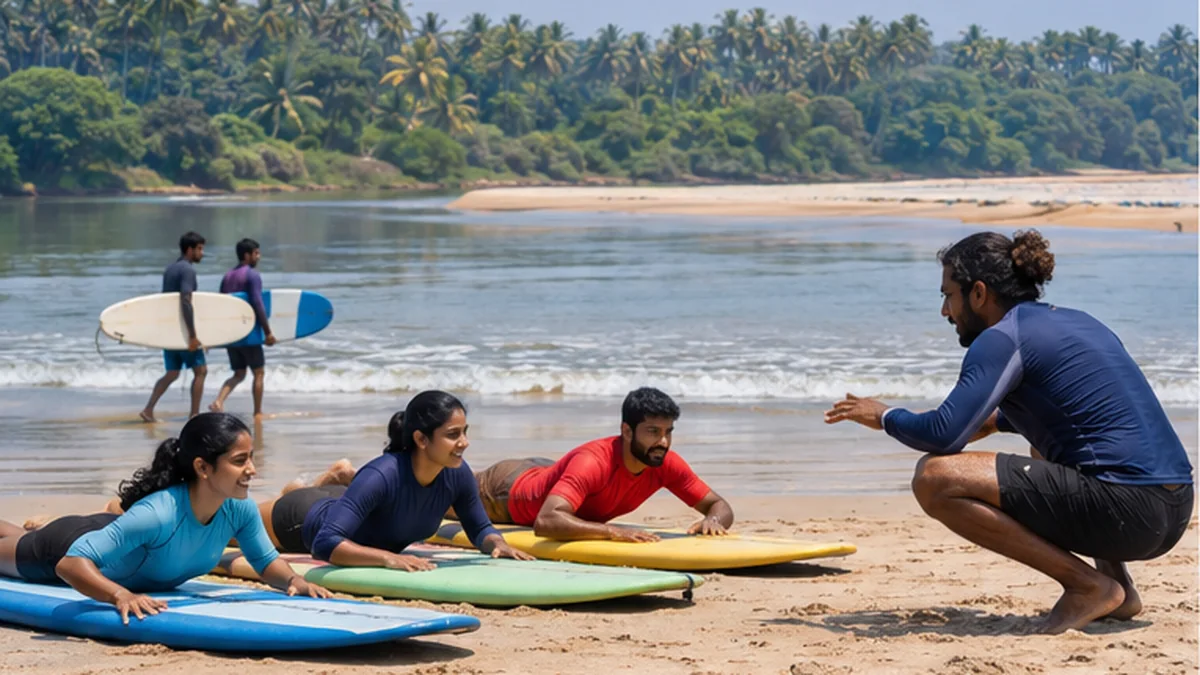
Mulki, situated thirty kilometers north of Mangaluru in Dakshina Kannada district, is revered as the birthplace of modern Indian surfing. Home to Mantra Surf Ashram, its sandbars at Sasihithlu beach deliver long, gentle waves ideal for novices.
The town sits at the peaceful confluence of the Shambhavi and Nandini rivers before they empty into the Arabian Sea. The combination of gentle estuary waters for warm-ups and uncrowded coastal sandbars makes Mulki India’s top destination for first-time wave riders.
Mantra Surf Ashram and the Shambhavi River Estuary
Founded in the late 1990s by Jack Hebner, Mantra Surf Ashram combines yogic discipline and vegetarian living with daily boat trips down the scenic Shambhavi River to empty coastal surf sandspits. Students awaken before sunrise for meditation, followed by a boat ride through mangrove-lined waterways to the beach.
The ashram provides an immersive learning environment where ocean mechanics, paddle endurance, and breath control are taught alongside surfing technique. Between morning and afternoon wave sessions, guests can try stand-up paddleboarding (SUP) along the calm river channels.
Sasihithlu Beach: Long Sandbars and Consistent Righthanders
Sasihithlu beach features wide sandbars where waves peel gently for fifty to one hundred meters, creating soft, forgivable wave faces where beginner surfers quickly master pop-up mechanics. Because the beach faces open ocean with no high-rise developments, lineups remain clean and uncrowded.
The local river mouth creates shifting sandbanks that hold gentle waist-high swells from October through April. Verified water sports guidelines and coastal access points are published on the Karnataka Tourism Coastal Water Sports Directory.
Kovalam and Varkala, Kerala: Arabian Sea Cliffside Breaks
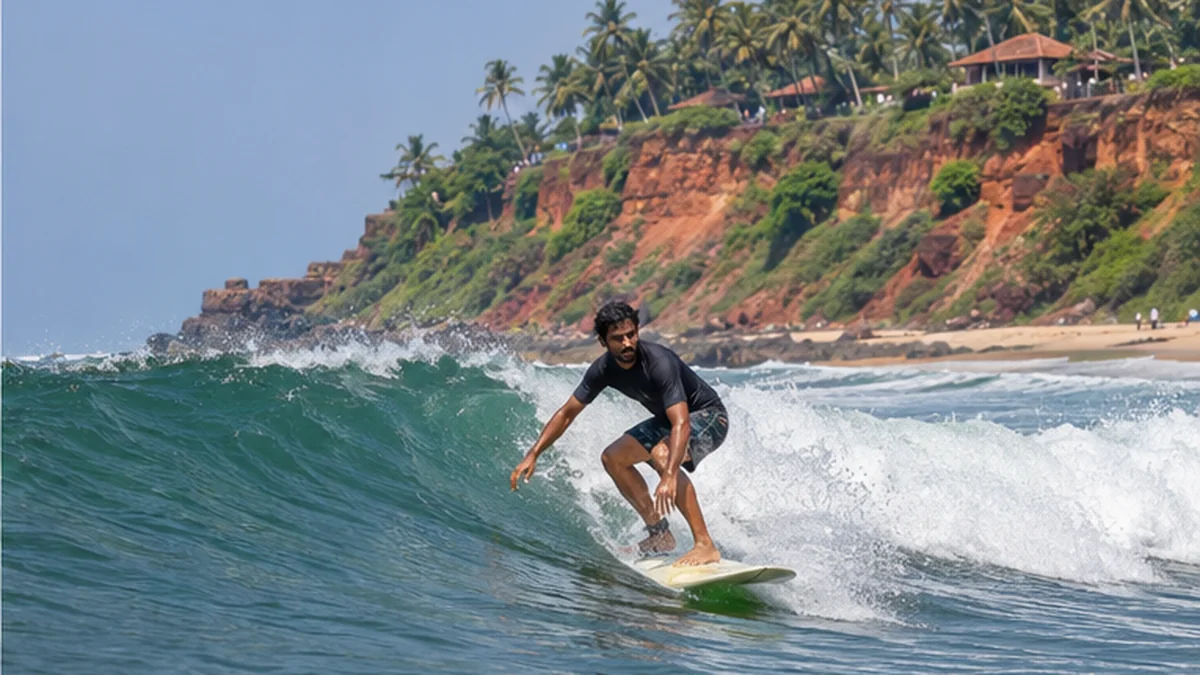
Southern Kerala offers two world-class surf enclaves: the curved crescent reef of Lighthouse Beach in Kovalam, which produces peeling lefthanders, and the dramatic red-laterite cliffs of Varkala, known for relaxed beach break peaks.
Both destinations combine reliable winter swells with celebrated coastal hospitality. Travelers planning a holiday along Kerala’s coastline can review accommodation and clifftop dining recommendations in our places to visit in Varkala cliff guide.
Pro Tip
Tide Timing for Kovalam Lefts: The famous left-hand wave peeling off the rocky promontory below Kovalam Lighthouse works best on mid-to-incoming tides. Low tides expose shallow submerged rocks, making the break unsuitable for beginners.
Kovalam Lighthouse Beach: Crescent Reef and Peeling Lefts
A stone breakwater and natural rocky shelf at the southern tip of Lighthouse Beach shapes incoming Arabian Sea swells into clean, organized left-breaking waves suitable for intermediate surfers. Kovalam Surf Club, established as a community social project, has trained generations of skilled local surfers.
The sandy northern section of the bay provides gentle white water rollers where beginners practice catching waves in waist-deep water. Clifftop safety rules and beach recreation guidelines are documented on the Kerala Tourism Kovalam Destination Directory.
Varkala North Cliff: Beach Breaks and Bohemian Surf Camps
Varkala blends dramatic coastal cliff scenery with sandbar breaks at Black Beach and Edava, supported by international surf lodges like Soul & Surf that integrate board rentals with sunset yoga. The red sandstone cliffs overlook long stretches of sandy beach accessible by clifftop staircases.
Waves break over soft sandbars, creating multiple shifting peaks where surfers can spread out along the beach. When the mid-morning sea breeze picks up, visitors relax in clifftop cafes, enjoy Ayurvedic oil massages, or take day excursions to nearby backwaters.
Covelong Point and Mahabalipuram, Tamil Nadu: Coromandel Point Breaks
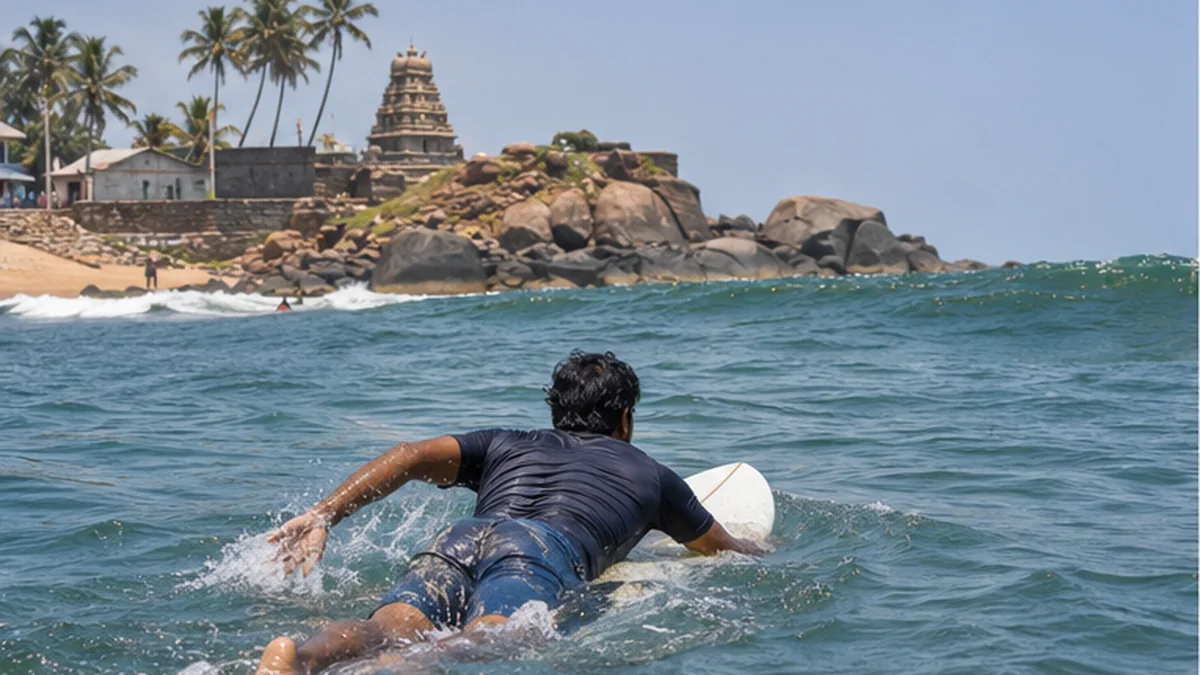
The Coromandel Coast south of Chennai hosts India’s most dynamic point breaks. Covelong Point (Kovalam village) and Mahabalipuram feature sand-bottom point setups where waves wrap smoothly around natural piers and ancient stone temples.
This eastern coastal corridor provides consistent point-break wave quality rarely found along open sand beaches. Surfers visiting the area can easily combine morning wave sessions with architectural exploration using our places to visit in Mahabalipuram guide.
Covelong Point: Fishing Village Surf School and Annual Festival
Founded by local fisherman Murthy Megavan, the Covelong Point Social Surf School revolutionized coastal community sports and hosts India’s largest annual surf, music, and yoga festival each autumn. A curved rock jetty shelters the bay, producing clean, peeling right-hand waves.
The surf school operates as a non-profit foundation, providing local youth with aquatic rescue training and vocational careers in water sports. The bay offers flat, sheltered water near the shore for introductory lessons, while the outside point delivers fast, rippable waves for advanced boarders.
Mahabalipuram Temple Point: Right-Hand Point Breaks Beside 8th-Century Granite
At Temple Point in Mahabalipuram, waves peel across a submerged sandbank adjacent to the UNESCO-listed Shore Temple, providing surfers with an unforgettable ancient stone backdrop on every ride. The rocky outcrop flanking the temple focuses incoming swells into organized right-hand lines.
Surfing here requires basic wave awareness, as waves break over sand mixed with occasional submerged granite boulders. Local surf outfits like Mumu Surf School offer guided sessions that help visiting surfers safely navigate the take-off zone.
Offbeat Frontiers: Little Andaman, Goa, and Rushikonda
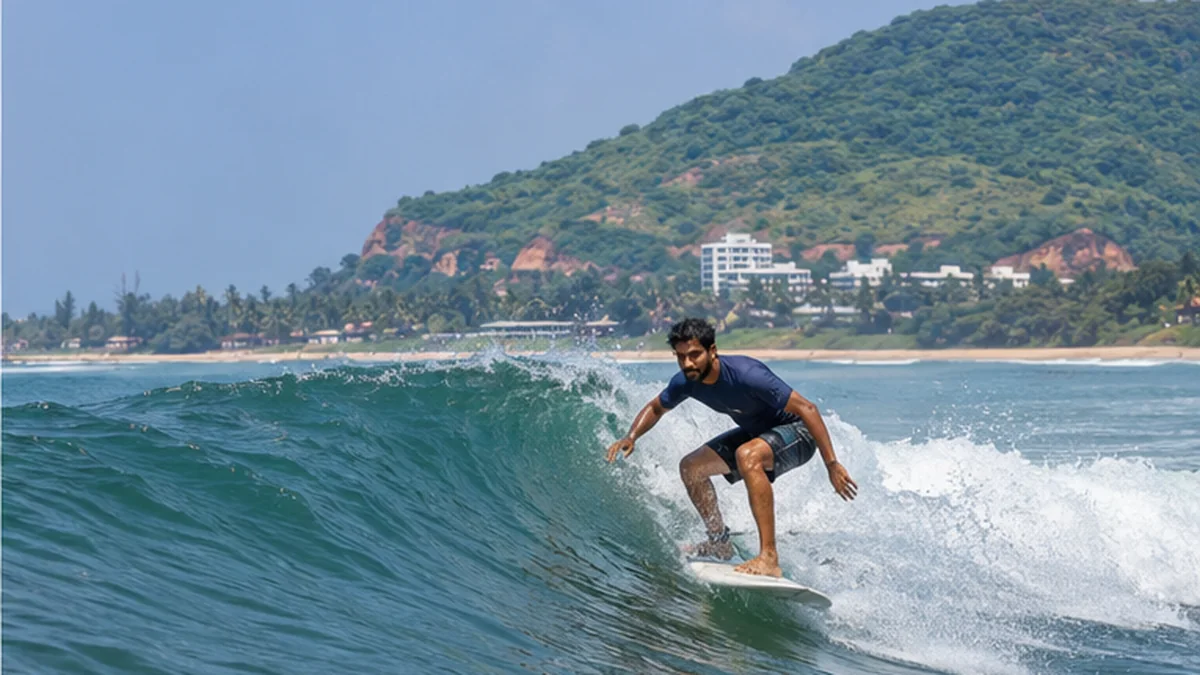
Beyond mainstream hubs, dedicated surf explorers venture to the remote left-hand reef break at Butler Bay in Little Andaman, while gentle coastal rollers at Morjim in Goa and Rushikonda in Andhra Pradesh welcome novices.
These frontier breaks offer exceptional solitude and varied wave mechanics. Adventurers traveling to the Bay of Bengal archipelago can consult our Radhanagar and Elephant Beach Havelock guide to plan island ferries and coastal permits.
| Offbeat Surf Spot | Geography & Break Style | Best Travel Months | Unique Travel Feature |
|---|---|---|---|
| Butler Bay (Little Andaman) | Fast, hollow left reef break | March to May | Untouched island wilderness, coral reefs |
| Morjim & Ashwem (Goa) | Gentle sandbar beach breaks | November to February | Laid-back beach shacks, shallow warm water |
| Rushikonda (Visakhapatnam) | Curved bay beach break | October to March | Certified Blue Flag water, speed boat support |
Butler Bay and Hut Bay: World-Class Left Point Breaks in the Andamans
Situated in the remote southern Andaman archipelago, Butler Bay is regarded by international surf magazines as India’s finest wave, serving up fast, hollow left-hand barrels over a coral reef. Reaching Little Andaman involves an eight-hour inter-island passenger ferry voyage south from Port Blair.
Butler Bay features a concave sandy cove bordered by dense tropical rainforests. The wave breaks over a shallow reef shelf, peeling with power and speed for over one hundred and fifty meters, making it suitable exclusively for advanced surfers carrying their own repair kits and medical supplies. Outdoor itineraries in this region pair well with Baratang Limestone Caves & Neil Island safari zones and timings, which covers park access and peak sighting months.
Gentle Beginner Waves at Morjim and Rushikonda
For casual vacationers, the mellow waist-high shorebreaks at Morjim and Ashwem in North Goa and the certified Blue Flag waters of Rushikonda in Visakhapatnam offer stress-free learning environments. In Goa, local outfits like Vaayu Ocean Adventures provide introductory board clinics alongside kitesurfing instruction.
At Rushikonda, the gentle curve of the hill protects the beach from heavy ocean turbulence, allowing novices to paddle into manageable waves without being overwhelmed by strong currents.
The Indian Surf Calendar: Swell Dynamics, Seasons, and Tides
India experiences two distinct surf seasons: the post-monsoon and winter months (October to April) bringing clean, waist-to-chest-high peeling waves for beginners, and the summer monsoon (May to September) delivering massive eight-to-twelve-foot swells for advanced chargers.
Aligning your travel dates with seasonal wave heights ensures that ocean conditions match your skill level. Travelers planning winter trips along the Arabian Sea can cross-reference coastal seasonal advisories in our Kerala coastal travel destinations overview.
Important
Monsoon Ocean Safety Advisory: Between June and August, Southwest monsoon storms create intense rip currents, heavy wave dumping, and reduced water clarity along the West Coast. Beginners should never attempt to paddle out during the monsoon season; surf schools suspend beginner lessons during these high-hazard months.
Post-Monsoon and Winter (October to April): Clean Peeling Beginner Waves
Winter brings gentle offshore morning winds, glass-smooth water surfaces, and consistent two-to-four-foot swells across Karnataka, Kerala, and Tamil Nadu, making it the prime season for surf schools. Morning sessions between 6:30 AM and 9:30 AM provide clean, unruffled wave faces before afternoon onshore breezes develop.
Water temperatures remain comfortable at 26°C to 28°C throughout the winter, eliminating the need for thick neoprene wetsuits. A lightweight UV rash guard and board shorts are all that is needed for hours of comfortable riding.
Pre-Monsoon and Monsoon (May to September): Powerful Heavy Swells
Deep low-pressure systems in the Indian Ocean generate powerful, overhead swells along the West Coast between May and September, transforming tranquil beaches into heavy, churning arenas strictly for expert riders. Waves during this period often reach ten to twelve feet, breaking with immense hydraulic force.
Advanced surfers head to specialized spots like Covelong Point or Mahabalipuram on the East Coast during this window, where pre-monsoon cyclonic depressions deliver clean, peeling waves sheltered from the fierce rains that lash the western seaboard.
Practical Field Advisory: Course Packages, Gear Rental, and Safety
Surf lessons in India are among the most affordable in the world, with certified 3-day beginner courses ranging between ₹6,500 and ₹9,000 including gear rental, professional coaching, and safety theory.
Investing in structured instruction accelerates your progress, teaching you proper paddling posture, wave selection, and pop-up mechanics under safe supervision. Official safety standards and coastal transport links are outlined on the Incredible India Karnataka Guide.
3-Day Beginner vs 7-Day Certification Course Fees
A single introductory discovery class costs approximately ₹2,000, while comprehensive 5-to-7-day certification programs run between ₹12,000 and ₹18,000, covering ocean reading, paddle technique, and wave etiquette. Most accredited schools include soft-top boards, leash, zinc sunblock, and video review sessions in their course tariffs.
For independent surfers traveling with their own equipment, board rentals typically cost ₹500 to ₹800 per session or ₹1,200 for a full day. Surf shops also provide wax, ding repair services, and fin replacements.
Ocean Safety, Rip Current Protocols, and Local Etiquette
Never surf alone, always wear an ankle leash attached to a soft-top surfboard, and learn to identify rip currents before paddling out to ensure a safe, exhilarating ocean session. Rip currents appear as dark, calm channels of churning water extending seaward through breaking wave lines.
If caught in a rip current, remain calm and paddle parallel to the shoreline until you escape the narrow seaward flow, rather than exhausting yourself paddling straight against the current. Always respect local surfers, yield right-of-way to the rider closest to the wave’s breaking peak, and avoid dropping in on another surfer’s wave face.
Frequently Asked Questions About Surfing in India
Where is the best place to learn surfing in India?
Mulki in Karnataka and Kovalam in Kerala are the two best destinations in India for beginner surfers due to their established ISA-certified surf schools, calm river mouth sandbars, and consistent gentle waves. Covelong Point near Chennai is equally celebrated on the East Coast for beginners seeking structured coaching.
Can beginners surf in Mulki and Varkala?
Yes, both Mulki and Varkala provide excellent conditions for first-time surfers between October and April, when waves remain manageable at two to four feet over soft sand bottoms. Experienced instructors accompany novices directly into the water, providing hands-on board positioning and pop-up guidance.
What is the primary surf season in India?
The prime surf season for beginners and intermediate riders extends from October through April, characterized by clean offshore winds, sunny skies, and manageable peeling waves. Advanced big-wave surfers prefer the pre-monsoon and monsoon months from May through September, when deep oceanic swells generate waves exceeding eight to ten feet.
How much do surfing lessons cost in India?
A standard 1.5-hour introductory surf discovery lesson costs between ₹2,000 and ₹2,500 per person, including board rental, rash guard, and instructor supervision. Comprehensive three-day beginner certification courses typically cost between ₹6,500 and ₹9,000 at accredited surf schools.
Is surfing safe in Kovalam and Mahabalipuram?
Surfing in Kovalam and Mahabalipuram is very safe when conducted under the supervision of certified local instructors who monitor daily tides and rip currents. Novice students are provided with soft-top foam surfboards to prevent collision injuries and wear mandatory safety leashes at all times.
What is the difference between West Coast and East Coast swells in India?
The West Coast (Karnataka and Kerala) receives consistent long-period groundswells from the southern Indian Ocean, producing excellent morning surf throughout the winter and massive swells during the summer monsoon. The East Coast (Tamil Nadu and Andhra Pradesh) benefits from seasonal Bay of Bengal depressions and cyclonic groundswells, providing prime point-break peeling waves between May and September.
Do I need to know how to swim to take a beginner surfing lesson?
While basic water confidence and the ability to swim 50 meters in open water is strongly recommended for safety, beginner lessons take place in shallow waist-deep water close to the beach under direct instructor oversight. Accredited schools also provide life jackets upon request for students building their open-water comfort.