Lucknow Awadhi Food Trail: Kebabs, Biryani, and Street Delicacies
Follow the royal Lucknow Awadhi food trail in Chowk and Aminabad with Tunday galouti kebabs, dum biryani, nihari kulcha, and Prakash kulfi.
Lucknow, the historic seat of the Nawabs of Awadh, is celebrated worldwide for elevating cooking from sustenance into an exquisite, aristocratic fine art. Guided by the philosophy of dum pukht (slow cooking in sealed clay or copper vessels), Awadhi cuisine blends subtle Persian sophistication with northern Indian agricultural bounty.
The royal chefs (bawarchis and rakabdars) served rulers who demanded foods so tender they required no chewing. Over centuries, these palace techniques spilled from imperial kitchens into the atmospheric brick bazaars of Chowk and Aminabad, establishing one of the most sophisticated street food circuits in Asia.
Lucknow Awadhi Food Trail Essentials
- Signature Masterpieces: Galouti Kebab (melt-in-mouth minced meat kebab), Awadhi Dum Biryani (aromatic saffron meat and rice), and Nihari Kulcha (slow-cooked marrow stew with tandoori bread).
- Primary Food Quarters: Chowk (the ancient core), Aminabad, and Hazratganj promenade.
- Cooking Technique: Dum pukht (slow simmering in handis sealed with dough over dying embers).
- Average Cost per Food Trail: ₹250 to ₹500 per person for an extensive multi-course evening tasting.
- Operating Hours: Morning nihari counters open from 6:30 AM to 9:30 AM; kebab houses and sweet shops run from 12:30 PM to 11:30 PM daily.
- Best Season: October to March, when pleasant winter weather makes rich meat broths and malai desserts especially welcoming.
The Legend of Tunday Kababi: The Melt-in-Mouth Galouti Kebab
The most famous culinary legend in Lucknow surrounds the creation of the Galouti kebab. During the late 18th century, Nawab Asad-ud-Daula lost his teeth to age, but refused to surrender his passion for gourmet meat dishes. He issued a royal proclamation challenging royal cooks to devise a kebab of unmatched tenderness that required zero chewing.
The contest was won by Haji Murad Ali, a one-armed master cook whose physical disability earned him the affectionate nickname Tunday. His recipe incorporated raw papaya paste as a natural meat tenderizer, along with a closely guarded blend of roughly 160 secret aromatic herbs, dried rose petals, sandalwood essence, and warm spices.
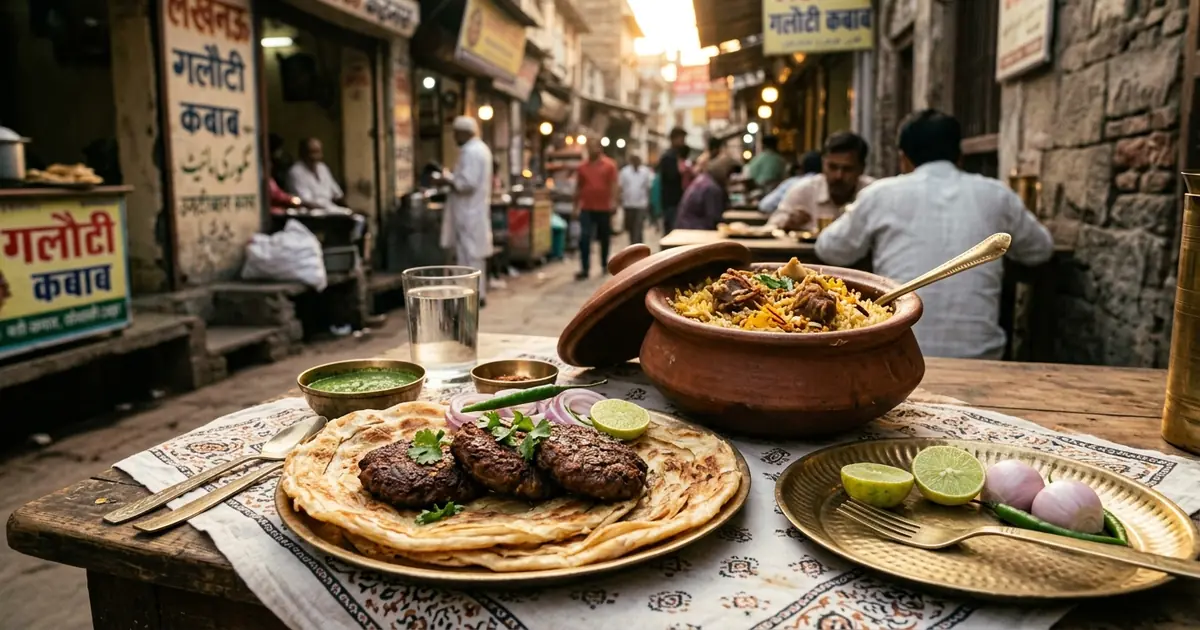
Minced dozens of times until achieving the consistency of smooth paste, the meat is shaped into delicate medallions and shallow-fried in clarified butter on a wide, concave tawa. The cooked kebab is transferred immediately onto a warm Ulte Tawe ka Paratha (an unleavened flatbread baked inverted over a curved iron pan with saffron-infused milk).
When placed on the tongue, the kebab dissolves instantly into rich savory creaminess without requiring any tooth pressure. Visitors can experience the original establishment tucked deep within the narrow market lanes of Phool Wali Gali in Chowk, or visit their larger branch in Aminabad.
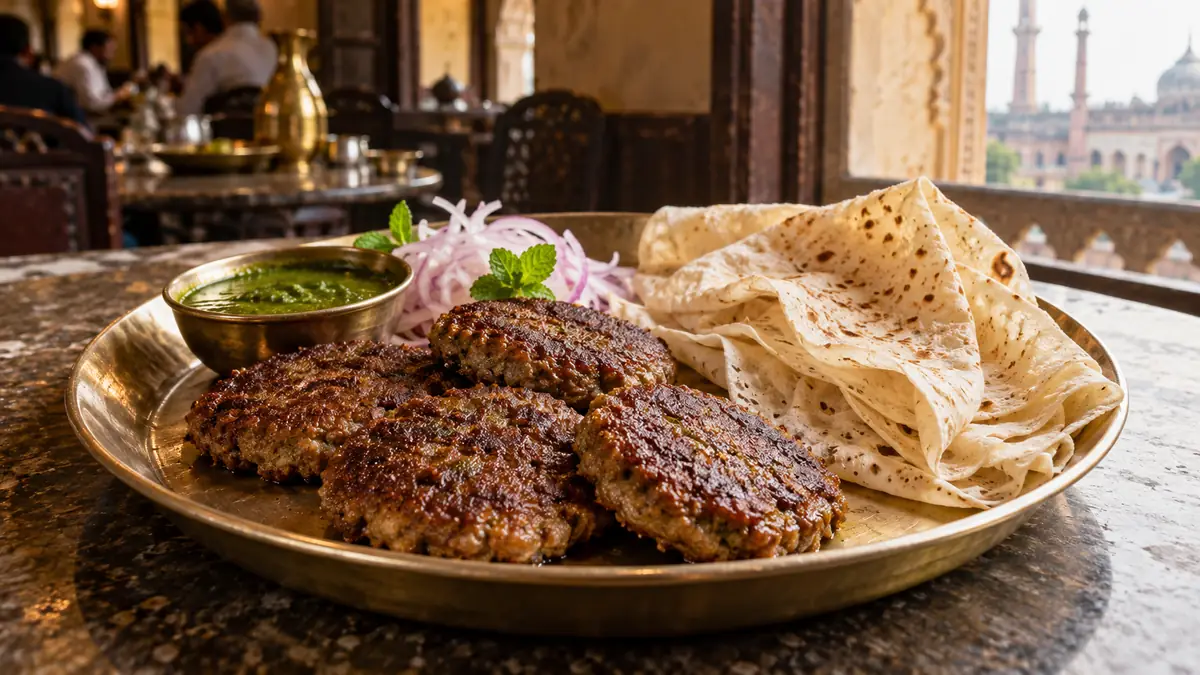
To compare these delicate melt-in-mouth patties with Punjab’s robust tandoori baking techniques, explore our Amritsar Street Food highlights.
Awadhi Dum Biryani: Saffron, Kewra, and Subtlety
Unlike the fiery, chili-forward biryanis of Hyderabad, the authentic Lucknowi biryani (technically classified as an Awadhi pakki biryani) prioritizes delicate fragrance and aromatic nuance. The dish avoids heavy spice heat, drawing complexity from mace (javitri), nutmeg (jaiphal), green cardamom, rose water, and kewra (screwpine extract).
In the Awadhi kitchen, master cooks first prepare the yakhni (a fragrant mutton stock simmered with whole spices until deeply flavorful). Long-grain aged basmati rice is parboiled separately in water perfumed with cinnamon and cloves.
The rice and tender meat pieces are then layered inside a heavy copper degh, anointed with golden streams of saffron milk and pure desi ghee, and sealed airtight with fresh flour dough. The pot is placed over low charcoal heat, with hot embers heaped onto the lid, allowing the grains to cook slowly in their own steam.
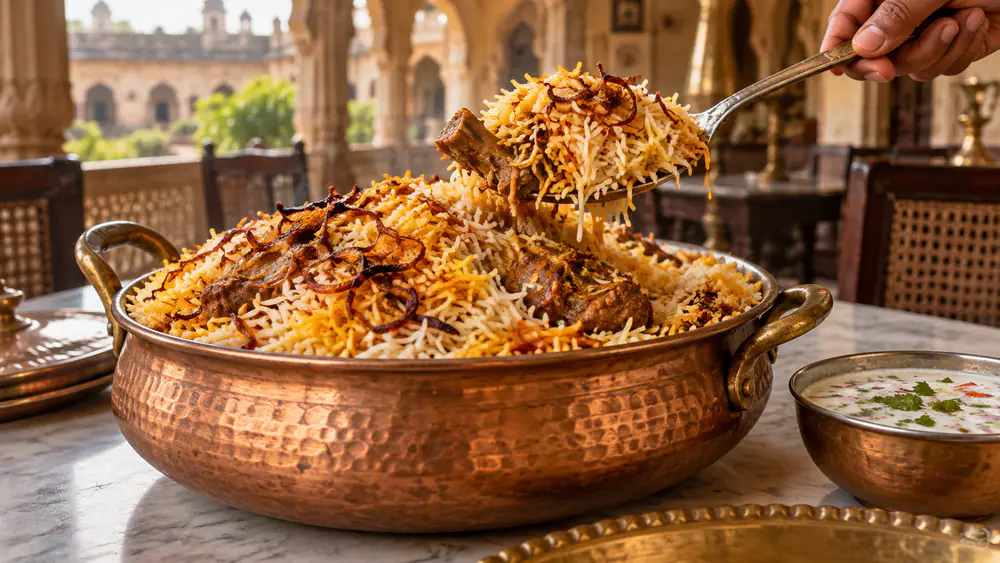
Idris Biryani in Patanala (Chowk), operating since 1968, remains the benchmark institution for authentic Awadhi biryani. Further south in Lalbagh, Lalla Biryani serves equally revered clay handis cooked over wooden coals.
To integrate Lucknow into an extended heritage circuit connecting the holy ghats of the Ganges and the temples of Ayodhya, review our Kashi Ayodhya Prayagraj itinerary.
Morning Awakening in Chowk: Nihari and Sheermal
While evening belongs to kebabs and biryani, early morning in Lucknow is ruled by Nihari and Sheermal. Derived from the Arabic word nahar (meaning daybreak), Nihari was historically eaten by laborers and nawabs alike after dawn prayers to provide long-lasting winter energy.
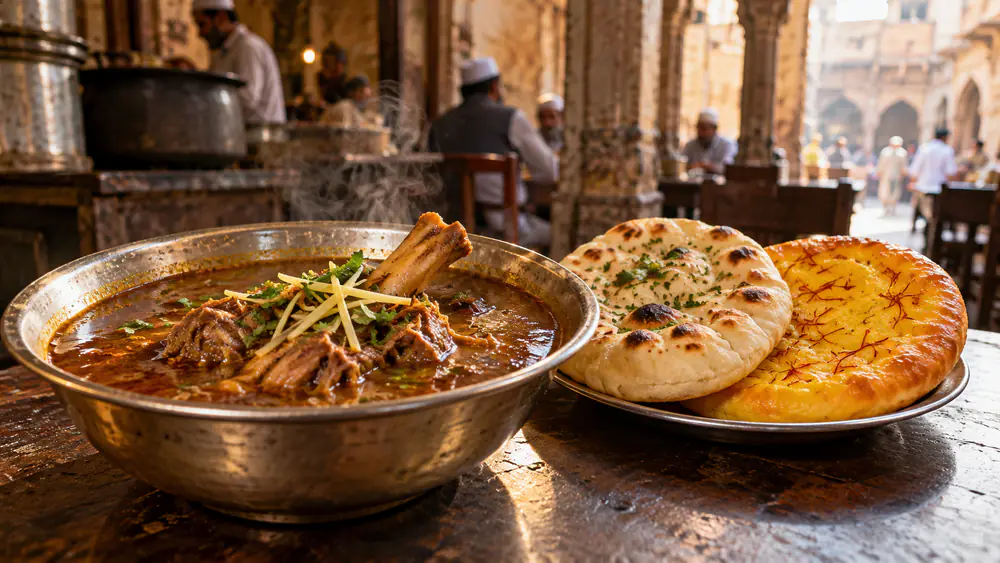
At Rahim’s Kulcha Nihari in Chowk, large copper cauldrons simmer for ten to twelve hours overnight. Tender cuts of mutton shank and marrow bones cook gently in a rich, velvety gravy thickened with roasted wheat flour and infused with dozens of warming spices.
Customers order their steaming bowl garnished with julienned ginger, chopped green chilies, and a squeeze of fresh lime, accompanied by hot, fluffy tandoori kulchas. Rahim’s bakers slap these round, yeast-leavened dough portions onto the inside walls of vertical clay tandoors, producing a pillowy bread with a crisp exterior.
Another iconic Lakhnavi bread is Sheermal, a saffron-flavored, golden-hued sweet flatbread kneaded with milk and clarified butter, baked in tandoors, and brushed with warm kewra water. Ali Hussain Sheermal in Chowk represents five generations of sheermal baking mastery.
For state architectural listings, guided heritage walks, and city maps across Uttar Pradesh, consult the official Incredible India Lucknow Portal.
Street Chaat Innovations: Tokri Chaat and Royal Sweets
Beyond royal Mughlai meat dishes, Lucknow has pioneered some of northern India’s most imaginative vegetarian street chaats and winter desserts. Travelers planning a wider northern food route can also explore Jaipur street food stalls and markets for classic snacks and local timings. For seasonal travelers planning around cultural events, Taj Mahotsav Agra dates and rituals details schedules and practical logistics.
Royal Cafe Tokri Chaat (Hazratganj)
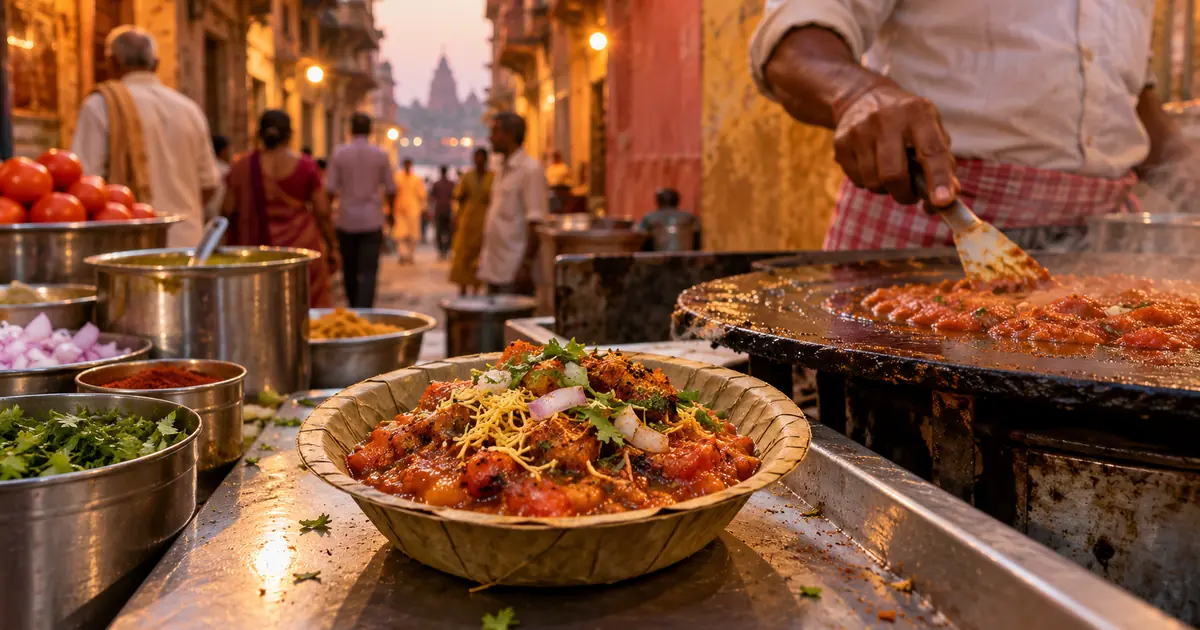
Hazratganj, Lucknow’s historic colonial shopping promenade, is the birthplace of the famous Basket Chaat (Tokri Chaat). Invented at Royal Cafe, the dish features a crisp, deep-fried basket woven from grated potatoes.
The potato basket is filled with boiled chickpeas, diced spiced potatoes, soft dahi vadas, thick whipped sweetened yogurt, tangy tamarind chutney, spicy mint sauce, and a shower of pomegranate seeds and sev. The resulting mountain delivers contrasting temperatures and textures in every mouthful.
Prakash ki Kulfi (Aminabad)
Operating in Aminabad since 1956, Prakash Kulfi serves dense, unctuous saffron-pistachio kulfi plated with golden strands of silky cornstarch falooda. Prepared by slow-reducing pure cow and buffalo milk for hours until rich and creamy, their kulfi contains zero artificial stabilizers or synthetic colorings.
Makhan Malai: The Winter Cloud of Chowk
Similar to the Daulat Ki Chaat found in Old Delhi, Lucknow produces its own ethereal winter morning milk dessert known as Makhan Malai (or Nimish). Prepared exclusively during chilly winter months from dew-chilled milk foam, the sweet cloud is served in terracotta cups topped with saffron, silver leaf (vark), and crushed pistachios.
To compare this delicate dessert with the milk-foam delicacies of the national capital, read our Old Delhi street food guide.
Lucknow Street Food Price Comparison and Iconic Vendors
The table below outlines average pricing, stall locations, and operational timings across Lucknow’s primary culinary landmarks.
| Specialty / Dish | Famous Eatery | Neighborhood | Operating Hours | Average Cost for Two |
|---|---|---|---|---|
| Galouti Kebab with Paratha | Tunday Kababi | Chowk / Aminabad | 12:30 PM to 11:30 PM | ₹180 to ₹280 |
| Mutton Awadhi Dum Biryani | Idris Biryani | Patanala, Chowk | 12:00 PM to 9:30 PM | ₹300 to ₹450 |
| Mutton Nihari with Kulcha | Rahim’s Kulcha Nihari | Chowk | 7:00 AM to 11:00 AM | ₹200 to ₹320 |
| Tokri (Basket) Chaat | Royal Cafe | Hazratganj | 11:30 AM to 10:30 PM | ₹220 to ₹300 |
| Saffron Falooda Kulfi | Prakash Kulfi | Aminabad | 11:00 AM to 11:00 PM | ₹140 to ₹220 |
| Saffron Sheermal Bread | Ali Hussain Sheermal | Chowk | 9:00 AM to 10:00 PM | ₹80 to ₹140 |
For national architectural preservation rules and monument entry details across historic Awadh, consult the Archaeological Survey of India official portal. After tasting Old Lucknow specialties in Chowk and Hazratganj, visitors heading east toward Gomti Nagar can check our Ambedkar Park Lucknow nearest metro station guide for sunset transit.
Practical Timings, Walking Routes, and Hygiene Advice
Tasting your way through Lucknow comfortably requires structuring your day around morning broths and evening tawa cooking.
Curated Food Crawl Itinerary
- Morning (7:30 AM to 9:30 AM): Arrive in ancient Chowk for steaming mutton nihari with hot tandoori kulchas at Rahim’s, followed by saffron sheermal at Ali Hussain.
- Midday (1:00 PM to 3:00 PM): Visit Idris Biryani in Patanala for traditional wood-fired dum biryani, followed by a digestive stroll past the Bara Imambara.
- Afternoon Leisure (4:30 PM to 6:30 PM): Head to Hazratganj for a stroll and a crispy potato basket chaat at Royal Cafe.
- Dinner (8:00 PM to 10:30 PM): Conclude in Aminabad or Chowk with melt-in-mouth Galouti kebabs at Tunday Kababi, capped with chilled saffron kulfi at Prakash.
Travelers looking to link Uttar Pradesh’s royal culinary legacy with the classic Mughal monuments of Agra and Jaipur can align their plans with our Golden Triangle India itinerary.
For central tourism planning, visa details, and cultural itineraries, visit Incredible India.
Food Hygiene and Health Tips
- Choose Reputed Establishments: Patronize well-established heritage kitchens like Tunday, Rahim’s, and Idris where high daily turnover ensures freshly simmered food.
- Drink Packaged Mineral Water: Avoid open tap water carafes at small stalls; purchase sealed bottled water.
- Pace Rich Preparations: Awadhi cooking relies heavily on pure ghee, marrow fat, and mutton stocks. Balance heavy dishes with hot green tea or herbal digestive tablets.
Frequently Asked Questions About Lucknow Street Food
What is the difference between a Galouti kebab and a Kakori kebab?
Both kebabs feature finely minced meat blended with raw papaya paste and aromatic spices. The Galouti kebab is shaped into flat round patties and shallow-fried in ghee on an inverted tawa, while the Kakori kebab is shaped along metal skewers and roasted over charcoal embers.
Where is the original branch of Tunday Kababi located?
The original historic branch of Tunday Kababi is located in Phool Wali Gali in Chowk, operating since 1905. A larger, modernized branch that offers air-conditioned family seating is located in Aminabad.
Is Awadhi biryani spicy?
No. Awadhi biryani is celebrated for its mild, delicate flavor profile. Instead of heavy red chili or pepper heat, it focuses on fragrant aromas derived from saffron, kewra water, rose essence, green cardamom, and gentle mace.
Can vegetarians enjoy street food in Lucknow?
Yes. Lucknow has exceptional vegetarian options including the potato Tokri Chaat at Royal Cafe, spicy Chole Bhature at Sardar Ji in Lalbagh, Kashmiri chai with bun maska, and famous dairy desserts like Prakash Kulfi and seasonal Makhan Malai.