Jaipur Street Food Guide: Pyaaz Kachori, Ghevar & Flavors
Explore Jaipur street food with Rawat pyaaz kachori, LMB malai ghevar, Gulab Ji chai, Pandit kulfi, and Johari Bazaar culinary walks.
Jaipur, Rajasthan’s terracotta-pink capital, preserves a culinary identity forged by desert geography, royal Rajput palaces, and ancient spice trading routes. Because water and fresh leafy vegetables were historically scarce across the Thar Desert, Marwari and Rajasthani cooks developed preparations relying on dairy milk, yogurt, pure desi ghee, dried wild beans (ker sangri), and roasted gram flour (besan).
Street gastronomy in the Pink City is bold, fiery, and deeply comforting. From blistered deep-fried kachoris spiced with wild asafoetida to intricate honeycomb discs of honeycomb ghevar soaked in saffron sugar syrup, Jaipur’s street food trail unfolds beneath the pink sandstone arched colonnades of the 18th-century walled city.
Jaipur Street Food Essentials
- Signature Specialties: Pyaaz Kachori (flaky pastry stuffed with spiced onions), Dal Baati Churma (baked wheat dough balls with lentils), and Malai Ghevar (honeycomb disc pastry with clotted cream).
- Famous Culinary Enclaves: Johari Bazaar, MI Road, Bapu Bazaar, and Chaura Rasta.
- Primary Cooking Medium: Pure cow and buffalo milk desi ghee used for both deep frying and dough kneading.
- Average Cost per Food Trail: ₹150 to ₹350 per person for an expansive morning or evening tasting.
- Operating Hours: Morning kachori and chai stalls open from 7:00 AM; sweet shops and dinner counters run until 10:30 PM daily.
- Best Season: October to March, when crisp desert winter mornings make hot spiced savories and kulhad chai especially enjoyable.
The Legendary Pyaaz Kachori of Rawat Mishthan Bhandar
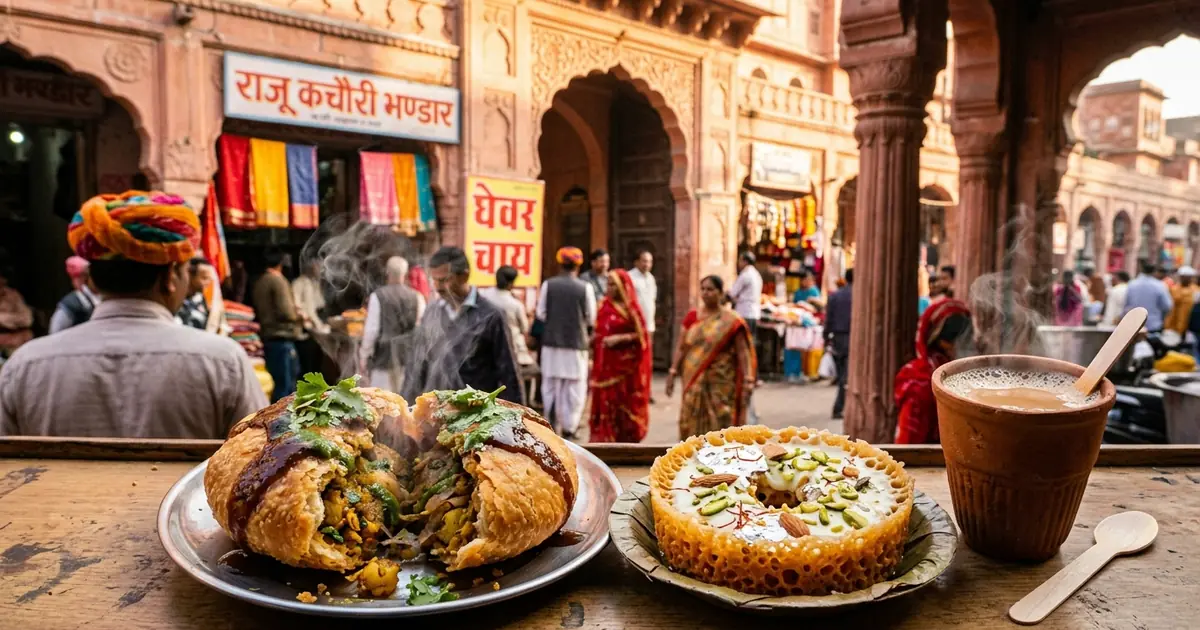
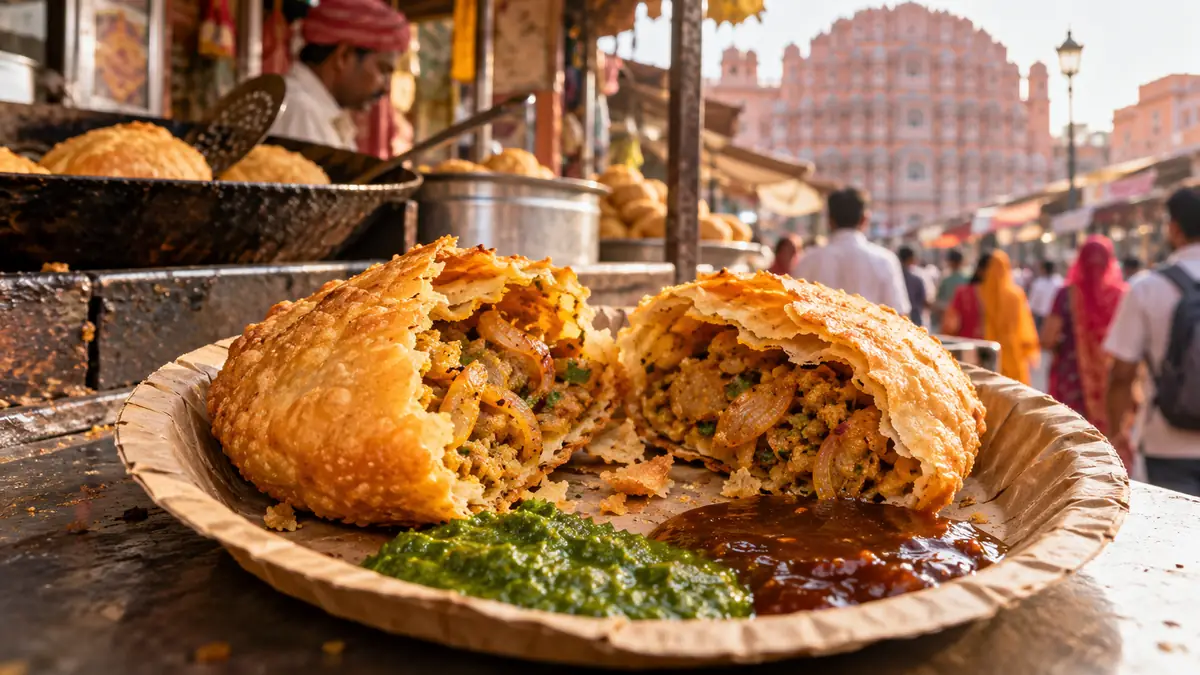
No morning in Jaipur is complete without joining the energetic queues outside Rawat Mishthan Bhandar on Station Road. Established in the mid-20th century, Rawat is widely credited with elevating the Rajasthani pyaaz kachori into a national culinary icon.
The kachori shell is made from refined flour dough kneaded with clarified butter and carom seeds (ajwain), ensuring a flaky, pastry-like crust. The stuffing consists of finely diced onions sauteed with boiled potatoes, crushed coriander seeds, fennel seeds (saunf), black pepper, red chili powder, and strong asafoetida (hing).
Cooks deep-fry the kachoris slowly in giant iron kadhais over medium flame for nearly twenty minutes, allowing the crust to expand into crisp blistered pockets without becoming greasy.
The kachori is served hot, broken open in the center to release fragrant steam, and ladled with sweet date-tamarind sonth and spicy coriander-mint chutney. A single kachori delivers substantial richness that keeps travelers satisfied for hours.
To integrate your morning kachori stop with visits to Amer Fort and the City Palace, explore our master guide to places to visit in Jaipur.
Royal Sweet Traditions: The Art of Rajasthani Ghevar
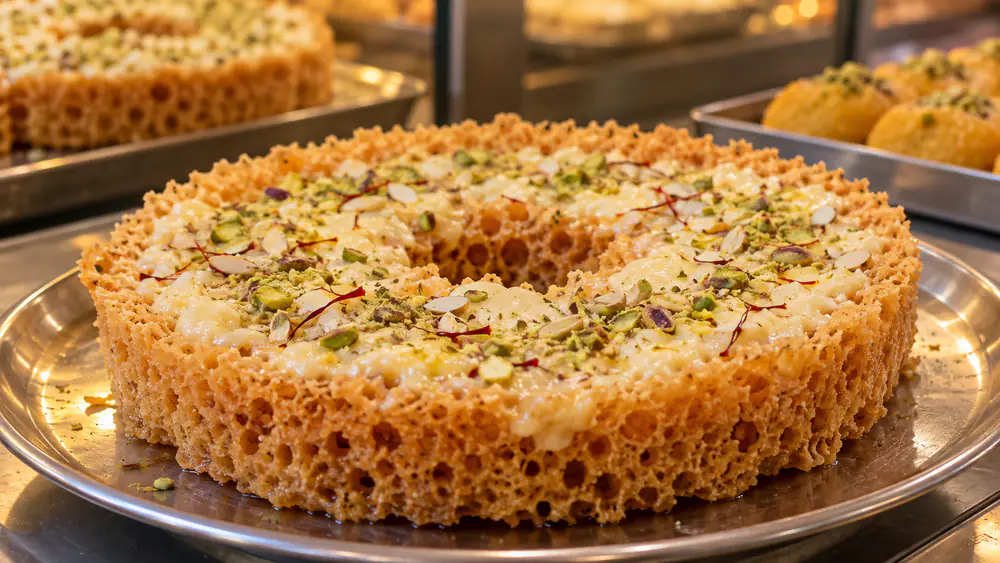
Ghevar is Rajasthan’s most complex and celebrated confection, traditionally prepared during the monsoon festival of Teej and winter months. The dessert resembles a porous honeycomb disc with an airy, lattice-like structure created through an astonishing thermodynamic cooking technique.
Confectioners vigorously whisk cold clarified butter with ice cubes until it transforms into a smooth white cream, then blend it with refined flour and ice-cold water to create a thin batter. When a ladle of this freezing batter is poured into boiling hot desi ghee, the moisture evaporates instantly, shooting hundreds of tiny steam chimneys through the frying fat.
Once golden and crisp, the circular disc is immersed briefly in warm sugar syrup infused with green cardamom and saffron strands.
For an indulgent variation, order Malai Ghevar, which is crowned with a thick layer of reduced sweet rabri (clotted cream), silver foil (vark), slivered almonds, and crushed pistachios. Laxmi Misthan Bhandar (LMB) in Johari Bazaar, operating since 1727, produces the most famous ghevar in Rajasthan.
To compare this intricate sugar confection with the milk-reduction sweets of eastern India, read our Kolkata street food guide.
Johari Bazaar Street Delicacies: Dal Baati, Chaat, and Lassi
Johari Bazaar forms the commercial heart of old Jaipur, lined with historic jewelers, textile shops, and multi-generational food carts operating under pink awnings.
Dal Baati Churma
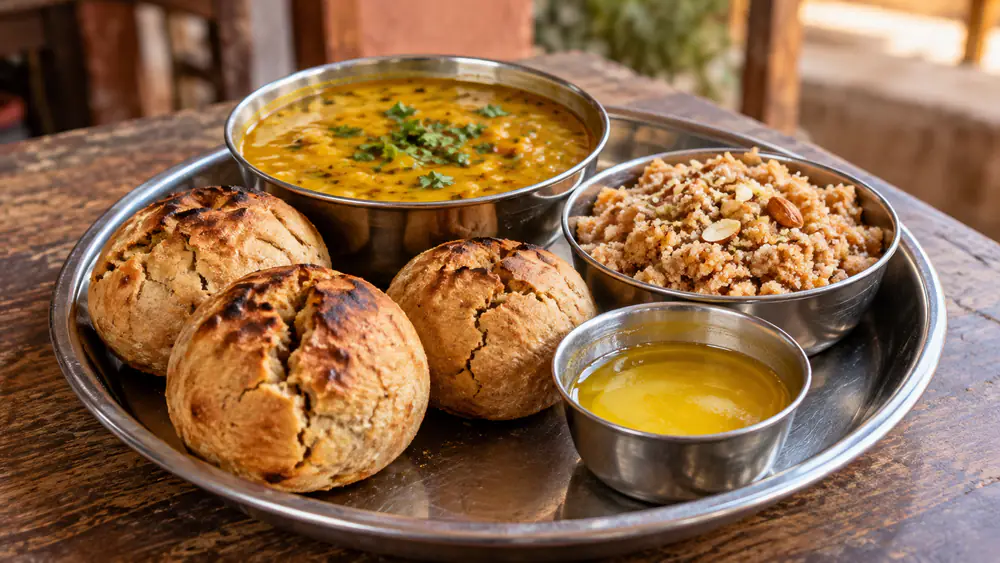
Rajasthan’s national dish consists of three balanced components: baatis (hard wheat dough balls baked over dried cow-dung cakes or charcoal embers until charred, then submerged entirely in melted ghee), panchmel dal (a spicy stew of five mixed lentils), and churma (sweet crumbled wheat cake flavored with cardamom and jaggery). Heritage spots like Thali and Brothers Dhaba offer authentic thali presentations.
Lassiwala (MI Road, Established 1944)
Located on Mirza Ismail Road near Panch Batti, the original Lassiwala (look for Shop 312) has churned fresh curd since 1944. Served in tall unglazed earthenware kulhads, their lassi is thick, creamy, and topped with a solid spoonful of yellow malai skimmed directly from copper pots. Customers can choose between sweet or salted versions, served ice-cold.
Pandit Kulfi (Hawa Mahal Road)
Located within sight of Hawa Mahal’s facade, Pandit Kulfi serves dense, fragrant saffron and pistachio kulfi molded in metal cones and sliced into neat rounds over dry sal leaves.
If you are planning to attend winter literary panels while exploring these bazaars, consult our Jaipur Literature Festival guide.
Chai Culture of Jaipur: Gulab Ji and Sahu Chai
Tea in Jaipur is treated with ceremonial affection, and few places capture local social life better than the city’s historic morning tea stalls.
Gulab Ji Chai Wale (MI Road)
Operating near Ganpati Plaza, Gulab Ji opened his tea stall in 1946. Known for his generous charitable spirit and exceptional masala tea, Gulab Ji simmered his chai in copper kettles with fresh ginger, crushed cloves, green cardamom, and full-fat buffalo milk.
Patrons pair their steaming glass of chai with bun maska or hot samosa-bun, sitting along low benches while local merchants discuss market news.
Sahu Chai (Chaura Rasta)
Situated on Chaura Rasta in the old walled city, Sahu Chai has brewed milk tea over open charcoal embers for generations. The slow coal heat imparts a distinct smoky undertone to the brew, setting it apart from gas-fired tea stalls.
To compare this desert chai heritage with the tandoor street snacks of northern Punjab, explore our Amritsar street food guide.
Jaipur Street Food Price Matrix and Landmark Locations
The table below outlines average pricing, stall locations, and operational hours across Jaipur’s primary culinary landmarks.
| Specialty / Dish | Famous Stall | Location | Operating Hours | Average Cost for Two |
|---|---|---|---|---|
| Pyaaz Kachori with Chutneys | Rawat Mishthan Bhandar | Station Road, Sindhi Camp | 6:30 AM to 10:00 PM | ₹100 to ₹160 |
| Saffron Malai Ghevar | LMB (Laxmi Misthan Bhandar) | Johari Bazaar | 7:00 AM to 11:00 PM | ₹250 to ₹400 |
| Thick Kulhad Malai Lassi | Lassiwala (Shop 312) | MI Road, Panch Batti | 7:00 AM to 4:00 PM | ₹140 to ₹200 |
| Masala Chai and Bun Maska | Gulab Ji Chai Wale | MI Road | 6:00 AM to 7:00 PM | ₹70 to ₹120 |
| Saffron Pistachio Kulfi | Pandit Kulfi | Near Hawa Mahal, Sireh Deori | 11:00 AM to 11:00 PM | ₹100 to ₹160 |
| Dal Baati Churma Thali | Mahaveer Rabri Bhandar | Mishra Rajaji Ka Rasta | 11:30 AM to 10:00 PM | ₹300 to ₹450 |
For national architectural preservation rules and monument entry details across Rajasthan, consult the Archaeological Survey of India official portal.
Practical Timings, Walking Routes, and Hygiene Advice
Tasting your way through Jaipur’s historic markets comfortably requires structuring your crawl around morning bakeries and evening twilight.
Curated Day-Long Tasting Itinerary
- Morning (7:30 AM to 9:30 AM): Begin on MI Road with steaming masala tea and bun maska at Gulab Ji, followed by hot pyaaz kachoris at Rawat.
- Midday (12:30 PM to 2:30 PM): Walk the pink colonnades of Johari Bazaar and savor an authentic Dal Baati Churma thali at LMB.
- Afternoon Refreshment (3:30 PM to 5:00 PM): Enjoy a chilled clay tumbler of thick malai lassi at the original Lassiwala on MI Road.
- Evening Sweet Crawl (6:30 PM to 9:00 PM): View the illuminated facade of Hawa Mahal while enjoying sliced saffron kulfi at Pandit Kulfi.
To connect your Jaipur culinary tour with Mughal Agra and imperial Delhi, align your journey with our Golden Triangle India itinerary.
Official state tourism maps and heritage walk schedules can be verified at the Incredible India Jaipur Portal.
For general travel clearance and foreign tourist guidelines, visit Incredible India.
Food Hygiene and Health Tips
- Choose Hot Fresh Kachoris: Ensure kachoris are retrieved directly from the hot oil kadhai or heated displays rather than sitting open on countertops.
- Drink Bottled Water: Do not consume municipal tap water at roadside tea stalls; carry sealed mineral water bottles.
- Pace Heavy Desi Ghee: Traditional Rajasthani recipes use substantial quantities of clarified butter. Drink warm water or ginger tea after heavy meals to aid digestion.
Frequently Asked Questions About Jaipur Street Food
What is the most famous street food to eat in Jaipur?
The most famous street food in Jaipur is the Pyaaz Kachori (flaky pastry stuffed with spicy onion-potato filling), followed by Malai Ghevar, Dal Baati Churma, and thick kulhad lassi from MI Road.
Which shop is the original Lassiwala in Jaipur?
The original Lassiwala is located at Shop 312 on MI Road near Panch Batti, operating since 1944. While several adjacent shops use similar names, the original shop features a prominent sign stating “Since 1944” and closes in the afternoon once daily curd batches run out.
Is Jaipur street food mostly vegetarian?
Yes. The vast majority of traditional street food in Jaipur is strictly vegetarian, reflecting Marwari and Jain culinary heritage. Non-vegetarian Rajput and Mughlai dishes such as Laal Maas (spicy mutton curry) are served primarily in sit-down restaurants rather than roadside food carts.
What is the best time of year to eat Ghevar in Jaipur?
Ghevar is available year-round, but it is traditionally prepared and celebrated during the monsoon season (July and August for the Teej festival) and throughout the cool winter months from October to February when rich milk sweets are in high demand.