Mumbai Street Food Guide: Vada Pav, Pav Bhaji, and Chaat Trail
Explore Mumbai iconic street food with top vada pav stalls, Sardar butter pav bhaji, Chowpatty bhelpuri, Irani cafe brun maska, and coastal seafood.
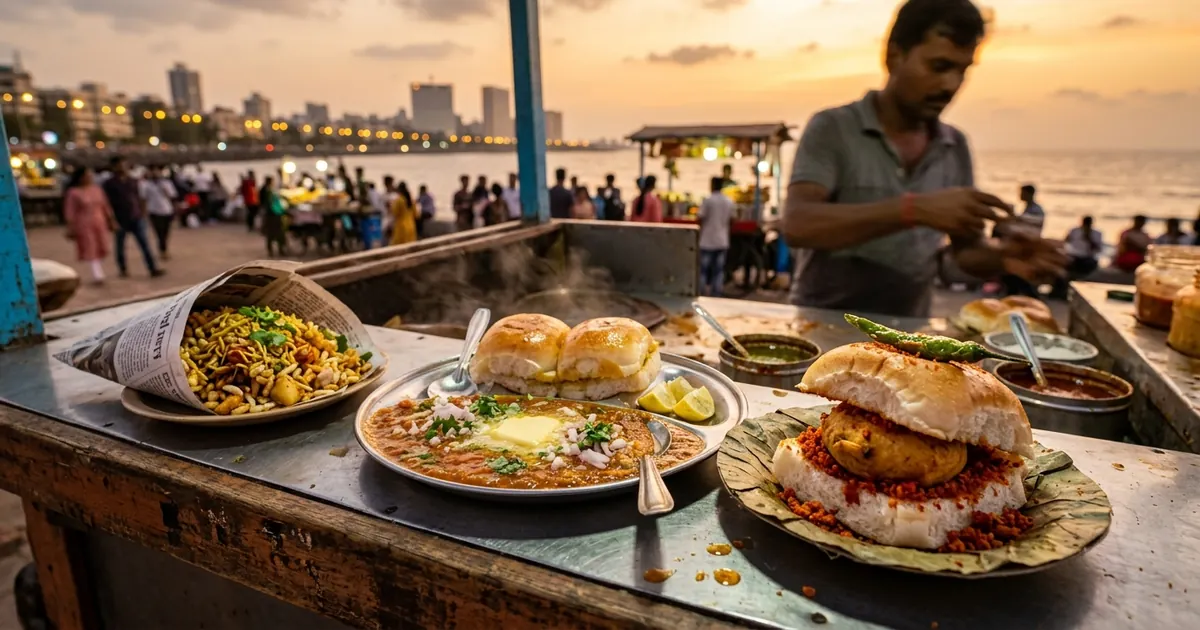
Mumbai is a city propelled by relentless speed and ambition, and its world-famous street food culture was engineered specifically to fuel this kinetic energy. In a metropolis where millions of commuters spend hours navigating suburban rail networks, sidewalk food carts serve as democratic equalizers where corporate executives, film technicians, and textile laborers stand shoulder to shoulder.
The foundation of Mumbai street gastronomy rests upon the humble Portuguese-introduced pav (yeast-leavened bread roll), reimagined through spicy Maharashtrian seasonings, coastal coconut gravies, and Gujarati sweet-savory street chaat combinations.
Mumbai Street Food Essentials
- Signature Specialties: Vada Pav (spiced potato fritter in pav bread), Pav Bhaji (spicy mashed vegetable curry with butter-toasted pav), and Bhelpuri (puffed rice tossed with tangy chutneys).
- Iconic Food Enclaves: Girgaon Chowpatty, Juhu Beach, Mohammad Ali Road, Dadar TT Circle, and Fort business district.
- Average Cost per Food Trail: ₹150 to ₹300 per person for two substantial savory courses, accompaniments, and cold desserts.
- Operating Hours: Breakfast stalls and vada pav counters open from 7:30 AM; beach chaat counters and dinner stalls run until midnight.
- Best Season: November to February, when dry winter breezes along the Arabian Sea offer pleasant evening outdoor conditions.
- Transit Tip: Most landmark stalls are clustered within walking distance of Western and Central suburban railway stations.
The King of Mumbai Street Food: The Legendary Vada Pav
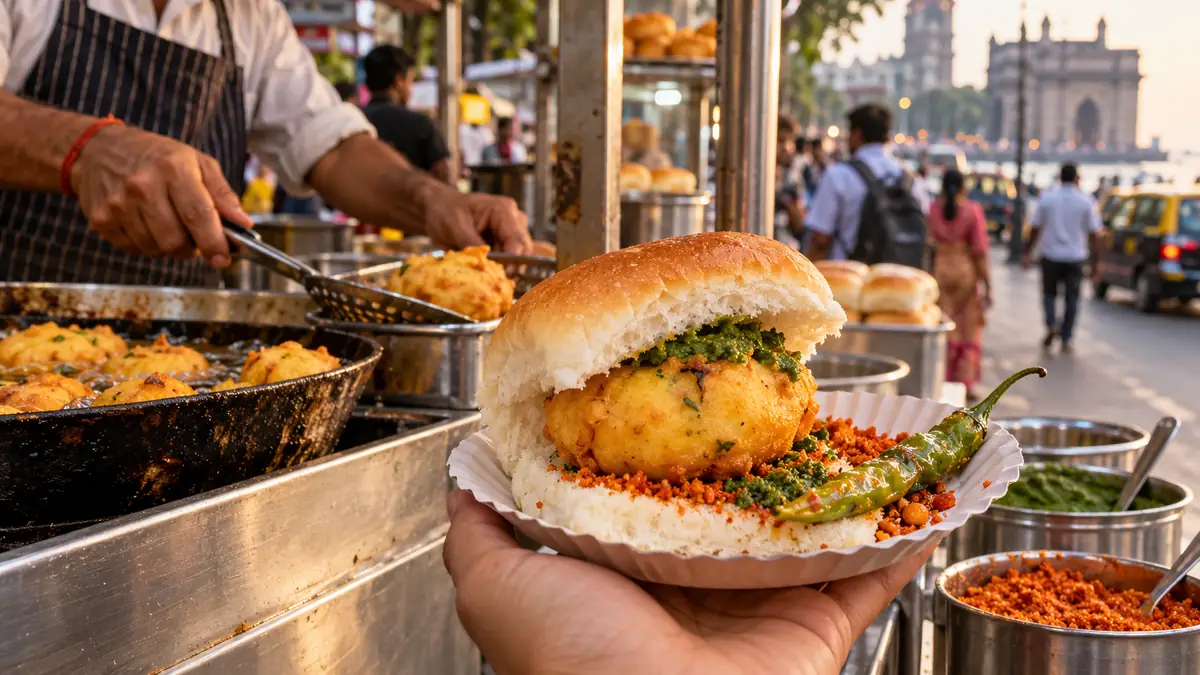
Often called the Bombay Burger, the vada pav was invented in 1966 by street vendor Ashok Vaidya outside Dadar railway station. Looking to offer a fast, portable, and inexpensive meal for thousands of textile mill workers rushing to factories, Vaidya placed a spiced potato ball inside a sliced pav bread smeared with garlic chutney.
The core of an authentic vada pav consists of boiled potatoes tempered with mustard seeds, turmeric, fresh curry leaves, grated ginger, and chopped green chilies. The mixture is balled, dipped in a spiced chickpea flour (besan) batter, and fried until crisp and golden.
The vendor slices a soft white ladi pav, smears the interior with fiery red garlic-coconut dry chutney and sweet tamarind sauce, nests the piping hot batata vada inside, and serves it with a blistered salted green chili.
Legendary stops include Ashok Vada Pav near Kirti College in Prabhadevi, Anand Stall opposite Mithibai College in Vile Parle, and Aram Milk Bar opposite Chhatrapati Shivaji Maharaj Terminus (CSMT).
To combine your morning street food crawl with sacred Ganpati darshan in central Mumbai, consult our Siddhivinayak Temple Mumbai guide.
Midnight Origins of Pav Bhaji: The Cotton Exchange Story
Pav bhaji traces its origins to the 1850s and 1860s, during the American Civil War when the global cotton trade experienced massive disruption. Mumbai cotton traders at the Bombay Cotton Exchange stayed up late receiving midnight telegraph prices from the New York exchange.
Street vendors around the business district innovated a late-night dish by collecting leftover market vegetables: potatoes, tomatoes, green peas, cauliflower, and capsicum. They mashed them together over large concave iron griddles (tawas) with generous blocks of butter and a pungent blend of coriander, cumin, fennel, and dried red chilies.
Today, a serving of Mumbai pav bhaji features a rich, brick-red vegetable mash topped with a melting slab of salted butter, accompanied by two soft pav rolls toasted in spiced butter on the same iron griddle. A side of finely diced red onions and a wedge of fresh lemon provides sharp acidity to cut through the rich butter.
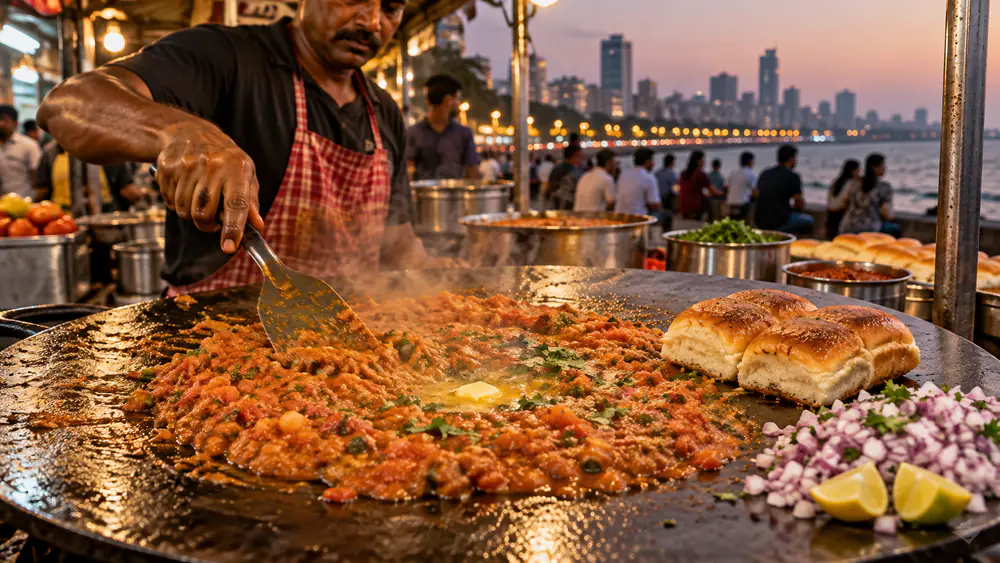
Celebrated destinations include Sardar Refreshments in Tardeo, famous for its lavish butter portions, Cannon Pav Bhaji near CSMT, and Amar Juice Centre in Juhu.
For travelers planning wider driving excursions across Maharashtra’s historic pilgrimage centers, review road connectivity in our 5 Jyotirlingas in Maharashtra route guide.
Beachside Chaat at Girgaon Chowpatty and Juhu Beach
Eating chaat while feeling the cool sea breeze of the Arabian Sea is a cherished Mumbai evening ritual. Girgaon Chowpatty and Juhu Beach host designated rows of licensed chaat vendors who have operated for generations.
Bhelpuri and Sev Puri
Mumbai bhelpuri combines puffed rice (kurmura) with crispy fried flour crispies (papdi), boiled potato cubes, finely chopped red onions, and raw green mango slices. The mix is bound together by three distinct chutneys: spicy green chili-coriander, sweet date-tamarind, and pungent red garlic paste, finished with a heavy shower of fine chickpea noodles (nylon sev).
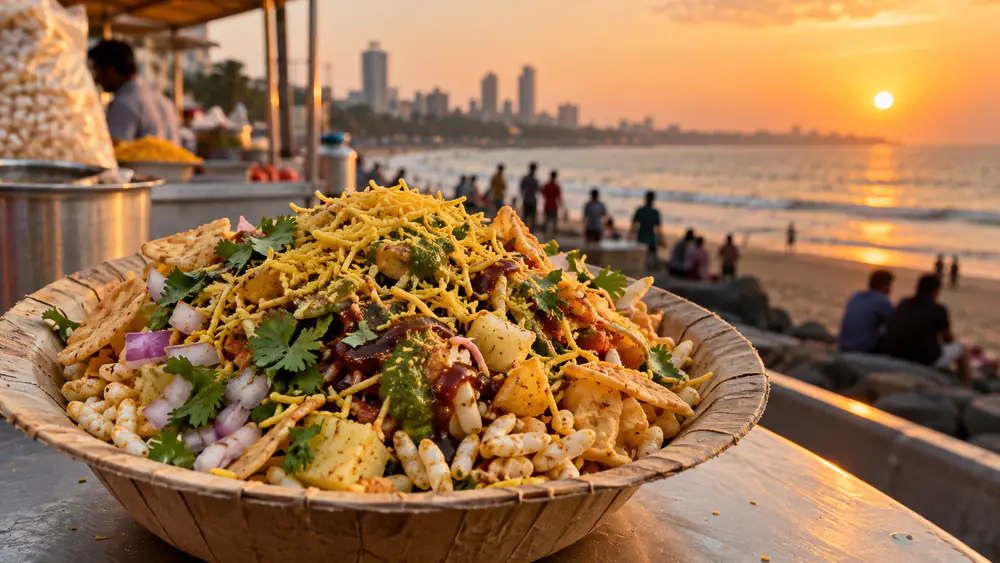
Sev puri arranges flat crisp puris topped with potato dice, onions, three chutneys, and a mound of crispy sev, delivering a crisp, tangy, and sweet crunch in every single bite.
Pani Puri on the Coast
Unlike the dark tamarind water of Kolkata phuchkas, Mumbai pani puri features warm ragda (spiced yellow peas) tucked inside semolina puris, flooded with chilled, mint-coriander spiced water and sweet tamarind sonth.
To compare beachside puffed rice creations with eastern tamarind street snacks, read our detailed Kolkata street food guide.
Irani Cafe Culture: Brun Maska, Chai, and Keema Pav
Beyond roadside carts, Mumbai’s food culture is deeply enriched by historic Irani cafes established by Zoroastrian Persian immigrants in the late 19th and early 20th centuries. These charming heritage establishments feature checkered tablecloths, bentwood chairs, high ceilings, and vintage glass jars.
Brun Maska and Irani Chai
The classic order is brun maska paired with hot Irani chai. Brun is a crusty, round hard bread with a crisp exterior and pillowy crumb, sliced and slathered with salted table butter. Diners dip the buttered bread directly into small cups of sweet, milky, cardamom-infused tea.
Keema Pav and Berry Pulao
For lunch, Irani cafes serve spicy minced mutton keema ghotala cooked with green peas and topped with a fried egg, scooped up with warm pav rolls. Heritage institutions include Britannia & Co. in Ballard Estate, Kyani & Co. near Marine Lines, and Yazdani Bakery in Fort.
To explore the rock-cut UNESCO sanctuaries and ancient basalt monasteries of Maharashtra, consult our comprehensive Ajanta Ellora caves guide. For travelers pairing Mumbai with a weekend vineyard trip, Nashik wine tasting tours and vineyard routes covers harvest seasons and tasting rooms.
Mohammad Ali Road and Bohri Mohalla: Mughlai Meat Delicacies
During the holy month of Ramadan and throughout winter evenings, the lanes of Mohammad Ali Road, Minara Masjid, and Bohri Mohalla transform into an expansive open-air meat market.
Seekh Kebabs and Baida Roti
Master cooks roast spiced minced buffalo and mutton seekh kebabs over long charcoal troughs, serving them with fresh mint leaves and round parathas. Baida roti features a thin sheet of dough folded around spiced egg and minced chicken or mutton, pan-fried on a griddle until crisp.
Nalli Nihari and Sanju Baba Chicken
At Noor Mohammadi Hotel on Bhendi Bazaar, patrons line up for slow-simmered Nalli Nihari, a rich bone-marrow stew cooked overnight. The hotel also serves Sanju Baba Chicken, a recipe gifted to the owners by Bollywood actor Sanjay Dutt.
For dessert, Suleman Usman Mithaiwala serves sizzling malpua, a deep-fried sweet pancake drenched in sugar syrup, coated in warm rabri, and garnished with chopped pistachios.
To compare these coastal Mughlai recipes with the imperial tandoor traditions of Old Delhi, explore our Old Delhi Street Food highlights.
Mumbai Street Food Price Matrix and Top Stalls
The table below outlines average costs, neighborhoods, and signature specialties across Mumbai’s most famous culinary stops.
| Specialty / Dish | Famous Stall | Location | Operating Hours | Average Cost for Two |
|---|---|---|---|---|
| Vada Pav with Chutney | Ashok Vada Pav | Prabhadevi | 11:00 AM to 9:30 PM | ₹50 to ₹80 |
| Butter Pav Bhaji | Sardar Refreshments | Tardeo | 12:00 PM to 11:30 PM | ₹250 to ₹350 |
| Bhelpuri and Sev Puri | Sharmajee / Badshah | Girgaon Chowpatty | 3:30 PM to 11:30 PM | ₹100 to ₹180 |
| Brun Maska and Irani Chai | Kyani & Co. | Marine Lines | 7:00 AM to 8:00 PM | ₹120 to ₹200 |
| Mutton Seekh Kebab | Farid Seekh Corner | Bohri Mohalla | 6:00 PM to 1:00 AM | ₹200 to ₹320 |
| Malpua with Rabri | Suleman Usman | Mohammad Ali Road | 4:00 PM to 12:30 AM | ₹150 to ₹250 |
For national architectural preservation rules and official monument details across western India, consult the Archaeological Survey of India official portal.
Practical Timings, Logistics, and Hygiene Tips
Navigating Mumbai’s expansive street food landscape requires practical transit planning and basic health precautions.
Recommended Daily Food Crawl Schedule
- Morning (8:00 AM to 10:00 AM): Start with crisp brun maska and hot Irani chai at Kyani & Co. in Marine Lines, followed by a fresh batata vada outside Churchgate station.
- Midday (12:30 PM to 2:30 PM): Head to Tardeo or CSMT for steaming plates of spiced butter pav bhaji.
- Sunset (5:00 PM to 7:00 PM): Walk along Marine Drive to Girgaon Chowpatty for bhelpuri, sev puri, and chilled kulfi falooda by the sea.
- Night (8:30 PM to 11:00 PM): Explore the kebabs and rotis of Bohri Mohalla or sample frankies and dosas along Carter Road in Bandra.
Official city tourism walk directories and urban transport maps can be verified at the Incredible India Mumbai Portal.
For pan-Indian travel advisories, consult the central directory of Incredible India.
Food Safety Recommendations
- Drink Sealed Bottled Water: Do not consume untreated tap water at street carts; always carry your own sealed drinking water.
- Select Busy Stalls: Patronize vendors with steady crowds where hot food is prepared fresh to order in boiling oil or smoking tawas.
- Verify Ice Quality: Avoid crushed ice in street juices or golas unless the vendor explicitly uses purified commercial cylinder ice.
Frequently Asked Questions About Mumbai Street Food
Who invented the vada pav in Mumbai?
Ashok Vaidya invented the vada pav in 1966 outside Dadar railway station. He paired a spiced fried potato dumpling with Portuguese-style pav bread to create a quick, nourishing meal for commuting mill workers.
What is the difference between ragda pattice and pav bhaji?
Ragda pattice consists of shallow-fried spiced potato patties served with warm dried white pea curry (ragda) and chutneys. Pav bhaji is a mixed mashed vegetable curry cooked with heavy butter and spices on a flat iron griddle, eaten exclusively with toasted pav rolls.
Which beach is better for street food: Girgaon Chowpatty or Juhu Beach?
Girgaon Chowpatty in South Mumbai is ideal for classic bhelpuri, sev puri, and kulfi with views of Marine Drive and Queen’s Necklace. Juhu Beach in the western suburbs offers a broader variety of contemporary street food including pav bhaji, dosas, and Chinese bhel.
Is Mumbai street food vegetarian-friendly?
Yes. The vast majority of Mumbai street classics, including vada pav, pav bhaji, bhelpuri, sev puri, ragda pattice, and frankies, are completely vegetarian. Non-vegetarian street food is concentrated in historic enclaves like Mohammad Ali Road and Bohri Mohalla.