5 Jyotirlingas in Maharashtra Route: 4-Day Road Trip Guide
Plan your road trip across the 5 Jyotirlingas in Maharashtra with daily driving routes, temple darshan timings, dress codes, hotels, and travel tips.
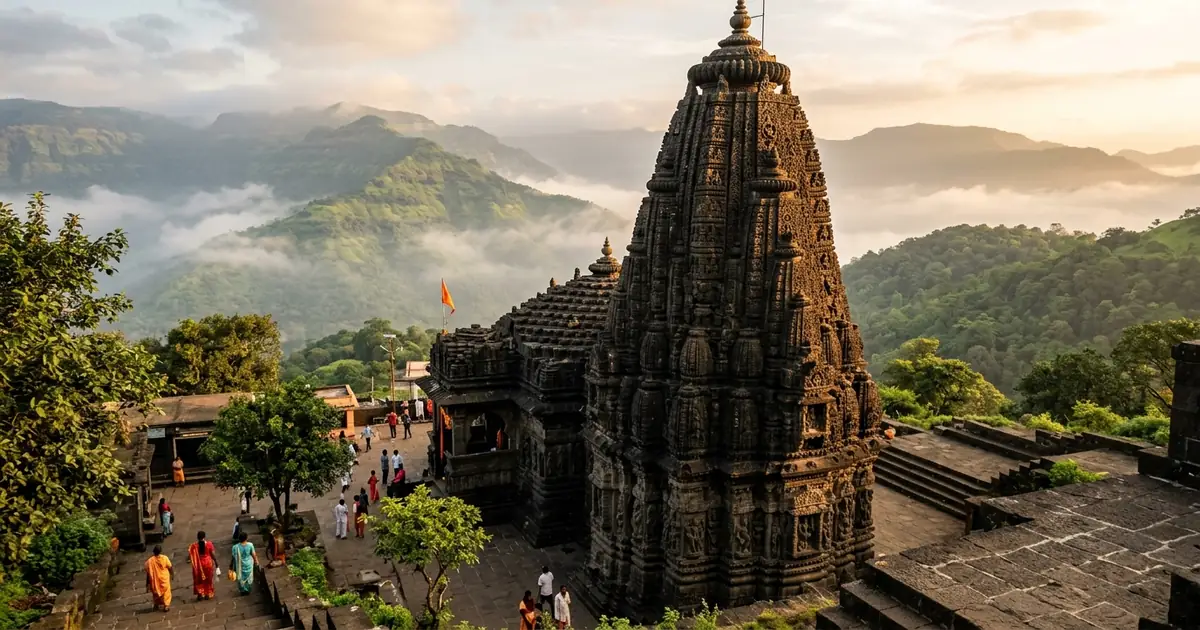
Maharashtra holds the rare distinction of housing five of the twelve sacred Jyotirlinga shrines dedicated to Lord Shiva across the Indian subcontinent. Spread across the rugged basalt ridges of the Western Ghats, the agricultural plains of Marathwada, and the Godavari River basin, these five shrines represent centuries of Rashtrakuta, Yadava, and Maratha architectural patronage.
Completing the Maharashtra Pancha Jyotirlinga yatra by road requires thoughtful sequencing, because the shrines are separated by winding ghat passes and long highway stretches. Travelers typically commence their journey from either Pune or Mumbai, driving roughly 1,000 to 1,200 kilometers across four to five days to complete darshan at Bhimashankar, Trimbakeshwar, Grishneshwar, Aundha Nagnath, and Parli Vaijnath.
Maharashtra Jyotirlinga Circuit Essentials
- Total Driving Distance: Approximately 1,050 to 1,200 kilometers depending on starting point (Pune vs Mumbai).
- Recommended Duration: 4 nights and 5 days for relaxed darshan and reasonable daily driving shifts.
- The Five Sacred Shrines: Bhimashankar (Pune district), Trimbakeshwar (Nashik), Grishneshwar (Chhatrapati Sambhajinagar), Aundha Nagnath (Hingoli), and Parli Vaijnath (Beed).
- Peak Season: October through March offers pleasant daytime temperatures and clear highway visibility.
- Monsoon Considerations: July through September brings lush waterfalls, but fog and wet mountain roads require careful driving.
- Temple Entry Guidelines: Most sanctums require traditional unstitched attire (dhoti and angavastram for men) for VIP touch-darshan or Sparsh Abhishek.
Understanding the Five Shrines and Their Sacred Geography
The five shrines are situated in two distinct geographic zones of Maharashtra. Two shrines occupy the moist, forested slopes of the Sahyadri range in Western Maharashtra, while three shrines stand across the drier interior plateau of Marathwada.
Bhimashankar sits at an elevation of 3,296 feet surrounded by dense evergreen woods near the source of the Bhima River. Trimbakeshwar rests at the foothills of the Brahmagiri mountain, where the sacred Godavari River originates. Further east near Ellora, Grishneshwar is built of red sandstone and marks the westernmost anchor of the Marathwada group.
In Hingoli district, Aundha Nagnath is celebrated as the eighth Jyotirlinga, linked in regional tradition to the Pandavas and Saint Namdev. Southward in Beed district, Parli Vaijnath crowns a modest hillock near the confluence of the Godavari and tributary streams, noted as an ancient centre of medicinal herbs and healing energies.
Each shrine carries distinct spiritual traditions and architectural heritage, as documented by state tourism resources on Maharashtra Tourism and national heritage surveys. Planning a circuit that balances highway transit with morning and evening aarti schedules ensures a peaceful and fulfilling journey across this historic terrain.
Best Starting Point: Pune vs Mumbai vs Aurangabad
Choosing your starting hub sets the tempo for the entire pilgrimage. Most domestic and overseas travelers land at Pune Airport (PNQ) or Mumbai Chhatrapati Shivaji Maharaj International Airport (BOM), while regional travelers often select Chhatrapati Sambhajinagar (Aurangabad Airport, IXU) as a central midpoint.
Pune is widely considered the most efficient starting point because it offers direct highway access to Bhimashankar via NH 60. Starting from Pune saves at least two hours of heavy metropolitan congestion compared to navigating Mumbai suburban bottlenecks.
A clockwise circuit starting from Pune allows you to visit Bhimashankar first, head north to Trimbakeshwar, cross east to Grishneshwar, sweep southeast to Aundha Nagnath and Parli Vaijnath, and return to Pune via Ahmednagar.
Starting from Mumbai works well if you secure direct flights into the city. From Mumbai, travelers generally drive northeast across the scenic Kasara Ghat on NH 160 directly to Trimbakeshwar near Nashik, followed by Grishneshwar, Aundha Nagnath, Parli Vaijnath, and ending with Bhimashankar before descending back to Mumbai. If you are spending an extra day exploring the coastal metropolis before embarking on the road trip, sample the city’s iconic street snacks and beachside bhelpuri with our Mumbai street food guide.
For travelers seeking a shorter driving loop, flying into Chhatrapati Sambhajinagar provides immediate proximity to Grishneshwar. You can hire a private cab locally, cover the eastern shrines first, drive west toward Nashik, loop down to Bhimashankar, and return to Aurangabad within four days.
Day 1: Pune to Bhimashankar to Nashik
Begin early in the morning from Pune, departing by 6:00 AM to avoid industrial traffic around Chakan and Rajgurunagar along NH 60. The 110-kilometer drive to Bhimashankar takes approximately three and a half hours, winding through scenic agricultural valleys before climbing the Sahyadri ghats into the Bhimashankar Wildlife Sanctuary.
Arrive at Bhimashankar Jyotirlinga by 9:30 AM. Park at the upper vehicle depot and walk down the paved stairway of roughly 250 steps to the temple courtyard. The temple displays Nagara styling mixed with Maratha wood and stone craftsmanship, dating to the mid-18th century under Nana Fadnavis.
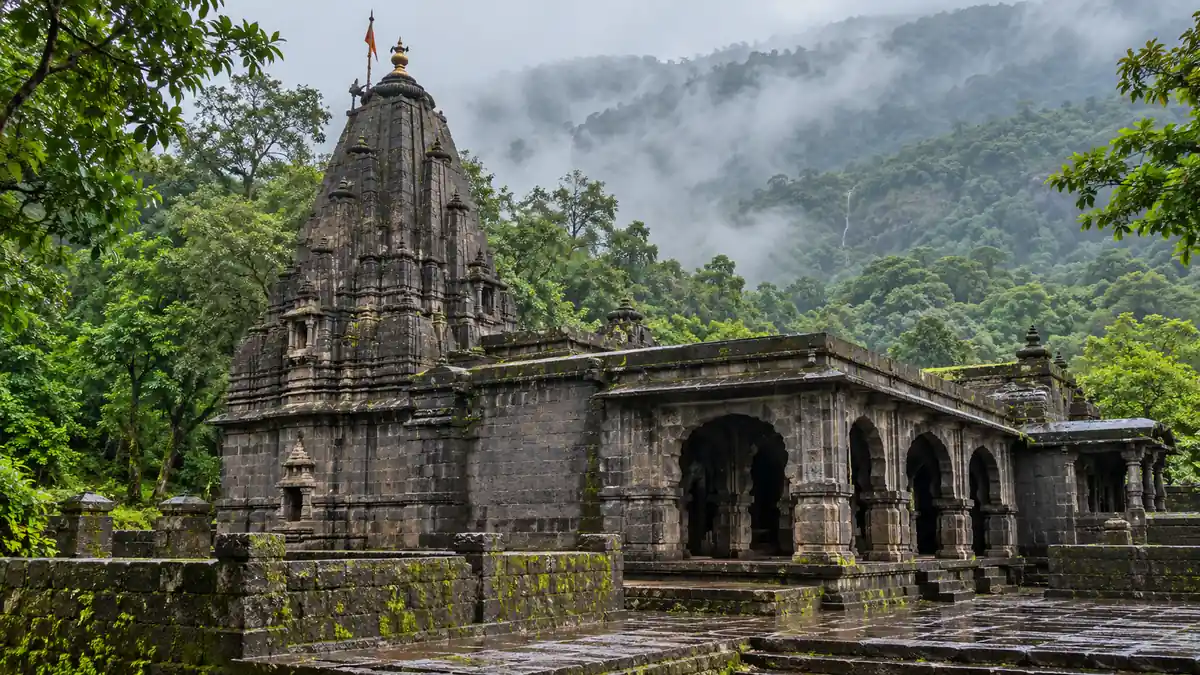
Complete general darshan or special entry darshan by 11:30 AM, have a simple Maharashtrian vegetarian lunch of pithla bhakri at the local village stalls, and begin the drive toward Trimbakeshwar. The route travels via Manchar, Sangamner, and Sinnar, covering roughly 230 kilometers in about five to six hours. Reach Trimbak town by 7:30 PM, check into your hotel, and rest overnight.
Day 2: Trimbakeshwar Darshan to Shirdi to Grishneshwar
Wake before sunrise to attend the morning kakad aarti or early darshan at Trimbakeshwar Jyotirlinga. The temple opens at 5:30 AM. Trimbakeshwar is unique among the Jyotirlingas because its lingam features three distinct faces representing Brahma, Vishnu, and Shiva, crowned by a jeweled gold mask during special ceremonies.
The black basalt temple constructed under Peshwa Balaji Baji Rao displays fine stone relief carvings. After completing darshan, walk around the sacred Kushavarta kund, the historic stone tank where the Godavari River emerges into public bathing ghats. Enjoy a traditional breakfast of warm misal pav or poha in Trimbak town before checking out by 10:30 AM.
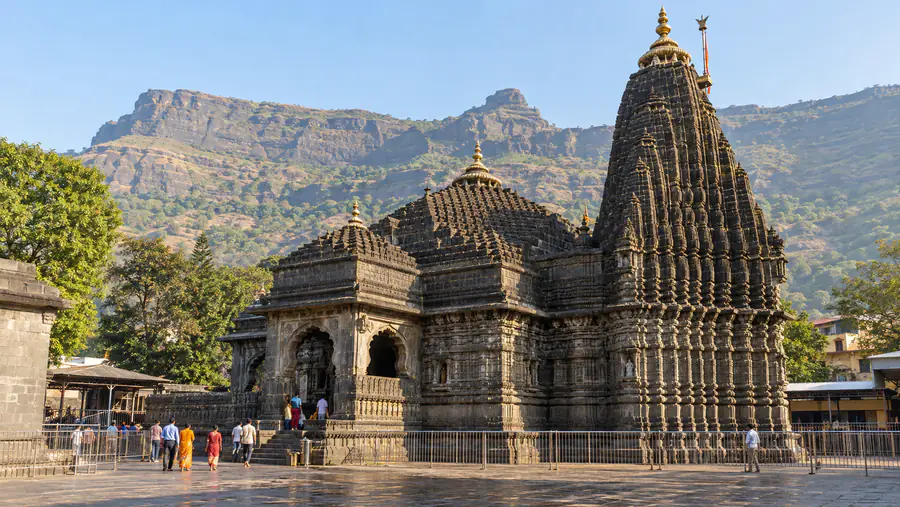
Depart Trimbak for Chhatrapati Sambhajinagar (Aurangabad), travelling through Shirdi or along the Samruddhi Mahamarg expressway. Continue eastward toward Verul village, home to Grishneshwar. The drive covers approximately 190 kilometers and takes four hours.
Arrive at Grishneshwar by late afternoon. Standing adjacent to the famous rock-cut caverns, Grishneshwar is constructed of warm red sandstone with detailed five-tiered shikharas restored by the Holkar queen Ahilyabai of Indore. Men must remove their upper garments to enter the inner sanctum. Complete evening darshan and stay overnight in Chhatrapati Sambhajinagar or Verul.
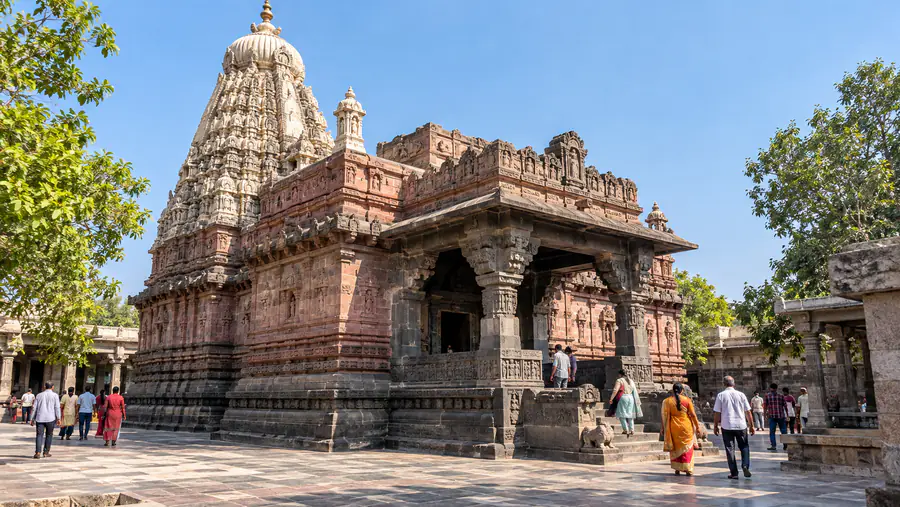
Day 3: Grishneshwar to Aundha Nagnath
Depart Chhatrapati Sambhajinagar by 7:00 AM, driving east across Marathwada along NH 752I toward Jalna and Hingoli district. The distance to Aundha Nagnath is roughly 210 kilometers, requiring about four and a half hours of driving through cotton and soybean farming belts.
Aundha Nagnath holds immense historical interest. Built during the Yadava dynasty in the 13th century, the temple architecture features Hemadpanthi stone masonry with deeply carved friezes of elephants, deities, and celestial dancers. The inner sanctum sits underground, reached via a narrow flight of stone steps where pilgrims descend into a cool, rock-cut chamber to offer bilva leaves directly to the swayambhu lingam.
Legend recounts that Sant Namdev sang bhajans outside this shrine when orthodox priests barred his entry, causing the temple structure to rotate to face the devotee. After unhurried darshan and lunch in Aundha, drive 65 kilometers south to Nanded or Parbhani to secure comfortable lodging, or proceed directly to Parli.
Day 4: Aundha Nagnath to Parli Vaijnath
From your overnight base, head toward Parli Vaijnath in Beed district. The distance from Aundha Nagnath to Parli Vaijnath is approximately 115 kilometers via Parbhani and Gangakhed, taking roughly three hours on state highways.
Parli Vaijnath stands atop a stone hillock surrounded by fortified stone walls and broad gateway portals. The current stone sanctum was reconstructed by Rani Ahilyabai Holkar in the late 18th century using local dark stone blocks. Devotees climb a flight of broad steps to reach the main mandapa.
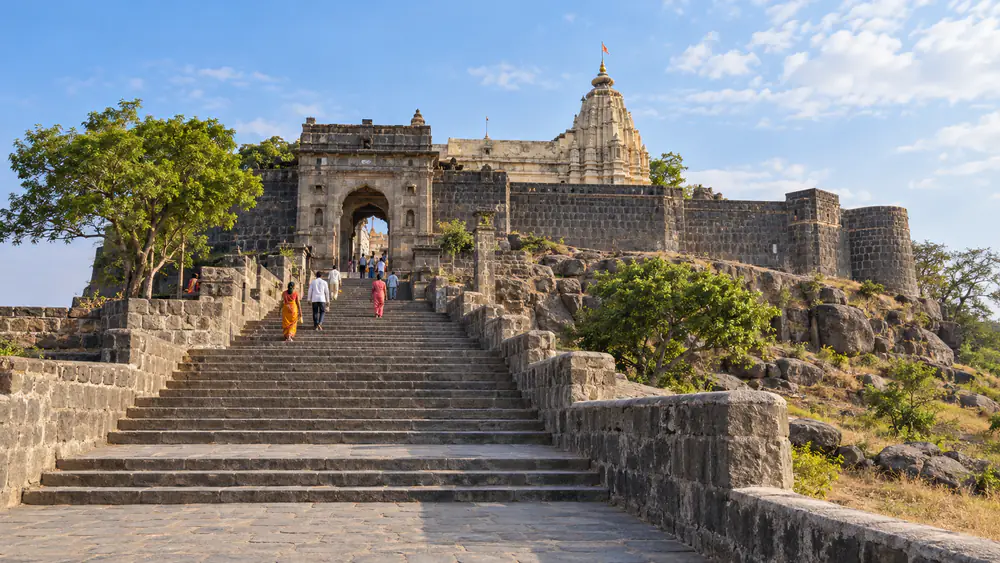
The lingam at Parli is associated with both healing and longevity, identified in scripture as Vaidyanath, the supreme physician. Touch-darshan is permitted during non-peak hours, allowing pilgrims to offer sacred water and flowers. After offering prayers and receiving temple prasad, check into your local guesthouse or drive toward Beed or Ahmednagar to position yourself for the final leg back to Pune.
Day 5: Parli Vaijnath Return to Pune
On your final day, complete the return drive across western Marathwada back to Pune. If you stayed overnight in Parli, the drive covers approximately 340 kilometers via Beed and Ahmednagar, taking six to seven hours over smooth state and national highways. If you have extra days on this regional circuit, Vistadome Trains India route breakdown outlines key sights, timings, and local transport.
Stop in Ahmednagar for lunch and visit the historic Ahmednagar Fort if time permits. Continue along the Ahmednagar-Pune highway (SH 27), reaching Pune by late afternoon. This completes your Pancha Jyotirlinga circuit with ample time to catch evening flights or trains onward to your home destination.
Route Map, Driving Distances, and Highway Conditions
The table below outlines the sector-by-sector driving distances, average travel durations, and key highway routes for the complete Maharashtra Jyotirlinga road trip.
| Sector Route | Distance (km) | Driving Time | Recommended Highway | Road Conditions |
|---|---|---|---|---|
| Pune to Bhimashankar | 110 km | 3.5 hours | NH 60 & SH 112 | Good 4-lane highway up to Manchar, narrow ghat climb near temple |
| Bhimashankar to Trimbakeshwar | 230 km | 5.5 hours | SH 112, NH 60, NH 160 | Good interior roads via Sangamner and Sinnar; winding sections |
| Trimbakeshwar to Grishneshwar | 190 km | 4.0 hours | NH 160 & Samruddhi Mahamarg | Excellent expressway corridors with fast bypass around Aurangabad |
| Grishneshwar to Aundha Nagnath | 210 km | 4.5 hours | NH 752I & NH 161A | 2-lane and 4-lane mixed highways through Jalna; moderate truck traffic |
| Aundha Nagnath to Parli Vaijnath | 115 km | 3.0 hours | SH 222 & NH 548B | Good 2-lane rural state highways via Parbhani and Gangakhed |
| Parli Vaijnath to Pune | 340 km | 6.5 hours | NH 548B & SH 27 | 4-lane corridors via Beed and Ahmednagar; steady traffic near Pune |
Road quality across Maharashtra has improved substantially with the opening of modern expressways like the Hindu Hrudaysamrat Balasaheb Thackeray Maharashtra Samruddhi Mahamarg. Using the expressway between Nashik and Aurangabad saves significant driving time, leaving you well-rested for temple rituals.
When booking vehicles, opt for an SUV or a comfortable sedan with good ground clearance, especially for the ghat ascents leading to Bhimashankar and rural stretches between Hingoli and Beed.
Sanctum Timings, VIP Darshan, and Online Passes
Temple queues can lengthen during Mondays (Somwar), Pradosham, and festival periods such as Shravan and Maha Shivratri. Knowing operating schedules and pass systems saves hours of standing in line.
Detailed architectural and conservation updates for heritage sites across the state can be referenced at the Archaeological Survey of India portal.
Temple Timings and Ritual Schedules
| Shrine Name | General Darshan Hours | Morning Aarti | Evening Aarti | VIP / Special Pass Availability |
|---|---|---|---|---|
| Bhimashankar | 4:30 AM – 9:30 PM | 4:30 AM (Kakad) | 7:30 PM (Sandhya) | VIP entry available at temple trust counters during peak weekends |
| Trimbakeshwar | 5:30 AM – 9:00 PM | 5:30 AM | 7:00 PM | Online e-passes and VIP queue passes (approx ₹200) available at trust office |
| Grishneshwar | 5:30 AM – 9:30 PM | 5:30 AM | 8:00 PM | Free general entry; paid priority queue passes during festival rushes |
| Aundha Nagnath | 4:00 AM – 10:00 PM | 5:00 AM | 7:30 PM | Direct trust entry passes available for special abhishekam |
| Parli Vaijnath | 5:00 AM – 9:00 PM | 5:30 AM | 8:00 PM | Priority entry available; touch-darshan during designated afternoon hours |
At Trimbakeshwar, crowds can swell dramatically on Mondays. Booking early morning slots or purchasing special entry passes at the Shri Trimbakeshwar Sansthan counter allows quicker access to the inner mandapa. At Grishneshwar, queues move relatively briskly outside festival weeks, but expect longer waits during the sacred month of Shravan (July-August).
For travelers interested in exploring all twelve pan-Indian shrines, our comprehensive 12 Jyotirlingas guide breaks down geographic linkages and spiritual origins across the country.
Dress Codes, Ritual Rules, and Temple Etiquette
Adhering to local customs ensures smooth entry and respectful participation in sanctum rituals. Each of the five Maharashtra shrines enforces specific guidelines for entering the garbhagriha (inner sanctum).
Sanctum Attire Requirements
- Grishneshwar: Strict rules govern inner sanctum entry. Male devotees wishing to enter the garbhagriha must remove shirts, vests, and belts, wearing only a traditional unstitched cotton dhoti. Female devotees should wear sarees or modest salwar kameez with dupattas. Western clothes like shorts, jeans, or sleeveless tops are not permitted in the inner chamber.
- Trimbakeshwar: For general darshan from the sabha mandap, formal modest attire is acceptable. However, for specialized pujas such as Narayan Nagbali, Kalsarpa Shanti, or direct Sparsh Abhishek on the lingam, male devotees must wear clean dhotis and shawls, while women must wear sarees.
- Bhimashankar, Aundha, and Parli: Traditional modest Indian attire is strongly recommended. While general darshan lines allow modest contemporary clothing, touch-darshan and special milk abhishekam require unstitched traditional dress.
Electronic Devices and Storage
Photography and videography are strictly prohibited inside the inner sanctums of all five temples. Mobile phones and cameras must either be switched off or placed in personal bags before entering the sanctum. Most temple premises provide shoe stands and cloakrooms for mobile phones and luggage, typically charging a nominal fee of ₹10 to ₹20 per item.
Best Time to Plan the Maharashtra Jyotirlinga Road Trip
Weather across Maharashtra varies sharply between the cool winter plateau, the blazing summer months, and the torrential monsoon in the Sahyadris.
Winter (October to March): Recommended Peak Season
Winter represents the ideal time for this road trip. Daytime temperatures range comfortably between 20°C and 28°C, while nights turn crisp and cool, dropping to 12°C to 15°C in hill regions like Bhimashankar. Driving conditions are clear, mountain roads are dry, and walking barefoot across temple stone flagstones is comfortable throughout the day.
Monsoon (July to September): Scenic Greenery with Mountain Caution
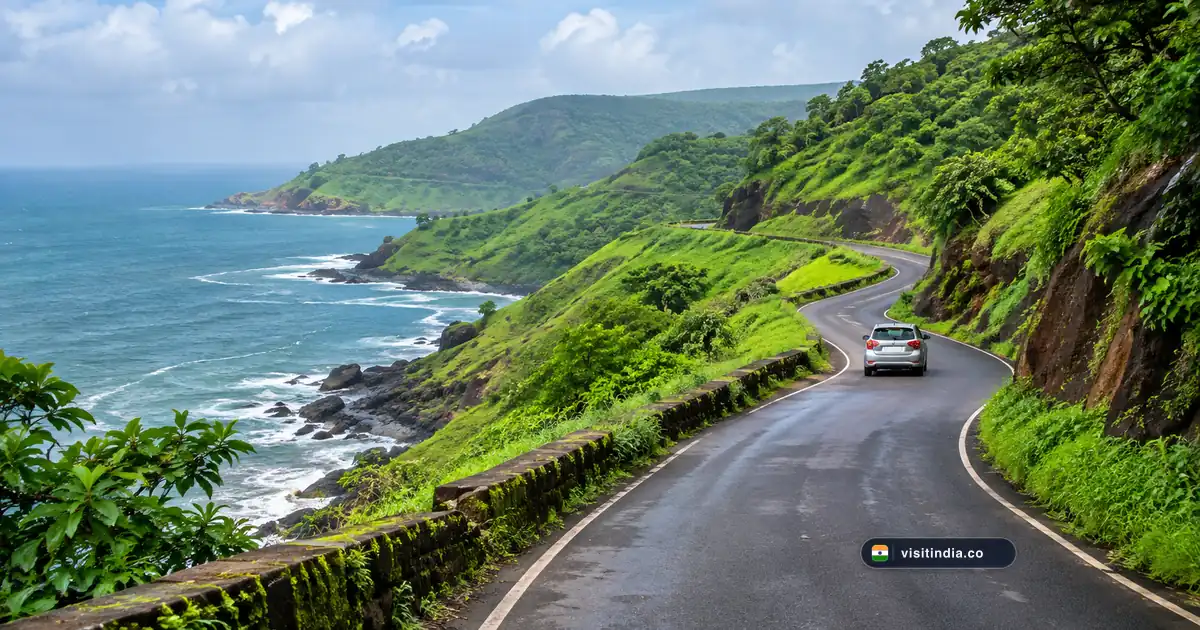
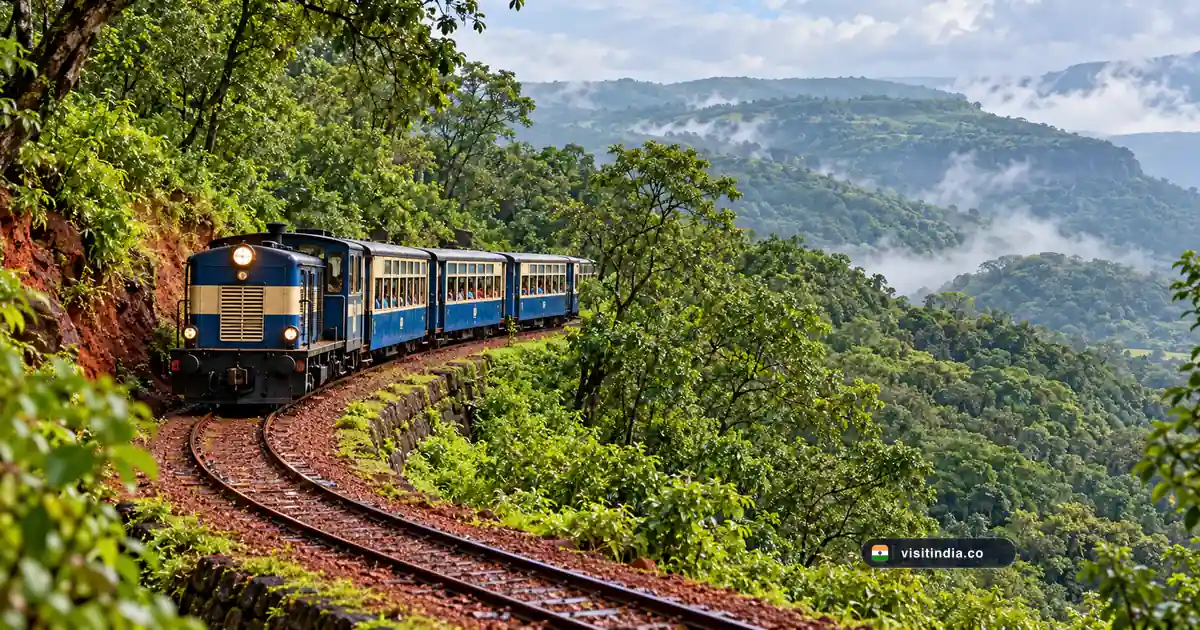
Monsoon transforms the Western Ghats into a lush green panorama dotted with seasonal cascades. The drive up to Bhimashankar and Trimbakeshwar is visually spectacular during these months. However, heavy rains frequently bring dense fog, slick roads, and occasional landslides in ghat sections. Furthermore, the Hindu holy month of Shravan falls during this period, drawing hundreds of thousands of pilgrims and resulting in long queues.
Summer (April to June): Hot and Demanding
Summer temperatures across Marathwada regularly exceed 40°C to 42°C. The afternoon sun makes bare-foot walking across stone temple courtyards painful, and long highway drives can cause vehicle overheating and physical fatigue. If traveling in summer, plan all darshans during early morning hours (5:30 AM to 8:30 AM) or after sunset.
For national travel planning inspiration, consult official resources on Incredible India to align regional itineraries with seasonal festivals. Travelers extending their pilgrimage to coastal forts, hill stations, or wildlife reserves can map multi-week circuits with our Maharashtra travel guide.
Accommodation, Dining, and Packing Recommendations
Securing comfortable lodging at strategic highway junctions ensures your road trip remains restful and organized.
Where to Stay Along the Route
- Nashik / Trimbak: Nashik city offers the widest range of quality hotels, luxury resorts, and boutique stays, situated just 30 kilometers from Trimbakeshwar. Staying in Nashik allows you to enjoy modern comforts and diverse dining options before driving east.
- Chhatrapati Sambhajinagar (Aurangabad): As a major commercial and tourism hub, the city features premium business hotels, MTDC resort properties, and comfortable family guesthouses located within a 45-minute drive of Grishneshwar.
- Nanded / Parbhani: For the eastern leg covering Aundha Nagnath and Parli Vaijnath, Nanded city offers quality 3-star and business hotels near the railway station and Hazur Sahib Gurudwara.
Regional Food and Dining
Maharashtra highway travel offers authentic regional cuisine. Enjoy traditional breakfast items such as poha, upma, sabudana khichdi, and spicy misal pav served with fresh pav buns. In rural Marathwada, local dhabas serve wholesome vegetarian thalis with jowar or bajra bhakri, pithla (gram flour curry), thecha (spicy green chili and garlic relish), and fresh churned butter. During fasting days, dedicated upvas thalis featuring singhara flour puris, boiled potato sabzi, and curd are widely available outside every temple gate.
What to Pack for the Circuit
- Traditional Garments: At least two sets of clean cotton dhotis with angavastrams for men and traditional cotton sarees for women to fulfill sanctum touch-darshan rules.
- Slip-on Footwear: Footwear must be removed outside every temple complex; choose comfortable slip-on shoes or sandals rather than laced boots to avoid delays at shoe counters.
- Cash in Small Denominations: While UPI payments are accepted at major stores, village parking counters, shoe stands, and small flower vendors often require cash notes of ₹10, ₹20, and ₹50.
- Hydration and First Aid: Carry a box of electrolyte sachets, motion sickness tablets for ghat curves, and personal prescription medications, as rural pharmacies between Hingoli and Beed may carry limited stock.
Frequently Asked Questions About the Maharashtra Jyotirlinga Route
Can the 5 Jyotirlingas in Maharashtra be completed in 3 days?
While physically possible by driving through the night, a 3-day itinerary requires grueling 12 to 14 hour driving shifts, leaving travelers exhausted and vulnerable to road fatigue. A 4-night, 5-day itinerary provides a balanced pace, ensuring daylight driving across ghats and peaceful temple visits.
Which is the best vehicle type for this road trip?
An SUV or a mid-size sedan with generous ground clearance is ideal. The ghat approaches to Bhimashankar and rural connectors between Jalna, Hingoli, and Beed can feature rough patches and speed breakers where low-clearance hatchbacks may scrape underbodies.
Are VIP darshan passes mandatory at all five temples?
No, general darshan queues are completely free at all five shrines. However, purchasing VIP or priority queue tickets at Trimbakeshwar and Bhimashankar is highly advisable on weekends, Mondays, and festival dates to avoid waiting four to six hours in line.
Is photography permitted inside the temples?
Exterior photography of temple towers and courtyards is generally allowed, but cameras and mobile phones are strictly prohibited inside the inner sanctums and garbhagrihas of all five shrines.