Kolkata Street Food Guide: Kathi Rolls, Phuchka, and Sweet Trail
Plan your Kolkata street food crawl with Nizam kathi rolls, Vivekananda Park phuchka, Dacre Lane toast, mishti doi, and legendary sweetshops.
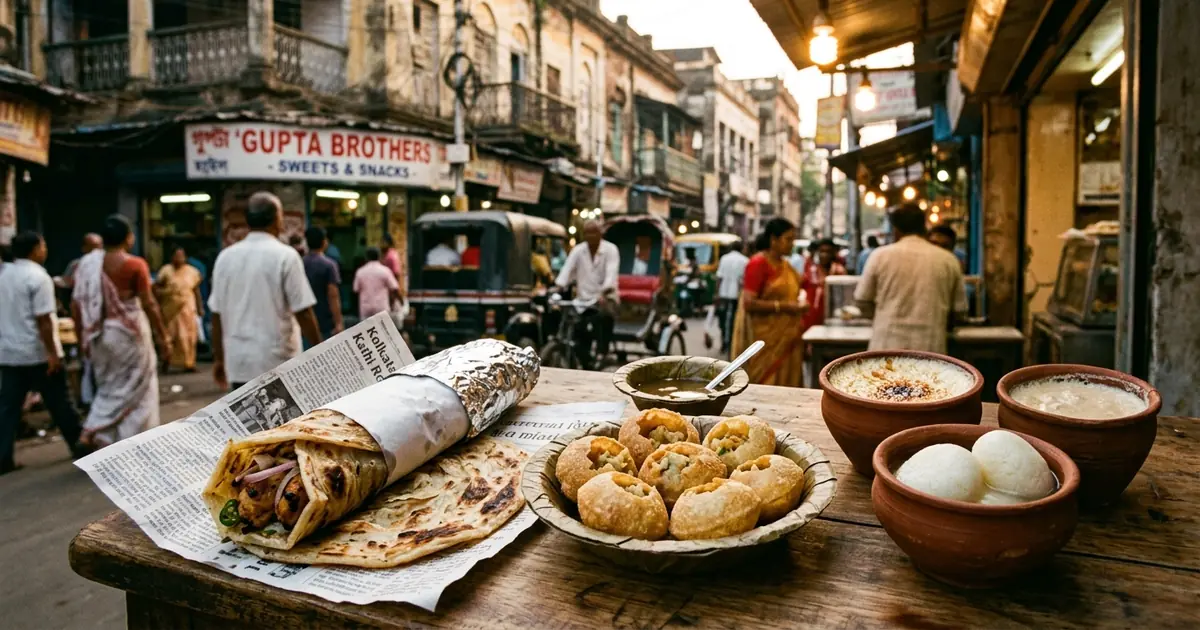
Kolkata is universally celebrated as India’s intellectual and cultural capital, but its true heartbeat pulses along the curbs and street corners where culinary art has flourished for over two centuries. Kolkata street food represents a fascinating collision of Bengali domestic heritage, British colonial clubs, Anglo-Indian boarding houses, and Awadhi royal chefs exiled from Lucknow.
From paper-wrapped kathi rolls glistening with egg and lime to delicate cottage cheese sweets aged in clay pots, Kolkata treats street food with academic reverence. Local residents debate the balance of cumin, boiled potatoes, and green chilies in a street vendor’s phuchka with the same passion reserved for art, literature, and cricket.
Kolkata Street Food Essentials
- Signature Specialties: Kathi roll (charcoal kebab wrapped in flaky paratha), Phuchka (hollow wheat sphere filled with spiced potato and tamarind water), and Mishti Doi (sweet fermented baked yogurt).
- Key Culinary Hubs: New Market / Hogg Market, Park Street, Dacre Lane (James Hickey Sarani), College Street, and Vivekananda Park.
- Average Cost per Food Trail: ₹150 to ₹350 per person for an expansive tasting across savories, rolls, tea, and sweets.
- Serving Hours: Office lunch stalls on Dacre Lane peak between 11:30 AM and 3:00 PM; evening roll and phuchka stalls operate from 4:30 PM to 10:00 PM.
- Best Season: October to February, when cool winter evenings make walking street bazaars and drinking hot clay-cup cha deeply enjoyable.
- Must-Try Cultural Tradition: Sipping strong ginger tea served in unglazed earthenware bhar (kulhad) alongside morning Bengali newspapers.
The Birthplace of the Kathi Roll: Nizam’s and New Market
The worldwide phenomenon of the wrap began in Kolkata during the early 1930s at Nizam’s, a historic restaurant situated near New Market (Sir Stuart Hogg Market). British colonial civil servants and office clerks frequented the eatery for skewered kebabs, but found eating oily meat pieces with their fingers inconvenient while commuting.
To solve this problem, Nizam’s chefs wrapped spiced skewers of charcoal-grilled mutton and chicken into freshly fried, layered parathas and rolled them in greaseproof paper. Originally called the roll, the prefix kathi was added in the 1960s when the kitchen replaced heavy iron skewers with light bamboo sticks (kathi).
The authentic Kolkata kathi roll features a freshly griddled paratha layered with a fried egg, stuffed with juicy charred meat chunks, slivered red onions, minced green chilies, and a squeeze of fresh lime juice. Purists firmly reject mayonnaise, cabbage, or bottled ketchup, relying instead on rock salt and house-roasted cumin powder.
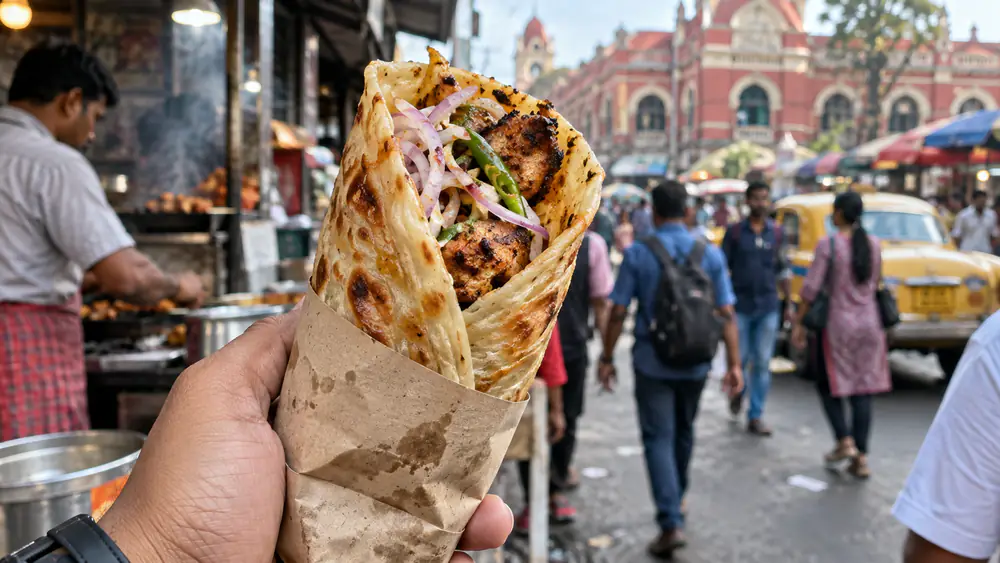
Beyond Nizam’s, top-tier roll purveyors include Kusum Rolls on Park Street, Hot Kathi Roll, and Bedwin at Gariahat, serving thousands of hungry evening patrons daily.
To explore traditional flatbread baking styles and tandoor traditions in northern India, compare these griddled rolls with our Amritsar street food guide.
Phuchka vs Golgappa: The Art of Kolkata’s Tangy Spheres
While northern India serves golgappas and western India prepares pani puri, Kolkata remains fiercely loyal to the phuchka. Kolkata phuchkas are distinct in almost every element: the shell, the filling, and the spiced water.
The phuchka shell is crafted from pure whole wheat flour, fried until thin, crisp, and dark brown. Unlike Delhi’s cold potato-and-chickpea mixes, Kolkata’s filling consists of warm mashed potatoes blended with boiled yellow peas (ghugni), roasted cumin-coriander masala, black rock salt, crushed fresh coriander, and fiery green chili paste.
The accompanying water is not sweet mint syrup, but sharp, unpasteurized tamarind pulp infused with gondhoraj lebu (Bengal’s fragrant king lime), roasted chili flakes, and rock salt. The vendor cracks the top of the shell with his thumb, packs the spiced potato mash, plunges the sphere into the dark tamarind pot, and drops it into your sal leaf dona.
The most celebrated phuchka destination is Vivekananda Park in southern Kolkata, where master vendors like Dilip Da craft bespoke phuchkas adjusted to your exact chili tolerance. For a sweet finale, vendors offer churmur, a crushed-phuchka salad tossed with potatoes, tamarind, and lime.
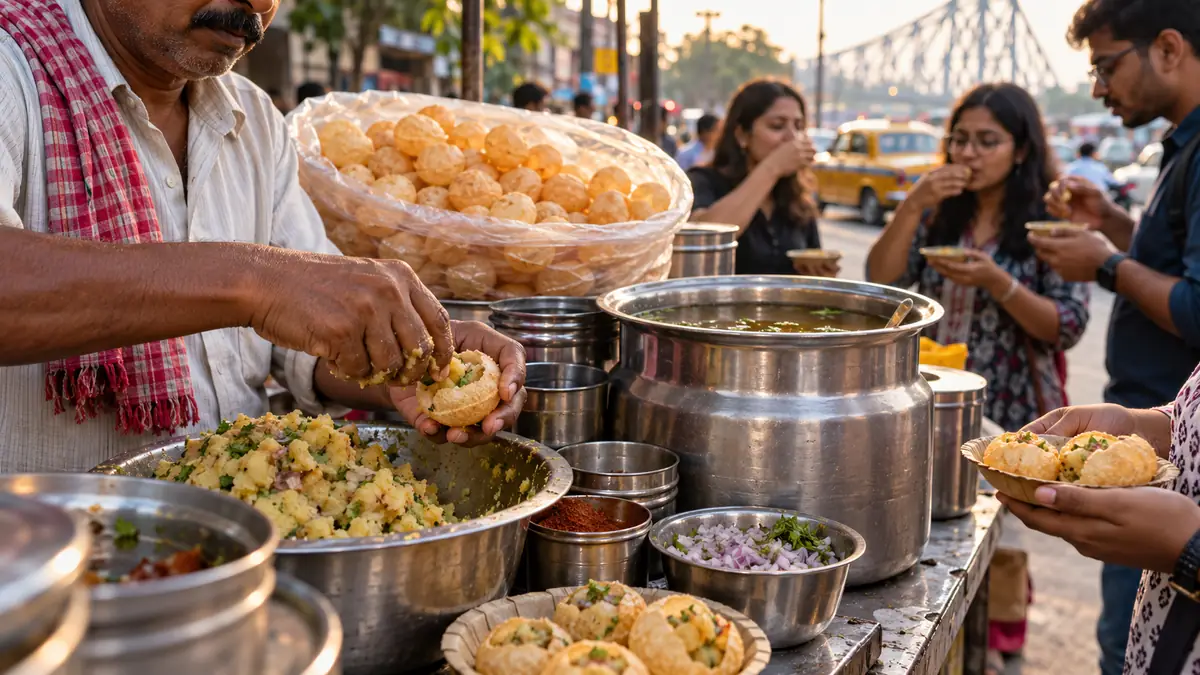
For cultural festival timing when phuchka stalls stay open until sunrise, consult our Kolkata Durga Puja guide.
Dacre Lane and Office Para: Heritage Colonial Street Dining
Hidden between the colonial banking offices and court buildings of central Kolkata lies James Hickey Sarani, universally known as Dacre Lane or Office Para. For over a century, this narrow alleyway has fed generations of clerks, lawyers, journalists, and students with high-quality meals at modest prices.
The lane represents a living museum of Kolkata’s hybrid culinary evolution, serving both hearty Bengali fish thalis and British-style colonial canteen comfort foods.
Chitto Babur Dokan
Founded in the mid-20th century, Chitto Da’s food stall is legendary for its chicken stew and buttered toast. Tender bone-in chicken pieces, papaya, carrots, and onions are slow-simmered in a clear, peppery broth served with two thick slices of white bread slathered with salted butter.
Dacre Lane Fish Fry and Mutton Kobiraji
Further down the lane, vendors fry Kolkata fish cutlets and Kobiraji cutlets to golden perfection. The fish fry uses fresh fillets of bhetki (barramundi) marinated in green coriander-chili paste, coated in biscuit crumbs, and fried until crisp.
The Kobiraji cutlet, derived from the English word coverage, features minced mutton coated in an airy, lacy web of whisked egg batter that expands like delicate filigree in the boiling oil. Both are served with fiery Bengali kasundi (pungent mustard sauce) and sliced cucumbers.
To pair colonial food trails with spiritual landmarks along the Hooghly River, explore our complete Dakshineswar Kali and Belur Math guide.
Bengali Sweets: Roshogolla, Sandesh, and Mishti Doi
No culinary portrait of Kolkata is accurate without exploring its legendary sweetshops (mishtir dokan). Bengal’s sweet-making tradition was revolutionized in the 19th century through the mastery of chhena (fresh cow milk curd), creating a distinct lineage of dairy confections.
Nobin Chandra Das and the Invention of Roshogolla
In 1868, confectioner Nobin Chandra Das invented the modern spongy roshogolla in north Kolkata by boiling fresh chhena balls in rolling sugar syrup until they absorbed the liquid and developed an elastic, spongy texture. Today, K.C. Das (founded by his son) continues this historic legacy along Esplanade.
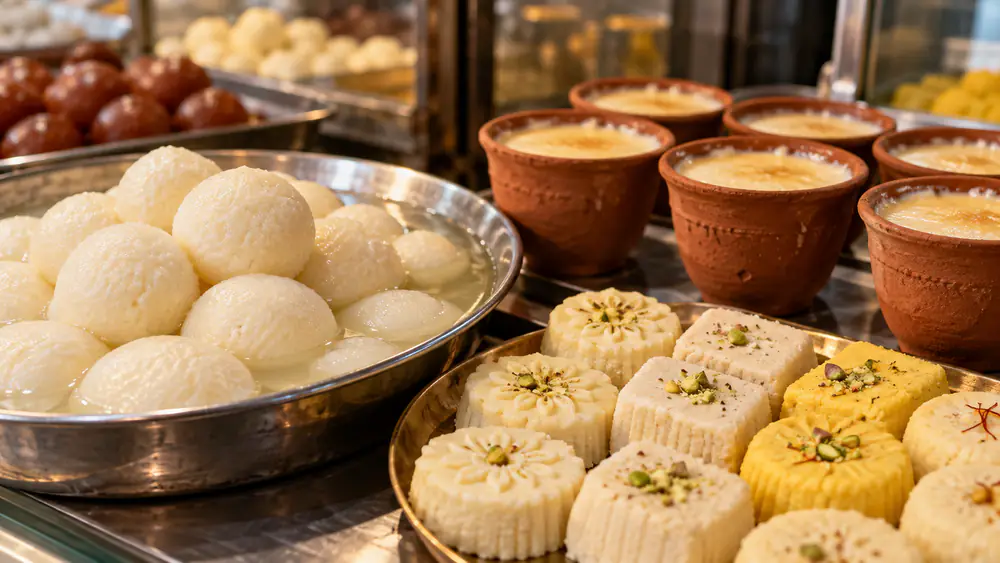
Girish Chandra Dey and Nakur Chandra Nandy (Hatibagan)
Operating in north Kolkata since 1844, Nakur Nandy is the undisputed temple of sandesh. Artisans hand-mold fresh chhena with sugar or date-palm jaggery into exquisite shapes. During winter months, they craft seasonal Nolen Gur Sandesh infused with liquid date palm sap, delivering subtle smoky butterscotch tones.
Mishti Doi in Terracotta Handis
Mishti doi is sweet curd prepared by boiling milk down to half its volume, caramelizing it with sugar, and allowing it to ferment inside unglazed terracotta pots. The porous clay walls absorb excess whey moisture, leaving a dense, velvety custard with a caramelized top crust. Amrita on Shyambazar and Mithai on Park Circus produce benchmark varieties.
Travelers can verify regional cultural festival schedules and city district maps at the official Incredible India Kolkata Portal.
North Kolkata Heritage Eateries and Cabin Culture
Kolkata’s unique cabin culture emerged during the British Raj as partitioned dining spaces where women, college intellectuals, and nationalist freedom fighters could meet privately away from public view.
Mitra Cafe (Shobhabazar, Established 1910)
Located opposite the Shobhabazar metro station, Mitra Cafe is famous for its Brain Chop (spiced mutton brain croquette), diamond fish fry, and mutton roast. The batter recipes and spice blends remain closely guarded family secrets.
Historic Sherbets and Syrups (College Street, Established 1918)
Situated near Presidency University, the historic College Street sherbet house has refreshed scholars, poets, and political leaders for over a century. Its signature drink is the Daab Sarbat, a cooling blend of tender coconut water, tender coconut pulp, and fragrant herbal syrups served in tall soda glasses.
For travelers who enjoy vintage urban transport and classic rail lines, combine your street food crawl with the historic narrow-gauge trains in our Mountain Railways of India guide.
Kolkata Street Food Price Comparison and Operating Hours
The table below outlines average pricing, key locations, and operating hours across Kolkata’s signature food stops.
| Specialty / Dish | Recommended Vendor | Neighborhood | Operating Hours | Average Price per Portion |
|---|---|---|---|---|
| Mutton Kathi Roll | Nizam’s / Kusum Rolls | New Market / Park Street | 12:00 PM to 11:00 PM | ₹90 to ₹140 |
| Tangy Phuchka (6 pcs) | Dilip Da | Vivekananda Park | 4:30 PM to 9:30 PM | ₹30 to ₹50 |
| Chicken Stew and Toast | Chitto Babur Dokan | Dacre Lane (James Hickey) | 9:00 AM to 8:00 PM | ₹80 to ₹120 |
| Fish Fry with Kasundi | Mitra Cafe | Shobhabazar | 4:30 PM to 10:00 PM | ₹120 to ₹170 |
| Nolen Gur Sandesh | Nakur Chandra Nandy | Hatibagan | 7:00 AM to 9:00 PM | ₹30 to ₹60 per piece |
| Mishti Doi (Earthen Pot) | Amrita / Mithai | Shyambazar / Park Circus | 8:00 AM to 10:00 PM | ₹60 to ₹100 per pot |
For national architectural preservation rules and monument entry details across eastern India, consult the Archaeological Survey of India official portal.
Practical Food Crawl Timings and Hygiene Advice
Enjoying Kolkata’s rich street culinary landscape safely requires choosing experienced stalls with high daily food turnover.
Recommended Daily Tasting Itinerary
- Morning (8:30 AM to 10:30 AM): Begin in North Kolkata at College Street with piping hot Kochuri and chholar dal at Putiram, followed by a chilled Daab Sarbat at the historic College Street sherbet house.
- Lunch (12:30 PM to 2:30 PM): Walk along Dacre Lane for light peppery chicken stew or traditional bhetki fish fry served with pungent kasundi.
- Late Afternoon (4:30 PM to 6:30 PM): Head south to Vivekananda Park for crisp phuchkas and tangy churmur.
- Evening (7:30 PM to 9:30 PM): Conclude along Park Street or New Market with freshly rolled mutton kathi rolls, followed by warm roshogolla at K.C. Das.
To compare eastern culinary corridors with royal Mughal street food in northern India, read our detailed Old Delhi street food guide.
For national tourism initiatives and e-visa information, explore the central portal of Incredible India.
Food Safety and Etiquette
- Drink Water Safely: Ensure the phuchka vendor uses mineral or filtered water for preparing tamarind water; established vendors display their mineral water containers openly.
- Observe Oil Quality: Choose fry stalls where the mustard oil is fresh golden-brown rather than dark black from repeated over-smoking.
- Embrace Kasundi with Care: Bengali kasundi mustard is significantly more pungent than Western mustard; try a tiny drop before coating your fish cutlet.
Frequently Asked Questions About Kolkata Street Food
Who invented the kathi roll in Kolkata?
The kathi roll was invented by Nizam’s restaurant near New Market in Kolkata during the 1930s. Cooks began wrapping kebabs inside fried parathas so British commuters and office workers could eat on the go without staining their clothes.
What is the difference between phuchka and pani puri?
Phuchka uses a thin whole-wheat shell stuffed with warm, spicy mashed potatoes and boiled yellow peas rather than cold chickpeas. The accompanying liquid is tangy tamarind water flavored with gondhoraj lime and roasted spices, with no sweet chutney added.
What are the best sweets to try in Kolkata during winter?
Winter is the season of Nolen Gur (fresh date palm jaggery). The best seasonal sweets include Nolen Gur Sandesh, Joynagarer Moa, and Nolen Gur Roshogolla, prized for their rich, caramel-like sweetness.
Is Kolkata street food safe for international travelers?
Yes, provided you choose high-turnover stalls where hot foods like rolls and cutlets are cooked fresh in front of you. When eating phuchkas, patronize established vendors at Vivekananda Park who use bottled mineral water.