Kolkata Durga Puja Guide: Pandals, Kumartuli & Rituals
Kolkata Durga Puja guide: UNESCO heritage status, North vs South pandal hopping circuits, Kumartuli idol crafting, Bonedi Bari pujas, and night transit.
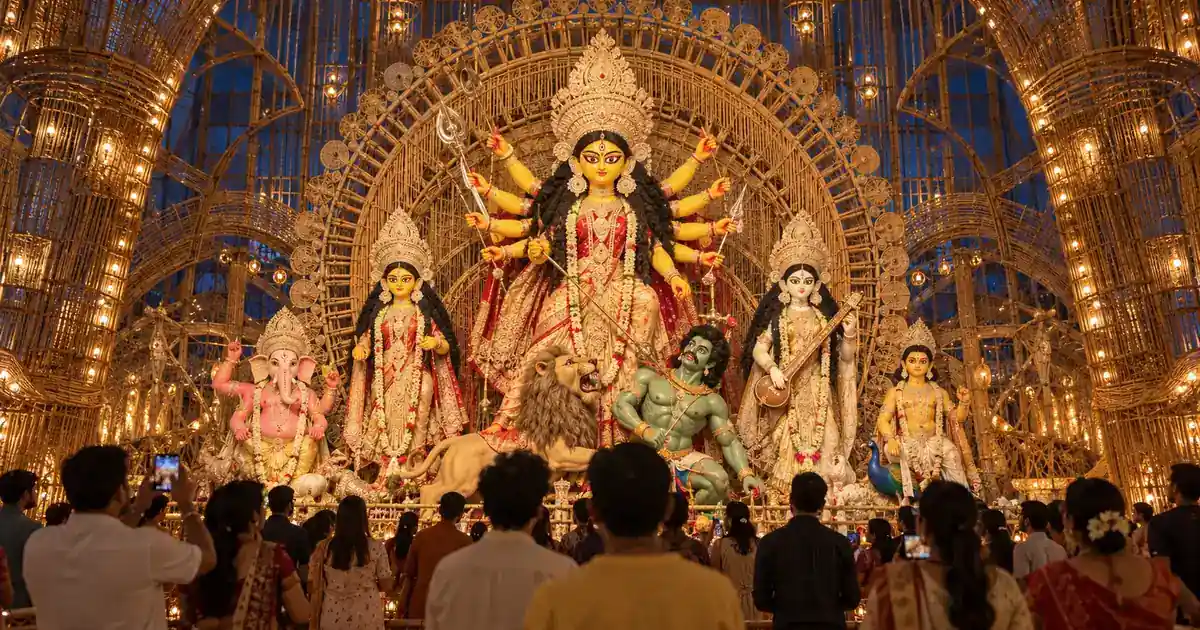
Kolkata Durga Puja transforms the capital of West Bengal into the world’s largest open-air art installation and street carnival every autumn. Inscribed on the UNESCO Representative List of the Intangible Cultural Heritage of Humanity, the festival transcends religious observance to become a massive public celebration of visual design, community solidarity, and performing arts.
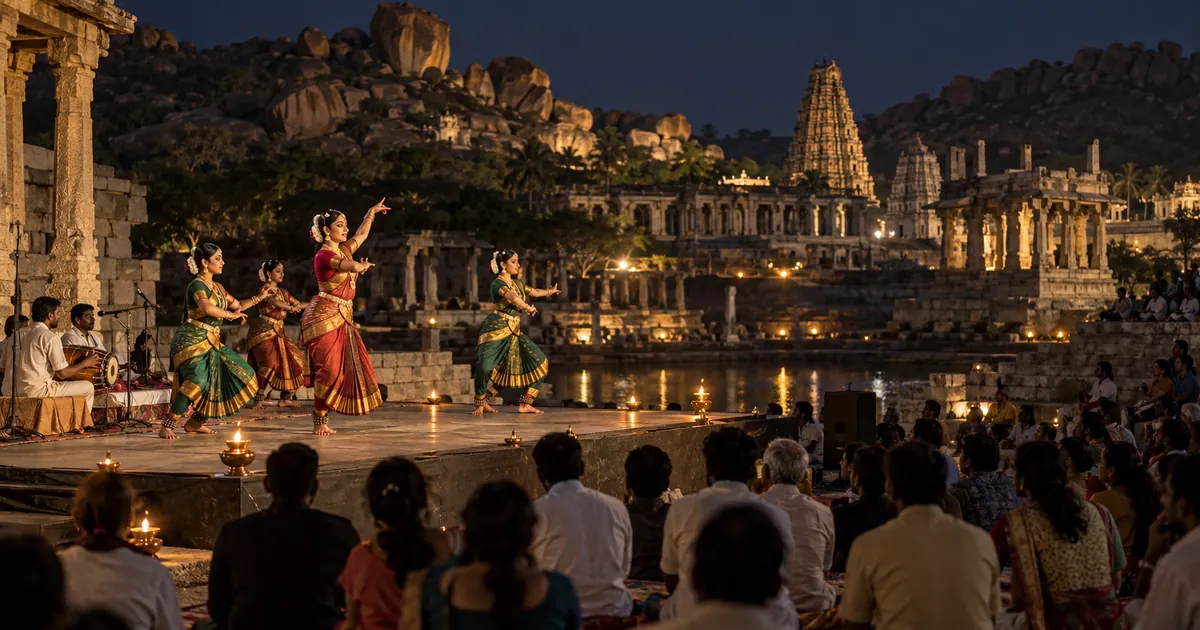
For ten days during the Hindu month of Ashwin (September or October), the metropolis constructs over three thousand community pavilions (pandals). Millions of revelers walk through the illuminated avenues from dusk until dawn, admiring hand-sculpted clay idols, hearing thunderous dhaak drums, and sampling regional street food specialties.
Kolkata Durga Puja Key Travel Essentials
- Festival Window: Ashwin month (September–October), with main public rituals spanning Maha Sasthi to Vijaya Dashami.
- Scale: Over 3,000 registered community pandals and 2,000 residential Bonedi Bari family celebrations across Greater Kolkata.
- UNESCO Inscription: Formally recognized on the UNESCO Representative List of Intangible Cultural Heritage of Humanity.
- Artistic Epicenter: Kumartuli potters colony along the Hooghly River, where master artisans craft clay idols using sacred river silt.
- Signature Rituals: Nabapatrika dawn bath, Kumari Puja at Belur Math, Sandhi Puja with 108 oil lamps, Dhunuchi Naach, and Sindoor Khela.
- Transit Operations: Kolkata Metro operates continuous overnight train services connecting northern and southern pandal corridors.
Understanding Kolkata Durga Puja: The UNESCO Cultural Phenomenon
Durga Puja celebrates the victory of Goddess Durga over the buffalo demon Mahishasura, symbolizing the triumph of righteousness over oppression. In Bengali culture, the festival takes on a tender familial dimension: Durga is welcomed not merely as a cosmic warrior goddess, but as Uma, the cherished daughter returning home from Mount Kailash for her annual four-day visit with her children Lakshmi, Saraswati, Ganesha, and Kartikeya.
What sets Kolkata’s celebration apart from other religious festivals across India is its radical artistic democratization. Community organizers hire top architectural designers, muralists, and craftspeople from rural Bengal to build monumental temporary pavilions constructed from bamboo, canvas, terracotta, metal, and sustainable recycled elements.
Each pandal functions as an interactive public art museum that explores classical temple architecture, indigenous folklore, global social issues, or contemporary environmental themes. The celebration embraces all citizens regardless of caste, class, or religion, turning public streets into shared civic galleries.
Travelers touring Shakta pilgrimage geography across eastern India can study related sacred shrines in our comprehensive guide to the 51 Shakti Peethas in India.
The Craft of the Gods: Walking Through Kumartuli Potters Colony
Every Durga Puja journey begins in Kumartuli, an ancient potters quarter situated along the eastern bank of the Hooghly River in North Kolkata. For over three centuries, generational artisan families have inhabited this maze of narrow alleyways, sculpting hundreds of clay idols destined for city pandals and global Bengali diaspora communities.
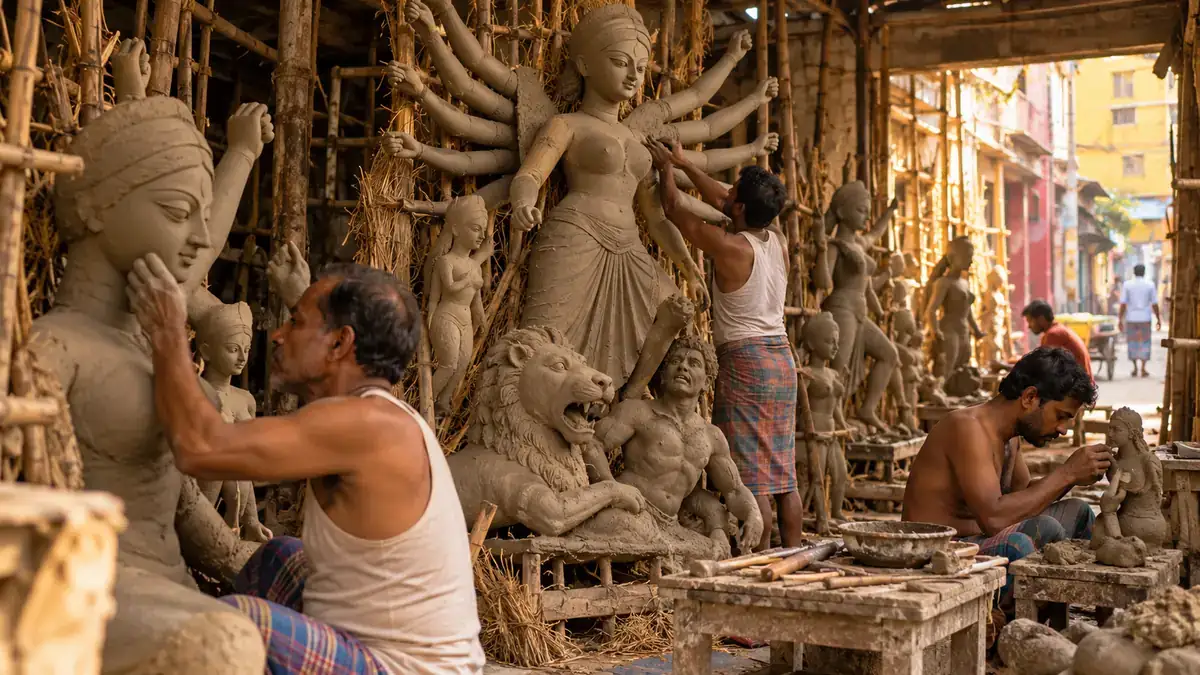
The idol-making process follows sacred, eco-conscious traditions:
- Kathamo (Bamboo and Wood Framework): Artisans tie bamboo poles and straw bundles onto wooden frames to create the skeletal core of the deities.
- Entel Maati and Ganga Clay: Artisans apply two distinct layers of river silt: Entel Maati (sticky clay mixed with rice husk chaff) for the foundational musculature, followed by Bele Maati (fine sandy alluvial silt) for smooth surface rendering.
- Punya Maati Ritual: By ancient custom, a pinch of soil gathered from the doorstep of a courtesan’s quarter (Nishiddho Palli) is blended into the clay, honoring marginalized women and symbolizing the universal motherhood of the divine.
- Sholar Saaj vs Daaker Saaj: Traditional idols are decorated with Sholar Saaj (carved white dried reed pith from wetlands) or Daaker Saaj (gleaming embossed metallic foil originally imported by postal mail from Germany).
The climax at Kumartuli occurs at dawn on Mahalaya, roughly six days before the main rituals begin. In a solemn ceremony known as Chokkhu Daan (the gifting of the eyes), master sculptors fast and paint the almond-shaped eyes of Goddess Durga by lamplight, breathing living spirit into the clay form.
Travelers seeking destination itineraries across West Bengal can explore broader circuit guides on the Incredible India West Bengal State Portal. Many visitors pair festival celebrations in the city with a wildlife boat expedition outlined in our Sundarbans National Park guide.
Pandal Hopping Circuits: North Kolkata vs South Kolkata
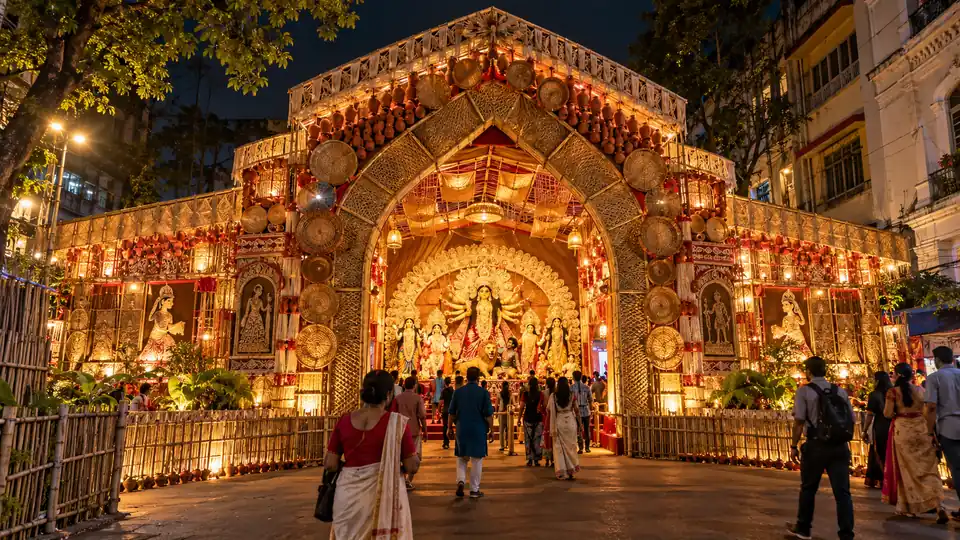
Navigating Kolkata during Durga Puja requires a clear geographic strategy. The city naturally divides into two contrasting pandal hopping zones: traditional North Kolkata and contemporary South Kolkata.
| Pandal Circuit | Dominant Aesthetic | Famous Signature Pandals | Nearest Metro Station |
|---|---|---|---|
| North Kolkata | Heritage, classical Ekchala idols, aristocratic courtyards | Bagbazar Sarbojanin, Kumartuli Park, Mohammad Ali Park, College Square | Shobhabazar Sutanuti, Girish Park, MG Road |
| South Kolkata | Experimental themes, avant-garde architecture, massive scale | Suruchi Sangha, Ekdalia Evergreen, Singhi Park, Maddox Square, Mudiali Club | Kalighat, Rabindra Sarobar, Netaji Bhavan |
| Eastern Bypass & Salt Lake | Sprawling installations, international replicas, festival food hubs | FD Block Salt Lake, BJ Block, Sreebhumi Sporting Club | Karunamoyee, Salt Lake Stadium, Ultadanga |
The North Kolkata Heritage Circuit
North Kolkata represents the historic soul of the city, characterized by narrow residential lanes, 19th-century colonial mansions with cast-iron balconies, and century-old community pujas.
- Bagbazar Sarbojanin: Established in 1919, Bagbazar is one of the oldest community pujas in Kolkata. It strictly preserves the classical Ekchala tradition, where all five deities stand under a single unified painted arch, adorned in gleaming white shola ornaments.
- College Square: Centered around a heritage water reservoir near Presidency University, this pandal is celebrated for its dazzling light displays reflected across the water, often replicating famous European cathedrals or Indian royal palaces.
- Mohammad Ali Park: Located near Central Avenue, this venue is renowned for constructing colossal stone-temple replicas with intricate plaster carvings.
The South Kolkata Avant-Garde Circuit
South Kolkata presents modern conceptual installations where fine-arts graduates transform pandals into immersive social statements.
- Ekdalia Evergreen Club: Situated near Gariahat, Ekdalia strictly preserves classical sanctum traditions with elaborate brass hanging lamps and traditional idol styling, contrasting with its modern surroundings.
- Singhi Park: Located just blocks from Ekdalia, Singhi Park features innovative thematic lighting designed by master technicians from Chandannagar.
- Suruchi Sangha (New Alipore): Celebrated for highlighting rural Indian folk crafts, choosing a distinct Indian state theme each year to construct pavilions using regional textiles, bamboo work, or terracotta pottery.
- Maddox Square: Famous for its expansive open park where young students, artists, and families gather on lawns to talk, hear music, and enjoy festival snacks.
Bonedi Bari Pujas: Centuries-Old Aristocratic Mansion Traditions
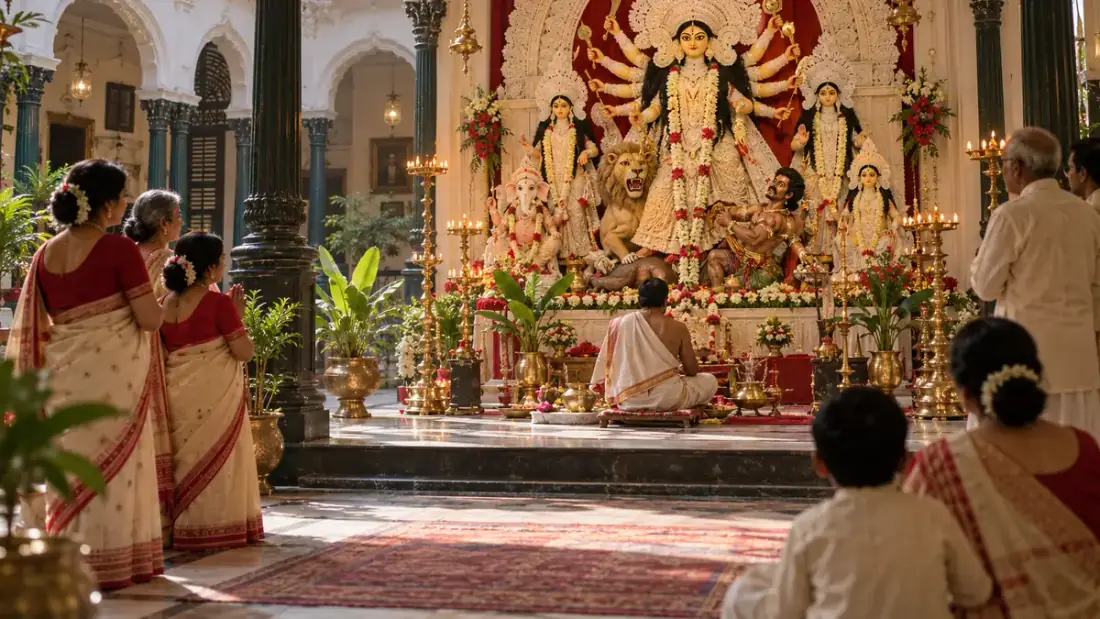
Long before modern street pandals emerged, Durga Puja was hosted exclusively inside the colonnaded courtyards (Thakur Dalan) of wealthy Bengali merchant and aristocratic families known as Bonedi Bari. Visiting these ancestral estates offers an atmospheric journey into 18th and 19th-century Calcutta history.
1. Sovabazar Rajbari (Founded 1757)
Founded by Raja Nabakrishna Deb in 1757 following the Battle of Plassey, Sovabazar Rajbari is the most historic family puja in Kolkata. The ceremony unfolds in a grand open courtyard surrounded by neoclassical Doric columns. The family preserves classical traditions, including the release of an Indian roller bird (Neelkanth) to announce the goddess’s departure to Mount Kailash.
2. Jorasanko Daw Bari
Hosted by the wealthy merchant Daw family near Girish Park, this puja is famous for its dazzling gold and silver jewelry adorning the deities. The family still displays antique European chandeliers imported from England and Belgium during the 19th century.
3. Belur Math Kumari Puja on Maha Ashtami
Located just across the river from northern Kolkata, Belur Math conducts one of the most spiritually significant ceremonies in India. Initiated in 1901 by Swami Vivekananda, the Kumari Puja on Maha Ashtami morning honors a young prepubescent girl as the living embodiment of the divine Mother. Thousands of pilgrims arrive before dawn to witness this solemn ritual.
Visitors planning an autumn pilgrimage can consult our companion architectural guide to Dakshineswar Kali Temple and Belur Math for ferry transit connections across the Hooghly River.
Official ritual schedules and monastic guidelines are documented on the Belur Math Durga Puja Portal.
Sacred Rituals, Sounds, and Celebrations from Sasthi to Dashami
While cultural revelry continues throughout the week, the religious core of Durga Puja unfolds through five specific calendar days:
Maha Sasthi: Bodhan and Welcoming the Mother
On Sasthi, priests perform the Bodhan (awakening ritual) beneath a sacred wood-apple tree (Bel tree), invoking the goddess through ancient Vedic mantras. The faces of the clay idols, previously concealed beneath fabric, are ceremonially unveiled to the public.
Maha Saptami: Nabapatrika Snan (The Banana Bride)
At dawn on Saptami, priests conduct the Nabapatrika ritual. Nine sacred plants tied together, dominated by a young banana plant draped in a red-bordered yellow saree (Kola Bou), are taken in procession to the Hooghly River for a ritual bath. The nine plants represent the nine botanical manifestations of Mother Nature.
Maha Ashtami, Sandhi Puja & Dhunuchi Naach
Maha Ashtami is the most solemn day of the festival. In the morning, devotees dress in fresh traditional attire (red-and-white sarees for women, silk kurtas and dhotis for men) to offer Pushpanjali (flower prayers) in unison.
The peak liturgical moment occurs during Sandhi Puja, marked at the exact 48-minute intersection between the end of Ashtami and the start of Navami. This ritual honors Goddess Chamunda slaying demons Chanda and Munda. Priests light exactly 108 clay oil lamps and offer 108 red lotus blossoms amidst deafening roars of conch shells and dhaak drumbeats.
Following the evening aarti, men and women perform the Dhunuchi Naach, balancing smoking earthenware clay braziers filled with burning coconut husk and fragrant frankincense (jhuno) in their hands and teeth while dancing to syncopated percussion rhythms.
Vijaya Dashami: Sindoor Khela and Bishorjon
On Dashami, the atmosphere shifts from joyous celebration to poignant farewell. Married women gather in the pandals to perform Devi Baran, feeding the goddess sweets and applying red vermilion to her forehead.
The women then engage in Sindoor Khela, playfully smearing bright red vermilion on one another’s cheeks, wishing marital prosperity and good fortune. By late afternoon, massive flatbed trucks carry the clay idols toward riverfront ghats (such as Babughat and Bagbazar Ghat) for Bishorjon (water immersion), returning the goddess to the river until next autumn. The reverence for holy water immersions along the Hooghly River connects deeply with winter pilgrims journeying south to the confluence of Ganga and the sea, as detailed in our Gangasagar Mela guide.
Kolkata Durga Puja Culinary Trail: Street Food and Bhog Feasts
Durga Puja is as much a gastronomic festival as it is a cultural and spiritual event. Strict fasting is observed only during morning prayer hours; once rituals conclude, public dining becomes the primary nighttime activity.
The Sacred Community Bhog
At afternoon prayer gatherings, community pandals distribute sanctified meals (Bhog) free of charge to visiting devotees. A traditional Durga Puja bhog plate features:
- Khichuri: A slow-cooked porridge of fragrant Gobindobhog rice, roasted moong lentils, ginger, and whole spices.
- Labra: A rich mixed-vegetable medley made with pumpkin, sweet potato, eggplant, and cauliflower cooked in mustard oil.
- Beguni and Chutney: Deep-fried battered eggplant slices served alongside sweet-and-sour tomato-date chutney.
- Payesh: Sweet rice pudding scented with green cardamom and bay leaves.
Midnight Street Food Feasting
At night, thousands of pop-up food stalls line every street corner, feeding millions of walking pandal hoppers until 4:00 AM:
- Kolkata Kathi Rolls: Flaky parathas rolled with spiced paneer, chicken, or mutton tikka, thinly sliced red onions, green chilies, and lime juice.
- Phuchka: Crisp round wheat-semolina shells filled with mashed spiced potatoes, boiled black gram, and tangy tamarind-mint water.
- Mughlai Paratha: Deep-fried layered flatbread envelopes filled with minced meat, eggs, and chopped coriander.
- Mishti (Bengali Sweets): Steaming baked rasgullas, mishti doi served in earthenware cups, and freshly prepared sandesh from heritage confectioners like K.C. Das and Balaram Mullick.
For an in-depth breakdown of stall locations, iconic sweetshops, and roll counters across the city, consult our comprehensive local dishes and food walks in Kolkata Street Food.
Practical Pandal Hopping Logistics: Metro, Night Safety & Passes
Experiencing Kolkata Durga Puja comfortably requires smart planning to navigate crowds that easily exceed several million people on festive nights.
Kolkata Metro All-Night Services
The Kolkata Metro is the single most efficient way to travel between northern and southern pandal clusters, bypassing congested city roads.
- 24-Hour Operations: The North-South Metro corridor (Blue Line) operates special overnight services during Saptami, Ashtami, and Navami, running trains every 7 to 10 minutes throughout the entire night.
- Smart Cards: Purchase a contactless metro smart card in advance to skip ticket counter queues at crowded hubs like Kalighat, Girish Park, and Esplanade.
VIP Passes and Sharadotsav Special Buses
- VIP Passes: Major organizers issue special VIP passes that provide queue-jumping privileges through dedicated security gates. These passes can often be obtained through partner hotels, corporate sponsors, or district police welfare counters.
- West Bengal Tourism Sharadotsav Tours: State tourism corporations run guided air-conditioned luxury bus packages covering prominent Bonedi Bari mansions and suburban pandals during morning and afternoon hours.
Pandal Hopping Strategy: Daytime vs Nighttime
- Morning Visits (8:00 AM to 12:00 PM): Best for serious photographers and older travelers. Lines are minimal, allowing quiet appreciation of detailed idol sculpting and morning rituals.
- Nighttime Visits (9:00 PM to 4:00 AM): Best for experiencing the city’s electric energy, illuminated street lighting, soundscapes, and midnight street food culture.
Visitors planning extended travel beyond festival week can consult our definitive West Bengal travel guide to combine city festivities with Himalayan tea hills and wildlife reserves. Practical city transit advisories and neighborhood directories can be reviewed on the Incredible India Kolkata City Directory.
Frequently Asked Questions About Kolkata Durga Puja
When is Kolkata Durga Puja held?
Durga Puja takes place during the autumn Hindu month of Ashwin, which corresponds to September or October on the Gregorian calendar. While preliminary pandal openings begin on Mahalaya, the principal five-day rituals span Sasthi, Saptami, Ashtami, Navami, and Vijaya Dashami, followed roughly a month later across eastern India by Chhath Puja Bihar UP river celebrations.
Is Kolkata Durga Puja safe for solo and international travelers?
Yes, Kolkata is exceptionally safe and welcoming during Durga Puja. The Kolkata Police deploy thousands of personnel, specialized female assistance teams (Winners squad), and medical first-aid booths at every major intersection. Crime rates are low, and local citizens take immense pride in guiding visiting travelers.
What is the significance of the UNESCO Intangible Cultural Heritage tag?
UNESCO inscribed “Durga Puja in Kolkata” on the Representative List of the Intangible Cultural Heritage of Humanity. This landmark recognition acknowledged the festival as an exemplary public celebration of community cooperation, traditional craftsmanship, and artistic expression.
What is the best way to get around during Durga Puja?
The Kolkata Metro is by far the fastest and most reliable transport option, running special all-night train services between North and South Kolkata. For short neighborhood hops between adjacent pandals, walking or hiring local auto-rickshaws is recommended.
Do I need tickets to enter Durga Puja pandals?
No, general entry to every community Durga Puja pandal in Kolkata is completely free and open to everyone. While general visitor queues can be long at popular venues, special VIP passes or morning visits allow travelers to bypass extended wait times.