Sundarbans National Park Guide: Boat Safari, Watchtowers & Tiger Booking
Comprehensive guide to Sundarbans National Park boat safaris, Sajnekhali permits, Sudhanyakhali and Dobanki watchtowers, tiger sightings, and Godkhali routes.
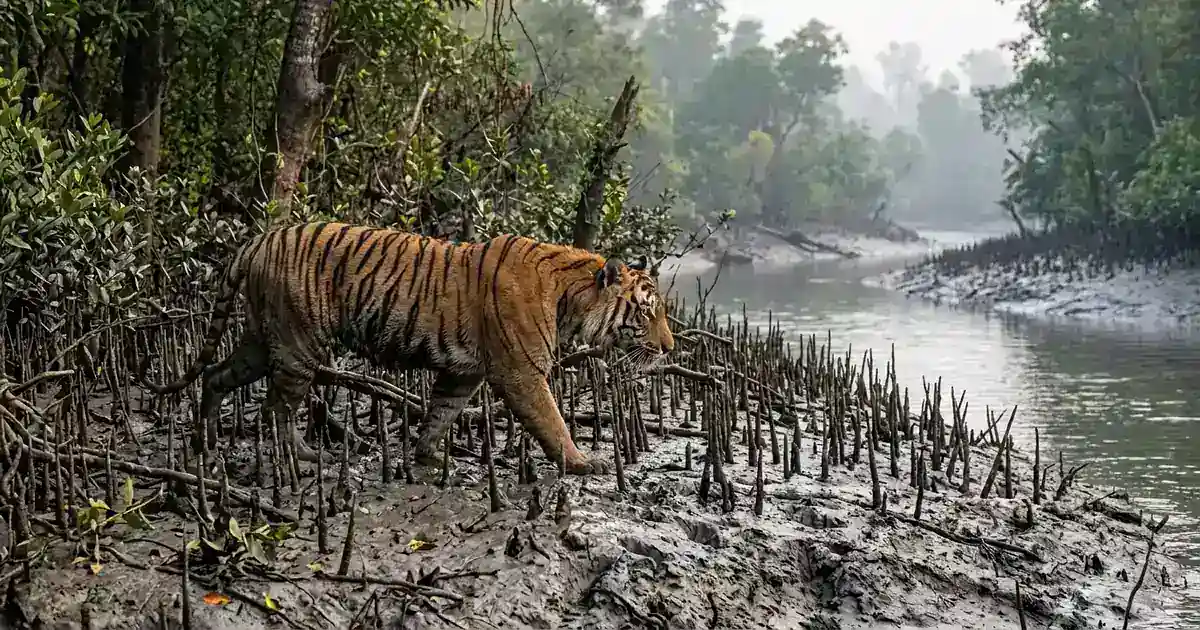
The Sundarbans delta spreads across the confluence of the Padma, Brahmaputra, and Meghna rivers at the southern tip of West Bengal. It forms the largest contiguous mangrove eco-region on Earth. Over 10,000 square kilometers of tidal waterways, mudflats, and halophytic forest span India and Bangladesh.
Safari & Permit Essentials
- Entry Gateway: Godkhali Ferry Ghat (approx. 85-100 km from central Kolkata).
- Safari Transport: Motorized launches only; no terrestrial jeeps or road vehicles operate inside the delta.
- Mandatory Checkpoints: All vessels register at Sajnekhali range office and pick up an authorized forest guide.
- Prime Sighting Hubs: Sudhanyakhali (freshwater predator pond) and Dobanki (elevated canopy walkway).
- Peak Travel Window: November to February for pleasant weather and maximum crocodile basking.
Unlike traditional inland reserves explored via open 4x4 gypsies, the Indian Sundarbans admits visitors solely by water. Motorized safari launches navigate braided saline creeks shaped by two daily tidal surges. Travelers often combine an expedition into these brackish waters with a cultural tour across Kolkata during celebrations like the traditions and processions during Kolkata Durga Puja, transitioning from urban riverfronts to dense coastal mangroves.
Official regional administrative data recorded on the South 24 Parganas district tourism portal notes that over 4,200 square kilometers make up the Indian Sundarbans Biosphere Reserve. Within this boundary, Sundarbans National Park serves as the core critical tiger habitat. It also holds dual recognition as a UNESCO World Heritage site and a designated Ramsar wetland.
| Key Delta Parameter | Official Detail |
|---|---|
| Reserve Status | Project Tiger Reserve, Biosphere Reserve, Ramsar Site |
| Core National Park Area | 1,330 square kilometers |
| Total Mangrove Species | 64 halophytic species recorded |
| Apex Predators | Royal Bengal Tiger, Estuarine Crocodile |
| Primary Safari Transport | Licensed motorized safari boats and launches |
| Gateway Ferry Port | Godkhali Ferry Ghat (South 24 Parganas) |
Watchtowers and Sighting Hubs: Sajnekhali, Sudhanyakhali, and Dobanki
Movement on foot within the Sundarbans core and buffer zones remains strictly forbidden due to dense mangrove swamps and free-roaming predators. All terrestrial viewing takes place within heavily fortified, high-fenced watchtower compounds maintained by the West Bengal Forest Directorate.
These watchtowers sit at strategic creek confluences and sweet-water ponds where wildlife congregates during low tide. Exploring these wetland platforms provides wildlife encounters distinct from the elevated elephant patrols found in our Kaziranga National Park Safari forest reserve overview.
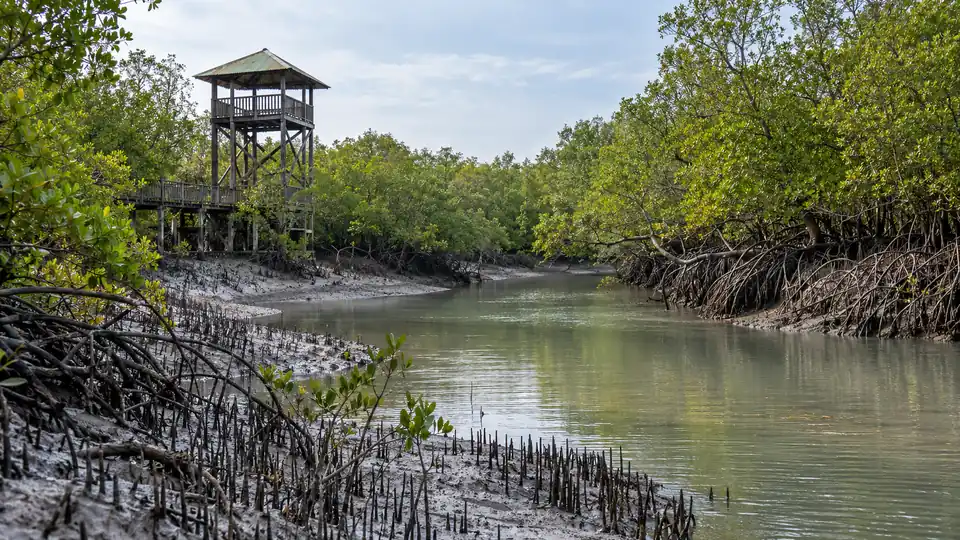
Sajnekhali: Forest Entry Permits and Mangrove Interpretation Centre
Sajnekhali serves as the primary administrative checkpoint for the Sundarbans Tiger Reserve. Every tourist launch entering the reserve must dock at the Sajnekhali river jetty to verify passenger manifests, pay environmental fees, and pick up a mandatory department-certified local forest guide.
The Sajnekhali complex houses the Mangrove Interpretation Centre, an informative museum showcasing specimens of estuarine reptiles, fish, and historical artifacts. Visitors also explore the on-site Bono Bibi temple shrine, where Hindu and Muslim honey-gatherers worship side by side for safety before venturing deep into tiger territory. A freshwater pond adjoining the watchtower regularly draws spotted deer, rhesus macaques, and egrets.
Sudhanyakhali: Freshwater Sweet-Water Pond Tiger Watch
Sudhanyakhali ranks among the most productive watchtowers for big cat observations. The Forest Department excavated a deep freshwater retention pond directly behind the clearing, surrounded by a broad buffer moat and high steel fencing.
Because the surrounding delta water contains heavy concentrations of salt, tigers and herbivores travel long distances through muddy creeks to drink sweet water here. The three-tiered observation tower accommodates up to 25 observers per level. It offers clear sightlines across the mud banks where saltwater crocodiles sunbathe during bright winter mornings.
Dobanki: Elevated Half-Kilometer Canopy Walkway
Dobanki features one of the most distinctive eco-tourism infrastructures in eastern India. Visitors step off the boat jetty onto an elevated concrete walkway suspended nearly twenty feet above the ground. Heavy galvanized steel chain-link fencing encloses the path on all sides and overhead.
This canopy walkway spans roughly 500 meters across dense Sundari, Gewa, and Goran mangrove thickets. It leads to a towering observation deck overlooking a large freshwater watering pond. Walking along this secure bridge provides a bird-eye view of deer herds picking through aerial pneumatophore roots below.
Burirdhabli and Netidhopani Watchtowers
Burirdhabli lies further east toward the Raimangal river border adjoining Bangladesh. It features a scenic wooden plank walkway through the interior mudflats, terminating at a ground-level watchtower overlooking the international border river.
Netidhopani houses the ruins of an ancient 400-year-old terracotta brick temple complex linked to the mythological ballad of Manasa Mangal and the legend of Behula-Lakhindar. A freshwater pond sits beside the historical clearing. Forest authorities regulate tourist vessel entries here to minimize motorized acoustic stress on local fauna.
Wildlife and Estuarine Biodiversity: Tigers, Crocodiles, and Cetaceans
The Sundarbans supports a unique biological system where terrestrial mammals and aquatic species adapt directly to extreme salinity and shifting tidal regimes. Historical documentation maintained on the South 24 Parganas district history portal traces the long human interaction with this dynamic ecosystem since the medieval period.
Unlike big cats inhabiting dry deciduous forests detailed in our Ranthambore Safari Booking permit and entry guide, Sundarbans tigers have evolved unique physiological traits to survive in tidal saltwater swamps.
Swimming Royal Bengal Tigers and Saline Adaptation
The Sundarbans houses an estimated population of over 100 wild Royal Bengal tigers (Panthera tigris tigris). These apex predators swim effortlessly across wide river channels spanning more than a kilometer across fast-flowing currents.
They drink from natural rainwater pockets, hunt spotted deer and wild boars trapped in muddy creek bends, and stalk fish and monitor lizards. Their paws have adapted to navigate slippery mud without sinking deeply into the soft clay. Tracking these tigers relies on spotters scanning the grey mudflats along the riverbanks for freshly exposed paw prints during low tide.
Estuarine Saltwater Crocodiles and Water Monitor Lizards
The Sundarbans mudflats provide prime habitat for the world’s largest living reptile, the estuarine or saltwater crocodile (Crocodylus porosus). Large specimens measuring over five meters in length haul themselves onto muddy banks to regulate their body temperature under the winter sun.
Two distinct lizard species inhabit the banks: the Asian water monitor (Varanus salvator) and the Bengal monitor (Varanus bengalensis). Water monitors frequently swim alongside tourist boats or dig into crab burrows along the mangrove edges.
Irrawaddy and Ganges River Dolphins Along Creeks
The brackish river confluences host two threatened cetacean species: the Ganges river dolphin (Platanista gangetica) and the Irrawaddy dolphin (Orcaella brevirostris). Ganges river dolphins favor deeper freshwater-dominant currents, while blunt-nosed Irrawaddy dolphins surface frequently near shallow coastal channels.
Birdlife throughout the mangrove forest remains equally rich. Birdwatchers routinely spot eight distinct species of kingfishers, including the brown-winged kingfisher, black-capped kingfisher, and the rare ruddy kingfisher. During winter, flocks of whimbrels, curlews, sandpipers, and white-bellied sea eagles scan the tree canopies and mudflats.
Boat Safari Operations: Motorized Launches, Routes, and Tidal Rules
Safaris in the Sundarbans operate exclusively on water using certified wooden launches powered by diesel inboard marine engines. Vessels range from small 6-passenger crafts designed for day trips to large double-deck tourist houseboats outfitted with onboard kitchens and cabins for overnight stays.
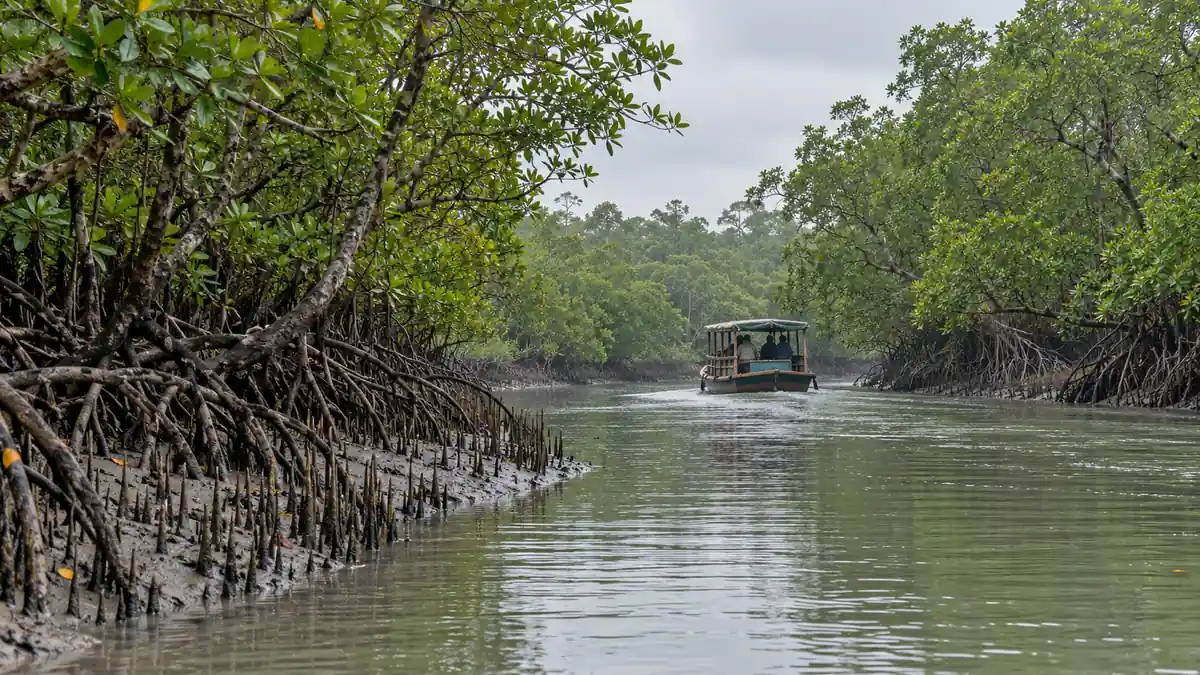
Navigating these tidal backwaters requires maritime planning comparable to the canal routes detailed in our Alleppey Houseboat Booking highlights and timings, though Sundarbans journeys face powerful marine tides and strict forest conservation rules.
| Route Stage | Primary Waypoint | Operations & Wildlife Highlights |
|---|---|---|
| Stage 1: Kolkata to Godkhali | Godkhali Ferry Ghat | Highway road transit through Canning to the primary river launch port |
| Stage 2: Godkhali to Sajnekhali | Sajnekhali Range Office | Gomor River cruise, forest entry permits, and local guide onboarding |
| Stage 3: Core Reserve Canals | Sudhanyakhali & Dobanki | Predator pond watch, elevated canopy walk, and low-tide creek tracking |
| Stage 4: Evening Anchor | Pakhiralay / Dayapur | Secure overnight mooring at designated inhabited island village jetties |
Government and Private Motorized Houseboat Cruises
Tourist vessels fall into two primary operational tiers. Private luxury launches feature air-conditioned lower decks, private western-style washrooms, upper viewing lounges, and dedicated chefs preparing fresh regional Bengali meals.
Government-operated tourist vessels managed through official state tourism initiatives also operate fixed schedules from Kolkata. These trips provide regulated itineraries, qualified naturalist crew, and direct terminal transfers.
High Tide vs. Low Tide Navigation Dynamics
Delta boat safaris depend strictly on the lunar tidal cycle, which shifts water levels by two to four meters every six hours. Understanding tidal movement is essential for productive wildlife viewing and safe navigation:
- Low Tide Phase: River levels drop dramatically, exposing vast sloping banks of grey clay and pneumatophore root systems. Crocodiles, water monitor lizards, mudskippers, and feeding tigers gather on these mudflats. However, shallow creeks become impassable for larger boats.
- High Tide Phase: Rising water fills narrow interior tributaries, enabling launches to glide quietly beneath thick mangrove branches. Wildlife retreats deeper into the interior forest islands as water covers the banks.
- Tidal Current Safety: Seasoned captains plan their daily routes with incoming and outgoing tidal currents to conserve engine fuel and maintain vessel stability.
Mandatory Local Guide and Guard Policies
Under national forest conservation guidelines, no tourist boat may enter the buffer or core zones without carrying an authorized local forest guide certified by the Sundarbans Tiger Reserve. In sensitive outer channels, an armed forest department guard also boards the vessel.
These guides belong to traditional fishing families who have lived along the delta for generations. Their intimate understanding of animal calls, tidal changes, and water currents ensures safe and ethical viewing practices.
Visitor Information: Safari Timings, Entry Fees & Tour Tariffs
The Sundarbans Tiger Reserve strictly limits commercial vessel movements between sunrise and sunset. Boats must clear all internal core channels and drop anchor at designated river jetties before dark.
Official travel safety protocols published on the Ministry of Tourism Incredible India portal mandate that all passengers wear life jackets while cruising on open waterways.
| Safari & Permit Item | Domestic Indian Rate | International Visitor Rate |
|---|---|---|
| Forest Entry Permit (Per Person / Day) | Rs 60 | Rs 200 |
| Motorized Boat Entry Permit (Per Day) | Rs 400 - 800 | Rs 400 - 800 |
| Certified Forest Department Guide (Per Day) | Rs 500 - 700 | Rs 500 - 700 |
| Digital Still Camera Fee | Rs 50 | Rs 500 |
| Video Camera Permit Fee | Rs 200 | Rs 1,000 |
Forest Department Permit Tariffs and Guide Charges
Boat owners typically handle all forest clearance procedures directly at the Sajnekhali range office. Individual travelers booking standalone day excursions must present government-issued photo identity cards (Aadhaar, Passport, or Voter ID) to receive passenger clearance slips.
Permits remain valid only for the calendar date issued. If your boat spends multiple days touring the delta, new day permits must be stamped each morning at Sajnekhali.
Complete 2-Day vs. 3-Day Package Cost Estimates
Most travelers explore the Sundarbans through all-inclusive group or private packages originating from Kolkata or Godkhali. These comprehensive packages cover surface road transfers, chartered launch rentals, forest permits, village cultural shows, meals, and eco-resort stays.
- Standard 2-Day / 1-Night Package: Rs 4,500 to Rs 7,500 per person on a twin-sharing basis in comfortable non-AC island lodges, including meals and shared boat safaris.
- Luxury 3-Day / 2-Night Cruise Package: Rs 14,000 to Rs 25,000 per person on premium river launches featuring deluxe air-conditioned cabins, private guides, and tailored cruise routes.
- Private Launch Day Charter (Ex-Godkhali): Rs 7,000 to Rs 12,000 per day for the entire private boat, excluding individual meal and forest department permit fees.
Best Time to Visit the Sundarbans & Seasonal Weather
The Sundarbans experiences a tropical coastal climate characterized by distinct winter, summer, and monsoon seasons. Planning your trip around regional weather patterns ensures comfortable boat journeys and optimal wildlife sightings.
| Season | Months | Temperature Range | Wildlife & Travel Conditions |
|---|---|---|---|
| Peak Winter | November to February | 12°C to 26°C | Pleasant weather, low humidity, maximum crocodile basking, and migratory birds |
| Summer | March to May | 24°C to 38°C | Warm and humid, occasional Nor’wester squalls, high deer movement around ponds |
| Monsoon | June to September | 26°C to 34°C | Heavy rain, rough river currents, stormy conditions, limited safari visibility |
| Post-Monsoon | October | 22°C to 32°C | Clear skies, lush greenery, moderate temperatures, festive season rush |
The winter window between November and February represents the peak travel period. Temperatures remain comfortable during long daylight hours on open sundecks. Cool morning breezes and lower river water temperatures encourage crocodiles, lizards, and deer to linger on exposed sunny banks.
Travelers visiting during March and April should prepare for sudden pre-monsoon convective thunderstorms, known locally as Kalbaisakhi. Monsoon months bring torrential downpours and high river swells that make navigation difficult for smaller wooden craft. Travelers seeking a drier coastal seaside excursion during the same winter window can explore our Digha, Mandarmani and Tajpur beach guide along Bengal’s southern sandy coast.
How to Reach the Sundarbans: Kolkata to Godkhali Route
The road network ends at the edge of the active delta. Godkhali Ferry Ghat in the Canning subdivision of South 24 Parganas serves as the universal springboard for almost all tourist expeditions entering the Indian Sundarbans.
Travelers arriving via Kolkata can easily connect their journey with heritage sites like Dakshineswar Kali Temple and Belur Math before heading toward the southern delta ports.
Kolkata to Canning by Local Suburban Train
Budget travelers frequently use the Kolkata suburban railway network operated by Eastern Railway:
- Board an EMU local suburban train from Sealdah South Station in central Kolkata bound for Canning Railway Station. Trains depart roughly every 30 to 45 minutes throughout the day.
- The 45-kilometer rail journey takes approximately 1 hour and 15 minutes, with standard unreserved fares costing Rs 15 per passenger.
- Upon arriving at Canning Station, hire a shared auto-rickshaw, public bus, or private utility van for the 28-kilometer road trip to Godkhali Ferry Ghat, which takes roughly 50 to 60 minutes.
- At Godkhali Ghat, board your scheduled hotel pick-up boat or pre-chartered safari launch.
Regional transport connectivity and ferry jetty operations can be verified on the South 24 Parganas district tourism portal.
Highway Drive from Kolkata to Godkhali Ferry Ghat
Driving from Kolkata to Godkhali covers roughly 85 to 100 kilometers, depending on your departure point within the city:
- Primary Route: Depart central Kolkata via the EM Bypass, proceed toward Baruipur, continue along the Canning State Highway, and drive across the Canning Bridge toward Basanti and Godkhali.
- Travel Time: The drive typically takes between 3 and 3.5 hours depending on morning market traffic in Baruipur and Ghatakpukur.
- Vehicle Parking: Godkhali Ghat features designated, fenced overnight parking lots managed by local village cooperatives where private cars can be safely parked for Rs 200 to Rs 300 per night.
Curated 2-Day Sundarbans Wildlife Boat Safari Itinerary
This classic 2-day, 1-night loop provides a balanced introduction to the mangrove forests, watchtower compounds, and traditional delta village life. For travelers combining this delta cruise with Himalayan tea gardens or cultural landmarks, explore our comprehensive West Bengal travel guide for multi-region itineraries.
Day 1: Kolkata to Godkhali, Sajnekhali Permits & Sudhanyakhali Cruise
- 07:00 AM: Depart central Kolkata by private air-conditioned vehicle toward the southern delta.
- 10:30 AM: Arrive at Godkhali Ferry Ghat. Board your private motorized launch, unpack in your cabin, and enjoy a traditional breakfast of luchi and alur dom.
- 11:30 AM: Cruise down the Gomor and Vidya rivers toward Sajnekhali. Dock at the jetty to obtain forest clearance permits and welcome your certified forest guide.
- 01:00 PM: Explore the Mangrove Interpretation Centre, Bono Bibi temple, and the Sajnekhali sweet-water pond while an authentic Bengali lunch is served onboard.
- 02:30 PM: Navigate into the Sudhanyakhali channel. Spend two hours scanning the mangrove edges and watchtower clearing for spotted deer, wild boars, and tigers.
- 05:30 PM: Exit the core forest zone before sunset. Drop anchor near Pakhiralay or Dayapur island.
- 07:00 PM: Enjoy hot tea and snacks at your island eco-resort, followed by a live performance of traditional Banbibi Pala folk drama.
Day 2: Dobanki Canopy Walk, Narrow Creeks & Godkhali Return
- 06:30 AM: Board the launch early with morning tea as mist rolls across the quiet waterways.
- 07:30 AM: Cruise through the Pirkhali, Gazikhali, and Panchamukhani canal junctions. Keep watch for kingfishers, mudskippers, and swimming tigers crossing the channels.
- 09:30 AM: Dock at Dobanki. Stroll along the elevated 20-foot high canopy walkway to observe the forest canopy and sweet-water pond from above.
- 11:30 AM: Slowly navigate winding backwater channels during low tide to spot basking saltwater crocodiles and large Asian water monitors on the mudflats.
- 01:30 PM: Enjoy a fresh fish curry lunch onboard as the boat navigates back along the Vidya river.
- 03:30 PM: Disembark at Godkhali Ghat. Reunite with your driver for the return road trip to Kolkata, arriving by 07:00 PM.
Frequently Asked Questions About Sundarbans Safari
What are the chances of seeing a tiger in the Sundarbans?
Seeing a tiger in the Sundarbans requires patience, timing, and good fortune. Unlike open grassland parks where tigers are easily tracked, the Sundarbans is a dense mangrove swamp where animals remain well hidden within thick vegetation. Sighting chances improve significantly during winter low tides when tigers cross exposed river channels or visit sweet-water ponds at Sudhanyakhali and Dobanki.
Is an overnight stay on a boat permitted in the Sundarbans?
Tourists are not permitted to anchor overnight inside the core national park or deep forest channels. Private and luxury safari boats drop anchor at designated island river jetties such as Pakhiralay, Dayapur, or Sajnekhali. Travelers may sleep onboard vessels anchored safely at these permitted village docks or stay at eco-resorts on nearby inhabited islands.
What should I pack for a Sundarbans boat tour?
Pack comfortable cotton clothing in neutral tones like khaki, olive green, beige, or grey. Bright neon colors can disturb wildlife. During winter months, carry a light fleece jacket or shawl for cool morning breezes on open decks.
Essential items include binoculars, a telephoto zoom camera lens, insect repellent, sunscreen, and wide-brim hats. Carry adequate cash in Indian Rupees, as ATMs on remote delta islands often run out of paper currency.
Are mobile networks and Wi-Fi available in the delta?
Mobile connectivity is generally available across the main entry hubs like Godkhali, Gosaba, and Pakhiralay, with major providers like BSNL, Jio, and Airtel offering standard 4G signals. However, once your boat enters narrow core channels near Dobanki or Burirdhabli, mobile signals drop completely. Most island eco-lodges provide basic Wi-Fi in their reception lounges.
Is the Sundarbans safe for senior citizens and young children?
Sundarbans boat safaris are generally safe and relaxing for family members of all ages, as travelers spend most of their time seated on comfortable launches. However, boarding and disembarking at river ghats requires walking across wooden gangways that shift with the tides. High watchtower compounds require climbing flights of stairs, though the elevated Dobanki walkway offers gentle ramps suitable for steady walking.