Kaziranga National Park Safari: Zones, Bookings & Fares
Book Kaziranga National Park jeep and elephant safaris across Kohora, Bagori, and Agoratoli with 2026-27 season dates, safari fares, and Guwahati cabs.
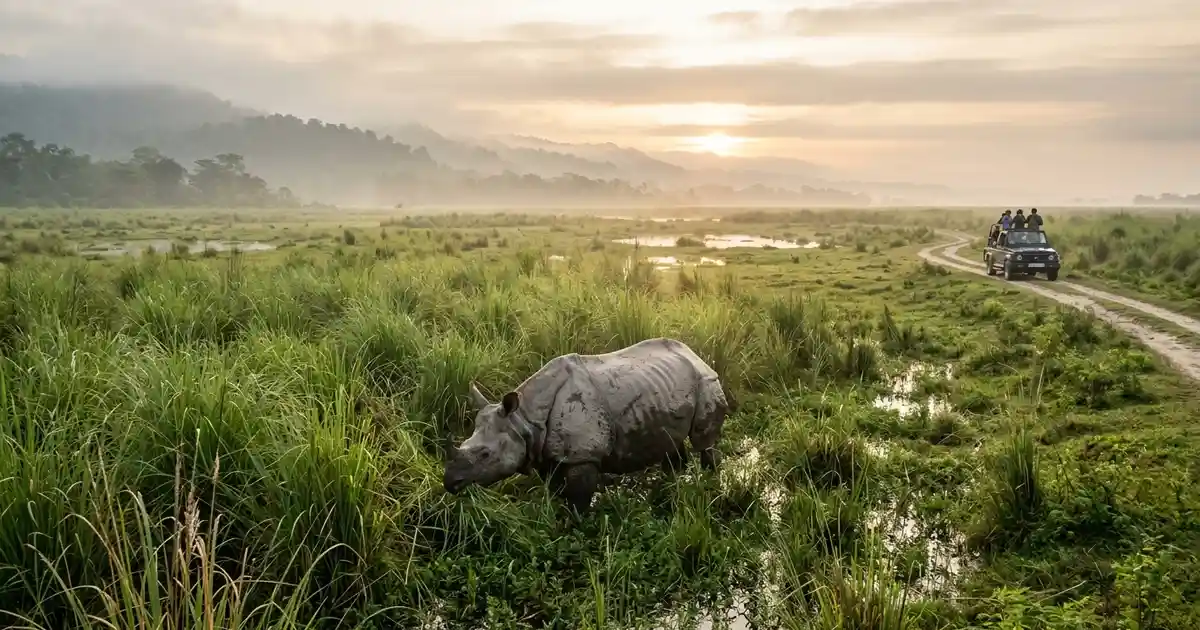
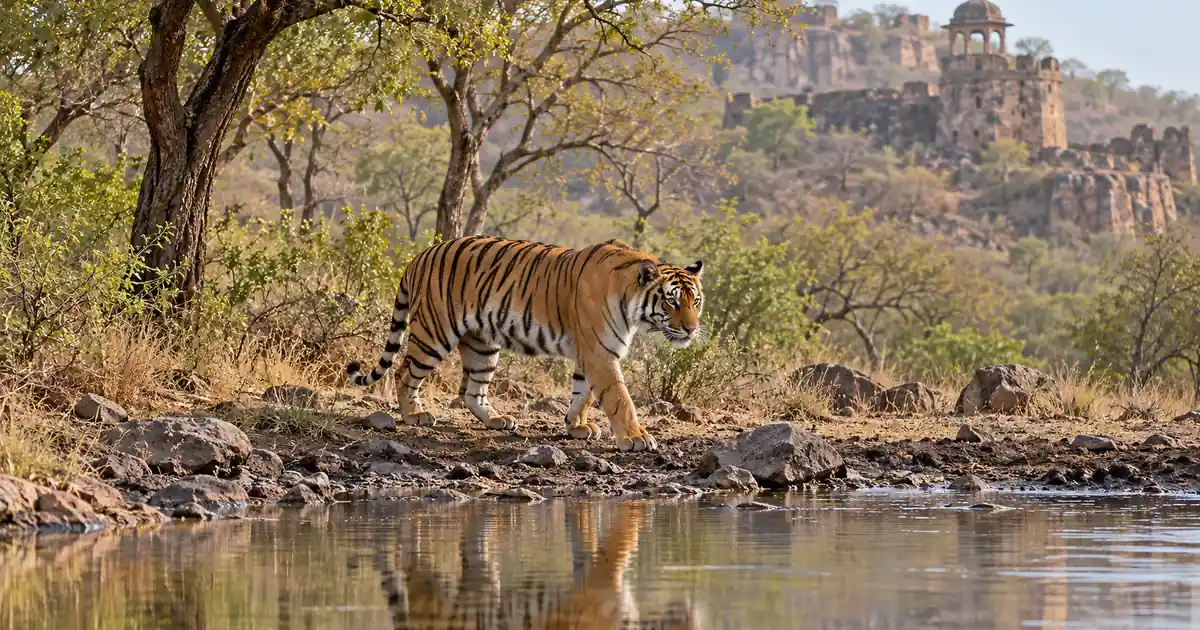
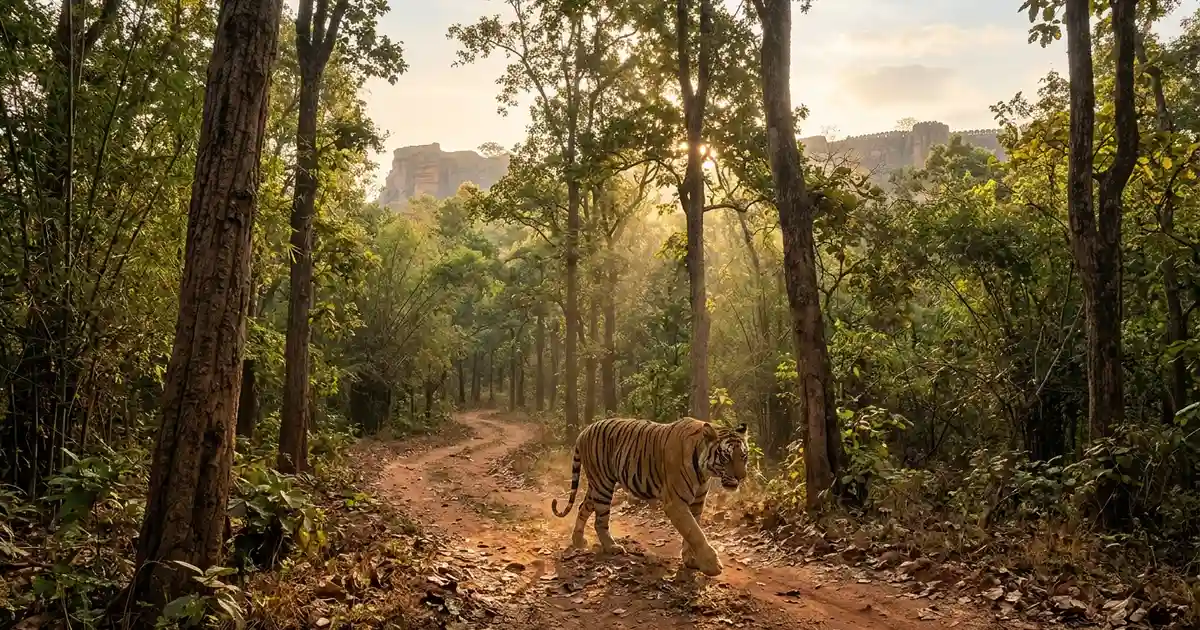
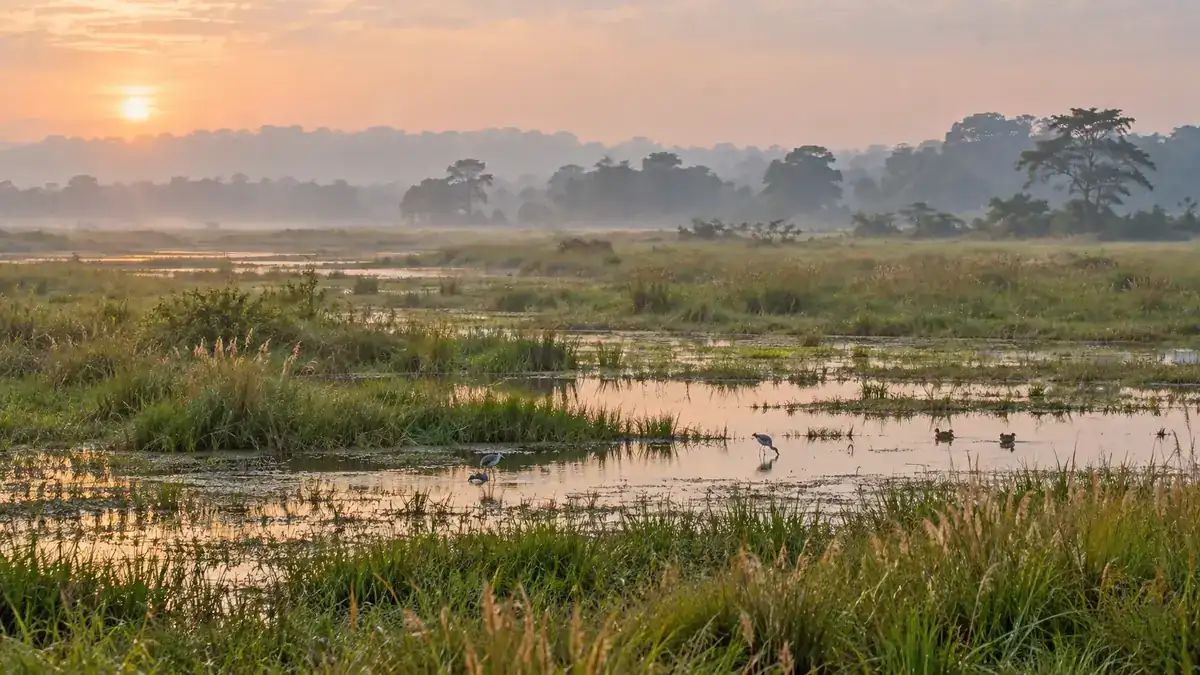
Spreading across the alluvial floodplains of the Brahmaputra River in central Assam, Kaziranga National Park shelters the world’s largest surviving population of the Great Indian One-Horned Rhinoceros (Rhinoceros unicornis). Inscribed as a UNESCO World Heritage Site in 1985, its tall elephant-grass savannas, oxbow lakes (beels), and semi-evergreen woods also support dense populations of Bengal tigers, wild water buffalo, Asian elephants, and eastern swamp deer.
Planning a trip cleanly requires booking separate jeep and elephant ranges months ahead, matching arrival to post-monsoon dry months, and choosing gates suited to rhinos or birdlife.
Kaziranga Safari Essentials: Lock morning elephant permits early and align arrival between November and April.
- 2026-27 Safari Season: Jeeps reopened October 3, 2026 and elephant safaris resumed November 1, 2026; closed June through September for Brahmaputra floods.
- Four Safari Ranges: Kohora (Central), Bagori (Western, highest rhino sightings), Agoratoli (Eastern, wetlands & birds), and Burapahar (hoolock gibbons).
- Jeep vs. Elephant Shifts: Jeeps run 7:00 AM and 1:00 PM (max 6 passengers); elephant rides run 5:00 AM and 6:00 AM exclusively in Kohora and Bagori.
- Nearest Transit Hubs: Jorhat Airport (JRH, 97 km) east, Furkating Station (FKG, 75 km), or Guwahati Airport (GAU, 215 km) west.
Four Safari Zones Compared: Kohora, Bagori, Agoratoli & Burapahar
Kaziranga divides tourist traffic cleanly across four distinct Assam Forest Department ranges linked along National Highway 715, allowing wildlife travelers to book targeted rides instead of repeating one dusty loop. Checking which range matches your primary wildlife goal prevents missing Bagori’s dense rhino grasslands or Agoratoli’s marshland bird colonies.
| Safari Range (Zone) | Gate Location | Vehicles Allowed | Dominant Habitat & Target Species | Best Match |
|---|---|---|---|---|
| Kohora (Central) | NH-715 Kohora town | Jeep & Elephant | Mixed elephant grass, shallow wetlands, rhinos, barasingha | First-time balanced wildlife intro |
| Bagori (Western) | ~12 km west of Kohora | Jeep & Elephant | Broad open floodplains & highest one-horned rhino density | Guaranteed rhino close photography |
| Agoratoli (Eastern) | ~18 km east of Kohora | Jeep safari only | Dense forest fringe & Sohola beel waterbirds, otters | Serious birders & quiet trails |
| Burapahar (Ghorakati) | ~38 km west of Kohora | Jeep safari only | Undulating Karbi foothill woods, western hoolock gibbons | Return guests & primate trackers |
Visitors planning multi-park Assam wildlife loops frequently pair Kaziranga with river island safaris and grasslands west toward the Bhutan foothills covered in our Manas National Park safari guide. Regional park conservation directives are outlined via the Assam Forest Department Official Portal.
Jeep and Elephant Safari Fares, Shifts, and Official Booking Rules
Kaziranga’s safari permits remain controlled by Assam Forest Department range offices alongside state tourism lodges to cap daily vehicle pressure inside sensitive rhino corridors. Book official forest permits through Assam Tourism counters or trusted state lodges rather than paying bloated hotel agent surcharges on arrival day.
| Safari Mode & Range | Daily Shift Windows | Capacity Rule | Typical Total Fare (Indians) | Typical Total Fare (Foreigners) |
|---|---|---|---|---|
| 4WD Open Jeep Safari (All 4 Zones) | Morning ~7:00 AM / Afternoon ~1:00 PM | Max 6 visitors per Gypsy | INR 3,000 - INR 4,200 per jeep | INR 7,000 - INR 7,700 per jeep |
| Dawn Elephant Safari (Bagori / Kohora) | Batch 1: 5:00 AM / Batch 2: 6:00 AM | Shared mahout saddle seats | INR 1,800 - INR 2,000 per person | INR 3,500 - INR 4,000 per person |
Note that quoted per-jeep figures cover Gypsy vehicle rental, forest gate permit, driver, and mandatory unarmed/armed guard fees for regular tourist zones. Bring physical Aadhaar cards, passports, or driving licenses matching your permit registration to the Kohora or Bagori range counter 30 minutes prior to departure.
Statewide safari updates and seasonal zone openings are maintained on the Assam Tourism Kaziranga Guide. Upper Assam wildlife travelers continuing east toward royal heritage sites frequently pair their safari passes with half-day tours at Charaideo Moidams in Sivasagar, roughly two hours down NH-715.
Why Bagori Morning Elephant Rides Book Out Earliest
Elephant-back tracks wind straight through six-foot wild ikora reed stalks unreachable by jeeps before sunlight warms the mist, offering eye-level photography within safe distance of grazing rhinos. Because Assam restricts daily morning elephant quota numbers strictly across Kohora and Bagori, book through authorized resort counters or Assam Forest range portals at least two to three weeks before December-March weekends.
If morning elephant permits sell out around Kohora, afternoon jeep slots in Bagori still deliver reliable sightings across open riverbanks near Bimoli and Donga watchtowers.
Seasonal Opening Calendar: 2026-27 Flood Cycles & Best Time
Kaziranga operates purely across dry post-monsoon and spring months from October through May, shutting completely from June to September when swollen Brahmaputra tributaries flood low grasslands, replenishing wetlands and letting calves move freely onto Karbi hillocks. For the 2026-27 wildlife year, jeep loops opened October 3, 2026 while elephant rides launched November 1, 2026.
- Best Viewing Months (November to April): Daytime winter sun holds pleasant temperatures between 11°C and 25°C, migratory waterfowl pack Agoratoli swamps, and controlled dry-grass burning in late January-February drastically opens long sightlines.
- Shoulder Periods (October & May): Expect greener dense tall grass early in October (slighter tiger visibility) and early afternoon thunder squalls by late May just before gate closure.
- Monsoon Cultural Pivots: If arriving in Assam between June and September when safaris lock shut, plan Guwahati temple stays around Ambubachi Mela at Kamakhya Temple or hill waterfalls in neighboring Meghalaya.
How to Reach Kaziranga from Guwahati, Jorhat & Furkating Rail
National Highway 715 runs directly through Kaziranga between Nagaon and Bokakhat, making road access fast from both eastern Jorhat and western Guwahati airports. Allow a slow buffer for final wildlife speed-bump corridors where animal-crossing cameras strictly limit vehicle speeds to 40 km/h along park boundaries.
- Jorhat Airport (Rowriah - JRH, ~97 km east): Closest domestic airfield with flights via Guwahati or Kolkata; taxis reach Kohora gate in 2 to 2.5 hours (INR 2,500 to INR 3,200).
- Furkating Railway Junction (FKG - ~75 km east): Practical Assam broad-gauge station in Golaghat served by Guwahati-Dibrugarh expresses like Rajdhani and Kamrup Express (~2 hours by cab).
- Guwahati Airport (GAU) & Guwahati Station (~215 km west): Primary flight gateway connecting Delhi, Mumbai, Bengaluru, and Kolkata; prepaid taxis and ASTC AC Volvo buses cover the highway east via Kaliabor in 4 to 5 hours.
- From Shillong by Road (~255 km): Direct highland-to-valley cabs descend via Jorabat and Nagaon in 5.5 to 6.5 hours, linking cleanly with itineraries featured in Meghalaya.
Designing a 3-Day Kaziranga, Majuli, and Upper Assam Itinerary
Three nights around Kohora or Bagori gives enough morning and afternoon windows to explore Central, Western, and Eastern ranges without safari fatigue. Between midday jeep breaks (10:30 AM to 1:00 PM), stop calmly at the Kaziranga National Orchid and Biodiversity Park near Durgapur village or sample Assamese thali meals along NH-715 dhaba kitchens.
- Day 1 (Arrive Guwahati -> Bagori Afternoon Jeep): Depart Guwahati early morning, settle near Kohora, and enter Bagori (Western Range) at 1:30 PM for close rhino floodplains.
- Day 2 (Kohora Dawn Elephant + Agoratoli Afternoon Jeep): Join the 6:00 AM elephant batch in Kohora, rest past midday at the Orchid Park, and finish with waterbirds across Agoratoli.
- Day 3 (Upper Assam River Monastery Extension): Drive northeast two hours across Nimati Ghat ferry onto Majuli Island to explore Assam’s historic satra river monasteries before returning toward Jorhat Airport.
Wider state route maps, festival alerts, and authorized accommodation listings are verified on the Incredible India Official Assam Portal.
Frequently Asked Questions About Kaziranga National Park Safari
What are Kaziranga National Park opening dates for the 2026-27 safari season?
Kaziranga stays open from early October through late May each year and remains strictly closed June to September during Brahmaputra floods. For 2026-27, jeep safaris opened October 3, 2026 and elephant safaris resumed November 1, 2026.
Which safari zone is best in Kaziranga National Park?
Bagori (Western Range) offers the highest density of one-horned rhinos along open wetlands, while Kohora (Central) balances rhinos, swamp deer, and tigers. Choose Agoratoli (Eastern) for birding and Burapahar for quiet forested gibbon trails.
How much do jeep and elephant safaris cost in Kaziranga?
A shared jeep accommodating up to 6 passengers runs roughly INR 3,000 to INR 4,200 total for Indian visitors (INR 7,000 to INR 7,700 for foreign nationals). Morning elephant safaris average INR 1,800 to INR 2,000 per Indian rider.
How to reach Kaziranga from Guwahati, Jorhat, and Furkating railway station?
Jorhat Airport (JRH) sits 97 km east (~2 hours by cab) and Furkating Railway Station (FKG) lies 75 km east (~2 hours). Major flights land at Guwahati Airport (GAU), roughly 215 km west (4.5 hours via NH-715).
How many days are needed to explore Kaziranga National Park properly?
Two to three days (with two nights in Kohora or Bagori) let you complete one dawn elephant ride plus two afternoon jeep safaris across Bagori, Kohora, and Agoratoli at a relaxed pace.