Manas National Park Safari: Booking, Langurs & Rafting Guide
Plan your Manas National Park safari in Assam with updated 2026 booking fees, Gypsy safari timings, river rafting routes, and golden langur spotting.
Manas National Park spans 500 square kilometers across the forested sub-Himalayan foothills of western Assam, contiguous with the Royal Manas National Park across the international border in Bhutan. Inscribed as a UNESCO Natural World Heritage Site in 1985 on the UNESCO World Heritage Centre Register, this wilderness reserve serves simultaneously as a Project Tiger sanctuary, an Elephant Reserve, and a recognized Biosphere Reserve.
The park occupies a unique transition zone where alluvial plains meet steep Himalayan ridges, drained by the crystal-clear currents of the Manas River. Today, wildlife travelers visit to track rare golden langurs, join tranquil river rafting expeditions, and observe wild elephant herds grazing across tall bhabar grasslands.
Safari & Permit Essentials
- Manas National Park operates two daily safari shifts: morning from 6:00 AM to 12:00 PM and afternoon from 2:00 PM to 5:00 PM between November 1 and April 30.
- Private 4x4 open Gypsy safaris cost between ₹3,000 and ₹4,500 per vehicle (accommodating up to 6 passengers), inclusive of vehicle entry, forest permits, and a mandatory eco-guide.
- The reserve shelters 22 endangered Schedule I mammalian species, including the endemic golden langur, secretive pygmy hog, hispid hare, and wild water buffalo.
- Gentle river rafting expeditions launch from Mathanguri on the Bhutan border, floating 35 kilometers downstream along the clear Manas River to Bansbari.
Travelers routinely integrate a Manas safari into comprehensive state circuits detailed in our Assam travel tips and routes.
Safari Timings, Entry Fees, and Permit Booking
Manas National Park opens for tourism from November 1 through April 30 each year, remaining closed during the summer monsoon months when mountain rivers flood low-lying forest tracks. The park operates two daily game drives: a morning shift from 6:00 AM to 12:00 PM and an afternoon shift from 2:00 PM to 5:00 PM.
Safari tariffs follow regulated fee schedules administered by the state forest department and registered tourist driver cooperatives:
| Safari Component & Category | Domestic (Indian Citizens) | Foreign Nationals | Notes & Logistics |
|---|---|---|---|
| Forest Entry Permit (Per Person) | ₹100 per day | ₹500 per day | Issued at the Bansbari range ticketing counter |
| Vehicle Entry Toll (Per Gypsy) | ₹300 per shift | ₹500 per shift | Valid for one morning or afternoon safari drive |
| Mandatory Certified Guide | ₹500 per vehicle | ₹500 per vehicle | Assigned by the Forest Department at the entry gate |
| 4x4 Gypsy Rental (Half Day) | ₹2,500 to ₹3,500 per vehicle | ₹2,500 to ₹3,500 per vehicle | Accommodates up to 6 adult passengers comfortably |
| Still Camera Fee (Per Device) | ₹100 per camera | ₹500 per camera | Professional lenses over 300mm require standard permit |
| Full Day Safari Package | ₹4,500 to ₹5,500 per vehicle | ₹7,000 to ₹8,500 per vehicle | Includes entry permits and extended access to Mathanguri |
Official permit policies and forest department conservation rules can be verified via the Manas Tiger Reserve Official Authority. Visitors should book private safari vehicles in advance through their chosen eco-lodge or upon arrival at the central Bansbari range gate.
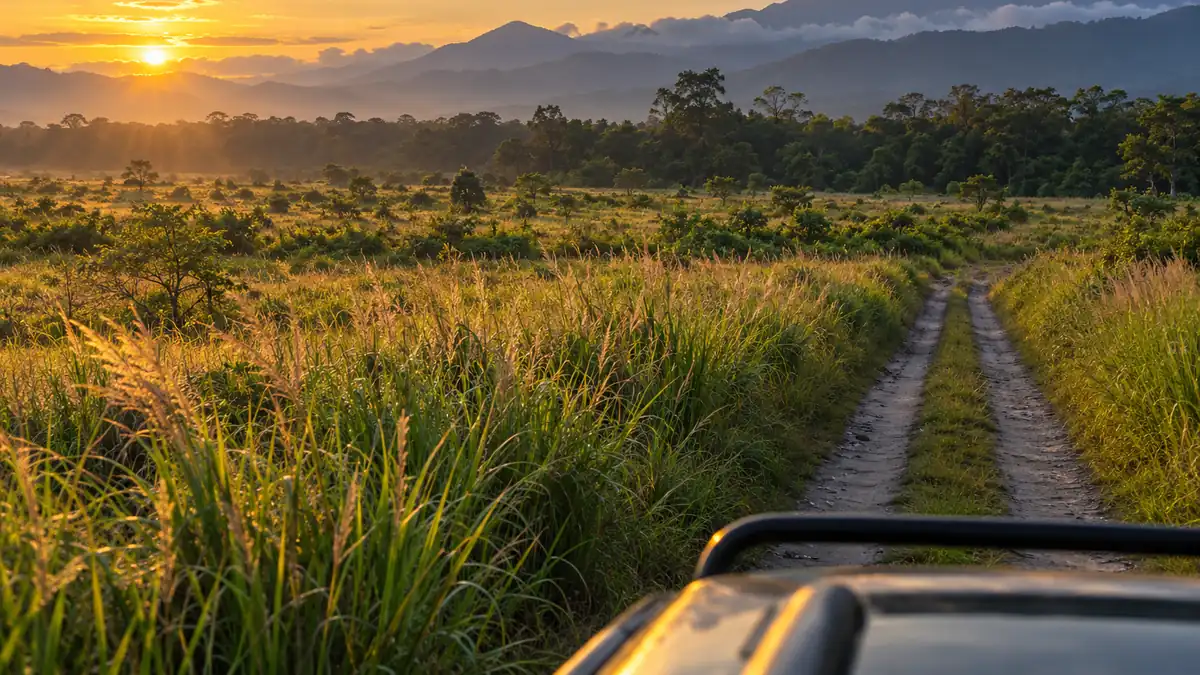
Unlike parks with rigid zone quotas, registered Gypsies in Manas can access extended tracks through the grasslands, providing wildlife enthusiasts uncrowded viewing corridors.
Safari Ranges: Bansbari, Bhuyanpara, and Panbari Topography
Manas National Park is organized into three administrative forest ranges, each displaying distinct floral compositions and terrain dynamics:
- Bansbari (Central Range): This is the primary tourism hub, headquartered at the main highway entry point. The sector features expansive alluvial elephant grass meadows that gradually give way to deciduous forests as the road climbs toward the Mathanguri river lodge on the Bhutan border. Most first-time travelers base themselves here for classic game drives and elephant interactions.
- Bhuyanpara (Eastern Range): Located 30 kilometers east of Bansbari, this open grassland sector features numerous natural water bodies (beels) and low grazing plains. Bhuyanpara offers exceptional bird watching for grassland species, including the critically endangered Bengal florican, and provides reliable sightings of reintroduced one-horned rhinos with young calves.
- Panbari (Western Range): Situated in the foothills along the western border, Panbari features dense semi-evergreen forest canopies and rocky seasonal streams. The dense canopy makes mammal spotting challenging, but it provides a rewarding sanctuary for dedicated botanical scholars and butterfly researchers.
Choosing between ranges allows travelers to alternate between open river vistas and dense foothill forests across multiple safari shifts.
The Golden Langur and Endangered Himalayan Foothill Wildlife
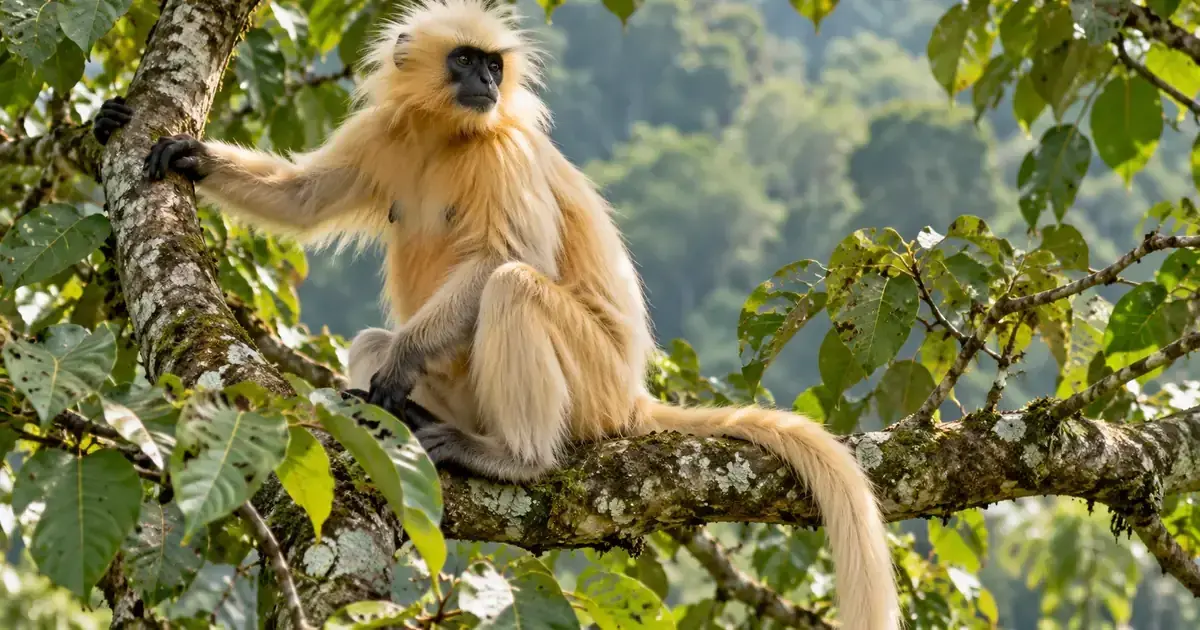
The biological hallmark of Manas National Park is the golden langur (Trachypithecus geei), an endangered Old World monkey found only in western Assam and adjacent parts of the Black Mountains of Bhutan. Covered in rich golden-cream fur with a dark, hairless face and a long tail, these arboreal primates forage in family troops high among semi-evergreen tree canopies.
Visitors frequently spot troops of golden langurs feeding on tender leaves and wild figs along the forested riverbanks near the Mathanguri inspection lodge. The park also shelters the world’s rarest and smallest suid, the secretive pygmy hog (Porcula salvania), which stands just 25 centimeters tall and lives exclusively within dense, unburnt tall grasslands.
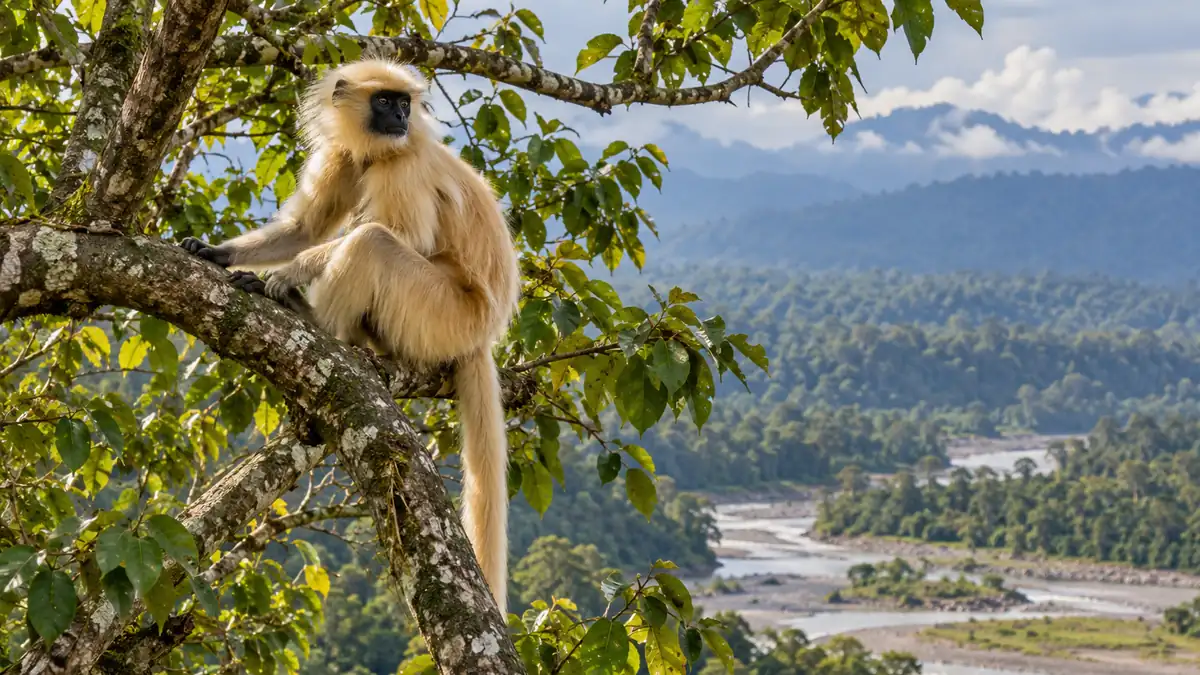
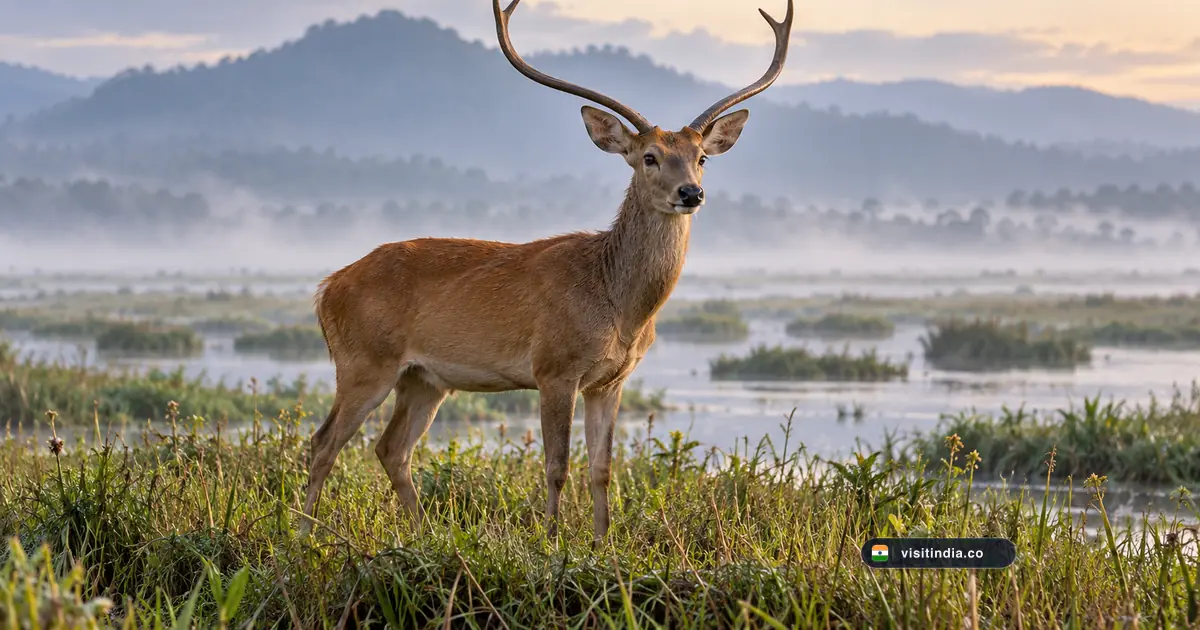
Other rare Schedule I species include the hispid hare, clouded leopard, Asian golden cat, and the world’s largest population of pure-strain Asiatic wild water buffalo (Bubalus arnee). In recent years, collaborative conservation efforts have reintroduced one-horned rhinos from central Assam, establishing a thriving breeding population inside the park.
Travelers can cross-reference regional sanctuary networks by reviewing our comprehensive Kaziranga National Park Safari permit and entry guide to compare rhino tracking terrains.
Mathanguri Forest Lodge and Manas River Rafting Expeditions
Situated 22 kilometers inside the forest from the Bansbari gate, Mathanguri sits directly on the international border along the rocky gorge of the Manas River. The historic government forest inspection lodge perches atop an elevated bluff, offering wide views of the river emerging from the pine-forested mountains of Bhutan.
Mathanguri serves as the launch point for one of India’s most scenic wilderness river rafting experiences. Outfitted with licensed river guides, safety helmets, and life jackets, inflatable rafts float 35 kilometers downstream along the clear, pebble-strewn river currents back to the park perimeter at Bansbari.
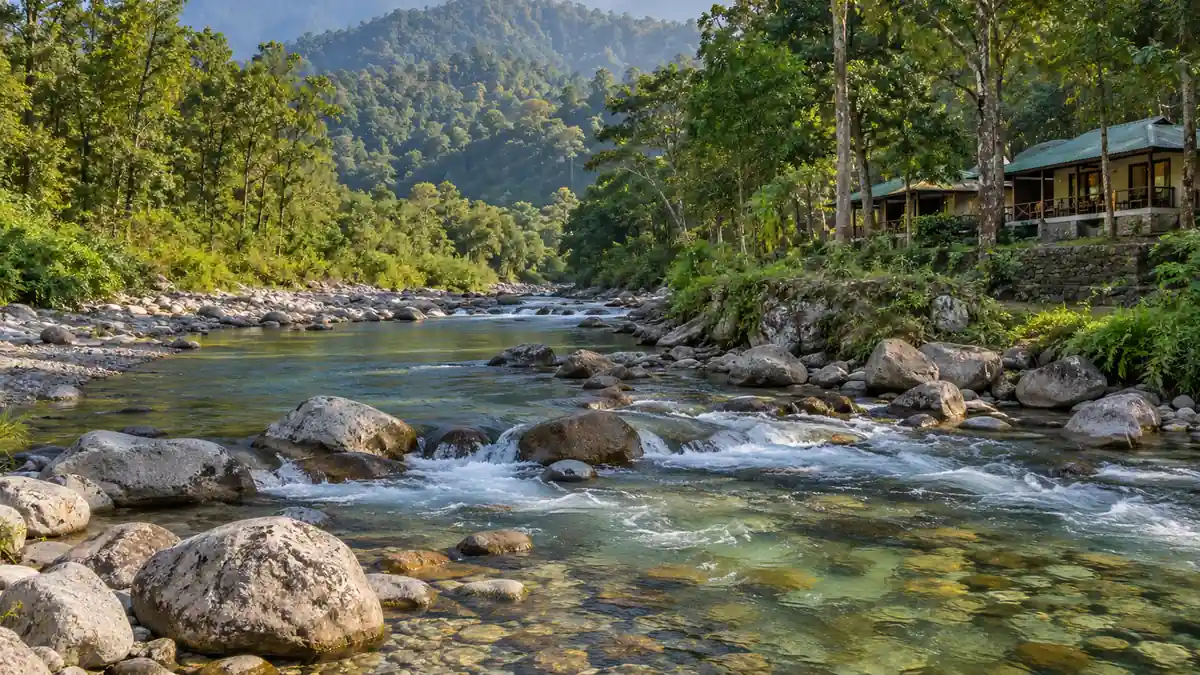
Because the river consists of gentle Grade I and Grade II flows without dangerous whitewater rapids, the 3.5-hour float trip is safe and comfortable for travelers of all ages. Floating silently down the river allows passengers to observe wild elephant herds swimming across water channels, water monitor lizards basking on rocky gravel bars, and white-bellied herons fishing along shallow shoals.
Rafting bookings should be reserved a day in advance through local eco-camps or licensed adventure operators in Bansbari, with boat tariffs averaging ₹3,500 to ₹5,000 per raft for up to six people.
Best Season to Visit: Winter Dry Months vs Summer Rains
The prime window to visit Manas National Park extends from November through April. During the peak winter months from December to February, morning temperatures drop to a crisp 10°C, daytime highs hover around 24°C, and clear skies provide views of the snow-capped Bhutan Himalayan ridges in the distance.
By March and April, the forest department carries out controlled grassland burns to stimulate fresh grass growth. As tall elephant grass is cleared, visibility across the meadows improves dramatically, drawing grazing herds of wild buffalo, swamp deer, and rhinos out into the open along main safari tracks.
From May through October, the arrival of the southwest monsoon brings torrential rains that transform mountain tributaries into surging torrents. Safari routes become impassable, and the park shuts down completely for public safety and ecological recovery.
Official seasonal opening notices and weather warnings are published annually on the Assam Tourism Department Destinations Portal.
How to Reach Manas: Routes from Guwahati and Barpeta Road
Manas National Park is easily accessible from the commercial and transportation hubs of lower Assam:
- By Road from Guwahati (140 km): Taxis and private rental cars take approximately 3.5 to 4 hours driving west along the four-lane National Highway 27 corridor to Simlaguri, followed by a 22-kilometer northward drive through Barpeta Road to the Bansbari gate.
- By Train: Barpeta Road Railway Station (Station Code: BPRD) serves as the closest railway hub, situated just 22 kilometers south of the park boundary. Several daily express trains connecting Guwahati with New Delhi, Kolkata, and northern India stop at Barpeta Road.
- By Air: Lokpriya Gopinath Bordoloi International Airport (GAU) in Guwahati functions as the nearest airport with daily non-stop flights from Delhi, Mumbai, Bengaluru, and Kolkata.
Travelers beginning their journey in Guwahati can combine an early morning darshan at the sacred Kamakhya Temple in Guwahati with an afternoon highway transfer to the forest gates of Manas.
Community Eco-Camps and Bodo Tribal Cultural Stays
Tourism at Manas is grounded in grassroots community involvement led by indigenous Bodo organizations and conservation trusts. Former forest hunters and poachers now work as certified naturalist guides, anti-poaching patrol volunteers, and homestay hosts, creating a peaceful coexistence between local communities and wildlife.
Several comfortable community eco-resorts and tented nature camps operate along the southern fringe of the park near Bansbari and Barpeta Road. These camps feature traditional thatch-roof cottages built with local bamboo and mud, equipped with private attached bathrooms, clean solar power, and ceiling fans.
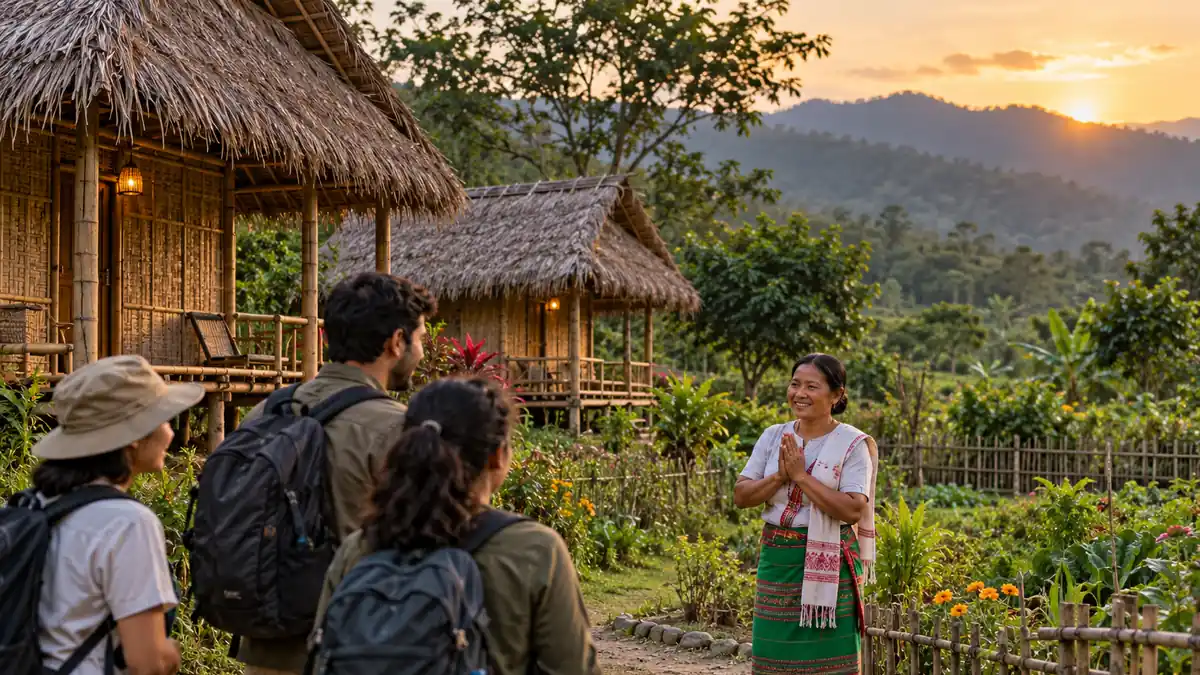
Evenings at the eco-camps feature community cultural programs where Bodo dance troupes perform the traditional Bagurumba folk dance around open campfires to the sound of the siphung flute and serja violin.
Camp kitchens serve authentic home-cooked Bodo meals, including roasted country chicken cooked with fresh indigenous herbs, tender pork prepared with bamboo shoots, and fragrant steamed Joha rice. The reserve’s harmonious blend of wildlife conservation and tribal hospitality secures its position among the best places to visit in India.
Frequently Asked Questions About Manas National Park
How do travelers book a jeep safari in Manas National Park?
Safari bookings can be arranged on arrival at the forest range field office in Bansbari or reserved in advance through registered local eco-resorts and the Bodoland Tourism department. Safari charges range from ₹3,000 to ₹4,500 per 4x4 Gypsy vehicle, which includes forest entry permits, vehicle tolls, and the mandatory certified naturalist guide.
What rare wildlife species is Manas National Park famous for protecting?
Manas is celebrated for sheltering rare species that occur in few other protected reserves, most notably the endangered golden langur with its striking creamy-gold coat and the tiny, elusive pygmy hog. The park also supports substantial populations of wild water buffalo, Asian elephants, Royal Bengal tigers, and reintroduced one-horned rhinos.
Which safari range is best for first-time visitors to Manas?
The central Bansbari range is the most popular and accessible sector, offering direct routes through elephant grass meadows up to the scenic river gorge at Mathanguri along the Bhutan border. The eastern Bhuyanpara range provides superior open grassland birding and higher chances of spotting grazing rhino mothers and calves.
Is river rafting in the Manas River safe for beginners and families?
Yes, river rafting along the Manas River from Mathanguri to Bansbari consists of gentle Grade I and II scenic floats over calm, crystal-clear water with no dangerous whitewater rapids. Certified river guides steer the rafts and provide required life jackets, making the 35-kilometer trip suitable for children and seniors.
When does Manas National Park open and close each year?
Manas National Park opens for tourism annually on November 1 and operates continuously through April 30 during the dry winter and spring season. The park remains closed from May 1 to October 31 due to torrential monsoon rains and overflowing mountain rivers flowing down from the Bhutan Himalayas.