Loktak Lake & Keibul Lamjao Park: Phumdis & Sangai Deer Guide
Plan your visit with our Loktak Lake and Keibul Lamjao National Park guide: floating phumdis, dancing Sangai deer safaris, boat fares, and homestays.
Spanning the southern floor of the Imphal Valley, Loktak Lake represents one of the most astonishing freshwater ecosystems on earth. Characterized by hundreds of circular floating biomass islands known as phumdis, this vast Ramsar wetland shelters traditional fishing settlements and forms the foundation of Keibul Lamjao National Park, universally recognized as the world’s only floating wildlife sanctuary.
Travelers and wildlife enthusiasts will discover that exploring loktak lake keibul lamjao national park offers encounters with rare wildlife found nowhere else in nature. From tracking the endangered Sangai brow-antlered deer as it balances across yielding vegetation to boarding country canoes past traditional circular fish traps, this comprehensive field guide details every aspect of visiting this natural wonder.
Wildlife & Wetland Essentials
- World’s Only Floating Park: Keibul Lamjao occupies 40 square kilometers of continuous floating phumdi in the southern basin of Loktak Lake.
- Endemic Star Species: The sole wild home of the Sangai (Rucervus eldii eldii), an endangered brow-antlered deer that steps gracefully across spongy wetland vegetation.
- Phumdi Island Mechanics: Floating islands consist of dense organic peat, decomposing reeds, and soil, with eighty percent of their thickness resting submerged.
- Safari Timing & Entry: Open daily from 6:00 AM to 5:00 PM; tickets cost ₹30 for Indian citizens and ₹200 for foreign visitors, with prime sightings between 6:00 AM and 8:30 AM.
- Transit from Imphal: Located 48 kilometers south of Imphal near Moirang, accessible within 90 minutes via private taxi or shared passenger jeep.
The Floating Phumdi Ecology of Loktak Lake
Phumdis are heterogeneous floating masses of vegetation, organic debris, and soil that cover nearly two-thirds of Loktak Lake, creating a dynamic wetland ecosystem that supports human settlements, fisheries, and wildlife.
The ecological identity of Loktak Lake is defined by its floating organic islands. Spanning nearly 287 square kilometers during the monsoon, the lake functions as a pulsating sponge that absorbs seasonal runoff from surrounding hill ranges. Travelers planning broader multi-day itineraries across the state can consult our comprehensive Manipur highlights and timings to integrate this wetland into their regional journey.
Phumdi Composition: Soil, Roots, and Buoyant Peat
A phumdi forms through decades of natural accumulation, where eighty percent of its dense, spongy organic mass floats submerged beneath the lake surface while the upper twenty percent supports grasses, reeds, and temporary dwellings.
The formation of a phumdi begins when aquatic weeds, primarily water hyacinth, wild rice, and reed grasses, entangle with floating debris. Over decades, dying roots and vegetative shoots compact with suspended river silt, forming dense, buoyant peat mats that can measure up to two meters in thickness.
During the dry winter season, receding lake water levels cause the heavier phumdis to settle onto the nutrient-rich lake bed. The plant roots absorb vital minerals from the lake bottom soil. When spring rains swell the lake, the buoyant vegetative mats detach from the floor and float freely once more across the water surface, maintaining a continuous nutrient cycle.
Athaphum: Circular Fisheries and Traditional Aquaculture
Local Meitei fishermen carve long strips of floating phumdi into circular enclosures called athaphums, anchoring them in open water to create nutrient-rich nursery zones that attract indigenous freshwater fish.
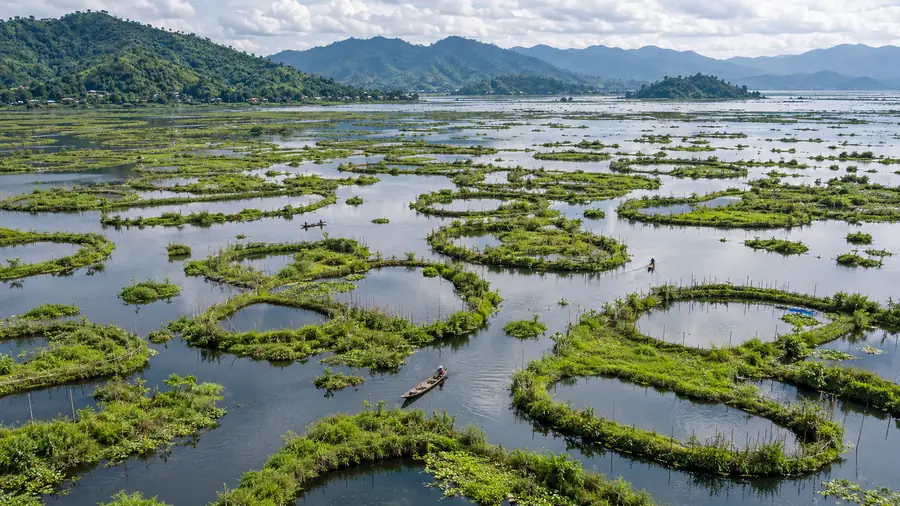
From elevated vantage points on Sendra hill, Loktak Lake appears decorated with dozens of emerald-green circular rings floating upon the dark blue water. Known locally as athaphums, these artificial circles are traditional fish aggregation enclosures developed by indigenous fishing communities.
Fishers harvest wild phumdi strips from the marshes, bend them into geometric rings measuring 20 to 50 meters in diameter, and secure them with bamboo poles driven into the lake bed. Feed made from rice bran and crushed oil cakes is sprinkled inside the ring.
After several months of enclosure, fishermen surround the circle with fine-mesh nets, enter the ring, and harvest bountiful catches of endemic carps, catfish, and freshwater prawns.
Champu Khangpok: Life in a Floating Island Village
Champu Khangpok is an authentic floating hamlet situated inside Loktak Lake, where hundreds of fishing families reside in traditional thatched bamboo huts built directly upon thick floating phumdis.
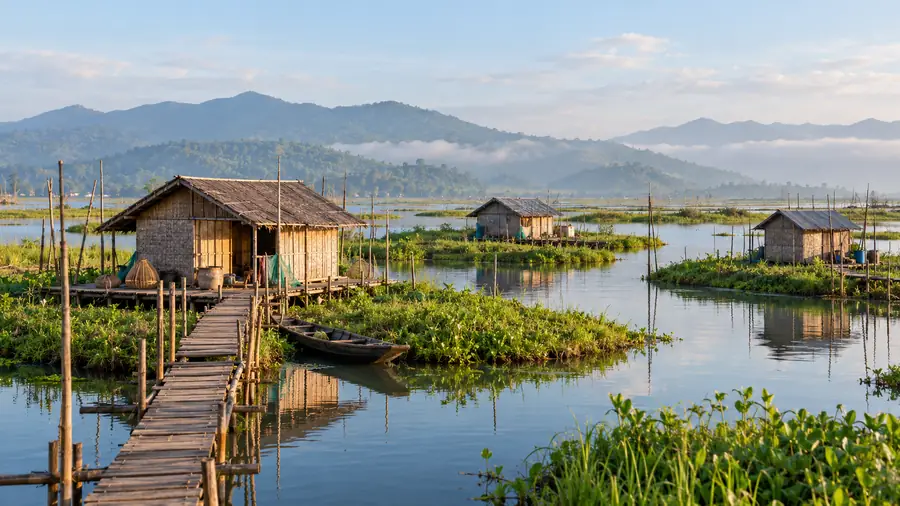
Unlike standard lakeside settlements built upon firm ground, Champu Khangpok is an entirely floating village situated in the middle of Loktak Lake. Over three hundred fishing households live in stilt huts erected upon thick, interlocking phumdi mats.
Residents navigate their village streets entirely by small wooden canoes (canoes called heis). The floating community operates its own primary school, solar-powered community charging stations, and mobile fish-drying racks, maintaining an intimate ancestral relationship with the seasonal rhythms of the water. Verified wetland conservation measures are cataloged on the Bishnupur District Administration Loktak Portal.
Keibul Lamjao National Park: The Dancing Deer Sanctuary
Keibul Lamjao National Park covers 40 square kilometers of floating wetland in southern Loktak Lake, serving as the sole wild refuge on earth for the endangered Sangai brow-antlered dancing deer.
Established as a protected sanctuary in 1966 and elevated to national park status in 1977, Keibul Lamjao represents one of the most successful wildlife recovery stories in Indian conservation history. The entire protected zone is composed of a contiguous floating mat of phumdi surrounded by open water channels. The cultural celebrations honoring this deer can be explored in our Manipur Sangai Festival guide.
Sangai Biology: Elongated Pasterns and Brow-Antlers
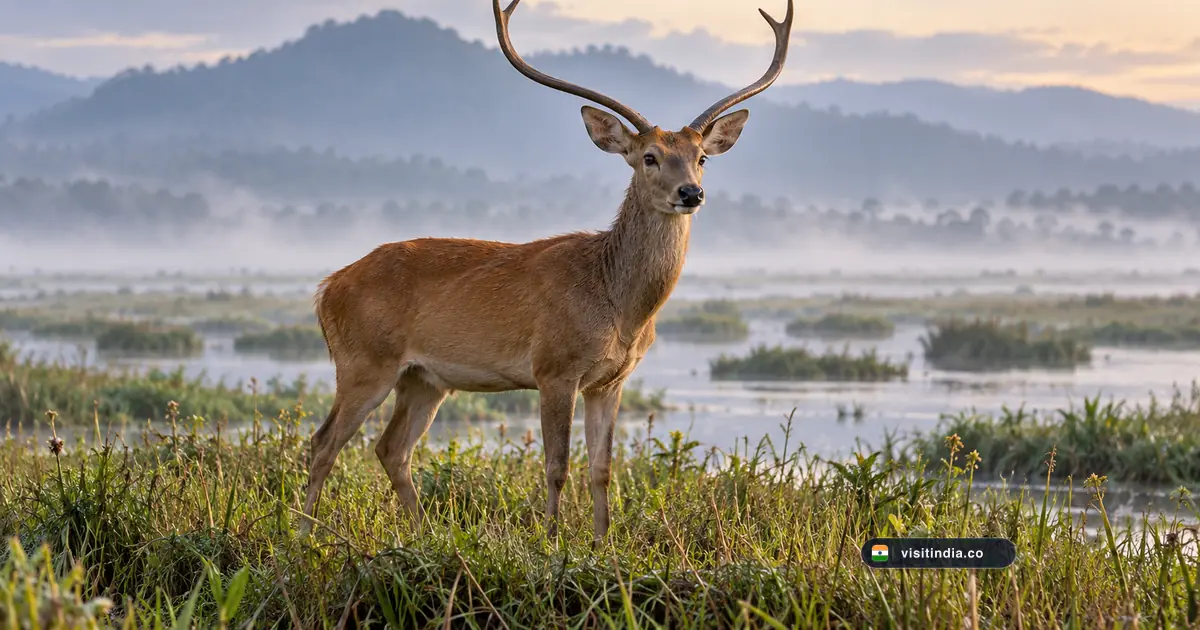
The Sangai (Rucervus eldii eldii) possesses uniquely elongated, flexible pasterns and specialized split hooves that allow it to walk effortlessly across spongy, bouncing phumdi beds without sinking.
The Sangai is an endemic subspecies of Eld’s deer found nowhere else in the wild. Male stags feature distinctive lyre-shaped antlers characterized by an unbroken arc extending from the forward-pointing brow tine back to the crowned beam tips, creating an elegant crown-like silhouette.
To survive in an aquatic swamp where firm land does not exist, the Sangai has developed remarkable biomechanical adaptations. Its middle foot bones (pasterns) are unusually elongated, and its split hooves flex outward with each step, distributing the animal’s weight across the yielding vegetative mats. When moving swiftly across floating grass beds, the deer steps with a delicate, springy, bouncing gait that resembles a graceful dance.
Conservation Recovery from the Brink of Extinction
Believed extinct in the early 1950s until a small herd of fourteen individuals was rediscovered, dedicated wetland protection by the forest department has nurtured the wild population back to over 260 deer today.
In 1951, colonial hunting pressure and habitat drainage led naturalists to declare the Sangai extinct in Manipur. However, in 1953, renowned naturalist E.P. Gee conducted an aerial and ground survey through the dense reeds of Keibul Lamjao, discovering a tiny surviving herd of fourteen deer hiding in the inaccessible southern swamps.
Following the establishment of the national park, the Manipur Forest Department, supported by local village defense committees and international conservation scientists, eradicated poaching and regulated grass cutting. Modern annual wildlife censuses conduct systematic counts, recording a steady population increase to over 260 individuals in the wild.
Watchtower Observation from Pabot Hill and Sendra
Visitors climb elevated forest department watchtowers on Pabot and Sendra hillocks at dawn, using high-magnification spotting scopes to observe family groups of Sangai grazing in the mist-covered floating grass beds.
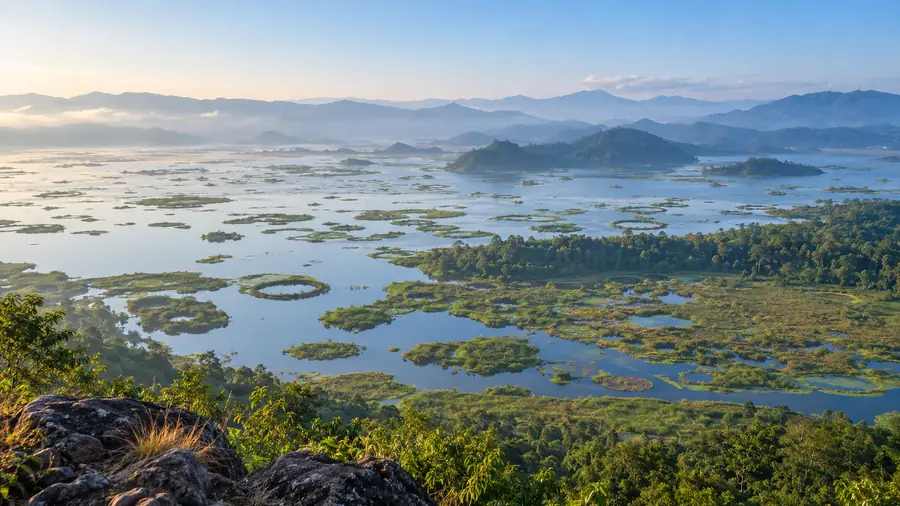
Because walking across the unstable, yielding phumdis inside the core park area is strictly prohibited to protect the fragile habitat and ensure visitor safety, wildlife observation takes place from elevated viewing platforms.
The primary observation post is the forest department watchtower on Pabot hill, an isolated rocky knoll that rises directly out of the southern marshland. Visitors ascending the tower by 6:00 AM can scan the open grass clearings using binoculars. As the early morning mist burns off beneath the rising sun, family groups of Sangai emerge from dense reed thickets to graze on fresh shoots of aquatic grass (Zizania latifolia).
| Attribute | Keibul Lamjao National Park | Loktak Lake Wetland Core |
|---|---|---|
| Total Protected Area | 40 square kilometers | 287 square kilometers |
| Habitat Classification | Floating Phumdi Wetland / Peat Marsh | Open Freshwater Lacustrine System |
| Key Mammal Species | Sangai (Rucervus eldii eldii), Hog Deer | Fishing Cat, Otter, Marbled Cat |
| Conservation Status | National Park (1977), Ramsar Site (1990) | Ramsar Wetland of International Importance |
| Primary Observation Point | Pabot Hill Watchtower | Sendra Hilltop & Motorboat Cruising |
| Visitor Entry Fee | ₹30 (Indians), ₹200 (Foreigners) | Free lake access; boat fees apply |
Boat Safaris, Island Hopping, and Sendra Hill
Visitors explore Loktak Lake via motorized country boats departing Sendra jetty, cruising past circular fishing rings and visiting the cashless island community of Karang.
Sendra Island, connected to the mainland by a low earthen causeway, serves as the primary tourism hub for Loktak Lake. Perched atop the island knoll, a government tourist lodge commands sweeping 360-degree views across the water, providing an ideal base for boat safaris and photography. Travelers exploring urban heritage can pair this excursion with sites in our Kangla Fort and Ima Keithel guide.
Motorboat Crossings from Sendra and Moirang Jetties
Authorized boatmen at Sendra jetty operate regulated motorboats for one to two-hour wetland cruises, charging ₹300 to ₹500 per person on shared rides or ₹1,200 to ₹1,500 for private charters.
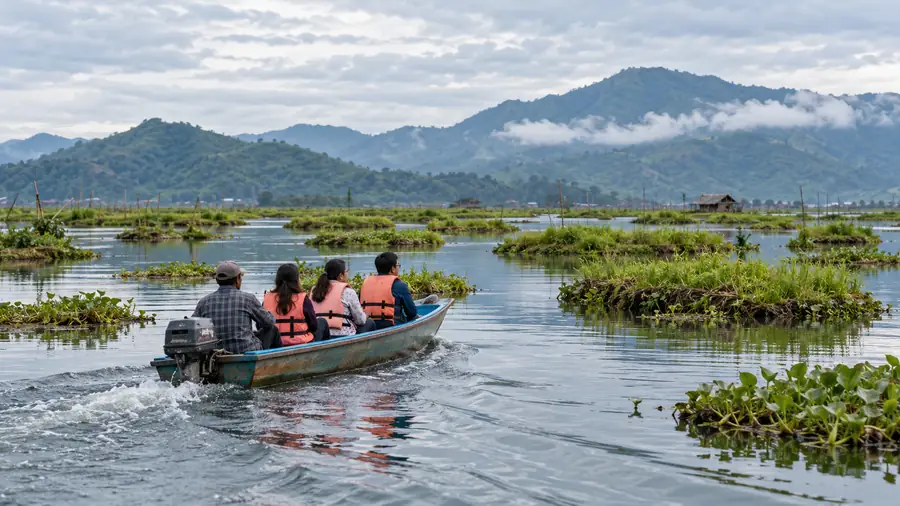
Boat tours depart continuously throughout daylight hours from the concrete boarding jetty at the foot of Sendra hill. Visitors board long, low-slung wooden country craft fitted with small inboard motors and mandatory foam life vests.
During the cruise, the boat navigates narrow, winding water lanes cut through dense floating phumdi mats. Passengers drift within feet of the green circular athaphums, observing local fishers hauling in cast nets or collecting tender aquatic plants for local markets. The gentle hum of the motor and the soothing motion of the water create an unforgettable sensory experience.
Karang Island: India’s First Cashless Community
Situated in the central basin of Loktak Lake, Karang is a peaceful rocky island inhabited by traditional weavers and fishers, recognized in 2017 as India’s first complete cashless island settlement.
Reachable only by a fifteen-minute boat ride from the Sendra shoreline, Karang Island rises like an emerald jewel from the center of the lake. Free of automobiles and motorized traffic, the island is crossed by stone pathways shaded by jackfruit and banana groves.
Following a nationwide digital empowerment campaign in 2017, all merchant stalls, tea shops, and handloom weavers on the island adopted digital UPI transactions, making Karang the first digital cashless island in India. Visitors can walk up to the hilltop temple of Karang Thangjing to admire sweeping vistas of the open lake and watch women weaving silk shawls on outdoor backstrap looms.
Floating Homestays and Sunrise Lake Photography
Travelers can arrange overnight stays in community-run eco-cottages erected upon anchored phumdis, waking to mirror-like reflections and misty sunrises as local fishers paddle out in narrow wooden dugouts.
For an adventurous overnight experience, community eco-tourism associations operate a handful of floating homestays built directly upon stabilized phumdis near Thanga and Sendra. Constructed using local bamboo, cane, and thatched grass, these modest huts allow travelers to sleep suspended above the water.
Waking at dawn on a floating homestay offers unmatched photographic opportunities. As the sun rises behind the eastern hill ranges, morning mist rolls across the quiet lake, while local fishers glide silently across the water in slender dugouts, casting silhouetted nets across mirror-like reflections.
Pro Tip
Sunrise Photography Advice If staying on Sendra Island or in a floating homestay, set your camera on a tripod by 5:15 AM. The soft pre-dawn ambient light creates deep cobalt blue water reflections, followed fifteen minutes later by intense golden illumination across the green phumdis.
Wildlife Biodiversity Across the Ramsar Wetland
Loktak Lake supports over 230 aquatic plant species, 57 freshwater fish varieties, and serves as an important winter habitat for thousands of migratory birds and rare wetland felines.
Designated under the Ramsar Convention on Wetlands in 1990, Loktak is one of the most biologically productive wetlands in eastern India. The interaction between floating vegetative mats, open limnetic waters, and rooted bottom vegetation provides diverse micro-habitats that shelter rich communities of resident and migratory species.
Resident and Migratory Waterfowl of Loktak
Between November and March, Loktak hosts vast flocks of migratory ducks including northern pintails, garganeys, and common teals feeding alongside resident purple swamphens and openbill storks.
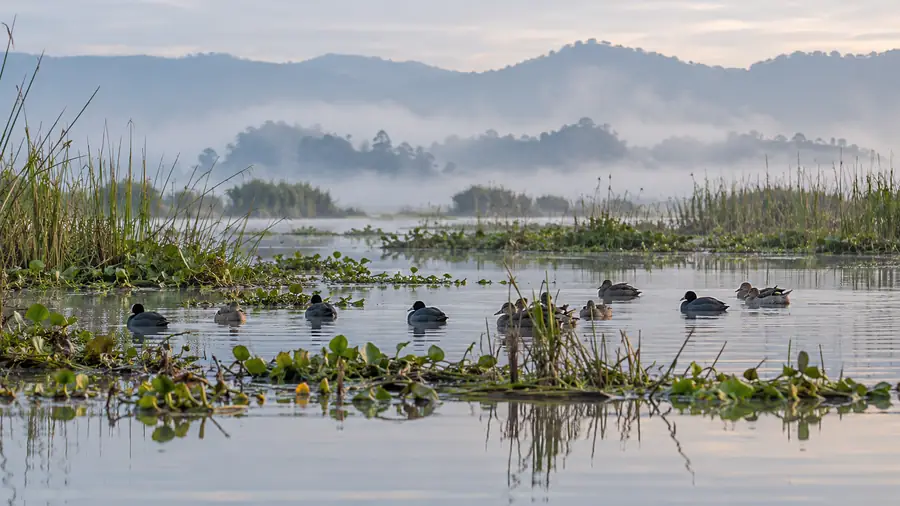
Loktak Lake lies along the Central Asian Flyway, an important migratory bird migration corridor connecting Siberian breeding grounds to South Asian wintering wetlands. Every winter, thousands of waterfowl settle upon the sheltered bays between phumdis.
Common migratory visitors include the northern shoveler, gadwall, ferruginous pochard, and Eurasian wigeon. Resident wetland birds thrive along the reed fringes throughout the year, including the purple swamphen, bronze-winged jacana, Asian openbill stork, and the white-breasted waterhen. Birdwatchers can cross-reference coastal and freshwater wetland birding tips in our Chilika Lake dolphin safari guide.
Wetland Carnivores: Fishing Cat and Marbled Cat
The dense reed beds and floating phumdis shelter rare semi-aquatic predators, including the endangered fishing cat (Prionailurus viverrinus), hog deer, and the nocturnal large Indian civet.
Beyond the iconic Sangai, Keibul Lamjao and the surrounding marshes harbor elusive mammalian predators specially adapted to wetland environments. Foremost among these is the fishing cat, a medium-sized feline with water-resistant fur and partially webbed front paws that hunts freshwater fish and waterfowl along the phumdi margins.
Other notable wildlife inhabitants include the Indian hog deer (Axis porcinus), wild boar, Asian small-clawed otter, and the large Indian civet. Nocturnal camera-trapping surveys conducted by wildlife biologists regularly document healthy populations of these secretive wetland mammals within the protected national park core.
Practical Safari Logistics: Routes, Timings, and Stays
Loktak Lake is 48 km south of Imphal along the Churachandpur highway, open daily with national park entry fees of ₹30 for Indian nationals and ₹200 for foreign visitors.
Planning an expedition to Loktak Lake requires coordination of road transit from the capital, boat bookings, and early morning national park entry passes. Because the best wildlife sightings occur before breakfast, staying overnight near the lake is strongly advised.
Reaching Loktak from Imphal by Road
Travelers can hire private taxis from Imphal for a 90-minute drive down the four-lane highway to Sendra Island (₹1,800 to ₹2,500 return) or take budget shared passenger jeeps from Wahengbam Leikai.
The most convenient way to reach Loktak Lake from Imphal is by hiring a private taxi. The route follows National Highway 2 southward through Bishnupur town before branching west toward Moirang and Sendra along well-paved, scenic four-lane roads. A private day charter typically costs between ₹1,800 and ₹2,500 including waiting time.
Budget travelers can board shared passenger jeeps or local state buses departing regularly from the Wahengbam Leikai bus stand in central Imphal. Shared jeeps travel directly to Moirang town in approximately 75 minutes for ₹50 to ₹70 per seat. From Moirang market, local three-wheeled auto-rickshaws ferry passengers the final five kilometers to Sendra jetty for ₹30.
Entry Tickets, Boat Tariffs, and Safari Hours
Keibul Lamjao National Park opens at 6:00 AM and closes at 5:00 PM daily; early morning entries between 6:00 AM and 8:30 AM offer the highest probability of observing Sangai deer in the open meadows.
Entry passes for Keibul Lamjao National Park are issued at the forest department checkpost near the base of Pabot hill. The entry fee is ₹30 for domestic adult visitors and ₹200 for international passport holders. Still digital cameras carry a nominal permit fee of ₹50, while video camera permits cost ₹250.
Boat safari tariffs at Sendra jetty are standardized by the local boatmen association. Standard 60-minute cruises on shared motorboats cost ₹300 per passenger, while private two-hour deep-lake charters cost ₹1,200 to ₹1,500 per boat accommodating up to six persons. Detailed visitor guidelines are cataloged on the Bishnupur District Administration Keibul Lamjao Directory and the Manipur Tourism Directorate portal.
Frequently Asked Questions About Loktak Lake and Keibul Lamjao
What is unique about Keibul Lamjao National Park?
Keibul Lamjao is the only floating national park in the world, consisting of a vast floating biomass of vegetation and organic peat (phumdi) that shelters the last surviving wild population of the endangered Sangai deer.
What are phumdis in Loktak Lake?
Phumdis are thick floating mats of vegetation, organic debris, and soil that float naturally across Loktak Lake. Approximately 80 percent of their mass remains submerged, supporting huts, fisheries, and wildlife.
Why is the Sangai deer called the dancing deer?
The Sangai (Rucervus eldii eldii) is called the dancing deer because its elongated, flexible pasterns flex gracefully as it steps across the soft, bouncy, yielding surface of the floating phumdi grass beds.
How far is Loktak Lake from Imphal and how do you get there?
Loktak Lake is located approximately 48 kilometers south of Imphal near Moirang. Travelers can reach it in roughly 90 minutes via private taxi or shared passenger jeep along the Imphal-Churachandpur highway.
Can tourists stay overnight on floating homestays in Loktak Lake?
Yes, travelers can book community-operated floating homestays built on thick phumdis near Thanga and Sendra, or stay at the government-managed Sendra Park and Resort on the hilltop overlooking the lake.
What are the safari timings and ticket prices for Keibul Lamjao National Park?
The national park is open daily from 6:00 AM to 5:00 PM. The entry fee is ₹30 for Indian citizens and ₹200 for foreign visitors, with a still camera permit fee of ₹50.
What is the best time of year to see Sangai deer at Loktak Lake?
The best season to view Sangai deer is from November to March during the dry winter months, particularly during early morning hours (6:00 AM to 8:30 AM) when deer feed in the open meadows.