Manipur Sangai Festival: Ras Lila, Dates & Culture Guide
Discover the Manipur Sangai Festival and Yaoshang traditions with complete event dates, classical Ras Lila dance details, venues, and travel tips.
The Manipur Sangai Festival stands as the state’s largest annual cultural celebration. Held each November, the ten-day festival serves as an extraordinary bridge connecting ancient Meitei court traditions, indigenous hill tribe heritages, and regional wildlife conservation. The festival takes its name from the Sangai, an endangered brow-antlered deer species that inhabits the floating reed masses of the Imphal Valley.
Beyond presenting the classical beauty of Manipuri Ras Lila dance, the festival highlights ancestral equestrian sports, handloom weaving, and indigenous gastronomy. Travelers can examine our detailed Manipur travel guide to plan their festival schedule alongside wider regional itineraries.
Festival & Cultural Essentials
- Sangai Festival Dates: Annually from November 21 to November 30 across multiple regional venues.
- Primary Festival Hub: Hapta Kangjeibung palace grounds and the historic Polo Ground in central Imphal.
- Secondary Event Venues: Moirang lakeside pavilion at Loktak Lake, Mao hill station in Senapati, and Khuman Lampak Sports Complex.
- Core Classical Traditions: Manipuri Ras Lila ballet, acrobatic Pung Cholom drum dances, and traditional Thang-Ta martial arts.
- Featured Indigenous Sports: Sagol Kangjei (ancestral 7-a-side polo on Manipuri ponies) and Yubi Lakpi (greased coconut rugby).
- Spring Counterpart: Yaoshang festival celebrated over five days during the Phalguna full moon (February/March) featuring nightly Thabal Chongba folk dances.
The Manipur Sangai Festival: Celebrating Culture and the Brow-Antlered Deer
The Sangai Festival serves as a grand platform that brings together thirty-four recognized ethnic tribes and valley communities. First established by the state tourism department to encourage responsible travel, the celebration has expanded into an internationally recognized cultural event.
The festival program spans multiple thematic disciplines, ranging from formal classical dance dramas to international polo matches and eco-tourism exhibits.
Origins, Ecological Theme, and Annual Dates (November 21 to 30)
Originally celebrated as the Manipur Tourism Festival, the event was officially renamed in 2010 to honor the Sangai (Rucervus eldii eldii). This unique deer species survives exclusively within the floating marshes of Keibul Lamjao National Park in southern Manipur.
By tying the state’s flagship cultural celebration to an endangered species, the festival promotes conservation awareness across regional communities. The festival takes place annually from November 21 to November 30.
During this ten-day window, autumn weather provides clear mountain skies, pleasant daytime temperatures around 22°C, and cool evenings. Detailed daily schedules and international delegation details are released each autumn through the official Manipur Tourism Sangai Festival Portal.
Multi-Venue Distribution: Hapta Kangjeibung, Moirang, and Mao
To distribute economic benefits and ease traffic congestion in central Imphal, the state government organizes the festival across several regional hubs:
| Festival Venue | Location | Primary Event Highlights |
|---|---|---|
| Hapta Kangjeibung | Palace Compound, Imphal | Main cultural stage, classical dance, handloom pavilions, international food courts |
| Mapal Kangjeibung | Central Imphal | Manipur State International Polo Tournament (Sagol Kangjei) |
| Moirang & Sendra | Bishnupur District (45 km from Imphal) | Water sports, Loktak floating pavilion exhibitions, tribal folk music |
| Khuman Lampak | North Imphal | Traditional indigenous sports (Mukna wrestling, Yubi Lakpi rugby) |
| Mao Hill Station | Senapati District (105 km north) | Cherry Blossom Festival, highland tribal dances, organic produce market |
Travelers can base themselves in Imphal to attend morning polo games and evening dance ballets, while dedicating single-day excursions to lakeside stages at Moirang.
Classical Manipuri Dance Traditions: Ras Lila and Pung Cholom
Classical Manipuri dance represents one of India’s eight officially recognized classical dance forms. Unlike the angular footwork and dramatic facial expressions seen in southern styles, Manipuri dance emphasizes flowing, circular movements, devotional restraint, and composed facial postures.
The festival stages present extraordinary daily performances by master dancers trained at foremost institutions, including the Jawaharlal Nehru Manipur Dance Academy.
Visitors can explore our Loktak Lake and Keibul Lamjao guide to plan peaceful nature excursions between evening dance performances.
Ras Lila: Devotional Krishna-Radha Vaishnavite Ballet
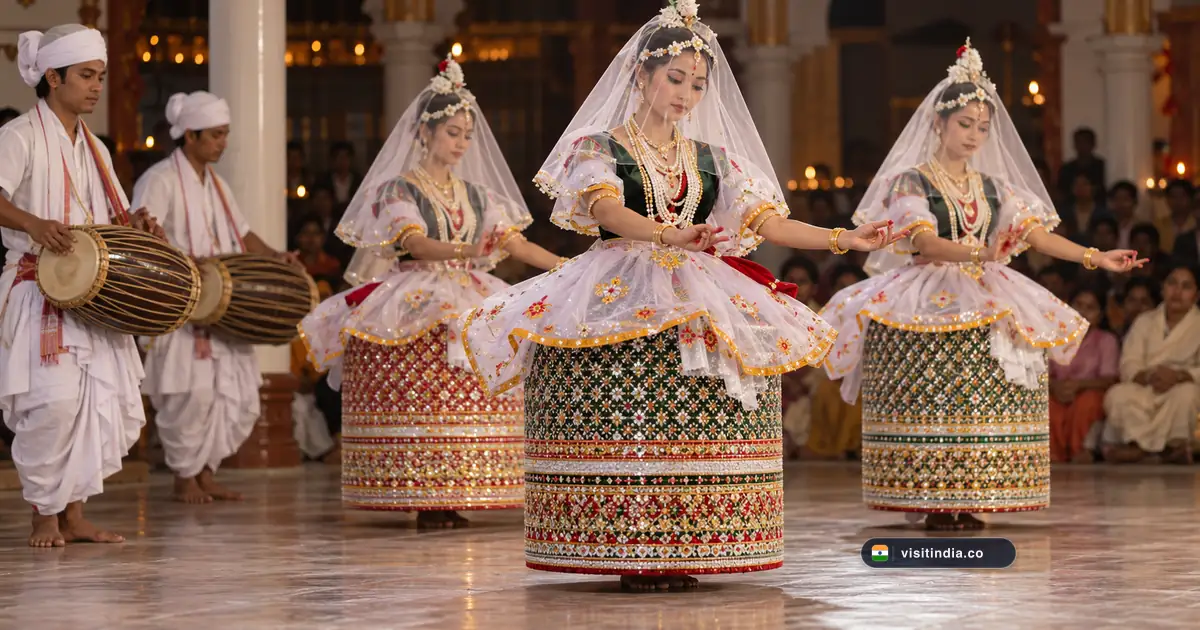
Ras Lila is the crowning glory of Manipuri classical dance. Developed in the eighteenth century under the royal patronage of King Bhagyachandra (Ningthou Ching-Thang Khomba), the dance portrays the divine love between Radha, Krishna, and the milkmaids (gopis) of Vrindavan.
According to historical tradition, King Bhagyachandra composed the choreography and designed the distinctive costumes following a sacred dream.
The performance is instantly recognizable by the Kumil, an ornate cylindrical skirt reinforced with stiff canvas and decorated with mirrors and embroidery. As the dancer glides across the stage, the skirt maintains a graceful bell shape that produces the illusion of weightless floating.
The upper garment includes the Vel, a translucent white head veil that covers the face, reflecting classical Meitei modesty. The movements remain gentle and undulating, avoiding sudden sharp gestures in favor of unbroken, spiraling arcs.
Pung Cholom: The Acrobatic Drum Dance of Manipur
Complementing the gentle grace of Ras Lila is the vigorous, masculine art of Pung Cholom. Dancers play the pung, a traditional two-headed hand drum hung from the neck, while executing complex physical movements.
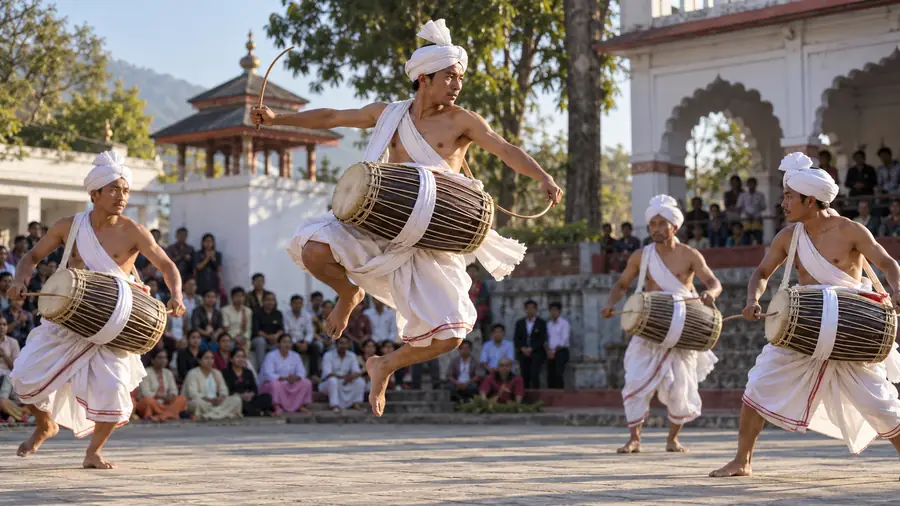
Performers dressed in spotless white dhotis and matching turbans weave intricate rhythmic cycles while jumping, squatting, and spinning mid-air.
The performance begins with slow, measured invocations that gradually build to dizzying crescendos of acrobatics without missing a single drumbeat. Pung Cholom functions as an essential prelude to religious ceremonies and festive celebrations, demonstrating physical agility and spiritual devotion.
Thang-Ta: Ancient Meitei Martial Art of Sword and Spear
The Sangai Festival also features performances of Thang-Ta, the ancestral martial art of Manipur. The term translates directly to thang (sword) and ta (spear), representing the traditional weaponry used by Meitei warriors to defend the kingdom.
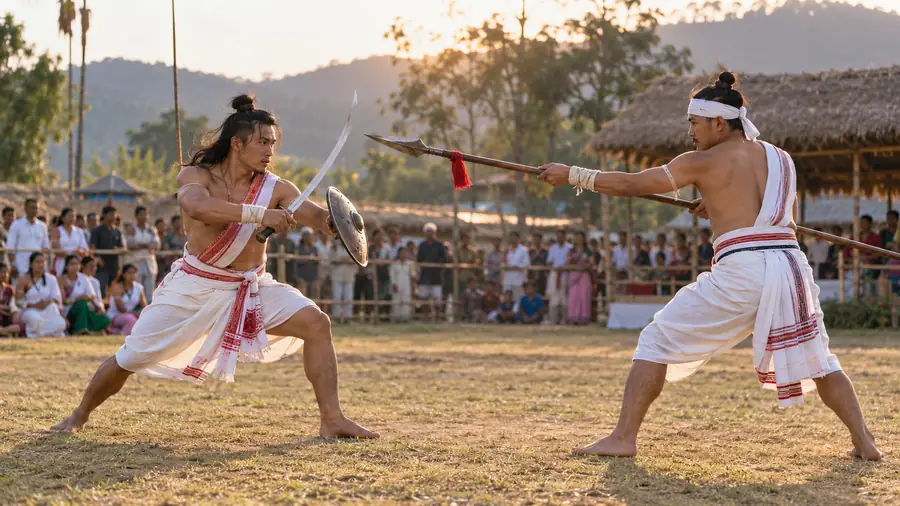
Thang-Ta integrates physical combat drills with breathing exercises, rhythmic steps, and philosophical training.
Demonstrations display incredible precision as martial artists execute lightning-fast strikes, defensive rolls, and synchronized weapon clashes. Today, master practitioners preserve these historical military traditions through formal academy instruction and festive demonstrations.
Indigenous Sports, Handlooms, and Culinary Traditions
Manipur possesses a rich athletic heritage, producing a disproportionate number of world-class Olympians, boxers, and football players. The Sangai Festival dedicates substantial arena space to indigenous sporting contests that have been practiced for centuries.
Visitors can combine festival events with historical walking circuits using our Kangla Fort and Ima Keithel guide to explore heritage sites across the capital.
Sagol Kangjei: The Ancestral Roots of Modern Polo
Equestrian enthusiasts recognize Manipur as the historic birthplace of modern polo. The indigenous game of Sagol Kangjei has been played in the valley for over a millennium.
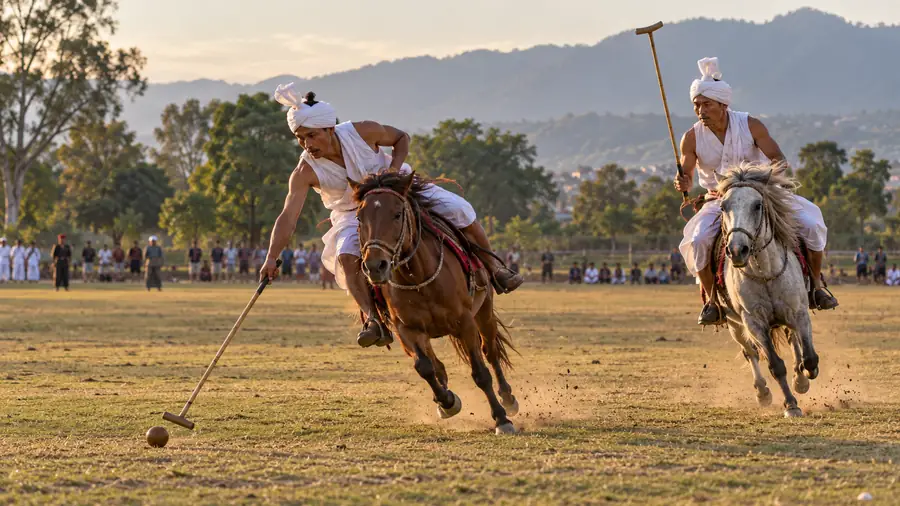
Colonial officers encountered the sport at Imphal in the 1850s, codifying its rules to establish the modern international game of polo.
Sagol Kangjei is played with seven players per side on nimble indigenous Manipuri ponies standing just twelve hands high. Riders wield long bamboo mallets and strike a seasoned willow-root ball, galloping at high speeds without modern saddles or stirrups.
During the Sangai Festival, Mapal Kangjeibung, the world’s oldest functional polo ground, hosts the Manipur State International Polo Tournament. Teams from the United Kingdom, the United States, Argentina, and India compete on original Manipuri ponies.
Handloom Traditions, Pottery, and Cane Crafts
The craft pavilions at Hapta Kangjeibung highlight the incredible technical skill of local weavers and craftsmen:
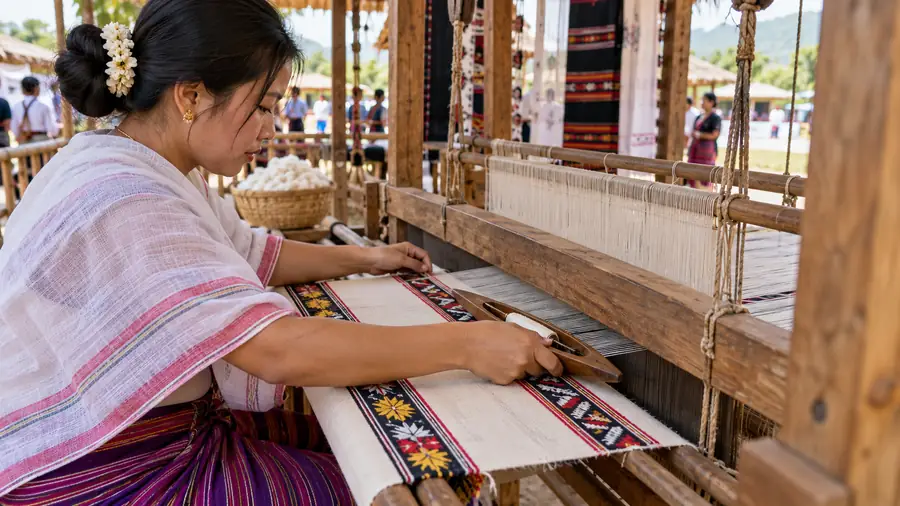
- Moirang Phee Textiles: Elegant cotton fabrics woven with traditional triangular temple borders (Moirang phijigoi) that symbolize the dragon deity Pakhangba.
- Shaphee Lanphee Shawls: Black handwoven shawls adorned with embroidered celestial symbols, traditionally awarded by Meitei kings to brave soldiers.
- Longpi Black Pottery: Unique cookware crafted from weathered serpentinite rock and black clay by Tangkhul Naga artisans in Ukhrul without a potter’s wheel.
- Cane and Bamboo Craft: Intricately woven fish traps, storage trunks, and delicate tea trays produced using indigenous highland bamboo.
Official tourism directories and exhibition listings are managed through the Manipur Tourism Directorate.
Indigenous Gastronomy: Chak-hao, Kangshoi, and Singju
Festival food stalls offer visitors a delicious introduction to authentic Manipuri cuisine. Traditional cooking emphasizes fresh river fish, seasonal greens, and aromatic valley herbs:
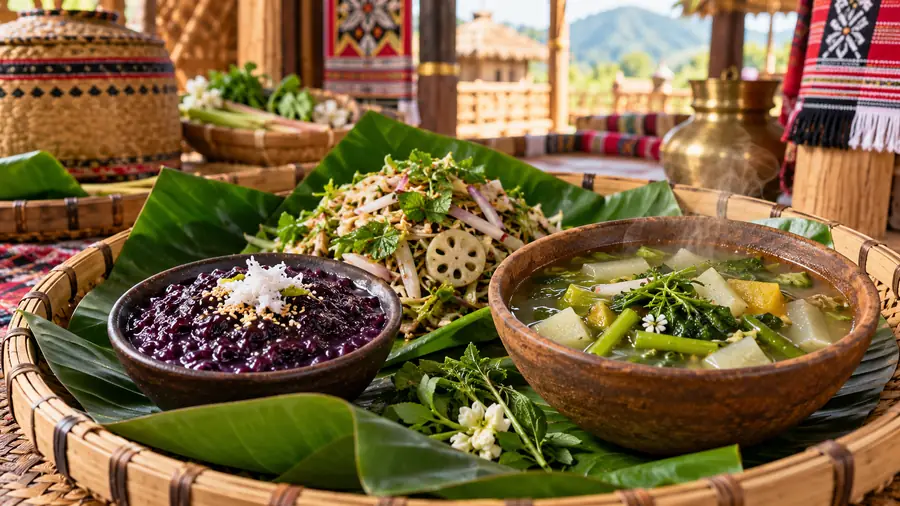
- Chak-hao Delicacies: Famous Manipuri black rice served as sweetened kheer (pudding) or steamed cakes, featuring a distinct nutty flavor and high antioxidant content.
- Kangshoi: A light, nutritious stew made with boiled seasonal vegetables, ginger, sliced onions, and fermented fish (ngari).
- Singju: A spicy herbal salad made from finely shredded cabbage, lotus stems, herbs, roasted perilla seeds, and chili paste.
- Sareng Curry: Prized freshwater catfish cooked in rich mustard gravy, considered a ceremonial delicacy across Meitei households.
Yaoshang: Manipur’s Five-Day Spring Festival of Colors and Sports
While the Sangai Festival dominates late autumn, Manipur’s calendar includes another major seasonal celebration. Yaoshang is observed for five consecutive days during the full moon of the Hindu month of Phalguna (February or March).
While commonly regarded as the Manipuri counterpart to Holi, Yaoshang has developed a unique cultural identity that combines ancient Meitei customs, sports competitions, and evening dances.
Travelers interested in seasonal celebrations across the wider Northeast can review our Hornbill Festival travel guide to plan consecutive festival tours across neighboring states.
Thabal Chongba: Moonlight Dancing Under the Full Moon
The social highlight of Yaoshang is Thabal Chongba, which translates from Meitei to “dancing by moonlight.” Each evening following sunset, open-air grounds in villages and urban neighborhoods are illuminated for community dance gatherings.
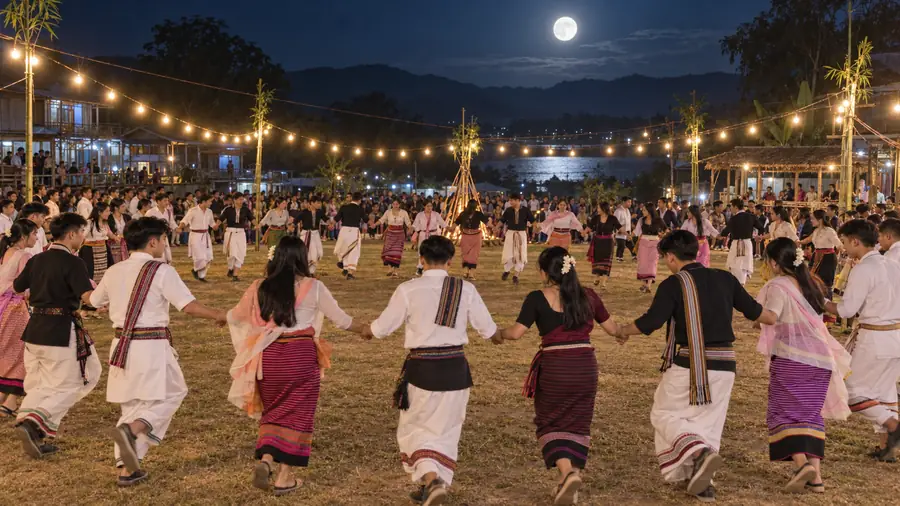
Young men and women join hands in a massive, expanding circle, performing rhythmic side-stepping and swinging arm motions to the beat of traditional drums and electric folk instruments.
Historically, Thabal Chongba provided an essential social avenue for young people to converse, socialize, and choose prospective spouses under the watchful eyes of community elders. Today, the tradition remains an energetic community ritual attended by thousands of youths across the Imphal Valley.
Yaoshang Sports Festivals: Channeling Youth Energy Through Athletics
Beginning in the mid-twentieth century, Manipuri community leaders introduced an innovative reform to prevent unruly behavior during spring festivities. Local neighborhood clubs converted the five-day festival into a massive community sports meet.
Every locality in Imphal organizes comprehensive athletic games on village grounds and school fields:
- Track and Field: 100-meter sprints, relay races, and long jump competitions for children and senior citizens.
- Indigenous Games: Tug-of-war contests, Mukna wrestling bouts, and bamboo climbing.
- Modern Team Sports: Seven-a-side football tournaments and volleyball matches that bring neighborhoods together.
This unique combination of sports and cultural celebration has earned Manipur a reputation as one of India’s most sports-loving states.
Practical Guide: Tickets, Festival Venues, and Travel Logistics
Attending the Sangai Festival requires advance logistics planning because flights and quality accommodations in Imphal fill up quickly by September and October. Additional administrative support can be verified through the Imphal West District Portal.
Getting to Imphal, Accommodation Booking, and Local Transfers
Bir Tikendrajit International Airport in Imphal offers daily direct flights from Kolkata, Guwahati, and New Delhi. Prepaid taxi counters at the terminal provide fixed-fare transfers to central city hotels located 8 km north:
- Hotels in Central Imphal: Reserve rooms around the Palace Compound, MG Avenue, or Sanjenthong to remain within walking distance of the main Hapta Kangjeibung festival grounds.
- Regional Day Transfers: Private taxis can be chartered for day excursions to the Loktak Lake venue (45 km south) or the Mao Cherry Blossom venue (105 km north).
- Inner-City Transit: Auto-rickshaws and app-based cabs operate regularly along major avenues connecting hotel districts to festival gates.
Venue Entry Passes, Cultural Etiquette, and Photography Guidelines
Festival entry procedures are straightforward and visitor-friendly:
- Entry Tickets: Daily entry tickets cost ₹30 to ₹50 per person, purchasable at entry gate counters or via online portals hosted by Manipur Tourism.
- Security Checkpoints: Visitors must carry a government-issued photo ID (Aadhaar or Passport) to present at security metal detectors.
- Dress Code: Modest clothing covering shoulders and knees is recommended, particularly when attending classical Ras Lila dance performances.
- Photography Rules: Mobile phone photography is freely permitted throughout the festival pavilions, while professional cameras and tripods may require a modest fee at the gate.
Frequently Asked Questions About the Manipur Sangai Festival
When is the Manipur Sangai Festival celebrated?
The Manipur Sangai Festival is held annually from November 21 to November 30. Exact cultural schedules and performance lineups across all regional venues are published in early autumn by Manipur Tourism.
Why is the festival named after the Sangai deer?
The festival is named after the Sangai, an endangered brow-antlered deer species found exclusively in Manipur’s Keibul Lamjao National Park. The celebration helps promote wildlife conservation alongside rich regional arts and heritage.
What is the classical dance form of Manipur performed at the festival?
Manipuri classical dance, especially the Vaishnavite Ras Lila, takes center stage with its graceful circular movements and bell-shaped cylindrical skirts. Dancers perform alongside energetic Pung Cholom drum dances and Kartal Cholom cymbal routines.
What is Yaoshang and how is it celebrated in Manipur?
Yaoshang is a five-day spring festival celebrated during the full moon of Phalguna as Manipur’s distinctive version of Holi. The festival uniquely combines religious customs with neighborhood sports tournaments and nightly Thabal Chongba moonlight dances.
What is Thabal Chongba during Yaoshang?
Thabal Chongba, meaning ‘dancing by moonlight,’ is a traditional folk dance where young men and women join hands in an expanding circle. Accompanied by rhythmic folk drumming, the communal dance serves as an important social tradition.
Where are the main venues for the Sangai Festival?
The primary festival venues include Hapta Kangjeibung and Mapal Kangjeibung in central Imphal, the Moirang lakeside pavilion near Loktak Lake, and cherry-blossom hill sites in Mao. Regional shuttle services link central Imphal to outlying venues.
What indigenous sports are showcased during the Sangai Festival?
The festival features Sagol Kangjei (ancestral 7-a-side polo on Manipuri ponies), Yubi Lakpi (greased coconut rugby), Mukna (traditional wrestling), and Thang-Ta martial arts demonstrations.