Manipur Travel Guide: Loktak Lake, Kangla Fort & ILP Routes
Explore the best places to visit in Manipur with our travel guide covering Loktak Lake phumdis, Keibul Lamjao, Kangla Fort, Ima Keithel, and ILP rules.
Manipur rests in a fertile oval valley enclosed by nine parallel mountain ranges along India’s northeastern frontier with Myanmar. Long celebrated in ancient Sanskrit literature as the “Jeweled Land,” this historic kingdom has cultivated an extraordinary civilizational identity defined by royal Meitei architecture, classical Ras Lila dance, indigenous martial traditions, and matriarchal markets that have operated continuously for centuries.
For travelers seeking untouched landscapes and deep cultural authenticity, the diverse places to visit in manipur offer unforgettable encounters. From the unique floating circular biomass islands of Loktak Lake to the ancestral citadel of Kangla Fort in Imphal, Manipur delivers rewarding travel experiences far removed from crowded tourist trails.
State Overview & Travel Highlights
- Geographic Setting: Landlocked northeastern state covering 22,327 square kilometers, featuring a central lacustrine valley at 780 meters altitude bordered by high mountain ranges.
- Aquatic Wonders: Home to Loktak Lake, the largest freshwater wetland in Northeast India, and Keibul Lamjao, the world’s only floating national park.
- Living Matriarchy: Houses Ima Keithel in central Imphal, Asia’s largest commercial market managed exclusively by over 4,000 married women traders.
- Martial & Sporting Roots: Historical birthplace of modern equestrian polo (Sagol Kangjei) and the ancient combat system of Thang-Ta.
- Visitor Access: Domestic Indian tourists must hold an approved Inner Line Permit (ILP) obtained online or at Bir Tikendrajit International Airport in Imphal.
Top Places to Visit in Manipur: Master Travel Blueprint
The primary places to visit in Manipur include Loktak Lake’s floating phumdi islands, the dancing Sangai deer at Keibul Lamjao National Park, the historic royal seat of Kangla Fort in Imphal, and the all-women market of Ima Keithel.
Travel across Manipur divides naturally between the central Imphal Valley and the surrounding hill districts. The central valley concentrates political history, classical religious temples, and urban commerce within easy reach of the capital. Extending southward, the lake basin of Bishnupur district offers world-famous wetland wildlife and wartime heritage, while northern highland ridges provide alpine trekking and cool pine forests.
Imphal Capital Circuit: Kangla Fort, Ima Keithel, and Govindaji Temple
Imphal anchors the central valley, preserving the ancient royal palace compound of Kangla Fort, the historic 4,000-vendor all-women market of Ima Keithel, and the golden twin domes of Shri Shri Govindaji Temple.
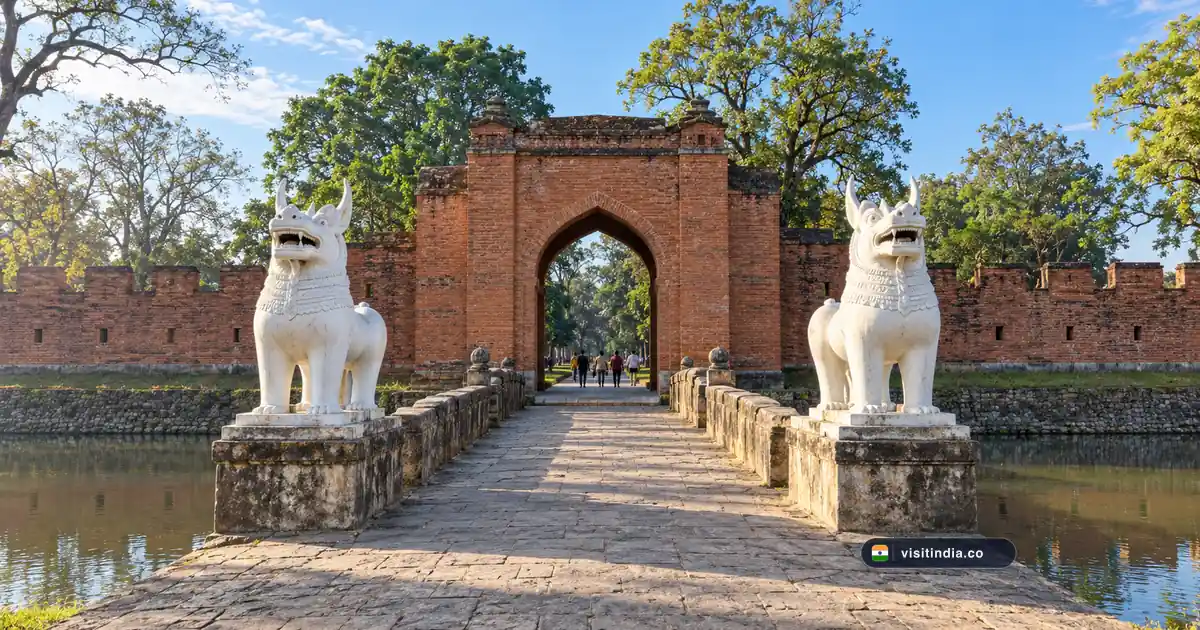
The state capital serves as the cultural and administrative heart of Manipur. At the center of the city stands Kangla Fort, an expansive historical enclosure that served as the royal seat of Meitei rulers for over two millennia. Visitors can walk along the ancient brick ramparts, view the sacred Sanamahi shrines, and admire the reconstructed Kangla Sha mythical dragon-lion statues guarding the royal entrance.
A short walk south leads into the thriving commercial avenues of Ima Keithel, a legendary market complex divided across three large municipal buildings where thousands of women trade in handwoven textiles, local vegetables, and fragrant spices. East of Kangla, the historic Shri Shri Govindaji Temple features twin golden domes and an open marble courtyard where classical Manipuri Ras Lila dance recitals are performed during major Vaishnavite festivals.
Loktak Lake and Keibul Lamjao: The World’s Only Floating National Park
Located 48 kilometers south of Imphal in Bishnupur district, Loktak Lake features circular floating biomass islands (phumdis) and shelters the world’s last wild population of the endangered brow-antlered Sangai deer.
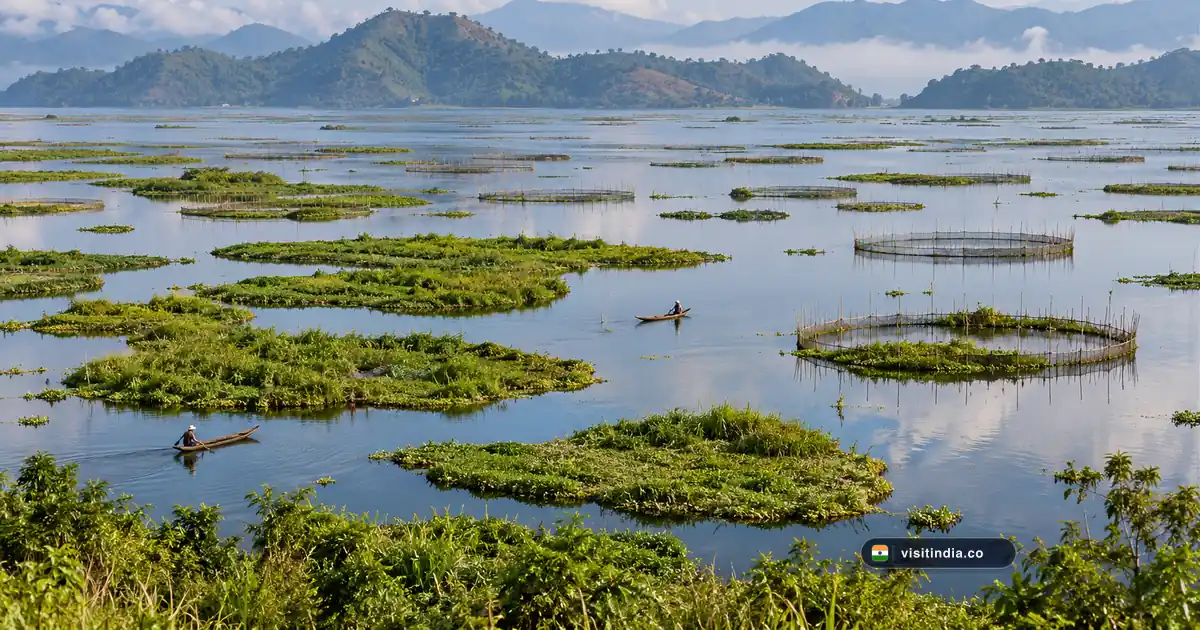
Covering nearly 287 square kilometers during the rainy season, Loktak Lake is the largest freshwater lake in Northeast India and a designated Ramsar wetland. The surface of the lake is dotted with hundreds of circular, floating vegetable islands known locally as phumdis. These floating islands are composed of thick organic peat, decomposing reeds, and soil that float buoyantly across the water.
At the southern end of the lake lies Keibul Lamjao National Park, the world’s only floating wildlife sanctuary. Covering 40 square kilometers of continuous floating phumdi, the park provides the exclusive natural habitat for the critically endangered Sangai deer (Rucervus eldii eldii). Travelers can explore boat routes and wildlife viewing points in our comprehensive wildlife spotting at Loktak Lake & Keibul Lamjao Park.
Moirang Heritage: INA Memorial Complex and Netaji’s Flag
Positioned on the southern shore of Loktak Lake, Moirang preserves the sacred temple of Lord Thangjing and the landmark INA Memorial Complex, where the Indian National Army first hoisted the national flag in 1944.
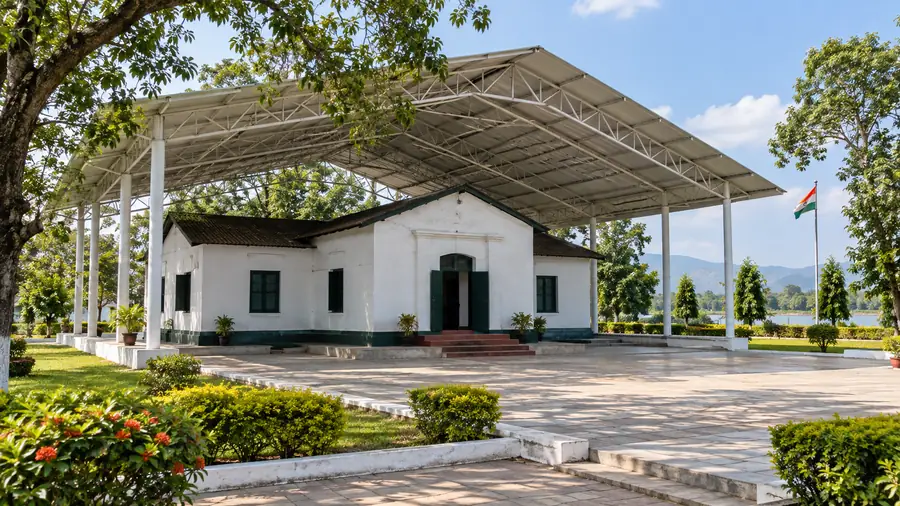
Moirang holds a revered place in both indigenous folklore and modern Indian freedom history. Culturally, the town is the setting of the legendary Khamba-Thoibi romance, celebrated annually during the spring Lai Haraoba festival at the ancient temple of Lord Thangjing.
Historically, Moirang is famous as the military headquarters where Colonel Shaukat Ali of Netaji Subhas Chandra Bose’s Indian National Army (INA) hoisted the Indian national tricolour flag on mainland soil on April 14, 1944. The modern INA Memorial Complex features a bronze statue of Netaji, a replica of the INA war memorial in Singapore, and a museum exhibiting wartime photographs, uniforms, and weapons used during the Battle of Imphal.
High-Altitude Green Valleys: Dzukou Ridge and Ukhrul Shirui Peaks
Manipur’s rugged highlands rise along its northern and eastern frontiers, encompassing the southern approach to Dzukou Valley and the mist-shrouded peaks of Ukhrul where the rare Shirui Lily blooms.
Beyond the lacustrine plains, Manipur’s mountain districts offer exceptional highland trekking. Along the northern boundary with Nagaland, the high-altitude wetlands of Dzukou Valley extend into Senapati district, featuring undulating dwarf bamboo knolls and seasonal summer lilies.
To the east, the district of Ukhrul rises toward the Myanmar border, inhabited primarily by the indigenous Tangkhul Naga community. The district’s crowning physical landmark is Shirui Kashung peak at 2,835 meters elevation. Every May, the upper slopes burst into bloom with the pale pink, bell-shaped Shirui Lily (Lilium mackliniae), a rare endemic flower that grows exclusively on these windswept ridges.
| Major Destination | Distance from Imphal | Primary Attraction | Recommended Time |
|---|---|---|---|
| Kangla Fort | 0 km (City Center) | Ancient Royal Seat & Reconstructed Kangla Sha | Half Day |
| Ima Keithel | 1 km South | 500-Year-Old All-Women Commercial Market | 2 to 3 Hours |
| Loktak Lake (Sendra) | 48 km South | Floating Phumdis & Island Boat Safaris | Full Day |
| Keibul Lamjao Park | 53 km South | World’s Only Floating Wildlife Park (Sangai) | Half Day |
| INA Memorial (Moirang) | 45 km South | Freedom Movement Museum & Historic Flag Site | 2 Hours |
| Imphal War Cemetery | 3 km North | WWII Commonwealth War Graves & Memorial | 1 to 2 Hours |
| Ukhrul (Shirui Peak) | 83 km East | Tangkhul Naga Culture & Endemic Shirui Lily | 1 to 2 Days |
Royal Meitei Architecture and Cultural Landmarks
Manipur’s royal heritage centers on Kangla Fort, the ancestral seat of Meitei kings featuring sacred dragon-lion Kangla Sha statues, alongside the matriarchal trade hub of Ima Keithel and the Imphal War Cemetery.
The built heritage of the Imphal Valley reflects deep cultural synthesis between the indigenous Sanamahi religion of the Meitei people and the Gaudiya Vaishnavism adopted by the royal court in the early 18th century. Royal compounds were designed as fortified ceremonial enclosures combining moats, sacred coronation mounds, and open-air pavilions. Complete city touring strategies are detailed in our dedicated Kangla Fort and Ima Keithel guide.
Kangla Fort: Sacred Sanamahi Sanctuaries and Royal Moats
Kangla Fort served as the fortified capital of the Kingdom of Manipur until 1891, housing the sacred coronation site, ancient brick ramparts, royal moats, and the reconstructed stone Kangla Sha mythical guardian statues.
Covering nearly 238 acres in the heart of Imphal, Kangla was the nerve center of royal administration from the reign of King Nongda Lairen Pakhangba in 33 CE until the British conquest following the Anglo-Manipur War of 1891. The fort is encircled by an outer brick rampart and a broad defensive moat (Thangapat) that was historically used for ceremonial royal boat races.
Within the perimeter walls, visitors can explore the sacred pond of Nungjeng Pakhangba, revered as the spiritual abode of the supreme ancestral serpent deity. Directly facing the main western gateway stand the colossal white statues of Kangla Sha, mythical dragon-lion figures that serve as the national emblem of Manipur. Destroyed by British forces in 1891, the towering statues were reconstructed in 2007 using archival photographs.
Ima Keithel: The 500-Year-Old All-Women Market Economy
Established in the 16th century, Ima Keithel (Mother’s Market) is run exclusively by over 4,000 married women vendors who manage wholesale and retail commerce in handloom textiles, fresh fish, and spices.
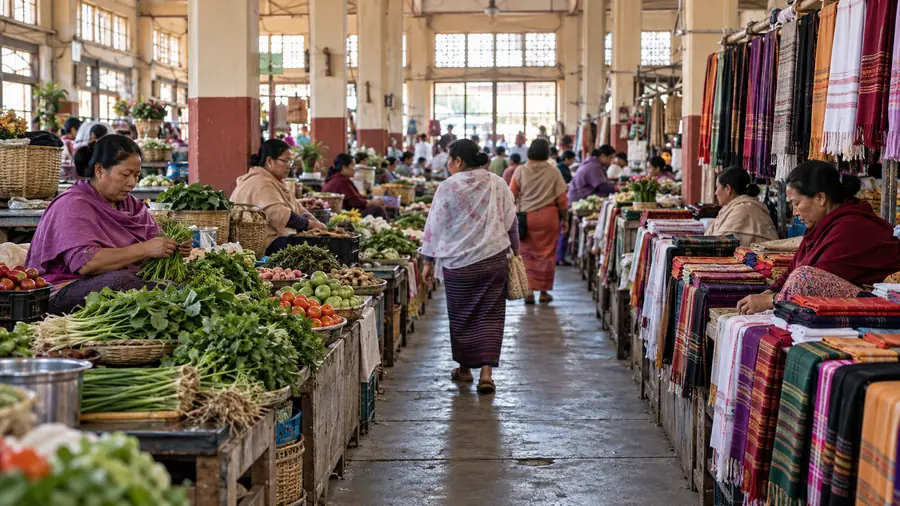
Situated directly opposite Kangla Fort, Ima Keithel is one of the most remarkable commercial and social institutions in Asia. Originating during the historical Lallup system, an ancient feudal labor law where male members of the household were deployed to distant border wars, women assumed sole responsibility for domestic trade, farming, and local governance.
Today, the market occupies three modern multi-story municipal halls: Purana Bazar, Laxmi Bazar, and Linthoingambi Bazar. Traditional trade rights pass exclusively from mother to daughter or daughter-in-law. Visitors strolling through the aisles can purchase authentic handwoven phanek sarongs, delicate enaphi dupattas, fermented bamboo shoots, and fresh lake fish directly from female entrepreneurs draped in traditional pink and maroon shawls. Official urban profiles are published by the Imphal West District Administration.
The Imphal War Cemetery and WWII Battle of Imphal Sites
Maintained by the Commonwealth War Graves Commission, the Imphal War Cemetery commemorates over 1,600 Commonwealth soldiers who died halting the Japanese imperial invasion of India during the fierce battles of 1944.
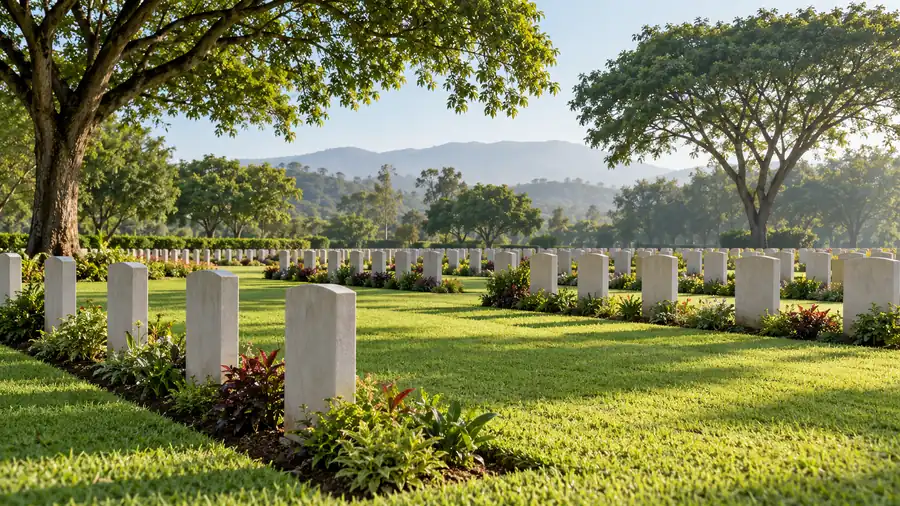
During the spring of 1944, the Imphal plain became the decisive battlefield of the Burma Campaign in the Second World War. British Commonwealth soldiers, supported by Indian and Gurkha regiments, fought brutal defensive actions against advancing Japanese divisions to protect the vital supply routes into Assam.
Located on the northern outskirts of Imphal, the Imphal War Cemetery features immaculate green lawns and bronze memorial plaques commemorating 1,603 Commonwealth soldiers. A stone Cross of Sacrifice stands at the center of the gardens. Military history enthusiasts often pair this site with the nearby Indian Army War Cemetery and Red Hill (Maibam Lotpa Ching), where the fiercest hand-to-hand combat occurred along the Tiddim road.
Wildlife Reserves, Wetlands, and Mountain Ecology
Manipur’s natural ecosystems range from the Ramsar wetland of Loktak Lake and Keibul Lamjao National Park to the cloud-covered slopes of Shirui Kashung peak, home to rare endemic flora and fauna.
Manipur’s complex topography and sub-tropical monsoon climate have created diverse ecological zones within short geographic distances. The valley floor supports nutrient-rich freshwater marshlands, while the surrounding hills preserve sub-tropical pine forests, rhododendron ridges, and montane grasslands that harbor globally threatened species.
Loktak Lake Phumdi Ecology and Circular Fishery Rings
Covering nearly 287 square kilometers, Loktak Lake is famed for its phumdis, thick floating mats of vegetation and organic soil utilized by local fishers to build traditional circular fish culture rings (athaphums).
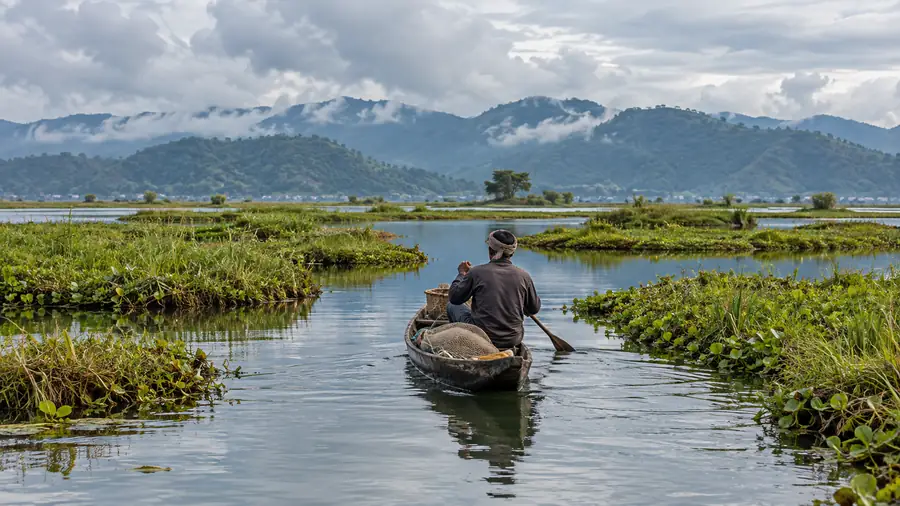
The ecological functioning of Loktak Lake is centered on its phumdis, which consist of heterogeneous masses of vegetation, organic debris, and soil in varying stages of decomposition. These floating mats vary in thickness from a few inches to several meters, with roughly eighty percent of their mass remaining submerged beneath the water surface.
Local fishing families live in temporary thatched huts erected directly upon the larger floating phumdis, creating complete floating fishing villages like Champu Khangpok. Fishers construct circular enclosures called athaphums using cut strips of phumdi, using them as natural aquaculture ponds to trap and harvest endemic freshwater fish. Official wetland conservation measures are cataloged on the Bishnupur District Administration Loktak Portal.
Keibul Lamjao National Park and the Endangered Sangai Deer
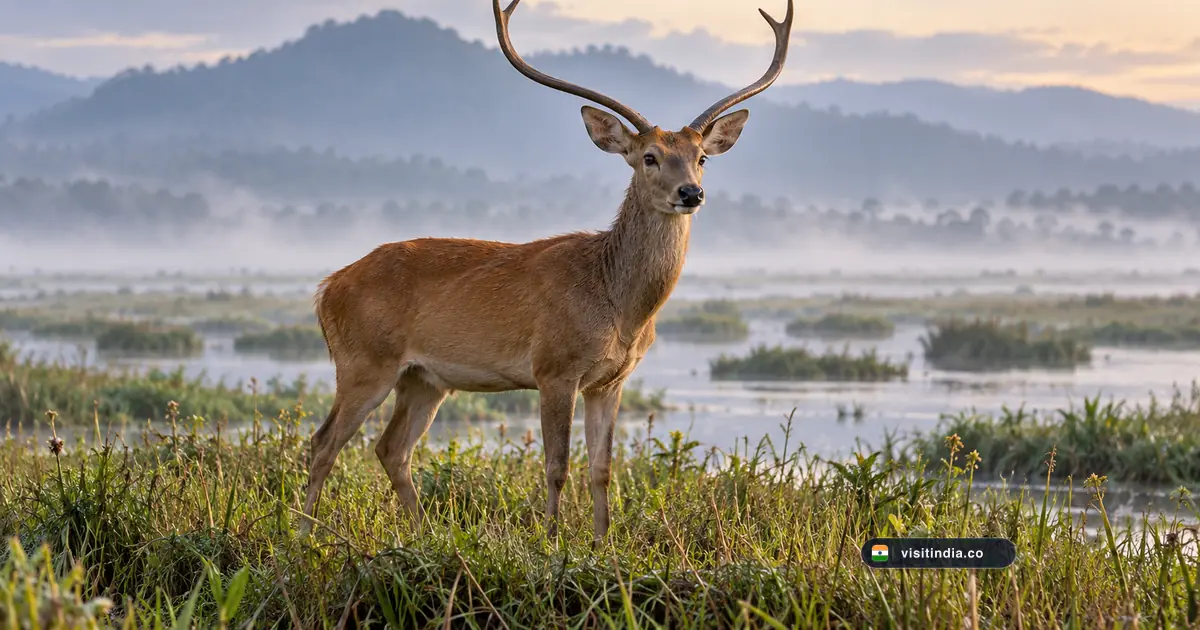
Occupying a 40-square-kilometer floating wetland in the southern basin of Loktak Lake, Keibul Lamjao is the sole natural sanctuary for the Sangai (Rucervus eldii eldii), known as the dancing deer of Manipur.
Declared a national park in 1977 to save the brow-antlered deer from extinction, Keibul Lamjao consists of a vast, continuous floating mat of phumdi. The Sangai deer has evolved unique split-hoofed anatomical adaptations that allow it to walk gracefully across the soft, spongy, yielding surface of the floating wetland, earning it the endearing title of the “dancing deer.”
The park population has made a remarkable recovery from fewer than twenty individuals in the 1950s to over 260 animals today. Visitors view the deer from elevated forest department observation towers located on the hillocks of Pabot and Sendra. Early morning boat patrols through the wetland channels offer the best opportunities to observe family groups grazing on aquatic grasses.
Hikers who appreciate high-altitude mountain ecosystems can explore related highland terrains detailed in our Dzukou Valley Trek permit and entry guide, where similar endemic flora carpets the alpine meadows.
Shirui Kashung Peak and the Endemic Shirui Lily of Ukhrul
Located 83 kilometers east of Imphal near the Myanmar border, Shirui Kashung peak rises to 2,835 meters, supporting the natural habitat of the rare pale pink Shirui Lily (Lilium mackliniae) that blooms in May.
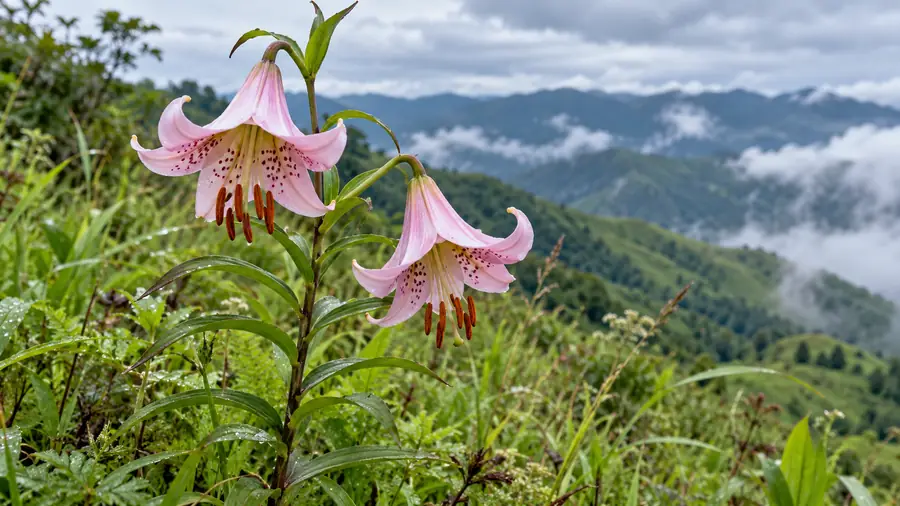
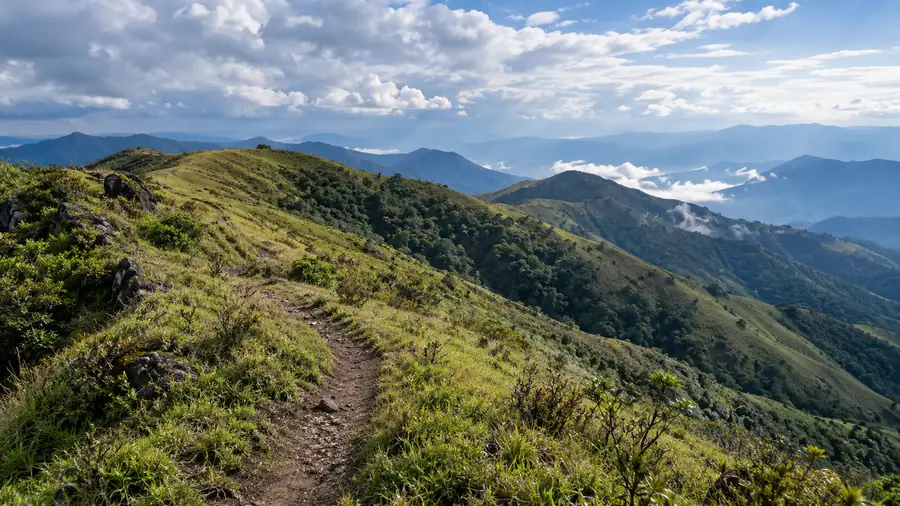
The mountain slopes of Ukhrul district represent one of Northeast India’s most celebrated botanical treasure houses. In 1946, English botanist Frank Kingdon-Ward discovered a delicate, ground-growing lily on the upper slopes of Shirui Kashung that had never been documented in scientific literature.
The Shirui Lily features pale bluish-pink bell-shaped petals that whiten as the flower matures, blooming for only two to three weeks between mid-May and early June. The plant is exceptionally sensitive to soil chemistry and microclimatic conditions, resisting all attempts at commercial cultivation outside its native mountain habitat. The annual Shirui Lily Festival in May brings cultural exhibitions, mountain biking rallies, and music concerts to the district headquarters of Ukhrul.
Living Cultural Traditions, Martial Arts, and Festivals
Manipur’s cultural heritage encompasses the state’s flagship Sangai Festival, the spring celebration of Yaoshang with Thabal Chongba dances, indigenous Thang-Ta martial arts, and the original equestrian game of Sagol Kangjei (polo).
The performance arts of Manipur occupy a respected position in India’s classical canon. Characterized by graceful, undulating circular movements, spiritual devotion, and richly hand-embroidered textiles, Manipuri cultural expressions celebrate the celestial love of Radha and Krishna alongside ancient pre-Hindu agrarian rites. Complete festival calendars can be studied in our Manipur Sangai Festival guide.
Manipur Sangai Festival: Ras Lila, Handlooms, and Cultural Shows
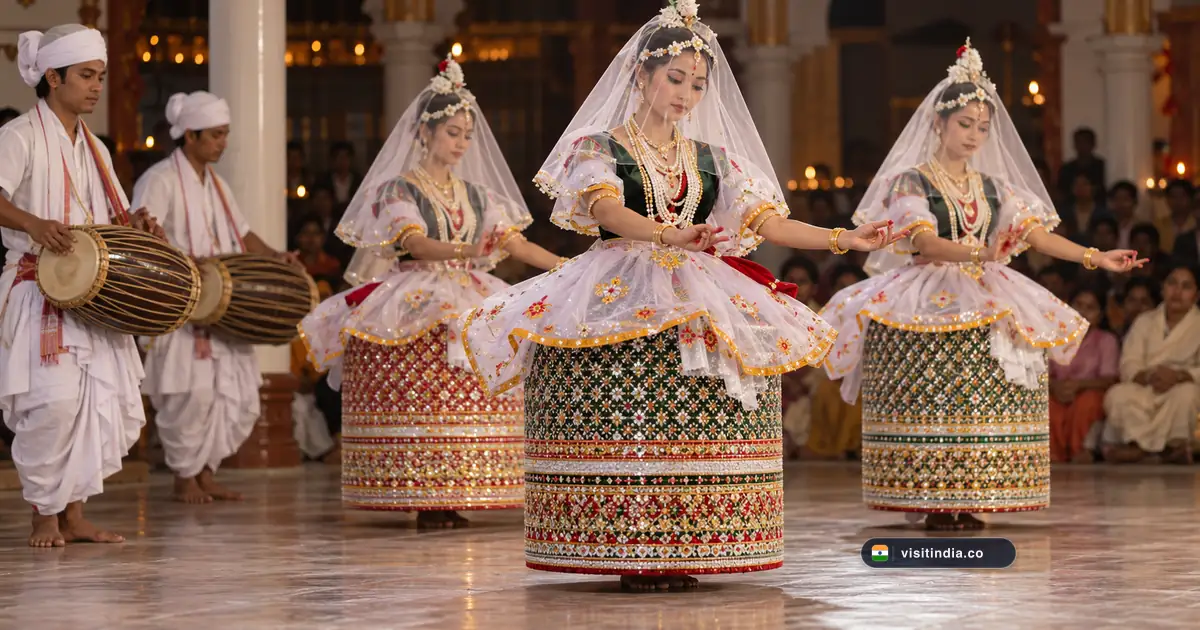
Held annually from November 21 to 30, the Sangai Festival celebrates the state’s cultural diversity through classical Manipuri Ras Lila dance performances in stiff Potloi skirts, handloom expos, and food fairs.
Named in honor of the state animal, the Manipur Sangai Festival is the flagship cultural event of the year. Organized by the State Tourism Department across multiple venues in Imphal, Moirang, and Mao, the ten-day festival presents the living arts of Manipur’s diverse communities.
The artistic centerpiece is the classical Manipuri dance performance at the Bhagyachandra Open Air Theatre. Dancers portraying the Gopis wear the traditional Potloi, an elaborate cylindrical satin skirt stiffened with cane ribs, decorated with mirrors and sequins, and paired with a translucent white veil (Innaphi).
The festival also presents indigenous pottery from Andro, black stone stoneware from Longpi, and handloom textiles. Festival schedules are updated on the Manipur Tourism Directorate portal.
Yaoshang Festival: Thabal Chongba Moonlight Folk Dances
Celebrated over five days during the full moon of Phalguna (February/March), Yaoshang unites local communities in day-time sporting events followed by energetic Thabal Chongba circle dances under the moonlight.
Yaoshang is Manipur’s most joyous and energetic celebration, coinciding with the broader Indian festival of Holi. Beginning with the ceremonial burning of a small thatched straw hut (Yaoshang Mei Thaba) on the first evening, the five-day festival uniquely channels community enthusiasm into organized athletics.
Every local locality and sports club organizes track and field events, football matches, and indigenous games for children and elders. As darkness falls, the focus shifts to Thabal Chongba (“Moonlight Dance”), where boys and girls join hands in large open circles to dance to the rhythmic beats of folk drums and saxophones beneath the spring full moon.
Indigenous Traditions: Thang-Ta Martial Arts and Sagol Kangjei Polo
Manipur is the historic birthplace of modern polo (Sagol Kangjei), played on native Manipuri ponies, alongside Thang-Ta, an ancient combat art combining sword and spear fighting with spiritual breath control.
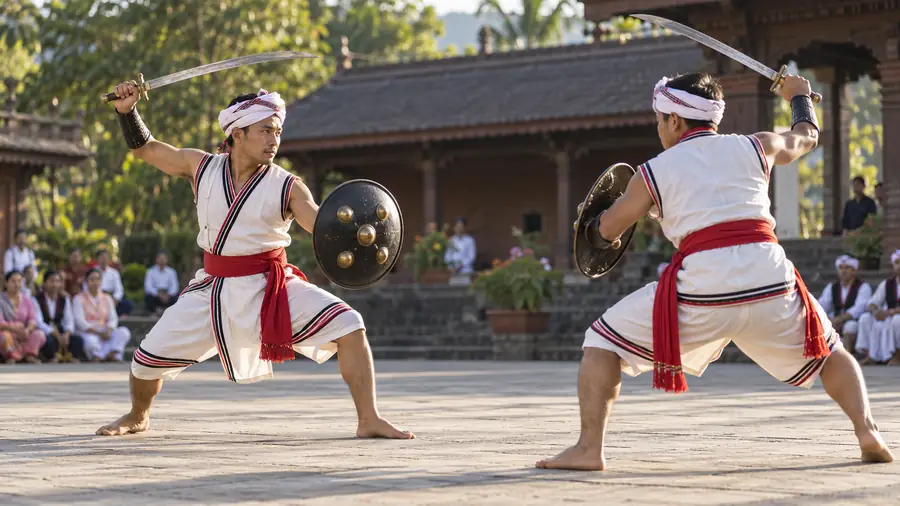
Manipur holds a distinguished place in world sporting history as the origin of modern polo. Known ancestrally as Sagol Kangjei, the game was played as early as the 14th century by royal warriors mounted on indigenous Manipuri ponies using bamboo-root balls and curved cane mallets. In the 1850s, British colonial officers in Cachar learned the game from local Manipuri expatriates, codified the rules, and introduced the sport to the world.
Alongside polo, Manipur preserved Thang-Ta (the art of the sword and spear), an ancient martial tradition integrating physical self-defense, breathing techniques, and spiritual discipline. Practitioners perform complex jumping strikes and spinning blade routines that demonstrate exceptional agility, balance, and mental composure.
Pro Tip
Mapal Kangjeibung Polo Match Timing If visiting Imphal between November and February, check the schedule at Mapal Kangjeibung, recognized as the world’s oldest functional polo ground located adjacent to Kangla Fort. Attending a live Manipur Polo International match offers an authentic glimpse into the state’s living equestrian heritage.
Ideal 5-Day Manipur Travel Itinerary
A well-structured 5-day Manipur itinerary spends two days exploring Imphal’s palaces, markets, and war memorials, two days at Loktak Lake, Sendra Island, and Keibul Lamjao, and one day visiting the INA museum at Moirang.
Coordinating travel across Manipur requires balancing historical exploration in the central valley with wildlife safaris in the southern lake basin. Travelers touring the broader region alongside the broad India travel overview will find this 5-day circuit efficient, safe, and rich in natural variety.
Day 1: Imphal Royal Heritage, Mothers Market, and WWII Memorials
Arrive at Bir Tikendrajit International Airport and complete your Inner Line Permit registration. Check into your hotel in central Imphal and spend the morning touring Kangla Fort, walking through the royal western gate to photograph the white Kangla Sha statues and the sacred Nungjeng Pakhangba pond.
After a traditional Meitei lunch featuring seasonal herbs, steamed fish, and chak-hao black rice, walk across to Ima Keithel. Spend two hours browsing handwoven shawls, bamboo crafts, and local spices. In the late afternoon, visit the Imphal War Cemetery to reflect on the 1944 Commonwealth memorial gardens before witnessing the evening aarti at Shri Shri Govindaji Temple.
Day 2: Loktak Lake Boat Safari, Sendra Island, and Phumdi Huts
Depart Imphal at 8:00 AM, driving 48 kilometers south along the highway to Sendra Island on Loktak Lake (roughly 90 minutes). Check into the hilltop tourist resort or a floating homestay built directly on a phumdi near Thanga village.
Board a motorized wooden longboat at the Sendra jetty for a two-hour cruise across the lake. Glide through the circular athaphum fishing rings, interact with local fishermen paddling slender canoes, and photograph the changing colors of the water against the backdrop of blue misty hills. In the evening, watch the sunset over the lake from the observation terrace on Sendra hill.
Day 3: Keibul Lamjao Wildlife Trek and Sangai Deer Sighting
Wake at dawn for an early morning safari into Keibul Lamjao National Park (15 minutes from Sendra). Climb the forest department watchtower on Pabot hillock by 6:00 AM, using binoculars to scan the floating grass beds for family groups of Sangai brow-antlered deer feeding on morning vegetation.
After breakfast, visit the Keibul Lamjao Interpretation Centre to learn about the unique swamp deer conservation project. Spend the afternoon exploring the nearby island of Karang, India’s first cashless island community reachable only by wooden passenger ferry, where weavers create intricate backstrap loom textiles in open courtyards.
Day 4: Moirang Freedom History and Local Handloom Clusters
Drive ten minutes from Sendra into the historic town of Moirang. Visit the INA Memorial Complex to see the monument where the Indian tricolour was first raised on mainland soil in April 1944, browsing the museum’s extensive collection of wartime artifacts, photographs, and letters written by Netaji Subhas Chandra Bose.
Next, visit the ancient temple of Lord Thangjing to study traditional Meitei temple wood carvings. Continue five kilometers west to the village of Ningthoukhong to visit local pottery workshops and handloom cooperatives where artisans produce traditional Moirang Phee fabrics featuring distinct temple-spire woven border patterns. Return to Imphal by evening.
Day 5: Crafts Shopping, Govindaji Morning Aarti, and Departure
Spend your final morning visiting the local craft emporiums along Kangla road to purchase authentic Manipuri black stone pottery from Longpi, hand-carved wooden polo ponies, and certified organic black rice (Chak-Hao).
Enjoy an early lunch of traditional Meitei thali, sampling dishes like eromba (mashed vegetables with fermented fish and chili), kanghou (stir-fried seasonal greens), and singju salad. Transfer to Bir Tikendrajit International Airport for your afternoon return flight to Kolkata, Guwahati, or New Delhi.
Practical Travel Logistics: ILP Permits, Transit & Guidelines
Domestic Indian tourists require a mandatory Inner Line Permit (ILP) obtained online or at Imphal airport, while regular flights into Bir Tikendrajit International Airport (IMF) connect travelers directly to major metros.
Organizing the entry requirements and transportation networks of Manipur is straightforward when planned in advance. Recent infrastructure modernizations, including four-lane highway expansions and terminal upgrades, ensure smooth travel across the central valley.
Inner Line Permit (ILP) Online Rules and Airport Counters
Indian citizens (who are not permanent residents of Manipur) must obtain an Inner Line Permit (ILP) under the provisions of the Bengal Eastern Frontier Regulation 1873, which was officially extended to Manipur in December 2019.
Travelers can apply for a 15-day Temporary ILP online through the official government portal (manipurilponline.mn.gov.in) by uploading a digital passport photo, valid government photo identification (Aadhaar or Passport), and paying an application fee of ₹100. The approved electronic permit can be saved on your mobile phone or printed out.
For travelers who have not applied online prior to travel, physical ILP facilitation counters operate inside the arrival hall of Bir Tikendrajit International Airport and at overland border checkpoints like Mao Gate on the Nagaland border and Jiribam on the Assam border. Foreign passport holders are exempt from the ILP requirement but must complete a standard registration form with the local Foreigners Registration Office (FRO) within 24 hours of arrival.
Flight Connections, Road Routes, and Best Weather Windows
Bir Tikendrajit International Airport (IMF), located 8 kilometers south of central Imphal, is the primary air gateway into the state. Daily nonstop flights connect Imphal to Kolkata, Guwahati, New Delhi, and Agartala operated by major domestic airlines.
By road, National Highway 2 (NH2) forms the primary overland arterial corridor, running north through Senapati to Kohima and Dimapur in Nagaland, and south through Churachandpur toward the border post of Moreh. Travelers coordinating extended overland itineraries across the region can connect this corridor with routes detailed in our Nagaland travel guide.
The best season to visit Manipur is from October to March during the cool, dry winter months. Daytime temperatures in the valley range pleasantly between 14°C and 25°C, with crisp, clear skies ideal for lake boating, photography, and city walks. Nights in December and January can be chilly, dropping to 4°C to 8°C, requiring travelers to pack warm woolen jackets and thermal layers.
Detailed district safety advisories and tourist accommodations can be verified directly on the Manipur Tourism Directorate official website.
Frequently Asked Questions About Manipur Travel
What are the top places to visit in Manipur?
Manipur’s top attractions include Loktak Lake with its circular floating phumdis, Keibul Lamjao National Park (home of the rare Sangai deer), the historic Kangla Fort in Imphal, and the 500-year-old all-women market of Ima Keithel. Visitors also explore the WWII Imphal War Cemetery and the INA Memorial in Moirang.
Is an Inner Line Permit required to enter Manipur?
Yes, Indian citizens (non-residents) require a mandatory Inner Line Permit (ILP) to enter Manipur, available online at manipurilponline.mn.gov.in or on arrival at Imphal airport for a fee of ₹100. Foreign nationals do not require an ILP but must register with the local FRO within 24 hours of arrival.
Why is Keibul Lamjao National Park unique in the world?
Keibul Lamjao is the world’s only floating national park, situated upon a continuous floating biomass of vegetation and organic peat (phumdi) on Loktak Lake, preserving the last natural wild population of the endangered Sangai deer (Rucervus eldii eldii).
What is Ima Keithel in Imphal and who runs it?
Ima Keithel (Mother’s Market) is an ancient commercial institution in central Imphal operated exclusively by over 4,000 married women vendors, recognized as the largest all-women market in Asia trading in textiles, fresh produce, and local crafts.
What is the best time of year to visit Manipur?
The ideal period to travel across Manipur is from October to March during the dry winter season, when comfortable temperatures range between 14°C and 25°C, perfectly coinciding with the annual Sangai Festival in late November.
How far is Loktak Lake from Imphal and how do you get there?
Loktak Lake is situated approximately 48 kilometers south of Imphal near Moirang. Travelers can reach it in roughly 90 minutes via private taxi or shared jeep along the well-maintained Imphal-Churachandpur highway.
What is the significance of Moirang in India’s freedom struggle?
Moirang holds immense historical significance as the town where Colonel Shaukat Ali of Netaji Subhas Chandra Bose’s Indian National Army (INA) first hoisted the Indian national tricolour on mainland soil on April 14, 1944.