Ambubachi Mela Kamakhya Dates, Temple Closure & Darshan Guide
Plan your pilgrimage with our Ambubachi Mela Kamakhya guide detailing June door closure dates, Nivritti reopening queues, Raktavastra prasad, and transit.
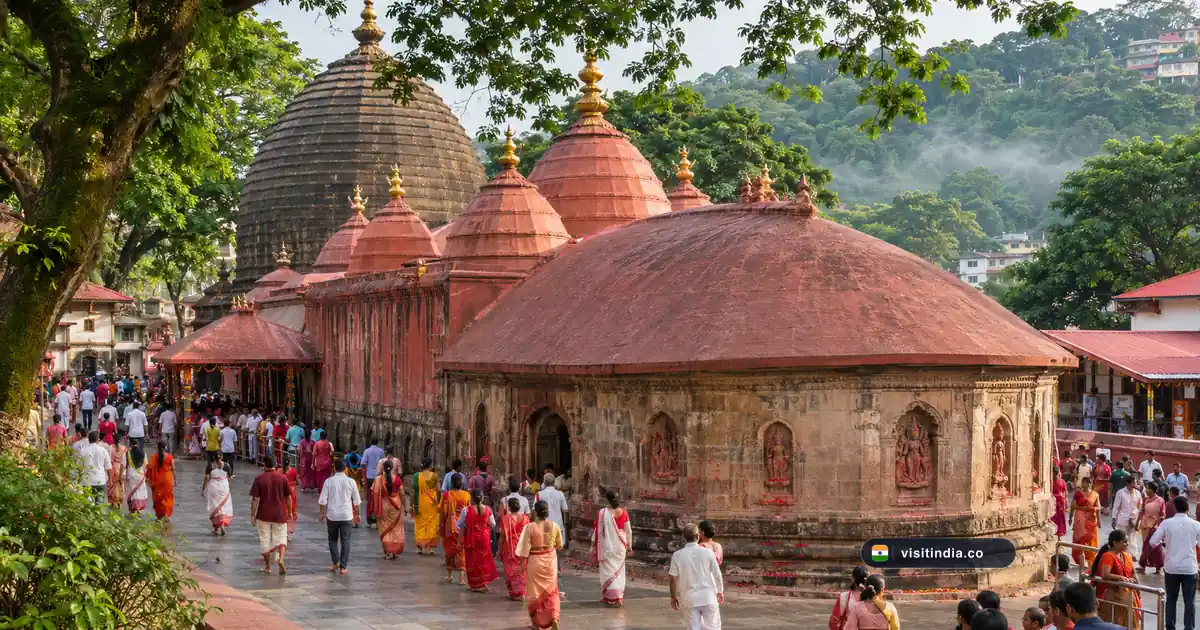
Nilachal Hill rises above the southern bank of the Brahmaputra River in Guwahati, crowned by the ancient red domes of Kamakhya Temple. Every year in mid-June, the hill hosts Ambubachi Mela Kamakhya dates temple closure rituals, drawing over four hundred thousand pilgrims, wandering sadhus, and Shakta devotees from across India.
The celebration marks the annual menstruation cycle of Goddess Kamakhya and Mother Earth. For three full days, the inner cave sanctum remains completely locked and sealed, reopening on the fourth morning amid massive devotional assemblies.
Managing your pilgrimage requires clear knowledge of transit bans, public tent camps, and queue management. With summer monsoon humidity and steep walking trails, thorough preparation ensures a safe and rewarding spiritual journey.
Key Festival Highlights at a Glance
- Sacred Sanctuary: Kamakhya Devalaya, crowning Nilachal Hill in Guwahati, Assam.
- Seclusion Period: Three full days of absolute door closure (Pravritti), pausing all worship.
- Reopening Ceremony: Sanctum doors unlock on the fourth morning (Nivritti) for public darshan.
- Equitable Queues: All paid VIP entry passes are strictly suspended throughout the festival.
- Sacred Relics: Distribution of sanctified red cloth (Raktavastra) and holy spring water (Angodak).
What to Expect at Ambubachi Mela Kamakhya Guwahati
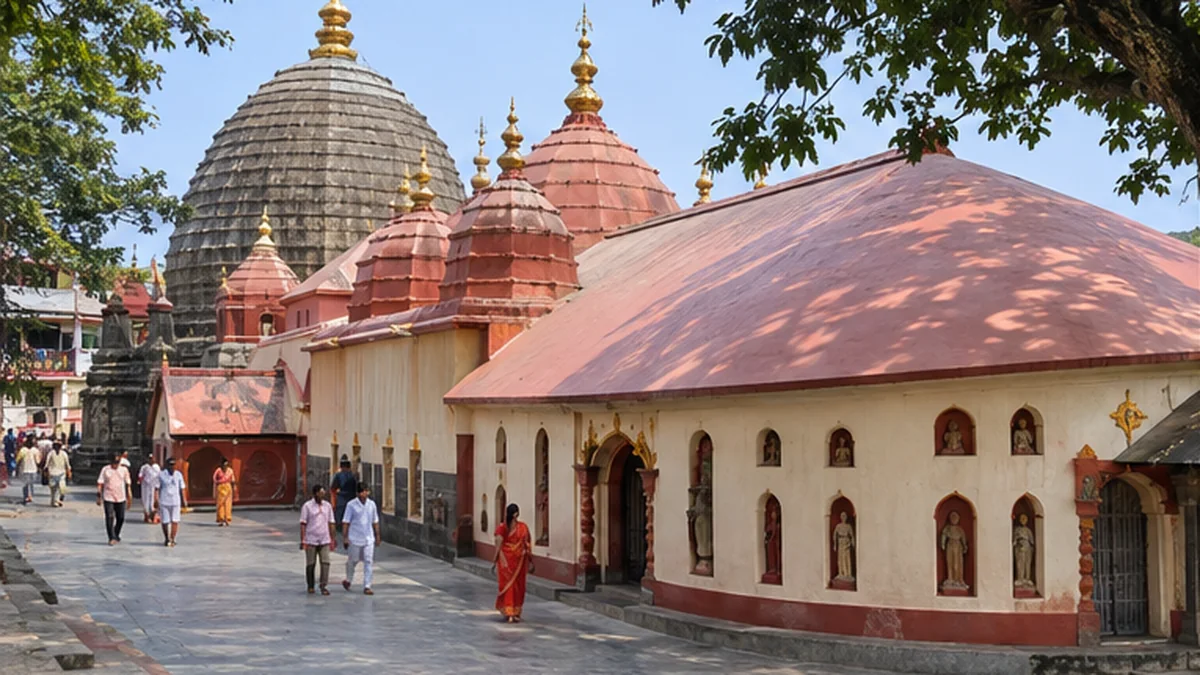
Ambubachi Mela is the largest religious congregation in Northeast India, drawing over 400,000 pilgrims to Kamakhya Temple in mid-June. It honors the annual menstrual cycle of Goddess Kamakhya and Mother Earth during the arrival of monsoon rains, celebrating feminine creative fertility.
Unlike standard Hindu festivals where temple doors stay open for regular worship, Ambubachi centers on divine rest. The stone courtyards fill with orange-clad sadhus, Baul folk singers from rural Bengal, and families who travel thousands of kilometers.
During the three-day seclusion, the entire hill transforms into a continuous spiritual fair. While formal temple rituals cease, informal kirtans, religious discourses, and community feasts take place across every corner of Nilachal Hill.
The Earth’s Menstrual Seclusion and Fertile Monsoon Cycle
According to Shakta tradition, the earth experiences her annual menstrual retreat during the solar transit into Mithuna (mid-June). Farming, plowing, and formal deity worship pause across eastern India as the land undergoes natural biological renewal.
The festival coincides directly with the breaking of the southwest monsoon over the Brahmaputra River basin. Torrential monsoon rains nourish the soil, replenishing the agricultural fields across Assam and Bengal.
Devotees view menstruation not as an impurity, but as the supreme source of creative cosmic energy. Farmers avoid digging the earth or planting seeds during these four days, allowing nature to rest. To understand the deeper architectural layout of the subterranean sanctum, read our detailed Kamakhya Temple sanctum guide.
Four Days of Complete Sanctuary Closure on Nilachal Hill
For three consecutive days, temple doors remain locked and sealed under red cloths while sadhus meditate in surrounding courtyards. Devotees chant outside the stone walls, awaiting the sanctum’s dramatic reopening on the fourth morning.
The sanctum lacks any carved idol or anthropomorphic image. Instead, it enshrines a natural bedrock fissure fed by a perennial subterranean spring, representing the sacred yoni of the Goddess.
While the inner cave remains inaccessible, pilgrims circumambulate the temple complex. Thousands gather along the stone stairways to offer prayers, burn incense, and participate in devotional singing outside the sealed bronze doorways.
Ambubachi Mela Kamakhya Dates Temple Closure and Reopening Schedule
Ambubachi Mela begins with Pravritti door closure between June 21 and June 22 and concludes with Nivritti reopening on June 25 or June 26. The sanctum remains sealed for seventy-two hours before opening at dawn on the fourth day.
The exact timing of door closure depends on precise astrological calculations determined by the temple management trust (Bordeuri Samaj). The ritual begins when the sun enters the Mrigashira nakshatra during the Assamese month of Ahar.
Knowing the chronological transition between Pravritti and Nivritti helps visitors plan when to arrive in Guwahati. Most long-distance pilgrims arrive one day before Pravritti to experience the initial door-sealing rituals.
| Festival Phase | Approximate Dates | Monastic & Temple Activity | Pilgrim Focus & Accessibility |
|---|---|---|---|
| Pre-Mela Setup | June 19 – June 20 | Camp setup at Pandu Port; transport curbs take effect | Pilgrim arrival at transit camps & registration |
| Pravritti (Door Closure) | June 21 or 22 (Afternoon) | Inner sanctum doors locked; white cloth draped over spring | Outer courtyard darshan only; sanctum closed |
| Sacred Seclusion (Day 2) | June 22 or 23 (Full Day) | Temple remains sealed; no priest worship inside cave | Sadhu discourses, kirtans & courtyard prayers |
| Sacred Seclusion (Day 3) | June 23 or 24 (Full Day) | Continuous scriptural recitations across Nilachal Hill | Community kitchens operate; queue staging |
| Nivritti (Reopening Day) | June 25 or 26 (Dawn) | Ritual snan bath, purification & sanctum doors unlock | Public queue enters cave; prasad distribution |
| Post-Mela Dispersal | June 27 (Full Day) | Normal temple timings resume; special passes re-open | Clearance of temporary pilgrim camps |
Pravritti Door Closure Rites and Altar Sealing
Pravritti occurs at an astrologically calculated hour in the afternoon. Priests enter the bedrock cave, place fresh white silk over the perennial spring yoni, and padlock the massive bronze gates until the seclusion period ends.
Before the doors are locked, priests perform the final daily offering (Bhog Aarti). All copper lamps are extinguished, and no further human footsteps enter the subterranean cave.
A heavy red cloth is placed across the outer doors, and armed security guards secure the entrance perimeters. Devotees assemble in the courtyards to blow conch shells and chant sacred names as the locks are secured. For comprehensive planning across the wider Brahmaputra valley, consult our Assam travel guide.
Nivritti Reopening, Snan Purification, and General Queue Opening
At dawn on the fourth day, priests break the seals, perform elaborate snan bathing rituals with Vedic mantras, and distribute holy red cloths. Public queues begin moving into the cave sanctum around 8:00 AM.
The chief priests unlock the bronze doors at roughly 5:30 AM. They enter the dark cave bearing sacred waters collected from the Brahmaputra River, mixed with milk, honey, and herbal pastes.
The submerged stone fissure is carefully bathed and cleansed. Fresh red hibiscus flowers and vermilion paste are applied to the bedrock before general entry commences. To verify the exact annual calendar and door timings, check the Maa Kamakhya Devalaya Official Temple Schedule.
The Sacred Prasadam: Raktavastra Cloth and Angodak Holy Water
Devotees receive two sacred relics following Nivritti: Raktavastra (a small piece of consecrated red silk) and Angodak (divine water collected from the subterranean bedrock spring). Both are revered as powerful emblems of spiritual protection, vitality, and maternal grace.
Receiving these items is considered the spiritual climax of the entire pilgrimage. Thousands of pilgrims wait patiently for hours outside the temple distribution counters to receive a tiny fragment of cloth.
Both relics carry deep religious reverence across eastern India. Families preserve them in home shrines or wrap them around amulets worn on the body for life-long spiritual protection.
Note
Consecrated Raktavastra cloth is distributed free of charge by authorized temple priests at designated counters. Never buy alleged sacred cloth pieces from unauthorized street touts surrounding the temple complex.
Consecrated Red Cloth (Raktavastra) Origins and Collection
White silk draped over the bedrock spring during Pravritti absorbs mineral-rich red waters, emerging deep crimson on Nivritti. Cut into small ribbons by priests, it is tied around wrists or stored in home altars.
Local belief holds that the sacred underground spring naturally turns reddish during these three days due to iron-ore deposits and geological mineral flows. When priests retrieve the white fabric, it has turned entirely red.
The cloth is divided into inch-wide strips known as Raktavastra or Angabastra. Devotees tie the red thread around their right wrist, believing it wards off evil influences and brings health and longevity. To explore other sacred Shakti sanctuaries, read our guide to the 51 Shakti Peethas in India.
Angodak Spring Water Distribution Protocols
Angodak represents the spring water collected from the sacred sanctum bedrock after the Goddess’s ritual bath. Distributed in small plastic phials or copper cups, pilgrims sip drops for internal purification.
Because the sanctum contains a natural perennial mountain spring, fresh water constantly trickles across the bedrock floor. On the morning of Nivritti, this water is collected into copper vessels before the crowd enters.
Priests sprinkle drops of Angodak onto the heads of waiting devotees. Many pilgrims bring small brass containers to carry a few drops back to their ancestral villages to bless elderly family members.
Tantric Gatherings: Naga Sadhus, Baul Singers, and Aghori Rituals
Kamakhya is the supreme seat of Tantric worship in India, attracting thousands of ascetics during Ambubachi. Naga sadhus, ash-smeared Aghoris, and Bengali Baul minstrels establish temporary akharas around Nilachal Hill, engaging in continuous devotional songs, fire ceremonies, and yogic meditation.
The festival provides a rare opportunity to observe diverse ascetic sects living together on the same forested hillside. Sadhus from the remote Himalayas, Varanasi, and central India set up camps beneath ancient banyan trees.
Visitors can walk among the camps, listen to philosophical discourses, and receive blessings. The atmosphere is open, with ascetics answering questions regarding spiritual practices and herbal remedies.
Akhara Encampments Across the Forested Hillside
Ascetics erect colorful canvas camps along the forested slopes surrounding the temple complex. Pilgrims visit these akharas to receive ashes (vibhuti), herbal blessings, and spiritual counsel from wandering masters.
Many sadhus maintain continuous sacred fires (dhuni) in front of their tents. Devotees bring offerings of incense, marigold garlands, and seasonal fruits, sitting quietly before the fires to receive blessings.
While photography of common areas is tolerated, visitors should always request permission before taking portraits of ascetics. Avoid disturbing sadhus engaged in deep meditation or private fire ceremonies. To learn more about regional folk dance traditions, read our article on the Bihu Festival in Assam.
Musical and Devotional Expressions of Shakta Tantra
Baul mystics from West Bengal sing ecstatic hymns on single-stringed ektaras throughout the night. Their music celebrates the divine mother without caste barriers, turning the hillside into an open spiritual gathering.
Groups of Baul singers sit in circular gatherings near the Tara and Bhuvaneshwari temples. Their rhythmic songs, accompanied by small clay drums (dubki) and ankle bells, continue until dawn.
The musical devotion creates an atmosphere of shared joy that transcends social and cultural divisions. Pilgrims of all backgrounds sit side by side on stone steps, clapping along to traditional Bengali and Assamese hymns.
Visitor Logistics: Reaching Nilachal Hill, Camps & Security Rules
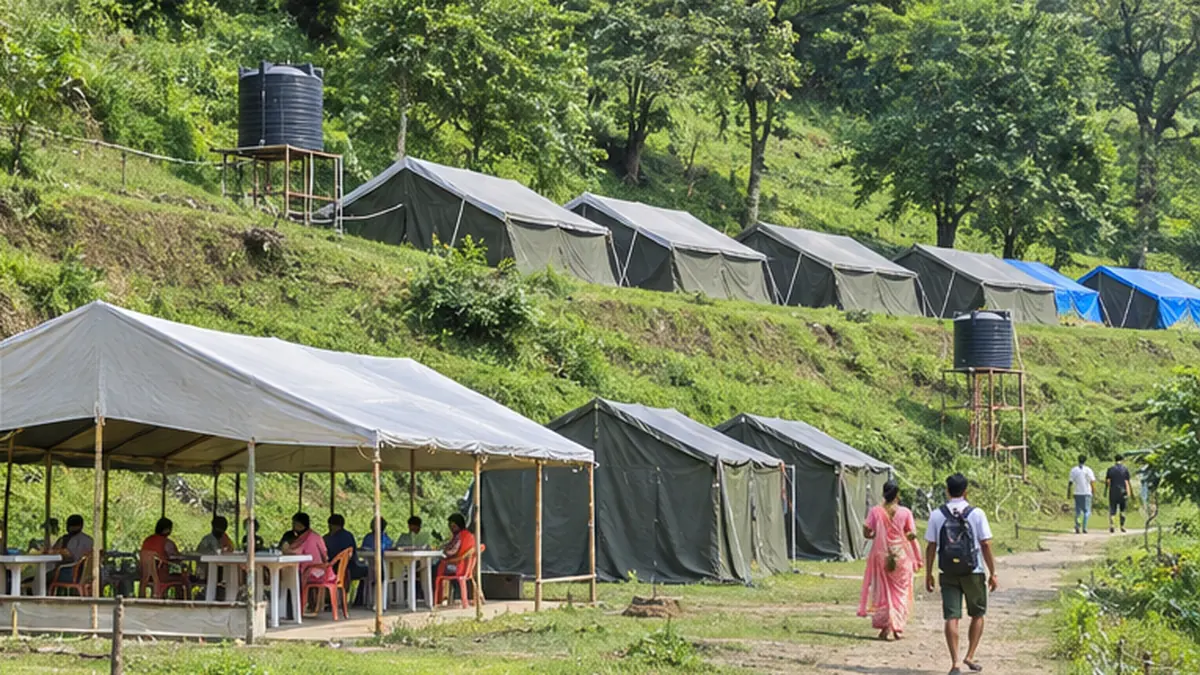
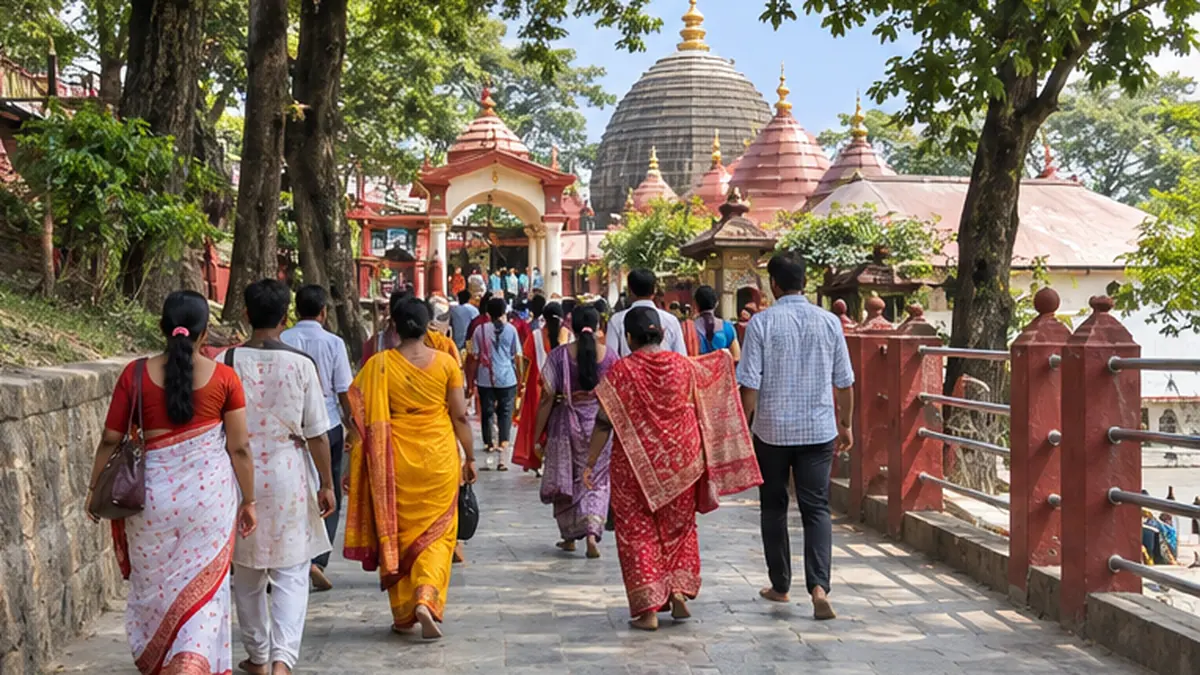
Private vehicles are completely banned from ascending Nilachal Hill during Ambubachi. Pilgrims must use designated transit camps at Pandu Port or Kamakhya Railway Station, board free ASTC electric shuttle buses, or walk the three-kilometer uphill pilgrim pathway.
The Kamrup Metropolitan District Administration implements strict traffic arrangements to manage the immense crowd. Checkpoints at the base of the hill halt all private automobiles, taxis, and auto-rickshaws.
Pilgrims arriving by train should disembark at Kamakhya Junction rather than Guwahati Junction whenever possible. Frequently designated in transit bulletins as Ambubachi Mela GHY, the railway network coordinates special passenger arrivals across both major terminals. The station lies just four kilometers from the foothill barriers, minimizing cross-city travel.
| Transit Parameter | Official Management Directive | Recommendations for Devotees |
|---|---|---|
| Nilachal Hill Access | Private vehicles completely prohibited on hill road | Walk via ancient stone stairway or use ASTC shuttles |
| ASTC Shuttle Buses | Free electric shuttles from foothill barriers to gate | Priority access strictly reserved for seniors and differently-abled |
| Pandu Port Camp | Largest pilgrim camp with dormitory tents & kitchens | Ideal for budget travelers seeking free shelter & meals |
| Kamakhya Station Camp | Transit shelter located at railway station exit | Convenient for same-day train arrivals and departures |
| Cloakrooms & Lockers | Mobile phones & leather goods banned inside sanctum | Store bags at authorized foothill camp cloakrooms |
Transit Hubs: Guwahati Station, Kamakhya Station & Pandu Port Camps
Guwahati District Administration establishes massive shelter camps at Pandu Port, Maligaon, and Kamakhya Railway Station. These free camps provide tent dormitories, clean drinking water, community kitchens (langar), and luggage cloakrooms.
The Pandu Port camp along the riverfront accommodates up to fifty thousand pilgrims simultaneously. It features clean toilet complexes, medical emergency stations, and continuous public announcements in multiple Indian languages.
Voluntary organizations and the state government run community kitchens serving free vegetarian meals three times daily. Clean drinking water tankers and mobile charging stations operate around the clock. If you wish to extend your journey toward mountain hill stations, consult our places to visit in Meghalaya travel planner.
Vehicle Restrictions, ASTC Shuttle Buses, and Walking Routes
All private cars, auto-rickshaws, and tourist cabs are halted at the foothill gates. Only official ASTC buses operate shuttle runs between foothill camps and the hilltop temple gates for elderly and disabled pilgrims.
Able-bodied devotees generally walk up the hill along two routes: the winding paved motor road or the historic stone staircase (Mekhela Ujowa Path). Walking the paved road takes approximately forty-five minutes.
The stone stairway provides a steeper direct ascent, shaded by dense tropical foliage. Wear comfortable slip-resistant footwear, as monsoon showers frequently make the stone steps slick. For official district advisories, refer to the Kamrup Metropolitan District Tourism Directory.
Queue Management, VIP Pass Suspensions, and Health Safety
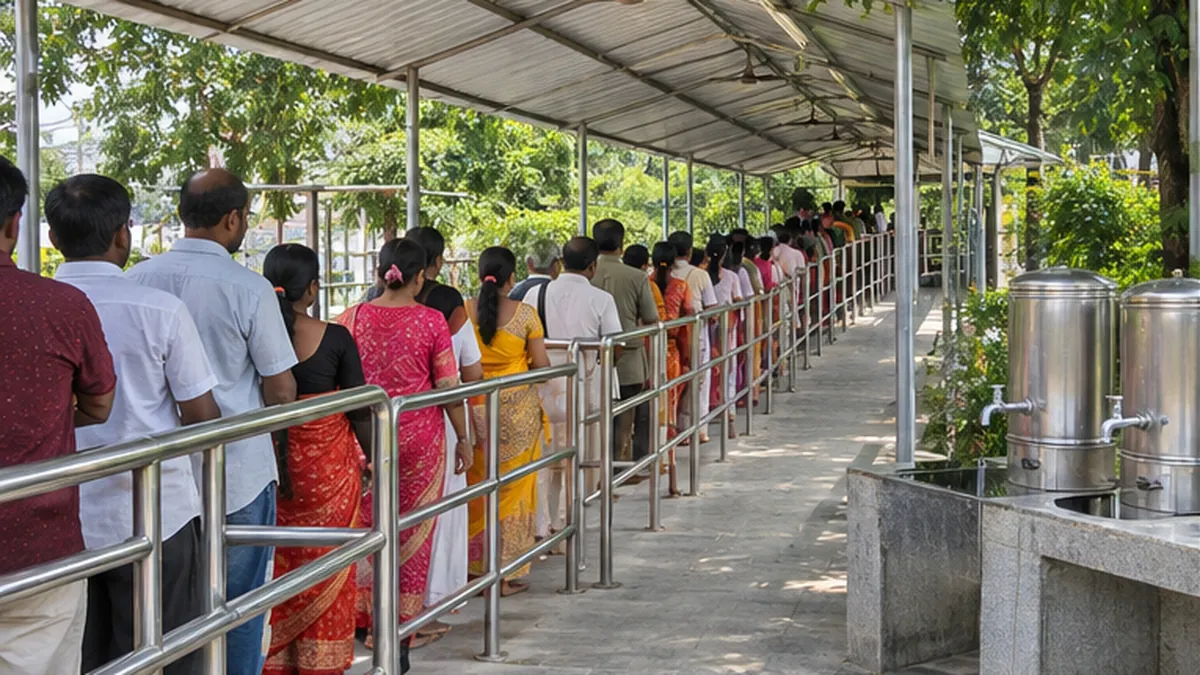
To maintain absolute fairness during the immense crowd surge, the temple administration completely suspends all paid VIP darshan passes (₹501 tickets) during Ambubachi Mela. Every devotee must stand in the single general barricade queue, with waiting times reaching 12 to 24 hours.
This universal equality policy ensures that every pilgrim, regardless of financial background or social status, shares an identical path to the inner sanctum. Even government dignitaries must follow standard protocol.
The general queue moves through covered metal barricades stretching several kilometers down the hillside. Patience and mutual consideration are essential virtues when standing in line.
Pro Tip
Carry electrolyte replenishment sachets and avoid consuming unboiled tap water. Prepare for long standing periods by wearing lightweight cotton garments and carrying a small umbrella for monsoon showers.
Universal Equality in Darshan Queues and Waiting Durations
No special queue passes are issued to VIPs, tourists, or donors on reopening day. Pilgrims move through kilometers of shaded metal barricades equipped with ceiling fans and water points, entering strictly by queue order.
Once inside the barricade system, movement is slow but continuous. Police personnel and volunteer scouts guide the line, preventing queue jumping and managing crowd density at access gates.
Expect to spend between twelve and twenty hours in the queue on Nivritti day. Those unable to withstand long physical exertion should consider visiting outside festival dates, when regular VIP passes and shorter lines are operational.
Monsoon Heat, Humidity, Drinking Water, and Medical Booths
June weather brings 90% humidity and temperatures near 34°C. First-aid clinics, NDRF rescue teams, and continuous drinking water points are stationed every two hundred meters along the hill ascent.
Heat exhaustion is common among pilgrims who fail to hydrate properly. The state health department operates round-the-clock medical camps staffed by doctors and stocked with essential emergency medications.
Ambulance corridors are maintained along the motor road to ensure rapid transit to Guwahati Medical College in case of emergencies. For statewide tourist guidelines and regional connectivity, visit the Incredible India Guwahati Travel Directory.
Frequently Asked Questions About Ambubachi Mela Kamakhya
Direct answers to common questions regarding Ambubachi Mela dates, temple closures, transit, and prasad.
When does Ambubachi Mela take place at Kamakhya Temple?
Ambubachi Mela is held annually in mid-June during the monsoon season, usually running from June 21 or 22 to June 25 or 26. The exact dates follow astrological calculations based on the Assamese solar calendar.
How long does Kamakhya Temple remain closed during Ambubachi?
The inner sanctum doors remain completely locked and sealed for seventy-two consecutive hours during the Pravritti period. The temple unlocks on the morning of the fourth day (Nivritti) following elaborate ritual purifications.
Can I buy a VIP pass to skip the queue during Ambubachi Mela?
No, the temple administration strictly suspends all paid VIP darshan passes and special entry privileges throughout the entire festival. Every devotee must join the single general barricade queue to enter the cave sanctum.
What is Raktavastra and how can devotees obtain it?
Raktavastra is a small piece of sacred red silk cloth that covered the spring bedrock during the three days of divine seclusion. It is distributed free of charge to devotees by temple priests at authorized counters after Nivritti.
Are private cars allowed to drive up Nilachal Hill during the festival?
Private cars, taxis, and auto-rickshaws are completely barred from driving up Nilachal Hill during Ambubachi Mela. Pilgrims must walk the paved route or use official ASTC shuttle buses arranged for elderly and disabled visitors.
Where can budget pilgrims stay during the Ambubachi festival in Guwahati?
The district administration arranges extensive free tent camps equipped with clean drinking water, kitchens, and toilets at Pandu Port and Kamakhya Railway Station. Thousands of pilgrims stay in these organized camps without needing advance hotel bookings.