Theyyam Kerala Calendar: Kannur, Kasaragod & Where to Watch
Explore our Theyyam Kerala calendar guide for Kannur and Kasaragod covering sacred kavu dates, fire leaps, Parassinikadavu timings, and village etiquette.
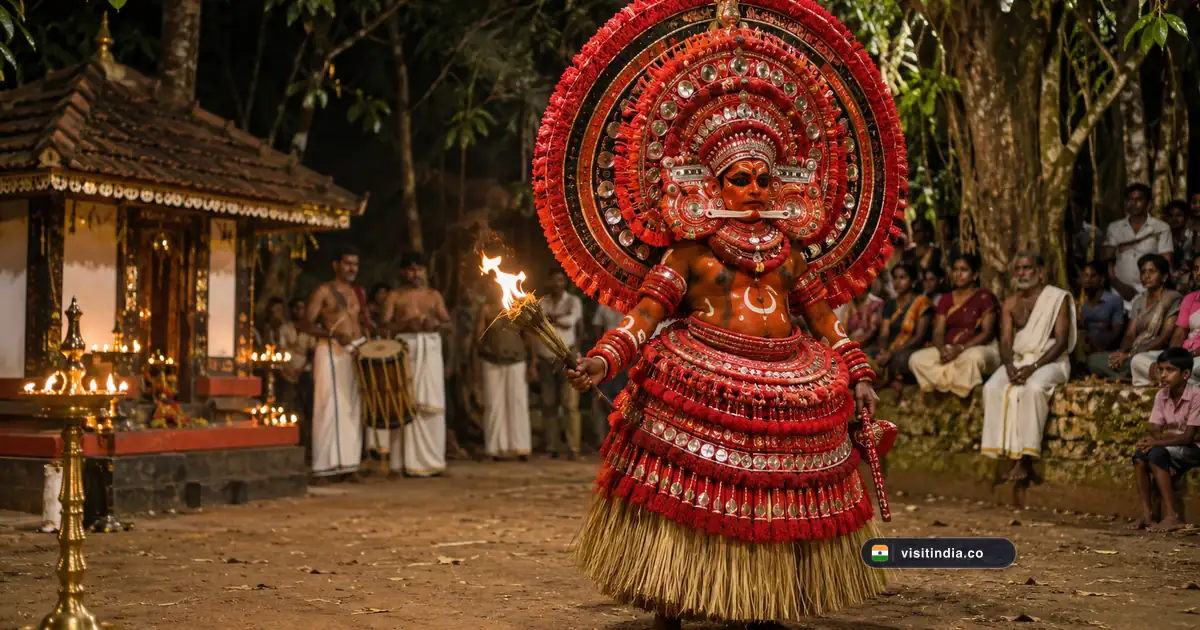
Deep within the coastal palm groves and laterite hills of North Malabar, nightfall awakens an ancient living faith. From October to May, village clearings across Kannur and Kasaragod resound with the thunder of Chenda drums as mortal men transform into physical deities. This Theyyam Kerala calendar kannur where to see guide provides essential logistics for experiencing these sacred performances.
Unlike theatrical arts performed on modern stages, Theyyam remains an authentic shamanic ritual rooted in ancestral worship, hero veneration, and spirit possession. Over four hundred distinct deities appear across twelve hundred sacred village groves.
Planning a journey to these remote rural shrines requires understanding local agricultural seasons, midnight transit logistics, and cultural conduct. With respectful preparation, travelers can observe one of the world’s oldest surviving ritual dance traditions.
Key Ritual Highlights at a Glance
- Sacred Heartland: Kannur and Kasaragod districts in the North Malabar region of Kerala.
- Ritual Season: Active from late October through May, pausing during the southwest monsoon.
- Free Community Access: Open to all observers without admission fees, tickets, or caste restrictions.
- Nocturnal Timings: Most village Kaliyattams run continuously from midnight until the following dawn.
- Transit Hubs: Kannur International Airport (CNN) and mainline railway stations along National Highway 66.
What to Expect at North Kerala Theyyam Rituals
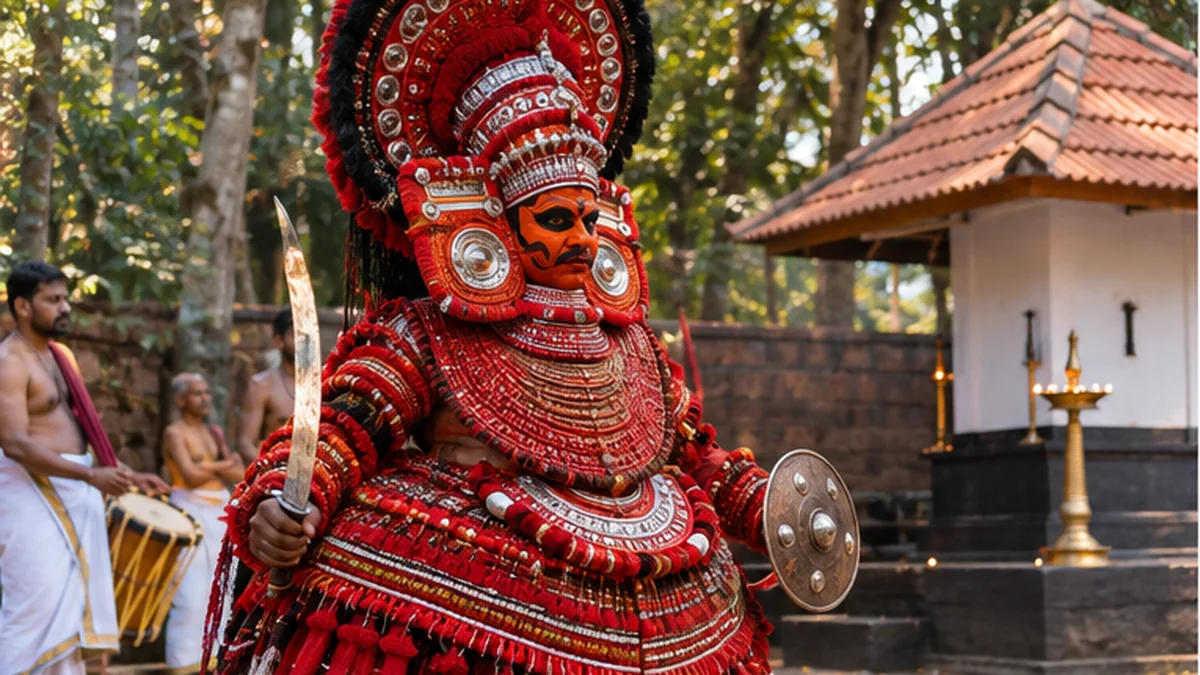
Theyyam is an ancient shamanic dance ritual native to North Malabar, Kerala, where performers surrender their mortal identity to channel living deities. Accompanied by thunderous Chenda drums, performers in massive headdresses dance across sacred groves to bless village communities.
The word Theyyam derives from Daivam, the Sanskrit term for God. When a performer enters the ritual arena (Muttam), villagers no longer perceive him as an ordinary human neighbor. He is revered directly as a divine incarnation capable of healing illnesses, solving disputes, and granting blessings.
The rites blend pre-Aryan indigenous beliefs, animism, and regional hero worship. As flaming coconut-leaf torches illuminate the dark grove, the sensory power of rhythm, fire, and incantation creates a deeply moving spiritual experience.
Living Deities: The Transformation from Mortal to Divinity
Drawn primarily from indigenous lower-caste communities, performers undergo rigorous fasting and complex facial painting (Mukhathezhuthu). Once crowned with the sacred mudi headdress, the performer is worshipped directly as the living embodiment of God.
The transformation is gradual and arduous. Dancers observe strict vegetarian diets and physical isolation for weeks before a major festival. In the greenroom (Aniyara), artists spend four to six hours painting intricate geometric patterns across their faces using natural ground stones and herbal extracts.
When the heavy crowned headdress is secured and the priest hands the performer a handheld bronze mirror (Nokkukannadi), the spirit enters his body. His eyes widen, his limbs tremble, and he steps into the courtyard with supernatural energy. To understand how North Malabar connects with broader coastal travel, explore our complete Kerala state travel guide.
Sacred Groves (Kavus) and Open Village Shrines
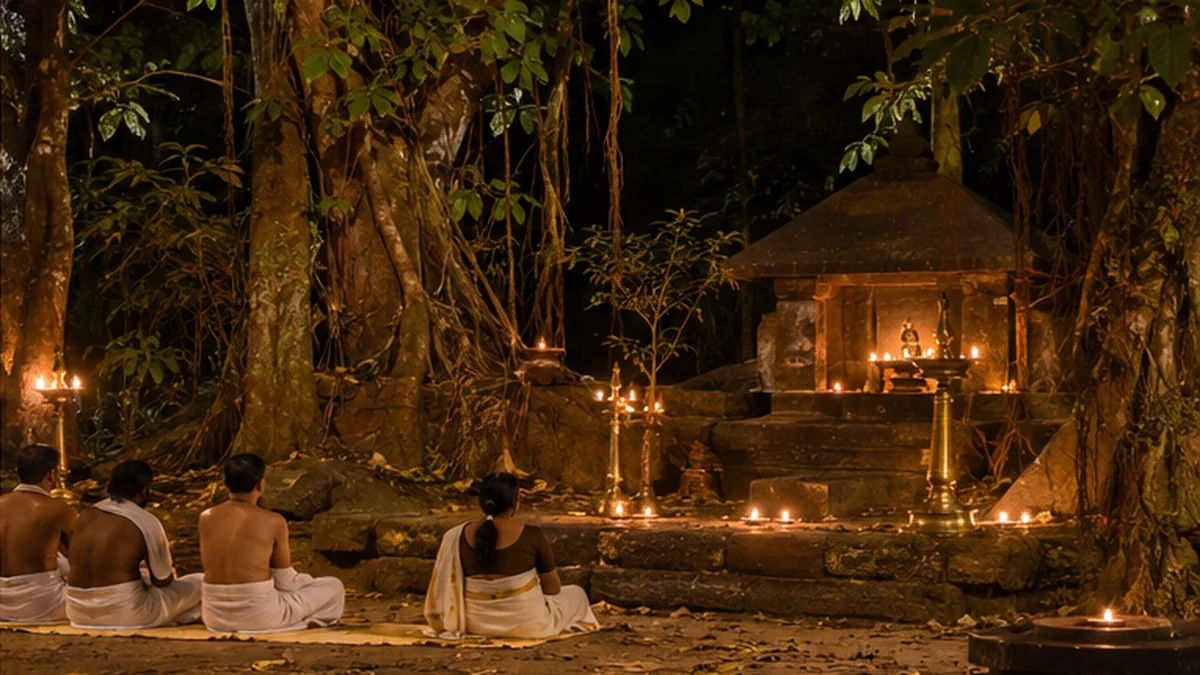
Unlike high-walled Vedic stone temples, Theyyam takes place in ancestral forest shrines called Kavus. These open-air clearings surrounded by ancient trees provide an organic arena where villagers sit shoulder-to-shoulder under night skies.
Kavus represent surviving pockets of ancient primary rainforest preserved through religious sanctity. Massive banyan trees, entangled vines, and sacred serpent stones (Sarpa Kavu) frame the perimeter.
The performance ground consists of hard-packed earth lit by brass oil lamps and burning coconut torches. Spectators stand or sit on woven mats just feet away from the dancers, creating an immediate sense of shared community involvement.
Theyyam Kerala Calendar Kannur Where to See and Season Guide
The Theyyam season runs from late October (Malayalam month of Thulam) through May (Idavam), pausing entirely during the heavy monsoon. Travelers locate exact dates by consulting the DTPC Kannur monthly calendar or visiting rural Kavus during peak months from December to March.
The ritual year begins on the tenth day of Thulam, usually falling in late October or early November. Shrines hold their annual festivals (Perumkaliyattam or Kaliyattam) on specific dates aligned with the traditional Malayalam astronomical calendar.
Because each village shrine follows its own unique generational schedule, dates shift annually against the Gregorian calendar. Planning requires verifying the active roster before heading into rural taluks.
| Calendar Window | Season Phase | Kavu Activity Level | Recommended Travel Focus |
|---|---|---|---|
| Late October – November | Season Opening (Thulam 10) | Moderate; inaugural village kavu festivals | Introductory shrines near Kannur town |
| December – January | Peak Winter Surge | Extremely high; daily all-night festivals | Fire Theyyam & Muchilot Bhagavathi events |
| February – March | Mid-Season High | Peak concentration across rural Kasaragod | Major community gatherings and Pottan Theyyam |
| April – May | Season Climax (Vishu) | Moderate to high; hot humid nights | Final Kaliyattams before summer rains |
| June – Mid-October | Monsoon Pause (Karkidakam) | Completely dormant in village groves | Parassinikadavu Muthappan Temple daily darshan |
The Sacred Season: October to May Kavu Festival Windows
Kicking off with the Thulam 10 festival, hundreds of Kavus across Kannur and Kasaragod host annual Kaliyattams. Peak density occurs between December and February, when multiple overnight performances take place every weekend.
During peak months, a traveler can easily observe two or three distinct village celebrations in a single weekend. The cool winter night air makes standing outdoors for several hours comfortable.
In rural Kasaragod, coastal fishing villages and inland agricultural settlements organize elaborate multi-day celebrations. If planning a broader journey through northern rail corridors, read our itinerary for places to visit in Kozhikode.
How to Consult the Official DTPC Calendar and Local Notices
The District Tourism Promotion Council (DTPC) in Kannur publishes an updated monthly festival schedule. Travelers can also check Malayalam notices plastered outside village tea stalls or consult specialized local Theyyam coordinators.
The official calendar lists the name of the Kavu, nearest railway station, and specific deities scheduled to appear each day. Local Malayalam newspapers also publish daily cultural listings that can be translated with assistance from your hotel host.
To ensure your dates match confirmed temple notices, review the Kerala Tourism Official Theyyam Calendar prior to mapping your village route.
Prominent Theyyam Forms: Fire Leaps, Mother Goddesses & Pottan
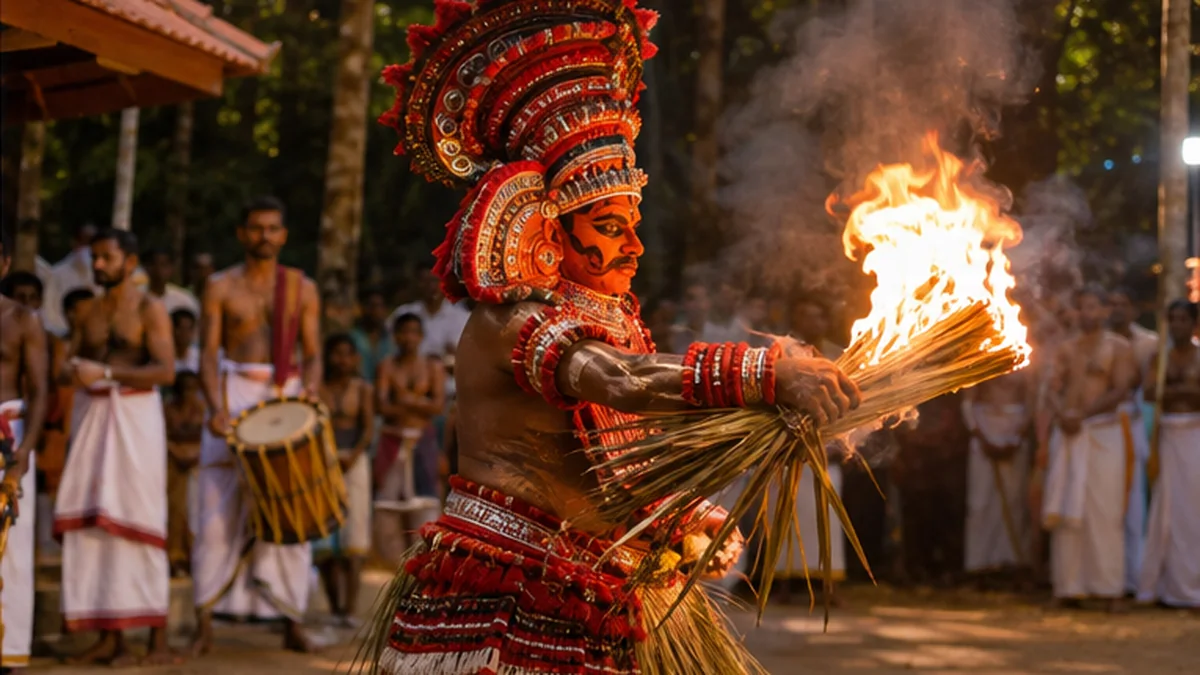
Over 400 distinct Theyyam forms exist, each with unique choreography, myth, and costume. The most iconic include Thee Chamundi (fire leaping), Muchilot Bhagavathi (splendid tower headdress), and Pottan Theyyam (social critique and red-hot embers).
Each form tells a specific story derived from regional folklore, caste history, or Puranic lore. Some deities represent benevolent mother goddesses, while others depict ancestral warriors or tragic heroes who challenged social injustice.
Witnessing diverse forms reveals the remarkable range of this ritual art. From gentle blessings to dramatic fire-jumping displays, every manifestation evokes a distinct emotional response from the gathered assembly.
| Theyyam Form | Deity Classification | Signature Visual Feature | Ritual Highlight |
|---|---|---|---|
| Thee Chamundi (Ottakkolam) | Wrathful Fire Deity | Skirt of fresh green palm fronds | Leaps over 100 times into glowing pyres |
| Muchilot Bhagavathi | Supreme Mother Goddess | Majestic 20-foot painted headdress (Mudi) | Graceful spinning dance with brass mirrors |
| Pottan Theyyam | Social Subversion / Shiva | Mask of woven straw and red paint | Laughs mockingly while lying on red-hot coals |
| Gulikan | God of Death / Saturn | Stilt-like movements & black palm mask | Acrobatic leaps, erratic running & fire eating |
| Kathivanur Veeran | Deified Folk Warrior | Intricate body paint & martial weaponry | Displays Kalaripayattu sword and shield skills |
The Fiery Spectacle of Thee Chamundi and Kandakarnan
In Thee Chamundi (Ottakkolam), the performer leaps repeatedly into a blazing pyre of glowing wood embers (Meri) over one hundred times. Extinguished only by green coconut fronds, the rite demonstrates divine invulnerability to fire.
A colossal wood fire is ignited in the center of the shrine courtyard at midnight, burning down to a mountain of crimson embers by 4:00 AM. Assistants fan the coals, producing a heat wave felt tens of meters away.
The dancer enters a deep trance, breaks away from holding assistants, and plunges headfirst into the burning mound. Pulled out within seconds, he circles the arena and dives in again, repeating the miraculous feat without sustaining burns. To compare this fervor with temple spectacles further south, consult our Thrissur Pooram festival guide.
Muchilot Bhagavathi and the Social Subversion of Pottan Theyyam
Muchilot Bhagavathi wears a towering twenty-foot crown made of bamboo and scarlet silk. Pottan Theyyam, embodying Lord Shiva disguised as a low-caste Chandala, laughs mockingly at social hierarchy while lying on live embers.
Muchilot Bhagavathi represents the highest patron goddess of the Vaniya community. Her towering mudi requires dozens of helpers to balance, and her gentle, regal movements entrance thousands of worshippers who receive blessed rice and turmeric powder.
In contrast, Pottan Theyyam is brilliant social satire. Through rhythmic verses, the deity interrogates the absurdity of untouchability, questioning why blood running through high-born and low-born veins looks identical. His fearless critique of social bigotry remains as revolutionary today as when it originated centuries ago.
Parassinikadavu Muthappan Temple: Year-Round Morning Rituals
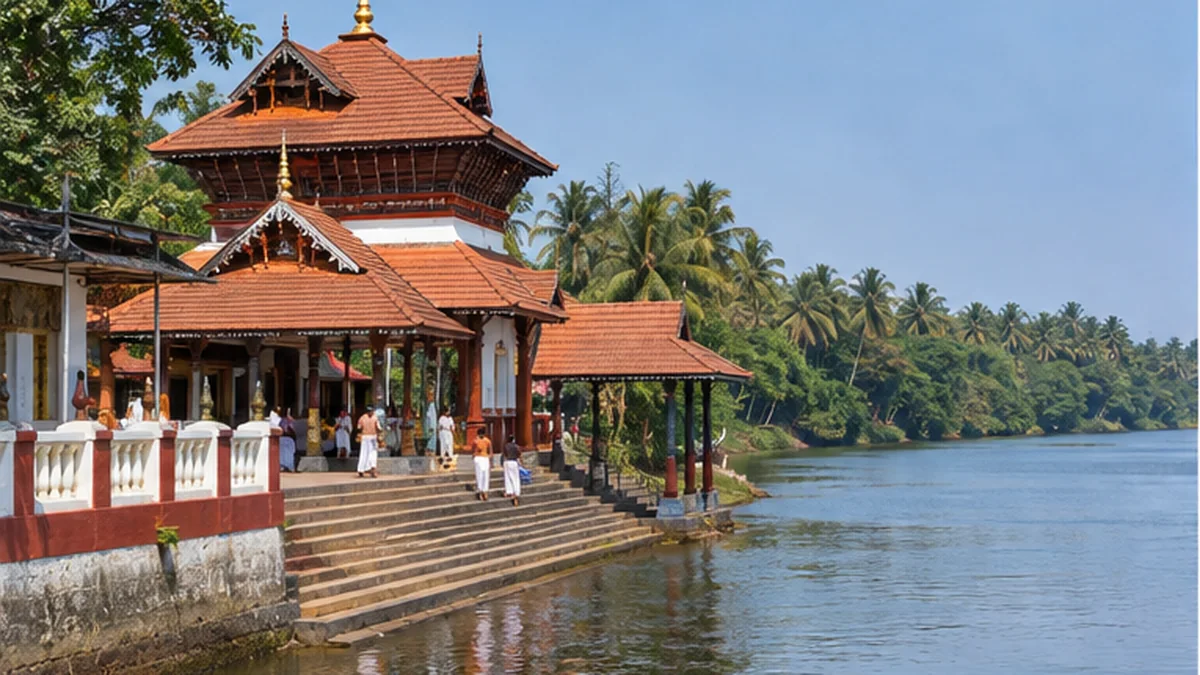
Parassinikadavu Sree Muthappan Temple, 20 km north of Kannur on the banks of the Valapattanam River, is the only shrine in Kerala where Theyyam rituals occur daily year-round. Morning performances of Thiruvappana and Vellattam take place at 5:30 AM without seasonal breaks.
For travelers visiting North Malabar during the summer monsoon when village Kavus are silent, Parassinikadavu offers an accessible window into living ritual worship. The riverside temple bustles with devotees every morning of the year.
The temple architecture differs from orthodox shrines, featuring open halls overlooking the flowing river. Pilgrims from all backgrounds stand together in line to speak directly with the manifestation of Lord Muthappan.
Note
Unlike seasonal village Kavus that operate strictly in winter, Parassinikadavu conducts authentic Theyyam rituals every single morning and evening throughout the calendar year.
Daily Thiruvappana and Vellattam Performance Timings
The temple opens before dawn, with Vellattam (junior form) taking the floor at 5:30 AM, followed by the majestic Thiruvappana (senior form) at 6:30 AM. An evening repeat session takes place between 6:30 PM and 8:30 PM.
During the morning darshan, Lord Muthappan dances through the pillared temple corridor to the rhythm of Chenda drums. After concluding the ritual choreography, the deity sits on a carved wooden stool to listen to individual devotees.
Pilgrims approach one by one, whispering personal worries, family disputes, or health concerns into the deity’s ear. The performer embraces each devotee, offering consoling words, divine laughter, and prasadam. If traveling toward the inland hills, plan connections using our places to visit in Wayanad guide.
Offerings of Toddy, Dried Fish, and Universal Inclusivity
Defying orthodox Hindu temple norms, Lord Muthappan accepts offerings of country palm toddy, roasted dried fish, and boiled green grams. Dogs are revered as his sacred companions and roam freely across the temple halls.
The temple rejects orthodox Brahminical caste exclusions. Legend states that Lord Muthappan was a hunter deity who lived among forest tribes, drank fermented palm toddy, and protected the oppressed.
Free community meals (Oottupura) are served to all visitors twice daily, consisting of boiled black grams, tea, and wholesome vegetarian food. The temple welcomes visitors of every religion and ethnicity without discrimination.
Visitor Logistics: Getting Around Kannur and Kasaragod Kavus
Fly into Kannur International Airport (CNN) or arrive via train at Kannur (CAN) or Kasaragod (KGQ). Because rural Kavus sit deep inside coastal palm groves, hiring a dedicated local auto-rickshaw or taxi driver is essential for nocturnal village navigation.
Most village shrines do not have street addresses or clear English signboards. They are known to local residents by ancestral family or village names, making local guidance indispensable for finding remote performances after dark.
Arranging your base accommodation in Kannur town, Thalassery, or Nileshwar provides convenient road access to both coastal and inland shrines. Traveling between villages after midnight is calm, with little vehicular traffic on rural roads.
| Travel Parameter | Practical Recommendation | Logistics & Cost Details |
|---|---|---|
| Nearest Airport | Kannur International Airport (CNN) | 25 km from Kannur town; prepaid taxis available |
| Rail Connectivity | Kannur (CAN), Thalassery (TLY), Kasaragod (KGQ) | Daily express trains on coastal trunk route (NH-66) |
| Local Transport | Hired auto-rickshaw or private taxi for full night | ₹1,500 – ₹2,500 for overnight auto hire |
| Base Towns | Kannur Town, Thalassery, Payyanur, Bekal | Heritage homestays and coastal boutique resorts |
| Cuisine & Dining | Traditional Malabar seafood, pathiri, and ghee rice | Available at town eateries before heading to rural Kavus |
Transit Corridors: Rail, Road, and Kannur International Airport
Kannur Airport connects directly with major Indian metros and Middle Eastern hubs. The coastal railway corridor offers frequent express trains along NH-66, linking Kozhikode, Thalassery, Kannur, Payyanur, and Kasaragod.
Trains such as the Vande Bharat Express and Mangaluru Express provide fast day travel along the Malabar coastline. Travelers can disembark at smaller taluk stations like Payyanur or Kanhangad to reach northern Kavu clusters.
For road travelers, National Highway 66 connects the entire region. While road widening work is underway, local paved district roads branching into interior villages remain in good condition. For culinary stops along the coast, refer to our Kerala food guide to Sadya and Karimeen.
Hiring Local Drivers, Overnight Homestays, and Village Etiquette
Pre-arrange an auto-rickshaw driver familiar with rural temple names, as GPS directions frequently fail on dirt village trails. Staying in heritage homestays near Payyanur or Thalassery provides easy access to midnight village events.
Many homestay owners maintain close ties with village temple committees and can verify whether a scheduled performance is running on time. Hiring an auto-rickshaw driver from the local village stand ensures you will not get lost on dark unpaved pathways.
When entering a rural Kavu, remember that you are a guest at an intimate community worship service. Local residents are warm and welcoming to visitors, often offering hot black coffee and puffed rice prasad. For district tourism updates, consult the Kannur District Administration Tourism Directory.
Sacred Grove Ethics: Photography, Night Vigils & Cultural Decorum
Theyyam is a living community faith, not a tourist spectacle. Visitors must dress modestly, remove footwear before entering shrine perimeters, never use flash photography directly into a performer’s eyes, and maintain silence during invocations.
Observing proper etiquette ensures that traditional village shrines remain welcoming to travelers. Because performers carry heavy wooden headdresses while balancing near open flames, any distraction can result in severe physical accidents.
Be respectful of local worshippers who have gathered to seek divine intervention for personal challenges. Yield front-row viewing space to elderly villagers during blessings.
Pro Tip
Never use continuous electronic camera flash during fire performances. The bright strobe light temporarily blinds the dancer, creating severe danger when leaping over glowing coal pyres.
Flash Restrictions, Sacred Boundaries, and Drone Prohibitions
Continuous camera flash temporarily blinds performers wearing heavy headdresses who are leaping around fire. Drones are strictly forbidden, and photographers must yield walking space when deities rush through crowds.
Use fast prime lenses (such as 35mm or 50mm with wide apertures of f/1.8) and increase your camera ISO to capture the ambient glow of torches without artificial illumination. Flash spoils the natural mood and disrupts the performer’s trance.
Maintain a respectful physical distance from the greenroom area where performers apply sacred facial makeup. Never step into the sanctified perimeter with shoes, leather belts, or hats. For northern coastal travel alerts, check the Kasaragod District Administration Tourism Portal.
Preparing for All-Night Vigils: Clothing, Hydration, and Seating
Performances frequently run from 10:00 PM until 7:00 AM without chairs. Bring a lightweight straw mat or folding stool, wear breathable cotton attire, carry mosquito repellent, and stay hydrated with local tender coconut water.
Temperatures remain warm and humid even at midnight along coastal Kerala. Wear loose-fitting cotton clothing that covers shoulders and knees, conforming to temple customs.
Bring a small portable power bank for your mobile phone and a lightweight headlamp for walking along dark village trails. Carrying mosquito repellent cream will keep you comfortable during long standing vigils beneath forest canopies.
Frequently Asked Questions About Theyyam in Kerala
Direct answers to common questions regarding Theyyam seasons, locations, tickets, and customs.
When is the best time of year to see Theyyam in Kerala?
The primary Theyyam season runs from late October through May, with peak festival density occurring between December and March across Kannur and Kasaragod. Outside this seasonal window, daily morning and evening Theyyam takes place year-round at Parassinikadavu Muthappan Temple.
Where can travelers watch authentic Theyyam rituals?
Authentic Theyyam takes place in ancestral village shrines (Kavus) throughout the rural countryside of Kannur and Kasaragod districts. Travelers can check monthly festival schedules through the Kannur District Tourism Promotion Council (DTPC) to identify upcoming village locations.
Do tourists need to pay an entry ticket or pass for Theyyam?
No, Theyyam ceremonies are open village community events that are completely free of charge for all observers. No entry tickets, commercial passes, or special VIP bookings exist at traditional sacred groves.
What should visitors wear when attending a Theyyam festival?
Visitors must dress in modest, respectful clothing covering their shoulders and knees, avoiding shorts, sleeveless tops, or western beachwear. Footwear must be removed and left outside the sacred shrine boundaries before entering the performance clearing.
Can tourists take photographs during Theyyam performances?
Yes, photography is permitted in the open courtyard, but electronic flash must never be used directly at dancers during trance or fire-leaping rituals. Drones are strictly prohibited, and visitors should never enter the sanctum sanctorum or greenroom without explicit permission.
How do travelers travel between rural village Kavus at night?
The most reliable method is pre-hiring a local auto-rickshaw or taxi driver from your base town who knows the local Malayalam names of rural shrines. Navigating through unpaved palm grove pathways after dark using mobile GPS alone is unreliable.