Kerala Food Guide: Traditional Sadya, Karimeen & Seafood
Experience authentic Kerala food with our complete guide to banana leaf Sadya, Karimeen Pollichathu, backwater toddy shops, and Malabar biryani.
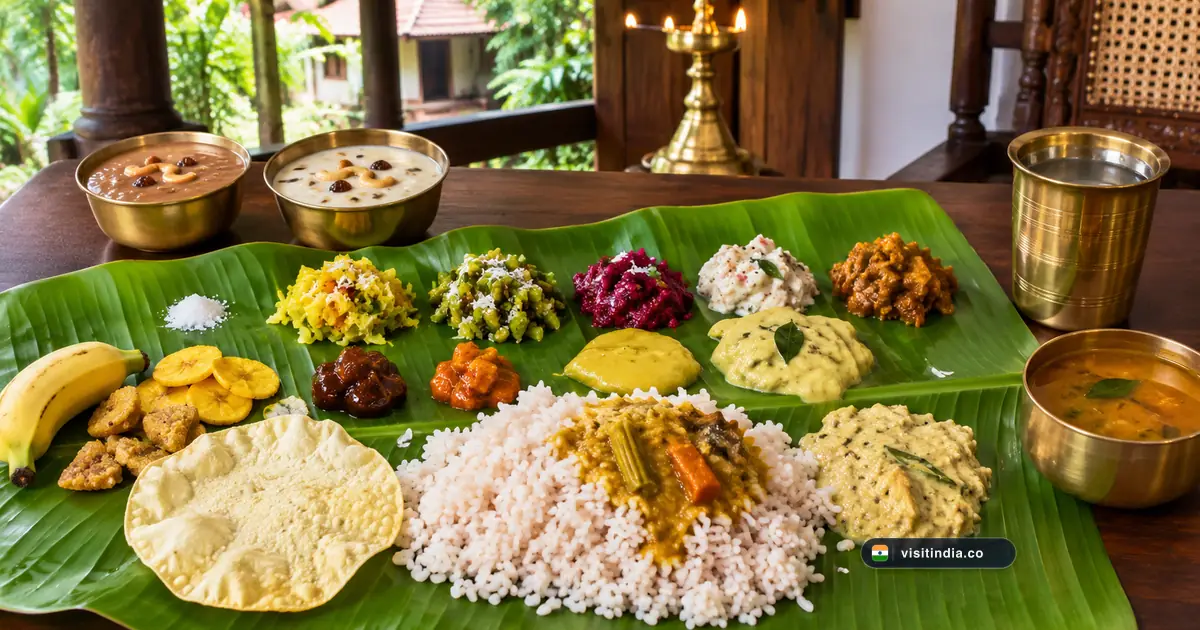
Kerala coastal geography and lush spice hills have nurtured one of the world most sophisticated culinary cultures, anchored by fresh coconut, pungent black pepper, and curry leaves. Consulting a comprehensive kerala food guide sadya dishes karimeen backwater specialties reveals a dramatic contrast between the sacred vegetarian geometry of the Onam feast and the fiery, rustic seafood served in canalside toddy shops.
From the quiet backwaters of Kuttanad to the historic spice ports of Kozhikode, dining in God Own Country is an immersive cultural experience. Understanding local serving customs, leaf orientation, and flavor combinations ensures you savor every meal like a local resident.
Kerala Culinary Essentials
- The Sacred Leaf Rule: A Sadya must be served on a plantain leaf with its tapered tip pointing to the left; fold the leaf inward toward yourself after eating to express culinary gratitude.
- Sadya Structure: A multi-course vegetarian banquet of 24 to 28 dishes, starting with ginger inji puli and banana chips, progressing through four rice courses, and finishing with sweet payasam.
- Signature Seafood: Karimeen Pollichathu (pearl spot fish wrapped in wilted banana leaf with shallot-chilli masala and roasted in pure coconut oil).
- Toddy Shop Culture: Rustic canalside eateries (kallu shappus) serving fresh sweet palm toddy alongside spicy boiled tapioca (kappa), clay-pot fish curry, and duck roast.
- Malabar Heritage: Northern Kozhikode and Thalassery feature aromatic dum biryanis cooked with fragrant short-grain Kaima rice, pure ghee, and mild green chilli masala.
The Royal Banana Leaf Sadya: Layout, Philosophy, and Dining Protocol
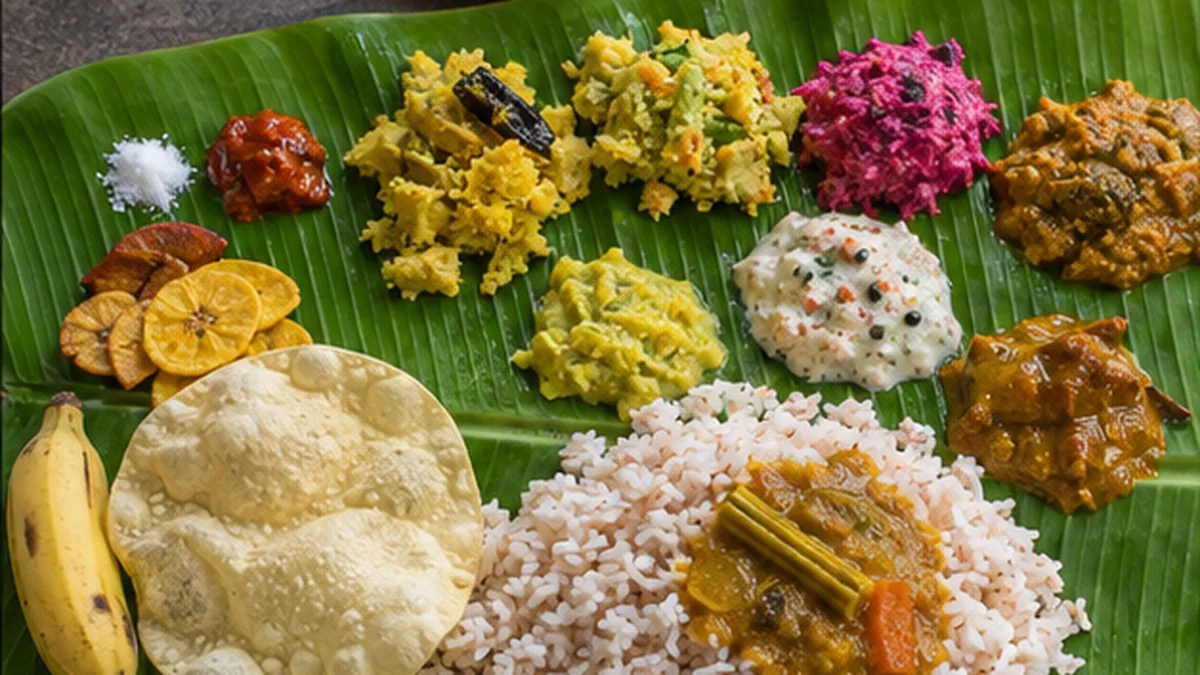
A Kerala Sadya is a grand vegetarian banquet of 24 to 28 dishes served on a fresh plantain leaf oriented with its tapered tip pointing to the diner’s left, eaten exclusively with the right hand, and concluded by folding the leaf inward toward oneself.
Originating as a ceremonial feast for temple festivals like the Thrissur Pooram festival and royal harvest celebrations like Onam, the Sadya represents culinary balance according to Ayurvedic dietary principles. Every taste profile, sweet, sour, salty, bitter, pungent, and astringent, is represented on the leaf in precise anatomical positions across 26 distinct serving spots.
Banana Leaf Orientation and Placement Rules
The plantain leaf must lie horizontally across the table with the stem base on the right and narrow tip on the left, establishing a standardized geometric canvas for sequential service.
This orientation is strictly observed across the state. The broader right side provides ample surface area for mounding steamed rice and pouring liquid curries, while the narrower left section holds smaller portions of intensely flavored pickles, chutneys, and fried accompaniments. Servers move systematically down the dining rows, ladling dishes in a choreographed sequence that has remained unchanged for centuries.
The Inward Leaf Fold: A Sign of Dining Gratitude
Folding the banana leaf top-to-bottom inward toward yourself signifies satisfaction and appreciation for the feast, whereas folding outward away from the body is strictly reserved for bereavement rituals.
Once you have finished your payasam and washed your fingers with water, take the top edge of the leaf and fold it down toward your chest. This gesture conveys to the host that the meal was bountiful, harmonious, and deeply satisfying. Folding the leaf outward toward the table is an ancient taboo associated solely with funeral meals, so keeping the fold directed inward is an essential cultural courtesy.
| Sadya Component | Placement on Leaf | Ingredients & Preparation | Culinary Purpose |
|---|---|---|---|
| Uppu (Salt) | Far top-left corner | Pure crystalline sea salt | Base seasoning adjustment |
| Upperi & Sharkara | Top-left edge | Raw banana crisps, jaggery-coated chips | Crunchy sweet and salty textural opening |
| Inji Puli | Top-left quadrant | Crushed ginger, tamarind, jaggery, green chilli | Digestive catalyst and palate cleanser |
| Avial | Top-right quadrant | 7 to 9 native vegetables, coconut, curd, curry leaf | The crown jewel of regional vegetable medley |
| Olan | Top-center | Ash gourd, red cowpeas, mild coconut milk | Soothing cooling counterpoint to hot spices |
| Erissery | Top-right | Yellow pumpkin, red beans, toasted coconut paste | Earthy, nutty, and mildly sweet side dish |
| Matta Rice | Center & lower half | Indigenous red parboiled coarse grain | Starchy foundation for four sequential liquid courses |
The 24-Dish Sadya Anatomy: From Inji Puli to Payasam Courses
The Sadya leaf is mapped with precision: top-left holds salt, banana chips (upperi), sharkara varatti, and digestive inji puli; top-right contains avial, thoran, olan, pachadi, and erissery; the center holds red Matta rice served sequentially with parippu dal, sambar, rasam, and sweet payasam.
Diners unfamiliar with Kerala dining customs are often surprised by the sheer variety of side dishes arranged before a single grain of rice is served. Each preparation plays a functional role in balancing body heat, aiding digestion, and stimulating appetite.
The Top-Left Flavor Balancers: Upperi, Sharkara Varatti, and Inji Puli
Inji puli, a dense dark paste of crushed ginger, green chillies, jaggery, and tamarind, acts as a palate cleanser and digestive equalizer throughout the rich meal.
Also known as Inji Curry, this preparation is considered the ultimate test of a traditional Sadya chef. It balances sour tamarind pulp against caramelized country jaggery and sharp fresh ginger root. Beside it sit crisp golden plantain chips fried in coconut oil (upperi) and thick plantain chunks coated in dark crystallised jaggery, dried ginger powder, and cumin (sharkara varatti).
The Coconut Core: Avial, Olan, Erissery, and Thoran
Avial brings together seasonal drumsticks, plantains, and yam in a raw coconut and yogurt paste, while delicate olan simmers tender ash gourd and cowpeas in pure coconut milk without heavy spices.
These side dishes highlight Kerala intimate relationship with the coconut palm. Avial uses coarsely crushed coconut and green chillies stirred into parboiled vegetables, finished with fresh curd and a drizzle of raw virgin coconut oil.
In contrast, Olan contains no chilli powder or turmeric, relying solely on the mild sweetness of white pumpkin simmered in fresh coconut milk. Erissery adds depth through slow-roasted coconut shreds fried to a deep mahogany brown.
Four Rice Courses: Parippu Ghee, Sambar, Rasam, and Morru
Red parboiled Matta rice is served first with roasted yellow parippu dal, melted ghee, and crushed papadam, followed by coconut-rich vegetable sambar, tangy black-pepper rasam, and soothing spiced buttermilk.
Eating the rice courses in correct chronological order is vital for digestive harmony. Diners receive 250 grams of steaming red rice before the four sequential liquid courses begin:
-
Course 1 (Parippu & Ghee): Yellow lentil dal cooked with cumin, topped with melted ghee and crushed papadam.
-
Course 2 (Sambar): A hearty tamarind gravy loaded with shallots, drumsticks, and roasted coconut paste.
-
Course 3 (Rasam): Clear peppery tomato broth infused with garlic, aiding digestion after coconut gravies.
-
Course 4 (Morru): Seasoned buttermilk tempered with mustard seeds, cooling the palate before sweet courses.
Sweet Concluding Courses: Palada Pradhaman and Parippu Payasam
Payasam is ladled directly onto the leaf, featuring creamy Palada Pradhaman made of slow-simmered rice flakes in sweetened milk, or dark Parippu Payasam sweetened with jaggery and spiced with cardamom.
Dessert in a Sadya is served in multiple varieties. Palada Pradhaman is delicate and pinkish, prepared by reducing full-cream milk and tiny rice flakes (ada) over wood fires for 3 to 4 hours until natural caramelization occurs.
Parippu Payasam offers a deeper profile made from roasted moong dal, coconut milk, and dark palm jaggery. Connoisseurs often mash a small yellow hill banana and crumble a papadam directly into their payasam to create a rich sweet-salty crunch. Travelers can discover these traditions throughout our Kerala travel guide.
Pro Tip
Do not ask for spoons or forks during a traditional Sadya. Eating with your fingers allows you to gauge food temperatures accurately and crush the papadam, rice, and ghee together into the perfect bite.
Karimeen Pollichathu: The Pearl Spot Delicacy of the Backwaters
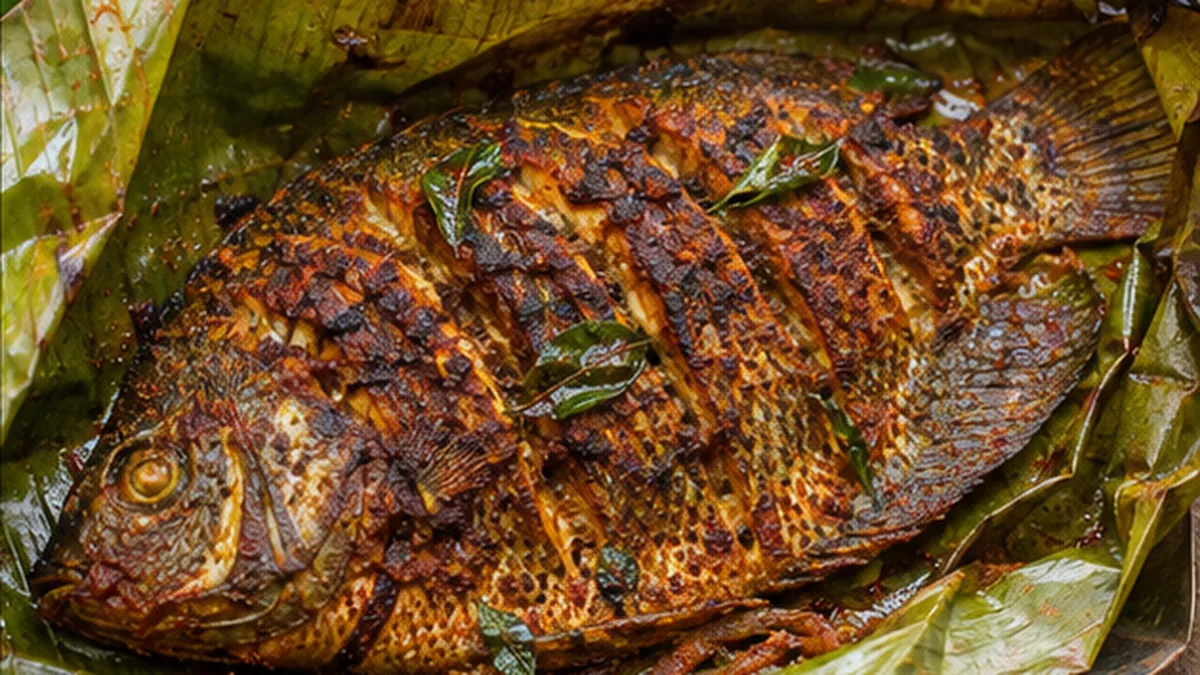
Karimeen Pollichathu features fresh pearl spot fish marinated in spicy turmeric and lime, coated with a sauteed masala of shallots, ginger, garlic, green chillies, and tomatoes, wrapped tightly inside a wilted banana leaf, and pan-roasted in pure coconut oil.
The green chromide pearl spot (Etroplus suratensis), known locally as Karimeen, is the undisputed state fish of Kerala. Found in brackish lagoons and rivers, its sweet white flesh absorbs spices well, making it the ideal choice for traditional leaf roasting.
The Art of Banana Leaf Steaming and Roasting
Wilting the plantain leaf over an open flame softens its fibers, allowing cooks to wrap the spice-crusted fish into a tight parcel that traps moisture and infuses delicate smoky herbal aromas during pan roasting.
The cooking process is a masterclass in moisture preservation. The cleaned 250-gram fish receives shallow diagonal gashes, which are rubbed with chilli, turmeric, and sea salt before being lightly seared in coconut oil for 2 minutes.
The chef then prepares a thick masala of finely diced shallots (chuvannulli), crushed ginger, garlic, curry leaves, and tomatoes. The fish is smothered in this aromatic paste, wrapped inside the softened leaf, tied with a plantain strand, and cooked slowly for 8 to 10 minutes over low heat on an iron tawa.
Where to Taste Fresh Pearl Spot Across Alappuzha and Kumarakom
The finest Karimeen is caught fresh daily in Vembanad Lake and served at canal-side dining spots across Alappuzha, Kumarakom, and local backwater houseboat kitchens.
When visiting the backwaters of Alappuzha, dining aboard a cruising houseboat offers an authentic setting to enjoy this specialty. Houseboat chefs buy live pearl spots directly from local canoe fishermen along the canals, cooking them fresh for lunch as you glide past palm groves. Local tourism and waterway information is published by the Alappuzha District Administration. Travelers planning a voyage can review our dedicated Alleppey houseboat booking guide.
The Kerala Toddy Shop Experience: Kallu Shappu Rustic Feasts
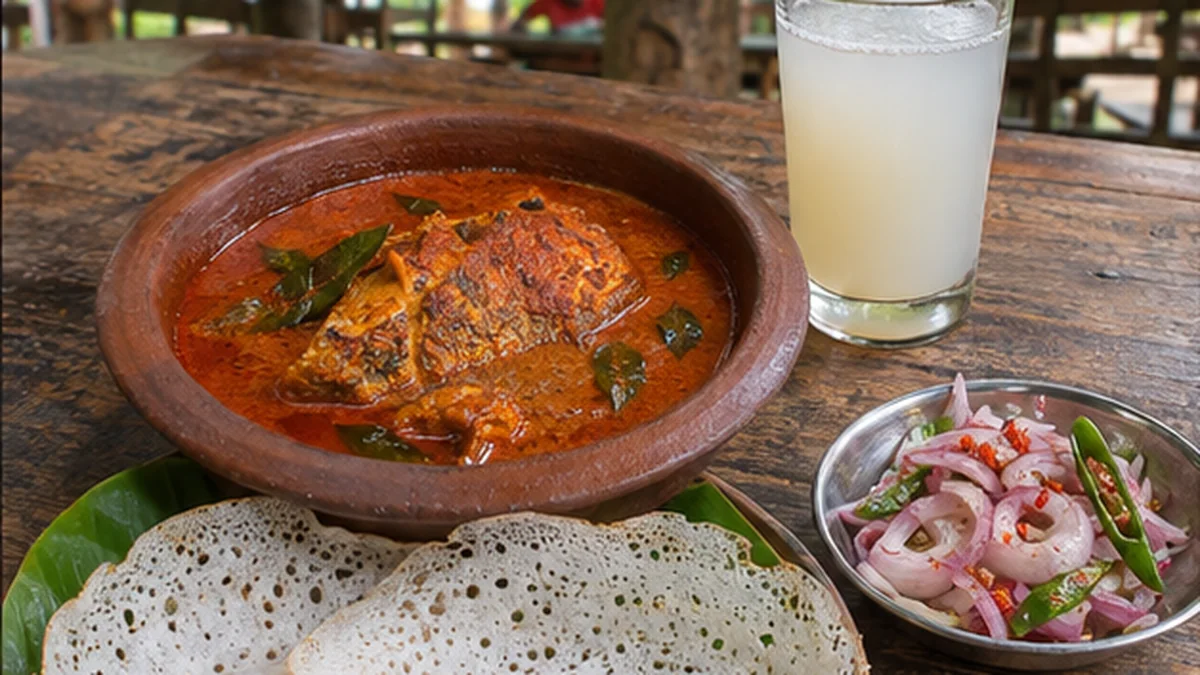
Toddy shops, or kallu shappus, are rustic dining institutions serving mildly alcoholic sweet palm toddy alongside intensely fiery village specialties including boiled kappa (tapioca) with red fish curry, peppery duck roast, and crab masala.
Originally established as simple village taverns for agricultural laborers, toddy shops have evolved into legendary culinary pilgrimage destinations for food lovers across India. Because natural toddy is mildly sweet when tapped in the morning, cooks developed fiery, highly spiced dishes to complement the beverage effervescence.
Boiled Tapioca and Fiery Red Meen Curry
Steamed kappa mashed with turmeric and green chillies provides the essential starchy foil to sharp, fiery meen curry cooked in earthen clay pots using smoky Malabar tamarind (kudampuli).
This pairing is an indelible cultural emblem of Central Kerala. Tapioca (kappa) arrived in Kerala during nineteenth-century famine relief efforts and became an integral staple. Boiled with turmeric, it is coarsely mashed and served warm alongside a deep-crimson fish curry. The curry gets its smoky sourness from dried kudampuli (Malabar tamarind rinds) and fiery heat from ground red chillies, cooked and aged inside traditional earthenware pots called chattis.
Tharavu Roast, Crab Fry, and Toddy Shop Etiquette
Kuttanad duck roast and fresh backwater mud crab are braised in thick shallot and black pepper gravy; modern toddy shops offer clean family dining cabins alongside traditional counters.
In Kuttanad, free-range ducks feed in flooded paddy fields, developing rich meat. The meat is braised with cracked Tellicherry black peppercorns, crushed garlic, and vinegar until the sauce clings densely to the bone.
Other staples include crab roast cooked in its shell and spicy pork fry. While village shops were once rough spaces, top backwater establishments now feature air-conditioned family rooms and open-air canal verandas welcoming travelers of all backgrounds. Fresh palm toddy containing 4 to 6 percent alcohol is tapped twice daily at 6:00 AM and 2:00 PM.
Malabar Muslim Cuisine: Kozhikode Biryani, Appam, and Halwa
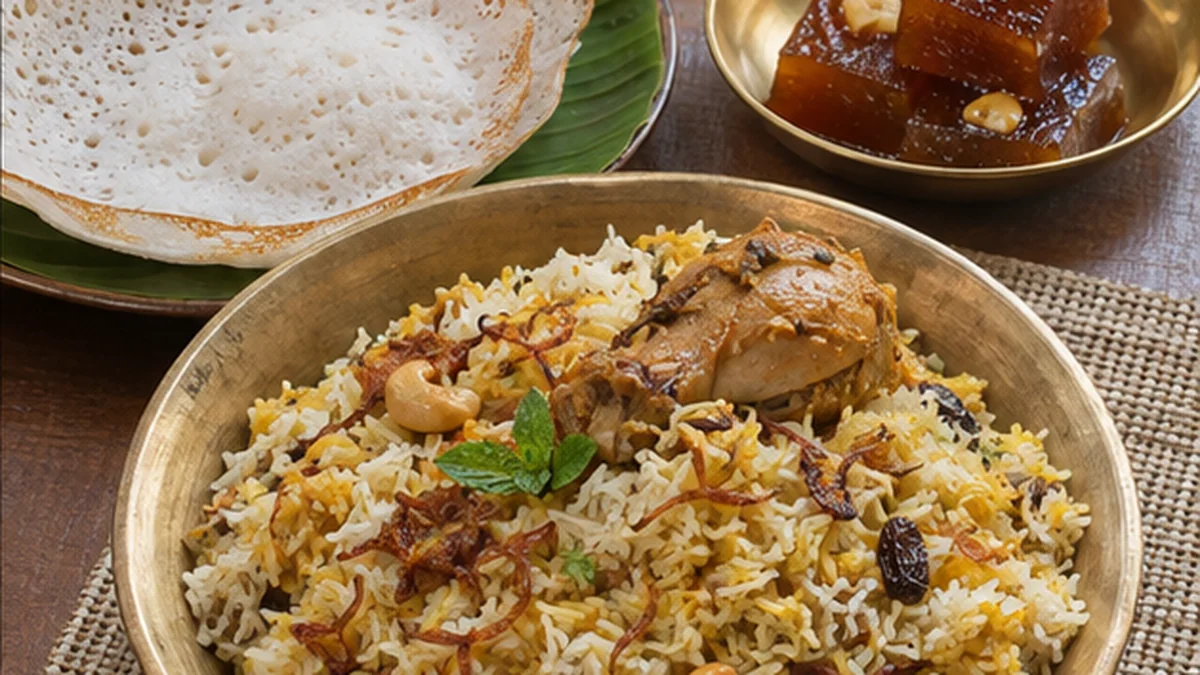
Northern Malabar cuisine is celebrated for aromatic Thalassery and Kozhikode biryanis cooked with fragrant short-grain Kaima rice, fluffy fermented appams with mild coconut stew, and translucent multi-flavored Kozhikodan halwa.
Influenced by centuries of maritime trade with Arab merchants, northern Kerala developed a culinary identity distinct from the central and southern regions. Spices are used with aromatic restraint, prioritizing green chillies, fennel seeds, and cinnamon over heavy turmeric or red chilli powders.
Thalassery and Kozhikode Dum Biryani Secrets
Unlike long-grain northern biryanis, Malabar biryani uses small fragrant Kaima rice cooked separately in ghee, layered over tender marinated chicken or mutton, sealed with dough, and steamed slowly on coals.
Known locally as Jeerakasala, Kaima rice is tiny, oval-shaped, and deeply fragrant. The meat is braised with shallots, ginger, garlic, green chillies, and mint into a moist gravy.
The parboiled rice and meat are assembled in layers inside an aluminum vessel, topped with golden fried onions (bista), cashews, and raisins. The lid is sealed with dough for slow dum cooking. Complete regional exploration is detailed in our Kozhikode city travel guide.
Sweet Street (SM Street) and Calicut Halwa Heritage
Kozhikode historic Mittayi Theruvu (Sweet Street) features century-old confectioners stirring massive copper cauldrons of coconut oil, jaggery, and flour into silky translucent banana and wheat halwas.
A stroll through Sweet Street reveals enormous glistening blocks of Kozhikodan halwa in shades of jet black, ruby red, and golden yellow. Confectioners stir wheat milk, refined sugar, cardamom, and coconut oil for hours over wood fires until the mass achieves a glossy, jelly-like texture. Sliced into squares and wrapped in greaseproof paper, it remains the ultimate culinary souvenir of northern Kerala, as documented by the Kozhikode District Administration.
Dining Customs, Jeeraka Vellam, and Practical Traveler Tips
Dine using only the right hand, drink warm pink cumin water (jeeraka vellam) provided complimentary in restaurants to aid digestion, and verify freshness when ordering backwater catch outside of monsoon fish breeding bans.
Embracing local food customs enriches the travel experience and helps keep your digestive system healthy in the tropical climate. Kerala hospitality is warm and accommodating, but following local conventions demonstrates cultural respect.
Jeeraka Vellam: The Herbal Pink Water of Kerala
Hot water boiled with cumin seeds or pathimugham (brazilwood bark) is served universally in restaurants, providing natural antimicrobial properties and soothing the digestive tract after spicy curries.
When you sit at any restaurant in Kerala, the server will pour a glass of warm pinkish herbal water. The pink hue comes from Pathimugham (Sappanwood), an ancient Ayurvedic medicinal bark known for cooling internal organs.
Boiling drinking water with cumin seeds (jeerakam) or herbal bark ensures water safety while neutralizing the acidity of spicy meals. Travelers traveling eastward into the hills can compare this cuisine with the tea plantation foods in our Munnar hill station guide.
Finding Authentic Sadya Outside of Festival Windows
While grand 28-dish Sadyas peak during Onam and Vishu, heritage dining halls and cultural centers across Kochi, Trivandrum, and Thrissur serve complete vegetarian leaf lunches daily.
You do not need to attend a wedding or autumn festival to experience an authentic Sadya. Heritage restaurants in Kochi, Trivandrum, and Thrissur serve daily banana leaf lunches priced from ₹150 to ₹300, featuring 14 to 20 traditional dishes. During major temple festivals, communal canteens prepare feasts for over 10,000 pilgrims daily. Tourism programs and culinary circuits are also featured on Incredible India.
Frequently Asked Questions About Kerala Food and Sadya
What are the essential dishes served in a traditional Kerala Sadya?
A traditional Sadya includes red Matta rice, Parippu dal with ghee, Sambar, Rasam, Avial, Thoran, Olan, Erissery, Pachadi, and Kichadi. Key accompaniments include Inji Puli, banana chips, papadam, and sweet payasams.
How should a banana leaf be placed and folded during a Kerala Sadya?
The plantain leaf must be placed horizontally with its narrow tapered tip pointing to the diner’s left side. After eating, fold the leaf inward toward yourself from the top edge to express dining satisfaction.
What is Karimeen Pollichathu and where is it best tasted in Kerala?
Karimeen Pollichathu is pearl spot fish coated with shallots, ginger, and spices, wrapped in a banana leaf and pan-roasted in coconut oil. It is best tasted in Alappuzha, Kumarakom, and canalside backwater houseboats.
What food is served at a traditional Kerala toddy shop?
Toddy shops serve fresh sweet palm toddy alongside spicy dishes including boiled tapioca (kappa), clay-pot red fish curry, peppery duck roast, crab fry, and pork roast.
How is Malabar Biryani different from Hyderabadi Biryani?
Malabar Biryani uses fragrant short-grain Kaima rice rather than long-grain basmati rice. It features mild green chilli marinades, pure ghee, and slow dum cooking with cashews, raisins, and fried onions.
Is tap water safe to drink in Kerala restaurants?
Restaurants in Kerala universally serve warm boiled water infused with cumin seeds (jeeraka vellam) or pathimugham bark. This traditional warm herbal water is safe to drink and helps aid digestion.
Are non-vegetarian dishes served during a traditional Onam Sadya?
Traditional Onam and wedding Sadyas are strictly vegetarian to preserve sacred temple culinary customs. However, non-vegetarian adaptations and seafood feasts are widely enjoyed across homes and coastal restaurants.
What is the significance of Inji Puli in a Kerala Sadya?
Inji Puli is a sweet, sour, and spicy paste made from crushed ginger, tamarind pulp, and jaggery. It acts as an essential digestive aid and palate cleanser that balances the richness of coconut-heavy dishes.