Digha, Mandarmani & Tajpur Beach Guide: Bengal Coast Itinerary
Explore places to visit in Digha and Mandarmani with verified Jagannath Dham timings, Tajpur pine forests, beach driving bans, and Howrah train schedules.
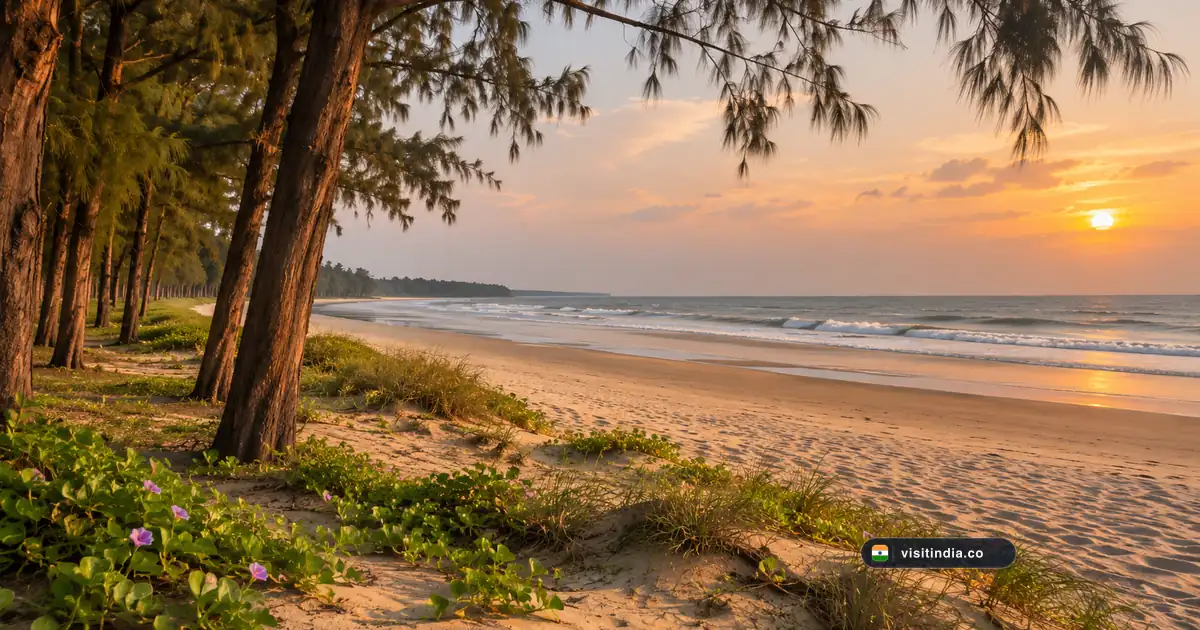
The Bay of Bengal coastline along southern West Bengal provides Kolkata residents and travelers with an accessible coastal getaway. Curating a journey across the top places to visit in digha and mandarmani introduces visitors to contrasting seaside environments connected by modern expressways and rural roads.
Digha has served as Bengal’s favorite seaside holiday hub since the mid-twentieth century. In contrast, neighboring Mandarmani and Tajpur offer expansive red-crab sandflats and dense casuarina pine forests.
Recent infrastructural additions, including the monumental 65-meter Digha Jagannath Dham Cultural Centre and the scenic Marine Drive connecting Old Digha to the Odisha border, have transformed the district into a year-round destination.
Travelers can attend morning temple aarti, explore deep-sea fishing harbors at Shankarpur, walk along deserted dunes, and sample fresh fried pomfret at beach shacks. This comprehensive handbook provides verified railway schedules, temple timings, environmental regulations, and local dining recommendations.
Digha & Mandarmani Travel Essentials
- Geography: Purba Medinipur District, 185 kilometers southwest of Kolkata along National Highway 116B.
- Primary Highlights: New Digha Sea Beach, Digha Jagannath Dham, Mandarmani Beach, Tajpur Pine Forest, and Shankarpur Fishing Port.
- Beach Driving Ban: Driving private cars or motorbikes on Mandarmani beach is strictly prohibited by district administration to protect marine life.
- Temple Etiquette: Traditional attire is recommended at Jagannath Dham; mobile phones and electronic cameras must be deposited in cloakrooms.
- Transit Hub: Digha Railway Station (DGHA) connects directly to Howrah Junction via multiple daily express trains.
The Bengal Coastal Corridor: Digha, Mandarmani, and Tajpur Overview
The southern edge of Bengal along the Purba Medinipur coast functions as a contiguous belt of dynamic tidal sands, river estuaries, and coastal villages. Unlike rocky peninsular headlands found in southern India, this shore features wide continental shelf flats where receding tides expose hundreds of meters of hard-packed sand. For a state-wide geographic perspective, review our West Bengal travel guide.
Official regional notices and travel advisories are published on the Ministry of Tourism Incredible India West Bengal Portal. The towns along this corridor each serve a distinct type of traveler. Digha offers family-friendly seaside resorts, landscaped parks, and religious architecture. Mandarmani caters to travelers seeking seaside luxury resorts built directly on the sand line, while Tajpur and Shankarpur appeal to naturalists who value quiet coastal woodlands and active fishing communities.
Geography of Purba Medinipur Shoreline
The Purba Medinipur coastline stretches approximately 65 kilometers from the mouth of the Hooghly River westward to the Subarnarekha River estuary on the Odisha border. The coastline is sheltered by coastal sand dunes and planted shelterbelts of casuarina and eucalyptus trees designed to blunt cyclone winds.
Because the seabed slopes very gradually, the tidal range along this coast is significant. During low tide, the sea retreats up to a kilometer into the bay, exposing expansive mudflats that host burrowing crabs and shorebirds. During high tide, rolling breakers crash against the concrete sea defenses of Old Digha.
Seasonal Weather and Ideal Travel Windows
The Bengal coast experiences three major seasons: a mild winter, a humid summer, and an active tropical monsoon. The most pleasant visiting window spans from late October through March. During these months, daytime temperatures remain around 25 to 28 degrees Celsius, accompanied by dry northeasterly breezes and calm sea swells.
Summer months between April and June bring high humidity and temperatures climbing past 35 degrees Celsius, though late-afternoon sea breezes provide relief. The monsoon period from July through September brings heavy rain squalls and high tides. While swimming is restricted during storms, the dramatic cloudy horizons and fresh local hilsa fish draw dedicated weekend travelers.
Old Digha vs New Digha: Promenade, Sea Bathing, and Marine Aquarium
Digha is divided into two distinct urban sectors: Old Digha to the east and New Digha two kilometers to the west. Understanding the differences between these sectors helps travelers choose appropriate lodging and leisure activities. Travelers comparing this shore with rocky peninsular beaches can explore the coastline documented in our Visakhapatnam coastal travel guide.
Old Digha was initially developed in the 1920s by English businessman John Frank Snaith and later promoted as a planned resort town by West Bengal Chief Minister Dr. Bidhan Chandra Roy in the 1950s. Today, Old Digha serves as a busy commercial center, whereas New Digha provides wider sandbars and organized recreation parks.
Old Digha Boulder Seawall and Sunset Stalls
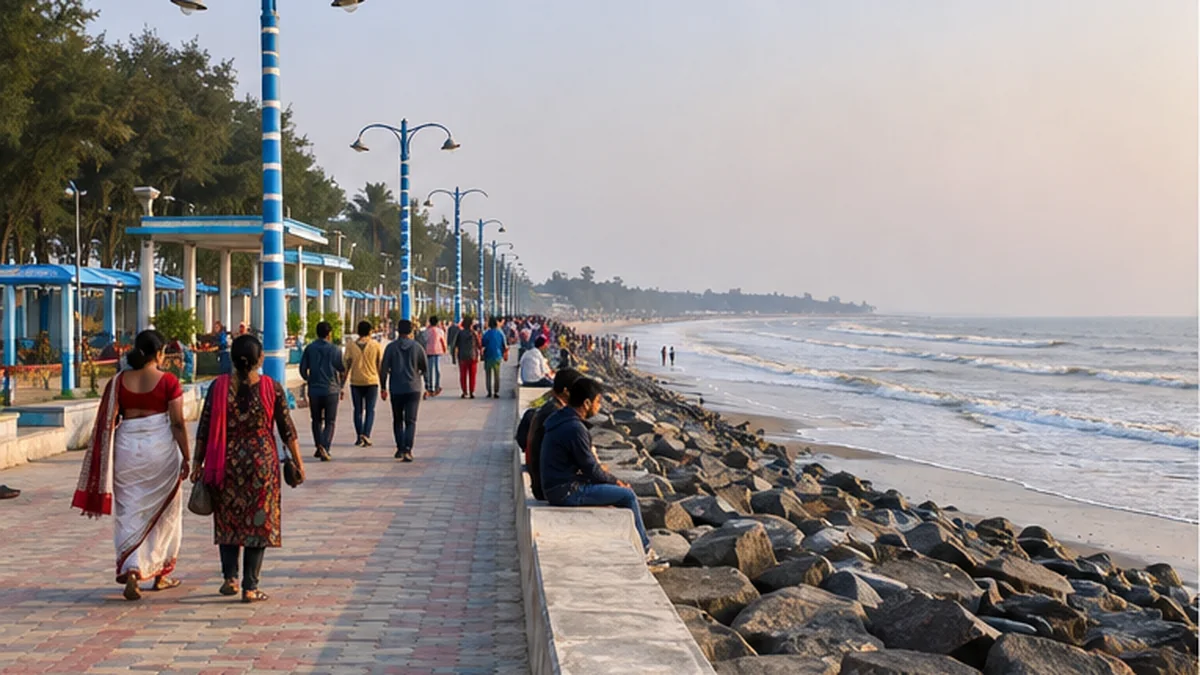
Old Digha features a reinforced concrete seawall anchored by massive black granite boulders to protect the town against coastal erosion. Due to the deep water and sharp stones, swimming is strictly prohibited along this stretch. Instead, a broad pedestrian promenade runs along the top of the seawall.
During late afternoon, the promenade fills with visitors admiring the sunset over the breakers. Scores of open-air stalls fry fresh catch of pomfret, tiger prawns, and bhetki on iron griddles. Nearby souvenir kiosks sell handmade cashew nut packets, conch shells, and decorative horn crafts produced in local cottage industries.
New Digha Casuarina Grove and Marine Aquarium
Two kilometers west lies New Digha, centered around a wide, gently sloping sandy beach bordered by tall casuarina trees. This sector is the primary bathing zone for families and casual swimmers. Lifeguard towers monitor safe bathing areas, and local vendors rent beach umbrellas and inflated rubber tubes.
A short walk from the sand stands the Marine Aquarium and Regional Centre (MARC), operated by the Zoological Survey of India. The facility features large glass display tanks housing marine species native to the northern Bay of Bengal, including horseshoe crabs, sea anemones, lionfish, moray eels, and sea turtles. Entry is free, and the educational exhibits provide insight into local coastal ecosystems.
Digha Jagannath Dham Cultural Centre: Architecture, Timings & Darshan Rules
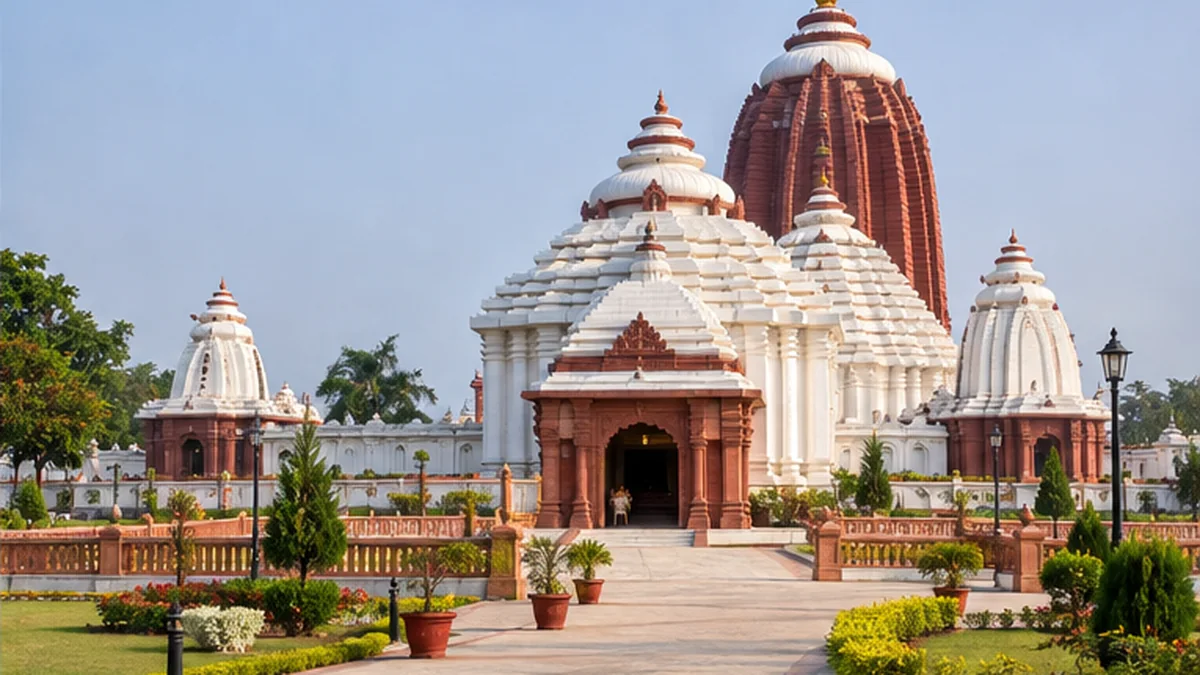
The most significant recent addition to the Digha landscape is the monumental Jagannath Dham Cultural Centre, constructed over a 22-acre campus near the Digha railway station. Built with Banshi Paharpur sandstone imported from Rajasthan, the shrine replicates the sacred Kalinga architectural profile of the twelfth-century temple in Odisha. Architecture enthusiasts can contrast this structure with the original sanctum described in our Puri Jagannath Temple pilgrimage guide.
The state government engineered the complex to accommodate thousands of pilgrims daily, providing modern queue complexes, landscaped gardens, and cultural exhibition halls. The project reflects the historical artistic heritage catalogued across the Archaeological Survey of India Protected Monuments in West Bengal.
Kalinga Architectural Grandeur and Sandstone Carvings
The central temple spire (Vimana) rises 65 meters (approximately 214 feet) into the coastal sky, matching the height and proportions of the ancient Puri temple. The complex adheres strictly to traditional Kalinga temple design, featuring four interconnected axial structures: the Vimana (sanctum sanctorum), Jagamohana (assembly hall), Natamandapa (dancing hall), and Bhogamandapa (hall of offerings).
Master stone artisans spent over three years carving intricate mythological reliefs across the outer red sandstone walls. Carvings depict the Dashavatara (ten incarnations of Lord Vishnu), dancing celestial figures, and traditional floral patterns. The sanctum enshrines wooden idols of Lord Jagannath, Lord Balabhadra, Devi Subhadra, and Sudarshana Chakra, carved from sacred neem logs following ancient ritual specifications.
Daily Darshan Schedule, Prasad Counters, and Security Protocols
The temple opens daily for public worship in two sessions, allowing devotees to participate in morning and evening rituals. Security protocols require visitors to pass through electronic baggage scanners, and carrying leather goods, belts, cameras, and mobile phones into the inner sanctum is prohibited.
| Ritual / Schedule Window | Timings | Visitor Activity / Access |
|---|---|---|
| Morning Opening & Mangala Aarti | 06:00 AM - 06:30 AM | Early darshan window |
| General Public Darshan | 06:30 AM - 01:00 PM | Unrestricted queue access |
| Afternoon Temple Closure | 01:00 PM - 04:00 PM | Deity rest period & kitchen cleanup |
| Evening Darshan & Sandhya Aarti | 04:00 PM - 08:30 PM | Evening lamps and devotional chants |
| Final Night Closure (Pahuda) | 09:00 PM | Temple doors sealed |
The complex operates large Anandabazar food halls where visitors can purchase authentic Mahaprasad, including khaja sweets, sweet dal, and flavored rice cooked in earthen pots. Adequate free shoe storage and paid cloakroom facilities are located directly outside the grand lion gate entrance.
Mandarmani Beach: Red Fiddler Crabs, Mudflats & Ban on Beach Driving
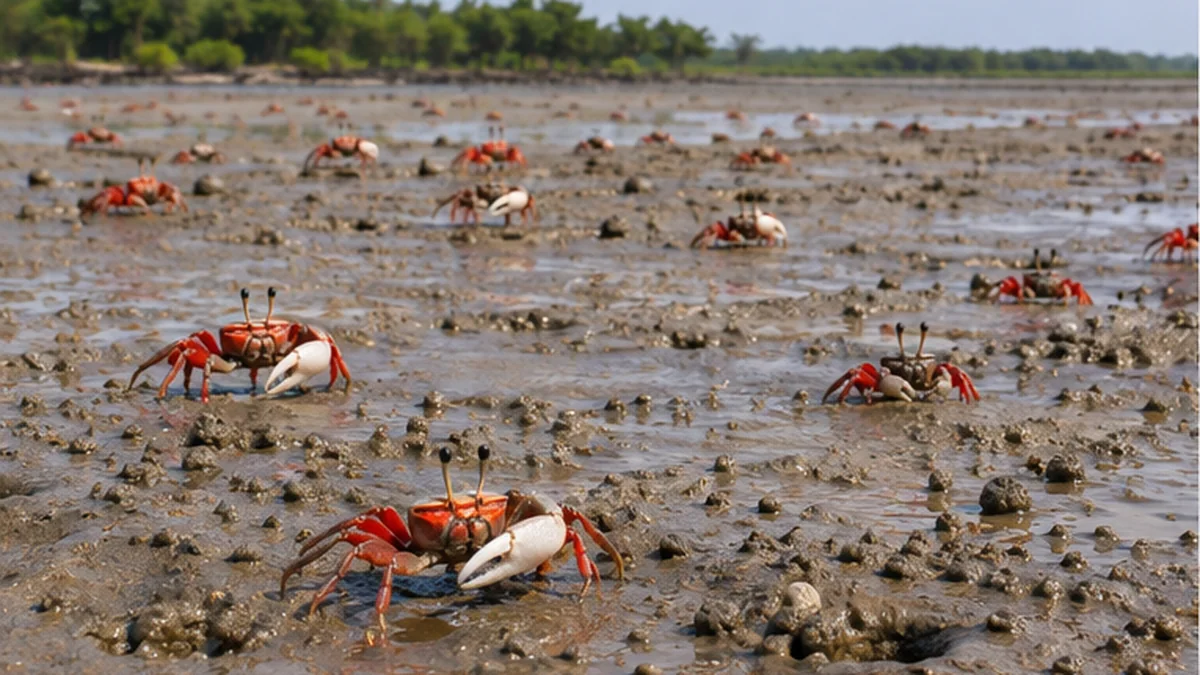
Fourteen kilometers east of Digha lies Mandarmani, celebrated for having one of India’s longest contiguous motorable beach stretches measuring thirteen kilometers. The shore here consists of tightly compacted sand that remains firm underfoot even as the tide recedes. Travelers who appreciate open coastal roadways can contrast this landscape with the scenic peninsular routes outlined in our Konkan coastal road trip guide.
Unlike the municipal promenade of Digha, Mandarmani is characterized by open beach resorts whose lawns border directly on the sand. The atmosphere is relaxed, with visitors spending mornings walking along the surf and evenings relaxing beside beachside bonfires under clear skies.
Thirteen-Kilometer Shoreline and Tidal Mechanics
The unique appeal of Mandarmani lies in the vastness of its open tidal plane. During low tide, the ocean recedes up to 800 meters from the resort boundary walls, leaving behind shimmering wet sand that reflects the sky like a mirror.
Because the beach is flat, incoming tides move inward rapidly. Visitors walking far out on the sandflats must keep watch on the water level and return toward the high-water line well before the incoming tide cuts off returning footpaths. Local resort staff sound advisory whistles as the tide turns.
Red Crab Sandflats and Motor Vehicle Prohibition
The southern end of Mandarmani Beach near the Dadanpatrabar estuary is home to massive colonies of bright red fiddler crabs (Dotilla and Uca species). During quiet morning hours, millions of these tiny red crustaceans emerge from sand burrows, turning large sections of the beach into an intense crimson carpet that disappears instantly into the mud when approached.
Warning
District Vehicle Prohibition: Driving personal cars, SUVs, or motorbikes along the Mandarmani beach sand is strictly prohibited under Section 144 orders issued by the Purba Medinipur District Administration and Calcutta High Court environmental directives. Violators face vehicle impoundment and heavy police fines.
Historically, tourists drove personal vehicles along the waterline, resulting in fatal accidents during high tide and severe destruction of fragile crab habitats. Today, vehicular traffic is diverted onto inland concrete roads, preserving the beach environment and ensuring visitor safety.
Tajpur & Shankarpur: Casuarina Forests, Fishing Harbours & Secluded Dunes
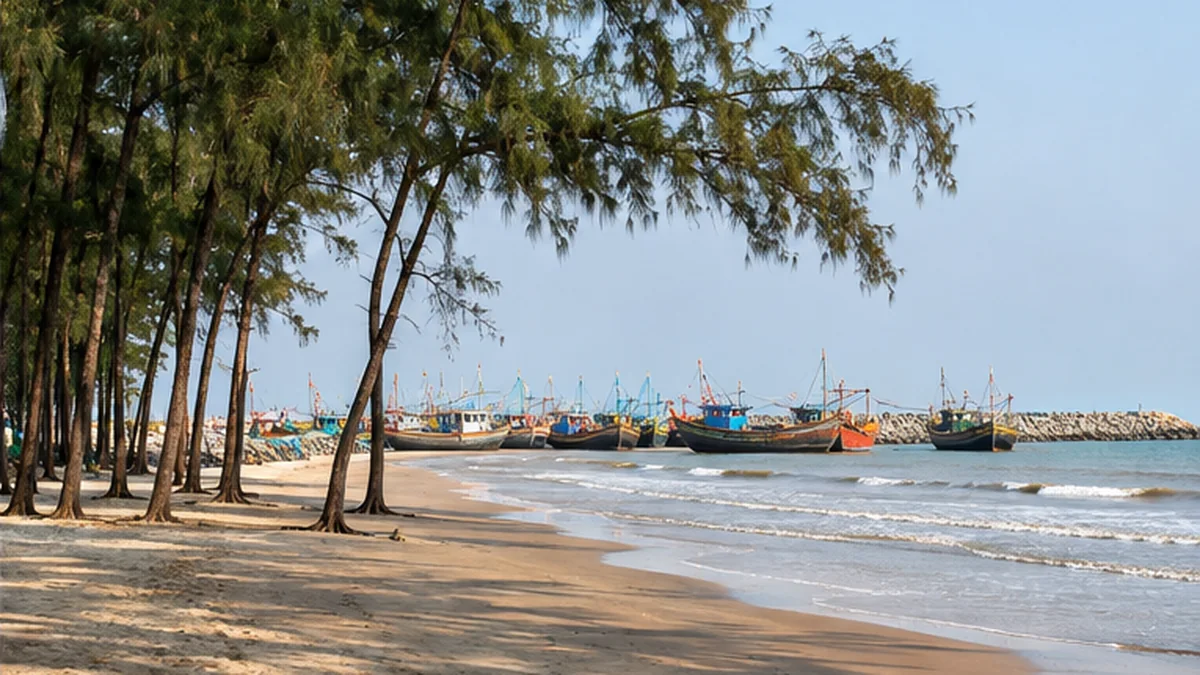
Situated between Digha and Mandarmani lie the quieter coastal villages of Tajpur and Shankarpur. These destinations remain largely free of high-rise commercial hotels, preserving the rural coastal atmosphere of Purba Medinipur. Travelers interested in maritime ecosystems can connect this journey with the forested delta explored in our Sundarbans mangrove safari guide.
Tajpur is famous for its dense pine forests, while Shankarpur serves as the primary marine fishing hub of West Bengal. Exploring both locations provides insight into the natural ecology and economic livelihoods of the Bengal coast.
Tajpur Casuarina Forest Coast and Quiet Retreats
Tajpur sits five kilometers off the main highway, accessed via a quiet country road that winds past fish-farming ponds (bheris) and betel-leaf plantations. The beach is bordered by a wide shelterbelt of towering casuarina trees whose needles carpet the sandy forest floor.
The shoreline here remains completely natural, without concrete pavements or commercial stalls. Independent travelers can hang hammocks between the pine trees, listen to the wind through the needles, and walk along uncrowded sands. Low-impact eco-resorts hidden inside the pine groves offer comfortable bamboo cottages and fresh home-cooked Bengali meals. Outdoor itineraries in this region pair well with Kovalam Beach and Poovar Island sightseeing guide, which covers park access and peak sighting months.
Shankarpur Deep Sea Fishing Harbour and Fish Auction
Located four kilometers east of Digha, Shankarpur functions as an active commercial deep-sea fishing port. The harbor sits at the mouth of a saltwater creek, where hundreds of colorful wooden fishing trawlers tie up along concrete jetties.
Visiting the harbor between 06:00 AM and 08:00 AM reveals an energetic scene as returning trawlers unload overnight catches of hilsa, pomfret, rohu, crabs, and jumbo tiger prawns. Wholesale auctions take place directly on the docks under the supervision of local fishing cooperatives.
While Shankarpur is less suitable for casual swimming due to boat traffic, it is the best place along the coast to purchase freshly caught seafood at wholesale prices.
Udaipur Beach & Marine Drive: Odisha Border Shoreline and Water Sports
Three kilometers west of New Digha lies Udaipur Beach, sitting directly along the interstate border between West Bengal and Odisha. Connecting Old Digha, New Digha, and Udaipur is the new scenic Marine Drive, a four-lane seaside boulevard featuring dedicated cycling tracks, palm-lined footpaths, and coastal streetlights.
Udaipur presents a wilder coastal environment, where low sandy dunes meet the waters of the Bay of Bengal. The beach forms a natural extension of the Talasari fishing coast of Odisha’s Balasore district.
The Digha-Udaipur Coastal Marine Drive
The Marine Drive has revolutionized transit between the beaches. In previous years, travelers had to navigate congested market lanes to travel between Old and New Digha. Today, the coastal road allows a smooth five-minute drive between the sectors while enjoying panoramic views of the ocean breakers.
At Udaipur Beach, rows of temporary palm-thatched shacks line the upper sand dunes. Visitors can sit on plastic chairs under the shade of casuarina trees, sip fresh green coconut water, and watch local fishermen repair their nets.
Talasari Estuary and Odisha Border Landscape
Just beyond Udaipur Beach lies the Talasari river estuary, where the Subarnarekha River reaches the ocean. The landscape here features tranquil backwaters, salt pans, and red sandbars dotted with small wooden ferry boats.
During low tide, travelers can cross the shallow border creek on foot or take small wooden motorboats to reach the remote sand islands of Talasari. Far upstream from this estuary, the same Subarnarekha basin tumbles off the granite plateau at the Ranchi waterfall circuit covering Hundru, Dassam, and Jonha Falls. The area offers an unhurried border landscape where the coastal cultures of Bengal and Odisha blend naturally.
Train & Road Logistics: Tamralipta Express, NH 116B & Bengal Seafood Trail
Reaching the Purba Medinipur coast from Kolkata is straightforward, with dependable rail links and multi-lane toll expressways connecting the metropolitan area to the shore. Travelers arriving via the capital can review transit terminals through the Incredible India Kolkata Departure Portal. Those wishing to pair their coastal journey with city delicacies can consult our Kolkata street food culinary guide.
Real-time train timings and status updates are managed by the National Train Enquiry System for South Eastern Railway. Choosing between train and private road transit depends primarily on group size and budget preferences.
Howrah to Digha Train Timings and Express Schedules
South Eastern Railway operates several daily express and passenger trains from Howrah Junction directly to Digha Railway Station. The journey takes between 3 hours 15 minutes and 3 hours 45 minutes, making rail transit the fastest and most relaxed way to travel.
| Train Name & Number | Departure Station | Departure Time | Digha Arrival | Travel Time |
|---|---|---|---|---|
| Tamralipta Express (12857) | Howrah Jn (HWH) | 06:45 AM | 10:05 AM | 3 hrs 20 mins |
| Kandari Express (22897) | Howrah Jn (HWH) | 02:25 PM | 05:50 PM | 3 hrs 25 mins |
| Digha AC Special (02847) | Howrah Jn (HWH) | 11:10 AM | 02:30 PM | 3 hrs 20 mins |
| Mecheda-Digha Local (68685) | Mecheda (MCA) | 08:00 AM | 11:05 AM | 3 hrs 05 mins |
Fares on express trains are affordable, with second-class chair car (2S) tickets costing approximately Rs 115 and air-conditioned chair car (CC) seats costing around Rs 410. Booking tickets two to three weeks in advance is recommended for weekend travel.
Driving via NH 116B and Local Coastal Seafood Delicacies
For motorists driving from Kolkata, the 185-kilometer route proceeds via the Vidyasagar Setu (Second Hooghly Bridge), National Highway 16 toward Kolaghat, and State Highway 4 via Nandakumar onto National Highway 116B. The highway is four-laned up to Nandakumar, followed by a well-paved two-lane coastal highway passing through Contai (Kanthi). The total driving time averages four to five hours depending on traffic.
A trip to the Bengal coast is incomplete without sampling the regional culinary specialties. Coastal restaurants and beach shacks excel in preparing traditional Bengali seafood thalis featuring steamed rice, thick moong dal, fried brinjal (begun bhaja), and rich fish curries cooked with mustard paste (shorshe maach) or spicy tomato-onion gravies (jhal). Prized seafood items include pomfret fry, jumbo freshwater prawns (chingri malaikari), and seasonal hilsa (ilish bhapa).
Frequently Asked Questions About Digha, Mandarmani and Tajpur
Which beach is better for a family vacation, Digha or Mandarmani?
Digha is better for families seeking organized municipal amenities, paved promenades, market stalls, and cultural landmarks like the new Jagannath Dham. Mandarmani suits travelers looking for quiet luxury resorts situated directly on the sand with private swimming pools and uncrowded beaches.
Can personal cars be driven onto the beach at Mandarmani?
No, driving private cars, four-wheel-drive vehicles, or two-wheelers on the beach sand at Mandarmani is strictly banned by the district administration. The rule was enforced to safeguard visitors from tidal risks and prevent the destruction of red fiddler crab colonies.
What are the opening timings of the Digha Jagannath Dham Temple?
The Digha Jagannath Dham opens daily from 06:00 AM to 01:00 PM for morning darshan and from 04:00 PM to 09:00 PM for evening rituals. The temple doors remain closed between 01:00 PM and 04:00 PM for the deities’ rest and cleaning.
How do I travel between Digha, Tajpur, and Mandarmani?
Local auto-rickshaws, battery-operated toto e-rickshaws, and private taxis regularly ply the connecting road between Digha, Tajpur, and Mandarmani. The 14-kilometer journey from Digha to Mandarmani takes roughly 35 minutes by car along the inland connecting road.
What is the fastest train from Kolkata to Digha?
The 12857 Tamralipta Express departing Howrah Junction at 06:45 AM is the fastest and most popular morning train, arriving at Digha Railway Station at 10:05 AM. The 22897 Kandari Express provides a convenient afternoon departure at 02:25 PM.
Can tourists swim safely at Old Digha beach?
No, swimming at Old Digha is strictly prohibited because the coast is fortified with sharp granite boulders and concrete seawalls where underwater drop-offs are dangerous. Swimmers should head to New Digha, where gentle sandy slopes are supervised by stationed coastal lifeguards.
What is Tajpur beach famous for?
Tajpur is famous for its peaceful coastal atmosphere, dense casuarina pine forests that grow right up to the high-tide line, and massive colonies of red crabs. It offers a secluded escape from commercial tourism without asphalt seawalls or crowded promenades.