Ranchi Waterfalls Guide: Hundru, Dassam & Jonha Falls Route
Complete guide to Ranchi's famous waterfalls: Hundru, Dassam, and Jonha Falls. Visiting hours, entry fees, step counts, Ormanjhi shortcut, and cab route.
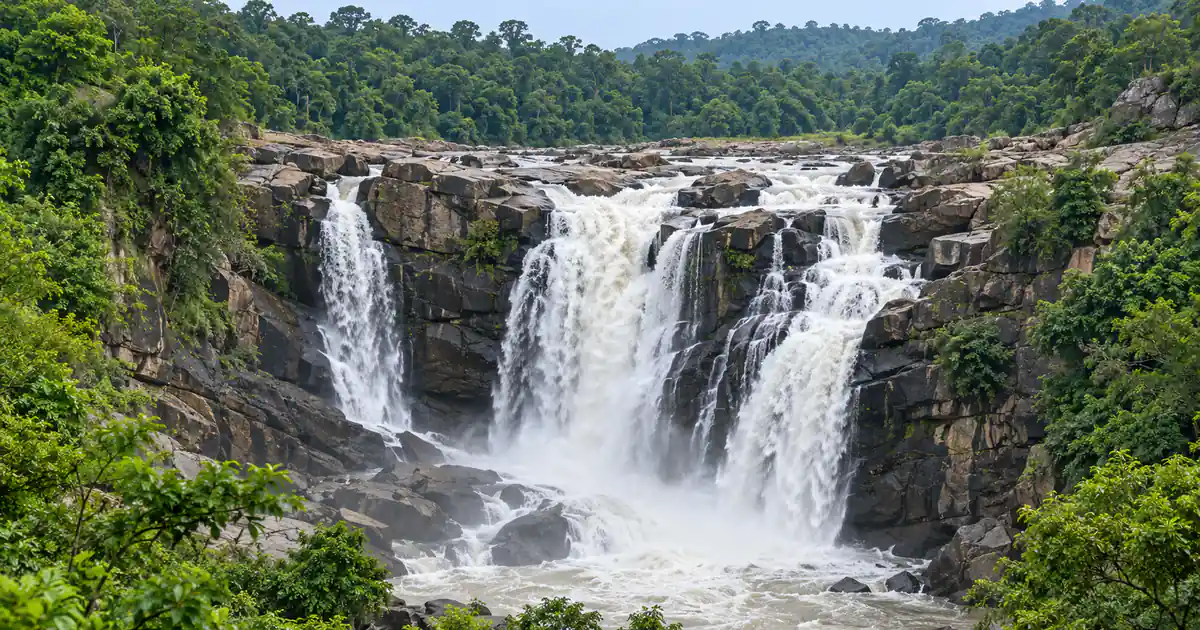
Ranchi earns its reputation as the City of Waterfalls from three dramatic plateau cascades (Hundru, Jonha, and Dassam) carved within an hour’s drive of the city centre along granite escarpments of the Chota Nagpur Plateau. Linking them into one clockwise loop covers 130 km and saves hours of backtracking across Jharkhand’s rural highways.
Plan at a Glance
- Operating Hours: 6:00 AM to 5:00 PM at Jonha; 8:00 AM to 5:00 PM at Hundru and Dassam.
- Entry & Parking: Nominal local upkeep fee of ₹10 to ₹20 per person plus ₹30 to ₹50 four-wheeler parking.
- Step Warning: Descending to the base pool requires roughly 700–745 steps at Hundru, 722 at Jonha, and 185–350 at Dassam.
- Smartest Order: Start at Hundru at 8:00 AM via Ormanjhi-Sikidiri, cross to Jonha by noon, and finish at sunset-lit Dassam off NH-33.
The Complete Ranchi Waterfalls Circuit Matrix
Every cascade surrounding Jharkhand state capital differs sharply in vertical plunge, stair gradient, river basin, and highway corridor. Planning your stops with step counts in mind prevents knee fatigue from cutting short your afternoon views.
| Waterfall Name | River Source | Drop Height | Distance from Ranchi | Stair Count | Entry Fee | Gate Timings |
|---|---|---|---|---|---|---|
| Hundru Falls | Subarnarekha River | 98 m (320 ft) | ~39–45 km Northeast | ~700–745 Steps | ₹10–₹20 | 8:00 AM – 5:00 PM |
| Jonha (Gautamdhara) | Raru River | 43 m (150 ft) | ~40–43 km East | ~722 Steps | ₹10–₹20 | 6:00 AM – 5:00 PM |
| Dassam Falls | Kanchi River | 44 m (144 ft) | ~40 km Southeast | ~185–350 Steps | ₹10–₹20 | 8:00 AM – 5:00 PM |
| Panchghagh Falls | Banai River | Tiered Rapids | ~55 km South (Khunti) | ~50 Steps | ₹10–₹15 | 7:00 AM – 5:00 PM |
| Hirni Falls | Ramgarha River | 37 m (121 ft) | ~68 km South | ~150 Steps | ₹15 | 7:00 AM – 5:00 PM |
Local village tourism committees (Paryatan Mitra volunteers) maintain ticket gates, viewpoints, and parking yards at each waterfall. Carry ₹10 and ₹20 currency notes because rural forest hills rarely maintain consistent mobile payment reception inside deep gorges.
Choosing Three vs Five Falls
Unless you stay in Ranchi for a full weekend, limit a single day trip to Hundru, Jonha, and Dassam so you finish every stair climb comfortably before dusk. Panchghagh and Hirni sit farther south toward Khunti and West Singhbhum and pair better with an overnight forest drive.
Hundru Falls: Subarnarekha Gorge and the Sikidiri Shortcut
Standing 98 metres (320 feet) tall on the Subarnarekha River, Hundru ranks among eastern India’s tallest single-drop cascades and forms the logical morning anchor of any circuit. Water spills over fractured granite bedrock into a deep emerald pool flanked by shaded cliff boulders.
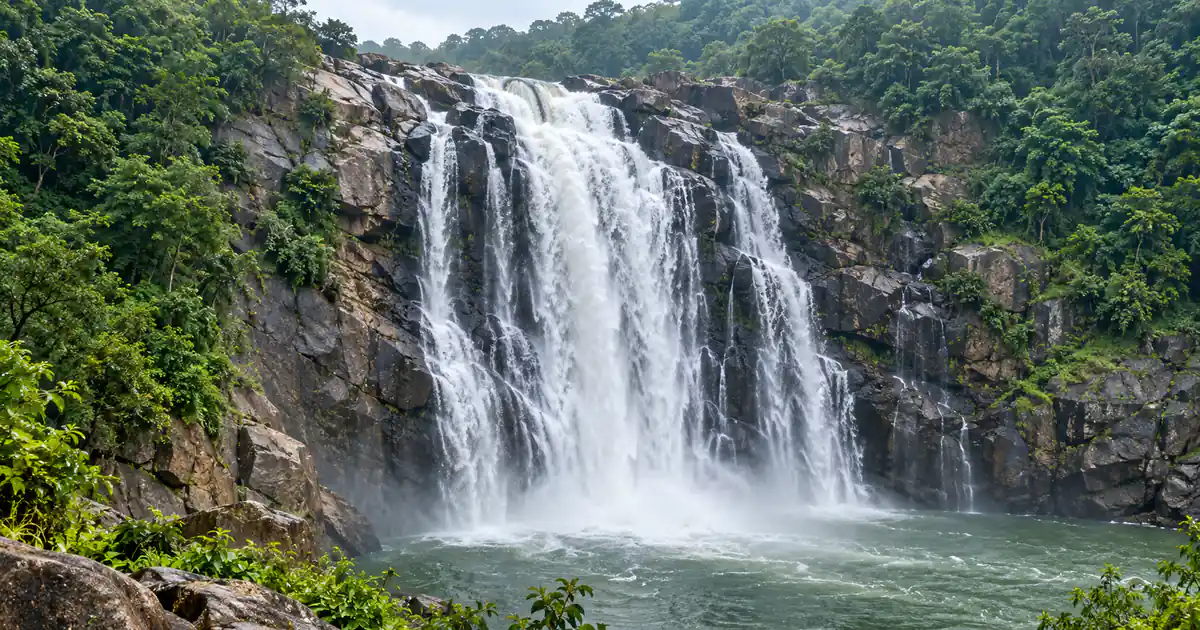
Historically, buses reached Hundru along the slower Ranchi-Purulia Road, whereas travellers today save time via the smooth four-lane Ormanjhi–Sikidiri expressway spur (roughly 39 km). Reaching the ticket gate right around 8:00 AM puts you on the upper viewing terraces while mist still rises off the gorge and before weekend picnic groups fill the railings.
Navigating the 745 Concrete Steps
Nearly 700 to 745 steep steps zig-zag down the canyon wall to the river boulder bed, lined with steel handrails, small rest benches, and tea stalls selling hot chai and salted chana.
Elderly visitors and families with toddlers often enjoy panoramic angles from the upper railings alone, reserving full gorge climbs for hikers who can compare these drops with Chitrakote and Tirathgarh falls in Bastar. Official district notices are posted on the Ranchi district tourism page.
Jonha Falls (Gautamdhara): Raru Basin Steps and Shrines
Located 43 km east of Ranchi off the Purulia highway near Jonha railway station, Jonha Falls (also called Gautamdhara) tumbles 43 metres into the wooded Raru River valley where the Gunga and Raru streams converge. Because the staircase begins beside a small hilltop Buddhist shrine linked by local lore to Lord Buddha, the gorge holds dual cultural and scenic appeal.
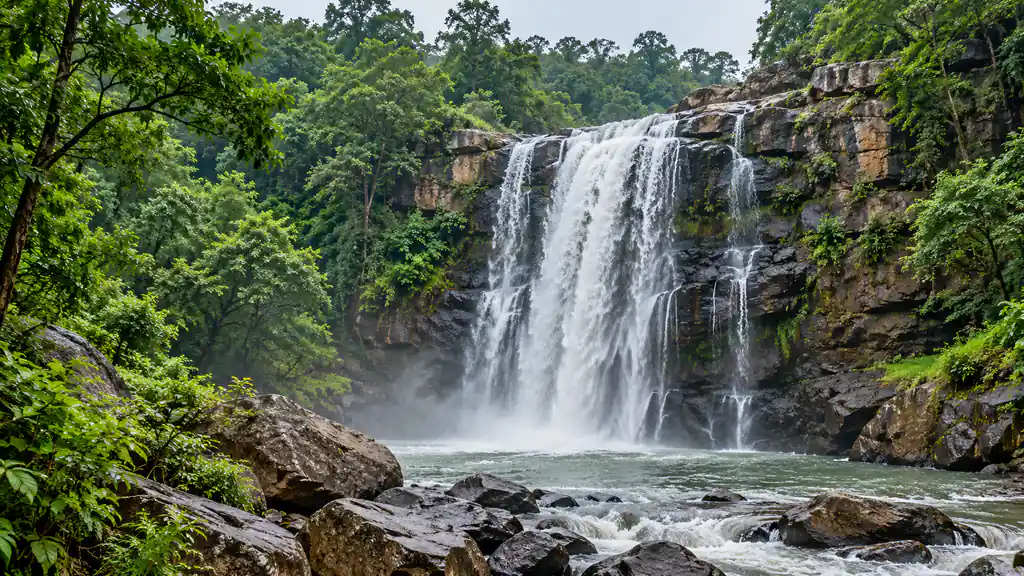
Unlike wide open rock faces elsewhere on the plateau, Jonha sits tucked inside dense sal and bamboo cover that keeps the 722-step stairway naturally shaded even at midday. Near the base, stone-banked channels allow safe paddling along shallow side eddies far from the roaring plunge pool.
Village Shrines and Train Access
At the summit beside the parking square sits an ashram shrine housing Buddha statues and simple rural eateries serving rice meals and pitha snacks. Weekend day-trippers without hired cars can catch early passenger trains from Ranchi Junction to Jonha Station and walk 1.5 km downhill, much like pilgrims heading onward to Shikharji in northern Jharkhand.
Dassam Falls: Ten Kanchi Cascades off NH-33
Forty kilometres southeast of Ranchi near Tamar town along the four-lane Ranchi–Jamshedpur Highway (NH-33), Dassam Falls splits the Kanchi River across ten wide parallel streams (the name derives from the Mundari word Da:Song, meaning pouring water). Spreading across stepped slate shelves rather than one narrow chute, Dassam delivers dramatic wide-angle reflections toward late afternoon.
Compared to Hundru and Jonha, Dassam requires far less stamina: roughly 185 to 350 wide masonry steps descend past guarded viewpoints directly facing the ten roaring curtains. That gentle climb makes Dassam the easiest finale of a tired afternoon before joining NH-33 straight back to Ranchi city.
Hidden Currents and Observation Decks
Deceptively calm surface pools right below Dassam conceal ferocious swirling currents that claim careless swimmers every monsoon. Always stay behind painted red warning lines on upper and lower observation balconies; travellers craving multi-day plateau scenery often pair Ranchi with Betla National Park and Netarhat on the western escarpment.
One-Day Circuit Order, Cab Fares, and Road Conditions
Driving the triangle counter-clockwise or clockwise matters hugely because Hundru and Jonha sit east of Ranchi while Dassam anchors the southern highway corridor. Tackling Hundru first at 8:00 AM keeps your steepest climb in cool morning shade and lets you return via smooth four-lane NH-33 asphalt before dusk.
- 8:00 AM (Ranchi to Hundru, 39 km via Ormanjhi-Sikidiri): Take NH-20 north toward Ormanjhi, turn east onto the smooth Sikidiri road, and descend before tour buses arrive.
- 11:15 AM (Hundru to Jonha via Sikidiri-Silli Link, 30 km): Cross quiet rural tarmac through bamboo ridges directly south toward Jonha village, stopping for simple thali lunch at Jonha gate stalls.
- 2:00 PM (Jonha to Dassam via Angara-Bundu Bypass, 45 km): Rejoin the main Ranchi-Purulia road briefly or cut across Bundu toward Tamar on NH-33.
- 4:30 PM (Dassam to Ranchi via NH-33, 40 km): Glide back on wide four-lane expressway right past Namkum into Ranchi city by 5:45 PM.
Full-day hatchback or sedan taxis chartered from Ranchi Junction or Birsa Munda Airport typically cost ₹2,500 to ₹3,200 (covering roughly 130–140 km and 9 hours), while larger SUVs run ₹3,800 to ₹4,500. Consult Incredible India’s Jharkhand guide and the dedicated Ranchi city portal for seasonal state tourism updates, or extend your eastern state travels toward Baidyanath Dham in Deoghar.
Public Transit Limitations
Shared autos and state buses reach Ormanjhi, Angara, and Bundu, yet leave final 6 to 12 km link lanes unserved inside forest hill pockets. Hiring a dedicated taxi or riding your own two-wheeler remains essential if you plan to finish all three cascades in a single day.
Best Season, Flash-Flood Safety, and Extended Plateau Trips
Water volume, trail friction, and afternoon light transform completely between monsoon storms and crisp winter sunshine across the Chota Nagpur Plateau. Pick your travel window depending on whether you value thundering spray or dry cliffside steps.
- October to February (Peak Season): Clear turquoise pools, crisp 12°C–24°C daytime weather, dry concrete stair steps, and lush green hills make winter unbeatable for families and photographers.
- July to September (Monsoon Peak): Full-capacity torrents crash across all ten streams at Dassam and flood Hundru’s gorge floor, though stair handrails get slick and flash currents trigger periodic lower-pool closures.
- March to June (Dry Summer): Midday temperatures pass 38°C across exposed plateau stone and water flow narrows considerably by May, restricting visits to sunrise hours.
Wear high-traction rubber trekking sandals or trail sneakers with firm grip rather than smooth leather flip-flops, and heed Paryatan Mitra whistles whenever upstream rain clouds darken the valley. Fans of South India’s lush monsoon gorges who enjoy comparing seasonal flow will find similar steep staircases along post-monsoon cascades at Mallalli Falls in Coorg.
Frequently Asked Questions About Ranchi Waterfalls
Can I cover Hundru, Jonha, and Dassam Falls in one day?
Yes. Starting from Ranchi at 7:15 AM in a private cab lets you explore Hundru first, drive across to Jonha by late morning, and finish at Dassam by 4:30 PM before returning via NH-33.
How many stairs are there at Hundru, Jonha, and Dassam Falls?
Hundru Falls descends roughly 700 to 745 steps, Jonha Falls counts about 722 shaded stone steps, and Dassam Falls requires a shorter climb of 185 to 350 steps depending on which deck you choose.
What is the best month to visit Ranchi waterfalls safely?
October through February delivers ideal conditions: strong post-monsoon river currents remain active while dry stairs, bright visibility, and cool daytime temperatures ensure safe trekking.
Is swimming permitted inside Hundru or Dassam plunge pools?
No. Swimming directly under Hundru, Jonha, or Dassam falls is strictly discouraged due to submerged granite rocks, sudden whirlpools, and seasonal flash-flood surges; stick strictly to shallow supervised edges.
What does a full-day taxi from Ranchi for all three waterfalls cost?
Expect ₹2,500 to ₹3,200 for a round-trip hatchback or sedan covering around 130–140 km across the full day, and ₹3,800 to ₹4,500 for an SUV such as an Innova or Ertiga.