Chitrakote Falls & Tirathgarh Waterfalls Bastar: Travel Guide
Plan your trip to Chitrakote Falls and Tirathgarh Waterfalls in Bastar with our guide to boating, timings, entry tickets, routes, and best seasons.
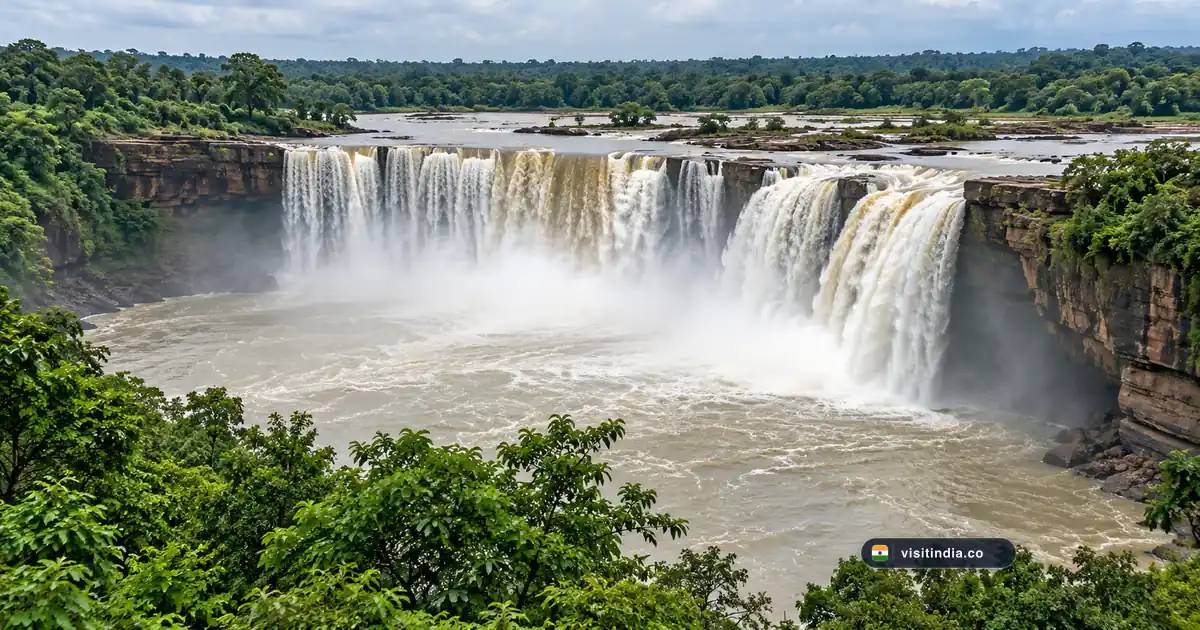
The deep river gorges of the Bastar plateau shelter some of peninsular India’s most dramatic hydrological spectacles. Carved by the perennial currents of the Indravati and Mungabahar rivers, these geological formations combine immense volumetric power with stepped cascades framed by dense sal and teak woodlands.
For travelers exploring the diverse wonders of central India, the legendary chitrakote waterfalls bastar circuit reveals nature at its most raw and captivating. From the roaring 300-meter-wide horseshoe curtain of Chitrakote to the tranquil multi-tiered rock shelves of Tirathgarh, this journey offers an unforgettable eco-adventure.
Waterfall & Safari Essentials
- Chitrakote Falls is located 38 kilometers west of Jagdalpur on the Indravati River, dropping 30 meters across a 300-meter-wide horseshoe cliff.
- Tirathgarh Falls sits 35 kilometers southwest of Jagdalpur inside Kanger Valley National Park, tumbling 91 meters across stepped rock blocks.
- Visiting hours for Chitrakote run daily from 6:00 AM to 6:00 PM with free entry, while Tirathgarh operates from 8:00 AM to 4:00 PM with park entry fees.
- Local fishermen operate country boat excursions to the mist zone at Chitrakote Falls for ₹50 to ₹100 per passenger depending on seasonal river volume.
- Peak monsoon from July to October delivers maximum thunderous volume, whereas winter from November to February brings calm turquoise waters ideal for boat rides.
Hydrological Geology: Indravati Horseshoe and Mungabahar Tiers
Chitrakote and Tirathgarh owe their contrasting aesthetics to the varied quartzite and sandstone geomorphology of the Bastar plateau. Chitrakote forms where the broad Indravati River abruptly plunges off a 30-meter-high horseshoe ledge, while Tirathgarh develops where the Mungabahar River slices through stepped terraces in the Kanger limestone valley.
These formations reflect millions of years of river erosion across ancient sedimentary beds. Similar to the dramatic cascades found along the Ranchi waterfalls circuit in eastern India, Bastar’s hydrology creates stepped escarpments that interrupt the flat plateau terrain.
The Indravati River Basin and Horseshoe Sandstone Shelf
Originating in the Eastern Ghats of Odisha, the Indravati River cuts across the forested Bastar plateau before dropping over a 300-meter-wide sandstone precipice at Chitrakote. The riverbed broadens dramatically above the drop, spreading over horizontal rock ledges.
During high-water stages, the river carries heavy loads of silt, giving the plunging curtain a distinctive reddish-ochre coloration. The sheer force of the falling water has excavated a deep circular plunge pool at the base of the gorge, bordered by boulders and dense riverine thickets documented by the Incredible India national tourism portal.
Mungabahar River and the Stepped Terraces of Tirathgarh
The Mungabahar stream flows quietly through dense sal jungles within Kanger Valley before fracturing into dozens of milky white chutes that tumble down 91 meters of stepped rock ledges. The underlying rock consists of fractured sandstone blocks interspersed with shale layers.
Because the river descends over multiple distinct terraces rather than a single vertical drop, the water churns into fine white froth. This frothy appearance gives Tirathgarh its popular local description as a milky cascade spilling across ancient stone steps.
| Waterfall Feature | Chitrakote Falls | Tirathgarh Falls |
|---|---|---|
| Feeding River | Indravati River (Godavari basin) | Mungabahar River (Kanger tributary) |
| Total Height Drop | 29 to 30 meters (single plunge) | 91 meters (stepped multi-tier) |
| Monsoon Width | Approximately 300 meters | 30 to 45 meters across channels |
| Geological Bed | Horizontal Indravati sandstone shelf | Fractured quartzite and shale terraces |
| Water Color Pattern | Ochre-red in monsoon, turquoise in winter | Foaming white across all seasons |
Chitrakote Falls: The Niagara of India Travel Experience
Visiting Chitrakote Falls offers viewing platforms perched along the cliff rim, gentle descending trails to the riverside, and thrilling wooden country boat excursions into the swirling mist below the drop. Travelers exploring the broader places to visit in Chhattisgarh guide discover that this natural spectacle serves as the state’s signature landmark.
The expansive scale of the horseshoe cliff makes Chitrakote feel vast and elemental. Visitors can experience the site from elevated cliff gazebos or descend stone staircases to feel the cool spray along the riverbank.
Viewing Platforms, Cliff Paths and Sunset Panoramas
Paved walkways and stone gazebos constructed along the southern bluff allow visitors to view the full horseshoe curve from above, catching dramatic golden-hour reflections at sunset. The panoramic trail wraps around the perimeter of the gorge.
Early morning visits reward photographers with mist rising from the gorge floor as the first rays of sunlight illuminate the forest canopy. In the late afternoon, the sun dips directly behind the cascading curtain, casting brilliant rainbow arcs across the rising vapor.
Country Boat Rides into the Misty Spray Zone
During winter and post-monsoon months, experienced boatmen row small wooden skiffs right into the spray zone below the falls, giving passengers an exhilarating water-level perspective for ₹50 to ₹100 per person. Life jackets are provided by the local boatmen cooperative.
From the water, the sheer scale of the sandstone amphitheater becomes awe-inspiring. The wooden boat bobs gently across the churning currents as droplets of spray drench passengers, offering an intimate encounter with the river’s power as described on the District Administration Bastar Chitrakote portal.
Evening Floodlight Illumination and Riverside Photography
After dusk, high-intensity colored floodlights project across the water curtain, transforming the falling Indravati River into an illuminated spectacle viewable directly from the resort rim. The light show operates daily from roughly 7:00 PM to 8:30 PM.
The illuminated water glows in rotating shades of green, gold, and blue against the ink-black night sky. Staying overnight at the adjacent bluff cottages allows travelers to enjoy the illuminated view from their private verandas while listening to the deep roar of the river.
| Activity / Service | Operational Timings | Typical Rate / Ticket | Notes & Recommendations |
|---|---|---|---|
| Clifftop Viewpoints | 6:00 AM to 6:00 PM | Free entry | Open to all visitors; paved trails |
| Country Boat Excursions | 7:00 AM to 5:00 PM | ₹50–₹100 per passenger | Weather permitting; winter only |
| Floodlight Illumination | 7:00 PM to 8:30 PM | Free to view from bluff | Operated by state tourism department |
| Dandami Resort Dining | 7:30 AM to 10:00 PM | ₹250–₹500 per meal | Overlooks the gorge; regional cuisine |
Tirathgarh Falls: Cascading Terraces in Kanger Valley
Tirathgarh Falls cascades down multiple distinct rock shelves inside Kanger Valley National Park and Kutumsar Caves, where visitors descend over 100 stone steps to explore lower pool viewing areas and cross rustic footbridges. A small medieval Shiva-Parvati shrine rests directly on a natural rock shelf opposite the primary cascade.
The surrounding forest creates a tranquil, secluded atmosphere very different from the open expanses of Chitrakote. Towering sal and bamboo groves shade the rocky trail down into the gorge.
Steep Stone Stairs and Descent to the Lower Pools
A well-maintained flight of stone stairs descends roughly 100 meters down the rocky gorge wall, allowing travelers to reach the splash pool and natural viewing boulders below. Handrails line the steeper stair sections for visitor safety.
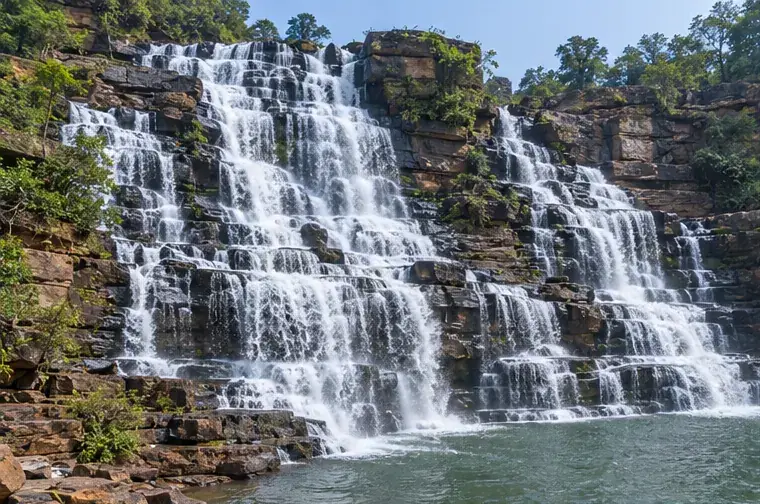
Descending the stairs brings you progressively closer to the rushing water, with each landing revealing a different angle of the multiple chutes. At the bottom, wooden walkways and stepping stones guide visitors across clear forest streams fed by the falls, verified by the District Administration Bastar tourism directory.
Ancient Shiva-Parvati Shrine on the Mid-Tier Rock
Centuries-old stone idols of Lord Shiva and Goddess Parvati occupy a whitewashed open shrine midway down the cliff, where local pilgrims offer forest flowers amid the rushing spray. Devotees pause here to offer prayers before continuing their descent.
The temple adds a peaceful spiritual element to the natural setting. During regional festivals like Mahashivratri, village families from neighboring forest settlements walk down into the gorge to perform ritual ablutions and seek divine blessings beside the sacred cascade.
Safety Protocols, Current Risks and Rock Ledge Advisory
The sandstone rocks around the waterfall are extremely slippery due to algae; visitors must avoid swimming near deep underwater currents and remain behind designated warning barriers. Flash floods can occur rapidly following heavy rain upstream.
Forest department signboards clearly mark zones where standing or bathing is prohibited. Travelers should wear sturdy walking shoes with rubber grip soles, hold onto handrails, and supervise children closely along all open rock ledges.
Caution
Tirathgarh Safety Advisory and Walking Profile
- Slippery Surfaces: Wet algae on horizontal rock ledges makes surfaces hazardous; never climb beyond perimeter fences for photography.
- Physical Exertion: The return climb up 100+ stone steps requires moderate cardiovascular stamina; take periodic rests at shaded landings.
- Park Gate Curfew: Visitors must clear the Kanger Valley National Park forest barrier by 4:30 PM before dusk falls across the jungle tracks.
Secluded Bastar Cascades: Tamra Ghoomar and Mandwa Falls
Beyond the signature twin falls, Bastar harbors quiet forested cascades including Tamra Ghoomar, which plunges 35 meters into a narrow green canyon just 12 kilometers from Chitrakote, and Mandwa Falls, which spills across wide stone steps near the Jagdalpur-Tokapal route. These secluded spots offer peaceful day hikes without crowd congestion.
Adding these lesser-known waterfalls to your travel schedule reveals Bastar’s undisturbed rural charm. Small tribal hamlets and quiet streams line the connecting country roads.
The Deep Forest Canyon of Tamra Ghoomar
Tamra Ghoomar falls off a sharp horseshoe cliff into a deeply eroded forest valley, creating an untouched amphitheater populated by migratory songbirds and lush sal trees. The water drops cleanly into a narrow canyon floor hidden far below the rim.
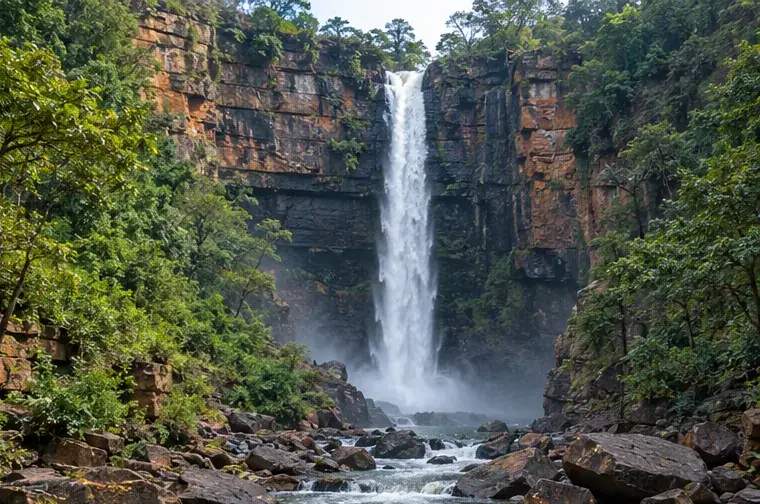
A simple clifftop viewpoint provides panoramic views across the forested abyss. Because commercial tourist facilities have not been built here, the site preserves an air of peaceful wilderness, perfect for contemplative nature walks.
Mendri Ghoomar and Seasonal Monsoon Plunges
Located nearby along the scenic rural ridge, Mendri Ghoomar bursts into life during the monsoon rains, dropping into an emerald gorge surrounded by rolling tribal farmlands. During winter, the waterfall dries to a gentle trickle, revealing dramatic rock formations.
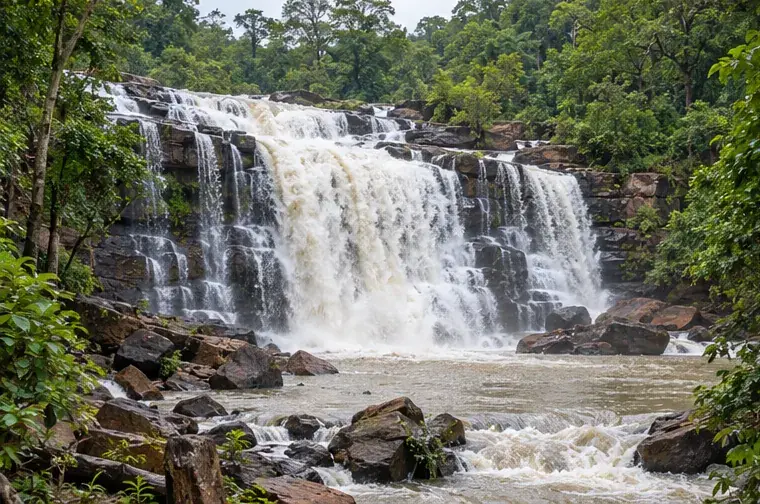
The drive between Chitrakote, Tamra Ghoomar, and Mendri Ghoomar traverses peaceful rural countryside where farmers cultivate paddy fields using traditional wooden ploughs. Country roads are paved and easily navigated by private vehicles or hired two-wheelers.
Mandwa Falls and Secluded Stream Treks
Mandwa Falls drops roughly 20 meters across wide granite shelves into a calm natural pool, providing an uncrowded picnic setting for families traveling southwest of Jagdalpur. The waterfall sits roughly 35 kilometers from the district headquarters.
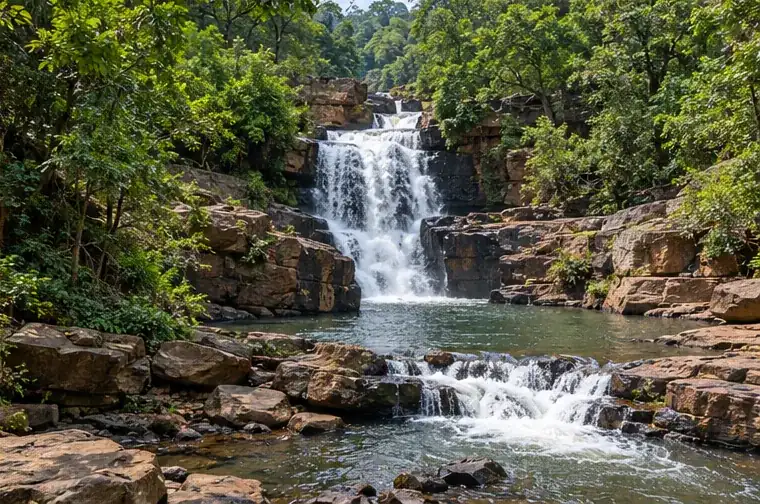
Visitors can walk along the rocky stream banks, explore shallow side channels, and observe forest butterflies fluttering along the damp river sands. Local villagers often guide travelers along safe footpaths through the surrounding teak woodland.
| Lesser-Known Cascade | Distance from Jagdalpur | Drop Height | Best Visiting Window | Highlights |
|---|---|---|---|---|
| Tamra Ghoomar | 45 km (12 km from Chitrakote) | 35 meters | July to November | Deep wooded canyon, untouched scenery |
| Mendri Ghoomar | 43 km (near Tamra Ghoomar) | 40 meters | August to October | Dramatic rainy-season drop, rural views |
| Mandwa Falls | 35 km (Tokapal tehsil) | 20 meters | August to December | Stepped rock shelves, shaded picnic clearings |
| Kanger Dhara | 36 km (inside Kanger Valley) | 10 meters | October to March | Cascading limestone rapids, jungle hiking |
Seasonal Planning: Monsoon Thunder vs Winter Turquoise Clarity
The ideal time to visit Bastar’s waterfalls depends on traveler preferences: July through October provides thunderous muddy-brown surges spanning 300 meters across Chitrakote, while November through February brings tranquil turquoise waters, safe boat rides, and comfortable 25°C daytime weather across both sites.
Timing your visit to align with your personal travel goals guarantees the best experience. Those who value photography of monumental water volume should brave the monsoon, while leisure travelers will appreciate the crisp winter season.
Monsoon Surge: July to October Flood Conditions
Heavy rainfall in the Eastern Ghats fills the Indravati River to maximum capacity, turning Chitrakote into an awe-inspiring wall of sound and spray that shakes the surrounding cliff edge. The waterfall spans its complete 300-meter horseshoe breadth.
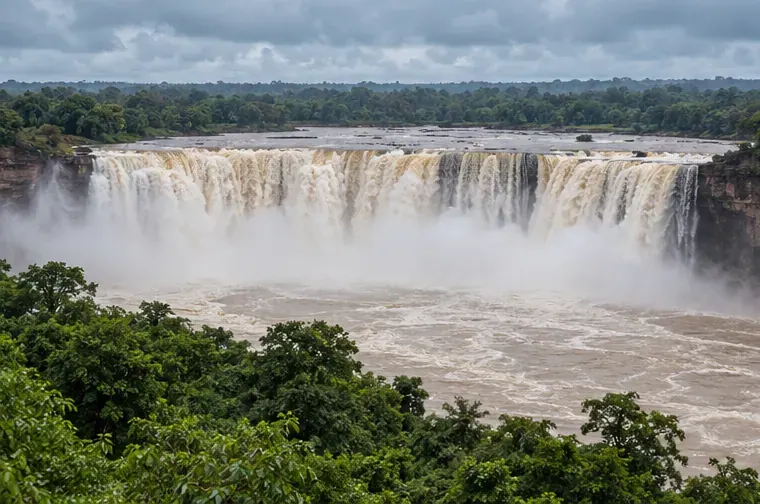
Visitors during these months will find boat rides suspended due to turbulent currents and high water levels. However, the sheer grandeur of the roaring brown torrent framed by emerald green forests creates world-class landscape photography. Travelers can also time their trip with the spirited Bastar Dussehra celebrations in Jagdalpur which occur from August to October.
Winter Window: November to February Boating and Hiking
As monsoon runoff subsides, water clarity returns, and calm weather permits wooden boat rides right to the foot of Chitrakote and leisurely descents down Tirathgarh’s stairways. Daytime temperatures hover comfortably between 20°C and 26°C.
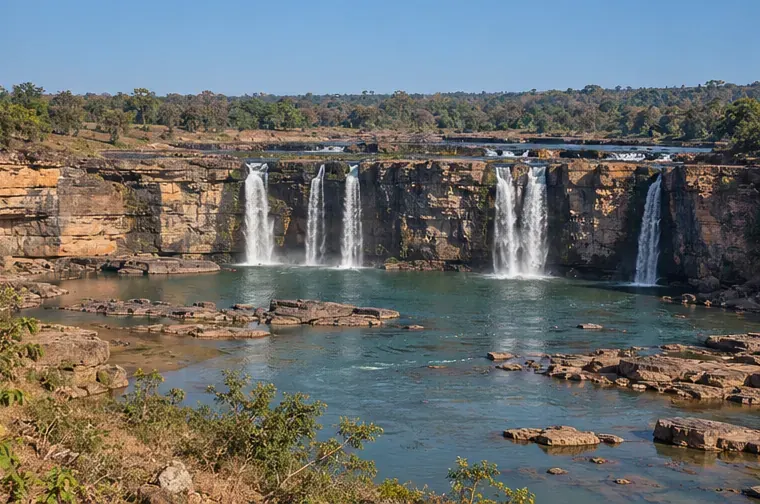
During these months, the Indravati River clears to a striking pale green and turquoise hue, splitting into multiple graceful streams over the sandstone ledge. This season offers ideal conditions for family vacations, cave visits, and relaxed riverfront walks.
Summer Realities: April to June Flow Reductions
Summer temperatures often climb above 40°C in Bastar, causing the Indravati flow to narrow into distinct trickles and significantly reducing water volume at Tirathgarh. Walking across unshaded stone paths becomes physically demanding in the midday heat.
While dedicated travelers can still visit the sites, the visual impact is considerably diminished compared to the cooler months. If visiting during summer, schedule outdoor sightseeing strictly during the early morning hours between 6:00 AM and 9:00 AM.
| Month Range | Weather Conditions | Chitrakote Character | Tirathgarh Character | Overall Recommendation |
|---|---|---|---|---|
| July to Sep | Heavy rain, 25°C–30°C | Roaring 300 m brown curtain | Thunderous foaming flow | Outstanding for dramatic volume |
| Oct to Nov | Mild rain, 22°C–28°C | Clearing waters, wide flow | Full tiered cascades | Highly recommended for all travelers |
| Dec to Feb | Pleasant, 12°C–26°C | Turquoise streams, boating | Clear cascading pools | Best for families and boat rides |
| Mar to Jun | Hot & dry, 28°C–42°C | Narrow separate streams | Reduced flow trickles | Low season; early mornings only |
Travel Logistics: Transport, Route Linking and Forest Lodging
Travelers access both waterfalls using Jagdalpur as their primary transit base. A paved 38-kilometer state road connects Jagdalpur to Chitrakote, while Tirathgarh lies 35 kilometers southwest along the Sukma highway, with comfortable lodging available at the cliffside Dandami Luxury Resort.
Planning transport and stays in advance ensures a relaxed journey through Bastar’s rural landscapes. The roads connecting major attractions are well-maintained and clearly signposted.
Reaching Jagdalpur, Chitrakote and Tirathgarh by Road
Taxis and private hire vehicles in Jagdalpur provide flexible transport to both waterfalls, with full-day return charters typically costing between ₹2,000 and ₹3,000 including waiting time. Hired vehicles can be arranged through local tour operators or hotel desks.
Travelers arriving from coastal Andhra Pradesh often arrive via the Araku Valley scenic passenger train route, which links Visakhapatnam to Jagdalpur through spectacular mountain tunnels. From Jagdalpur station, local auto-rickshaws and taxis provide immediate onward connections.
Connecting Chitrakote and Tirathgarh in a 1-Day or 2-Day Plan
A 2-day circuit is strongly recommended: spend Day 1 at Chitrakote and Tamra Ghoomar for sunset and night lights, and dedicate Day 2 to Tirathgarh and adjacent Kanger Valley caves. A single-day dash between both falls requires over 140 kilometers of driving and leaves little time to appreciate either site.
On Day 1, drive west from Jagdalpur to Chitrakote, stop at Tamra Ghoomar en route, take an afternoon boat ride, and stay overnight at the bluff. On Day 2, travel south into Kanger Valley to explore Kutumsar Cave in the morning and spend the afternoon at Tirathgarh Falls before returning to Jagdalpur.
Where to Stay: Dandami Luxury Resort and Forest Rest Houses
The Chhattisgarh Tourism Board operates the cliff-edge Dandami Luxury Resort directly overlooking Chitrakote Falls, while forest rest houses provide rustic stays inside Kanger Valley. Dandami Resort offers air-conditioned cottages, tented luxury suites, and a full-service multi-cuisine restaurant.
Booking Dandami Resort well in advance is essential during peak winter weekends and festive holiday periods. In Jagdalpur town, travelers will find several dependable mid-range hotels, while eco-resorts near the national park boundary cater to wilderness enthusiasts.
Pro Tip
Recommended 2-Day Bastar Waterfalls Itinerary
- Day 1: Chitrakote Exploration: Depart Jagdalpur at 9:00 AM; visit Tamra Ghoomar gorge; check in at Dandami Resort; take a 3:00 PM country boat ride; enjoy the 7:00 PM floodlight illumination.
- Day 2: Kanger Valley & Tirathgarh: Depart at 8:00 AM for Kanger Valley National Park; explore subterranean Kutumsar Cave; descend stone stairs at Tirathgarh Falls by 1:00 PM; return to Jagdalpur by 5:00 PM.
Frequently Asked Questions About Bastar Waterfalls
Why is Chitrakote Falls called the Niagara of India?
Chitrakote Falls is known as the Niagara of India because it forms a massive 300-meter-wide horseshoe-shaped curtain of water across the Indravati River during the monsoon season. Plunging roughly 30 meters over sandstone ledges, it is the widest natural waterfall in the country.
What is the best time of year to visit Chitrakote and Tirathgarh?
The best time to visit is from October to February when the weather is pleasantly cool and the waterfalls retain generous post-monsoon volume with clear waters. If you want to witness the waterfalls at their most thunderous and widest state, plan your trip between July and September.
How far is Chitrakote Falls from Jagdalpur?
Chitrakote Falls is situated 38 kilometers west of Jagdalpur town, taking approximately 45 to 50 minutes to reach via a smooth paved state highway. Regular private taxis, auto-rickshaws, and local buses operate daily along this route.
Can visitors take boat rides at the base of Chitrakote Falls?
Yes, local fishermen operate country boat rides during the winter and dry months when river currents are safe and calm. The boat ride takes passengers close to the misty spray zone below the falls for a nominal fee of ₹50 to ₹100 per person.
Is swimming permitted at Tirathgarh Waterfalls?
Swimming is strictly discouraged in the deep plunge pools of Tirathgarh due to hidden underwater rocks, strong currents, and slippery algae on stone surfaces. Visitors can safely wade in the shallow designated stream edges under the supervision of local guides.
Can you visit Chitrakote Falls and Tirathgarh Falls in a single day?
While it is possible to visit both waterfalls in a single day because they are separated by about 65 kilometers, splitting them across two days is much more enjoyable. A two-day itinerary allows you to explore nearby limestone caves at Kanger Valley and catch the evening illumination at Chitrakote.