Chhattisgarh Travel Guide: Bastar Waterfalls, Caves & Temples
Explore the best places to visit in Chhattisgarh with our travel guide covering Chitrakote Falls, Kanger Valley, Bhoramdeo Temple, and Bastar Dussehra.
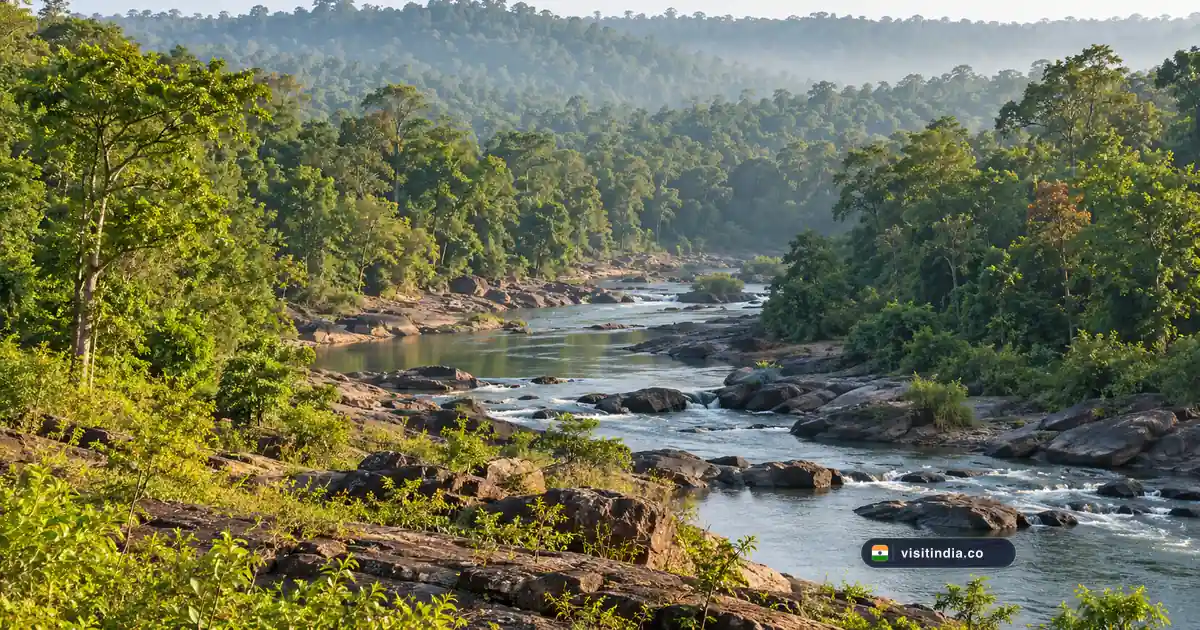
Chhattisgarh unfolds across the verdant heart of central India, where the fertile Mahanadi river basin meets the ancient sandstone plateaus of the Bastar highlands. Long known as the rice bowl of India, this landlocked state preserves extensive tropical forests, roaring river gorges, and an extraordinary indigenous cultural legacy that has flourished uninterrupted for millennia.
For travelers seeking authentic travel experiences off the well-trodden tourist trails, the diverse places to visit in chhattisgarh reveal an untouched frontier. From the sweeping horseshoe cascades of Chitrakote Falls to the intricately sculpted medieval sanctums of Bhoramdeo, Chhattisgarh delivers genuine natural wonder and deep cultural heritage.
State Overview & Travel Highlights
- Chhattisgarh spans 135,192 square kilometers across 33 administrative districts, with over 44 percent of its landmass under lush forest canopy.
- The state capital and primary commercial transit gateway is Raipur, served by Swami Vivekananda Airport and Raipur Junction railway station.
- Southern Bastar forms the ecological and indigenous heartland, anchored by the historic district headquarters of Jagdalpur along National Highway 30.
- Notable natural landmarks include Chitrakote Falls, known as the Niagara of India, and the subterranean limestone caverns of Kanger Valley National Park.
- Peak travel season extends from October to March, offering clear temperate skies, accessible jungle trails, and thriving post-monsoon waterfalls.
Geographic Landscape, Forest Corridors and Climate Realities
Chhattisgarh spans 135,192 square kilometers across central India, encompassing the fertile Mahanadi river basin, the rugged Maikal Hills to the northwest, and the dense Dandakaranya sal forest plateaus of Bastar to the south. With more than 44 percent forest canopy, the state features a tropical climate best explored between October and March when daytime temperatures range from 18°C to 28°C.
The geographic structure of Chhattisgarh creates three distinct ecological zones that dictate local travel routes and seasonal planning. Understanding these regional contrasts helps visitors navigate the varying terrain between the northern hill ranges and the deep southern valleys.
Three Natural Zones: North Hills, Central Plains and Bastar Plateau
Chhattisgarh naturally divides into the forested northern hills of Surguja, the agricultural central Mahanadi plains around Raipur and Bilaspur, and the southern Bastar plateau bordered by the Godavari basin. Each zone possesses a unique microclimate and topography.
The northern region rises toward the Chota Nagpur plateau and the Satpura ranges, characterized by deciduous hills and sal forests. The central plain forms an alluvial agricultural basin watered by the Mahanadi, Sheonath, and Hasdeo rivers. Southward, the Bastar plateau rises to an average elevation of 600 meters, carved by the mighty Indravati and Sabari river systems.
Seasonal Weather Windows and Monsoon Waterfall Surges
Winter between October and March offers cool, pleasant weather ideal for sightseeing, whereas the monsoon from July to September turns regional cascades into thunderous brown surges of maximum volume. Summer months from April to June bring dry heat with temperatures often surpassing 42°C.
Travelers prioritizing river boating and cave exploration should schedule visits between November and February when water levels stabilize. Conversely, photography enthusiasts who wish to witness the full breadth of forest waterfalls will find late August and September particularly rewarding, provided they navigate monsoon road conditions with care.
Forest Reserves and Indigenous Ecological Corridors
The state’s vast tropical deciduous forests sustain crucial tiger, leopard, and wild water buffalo corridors connecting central Indian reserves with the Eastern Ghats of Odisha and Andhra Pradesh. These woodlands harbor valuable timber species including teak, sal, bamboo, and mahua trees.
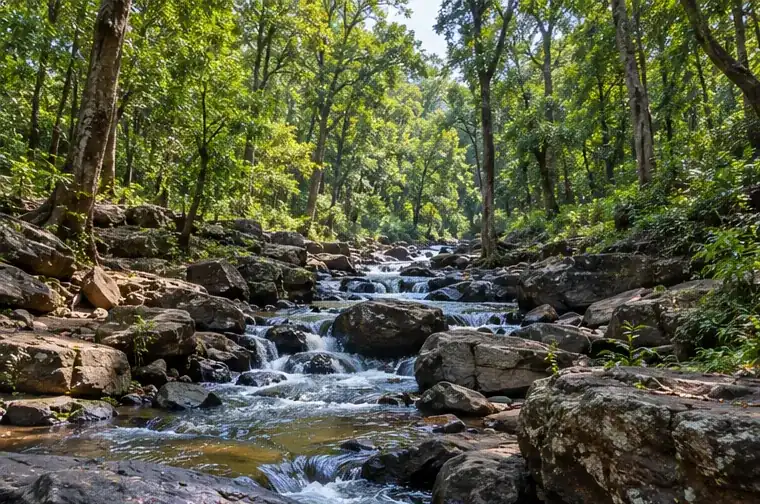
Wildlife enthusiasts frequently observe that these forested corridors connect directly with sanctuaries like the Bandhavgarh National Park safari ecosystem in neighboring Madhya Pradesh. Within Chhattisgarh, protected areas such as Achanakmar, Barnawapara, and Indravati National Park protect endangered species like the wild water buffalo (Bubalus arnee), the state animal.
| Geographic Zone | Key Districts | Topography & Elevation | Signature Attractions |
|---|---|---|---|
| Northern Hills | Surguja, Jashpur, Koriya | Undulating hill ranges (600–1,200 m) | Mainpat Tibetan settlement, Amrit Dhara Falls |
| Central Plains | Raipur, Durg, Bilaspur, Mahasamund | Flat alluvial basin (150–300 m) | Sirpur archaeological site, Barnawapara Sanctuary |
| Western Foothills | Kabirdham, Rajnandgaon | Maikal Range slopes (300–850 m) | Bhoramdeo Temple complex, Chilphi Ghati |
| Southern Bastar | Bastar, Dantewada, Sukma, Kanker | Dissected plateau (500–800 m) | Chitrakote Falls, Kanger Valley, Kutumsar Caves |
Top Places to Visit in Chhattisgarh: Essential Regional Highlights
The primary places to visit in Chhattisgarh center on the majestic waterfalls and cave sanctuaries in Bastar, alongside ancient architectural wonders in Kawardha and Mahasamund. Cultural festivals like the 75-day Bastar Dussehra and sacred pilgrimage shrines such as the Danteshwari Shaktipeeth in Dantewada complete the signature highlights.
Exploring Chhattisgarh requires a balanced itinerary that pairs southern eco-adventures with central heritage sanctuaries. Each highlight reflects a distinct chapter in central India’s natural and dynastic history.
Bastar Waterfalls and Subterranean Limestone Caverns
Bastar stands as the state’s foremost travel destination, where visitors encounter India’s widest waterfall at Chitrakote, multi-tiered cascades at Tirathgarh, and the subterranean stalactites of Kutumsar Cave. The region functions as an exceptional destination for geology lovers and nature photographers.
Jagdalpur serves as the logistical hub for exploring these natural formations. Located roughly 38 kilometers west of the town, Chitrakote Falls roars across sandstone cliffs, while Kanger Valley National Park protects untouched rainforest pockets and limestone cave networks that run hundreds of meters into subterranean darkness.
Medieval Stone Architecture at Bhoramdeo and Sirpur
Central Chhattisgarh preserves exquisite architectural heritage, from the intricately carved Nagara-style stone sanctums of Bhoramdeo in the Maikal foothills to the ancient Buddhist viharas and brick shrines of Sirpur. These monuments demonstrate sophisticated regional craftsmanship dating from the 7th through 11th centuries.
Sirpur, situated along the sacred Mahanadi River, was once a thriving cosmopolis where Buddhist monks, Hindu scholars, and Jain ascetics studied side by side. At Bhoramdeo, often called the Khajuraho of Chhattisgarh, erotic and devotional stone carvings ornament the exterior walls of an ancient Shiva temple built by the Phani Nagavanshi kings.
Sacred Shrines and Tribal Craft Centers of South Chhattisgarh
Dantewada houses the revered Maa Danteshwari Temple, recognized among the ancient 51 Shakti Peethas of India, while craft hamlets around Kondagaon and Jagdalpur display generational mastery in Dhokra metal casting and terracotta pottery. These sacred and creative hubs embody Bastar’s living traditions.
Pilgrims visit Dantewada to pay homage at the confluence of the Shankini and Dhankini rivers, where the divine tooth of Goddess Sati is believed to have fallen. In craft villages like Kumharpara, tribal artisans mold beeswax and clay molds to produce internationally acclaimed bronze sculptures using the ancient lost-wax casting technique.
| Destination | District | Category | Ideal Duration | Key Highlights |
|---|---|---|---|---|
| Chitrakote Falls | Bastar | Nature & Waterfalls | 1 Day | Horseshoe falls, river boating, sunset views |
| Kanger Valley | Bastar | Wildlife & Biosphere | 1–2 Days | Kutumsar Caves, Tirathgarh Falls, sal jungle |
| Bhoramdeo | Kabirdham | Heritage Architecture | 1 Day | 11th-century stone temple, Maikal hills |
| Sirpur | Mahasamund | Archaeology & Buddhism | 1 Day | 7th-century Lakshmana brick temple, viharas |
| Dantewada | Dantewada | Spiritual Pilgrimage | Half Day | Maa Danteshwari Temple, river confluence |
| Mainpat | Surguja | Hill Station & Culture | 1–2 Days | Tibetan monasteries, Tiger Point, Dhakpo Gompa |
Natural Wonders: Waterfalls, Gorges and Biosphere Sanctuaries
Chhattisgarh holds some of peninsular India’s most dramatic hydrological wonders, headlined by the Chitrakote Falls and Tirathgarh waterfalls on the Indravati River, which widens to nearly 300 meters during the monsoon. Within Kanger Valley, the multi-tiered Tirathgarh Falls drops over 90 meters across layered sandstone blocks, while underground cavern systems like Kutumsar, Dandak, and Kailash feature limestone speleothems and rare blind cave fauna.
The state’s river drainages carve dramatic canyons through ancient quartzite and sandstone formations. Bastar in particular features a concentration of waterfalls and karst formations unmatched in central India.
The Indravati River Gorge and Horseshoe Cascades
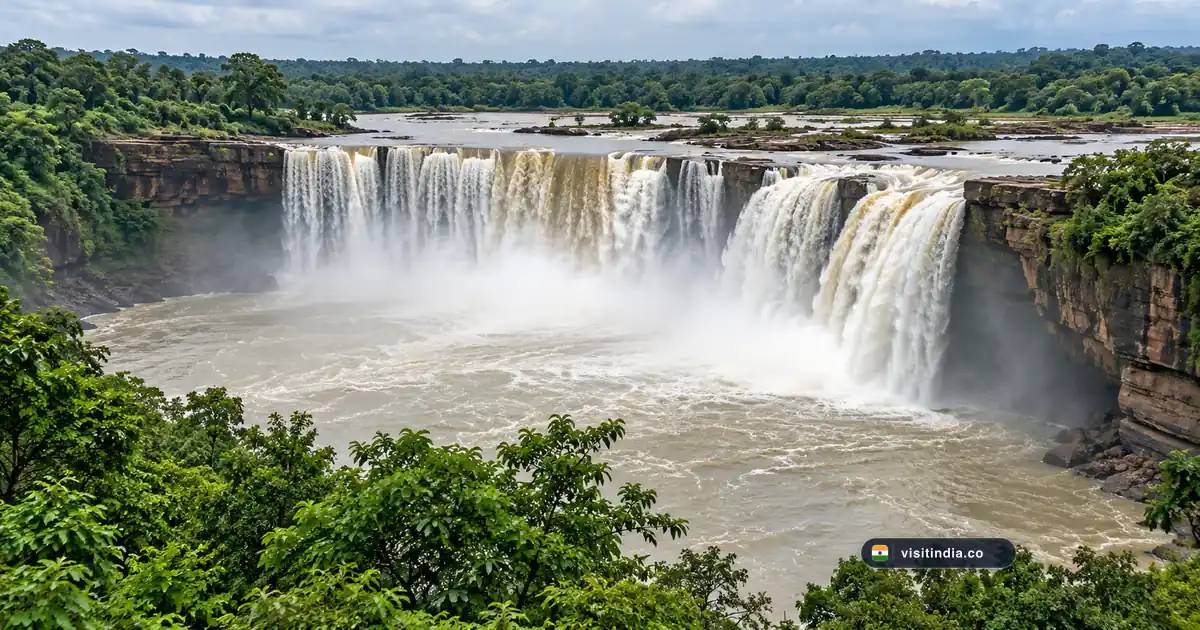
Chitrakote Falls plunges 30 meters off a horseshoe-shaped sandstone cliff, earning its reputation as the Niagara of India through its seasonal breadth and roar. The Indravati River flows quietly through dense forests before dropping over a broad precipice into a churning pool.
During the monsoon months from July to October, the river swells dramatically, covering the rocky ledges with a unified sheet of roaring water. In the winter months from November to February, the flow clears into separate streams of turquoise water, allowing local fishermen to navigate wooden country boats near the base of the spray, as highlighted on the Bastar District tourist portal.
Tirathgarh Falls and Kanger Valley Subterranean Caverns
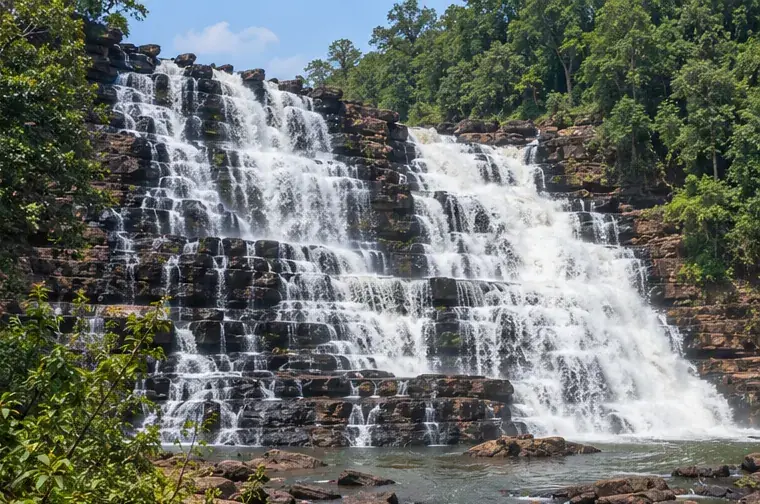
Tirathgarh Falls cascades down stepped rock terraces in Kanger Valley, leading toward subterranean caves where underground rivers carved massive stalactites and stalagmites over millennia. The white water tumbles across multiple distinct tiers, creating misty natural swimming pools surrounded by dense sal trees.
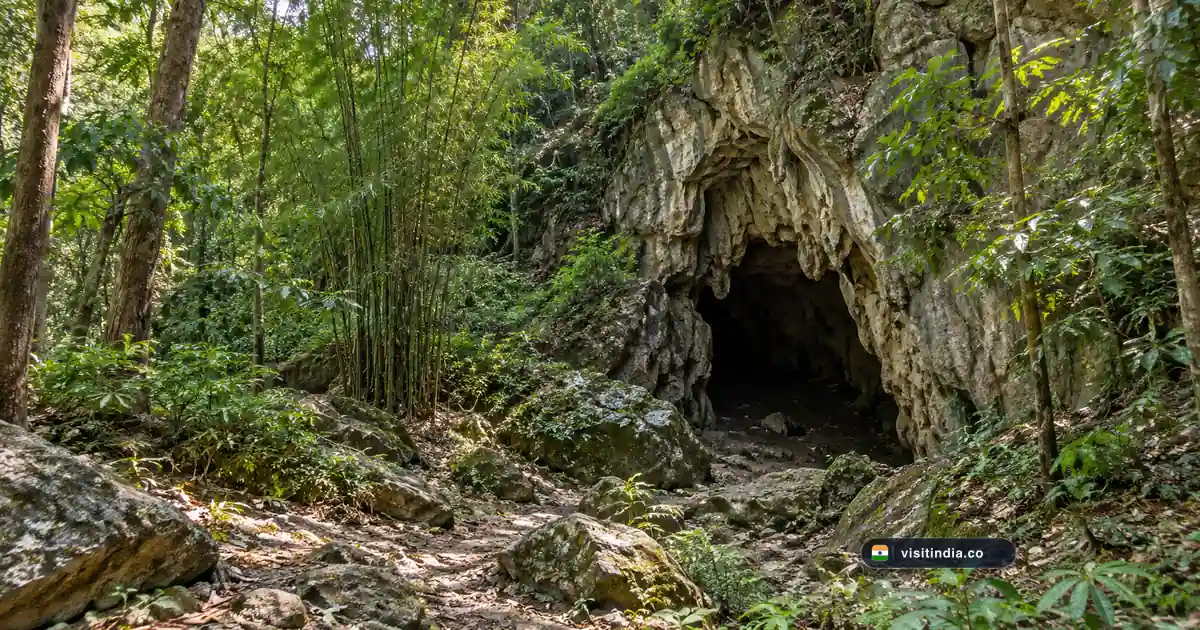
A short drive further into the park leads to Kutumsar Cave, discovered in the early twentieth century. Descending through a narrow vertical entrance into the cool limestone darkness, visitors walk along elevated walkways to observe towering calcite columns and subterranean pools that shelter Nemacheilus evezardi, a blind, pigmentless cave fish species.
Tamra Ghoomar, Mandwa and Forest Waterfalls
Surrounding Jagdalpur are secluded forest falls like Tamra Ghoomar, situated in a deep scenic valley, and Mandwa Falls, which plunges into a rocky natural pool popular for day treks. These lesser-visited sites offer tranquil alternatives to the major cascades.
Tamra Ghoomar drops roughly 35 meters into a lush green gorge framed by rocky bluffs and undisturbed tribal agricultural plots. Visiting these hidden falls provides travelers with peaceful viewpoints and opportunities to observe regional birdlife including kingfishers, racket-tailed drongos, and paradise flycatchers.
| Waterfall / Cave Site | River System | Height / Depth | Nearest Road Base | Entry Fee & Guide Rules |
|---|---|---|---|---|
| Chitrakote Falls | Indravati River | 30 m drop, 300 m width | Jagdalpur (38 km) | Free entry; boat rides ₹50–₹100 |
| Tirathgarh Falls | Kanger River tributary | 91 m multi-tiered drop | Jagdalpur (35 km) | Park entry ₹50; vehicle pass ₹150 |
| Kutumsar Cave | Subterranean karst | 35 m deep, 330 m walk | Jagdalpur (40 km) | Guide mandatory; entry ₹50–₹100 |
| Tamra Ghoomar | Forest drainage | 35 m single plunge | Jagdalpur (45 km) | Free entry; rustic parking |
| Dandak Cave | Kanger Valley karst | 25 m subterranean walk | Jagdalpur (42 km) | Forest permit required at barrier |
Heritage Circuits: Ancient Dynasties, Brick Temples and Buddhist Monasteries
Chhattisgarh’s architectural legacy bridges the ancient kingdoms of Dakshina Kosala and medieval Nagavanshi rulers. The Bhoramdeo Temple and Sirpur Buddhist circuit features the 7th-century red-brick Lakshmana Temple along the Mahanadi River, while Bhoramdeo Temple near Kawardha preserves exquisite Nagara-style stone friezes situated against the Maikal Range.
These stone and brick monuments demonstrate how central India acted as a cultural crossroads where architectural styles from northern and southern dynastic schools merged. Visitors discover an impressive collection of early medieval sculpture and monastic architecture.
The 7th-Century Brick Masterpiece of Sirpur
Sirpur represents one of India’s most significant early medieval archaeological complexes, distinguished by the intricately carved red-brick Lakshmana Temple and monumental monastic foundations. Built around 625–650 CE by Queen Vasata in memory of her husband King Harshagupta of the Somavamshi dynasty, the temple remains an engineering wonder.
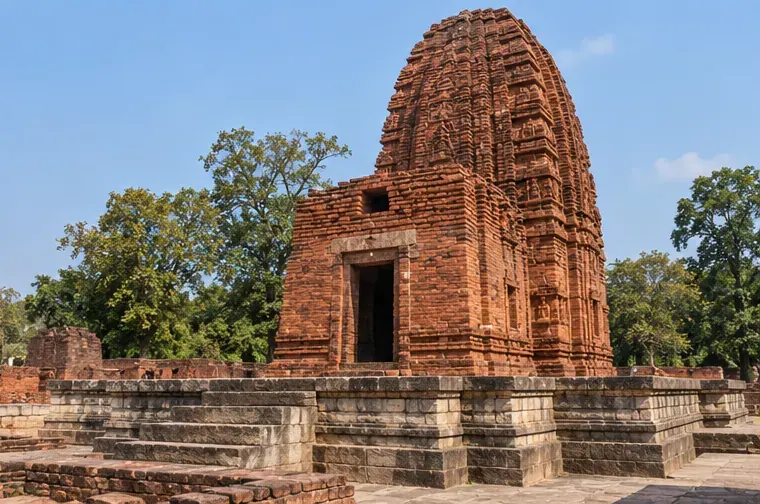
The monument stands on a high stone platform accessed by a flight of steps. Its sanctum doorway displays detailed stone carvings of Vishnu’s incarnations and river goddesses, detailed on the Mahasamund District Sirpur portal and conserved by the Archaeological Survey of India Raipur Circle.
Nearby excavations at Anandprabhu Kuti Vihar and Teevardev Mahavihar revealed residential monasteries where Chinese pilgrim Xuanzang recorded an active community of Mahayana scholars.
Nagara Carvings of the Bhoramdeo Temple Complex
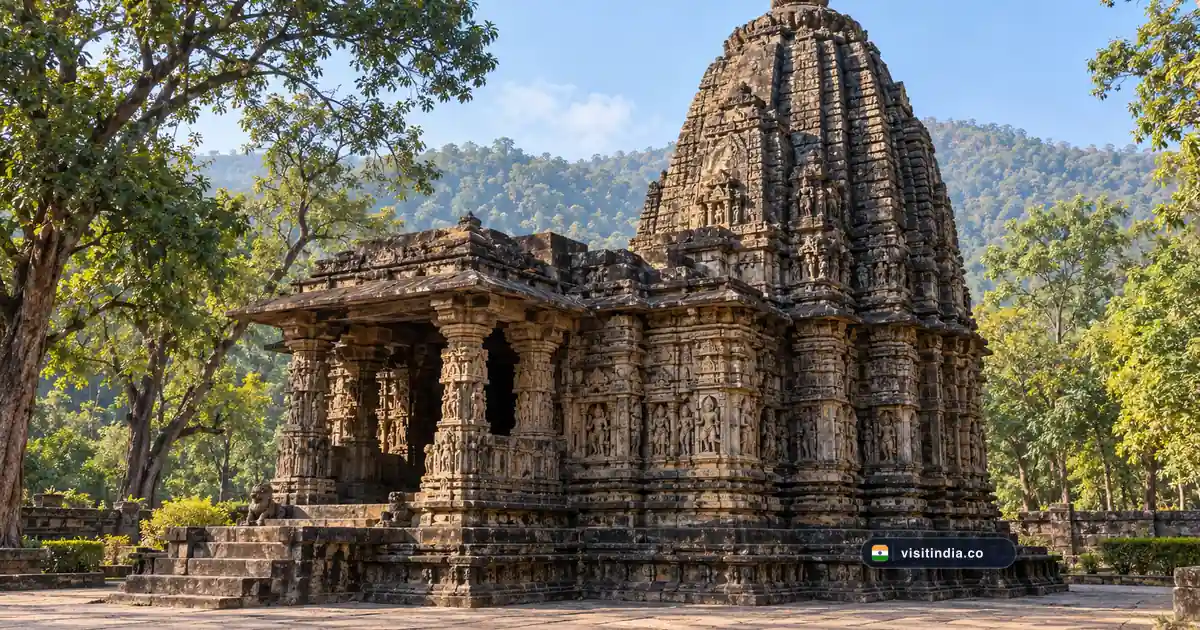
Dating to the 11th century under the Phani Nagavanshi dynasty, Bhoramdeo Temple displays masterfully sculpted stone erotica and deities reminiscent of classical central Indian Nagara tradition. Situated in a peaceful valley beside the Pushpa Sarovar lake, the temple faces east toward the rising sun.
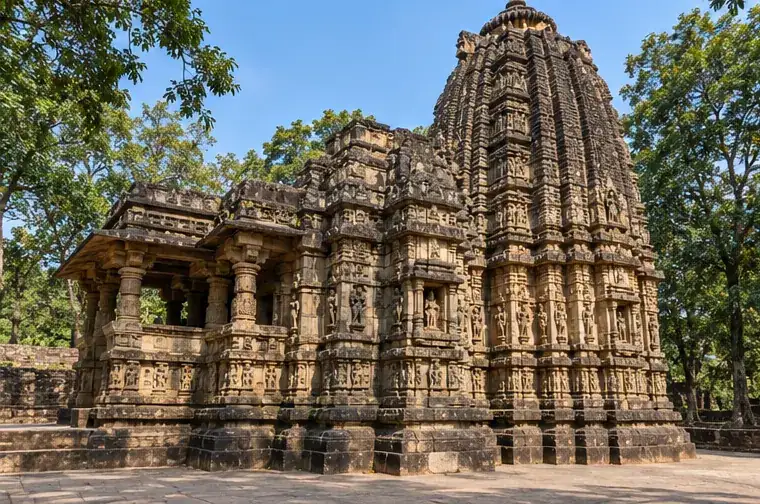
The sanctum features a subterranean Shivalinga accessed by descending several stone steps. Outside, the soaring curvilinear sikhara tower rises above multiple bands of relief sculptures depicting celestial maidens, warrior processions, musicians, and mithuna couples carved from buff-colored local sandstone, as documented by the Kawardha District tourism portal.
Tala, Malhar and the Early Medieval Sculptural Tradition
Sites like Malhar and Tala near Bilaspur contain rare 6th-century Saivite and Vaishnavite stone sculptures, notably the enigmatic Rudra Shiva statue with composite animal iconography. These archaeological centers illustrate the early artistic experiments of the Sarabhapuriya and Panduvamshi rulers.
The Jitiya temple at Tala features an extraordinarily detailed 2.7-meter-tall monolith whose anatomical features are formed by various creatures, including crabs, lizards, scorpions, and peacocks. Malhar, one of the oldest inhabited towns in the state, retains ancient fortified moats, Buddhist stupa foundations, and a museum containing rare early copper plate inscriptions.
Note
Archaeological Sites Visitor Information
- Sirpur Timings & Fees: Open daily from sunrise to sunset. Entry tickets cost ₹25 for Indian citizens and ₹300 for foreign passport holders. An on-site museum displays excavated bronze artifacts.
- Bhoramdeo Access: Located 18 kilometers from Kawardha and 135 kilometers from Raipur. Entry to the main temple complex is free. Dawn and late afternoon provide optimal photography lighting.
- Preservation Etiquette: Visitors must avoid touching fragile terracotta brick carvings at Sirpur and remove footwear before ascending sanctum steps.
Living Indigenous Heritage: Tribal Arts, Weekly Haats and Sacred Traditions
Over one-third of Chhattisgarh’s population belongs to indigenous tribal communities, including the Gond, Maria, Muria, Halba, and Bhatra peoples. Visitors experience this living heritage around Kanger Valley National Park safari gateways through active weekly village markets, traditional metal crafts like lost-wax Dhokra casting, and communal ceremonies honoring nature deities and clan totems.
Unlike commercial tribal exhibits elsewhere, Bastar’s indigenous heritage remains organic, dynamic, and rooted in daily agrarian rhythms. Travelers who approach these communities with humility and respect find a warm and welcoming cultural world.
Dhokra Lost-Wax Bell Metal Casting and Wrought Iron Craft
Artisans in Kondagaon and Bastar practice ancient cire perdue lost-wax metal casting to produce intricate Dhokra figurines, complemented by handmade wrought iron tools and tribal lamps. Every piece is unique, crafted by hand without modern molds or machinery.
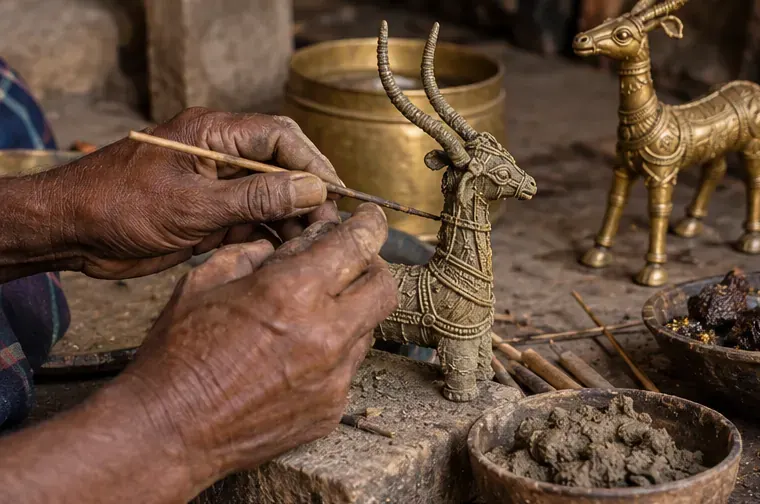
The process begins with a clay core sculpted to the rough shape of the intended artifact. Artisans apply beeswax cords across the core to create fine details, coat the wax in multiple layers of river clay, and bake the mold in an open charcoal kiln. As the wax melts away, molten bell metal fills the empty chamber, yielding durable bronze figures representing tribal dancers, musicians, and sacred elephants.
Weekly Village Haats: Barter Traditions and Local Delicacies
Weekly haats serve as rural social hubs where villagers gather to trade farm produce, forest honey, and mahua wine, offering respectful visitors glimpses into timeless barter traditions. Haats rotate among villages on fixed days of the week, transforming forest clearings into active trade gatherings.
Visitors wandering through a Bastar haat discover hand-woven textiles, terracotta utensils, forest herbs, and seasonal forest produce like tendu leaves and sal seeds. Travelers can sample traditional local foods, including chhaprah (red ant chutney flavored with ginger and coriander), fresh mahua liquor fermented from tree flowers, and crispy rice cakes steamed in sal leaves.
Ghotul Traditions and Communal Clan Heritage
The Muria and Maria tribes historically fostered the Ghotul, a community youth dormitory system centered on mutual cooperation, cultural folklore, music, and social education. In traditional villages, adolescents gathered at the Ghotul every evening to learn clan history, social duties, and communal dances.
Music and dance play central roles in tribal ceremonies. The rhythmic beating of the cylindrical mandar drum accompanies graceful group dances where men wearing bison-horn headdresses step in unison with women holding brass jingling sticks. These artistic traditions reinforce solidarity and deep reverence for the sacred sal forests.
Important
Responsible Cultural Etiquette in Tribal Hamlets
- Ask Before Photographing: Always obtain verbal permission before taking portraits of village elders, women, or artisans at work in weekly markets.
- Support Local Artisans Directly: Purchase handicrafts directly from artisan cooperatives in Kondagaon or Jagdalpur rather than commercial middlemen to ensure fair wages reach tribal families.
- Respect Sacred Groves (Devgudis): Village shrines dedicated to local clan deities are sacred spaces; remove shoes and never step onto sanctum platforms without explicit invitation.
Cultural Celebrations: Bastar Dussehra and Regional Fairs
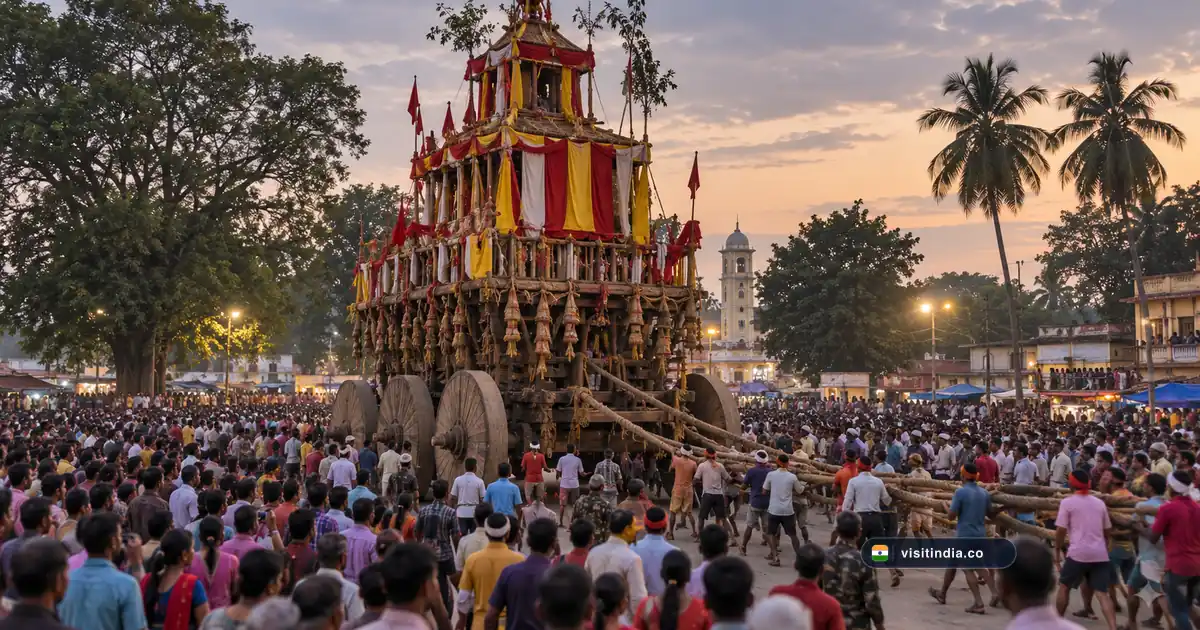
Bastar Dussehra stands out as the longest festival on Earth, celebrated during the 75-day Bastar Dussehra festival between Shravan and Ashwin months without any connection to the epic Ramayana or the burning of Ravana effigies. Centered around Goddess Danteshwari in Jagdalpur, the festival unites dozens of tribal clans to construct and pull a massive two-tiered wooden chariot, culminating in grand royal durbar assemblies.
The festival originated in the early fifteenth century under Maharaja Purushottam Deo of the Kakatiya dynasty. It celebrates community consensus, divine female energy, and the harmonious relationship between the ruler, the tribal clans, and the guardian deities of Bastar.
The 75-Day Tribal Ritual Cycle of Bastar Dussehra
Beginning with Pata Jatra wood sanctification in August and concluding with Ohadi farewells in October, the festival honors Mother Danteshwari through elaborate community rites. Each ritual is assigned to a specific tribal community according to ancestral custom.
The ceremonies commence when carpenters from the Saora tribe perform rites on a sacred sal log brought from the Bilori forest. Key subsequent phases include Kachan Gaadi, where a young unmarried girl swings on a bed of thorn twigs to receive the protective blessing of Goddess Kachan, and Nisha Jatra, a solemn midnight sacrifice held inside the palace temple grounds.
The Gigantic Double-Decker Wooden Chariot Pull
Thousands of tribal devotees gather in Jagdalpur to pull the colossal handmade wooden chariot (Rath) through city streets, using ropes braided from wild forest fibers. The chariot is assembled without iron nails, using ancient interlocking wooden joinery techniques.
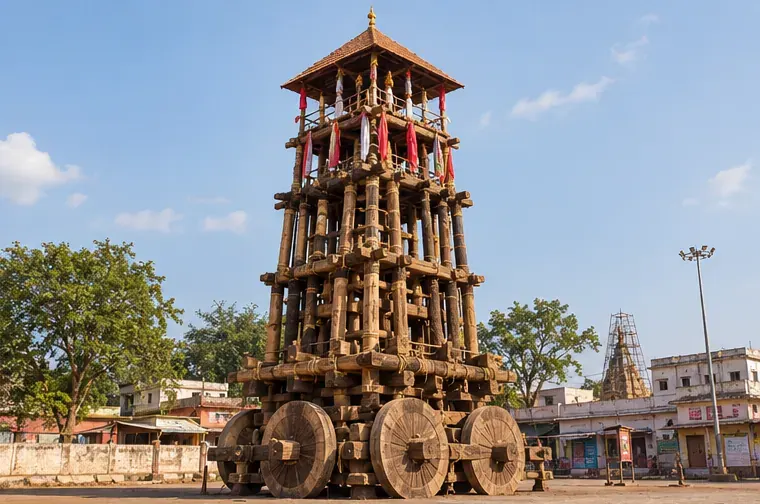
A smaller four-wheeled chariot (Phool Rath) is pulled during the early days of Navratri, while a massive eight-wheeled chariot (Vijay Rath) rolls during the climactic days. Devotees from distant forest villages travel on foot for days to participate in the chariot pull, creating an animated sea of colorful headbands, feather ornaments, and traditional drum rhythms.
Madai Fairs, Hareli and Rajim Kumbh Mela
Across other seasons, the agrarian Hareli festival welcomes the monsoon, colorful tribal Madai fairs animate district villages, and the Rajim Kumbh attracts pilgrims to the Mahanadi river confluence. These celebrations punctuate the agricultural calendar with joyous feasting and spiritual devotion.
Hareli, celebrated in July or August, involves cleaning agricultural implements, honoring farm cattle, and participating in stilt-walking contests on bamboo stilts called gedi. In winter, rotating Madai fairs travel across Kanker, Narayanpur, and Dantewada, where tribal deities carried on ornate palanquins meet in sacred social reunions.
| Festival | Region / Venue | Timing | Cultural Significance |
|---|---|---|---|
| Bastar Dussehra | Jagdalpur (Bastar) | August to October (75 days) | World’s longest festival; chariot pull for Goddess Danteshwari |
| Hareli Festival | Statewide (Agrarian) | Shravan Amavasya (July/August) | Agricultural tools worship, gedi stilt walking, cow blessing |
| Madai Festival | Kanker, Narayanpur, Bastar | December to March | Tribal deity congregations, community feasts, folk dances |
| Rajim Kumbh Mela | Rajim (Mahanadi confluence) | Magh Purnima to Mahashivratri | Holy river bathing, sadhu assemblies at Rajiv Lochan temple |
| Sirpur National Festival | Sirpur (Mahasamund) | January / February | Classical dance, music, and Buddhist heritage symposium |
Comprehensive Chhattisgarh Itineraries: 5-Day and 8-Day Travel Circuits
A well-planned Chhattisgarh tour requires a minimum of five to eight days to balance central heritage sites with southern Bastar eco-tourism, often compared by heritage travelers to the Khajuraho temple complex in central India. A 5-day route covers Raipur, Sirpur, Jagdalpur, Chitrakote Falls, and Kanger Valley, while an extended 8-day circuit adds Kawardha’s Bhoramdeo Temple, Barnawapara Wildlife Sanctuary, and tribal craft hamlets.
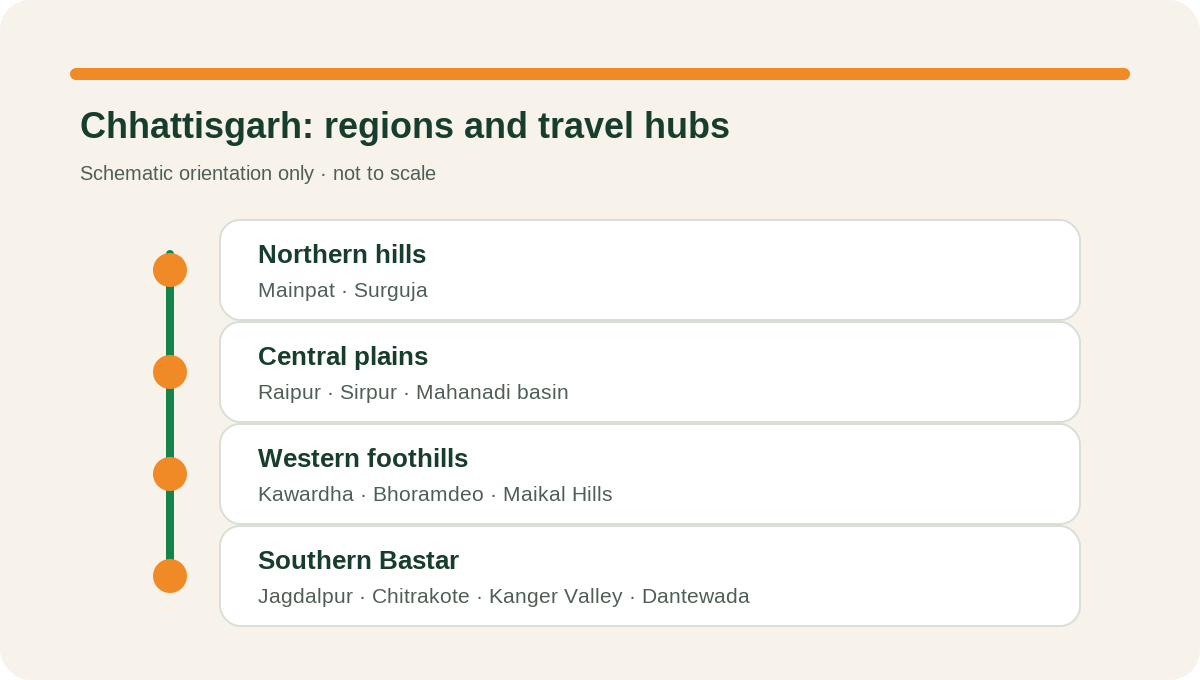
Given the substantial highway distances between central and southern districts, organizing your stops logically along primary road corridors minimizes driving fatigue and maximizes sightseeing time.
The 5-Day Bastar Eco-Heritage Circuit
Starting from Raipur, this five-day circuit focuses on Jagdalpur, Chitrakote Falls, Tirathgarh, Kutumsar Cave, and Kondagaon’s craft villages before returning north. It provides first-time visitors with an efficient introduction to the state’s signature highlights.
On Day 1, travelers arrive at Raipur Airport and drive south along National Highway 30 to Jagdalpur. Make an en-route stop at Kondagaon to observe Dhokra artisans at work.
Day 2 is dedicated to exploring Chitrakote Falls with an afternoon boat ride and evening light illumination. Day 3 covers Kanger Valley National Park for Kutumsar Cave and Tirathgarh Falls.
Day 4 visits Dantewada for Danteshwari Temple before returning to Raipur on Day 5 via Kanker.
The 8-Day Complete Central Chhattisgarh Grand Tour
The eight-day grand tour encompasses Raipur, Sirpur brick ruins, Barnawapara wildlife, Bhoramdeo temple in Kawardha, and deep exploration of Bastar waterfalls and tribal markets. This comprehensive loop is ideal for culture lovers and road-trip enthusiasts.
The journey begins in Raipur with day trips to Sirpur’s Buddhist monasteries and Barnawapara wilderness trails. On Day 3, travel northwest to Kawardha to visit Bhoramdeo Temple and explore the peaceful Maikal foothills.
On Day 4, drive south to Kanker to experience heritage palace hospitality. Days 5 through 7 are spent around Jagdalpur visiting Chitrakote Falls, Kanger Valley caverns, and traditional weekly haats.
Conclude with a return drive or train journey back to Raipur on Day 8.
Driving Routes, Fuel Stops and Highway Connectivity
National Highway 30 provides the smooth primary north-south arterial corridor between Raipur and Jagdalpur, equipped with regular fuel plazas, highway eateries, and scenic forest passes. The highway is largely a four-lane divided road as far as Dhamtari, transitioning into an excellent two-lane paved carriageway through Keshkal Ghati.
The Keshkal Ghat section features twelve dramatic hairpin curves climbing up onto the Bastar plateau, offering sweeping valley panoramas. Reliable petrol pumps and puncture repair shops operate frequently along NH-30 in major towns like Dhamtari, Charama, Kanker, and Kondagaon.
| Day | Destination / Base | Primary Route & Distance | Key Daily Sightseeing Highlights |
|---|---|---|---|
| Day 1 | Raipur to Jagdalpur | NH-30 (295 km, 6 hrs) | Keshkal Ghat views, Kondagaon Dhokra craft village |
| Day 2 | Chitrakote & Environs | State Highway (38 km, 1 hr) | Chitrakote horseshoe falls, boat ride, sunset viewpoints |
| Day 3 | Kanger Valley National Park | SH-4 (40 km, 1.5 hrs) | Kutumsar limestone caves, Tirathgarh multi-tier falls |
| Day 4 | Dantewada & Tribal Haats | NH-63 (85 km, 2 hrs) | Maa Danteshwari Shaktipeeth shrine, rural weekly market |
| Day 5 | Jagdalpur to Raipur | NH-30 (295 km, 6 hrs) | Bastar Palace, Anthropological Museum, departure flight |
Travel Logistics: Transport, Stays, Safety and Responsible Tourism
Travelers enter Chhattisgarh primarily through Swami Vivekananda Airport in Raipur, connecting via National Highway 30 to Jagdalpur across a 295-kilometer drive taking 5 to 6 hours. Public transport includes air-conditioned sleeper buses, the scenic Araku Valley rail journey operating along the Kothavalasa-Kirandul (KK) line, and government-run tourism board resorts located at all major attractions.
Navigating Chhattisgarh is straightforward when travelers leverage established transit hubs and reliable accommodation networks. Planning ahead ensures comfortable stays and reliable transport connections.
Air, Rail and Road Gateways to Raipur and Jagdalpur
Raipur connects directly by air to major Indian metros including Delhi, Mumbai, Bengaluru, Kolkata, and Hyderabad. The modern Swami Vivekananda Airport (RPR) is situated 15 kilometers south of downtown Raipur, with prepaid taxis and app-based cabs available.
For travelers journeying directly to southern Bastar, regional flights operate intermittently connecting Raipur and Hyderabad with Maa Danteshwari Airport in Jagdalpur (JGB). On the rails, Raipur Junction is a major broad-gauge hub on the Howrah-Mumbai mainline, while Jagdalpur station connects directly with Visakhapatnam via the scenic mountain tunnels of the Eastern Ghats.
Accommodation: Tourism Board Resorts and Tribal Homestays
Government and private operators provide comfortable lodging, including the Dandami Luxury Resort at Chitrakote and motels statewide, supported by private eco-resorts and emerging village homestays in Bastar. These properties offer clean rooms, authentic regional meals, and verified tour guiding services.
Dandami Resort sits directly on the bluff overlooking Chitrakote Falls, allowing guests to watch the illuminated waterfalls from their cottage balconies. In Jagdalpur, several mid-range heritage hotels and eco-resorts provide air-conditioned rooms, while rural homestays in villages like Dhurwa Dera offer authentic glimpses into traditional tribal hospitality.
Safety Realities, Advisory Notes and Respectful Etiquette
Major tourism corridors in Bastar and Jagdalpur are safe, peaceful, and welcoming for tourists, requiring standard travel precautions and respectful conduct when photographing tribal rituals. Decades of peace and infrastructure development have made core travel circuits completely accessible.
Travelers should avoid driving on unpaved jungle interior tracks after nightfall and adhere to primary national and state highways. When visiting weekly village markets or religious shrines, dress modestly, refrain from offering money or candy to children, and always ask permission before taking close-up portraits.
Pro Tip
Visitor Practical Guidelines and Emergency Contacts
- Medical Planning: Carry personal prescription medicines, mosquito repellent, and oral rehydration salts when touring rural forested areas. Tap water should be avoided in favor of filtered water.
- Cash & Banking: Carry adequate cash in ₹100 and ₹500 denominations when heading into Bastar or rural haats, as ATM networks become scarce outside district towns like Jagdalpur and Kawardha.
- Emergency Helpline Numbers: Police Emergency (112), Ambulance (108), State Tourism Information Desk (+91 771 4224600).
Frequently Asked Questions About Visiting Chhattisgarh
What are the best places to visit in Chhattisgarh?
The top places to visit in Chhattisgarh include Chitrakote Falls and Kanger Valley National Park in Bastar, Bhoramdeo Temple near Kawardha, and the ancient Buddhist and Hindu ruins of Sirpur. Cultural travelers should also visit the historic town of Jagdalpur and the revered Danteshwari Temple in Dantewada.
What is the best time to visit Chhattisgarh?
The ideal time to visit Chhattisgarh is between October and March when the weather remains pleasantly cool and dry for temple sightseeing and jungle safaris. If your main goal is witnessing waterfalls at their maximum volume, the post-monsoon window from July through October is unmatched.
How do you reach Bastar and Jagdalpur from Raipur?
You can reach Jagdalpur from Raipur by road along National Highway 30, a 295-kilometer drive taking approximately five to six hours by car or regular air-conditioned sleeper bus. Travelers can also take the scenic overnight passenger train from Visakhapatnam or fly via regional air connections to Jagdalpur Airport.
Why is Chitrakote Falls called the Niagara of India?
Chitrakote Falls earns the title of the Niagara of India because it forms a dramatic 300-meter-wide horseshoe-shaped curtain of water across the Indravati River during the monsoon season. Plunging roughly 30 meters off rugged sandstone cliffs, it is the widest natural waterfall in India.
Is traveling to Bastar and southern Chhattisgarh safe for tourists?
Yes, visiting established tourist corridors around Jagdalpur, Chitrakote Falls, Kanger Valley National Park, and Dantewada is safe and well-traveled by thousands of domestic and international tourists annually. Sticking to primary highway routes, daytime travel, and verified local guides ensures a smooth journey.
Why is Bastar Dussehra celebrated for 75 days?
Bastar Dussehra spans 75 days because it is an ancient agrarian tribal festival dedicated to the local patron deity Goddess Danteshwari, with no connection to the Ramayana or the slaying of Ravana. The extended celebration allows dozens of tribal communities to participate in distinct sequential rituals, from gathering sacred sal timber to pulling the ceremonial wooden chariot.
What is Bhoramdeo Temple famous for?
Bhoramdeo Temple is renowned as the Khajuraho of Chhattisgarh due to its richly sculpted 11th-century Nagara-style stone architecture and erotic friezes depicting deities and celestial figures. Situated in the tranquil Maikal foothills of Kawardha, it was constructed by King Gopal Dev of the Phani Nagavanshi dynasty.
How many days are recommended for a Chhattisgarh trip?
A trip of five to seven days is recommended to comfortably explore the state’s diverse attractions without feeling rushed. A five-day itinerary allows you to explore Raipur, Sirpur, Jagdalpur, Chitrakote Falls, and Kanger Valley, while seven to eight days permits adding Kawardha and Bhoramdeo Temple.