Bastar Dussehra Festival Guide: 75-Day Rituals & Chariot Pull
Experience the 75-day Bastar Dussehra festival in Jagdalpur with our guide to tribal rituals, the massive wooden chariot pull, schedules, and history.
In the forested cultural heartland of southern Chhattisgarh, the arrival of autumn heralds the longest continuous religious celebration on Earth. Spanning seventy-five consecutive days, this extraordinary festival unites dozens of indigenous tribal clans with the royal house of Bastar in a magnificent display of communal solidarity, ancient engineering, and sacred devotion.
For cultural travelers and festival photographers, witnessing the monumental bastar dussehra festival in Jagdalpur offers an encounter with living traditions found nowhere else in South Asia. Unlike conventional Dussehra celebrations that reenact the Ramayana or burn effigies of Ravana, Bastar’s festival centers on honoring the supreme matriarchal power of Goddess Danteshwari.
Festival & Spectator Essentials
- Bastar Dussehra spans 75 consecutive days from Shravan Amavasya to Ashwin Shukla Trayodashi (August through October) in Jagdalpur, Chhattisgarh.
- The festival honors Goddess Danteshwari, the supreme patron deity of Bastar, and involves zero burning of Ravana effigies or recitation of the Ramayana.
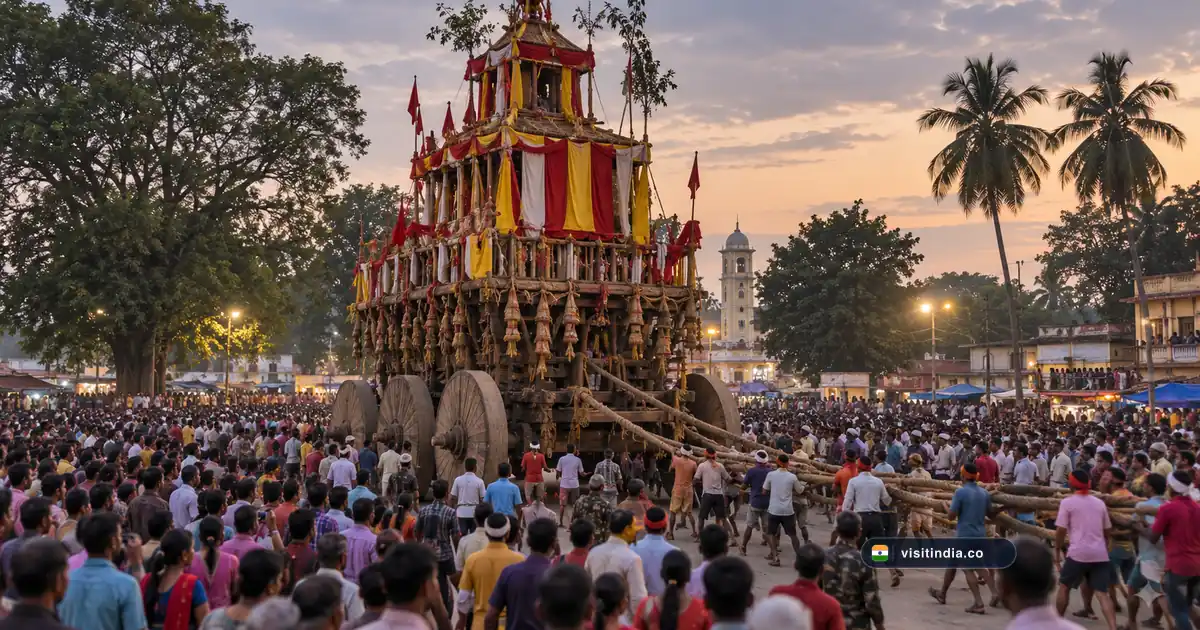
- The central spectacle involves pulling colossal handmade wooden chariots (the 4-wheeled Phool Rath and 8-wheeled Vijay Rath) assembled entirely without metal nails.
- Key public rituals include Kachan Gaadi (the thorn swing oracle), Nisha Jatra (midnight sacrifice), and the historic Muria Durbar tribal parliament.
- The best time for travelers to witness the festival is during the climactic five days around Vijay Dashami, centered at Sirhasar Chowk and Bastar Palace.
Historical Origins: Maharaja Purushottam Deo and Goddess Danteshwari
Instituted in the early 15th century by Maharaja Purushottam Deo of the Kakatiya dynasty, Bastar Dussehra is an ancient agrarian tribal festival dedicated exclusively to Goddess Danteshwari. Unlike conventional Dussehra festivals that celebrate Lord Rama’s victory over Ravana, Bastar’s celebration honors the divine mother and reinforces kinship between royal rulers and indigenous forest clans.
This unique festival structure reflects the egalitarian political balance that historically governed the Bastar plateau. Travelers reading our definitive places to visit in Chhattisgarh guide discover that this festival represents the crown jewel of the state’s living indigenous heritage.
The 15th-Century Pilgrimage from Puri to Bastar
Maharaja Purushottam Deo undertook an arduous pilgrimage to Jagannath Puri on foot, where he received the hereditary title of Rath-Pati and divine authorization to pull a 16-wheeled chariot in Bastar. Returning to his forest kingdom around 1408 CE, the ruler divided this chariot privilege among his tribal subjects.
Rather than dedicating the festival to Jagannath alone, the king integrated the practice into the existing devotion for Goddess Danteshwari, the state’s patron deity. This blend of classical temple chariot culture with local indigenous nature worship created the distinctive Bastar festival traditions that have persisted for over six centuries.
Goddess Danteshwari: The Supreme Matriarch of the Plateau
Revered as the presiding matriarchal deity of the Bastar plateau, Goddess Danteshwari’s palanquin is carried from Dantewada to Jagdalpur to preside over the multi-week clan assemblies. Local tribal communities regard her as their divine mother, protector of the sal forests, and guarantor of bumper autumn harvests.
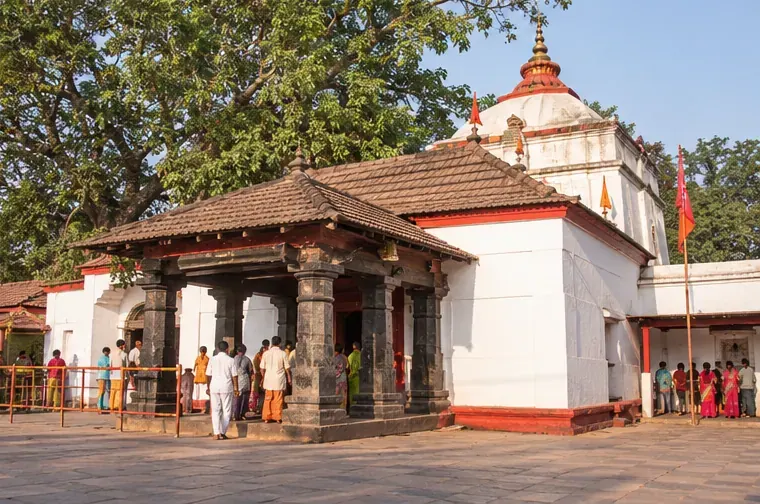
During the festival, her sacred footprints (charan paduka) and ceremonial umbrella (chhatra) are installed within the royal palace temple. Throughout the proceedings, every public ritual begins with offerings of vermilion, flowers, and forest honey to invoke her protective presence.
| Historical Dimension | Traditional Narrative | Contemporary Significance |
|---|---|---|
| Founder King | Maharaja Purushottam Deo (4th Kakatiya ruler) | Institutionalized royal and tribal joint governance |
| Puri Pilgrimage Date | Approximately 1408 CE (early 15th century) | Origin of the ceremonial wooden chariot pull |
| Presiding Goddess | Maa Danteshwari (Shakti incarnation) | Replaces North Indian Ramayana narrative entirely |
| Total Duration | 75 days (Shravan to Ashwin months) | Officially recognized as Earth’s longest festival |
| Key Tribal Clans | Gond, Maria, Muria, Halba, Bhatra, Saora | Every clan performs dedicated ancestral duties |
The 75-Day Ritual Calendar: From Pata Jatra to Ohadi
Bastar Dussehra unfolds across 12 distinct sequential rituals spanning 75 days, beginning with Pata Jatra wood sanctification on Shravan Amavasya in August. Highlights include Dera Gari, the Kachan Gaadi thorn swing trance, Jogi Bithai penance, daily chariot circuits during Navratri, Nisha Jatra, and concluding with Ohadi farewell rites in October.
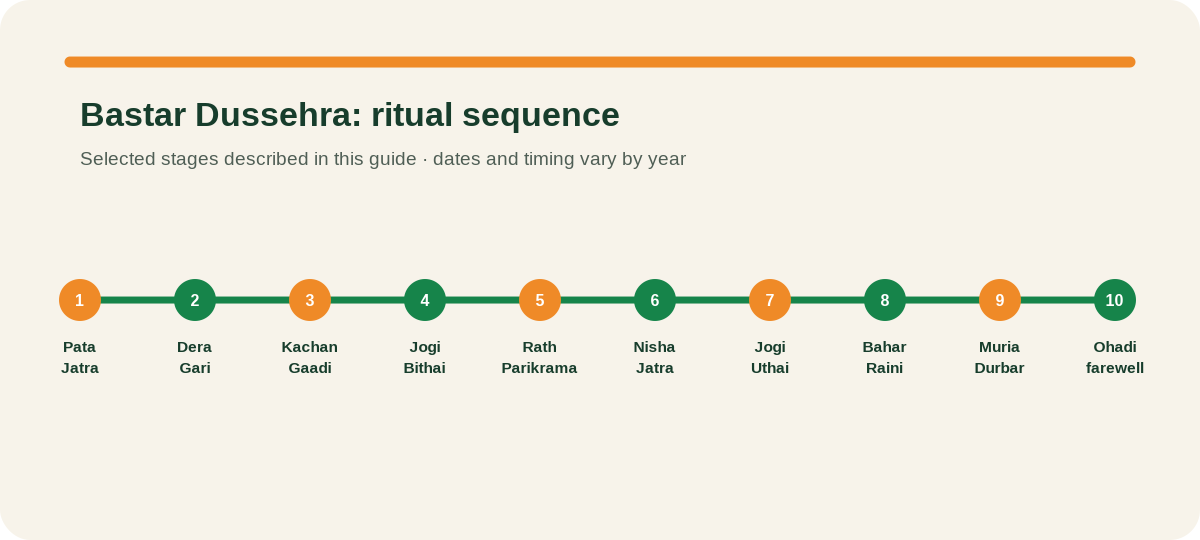
Each ceremony is executed by a specific indigenous community according to centuries of unwritten customary law. Similar to the sacred traditions documented in the 51 Shakti Peethas pilgrimage traditions, the rites invoke female divine power through intense community participation.
Pata Jatra: The Sacred Sal Log Sanctification
The festival commences when the first ceremonial sal wood log is brought from the Bilori forest and consecrated with vermilion and forest honey at Sirhasar Chowk. This simple ritual marks the formal start of chariot construction.
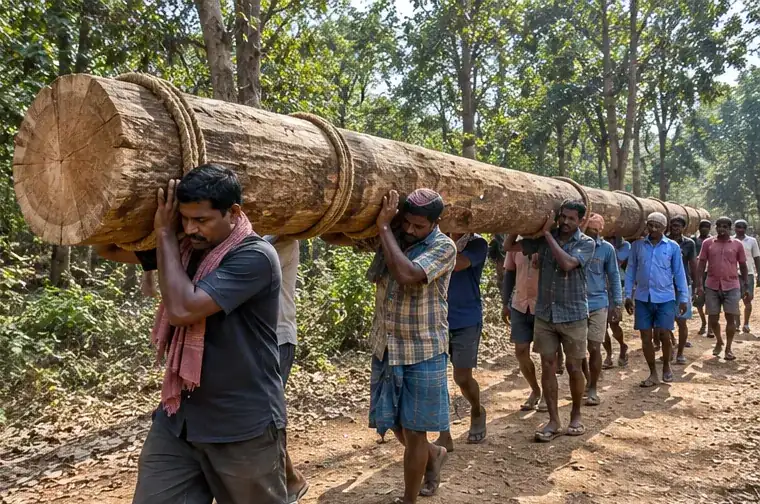
Village elders from the Saora carpenter guild examine the timber for auspicious grain patterns. Once purified by royal priests, the log is prepared as the axle for the upcoming procession chariot, officially beginning the festive calendar documented by the District Administration Bastar tourism portal.
Dera Gari and Kachan Gaadi: The Thorn Bed Oracle
A young girl from the Mirgan community enters a trance and swings upon a bed of sharp thorn twigs, channeling Goddess Kachan to grant formal divine permission for the chariot pull. This remarkable ceremony occurs in early Ashwin month just before Navratri.
The chosen maiden lies upon a swing woven from wild babul and bel thorns while village shamans chant invocation hymns to the beat of bronze gongs. The girl remains uninjured by the thorns, tossing flowers to the crowd to signal the goddess’s divine sanction for the festival to proceed.
Jogi Bithai and Nisha Jatra Midnight Ceremonies
A youth from the Halba tribe sits in unbroken ascetic meditation inside a palace pit for nine days to pray for universal peace, while priests perform midnight propitiation at Nisha Jatra. The ascetic vows silence and survives on minimal water throughout the fasting period.
On the night of Maha Ashtami, royal priests and clan elders assemble for Nisha Jatra at the ancient temple grounds near the palace. In an atmosphere thick with incense and burning oil torches, solemn midnight rites ensure the spiritual protection of the entire realm.
| Sequential Ritual | Approximate Timing | Primary Venue | Spiritual & Community Purpose |
|---|---|---|---|
| 1. Pata Jatra | Shravan Amavasya (August) | Sirhasar Chowk | Consecration of the first sal wood chariot log |
| 2. Dera Gari | Bhadrapada month | Palace workshops | Assembling the timber framework and wooden axles |
| 3. Kachan Gaadi | Ashwin Amavasya (late Sep) | Kachan Temple | Thorn swing oracle granting festival permission |
| 4. Jogi Bithai | Navratri Pratipada (Day 1) | Bastar Palace pit | 9-day ascetic penance by Halba youth for peace |
| 5. Rath Parikrama | Navratri Days 2 to 9 | Sirhasar & Palace | Daily public procession of the four-wheeled chariot |
| 6. Nisha Jatra | Maha Ashtami midnight | Palace grounds | Midnight propitiation rites with forest honey |
| 7. Jogi Uthai | Navratri Navami (Day 9) | Bastar Palace | Ceremonial conclusion of the Halba youth’s penance |
| 8. Bahar Raini | Vijay Dashami night | Kumhrakote forest | Ritual kidnapping and recovery of the 8-wheeled chariot |
| 9. Muria Durbar | Day after Vijay Dashami | Sirhasar Hall | Democratic public parliament of tribal village chiefs |
| 10. Ohadi (Bida) | Ashwin Shukla Trayodashi | Town borders | Emotional farewell procession for Goddess Danteshwari |
The Massive Chariot: Traditional Engineering and Community Labour
The colossal wooden chariot is constructed fresh each year by traditional Saora tribal carpenters using ancient interlocking timber joinery without a single iron nail. Depending on the festival phase, a four-wheeled Phool Rath or an enormous eight-wheeled Vijay Rath is pulled through Jagdalpur by thousands of Maria and Muria villagers using thick ropes woven from wild forest creepers.
The engineering prowess of these tribal carpenters mirrors the monumental wooden joinery celebrated during the Puri Rath Yatra chariot traditions in Odisha. Without computerized blueprints or mechanical saws, local craftsmen construct a towering vehicle capable of carrying dozens of priests and ceremonial icons safely through crowded avenues.
Chariot Construction Without Metal Nails or Modern Tools
Village carpenters shape massive sal logs using traditional adzes and wooden wedges, fitting crossbeams and solid timber wheels together through ancestral carpentry knowledge. Massive wooden pegs (chulas) hold the structural chassis firmly in place.
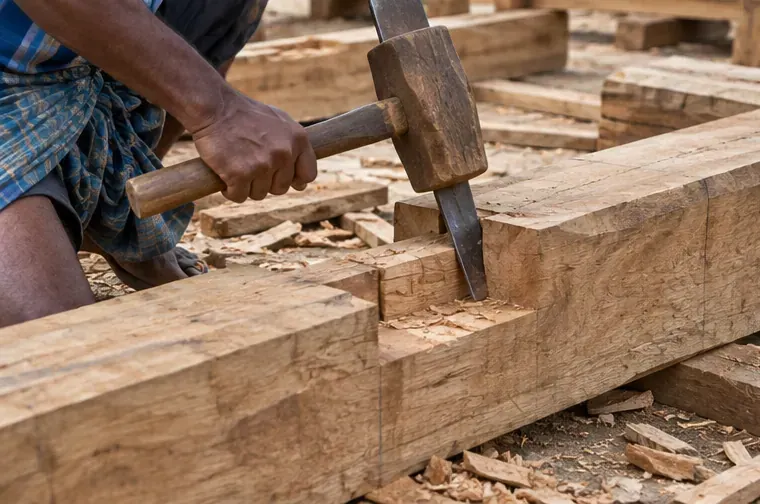
The wheels are cut from solid sal tree trunks without spokes, bound with tough rawhide strips that absorb road shock across paved and cobblestone streets. High timber canopies are ornamented with handmade brass bells, colorful handloom drapes, and seasonal marigold garlands verified by the Incredible India festival archives.
Phool Rath vs Vijay Rath: The Four-Wheeler and Eight-Wheeler
The lighter four-wheeled Phool Rath navigates town streets during early Navratri evenings, while the monumental double-decker eight-wheeled Vijay Rath rolls during the festival climax. The Phool Rath carries the ceremonial umbrella of the goddess across a circular route around Sirhasar Chowk.
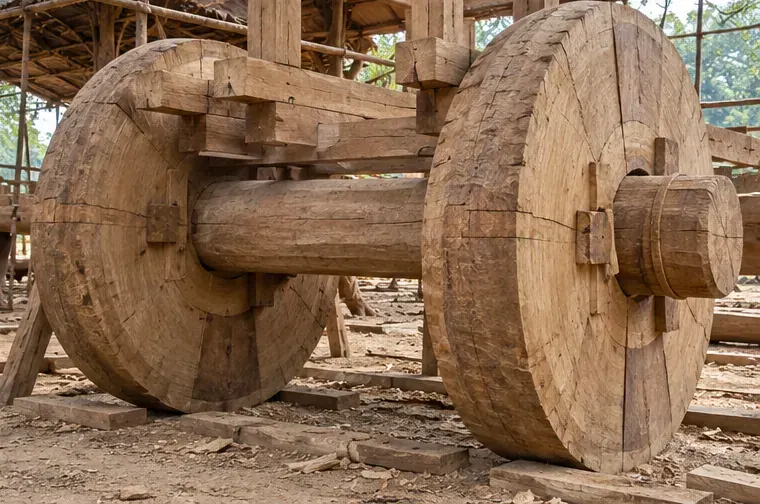
On Vijay Dashami, the gargantuan Vijay Rath makes its dramatic entrance. Towering more than 35 feet high and carrying the royal emblem alongside the shrine of Danteshwari, this monumental structure weighs over 12 tonnes and requires the coordinated muscle of over 1,000 pullers to overcome initial inertia.
The Maria and Muria Chariot Pullers and Sacred Forest Ropes
Thousands of tribal youth from surrounding Maria and Muria settlements grip massive creepers to haul the chariot through cheering crowds, accompanied by the thunder of brass drums. The pulling ropes (rassis) are braided by tribal elders using wild siadi forest vines harvested from deep jungle ravines.
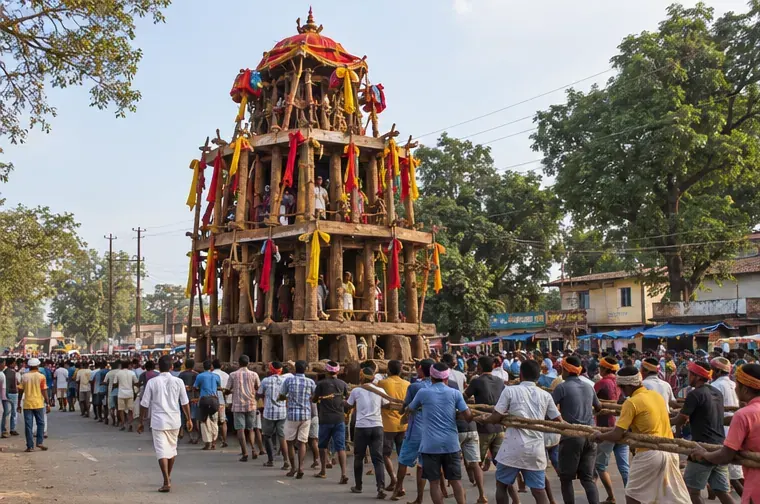
Gripping the thick ropes with bare hands, chanting devotees pull in unified rhythmic surges. The ground rumbles beneath the massive solid wooden wheels as the chariot lurches forward, accompanied by the singing of traditional clan ballads and the trill of brass horns.
| Chariot Specification | Phool Rath (Flower Chariot) | Vijay Rath (Victory Chariot) |
|---|---|---|
| Active Festival Phase | Navratri Days 2 through 8 | Navratri Day 9 through Vijay Dashami |
| Wheel Configuration | 4 solid timber wheels without spokes | 8 heavy multi-timber solid wheels |
| Overall Structure | Single-tier canopy decorated with blooms | Double-decker wooden pavilion with spires |
| Primary Haulers | Local town devotees and youth | Maria and Muria tribal clans from forest hamlets |
| Traction Ropes | Braided natural forest siadi vine ropes | Triple-strand wild forest vine hauling cables |
Bahar Raini and the Muria Durbar: Indigenous Governance and Unity
Bahar Raini reenacts the playful ritual kidnapping of the royal chariot by Maria and Muria tribesmen into the Kumhrakote sacred grove, prompting the royal scion to negotiate its return over a communal cooked feast. The following day, the Muria Durbar convenes in Sirhasar Hall as an open-air tribal parliament where village headmen voice local concerns directly to state administrators.
These climactic events highlight how Bastar Dussehra functions as an active mechanism of social harmony rather than merely an ancient ritual. They reinforce mutual accountability between governing authorities and the forest communities documented on the District Administration Bastar official portal.
Bahar Raini: The Ritual Chariot Abduction into Kumhrakote
In the dead of night after Vijay Dashami, tribesmen quietly haul the chariot outside the city into Kumhrakote forest, symbolizing the tribal community’s ownership of the festival. When morning breaks, town residents discover the plaza empty and the massive vehicle hidden among the trees.
This mock abduction commemorates historical tensions when tribal subjects reminded the ruler that royal power existed solely through the consent of the forest clans. Today, the event is celebrated with affectionate humor and joyous forest gatherings.
The Royal Feast and Appeasement of the Forest Clans
The head of the royal family arrives at the forest grove bearing gifts and cooked rice to feast alongside tribal leaders, restoring harmony before the chariot returns to the palace. Traditional clay pots brimming with seasoned rice, lentils, and forest greens are distributed freely to thousands of attendees.
Following the communal meal, tribal elders happily take up the ropes once more to pull the Vijay Rath back into the city, where cheering townspeople welcome the returning chariot with flower petals and brass bells.
Muria Durbar: Traditional Tribal Parliaments and Grievance Hearing
In a unique democratic tradition dating to the 19th century, tribal village chiefs (Majhis and Mukhiyas) address the collector and ministers in an open town hall assembly. Clad in traditional turbans and holding ceremonial staves, village elders step forward to voice local concerns.
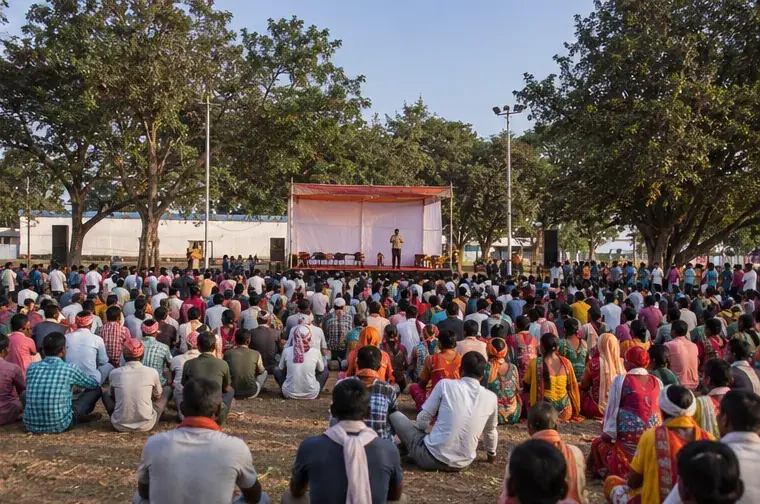
Issues raised include forest grazing rights, rural road maintenance, school staffing, and fair pricing for non-timber forest produce. Government officials listen attentively, record petitions, and announce immediate policy remedies, preserving an ancient tradition of participatory democracy.
Note
Muria Durbar Democratic Tradition and Protocol
- Open Public Assembly: Held at Sirhasar Chowk, the durbar is accessible to visiting spectators and cultural researchers who observe from side galleries.
- Traditional Leadership: Over 100 hereditary village Majhis represent their respective clan territories, speaking in Gondi and Halbi dialects.
- Direct Redressal: Ministers and the district collector must provide direct spoken responses to each community grievance before the assembly formally adjourns.
Spectator Planning: Venues, Key Dates and Travel Logistics
Travelers planning to witness Bastar Dussehra should target the final five days from Navratri Ashtami through Vijay Dashami in Jagdalpur. Most major processions take place in late afternoon around Sirhasar Chowk, Bastar Palace, and Danteshwari Temple, accessible via National Highway 30 from Raipur or via scenic train connections from Visakhapatnam.
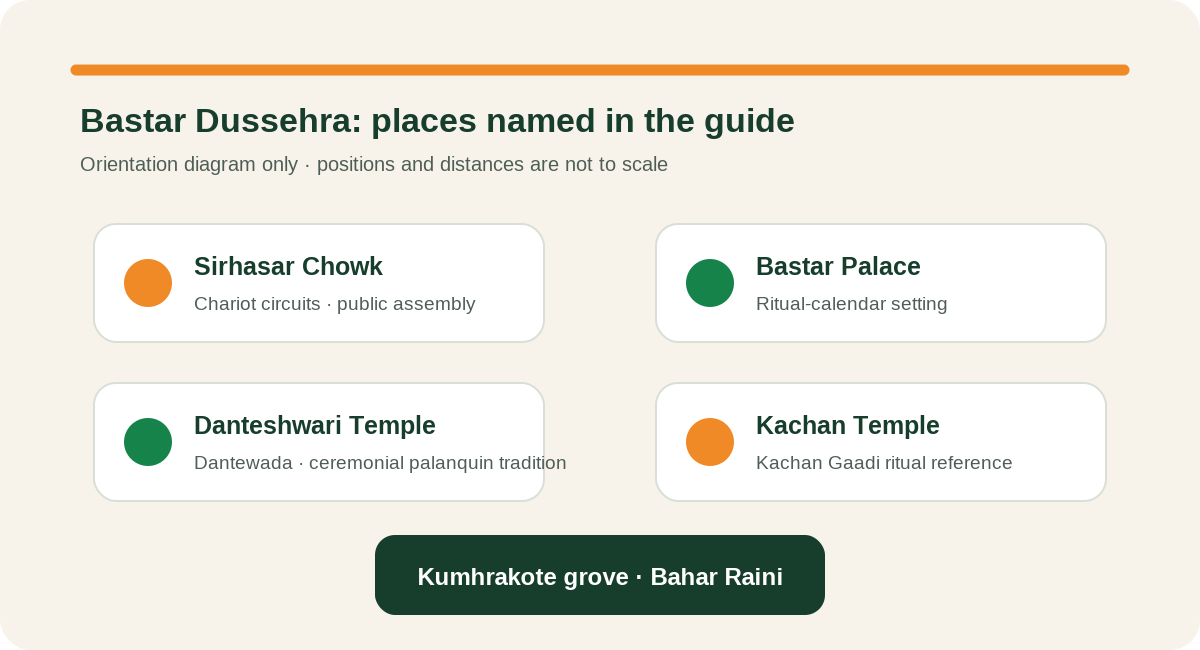
Many visitors pair their festival journey with a daytime Chitrakote and Tirathgarh waterfalls excursion located 38 km from town, requiring roughly 1 hour of scenic driving. This combination allows travelers to experience both monumental waterfalls and rich indigenous tribal traditions in a single trip.
Navratri to Vijay Dashami: The High-Action Festival Window
Focusing on the final week allows visitors to experience Kachan Gaadi, the evening chariot circuits, Nisha Jatra, and the concluding Muria Durbar in a compact visit. During these days, the entire town of Jagdalpur is draped in festive illumination and crowded evening craft markets.
Each evening around 4:30 PM, crowds gather around Sirhasar Chowk to witness the preparation of the chariot. As dusk falls, temple torches flare to life, creating dramatic photographic lighting as the procession begins its circuit.
Jagdalpur Transit Gateways, Trains and Road Connections
Air-conditioned sleeper buses run overnight from Raipur (295 km), while the daily Kirandul Express passenger train connects Visakhapatnam to Jagdalpur through the Eastern Ghats. Jagdalpur also features regular domestic regional flights connecting with Raipur and Hyderabad.
Taxis and auto-rickshaws are readily available in town for transfers between the railway station, central hotels, and the palace grounds. Traffic around Sirhasar Chowk is closed to motor vehicles during procession hours, creating a pedestrian-friendly festival zone.
Where to Stay: Advance Hotel Bookings in Jagdalpur
Hotels in Jagdalpur fill up months in advance for the festival; travelers should secure rooms early or arrange rural homestays through local eco-tourism cooperatives. Several mid-range heritage properties and business hotels operate in the town center within 2 km of the palace, typically charging ₹1,500 to ₹4,500 per night.
Travelers looking for tranquil surroundings can stay at eco-resorts near Chitrakote Falls and commute into Jagdalpur for afternoon and evening festival rituals. Booking at least three to four months in advance is strongly recommended for festive dates.
| Travel Window | Daily Event Highlights | Spectator Practical Advice |
|---|---|---|
| Day 1 (Navratri Saptami) | Evening Phool Rath circuit around palace | Arrive early at Sirhasar Chowk for elevated viewpoints |
| Day 2 (Maha Ashtami) | Phool Rath procession and midnight Nisha Jatra | Wear comfortable walking shoes; carry a light flashlight |
| Day 3 (Maha Navami) | Jogi Uthai penance conclusion ceremony | Watch Halba youth emerge from 9-day ascetic meditation |
| Day 4 (Vijay Dashami) | Giant 8-wheeled Vijay Rath chariot pull | Maximum crowd density; stay within marked spectator zones |
| Day 5 (Bahar Raini / Durbar) | Kumhrakote feast & open Muria Durbar | Attend the morning forest feast and afternoon tribal assembly |
Cultural Sensitivity: Respectful Photography and Tribal Etiquette
Because Bastar Dussehra is an active sacred pilgrimage rather than a commercial performance, visitors must observe strict cultural respect. Spectators should dress conservatively, request permission before photographing trance rituals like Kachan Gaadi, and refrain from crossing the path of the sacred chariot while it is in motion.
Between festival events, travelers can explore the tranquil wilderness trails of the Kanger Valley National Park safari trails to observe the quiet forest environment where these tribal communities live. Maintaining humility and patience enriches your festival experience.
Photography Protocols During Trance and Midnight Rites
Turn off camera flash during sensitive rituals such as Kachan Gaadi and Nisha Jatra, maintaining a respectful distance from shamans and mediums in trance states. Harsh strobe flashes can disorient ritual practitioners and disrupt solemn religious proceedings.
Use fast prime lenses with wide apertures to capture ambient lantern light rather than relying on artificial illumination. When photographing village elders or women in traditional attire, smile, make polite eye contact, and seek verbal or gestural consent.
Sacred Enclosures: Guidelines for Visitors at Sirhasar Chowk
Avoid obstructing ceremonial paths, remove footwear before entering temporary shrine pavilions, and follow the instructions of community volunteer stewards. The path of the chariot must remain completely clear to prevent accidental injury under the heavy wooden wheels.
Spectators should avoid climbing onto structural supports of the chariot or attempting to touch the sacred icons installed upon the upper canopy. Respectful observation from designated pedestrian sidelines guarantees safety for all participants.
Supporting Local Bastar Artisans and Fair Trade Markets
Support the local economy by purchasing authentic Dhokra metalwork, bell metal bells, and handloom shawls directly from tribal artisans gathered at the festival fairs. Temporary handicraft stalls line the streets around Sirhasar Chowk during festival week.
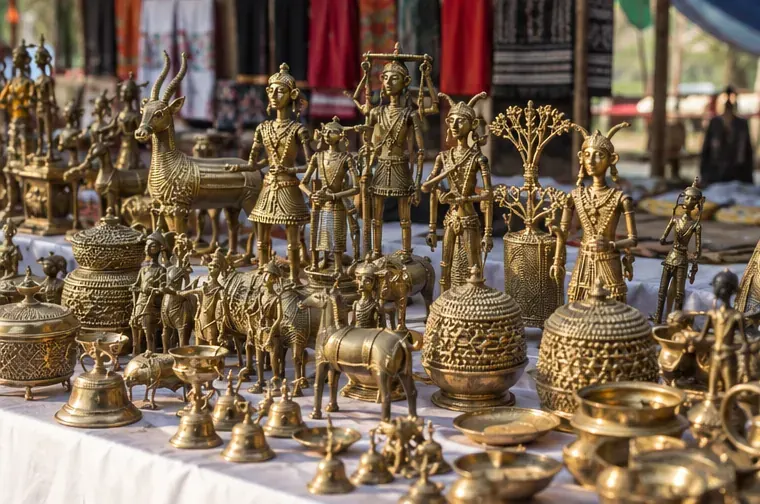
Buying directly from artisan cooperatives ensures that your tourism spending directly benefits rural craft families. Avoid aggressive haggling over handcrafted artifacts that represent days of meticulous manual labor using centuries-old lost-wax techniques.
Important
Responsible Cultural Etiquette for Festival Spectators
- Modest Attire: Dress respectfully in clothing that covers shoulders and knees when visiting palace temples and ceremonial assembly areas.
- Chariot Safety Distance: Maintain at least ten feet of clearance from moving chariot wheels; never run alongside hauling ropes while the vehicle is in motion.
- No Alcohol or Tobacco: Refrain from consuming alcohol or smoking within sacred palace squares and religious enclosures during ritual processions.
Frequently Asked Questions About Bastar Dussehra
Why is Bastar Dussehra celebrated for 75 days?
Bastar Dussehra spans 75 consecutive days because it is an ancient tribal celebration dedicated to Goddess Danteshwari and the local forest clan deities, rather than a retelling of the Ramayana. The extended timeline allows dozens of remote indigenous villages to participate in distinct sequential rituals, from sanctifying sal logs to pulling the ceremonial wooden chariot.
Does Bastar Dussehra burn effigies of Ravana?
No, Bastar Dussehra does not burn effigies of Ravana or celebrate the defeat of Lanka depicted in the North Indian Ramlila tradition. The festival is entirely centered on worshiping the supreme matriarchal power of Goddess Danteshwari and celebrating community solidarity between the royal family and tribal communities.
What is the Kachan Gaadi ritual during Bastar Dussehra?
Kachan Gaadi is an oracle ritual where an unmarried young girl from the Mirgan community enters a trance state and lies upon a swing woven from thorny bel and babul branches. While suspended on the thorns without injury, she channels the goddess Kachan Devi to grant official divine permission for the festival chariot procession to begin.
Who constructs and pulls the Bastar Dussehra chariot?
The wooden chariot is hand-hewn by Saora tribal carpenters without using iron nails, adhering to centuries of ancestral joinery techniques. Thousands of young men from the Maria and Muria tribal clans haul the heavy ropes to pull the massive chariot through the streets of Jagdalpur.
What is the Muria Durbar held during Bastar Dussehra?
The Muria Durbar is a historic public town-hall parliament held at Sirhasar Chowk on the day after Vijay Dashami. Tribal elders, village headmen (Majhis), government administrators, and members of the former royal family convene in open assembly to discuss rural welfare, land rights, and community governance.
When should travelers visit Jagdalpur to experience Bastar Dussehra?
Travelers should visit during the climactic final week between Navratri Saptami and Vijay Dashami (usually late September or October) when the major daily chariot processions, midnight rites, and Muria Durbar take place. Booking accommodations in Jagdalpur several months in advance is essential due to heavy festival attendance.