Puri Rath Yatra Festival Guide: Chariot Dates & Rituals
Plan your visit to the Puri Rath Yatra festival in Odisha with chariot pulling rules, Snana Yatra dates, Gundicha Temple rituals, and travel advice.
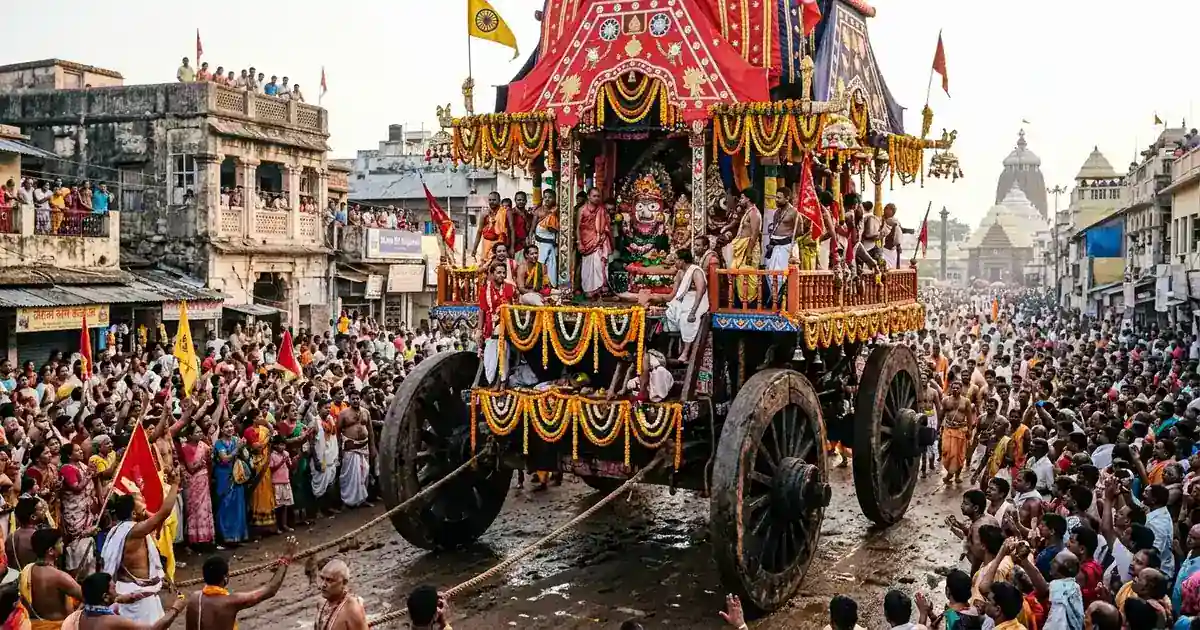
The Puri Rath Yatra, celebrated annually in coastal Odisha, is the oldest and grandest chariot festival on the Indian subcontinent. Commemorating the journey of Lord Jagannath, Lord Balabhadra, and Devi Subhadra from the 12th-century Shrimandir to the garden palace of Gundicha Temple, this event draws over a million pilgrims to Grand Road (Bada Danda).
What makes the Rath Yatra unique in Hindu theological tradition is its universal accessibility. While regular temple rules restrict access to the inner sanctum of the Shrimandir, during Rath Yatra the deities step out onto the public streets. People of every background and nationality are permitted to view the deities face-to-face and pull the colossal wooden chariot ropes.
Puri Rath Yatra Essentials
- Primary Festival Location: Bada Danda (Grand Road), connecting the Jagannath Temple to Gundicha Temple in Puri, Odisha.
- Seasonal Timing: Ashadha Shukla Paksha Dwitiya (June or July annually during the onset of the monsoon).
- The Three Colossal Chariots: Nandighosa (Lord Jagannath, 45 ft), Taladhwaja (Lord Balabhadra, 44 ft), and Darpadalana (Devi Subhadra, 43 ft).
- Key Ceremonial Milestone: Chhera Panhara, the ritual sweeping of the chariot platforms with a gold broom by the Gajapati King of Puri.
- Total Chariot Journey Distance: Approximately 2.5 kilometers along Grand Road.
- Gundicha Stay Duration: 7 full days of open public darshan (Adap Mandap darshan) before the Bahuda Yatra return journey.
Spiritual Philosophy and the Meaning of the Chariot Journey
The philosophical roots of the Rath Yatra trace back to ancient Vedic texts and the Katha Upanishad, where the human body is compared to a wooden chariot, the intellect to the charioteer, the mind to the reins, and the soul to the divine passenger seated within.
By witnessing the supreme deity travelling atop the open chariot, devotees believe they attain spiritual liberation from the continuous cycle of death and rebirth. This belief is celebrated in the ancient Sanskrit aphorism: Rathe tu vamanam drishtwa punarjanma na vidyate (seeing the Lord on the chariot liberates the soul from rebirth).
Unlike the permanent stone carvings found across eastern Indian monuments, the deities of Jagannath are carved from sacred neem wood. Every twelve to nineteen years during an intercalary leap month, the wooden idols undergo the profound mystical transformation of Nabakalebara, where the divine life essence is transferred to freshly carved neem wood bodies.
For a deeper understanding of the primary architectural complex and daily temple services, consult our dedicated guide to the Puri Jagannath Temple. Travelers exploring the coastal region can also refer to the complete Odisha travel guide for broader circuits and transport connections.
Char Dham Links and Eastern Sacred Geography
Puri forms the eastern anchor of the original Char Dham pilgrimage established by Adi Shankaracharya in the 8th century CE. In traditional sacred cosmology, Lord Vishnu is believed to bathe at Rameswaram, meditate at Badrinath Temple in the Himalayas, dine at Puri, and retire to Dwarka in the west.
This cosmic rhythm places Puri as the center of divine hospitality and culinary abundance. The temple kitchen prepares fifty-six daily offerings (Chhappan Bhog) cooked solely in earthen pots over wood fires, transforming local rice, lentils, and indigenous vegetables into sanctified Mahaprasad shared equally without caste distinction.
During Rath Yatra, this hospitality spills out across the coastal sands, as community kitchens feed millions of arriving pilgrims along the Grand Road corridor.
The Chariot Construction Tradition: Ancient Sacred Engineering
The creation of the three massive wooden chariots represents one of the world’s most impressive examples of living hereditary engineering. Every single year, all three chariots are constructed completely from scratch using traditional wood carpentry techniques, without utilizing blueprints, modern power tools, or metal nails.
The construction begins on the auspicious day of Akshaya Tritiya in April or May. Over 1,000 logs of specific timber species such as asana, dhaura, and phasi are harvested from designated state forest reserves and floated down the Mahanadi River toward Puri.
Hereditary craftsmen known as Maharana servitors, whose families have preserved the oral geometric ratios for centuries, construct the massive wooden structures along Bada Danda outside the royal palace.
Specifications of the Three Sacred Chariots
| Feature | Nandighosa (Lord Jagannath) | Taladhwaja (Lord Balabhadra) | Darpadalana (Devi Subhadra) |
|---|---|---|---|
| Height | 45 feet (13.7 meters) | 44 feet (13.4 meters) | 43 feet (13.1 meters) |
| Number of Wheels | 16 massive wooden wheels | 14 wooden wheels | 12 wooden wheels |
| Canopy Fabric Colors | Red and Yellow | Red and Bluish-Green | Red and Black |
| Presiding Chariot Guardian | Garuda | Vasudeva | Jayadurga |
| Charioteer (Sarathi) | Daruka | Matali | Arjuna |
| Chariot Horses | 4 White wooden horses | 4 Black wooden horses | 4 Reddish wooden horses |
| Sacred Rope Name | Sankhachuda | Basuki | Swarnachuda |
The brightly colored cloth canopies covering the timber frame require hundreds of meters of cotton fabric supplied by the state administration. The wheels are painted with traditional Oriya geometric rings and floral petals.
Official state visitor directories and local civic arrangements are coordinated through Incredible India Puri Heritage Guide to assist arriving travelers.
Sacred Ritual Sequence Leading to Rath Yatra
The Rath Yatra is not a single-day event; it is the culmination of a weeks-long ritual sequence that begins with the sacred bathing festival of Deva Snana Purnima.
1. Deva Snana Purnima (The Sacred Bathing Festival)
Occurring on the full moon day of Jyeshtha month, the three sibling deities, along with Sudarshana Chakra, are brought in ceremonial procession to the elevated Snana Mandap terrace overlooking the outer temple walls. Priests pour 108 earthen pots of scented water drawn from the sacred golden well over the wooden deities.
Following the ablution, the deities are dressed in the Gajanana Besha, assuming the form of Lord Ganesha to fulfill the devotion of regional pilgrims.
2. Anasara: The 15-Day Seclusion Period
According to ritual belief, the extensive public cold-water bath causes the deities to fall ill with fever. Immediately following Snana Purnima, the sanctum doors are sealed for fifteen days, a period known as Anasara.
During Anasara, the deities are moved to an internal secret chamber where temple physicians administer herbal medicinal pastes, roots, and light fruit juices. Traditional pattachitra cloth paintings depicting the deities are hung outside the closed sanctum for public darshan.
3. Netrotsava and Naba Jaubana Besha
Two days prior to the Rath Yatra, the deities recover from their illness. In the delicate ritual of Netrotsava, hereditary temple artists touch up the painted pupils of the deities’ large eyes with fresh herbal pigments.
The following morning, the sanctum reopens for Naba Jaubana Darshan, allowing devotees to behold the refreshed youthfulness of the divine siblings before they prepare to step outside.
Rath Yatra Day: Pahandi Bije and Chhera Panhara
The morning of Rath Yatra begins with remarkable energy across the crowded expanse of Grand Road. Over a million devotees assemble as early as 5:00 AM, chanting Jai Jagannath and playing traditional brass cymbals and mardala drums.
Pahandi Bije: The Royal Procession
Around 9:30 AM, the ceremonial procession known as Pahandi Bije commences. Temple servitors, wearing colorful silk turbans, carry the heavy wooden deities down the 22 stone steps of the Lion’s Gate to their respective chariots.
The deities sway gently back and forth under giant velvet floral headdresses, while hundreds of priests pull and guide them forward to the sound of conch shells and sacred chants. Lord Balabhadra is seated first, followed by Devi Subhadra carried in the horizontal arms of sevayats, and finally Lord Jagannath ascends Nandighosa.
Chhera Panhara: The Ritual of Royal Humility
Once the deities are securely installed atop their wooden thrones, the most famous social ritual of the festival occurs: Chhera Panhara.
The titular Gajapati King of Puri, revered as the foremost servant of Lord Jagannath, arrives from his palace in a gilded palanquin. Ascending each chariot platform one by one, the King sprinkles fragrant sandalwood water and sweeps the wooden boards with a ceremonial gold-handled broom.
This ancient act of supreme humility demonstrates that before the Lord of the Universe, all human distinctions of monarch, priest, and common laborer are entirely equal. Only after the royal sweeping is finished are the wooden horses hitched and the four massive coir ropes uncoiled for the public.
Pulling the Sacred Chariots to Gundicha Temple
Around 2:00 PM, the order is given to commence pulling. Grasping the thick coir ropes is considered one of the highest spiritual honors in Hindu life. Hundreds of hands grip each rope, hauling the multi-ton wooden giants down the wide avenue of Grand Road.
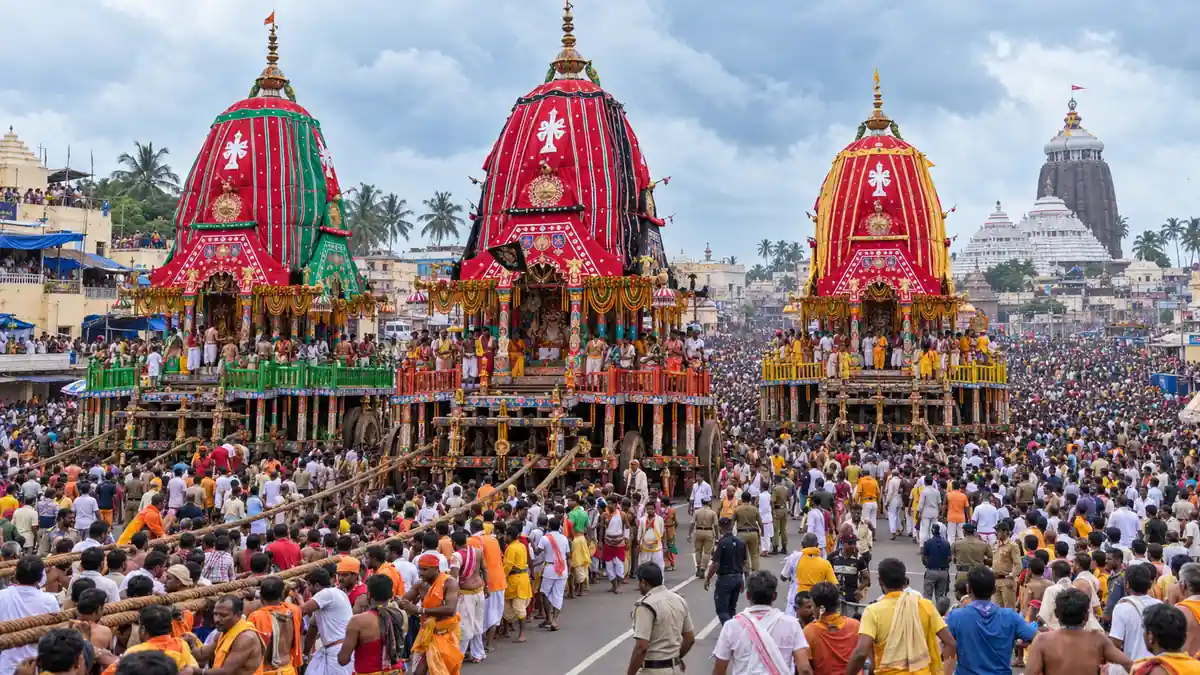
The chariots move slowly down the 2.5-kilometer street, their giant wooden wheels creaking over the stone pavement. Because the chariots possess no mechanical steering mechanisms, hereditary servitors steer the vehicles by adjusting wooden friction brakes pressed against the wheels with long timber levers.
The procession usually reaches the Gundicha Temple gates by sunset or early the following morning. The deities spend seven days inside the Gundicha Temple, resting on the Adap Mandap, where special Mahaprasad is prepared in earthen pots and distributed freely to visiting pilgrims.
The Return Journey: Bahuda Yatra and Suna Besha
After their seven-day stay at Gundicha Temple, the deities begin their return journey back to the main Shrimandir, an event known as Bahuda Yatra.
On the tenth day of the bright fortnight, the chariots are turned around to face south. On the return drive, the procession halts at the Mausi Maa Temple, where the deities are offered a traditional treat of baked poda pitha, a sweet spiced rice-flour cake.
Suna Besha: The Golden Adornment
The climax of the festival takes place on the day following Bahuda Yatra. While resting outside the Lion’s Gate aboard their chariots, the three deities are decorated with solid gold ornaments weighing over 208 kilograms in the magnificent ritual of Suna Besha.
Lord Jagannath and Lord Balabhadra are adorned with golden hands, golden feet, jeweled diadems, and large golden conch and chakra symbols. Over half a million devotees assemble along Bada Danda to behold this radiant display under powerful evening floodlights before the deities re-enter their sanctum during the Niladri Bije ceremony.
For national festival schedules and official state tourism dates, consult the central resources on Incredible India to plan coastal cultural journeys.
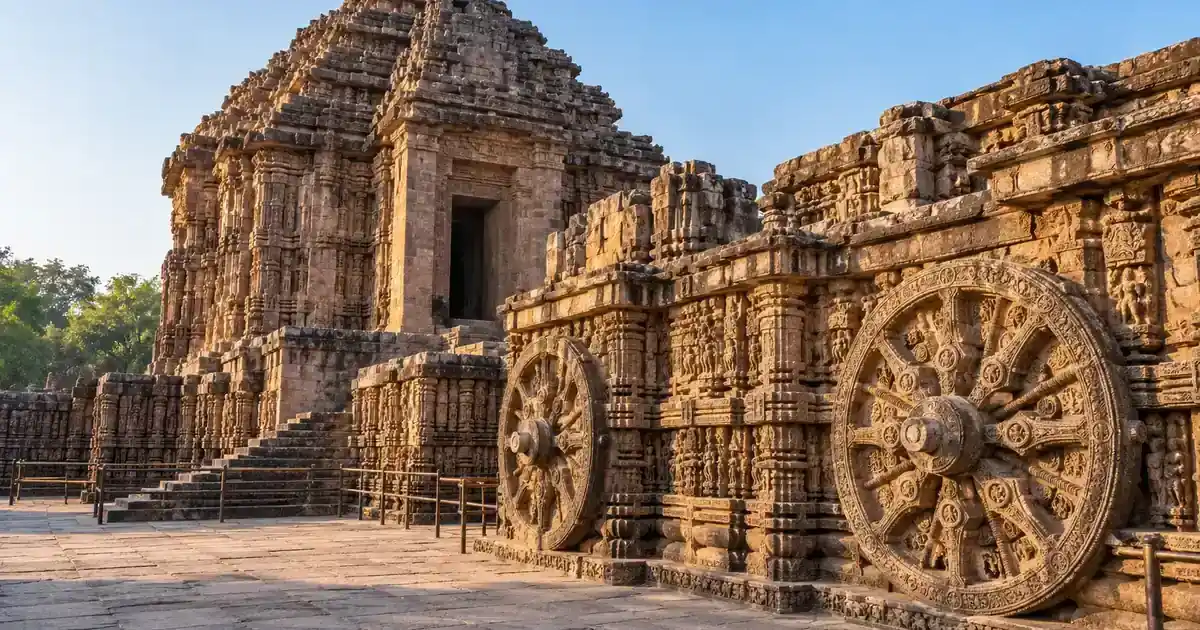
Travelers visiting Odisha in winter can also explore classical performing arts festivals like the Konark Dance Festival dates and rituals, which takes place against the backdrop of the UNESCO 13th-century Sun Temple chariot just 35 kilometers up the marine drive.
Comparing Grand Festival Spectacles Across India
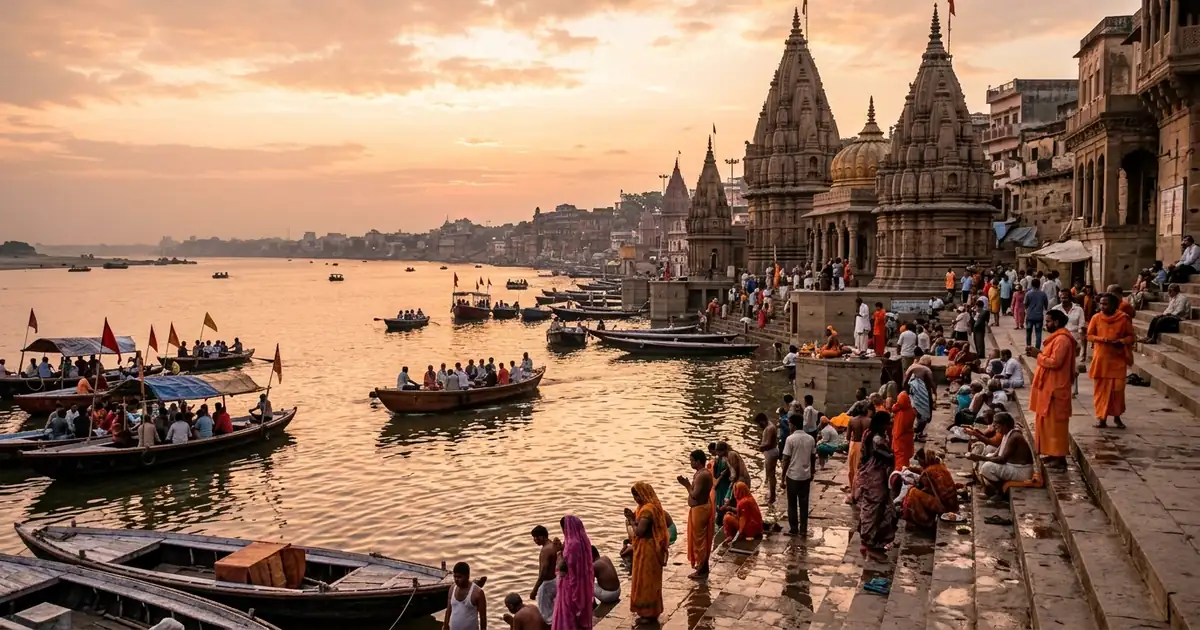
India celebrates numerous regional festival gatherings that rival the scale of the Puri chariot procession. Pilgrims often compare the immense crowds and devotional intensity of Rath Yatra with the illuminated river rituals of Dev Deepawali in Varanasi along the holy Ganga.
Likewise, spiritual travelers mapping sacred Shakti shrines across the subcontinent often note that the Vimala Temple inside the Puri complex forms one of the four original Adi Shakti Peethas. For broader travel planning across seasonal cultural events, visitors can consult comprehensive national travel guides.
Crowd Safety, Viewing Advice, and Travel Logistics
Attending the Puri Rath Yatra requires thoughtful advance preparation, as the small coastal town accommodates over one million visitors in a single week.
Where to Watch the Chariot Procession
- Rooftop Balconies: Numerous private hotels, mutts, and residential buildings along Bada Danda rent out terrace and balcony seating spaces for viewing the procession. Reserving a balcony seat well in advance provides exceptional elevated views, sun protection, and safe distance from intense street crowds.
- Rath Pulling on the Street: If you choose to join the crowd on the street to touch the sacred ropes, remain alert. Move with the flow of the crowd, avoid carrying valuables or backpacks, and never attempt to cross in front of a moving chariot wheel.
Health, Hydration, and Heat Safety
The festival occurs in June or July during high summer humidity and intermittent monsoon showers. Dehydration and heat exhaustion are common. Drink plenty of electrolyte water and avoid consuming open drinks from unauthorized roadside buckets. The district administration sets up free first aid kiosks, mist sprays, and drinking water stations along both sides of Grand Road.
For architectural and monument preservation guidelines across protected shrines in the region, refer to the Archaeological Survey of India official portal.
How to Reach Puri for the Festival
Puri is well connected to the rest of India via the state capital of Bhubaneswar.
| Transit Mode | Gateway Point | Distance to Puri | Route & Transport Advice |
|---|---|---|---|
| By Air | Biju Patnaik International Airport, Bhubaneswar (BBI) | 60 km | 1.5-hour drive via smooth 4-lane NH 316; pre-paid airport cabs available |
| By Rail | Puri Railway Station (PURI) | 2 km from Grand Road | Special Rath Yatra express trains connect Puri to Kolkata, Delhi, and Chennai |
| By Road | Baramunda Bus Terminal, Bhubaneswar | 62 km | Regular AC state transit buses and private taxis run every 15 minutes |
During festival week, vehicular traffic into central Puri is restricted. Private cars and tourist buses are halted at outer parking lots like Talabania and Malatipatpur, with authorized electric shuttles and auto-rickshaws transporting passengers into the town center. Travelers planning broader multi-state vacations can reference our curated directory of the best places to visit in India.
Frequently Asked Questions About the Puri Rath Yatra
Can foreigners and non-Hindus participate in the Puri Rath Yatra?
Yes, absolutely. While non-Hindus are not permitted inside the permanent stone sanctum of the Jagannath Temple on regular days, the Rath Yatra is completely open to everyone. People of all backgrounds and faiths are welcome to view the deities on Grand Road and help pull the chariot ropes.
On which date does the Puri Rath Yatra take place each year?
The festival date follows the Hindu lunar calendar, occurring on the second day of the bright fortnight of the month of Ashadha, which falls between late June and mid-July on the Gregorian calendar.
What is the ritual of Chhera Panhara?
Chhera Panhara is the ceremonial sweeping of the three chariot platforms with a golden broom performed by the Gajapati King of Puri. This ritual symbolizes that earthly rulers are humble servants before the supreme divinity.
How can visitors safely pull the chariot ropes?
Join the designated public rope-pulling queues under the direction of police and servitors. Always pull from the sides rather than directly in front of the vehicle, wear sturdy footwear, and step back immediately when signal whistles indicate that the chariot is stopping.