Places to Visit in Visakhapatnam: 2 Days Vizag City Guide
Plan your trip with our guide on places to visit in Visakhapatnam in 2 days. Explore INS Kurusura, Kailasagiri skywalk, Rushikonda, and Yarada Beach.
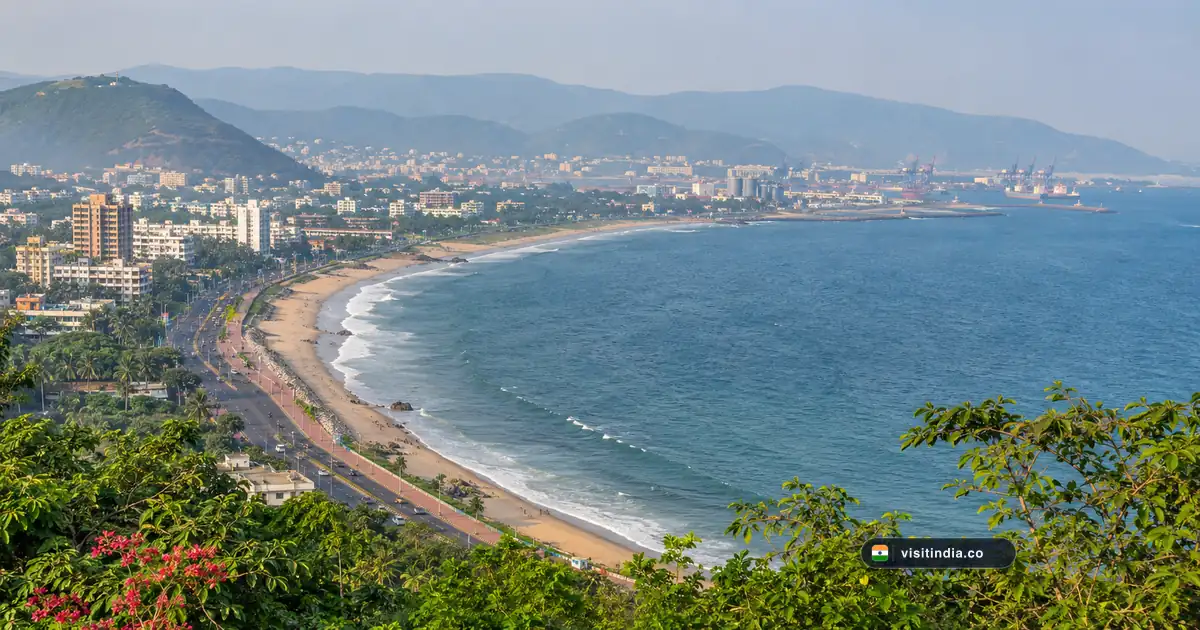
Perched along the scenic eastern seaboard where jungle-draped Eastern Ghats ridges plunge directly into the Bay of Bengal, Andhra Pradesh’s largest city offers an exceptional coastal escape. Selecting the right places to visit in visakhapatnam 2 days itinerary allows travelers to combine decommissioned naval combat vessels, sacred hilltop shrines, and clean ocean beaches into a rewarding weekend getaway.
Affectionately termed the City of Destiny, Visakhapatnam charms visitors with broad beach boulevards, hilltop cable cars, and a deep maritime identity. From standing inside the cramped pressure hull of a real Soviet-built submarine to watching fishing dhows return at sunrise along Yarada beach, the city provides an authentic encounter with peninsular India’s naval heartland.
Visakhapatnam 2-Day City Essentials
- Suggested Trip Length: 48 hours to explore core city beaches, hilltops, and museums.
- Anchor Attractions: INS Kurusura Submarine Museum, TU-142 Aircraft Museum, Kailasagiri Hilltop Park, and Rushikonda Beach.
- Public Transit Gateways: Visakhapatnam Junction (VSKP, 4 km from RK Beach) and Visakhapatnam Airport (VTZ, 14 km).
- Museum Schedule Alert: RK Beach submarine and aircraft museums open only in the afternoon from 2:00 PM and remain closed all day Monday.
- Certified Clean Waters: Rushikonda holds international Blue Flag certification for clean swimming waters and organized amenities.
Visakhapatnam City Overview: Where the Eastern Ghats Meet the Ocean
Visakhapatnam, known affectionately as Vizag, is Andhra Pradesh’s largest coastal metropolis. Framed by emerald Eastern Ghats ridges and the Bay of Bengal, the city features historic maritime museums, certified Blue Flag beaches, and sacred hilltop temples.
Unlike purely commercial industrial ports, Vizag benefits from dramatic geography where rocky promontories isolate distinct ocean coves. The city functions as an essential gateway for Andhra Pradesh coastal tourism circuits, connecting coastal highways with cool coffee plantations in the highlands.
Geography of the City of Destiny and Eastern Naval Command
Set along a natural deep-water harbour, Vizag houses the headquarters of the Indian Navy’s Eastern Naval Command and functions as a major commercial seaport connecting inland mineral belts with global ocean lanes. The harbour is sheltered by the massive rocky headland of Dolphin’s Nose, which shields commercial docks from Bay of Bengal cyclonic surges.
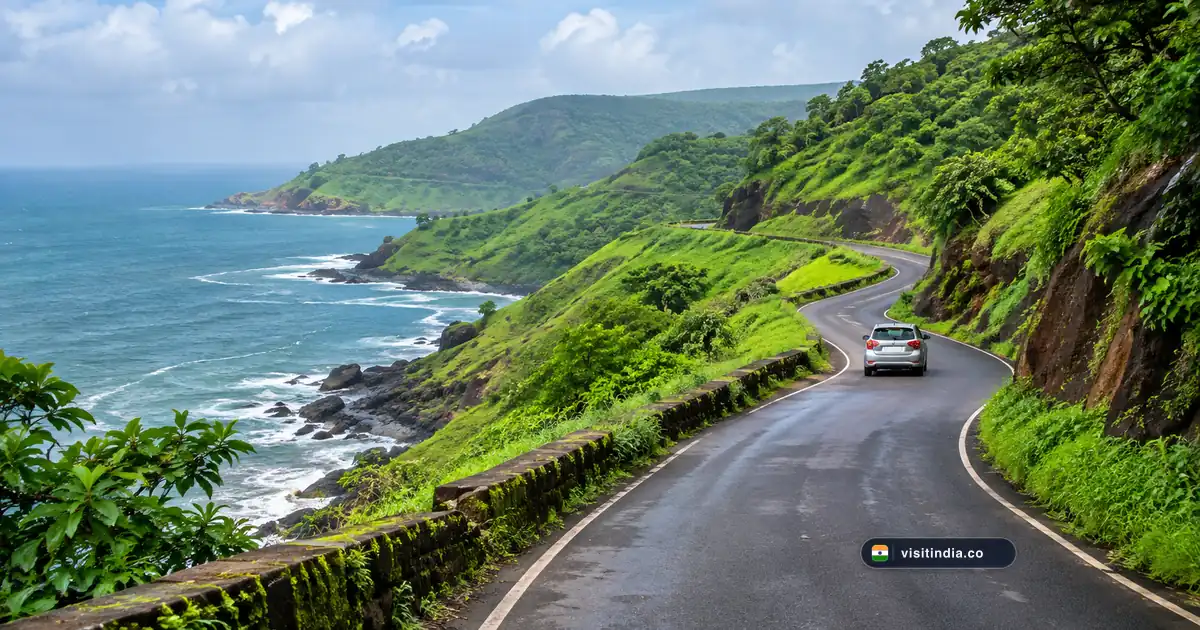
The city extends north along a scenic thirty-kilometer coastal corridor toward Bheemunipatnam. Green hills border the highway on the west while waves crash against granite outcrops on the east, creating one of peninsular India’s finest maritime driving routes.
Structuring an Efficient 48-Hour City Itinerary
A two-day visit divides naturally into exploring coastal headlands, temples, and maritime museums on Day 1, followed by southern lighthouses, Yarada beach, and scenic drives to Bheemili on Day 2. Pacing your sightseeing around the afternoon museum openings on RK Beach prevents unnecessary cross-town backtracking.
Start your mornings outdoors on elevated hilltops or quiet sandy bays before the midday sun warms the coastline, reserving air-conditioned museum galleries and beachside seafood dining for late afternoons and evenings.
| Itinerary Window | Target Area & Attractions | Operational Focus | Estimated Hours |
|---|---|---|---|
| Day 1 Morning | Simhachalam Temple & Kailasagiri | Hilltop views, ropeway cable car, glass skywalk | 8:00 AM to 12:30 PM |
| Day 1 Afternoon | Rushikonda Beach & Buddhist Sites | Blue Flag swimming, Thotlakonda ruins | 1:30 PM to 4:00 PM |
| Day 1 Evening | RK Beach Museum Precinct | INS Kurusura Submarine & TU-142 Aircraft | 4:30 PM to 8:30 PM |
| Day 2 Morning | Dolphin’s Nose & Yarada Beach | Lighthouse panoramic views, secluded sands | 8:00 AM to 12:00 PM |
| Day 2 Afternoon | Ross Hill & Bheemili Coastal Drive | Interfaith hill shrines, Dutch colonial cemetery | 1:30 PM to 6:00 PM |
Day 1 Morning: Simhachalam Temple and Kailasagiri Hilltop Park
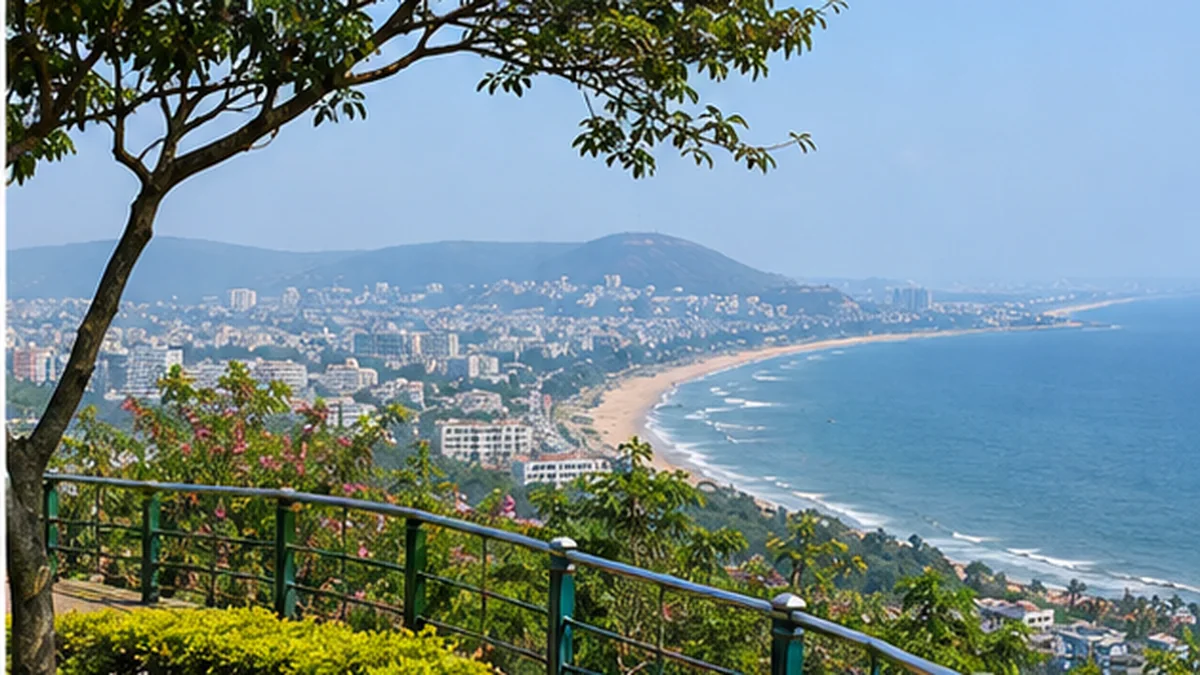
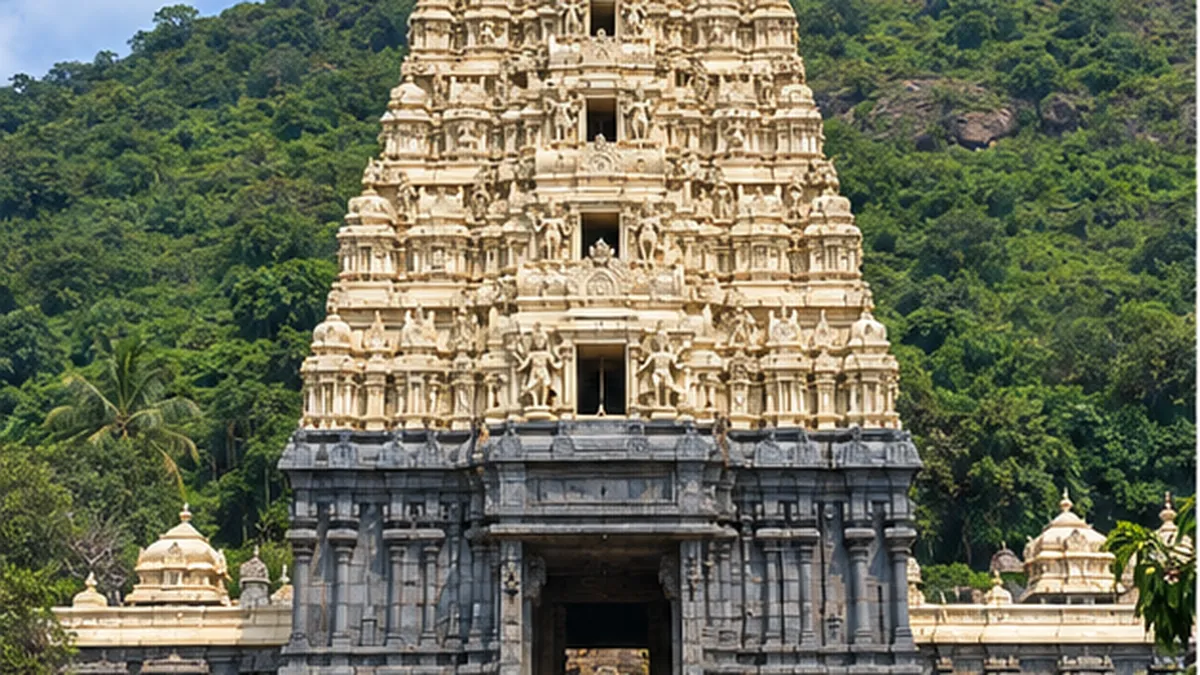
Start Day 1 early with morning darshan at the 11th-century Simhachalam Temple, followed by riding the scenic ropeway cable car up to Kailasagiri Hilltop Park for 360-degree views of the coastline.
Beginning your exploration at Simhachalam allows you to experience Andhra’s ancient spiritual roots before ascending Kailasagiri. Pilgrims touring coastal Andhra often combine this sacred site with the highland nature circuits detailed in our Araku Valley and Borra Caves circuit guide.
Simhachalam Varaha Lakshmi Narasimha Temple Darshan
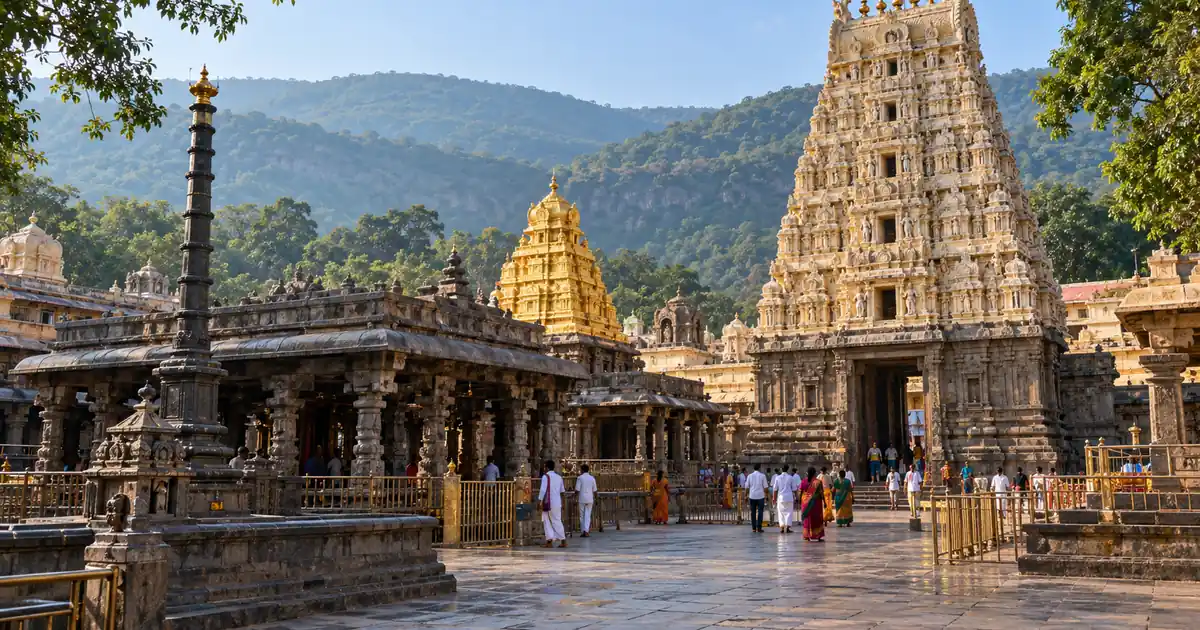
Perched on the forested Simhagiri ridge sixteen kilometers from the center, this sacred shrine honors Lord Narasimha covered continuously in sandalwood paste except during the annual Chandanotsavam festival. Built under the patronage of the Eastern Ganga dynasty and Gajapati monarchs, the stone temple blends Kalinga and Dravidian architectural features.
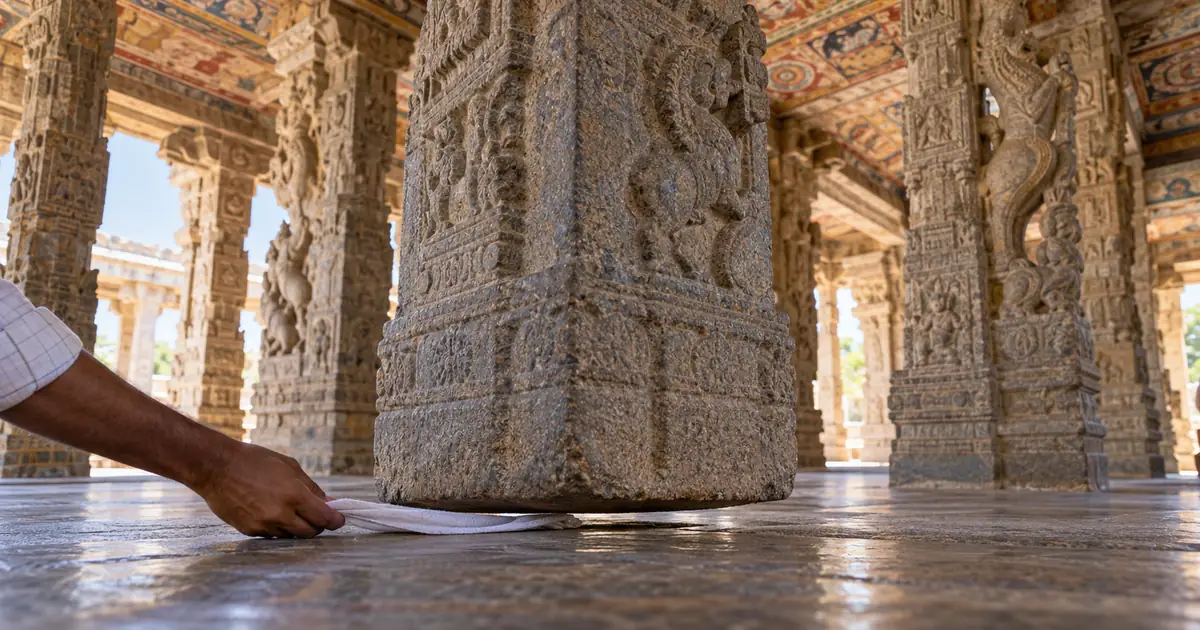
Devotees queue in open stone corridors decorated with intricately carved pillars depicting the avatars of Vishnu. Free general darshan queues take about forty minutes on weekday mornings, while ₹100 express darshan tickets expedite sanctum access during festival days.
Kailasagiri Ropeway, Shiva-Parvati Statues, and Glass Skywalk
Rising 360 feet above the coast, Kailasagiri features 40-foot white statues of Lord Shiva and Goddess Parvati, a circular toy train, and a newly constructed cantilevered glass skywalk extending over the cliff edge. The park sits atop a flat plateau managed by the Visakhapatnam Metropolitan Region Development Authority (VMRDA).
Visitors can board the passenger ropeway from Beach Road, enjoying an aerial glide above coastal coconut trees for ₹110 return fare. Walking onto the transparent reinforced glass panels of the new skywalk delivers an exhilarating view of breakers crashing hundreds of feet directly below.
Day 1 Afternoon: Rushikonda Blue Flag Beach and Buddhist Monasteries
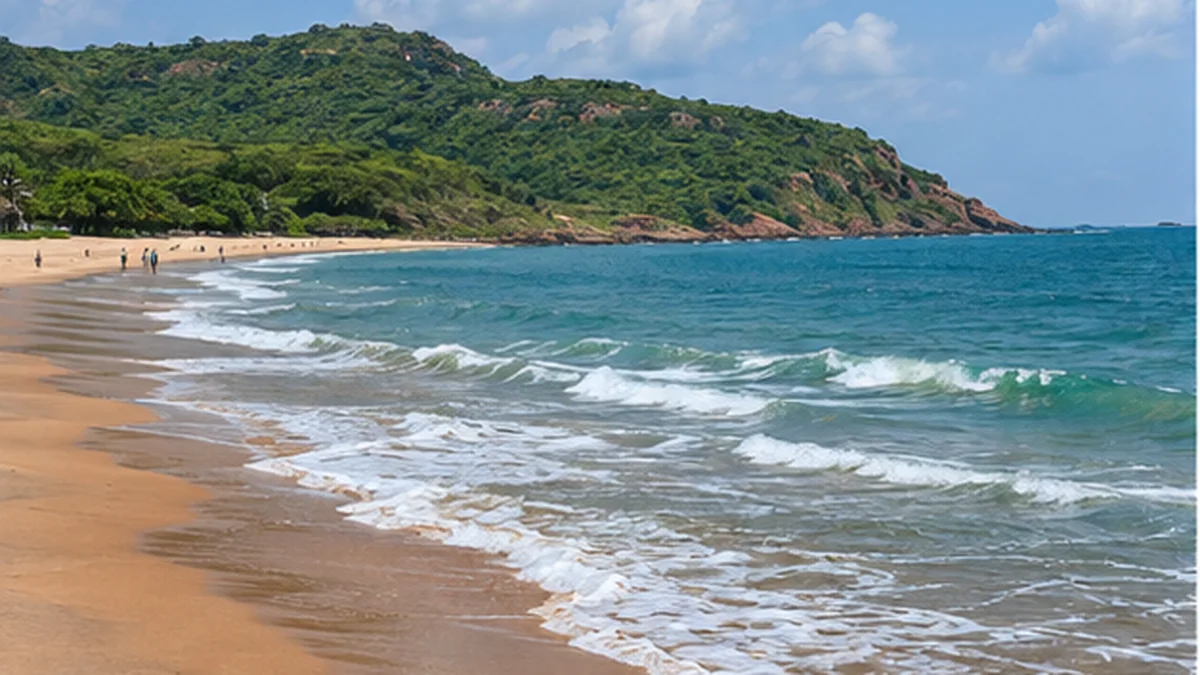
Head eight kilometers north along the coastal road to Rushikonda Beach, certified under the international Blue Flag program for its clean bathing waters, golden sands, and organized water sports amenities.
After a morning of temple visits and hilltop panoramas, the sandy crescent of Rushikonda provides a refreshing outdoor retreat. Pilgrims who travel south toward major temple cities like Tirumala Tirupati Balaji darshan rules frequently stop here to unwind along the tranquil shoreline.
Pro Tip
Rushikonda Swimming Safety: Always restrict swimming to the designated zones marked by red-and-yellow flags patrolled by professional lifeguards. The northern end of the bay near the rocky promontory experiences sudden underwater drop-offs and strong rip currents.
Rushikonda Beach: Certified Blue Flag Waters and Water Sports
Rushikonda provides safe, monitored swimming zones, eco-friendly showers, and certified adventure operators offering speed boating, jet skiing, sea kayaking, and windsurfing. The bay’s gentle slope makes it one of the safest swimming beaches along the central Andhra coast.
Adventure operators registered with Andhra Pradesh Tourism offer five-minute speed boat rides into the bay for approximately ₹300 per passenger, while tandem jet ski rides cost ₹500. Shaded timber loungers and changing rooms are maintained under strict eco-label standards.
Thotlakonda and Bavikonda Ancient Monastic Remains
Five kilometers north on coastal hills stand the excavated ruins of Thotlakonda and Bavikonda, ancient Hinayana Buddhist monasteries dating back to the 2nd century BCE where monks meditated overlooking the sea. These complexes served as major education centers on the trans-oceanic trade route linking Kalinga with Southeast Asia.
Visitors can walk among circular brick stupas, rock-cut cisterns, vihara cells, and stone pillared congregation halls. The hilltop vantage point delivers complete quiet, with wind rustling through scrub grass and panoramic views across the turquoise sea.
Day 1 Evening: RK Beach Maritime Museum Precinct
Spend late afternoon exploring Ramakrishna (RK) Beach, home to two of India’s most extraordinary public defense exhibits: the decommissioned INS Kurusura submarine museum and the TU-142M maritime reconnaissance aircraft museum.
Located along Beach Road, this museum cluster celebrates the Indian Navy’s maritime achievements. Both sites are managed cooperatively with the Eastern Naval Command, ensuring museum visitors receive authentic insights from retired naval personnel.
| Museum Complex | Operating Hours | Adult / Child Ticket | Signature Experience |
|---|---|---|---|
| INS Kurusura (S20) | 2:00 PM to 8:30 PM (Mon Closed) | ₹70 / ₹40 | Walking through active submarine control room |
| TU-142 Aircraft | 2:00 PM to 8:30 PM (Mon Closed) | ₹70 / ₹40 | Inspecting flight deck and sonobuoy racks |
| Combined Pass | 2:00 PM to 8:30 PM (Mon Closed) | ₹120 / ₹60 | Both museums with priority queue entry |
INS Kurusura Submarine Museum: Living Quarters and Torpedo Bays
INS Kurusura (S20) is a 91-meter Soviet-built submarine hauled onto the sand, allowing visitors to walk through narrow crew bunks, control rooms, periscopes, and operational torpedo launch compartments. Commissioned in 1969, the vessel played a vital combat reconnaissance role during the 1971 naval war.
Walking through the submarine’s watertight circular bulkheads, visitors experience the austere reality of submariner life. Retired naval guides explain how seventy-five crew members lived for weeks without sunlight, sleeping on bunks positioned directly above heavy torpedo tubes.
TU-142 Aircraft Museum: Inside the Maritime Reconnaissance Giant
Situated right across Beach Road, the TU-142M was one of the world’s heaviest turboprop aircraft, operated by the Indian Naval Air Squadron for anti-submarine warfare and long-range ocean surveillance. This massive aircraft features four counter-rotating propeller engines and a distinctive swept-wing silhouette.
Visitors ascend an external gantry to enter the fuselage, observing the flight control cockpits, radar stations, and electronic countermeasure consoles used to track foreign naval fleets across the Indian Ocean basin.
Day 2 Morning: Dolphin’s Nose Lighthouse and Yarada Beach
Begin Day 2 by driving to the southern arm of the harbour at Dolphin’s Nose, a dramatic rocky headland rising 174 meters above the sea that houses a powerful coastal lighthouse guiding ships into port.
This southern sector offers a completely different perspective of Vizag, trading urban promenades for rural fishing villages and rugged hillscapes. Administrative visitor notices are updated on the District Administration Visakhapatnam Official Portal.
Dolphin’s Nose Hill and Historic Lighthouse Panorama
The promontory is shaped like a dolphin’s snout, housing a 19th-century lighthouse with a beam visible for 32 nautical miles, offering panoramic views of the city skyline and harbor breakwaters. The summit provides a bird’s-eye perspective of massive container cargo vessels entering the inner navigation channel.
The lighthouse tower operates visitor viewing sessions between 3:00 PM and 5:00 PM daily for a nominal entry fee of ₹20. Even from the hill plateau outside lighthouse hours, the vista across the outer harbor and rocky surf is exceptional.
Yarada Beach: Golden Sands Fringed by Jungle Slopes
Tucked directly behind Dolphin’s Nose hill, Yarada Beach offers an uncrowded expanse of soft sand bordered by steep green hills and banana plantations, far removed from urban bustle. Accessible via a winding ghat road over the hill, the beach feels completely wild.
Golden sand curves for three kilometers, bordered by quiet palm groves and traditional fishing catamarans. While the sea here is too rough for safe casual swimming, it is an idyllic setting for sunrise photography, seaside strolls, and enjoying fresh coconut water in the shade.
Day 2 Afternoon: Ross Hill, Dutch Port History, and Bheemili Drive
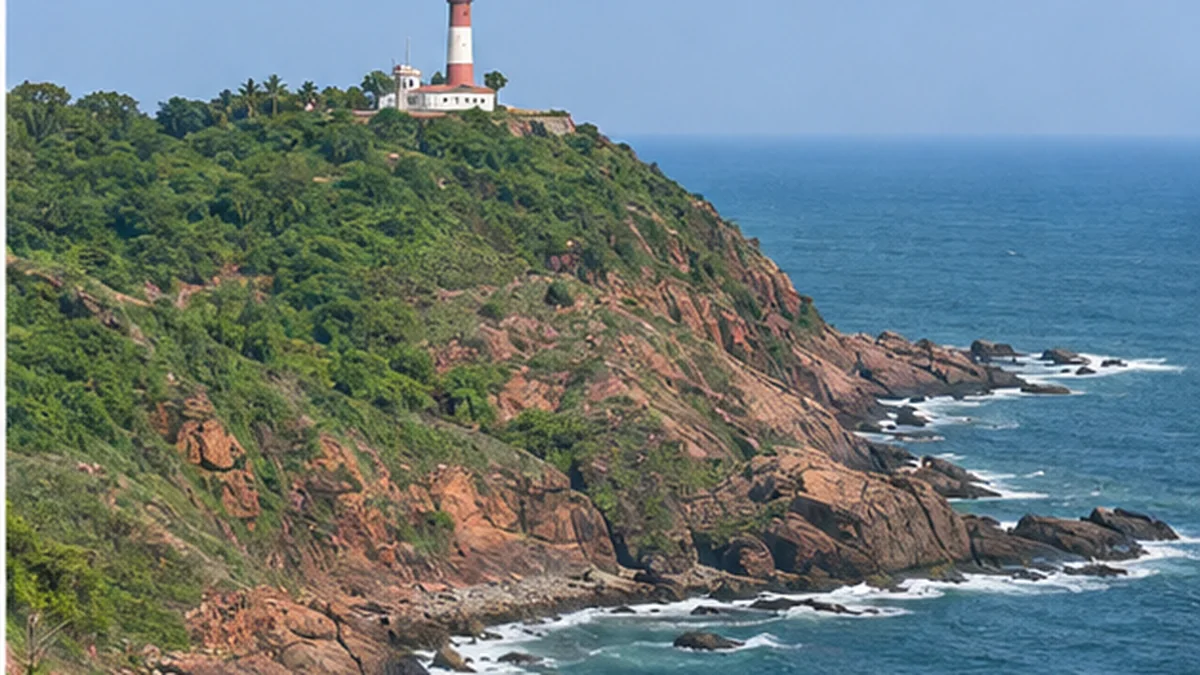
Conclude your city exploration by visiting the three harmonious shrines atop Ross Hill, followed by an exhilarating twenty-five-kilometer seaside drive along the marine highway to the ancient Dutch port of Bheemunipatnam (Bheemili).
This cultural journey illustrates the diverse historical layers of coastal Andhra. Travelers planning wider temple tours often connect this heritage with the ancient river shrines detailed in our Srikalahasti Temple Rahu Ketu Pooja guide.
Important
Coastal Highway Speed Limits: The marine drive between Rushikonda and Bheemili features scenic ocean bends and occasional crossing cattle from fishing hamlets. Keep speeds below 50 km/h and watch for localized sand drifts along the outer shoulder.
Ross Hill Interfaith Shrines and Fishing Harbor
Ross Hill illustrates Vizag’s communal harmony, featuring a Catholic church on Ross Hill, the Dargah Kudaratullah on Darga Konda, and Sri Venkateswara Swamy Temple on Sringamani Hill overlooking the port. For over a century, these three adjacent knolls have represented a shared symbol of interfaith unity.
From the terrace of the Ross Hill Church, look down upon the active Visakhapatnam fishing harbor, where hundreds of brightly painted wooden trawlers unload catches of prawns, seer fish, and mackerel alongside morning auction sheds.
Marine Drive to Bheemili: Oldest Dutch Cemetery and River Estuary
The four-lane coastal road to Bheemili hugs the ocean shore, terminating at Andhra Pradesh’s oldest municipality where 17th-century Dutch obelisks and clock towers overlook the Gosthani River estuary. The drive is flanked by red sandstone cliffs and deserted coastal sandbanks.
At Bheemili, visit the shaded Dutch cemetery dating back to 1661, displaying stone obelisks carved with coats of arms from the Dutch East India Company. End your afternoon watching the sunset where the Gosthani River flows peacefully into the ocean.
Travel Planning: Transit Hubs, Coastal Weather, and Cuisine
Visakhapatnam is well connected via Visakhapatnam International Airport (VTZ) and Visakhapatnam Junction (VSKP). Visitors enjoy pleasant winter weather from October to March and savor fiery coastal Andhra seafood and street snacks.
Planning an efficient stay involves choosing between beachfront hotels along RK Beach or quieter resorts near Rushikonda. Travelers heading inland toward Telangana can contrast these coastal flavors with the royal culinary circuits in our Charminar and Golconda Fort heritage guide.
Transit Arrival via Visakhapatnam Airport (VTZ) and Rail Terminal
The railway terminal sits four kilometers from RK Beach, while the international airport lies fourteen kilometers west, served by pre-paid taxi booths and regular app-based cab fleets. Pre-paid airport cabs charge approximately ₹450 to ₹600 to Beach Road hotels.
Visakhapatnam Junction is an essential hub on the Chennai to Howrah main railway line, hosting regular Vande Bharat Express and superfast trains connecting Hyderabad, Vijayawada, Bhubaneswar, and Kolkata. Official regional travel recommendations and site profiles are documented on the District Administration Visakhapatnam Tourist Places Guide.
Coastal Andhra Cuisine: Andhra Thalis, Bamboo Chicken, and Seafood
Sample traditional banana-leaf Andhra meals with spicy gongura pachadi, Royyala Iguru (prawn curry), and spicy crab fry at local beachside dining rooms and night street food stalls. Coastal seafood in Vizag is prepared with freshly ground black pepper, curry leaves, and sour tamarind paste.
Along RK Beach promenade, evening food vendors dish out hot muri mixture (puffed rice tossed with chopped onions, roasted peanuts, green chilies, and lime juice) alongside fried fish cutlets and sweet badam milk.
Travelers can cross-check regional travel advisories and updated festival calendars through the Incredible India Andhra Pradesh Guide before finalizing their coastal city itinerary.
Frequently Asked Questions About Visiting Visakhapatnam
How many days are enough to see Visakhapatnam?
A two-day itinerary is ideal to explore Visakhapatnam’s core city attractions including the INS Kurusura submarine museum, Kailasagiri hilltop park, Rushikonda Blue Flag beach, and Simhachalam temple. Travelers wishing to include a day excursion to the coffee plantations and limestone caves of Araku Valley should plan for three to four days.
What are the best places to visit in Visakhapatnam in 2 days?
The best two-day sequence covers Simhachalam Temple, Kailasagiri hilltop, and the submarine and aircraft museums on RK Beach during Day 1. Day 2 should focus on Dolphin’s Nose Lighthouse, Yarada Beach, Ross Hill interfaith shrines, and the scenic coastal drive to Bheemunipatnam.
What are the timings and ticket prices for the INS Kurusura submarine museum?
The INS Kurusura submarine museum opens from 2:00 PM to 8:30 PM on weekdays and Saturdays, with early morning entry starting at 10:00 AM on Sundays. Entry tickets cost ₹70 for adults and ₹40 for children, and the museum remains completely closed every Monday for maintenance.
Is Rushikonda a certified Blue Flag beach?
Yes, Rushikonda Beach holds the prestigious international Blue Flag certification awarded by the Foundation for Environmental Education for its clean swimming waters, waste management, and safety standards. The beach features lifeguards, shower facilities, disabled access ramps, and eco-friendly water sports.
How do you reach Kailasagiri hilltop park?
Visitors can reach Kailasagiri hilltop either by taking the scenic passenger ropeway cable car from the base station along Beach Road or by driving up the paved ghat road. Return cable car tickets cost ₹110 per adult, while road vehicles pay a nominal hilltop entry fee.
What are the temple rules for Simhachalam temple darshan?
Simhachalam Temple requires visitors to dress in modest traditional attire, barring short skirts, ripped jeans, and sleeveless tops from the sanctum queues. Devotees can participate in general free darshan or purchase ₹100 expedited tickets at designated temple counters.
What is the best season to plan a trip to Visakhapatnam?
The winter months between October and March offer pleasant daytime temperatures ranging from 22°C to 29°C with low humidity and clear coastal skies. Summer months from April to June are hot and humid, while July to September experiences intermittent Southwest monsoon rainfall.