Tirumala Tirupati Balaji Temple: Timings, Tickets & Darshan
Complete guide to Tirumala Tirupati Balaji Temple. Find ₹300 Special Entry booking, Alipiri and Srivari Mettu trekking steps, daily timings, and dress codes.
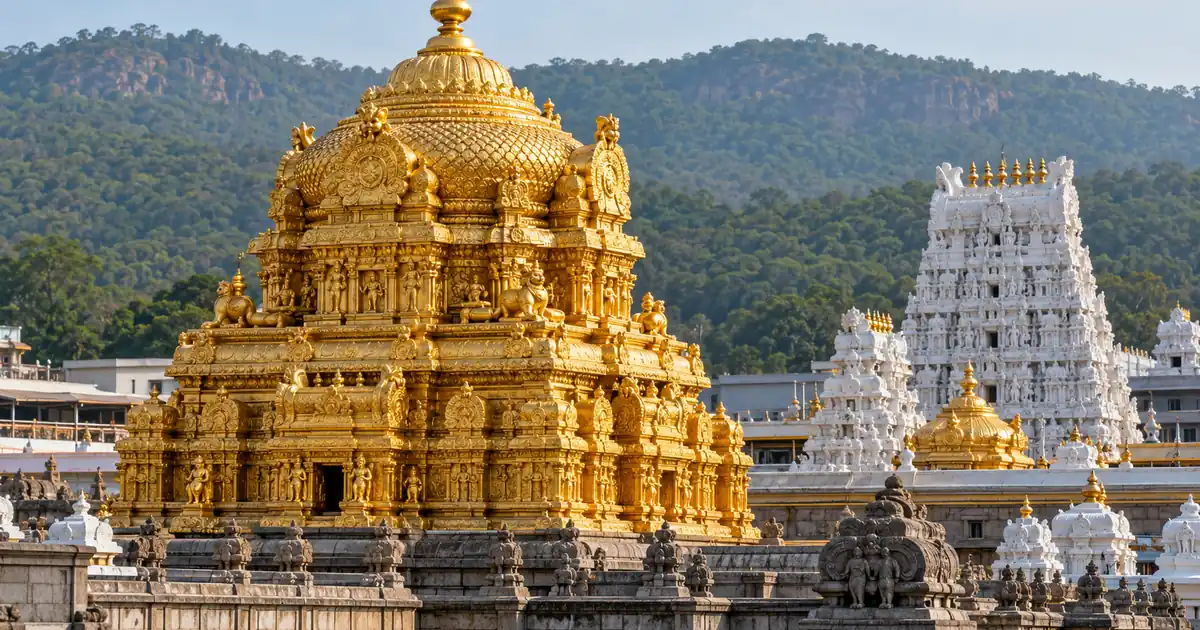
Tirumala Tirupati Balaji, dedicated to Lord Sri Venkateswara, is one of the most revered Hindu pilgrimage destinations in the world. Perched on Venkatadri, the seventh peak of the Seshachalam range in southern Andhra Pradesh, this ancient hill shrine attracts tens of millions of devotees every year. The sanctuary stands 853 meters above sea level and functions under the administration of the Tirumala Tirupati Devasthanams trust.
Devotees travel from across India and abroad to seek the blessings of Lord Srinivasa, who is worshipped as the living manifestation of Vishnu in the current Kali Yuga. Planning a visit to this sacred hill requires thorough preparation, from securing online entry quotas to understanding queue compartment routines and footpaths.
Darshan & Pilgrim Essentials
- Primary Deity: Lord Sri Venkateswara (Lord Balaji, Srinivasa, Govinda)
- Hill Elevation & Peak: 853 meters (2,799 feet) above sea level on Venkatadri Hill
- Administrative Authority: Tirumala Tirupati Devasthanams (TTD)
- Primary Darshan Types: ₹300 Special Entry Darshan (SED), Slotted Sarva Darshan (SSD), and Divya Darshan
- Footpath Steps: Alipiri Mettu (3,550 steps, 9 km) and Srivari Mettu (2,388 steps, 2.1 km)
- Dress Code Requirement: Strictly traditional Hindu clothing (Dhoti/Kurta for men; Saree/Chudidar with Dupatta for women)
- Nearest Rail Junction: Tirupati Main Railway Station (TPTY), 22 km via Ghat Road
Spiritual Significance and Seshachalam Seven Hills Legend
Lord Venkateswara chose the Seshachalam range as his permanent earthly abode to protect humanity throughout the hardships of the Kali Yuga. Devotees believe that sincere prayers offered at this hilltop shrine relieve debts, clear spiritual obstacles, and grant liberation.
The Manifestation of Lord Venkateswara in Kali Yuga
According to the sacred puranas, Sage Bhrigu tested the patience of the Hindu Trinity to determine the supreme deity. When the sage kicked Lord Vishnu on the chest, Goddess Lakshmi felt insulted by Vishnu’s forbearance and departed Vaikuntha for Earth. Desolate without his consort, Lord Vishnu descended to the Seshachalam hills and sat in deep meditation inside an ant-hill.
He took the human form of Srinivasa and eventually wed Princess Padmavati, an avatar of Lakshmi, in a grand celestial wedding. To finance the celebration, Lord Srinivasa took a substantial loan from Kubera, the treasurer of the gods. Devotees offer coins and gold into the temple hundi to help pay the interest on that holy debt.
The Sacred Geography of Venkatadri and Seshachalam Peaks
The Seshachalam mountain range represents the body of Adisesha, the celestial serpent upon whom Lord Vishnu rests. The hills consist of seven prominent peaks: Seshadri, Neeladri, Garudadri, Anjanadri, Vrishabhadri, Narayanadri, and Venkatadri. The temple of Lord Balaji crowns Venkatadri, earning him the name Seven Hills God or Edu Kondala Vada.
Each peak carries deep scriptural associations with divine protectors and sages who practiced austerities on these slopes. The green hills are covered in dry deciduous forests, sacred springs called theerthams, and rocky ridges. Exploring this holy geography offers insight into the broader Andhra Pradesh temple circuit, where royal dynasties enriched spiritual centers across centuries.
Historical Patronage from Pallava to Vijayanagara Dynasties
Royal records engraved on the granite walls of Tirumala document continuous patronage across more than a millennium. The Pallava Queen Samavai consecrated the silver idol of Bhoga Srinivasa in 966 CE. Later, the Cholas, Pandyas, and the rulers of Vijayanagara lavished tremendous wealth upon the shrine.
King Krishnadevaraya of the Vijayanagara Empire visited Tirumala seven times between 1513 and 1521 CE. He donated heaps of gold and precious stones, funding the complete gold guilding of the sanctum roof. Bronze statues of Krishnadevaraya and his two queens still stand in prayer inside the temple compound, commemorating their devotion.
Ananda Nilayam Sanctum, Gold Vimana, and Dravidian Architecture
The central sanctuary of Tirumala features an ornate Dravidian complex crowned by the Ananda Nilayam, a tiered tower entirely covered in gold sheets. The temple layout channels pilgrim queues through concentric stone courtyards before revealing the towering self-manifested deity.
Architectural Plan of the Mukkoti Pradakshinam Courtyards
The temple compound incorporates multiple concentric enclosures known as prakarams, bordered by towering granite boundary walls. Devotees pass beneath the outer stone gopuram and progress through the Sampangi Pradakshinam courtyard. This passage houses stone mandapams built by Vijayanagara rulers and Saluva chiefs.
The inner circumambulation path, known as the Vimana Pradakshinam, surrounds the sanctum sanctorum. Historically, the sacred Mukkoti Pradakshinam corridor opened only during Vaikuntha Ekadashi, allowing devotees to circle the inner chamber through special doors. Pilgrims traveling across the region often compare these ornate granite pillars with the stone shrines at the Mallikarjuna Jyotirlinga in Srisailam. Heritage records can also be explored through the Incredible India pilgrimage directory.
The Gilded Splendor of the Ananda Nilayam Vimana
The three-tiered tower above the sanctum sanctorum is called the Ananda Nilayam, meaning the abode of eternal bliss. First gilded with gold copper plates by Chola king Jatavarman Sundara Pandya in the 13th century, it was later enriched by Saluva Narasimha Deva Raya and King Krishnadevaraya.
Gilded relief sculptures cover every level of the tower, depicting avatars of Vishnu and heavenly attendants. On the northern face of the golden vimana sits the holy image of Vimana Venkateswara. Devotees pause in the inner courtyard to fold their hands toward this image, believing its darshan grants the same spiritual merit as seeing the main idol inside the sanctum.
Dhvajastambham, Bali Peetham, and Golden Bell Traditions
Before reaching the silver threshold of the sanctum, pilgrims pass the towering gilded flagpole, or Dhvajastambham. Surrounding this sacred mast is the Bali Peetham, where daily ceremonial offerings are placed for guardian deities. Devotees perform prostrations here before entering the queue toward the inner sanctum.
Nearby hangs a massive bronze and gold bell used during the daily food offering rituals known as Naivedyam. During this period, the sanctum doors close, and temple bells ring through the corridors. The rhythm of these bells signals that Lord Venkateswara is receiving cooked offerings according to Vaikhanasa Agama tradition.
Darshan Categories: ₹300 Special Entry, Sarva Darshan, and Srivani Quota
Access to Lord Venkateswara operates through structured quotas designed to manage up to 100,000 pilgrims each day. Understanding how each ticket type functions is vital for avoiding extended delays in holding compartments.
| Darshan Category | Booking Mode | Ticket Price (INR) | Typical Waiting Duration |
|---|---|---|---|
| Special Entry Darshan (SED) | Online advance reservation | ₹300 per pilgrim | 2 to 4 hours |
| Slotted Sarva Darshan (SSD) | Daily counter tokens in Tirupati | Free | 4 to 8 hours |
| Free Sarva Darshan | Direct walk-in without token | Free | 8 to 18 hours |
| Divya Darshan (Pedestrian) | Biometric counters on footpaths | Free | 3 to 6 hours |
| Srivani Trust Break Entry | Online donation plus ticket | ₹10,500 per devotee | 1 to 2 hours |
| Infant & Senior Citizen Quota | Daily reporting at special gates | Free entry | 1.5 to 3 hours |
Special Entry Darshan (SED) Online Booking Mechanics
The ₹300 Special Entry Darshan remains the most popular option for travelers visiting Tirumala from distant states. The trust releases these ticket quotas online about two to three months ahead of the target month on the official TTD booking portal. Devotees must create an account using an active Indian mobile number and enter verified Aadhaar details for every pilgrim.
Each booking slot specifies a precise reporting hour at the ATC car parking entry point in Tirumala. Devotees must carry the physical printout of the booking confirmation along with original government photo identity cards. Failure to show matching identity proof will result in denial of entry at the preliminary verification gate.
Slotted Sarva Darshan (SSD) Free Token Counters in Tirupati
For pilgrims unable to secure ₹300 tickets online, TTD issues free Slotted Sarva Darshan tokens at offline counters in Tirupati town. Counters operate at locations such as Srinivasam Complex near the bus station, Vishnu Nivasam opposite the railway station, and Bhudevi Complex near Alipiri.
Devotees present their Aadhaar card at the biometric terminal to receive a time-stamped token. This slip indicates the designated reporting hour at the queue complex in Tirumala, freeing pilgrims from waiting in holding pens for an entire day. Counters open early in the morning and issue tokens until the day’s quota is exhausted.
Srivani Trust Donation Privileges and VIP Break Entry
Devotees seeking expedited entry can utilize the Sri Venkateswara Aalayala Nirmanam (Srivani) Trust initiative. Under this scheme, an individual contributes ₹10,000 as a donation toward temple renovation and village shrine construction, followed by purchasing a ₹500 VIP Break Darshan ticket.
The Srivani quota allows pilgrims access during morning VIP break slots, drastically reducing overall queue movement time. Bookings can be made online through the official portal, and offline quota rooms are also maintained in Tirumala subject to availability.
Vaikuntham Queue Complex Waiting Realities and Refreshment Services
All entry streams eventually feed into the Vaikuntham Queue Complex, a massive multi-level facility containing dozens of spacious holding compartments. Once inside your assigned compartment, gates lock periodically to regulate human traffic into the main temple corridors.
TTD staff provide continuous complimentary refreshments to all waiting devotees. Sevadals distribute piping hot sambar rice, pongal, buttermilk, warm milk for toddlers, and fresh drinking water. Clean restrooms and medical aid posts are integrated into every corridor, ensuring comfort during peak rush hours.
Pilgrim Footpaths: Alipiri Mettu vs Srivari Mettu Trek Routes
Trekking uphill to Tirumala on foot is a time-honored devotional practice believed to cleanse worldly sins and demonstrate humility. TTD maintains two distinct pedestrian paths equipped with covered canopies, drinking water, lighting, and security.
Alipiri Mettu Route: 3,550 Steps Through Galigopuram
Alipiri Mettu serves as the primary and longest walking path, starting from the foot of the hill at Alipiri in Tirupati. The route covers 9 kilometers and comprises 3,550 steps. The initial stretch up to the Galigopuram is steep and demanding, requiring endurance and steady pacing.
Beyond Galigopuram, the path flattens out around the Deer Park and proceeds alongside the scenic highway before climbing the final ridge into Tirumala. Most pilgrims take between 3.5 to 5 hours to complete this trek. The entire trail is well-lit, paved with smooth stones, and monitored by closed-circuit cameras.
Srivari Mettu Route: 2,388 Steps from Srinivasa Mangapuram
Srivari Mettu is the traditional royal pathway used by Krishnadevaraya and represents the shortest route to the hilltop. Located near Srinivasa Mangapuram, approximately 15 kilometers west of Tirupati town, this trail covers 2.1 kilometers and contains 2,388 stone steps.
While steeper than Alipiri, the compact distance means most fit walkers complete the ascent in 1.5 to 2.5 hours. The path winds through shaded forest canopies and remains open from 6:00 AM to 5:00 PM daily. TTD runs free transit buses from Tirupati Railway Station directly to the Srivari Mettu base.
Free Luggage Transfer Counters and Walking Token Protocols
Walkers do not need to haul heavy luggage up the mountain stairs. TTD operates a complimentary luggage transport service at both Alipiri and Srivari Mettu starting gates. Pilgrims deposit their suitcases, receive a barcoded receipt, and retrieve their belongings at the hilltop common luggage counter near the central bus stand.
Pedestrians can also access Divya Darshan tokens at designated biometric booths midway along the steps. These tokens provide expedited entry into the sanctum compared to standard unslotted queues. Tokens are limited each day, so beginning your climb before dawn improves your chances of obtaining one.
Srivari Laddu Prasadam, Tonsuring (Kalyanakatta), and Cloakroom Lockers
The pilgrimage to Tirumala involves sacred rituals beyond darshan, including head shaving, offering prasadam, and securing personal belongings. Managing these logistics smoothly allows you to focus fully on the divine experience.
GI-Tagged Tirupati Laddu Production and Token Collection
The world-famous Tirupati Laddu is prepared in the temple’s massive kitchen, known as the Potu. Crafted from gram flour, pure cow ghee, sugar candy, raisins, cardamom, and cashew nuts, the sweet holds a prestigious Geographical Indication (GI) status.
Every darshan ticket includes one complimentary laddu. Devotees collect their prasadam at the large distribution complex located directly outside the temple exit. Additional laddus can be purchased at ₹50 each by presenting your ticket barcode at the automated payment counters.
Kalyanakatta Tonsuring Rituals and Hygiene Standards
Offering one’s hair through tonsuring represents the shedding of ego and vanity before God. TTD operates massive, multi-story tonsuring centers called Kalyanakatta across Tirumala, along with mini-tonsure centers near guest houses. The service is completely free, and barbers are compensated directly by the trust.
TTD maintains strict hygiene protocols, using brand-new disposable blades and sanitized equipment for every devotee. Dedicated bathing complexes with hot water taps stand adjacent to the main Kalyanakatta buildings, allowing pilgrims to bathe thoroughly before wearing traditional clothes for darshan.
Electronic Cloakrooms, Cell Phone Lockers, and Footwear Stands
Electronic items, mobile phones, cameras, smartwatches, and leather goods are strictly barred inside the temple compound. Free mobile deposit counters operate outside the entrance to the Vaikuntham Queue Complex. Staff seal your devices in tamper-evident pouches and hand you an electronic barcode token.
Similarly, extensive free footwear stands line the pedestrian plazas around the temple. Pilgrims are advised to memorize their locker numbers or take note of the sector signboards. Collecting your items after darshan requires presenting the printed receipt tokens.
Dress Code Mandates, Ghat Road Regulations, and Transit Access
Strict adherence to dress standards and transport schedules guarantees a hassle-free visit to the hilltop shrine. Tirumala enforces traditional clothing policies firmly across all sanctum queue lines.
Strict Traditional Dress Regulations for Men and Women
TTD mandates traditional Hindu attire for all devotees entering the queue lines. Western clothing, jeans, shorts, and skirts are strictly prohibited. Temple guards will deny entry to anyone wearing improper attire, regardless of confirmed booking slips.
- Men: Must wear a white or cream dhoti with an upper cloth (kanduva), or a traditional kurta pyjama. Shirts can be worn during the approach, but devotees must remove shirts when entering certain inner sanctum lines.
- Women: Must wear a saree, a half-saree (pavada), or a churidar / salwar kameez accompanied by a properly draped dupatta. Sleeveless tops and tight leggings are not allowed.
- Children: Expected to wear traditional attire or modest ethnic dress suitable for a holy place.
Twin Ghat Roads: Speed Timing Limits and Night Closures
Connecting Tirupati town to the Tirumala hill are two engineered mountain highways known as the Ghat Roads. The Second Ghat Road handles all uphill traffic over 18 kilometers, while the First Ghat Road carries downhill vehicles over 19 kilometers.
To ensure safety and reduce wildlife accidents, TTD enforces strict minimum travel times. Vehicles climbing uphill must take at least 28 minutes to reach the hilltop toll plaza, while downhill trips must take at least 40 minutes. Arriving earlier triggers automated speeding fines. Both ghat roads are completely closed to all vehicular traffic from 12:00 AM midnight to 3:00 AM daily.
How to Reach Tirupati by Train, Flight, and Hilltop Bus
Tirupati is exceptionally well-connected to every major Indian city by air, rail, and road networks. Tirupati Airport (TIR) at Renigunta operates direct domestic flights from Hyderabad, Bengaluru, Chennai, and New Delhi. Pilgrims can book trains through the IRCTC train reservation portal, arriving at Tirupati Main (TPTY) or Renigunta Junction (RU).
From Tirupati, state transport corporation (APSRTC) electric buses operate continuously every 2 to 3 minutes from the central bus stand and railway station to Tirumala. The scenic journey takes approximately 45 minutes. During the annual autumn Brahmotsavam, over three hundred thousand devotees assemble along the Mada Streets, detailed in our dedicated Tirupati Brahmotsavam Garuda Seva guide. Many devotees also take day trips to the renowned Srikalahasti Temple, situated just 38 kilometers east of Tirupati, for Rahu-Ketu Sarpa Dosha nivarana poojas.
Frequently Asked Questions About Tirumala Tirupati Balaji
What are the official daily darshan operating hours?
The temple operates for nearly 22 hours each day. The sanctum opens around 3:00 AM with the sacred Suprabhatam awakening ritual and closes around 1:00 AM after the final Ekantha Seva bedtime rites. Darshan for general pilgrims usually runs from 6:00 AM to 11:30 PM, pausing briefly during scheduled food offerings and cleaning.
When does TTD release the ₹300 Special Entry Darshan quota?
TTD releases the ₹300 Special Entry Darshan quota online between the 18th and 24th of each month for the subsequent two to three months. Exact release notifications are published on the official TTD website and news channels several days in advance. Slots often sell out within minutes of opening.
Are jeans or Western clothing permitted inside the sanctum line?
No, jeans, t-shirts, Western trousers, skirts, and shorts are strictly forbidden in all darshan queue lines. Men must wear traditional dhotis or kurta pyjamas, while women must wear sarees or salwar kameez with dupattas. Temple staff turn away non-compliant pilgrims at security gates.
Which walking route is faster: Alipiri Mettu or Srivari Mettu?
Srivari Mettu is much faster, taking 1.5 to 2.5 hours to climb 2,388 steps over a 2.1-kilometer trail. Alipiri Mettu is longer, covering 9 kilometers with 3,550 steps, taking between 3.5 to 5 hours to finish. Srivari Mettu is open from 6:00 AM to 5:00 PM, while Alipiri Mettu remains open 24 hours.
How do devotees deposit mobile phones and leather items?
Devotees deposit mobile phones, cameras, smartwatches, and leather goods at dedicated free TTD cloakrooms located near the Vaikuntham Queue Complex entrance. Attendants bag your items, record your biometric or phone details, and provide a barcoded token for secure retrieval after exiting.
What is the nearest railway junction and airport to Tirumala?
The nearest railway station is Tirupati Main (TPTY), located 22 kilometers from Tirumala. Renigunta Junction (RU) is 32 kilometers away and serves many express long-distance trains. The nearest air gateway is Tirupati Airport (TIR) at Renigunta, 38 kilometers from the hilltop shrine.