Srikalahasti Temple Rahu Ketu Pooja: Timings & Costs Guide
Complete guide to Srikalahasti Rahu Ketu Kala Sarpa Dosha Nivarana Pooja. Ticket prices (₹500-₹2,500), timings, step-by-step rituals, and Tirupati transit.
Field Advisory & Quick Summary
- The Air Element (Vayu Sthalam): Srikalahasteeswara Temple represents the air element among the five sacred Pancha Bhuta Sthalams. In the windowless sanctum, an oil lamp flame flickers continuously from an invisible current of air.
- Rahu Ketu Sarpa Dosha Nivarana: Srikalahasti is recognized across India as the foremost pilgrimage center for neutralizing Rahu, Ketu, and Kala Sarpa Doshas through specialized Vedic rituals.
- Pooja Ticket Tiers: Tickets range from ₹500 (outer hall) to ₹750, ₹1,500, ₹2,500 (VIP AC Mandapam), and ₹5,000 (exclusive priority). All tickets include the official pooja samagri materials.
- Key Astrological Timings: Performing the ritual during Rahu Kalam (especially on Tuesdays and Sundays) or during solar and lunar eclipses is considered particularly potent.
- Proximity to Tirupati: Located just 36 kilometers east of Tirupati, making it an easy 45-minute road journey from the Balaji pilgrimage hub.
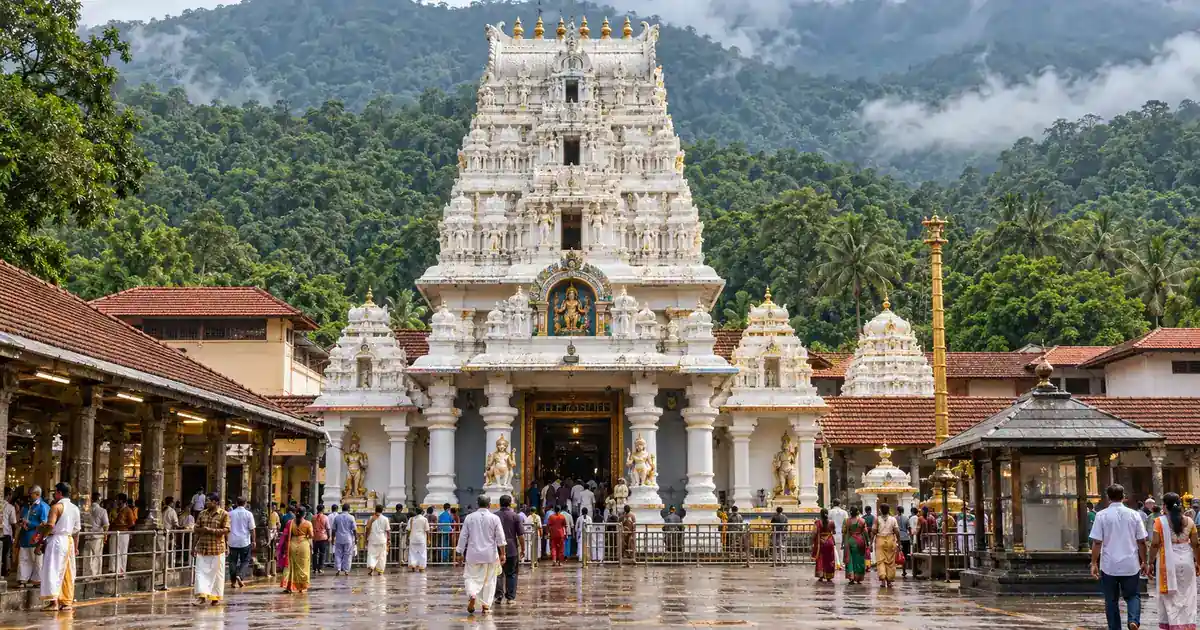
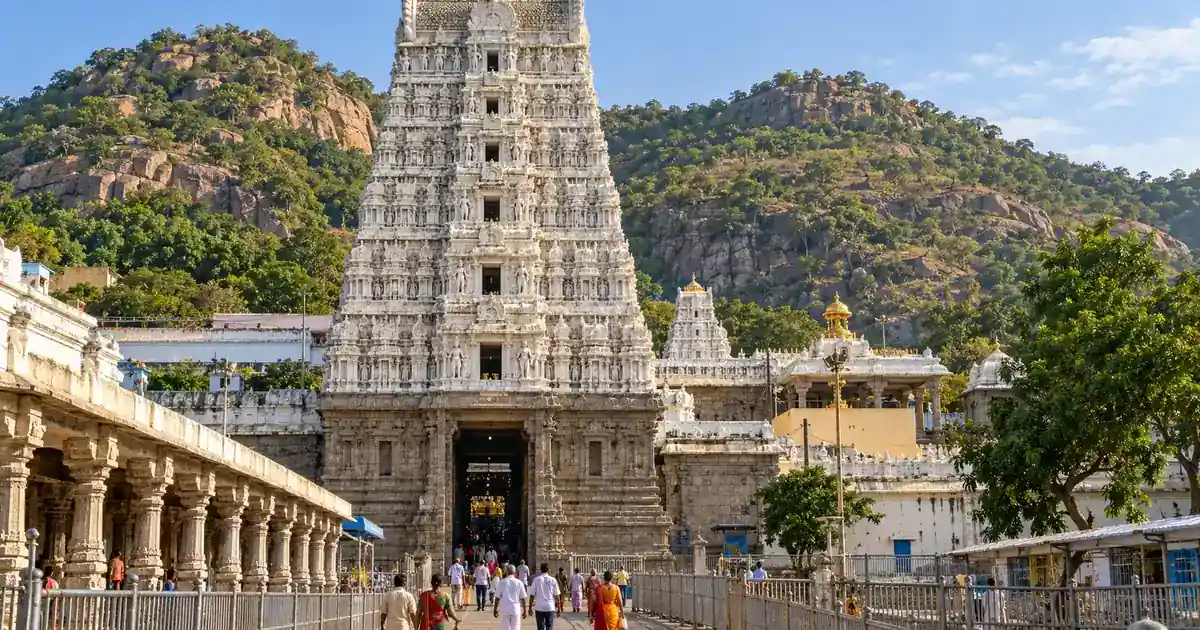
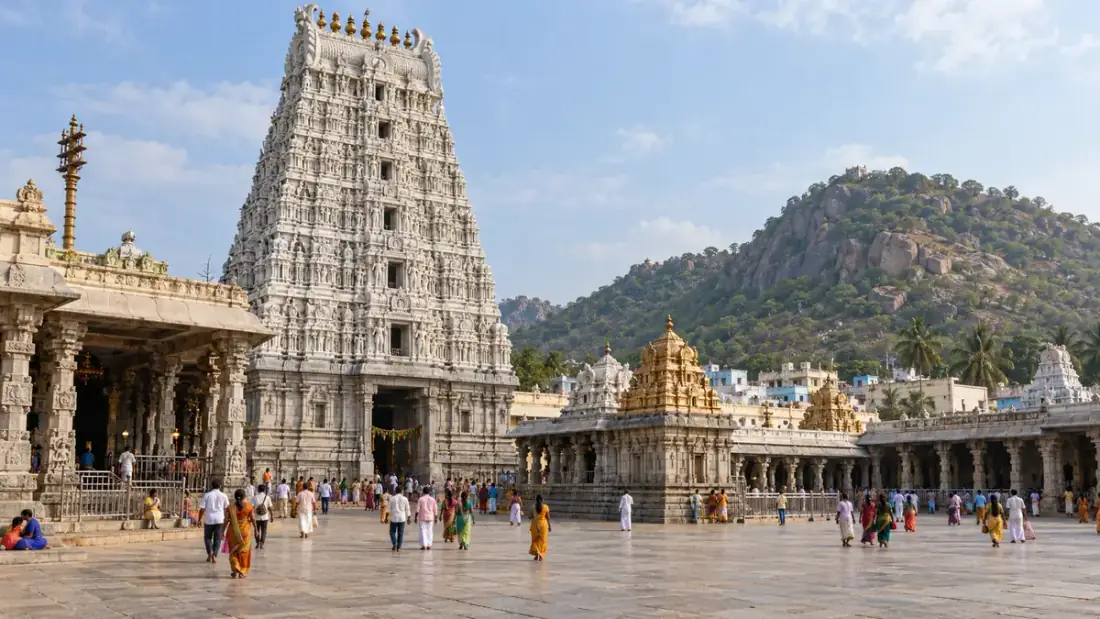
Situated along the banks of the holy Swarnamukhi River in the Tirupati district of Andhra Pradesh, Srikalahasteeswara Temple stands as one of ancient India’s most venerated Shaivite monuments.
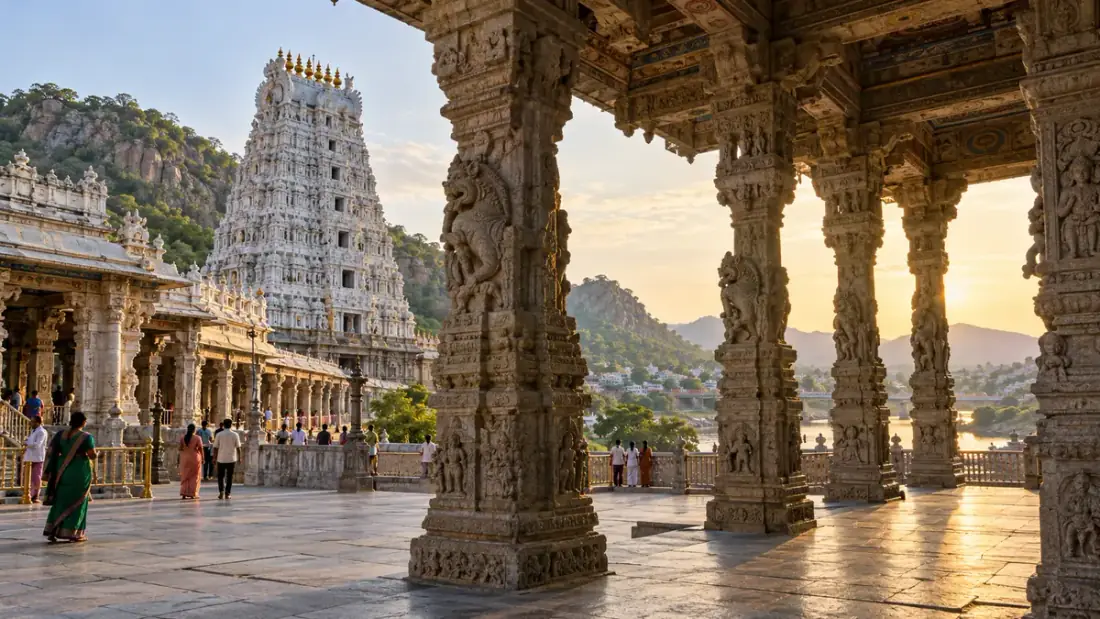
The temple occupies a dramatic natural setting where the river bends northwards and rocky granite hillocks flank the sanctuary. Its central sanctum is carved directly into the lower slope of the Kannappa hillock, crowned by towering gopurams constructed during the Chola, Pallava, and Vijayanagara eras.
Beyond its architectural magnitude, Srikalahasti holds two unique claims to spiritual renown. It is the sole Pancha Bhuta Sthalam located outside Tamil Nadu, embodying the air element (Vayu Lingam).
Simultaneously, the shrine serves as the primary center in India for conducting the Rahu-Ketu Sarpa Dosha Nivarana Pooja, drawing hundreds of thousands of pilgrims annually seeking relief from planetary afflictions.
Devotees touring the wider regional network of elemental Shiva shrines can trace the remaining four temples in our Pancha Bhuta Sthalams Circuit architecture and visitor tips.
The Cosmic Vayu Lingam: Air Element & The Legend of Three Creatures
In classical Hindu cosmology, air (Vayu) represents the vital life breath (Prana) that animates all sentient living beings. At Srikalahasti, Lord Shiva is worshipped as Kalahasteeswara, the Lord of Air.
The central lingam is self-manifested (Swayambhu) from natural white stone and remains untouched by human hands; even the temple priests perform holy abhishek (water bathing) solely upon the metallic Utsava idol and the stone pedestal, rather than the lingam itself.
| Symbolic Dimension | Sacred Attribute & Manifestation |
|---|---|
| Cosmic Element | Air (Vayu), embodying breath, mobility, and cosmic vitality |
| Presiding Deities | Lord Srikalahasteeswara and Goddess Gnana Prasunambika |
| Sanctum Phenomenon | Two ghee lamps burn inside the airtight sanctum; one stays still while the other flickers continuously |
| River Sanctification | The holy Swarnamukhi (“Golden-Faced”) River flowing northward (Uttara Vahini) |
| Sacred Mountain | Kannappa Hill, where the hunter-saint Kannappa offered his eyes to Shiva |
The proof of the air element is visible inside the inner sanctum sanctorum. The garbhagriha is an airtight stone cave without windows or external ventilation. Two brass ghee lamps stand before the lingam.
While the primary lamp remains steady and unmoving, the flame of the secondary lamp flickers continuously, agitated by an imperceptible draft of air that emanates from the base of the lingam, symbolizing the perpetual breath of Shiva.
The name Srikalahasti immortalizes three devoted creatures who attained liberation (Moksha) through pure instinctive worship:
- Sri (The Spider): Spun intricate silk webs over the lingam to protect it from scorching sun and falling debris.
- Kala (The Serpent): Placed precious gem stones (nagaratnas) atop the lingam every morning to adorn the Lord.
- Hasti (The Elephant): Fetched fresh water from the Swarnamukhi River in its trunk to bathe the lingam, decorating it with vilva leaves.
When the elephant unknowingly swept away the serpent’s gems while washing the lingam, a misunderstanding arose, and the serpent entered the elephant’s trunk in anger. Both creatures perished in divine devotion, and Shiva granted eternal salvation to all three, uniting their names into the sanctuary.
Understanding Rahu Ketu & Kala Sarpa Dosha: Why Srikalahasti?
In Vedic astrology (Jyotisha), Rahu and Ketu are known as lunar nodes or shadow planets (Chhaya Grahas). When all seven major planets (Sun, Moon, Mars, Mercury, Jupiter, Venus, and Saturn) are hemmed between Rahu and Ketu in a birth chart, the configuration forms Kala Sarpa Dosha.
Similarly, adverse alignments of Rahu or Ketu with the Sun, Moon, or Venus generate specific planetary afflictions known as Sarpa Dosha or Naga Dosha, traditionally associated with delayed marriage, career obstacles, health difficulties, and family unrest.
| Astrological Condition | Astrological Pattern | Traditional Believed Impact | Srikalahasti Remedy Focus |
|---|---|---|---|
| Kala Sarpa Dosha | All planets positioned between Rahu and Ketu | Fluctuating fortunes, career delays, chronic stress | Full Kalasarpa Nivarana Pooja with silver snake idols |
| Rahu Dosha | Rahu afflicted or poorly placed in key astrological houses | Mental restlessness, unexpected financial setbacks | Rahu Pooja with black urad dal and blue flowers |
| Ketu Dosha | Ketu placed adversely in key birth chart sectors | Health vulnerabilities, indecision, relationship strain | Ketu Pooja with horse gram and multi-colored flowers |
| Naga Dosha / Putra Dosha | Harm caused to serpents in ancestral lineage | Obstacles in childbirth, marital friction | Special Sarpa Dosha remedy and idol donation |
Srikalahasti is revered as the ultimate remedy center because Lord Shiva here bears the title of Kala Samhara Murti (the conqueror of time and death). Furthermore, Rahu and Ketu themselves are believed to have prayed to Lord Shiva at this very spot to attain divine planetary status.
Consequently, performing the dosha nivarana pooja inside this consecrated field of air is believed to neutralize negative astrological currents and restore karmic harmony.
Devotees pairing this pilgrimage with blessings for prosperity often begin their journey at the world-renowned shrine of Tirumala Tirupati Balaji Temple, located just a short drive across the valley.
Rahu Ketu Pooja Ticket Categories, Prices & Mandapam Options
The temple administration manages the Rahu-Ketu Pooja through multiple specialized halls (mandapams) to handle thousands of daily participants. Tickets are sold over the counter at the temple and through authorized online portals.
All tickets include the official pooja samagri kit containing two silver serpent idols, flowers, coconuts, sacred threads, and ritual offerings.
| Ticket Category | Ticket Fee | Pooja Venue / Mandapam | Batch Size & Experience | Total Ritual Duration |
|---|---|---|---|---|
| General Category | ₹500 | Outer Pillared Hall (Open Hall) | Large group batch (100–150 devotees) | 35 to 45 minutes |
| Special Mandapam | ₹750 | Semi-enclosed Mandapam | Medium group batch (50–75 devotees) | 45 minutes |
| VIP Mandapam | ₹1,500 | Enclosed Air-Cooled Mandapam | Smaller batch (30–40 devotees), closer priest guidance | 45 to 50 minutes |
| Super VIP Mandapam | ₹2,500 | Fully Air-Conditioned VIP Hall | Limited seating (15–20 devotees), individualized chanting | 50 to 60 minutes |
| Exclusive Priority Seva | ₹5,000 | Inner Sanctum Special Enclosure | Individual couple or family batch with dedicated priest | 60 minutes + priority darshan |
Which Ticket Category Should You Choose?
- Budget & Solo Pilgrims: The ₹500 and ₹750 categories provide the identical authentic Vedic mantras and samagri kit. The primary difference is the hall setting and larger crowd volume.
- Families & Senior Citizens: The ₹1,500 or ₹2,500 VIP Mandapam tickets are strongly recommended. These air-conditioned halls feature clean carpets, ample seating space, and clearer audio amplification of the priest’s Sanskrit chanting instructions.
- Darshan Fast-Track Privilege: Higher-tier tickets (₹1,500 and ₹2,500) include expedited entry into the main temple sanctum for general darshan of Lord Srikalahasteeswara and Goddess Gnana Prasunambika immediately following the pooja.
Official rates and administrative service announcements are published on the Tirupati District Tourism Administration Directory.
Step-by-Step Pooja Procedure: How the Ritual Is Performed
Understanding the sequence of rituals helps pilgrims participate mindfully without feeling overwhelmed by the fast-moving temple atmosphere.
Step 1: Purchasing Tickets and Collecting Samagri
Upon arriving at the temple ticketing counters, present your ID proof and purchase your selected pooja ticket. You will receive an official entry pass along with a wicker basket containing the complete Pooja Samagri:
- Two small consecrated silver serpent idols (one representing Rahu, one representing Ketu).
- Black cloth and mixed-grain pulses (urad dal and horse gram).
- Two coconuts, betel leaves, turmeric, kumkum, and sacred thread.
- Fresh flower garlands.
Step 2: Entering the Mandapam and Priest Instructions
Proceed to your assigned mandapam based on your ticket category. Remove your footwear outside the mandapam doors and sit cross-legged on the carpeted floor.
A designated Vedic priest presides over the batch, reciting Sanskrit mantras through the sound system and demonstrating each ritual action step by step.
Step 3: Performing the Sankalpam and Abhishek
The priest guides all participants through the Sankalpam, where you state your name, birth star (Nakshatra), zodiac sign (Rasi), and ancestral lineage (Gotra), mentally offering the prayer for dosha removal.
Next, you will perform personal abhishekam on the silver serpent idols using sacred water and milk provided in small cups, applying turmeric and kumkum to the serpent hoods while chanting the Rahu-Ketu Gayatri mantras.
Step 4: Offering the Silver Idols into the Hundi
At the conclusion of the ritual, you tie the protective sacred thread on your wrist. Devotees then carry the two silver serpent idols to the designated temple donation box (Hundi) and drop them inside.
Important
In traditional practice, the silver serpent idols used during the Rahu-Ketu Pooja must never be taken back home. They must be deposited into the temple hundi as an offering of surrender.
Step 5: Main Temple Darshan
After completing the mandapam ritual, proceed through the interior corridors to have darshan of Lord Srikalahasteeswara (the Vayu Lingam) and Goddess Gnana Prasunambika.
Do not look back over your shoulder when exiting the temple gates; walk straight out toward your accommodation or transport.
Optimal Pooja Timings: Rahu Kalam, Eclipse Windows & Auspicious Days
While the pooja can be performed on any day between 6:00 AM and 6:00 PM, Vedic astrology highlights specific time windows when the ritual yields maximum planetary benefits.
| Auspicious Window | Astrological Reason | Recommended Pilgrim Plan |
|---|---|---|
| Tuesday Rahu Kalam | 3:00 PM to 4:30 PM; ruled by Mars (Angaraka) | Highly recommended for neutralizing severe Kuja and Rahu Doshas |
| Sunday Rahu Kalam | 4:30 PM to 6:00 PM; ruled by the Sun (Surya) | Popular for overall vitality, family harmony, and career clearing |
| Solar & Lunar Eclipses | Rahu and Ketu align directly with cosmic luminaries | Srikalahasti is one of the only temples in India that remains open during eclipses |
| Nag Panchami | Dedicated national festival honoring serpent deities | Heavy pilgrim rush; advance morning arrival essential |
| Maha Shivaratri | Supreme night of Shiva’s cosmic manifestation | Continuous round-the-clock poojas across all mandapams |
Temple Open During Eclipses: A Rare Phenomenon
Unlike virtually all other Hindu temples across India, which close their doors during solar and lunar eclipses to avoid inauspicious cosmic rays, Srikalahasteeswara Temple remains open during eclipses.
Because Lord Shiva at Srikalahasti is worshipped as the controller of Rahu and Ketu, eclipses are considered the most powerful time of all to perform the Sarpa Dosha Nivarana ritual here.
Temple Timings, General Darshan & Pathala Ganapati Cave
The temple operates long daily hours to accommodate regular darshan alongside continuous pooja batches.
- Morning Darshan Hours: 6:00 AM to 12:30 PM (Gates open for Suprabhatam and early poojas).
- Midday Break: 12:30 PM to 2:30 PM (Main sanctum closed for naivedyam; pooja mandapams remain operational).
- Evening Darshan Hours: 2:30 PM to 9:00 PM (Evening sevas concluding with Arthajama Pooja at 8:45 PM).
Visiting the Pathala Ganapati Underground Cave
A fascinating architectural highlight within the complex is the Pathala Ganapati (Underground Ganesha) shrine.
Located twenty feet below ground level in an ancient granite stairwell, this small sanctum requires visitors to stoop low and descend twenty steep stone steps into a subterranean chamber.
Only two or three visitors can enter the dimly lit chamber at a time. The stone Ganesha idol sits surrounded by natural underground moisture, believed to bless pilgrims before they undertake spiritual endeavors.
Devotees interested in historic temple caves can also compare this subterranean architecture with the rock sanctuaries described in our guide to Tiruvannamalai Arunachaleswarar Temple.
Mandatory Traditional Dress Code & Pilgrim Rules
The Srikalahasti temple devasthanam strictly enforces traditional South Indian temple attire across all pooja halls and darshan lines.
- Male Devotees: Must wear a traditional dhoti (panche / veshti) with an angavastram or a modest cotton kurta-pyjama. While shirts are permitted inside the outer pooja mandapams, men are required to remove upper garments before stepping into the inner sanctum of the Vayu Lingam. Western clothing such as jeans, shorts, three-quarters, and sleeveless t-shirts are barred at security.
- Female Devotees: Must dress in traditional sarees, half-sarees (pavadai), or modest salwar-kameez suits with a dupatta draped across both shoulders. Western clothing like jeans, skirts, capris, and tight-fitting trousers will result in denied entry.
Essential Temple Guidelines
- Footwear Storage: Leave sandals and shoes at the municipal footwear stalls outside the riverbank entrance. Walking barefoot on the stone floors is mandatory.
- Electronics & Bags: Mobile phones and cameras are prohibited inside the inner sanctum. Secure locker counters are available near the Rajagopuram for ₹10 per device.
- No Direct Temple Visits Afterward: Astrological custom advises pilgrims not to visit any other temple or relative’s home on the immediate return journey after performing the Rahu-Ketu Pooja. Travel straight back to your hotel or home to rest.
Travelers continuing their spiritual journey across Andhra Pradesh can also visit the legendary Jyotirlinga and Shaktipeeth shrine at Mallikarjuna Jyotirlinga in Srisailam.
How to Reach Srikalahasti from Tirupati, Chennai & Bangalore
Srikalahasti is situated on the eastern plains of the Rayalaseema region, enjoying direct highway and rail connections with regional transit hubs.
| Starting City | Road Distance | Primary Travel Highway | Estimated Travel Time | Best Transport Mode |
|---|---|---|---|---|
| Tirupati | 36 kilometers | NH 71 (Tirupati-Renigunta-Srikalahasti Road) | 40 to 50 minutes | State buses (every 10 mins) or private taxi |
| Renigunta Junction | 28 kilometers | NH 71 | 35 minutes | Local train, auto-rickshaw, or cab |
| Chennai | 115 kilometers | NH 16 (via Gummidipoondi, Tada & Sullurpeta) | 2.5 to 3 hours | Direct express train or rental cab |
| Bengaluru (Bangalore) | 285 kilometers | NH 75 and NH 40 (via Kolar, Chittoor & Tirupati) | 5.5 to 6.5 hours | Interstate KSRTC bus, train, or private car |
| Vijayawada | 365 kilometers | NH 16 (via Ongole & Nellore) | 6.5 to 7 hours | Superfast express trains or private highway cab |
Transit Options in Detail
- From Tirupati (Direct Cab or Bus): The easiest route. Andhra Pradesh State Road Transport Corporation (APSRTC) operates non-stop express buses every ten minutes from the Tirupati central bus station to Srikalahasti (fare: ₹55 per passenger). Pre-paid cabs from Tirupati cost approximately ₹1,200 to ₹1,600 for a round trip including waiting time.
- By Train: Srikalahasti has its own railway station (Station Code: KHT), situated three kilometers from the temple gates. The station connects to Chennai Central, Tirupati, Hyderabad, and Vijayawada. Major interstate express trains also halt at Renigunta Junction (RU), just 28 km away.
- By Air: The nearest airport is Tirupati International Airport (TIR) at Renigunta, located 25 kilometers west of Srikalahasti. The airport handles daily direct flights from Chennai, Bengaluru, Hyderabad, and Mumbai.
Flight and train connections across Andhra Pradesh can be verified on the official Incredible India Andhra Pradesh Portal, while train seats can be reserved via the official IRCTC portal.
Curated One-Day Travel Itinerary: Combining Tirupati & Srikalahasti
This efficient single-day plan allows pilgrims to combine morning darshan at Tirumala with an afternoon Rahu-Ketu Pooja at Srikalahasti.
| Time Window | Planned Activity | Location & Route Details | Practical Advice |
|---|---|---|---|
| 06:00 AM - 08:30 AM | Special Entry Darshan at Tirumala | Tirumala Hill Temple complex | Pre-book the ₹300 Seeghra Darshan slot in advance |
| 08:30 AM - 09:30 AM | Collect Laddu Prasadam & Descend Ghat Road | Tirumala to Tirupati plains (22 km) | Take the scenic descending ghat road |
| 09:30 AM - 10:30 AM | Traditional South Indian Breakfast | Tirupati City Center | Enjoy fresh idlis, dosas, and filter coffee |
| 10:30 AM - 11:30 AM | Drive to Srikalahasti | NH 71 highway (36 km drive) | Smooth four-lane highway, 45-minute drive |
| 11:30 AM - 12:30 PM | Purchase Ticket & Enter Pooja Mandapam | Srikalahasti Temple ticketing counter | Opt for the ₹1,500 VIP air-conditioned hall |
| 12:30 PM - 01:30 PM | Participate in Rahu-Ketu Pooja | Designated pooja mandapam | Follow priest chanting; drop silver serpents in hundi |
| 01:30 PM - 02:30 PM | Sanctum Darshan of Vayu Lingam | Srikalahasteeswara inner sanctum | View the flickering lamp and visit Pathala Ganapati |
| 02:30 PM - 03:30 PM | Stroll along Swarnamukhi Ghat & Lunch | Temple bazaar area | Traditional Andhra thali meals |
| 03:30 PM Onward | Return Transit to Tirupati or Chennai | Highway departure | Conclude spiritual journey without visiting other shrines |
Frequently Asked Questions About Srikalahasti Rahu Ketu Pooja
What is the cost of Rahu Ketu Pooja at Srikalahasti?
Rahu Ketu Pooja tickets are available in multiple tiers: ₹500 (open hall), ₹750 (semi-enclosed hall), ₹1,500 (air-conditioned VIP hall), ₹2,500 (super VIP air-conditioned hall), and ₹5,000 (exclusive family priority). All ticket rates include the complete pooja samagri materials and silver serpent idols.
How long does the Rahu Ketu Pooja take?
The mandapam pooja takes approximately 45 to 60 minutes. After completing the ritual, devotees spend an additional 30 to 60 minutes in the queue for darshan of Lord Srikalahasteeswara and Goddess Gnana Prasunambika, making the total visit roughly two to two and a half hours.
Can we do the Rahu Ketu Pooja during Rahu Kalam?
Yes. Performing the pooja during Rahu Kalam (especially on Tuesdays from 3:00 PM to 4:30 PM and Sundays from 4:30 PM to 6:00 PM) is considered especially potent for neutralizing Kala Sarpa Dosha. The temple conducts poojas continuously throughout the day from 6:00 AM to 6:00 PM.
Can we take the silver snake idols home after the pooja?
No. In accordance with strict temple rules and Vedic astrological tradition, the silver serpent idols must be deposited directly into the temple hundi (donation box) at the end of the ritual. Taking the idols home is believed to retain the dosha rather than resolving it.
How far is Srikalahasti from Tirupati, and what is the taxi fare?
Srikalahasti is situated 36 kilometers east of Tirupati along the well-maintained NH 71 highway. The drive takes 40 to 50 minutes by car. A private taxi costs between ₹1,200 and ₹1,600 for a round trip with waiting time, while direct state APSRTC buses depart every ten minutes for ₹55 per passenger.