Kukke Subramanya Temple Guide: Sarpa Samskara Booking, Timings & Darshan
Plan your pilgrimage to Kukke Subramanya Temple in Karnataka. Complete guide to Sarpa Samskara booking, Ashlesha Bali, darshan timings, dress code, and stays.
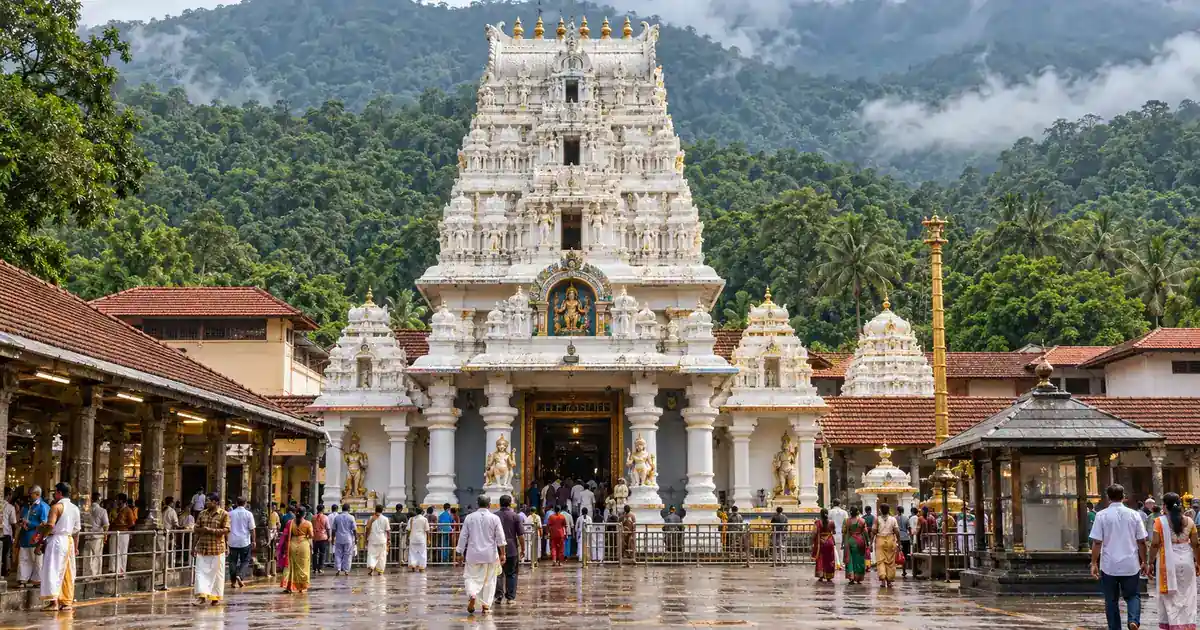
Kukke Subramanya Temple stands in the village of Subramanya in the Sullia Taluk of Dakshina Kannada district, Karnataka. Situated at the base of the Kumara Parvatha mountain peak within the Western Ghats, this ancient pilgrimage site is revered as the primary sanctuary of Lord Kartikeya, worshiped here as Lord Subramanya, the divine commander and supreme protector of the serpent realm.
Pilgrims travel from all parts of India to perform specialized Vedic rituals such as Sarpa Samskara and Ashlesha Bali. These rituals seek relief from astrological afflictions known as Sarpa Dosha and Kala Sarpa Dosha. The temple compound is enveloped by evergreen forests and bordered by the sacred Kumaradhara River, where devotees begin their pilgrimage through ritual purification baths.
Kukke Subramanya Pilgrim Advisory
- Primary Sanctum Deity: Lord Subramanya (Kartikeya) with serpent king Vasuki and Sesha.
- Core Vedic Rituals: Sarpa Samskara (strict 2-day ritual), Ashlesha Bali, and Naga Prathishta.
- Strict Temple Dress Code: Men must remove shirts and vests before entering inner courtyards. Dhoti or pajama with angavastram required. Women must wear sarees or salwar kameez.
- Sacred Water Ritual: Traditional pilgrim bath at Kumaradhara River located 1.5 km before sanctum entry.
- Nearest Railhead: Subrahmanya Road Railway Station (SBHR), located 12 km west of the shrine.
Mythological Origins and the Sanctuary of Vasuki
According to regional Sthala Puranas and classical epics, the divine serpent king Vasuki sought refuge at this location to escape the fierce wrath of Garuda, the celestial eagle mount of Lord Vishnu. Lord Shiva granted Vasuki protection and instructed him to perform austerities in the subterranean grottos of the Kumara Parvatha mountain range.
Pleased with Vasuki’s devotion, Lord Kartikeya descended to the spot following his victory over the demon ruler Tarakasura. Lord Kartikeya promised to abide eternally in the sanctum alongside Vasuki and the great serpent Adisesha, granting divine protection to all serpents and blessing devotees who revere them.
Centuries later, the revered philosopher Adi Shankara visited this mountain sanctuary during his spiritual travels across the subcontinent. Shankara referred to the shrine as Bhaje Kukke Lingam in his compositions, reaffirming its ancient place among the most revered pilgrimage locations of southern India.
Devotees seeking astrological remediation for planetary serpent curses often combine their prayers here with rituals described in our Srikalahasti Temple Rahu Ketu Pooja darshan and timings. Official heritage details can be consulted via the Dakshina Kannada District Administration portal.
Sanctum Architecture and Layout
The architecture of Kukke Subramanya Temple exhibits the classic functional aesthetics of coastal Karnataka and the Malnad region. Characterized by sloping terracotta tiled roofs, heavy timber beams, and carved granite pillar halls, the design efficiently weathers the torrential monsoon rains of the Western Ghats.
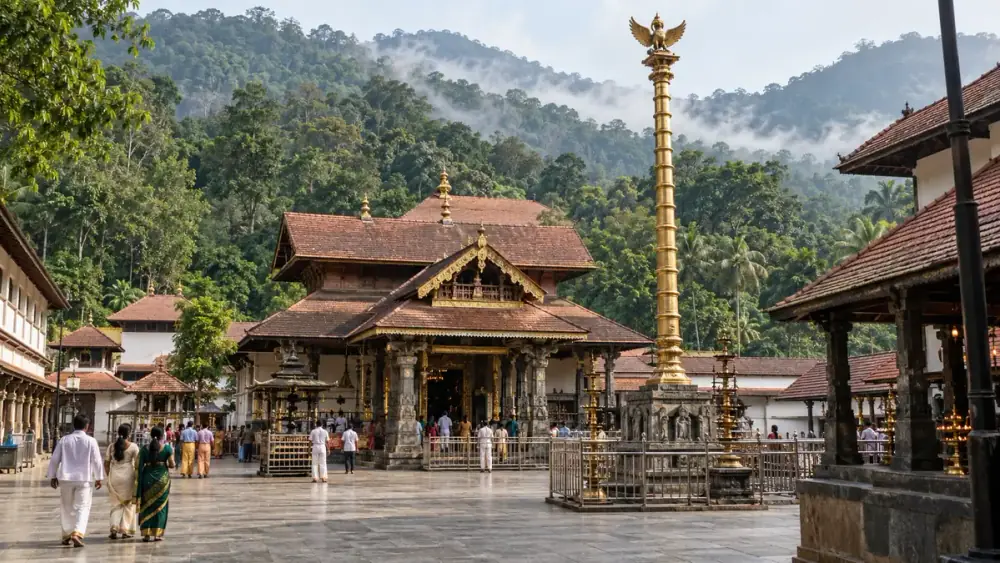
Travelers admiring classical stone craftsmanship can compare these Western Ghats timber and granite structures with the vast stone pavilions of Virupaksha Temple in Hampi.
Garuda Stambha: The Silver Pillar of Protection
Upon crossing the outer courtyard and main entryway, devotees encounter the prominent silver-plated Garuda Stambha (Garuda Pillar) positioned directly between the sanctum entrance and the outer hall.
Legend records that this silver column was consecrated and enchanted with specific Vedic mantras to neutralize the venomous breath emanating from Vasuki inside the sanctum. Devotees circumambulate the pillar clockwise before presenting themselves before the sanctum doorway.
The Inner Sanctum (Garbhagriha)
The inner sanctum features a stepped pedestal where three divine forms are worshiped together:
- Lord Subramanya: The supreme deity seated on a raised throne in the upper tier.
- Vasuki: The multi-headed serpent king positioned immediately beneath Lord Subramanya.
- Shesha: The great cosmic serpent positioned below Vasuki.
The sanctum remains illuminated by brass oil lamps fueled with clarified cow butter. Devotees receive sacred ash (vibhuti) and sanctified earth from the holy snake mounds (Mrittika Prasada), treasured for its spiritual protective qualities.
Sarpa Samskara Pooja: Complete 2-Day Ritual Guide
The Sarpa Samskara is an intensive Vedic ritual performed by pilgrims seeking to appease the souls of serpents harmed intentionally or inadvertently in past or present lifetimes. The temple management conducts this pooja under strict Vedic guidelines overseen by trained temple priests.
Key Rules and Eligibility for Sarpa Samskara
- Duration: The ritual spans two consecutive days. Participants must stay in the temple town for both days.
- Participation Limit: Up to four family members (husband, wife, and two children or blood relatives) can participate under one ticket.
- Dietary Restrictions: Strict fasting (Satvik diet) is mandatory throughout the two days. Devotees must partake only of temple-provided prasadam meals.
- Purity Guidelines: Pregnant women are not permitted to sit for this ritual. The ritual cannot be conducted during family mourning periods or menstrual cycles.
| Ritual Parameter | Day 1 Protocol | Day 2 Protocol |
|---|---|---|
| Morning Reporting | 8:30 AM at the designated Sarpa Samskara Hall | 6:00 AM at the ritual counter |
| Core Ceremonies | Sankalpa, Homa offerings, Pinda Pradana, and Asthi Visarjana | Naga Prathishta, concluding pooja, and sanctum darshan |
| Dietary Fasting | Only midday temple prasada meal; fast through evening | Light prasada after pooja completion at noon |
| Brahmacharya | Strict celibacy and floor-mat sleeping on temple grounds | Formal release from ritual vows after noon aarti |
Booking Process and Advance Reservations
Due to high pilgrimage demand, the temple administration strictly caps the number of daily Sarpa Samskara rituals.
- Online Advance Booking: Devotees must register slots well in advance through the official Karnataka state endowment online services portal.
- Offline Quota: A limited emergency counter opens at the temple administration office at 8:00 AM daily for the following morning’s rituals, allocated on a strict first-come, first-served basis.
- Official Fee: The seva fee is fixed by the endowment department at ₹3,000 to ₹3,500 (confirm current rates upon booking), which covers all ceremonial samagri, priest dakshina, and prasada.
Ashlesha Bali Pooja: Single-Day Planetary Remediation
For pilgrims unable to commit to the two-day Sarpa Samskara schedule, the Ashlesha Bali pooja provides a potent single-session alternative. Performed during the auspicious lunar transit of the Ashlesha Nakshatra every month, this ceremony invokes the nine divine serpents (Nava Nagas).
Devotees sit around intricate geometric mandalas created on the hall floor using natural colored rice powders, turmeric, and vermilion. The priests chant Vedic hymns and make systematic offerings of milk, tender coconut water, and flowers to each serpent deity.
- Session Timings: Conducted daily in two shifts: Morning shift at 7:00 AM and Evening shift at 5:00 PM.
- Ashlesha Nakshatra Days: Peak demand occurs on the monthly Ashlesha star day, requiring pilgrims to report 2 hours prior to start time.
- Seva Cost: Approximately ₹400 to ₹500 per devotee.
Pilgrims mapping their spiritual journey through Karnataka’s heritage landscape can plan complementary visits using our guide to top places to visit in Coorg.
Daily Darshan Timings, Sevas & Temple Schedule
The temple gates open before dawn and follow an unbroken liturgical cycle throughout the day.
| Time Slot | Liturgical Activity | Visitor Guidelines |
|---|---|---|
| 6:30 AM – 10:00 AM | Morning Darshan & Ushakkala Pooja | Ideal time for general queue; moderate crowds |
| 10:00 AM – 12:15 PM | Mahapooja & Sarpa Samskara Darshan | Special queue priority for ritual ticket holders |
| 12:30 PM – 1:30 PM | Mahamangalarathi & Noon Prasada Distribution | Free temple Annadanam dining hall opens |
| 1:30 PM – 3:30 PM | Temple Courtyard Gate Closure | Outer sanctum closes for deity rest; administrative counters open |
| 3:30 PM – 6:00 PM | Afternoon Darshan & Ashlesha Bali Batch 2 | General queue resumes |
| 6:00 PM – 8:00 PM | Night Mahapooja & Deeparadhana | Grand aarti with traditional coastal Panchavadyam drums |
| 8:30 PM | Final Harivanasam & Temple Closure | Sanctum doors locked for the night |
Devotees planning multi-temple circuits across Karnataka can also review the daily rituals and heritage architecture detailed in our Omkareshwara Temple Coorg guide.
Free Annadanam: The Divine Dining Tradition
Following the ancient tradition of Dakshina Kannada shrines, Kukke Subramanya operates an expansive Annadanam hall (Shanmukha Prasada Hall) serving nutritious, warm meals free of charge to thousands of pilgrims daily.
- Lunch Timings: 11:30 AM to 2:30 PM daily.
- Dinner Timings: 7:30 PM to 9:30 PM daily.
- Meal Composition: Steamed boiled rice, aromatic Sambar seasoned with fresh local spices, rasam, vegetable palya, buttermilk, and traditional payasam sweet dessert.
- Dining Etiquette: Pilgrims sit in traditional rows (pankti) on clean stone dining benches. Wasting food is strictly discouraged.
Temple Accommodation: Guest Houses & Private Lodges
Accommodations in Subramanya village range from temple-managed trust guest houses to privately operated modern hotels.
Temple Administration (Muzrai) Guest Houses
The temple runs several clean, affordable lodging complexes within walking distance of the sanctum:
- Ashlesha Guest House: Modern multi-story complex offering AC and non-AC rooms. Highly recommended for families.
- Skanda Kripa: Located close to the car street; economical and clean.
- Subramanya Sannidhi: Basic non-AC double rooms suitable for pilgrims on short stopovers.
Reservations for temple guest houses should be made online 30 days in advance via the Karnataka Muzrai administrative portal. Room keys must be collected at the central reception counter near the bus stand upon presenting government photo ID. Official lodging protocols are documented on the Karnataka Tourism portal.
Private Lodges and Homestays
Numerous private lodges cluster along the main temple road and near the Kumaradhara river bridge. Room tariffs range from ₹800 to ₹1,500 for standard rooms and ₹2,000 to ₹4,500 for air-conditioned suites during festival weekends.
The Sacred Kumaradhara River & Holy Bath Rules
The Kumaradhara River originates high up in the Western Ghats and cascades through undisturbed mountain slopes before flowing past the Subramanya village perimeter. Pilgrim convention requires devotees to take a holy dip in the river before entering the shrine.
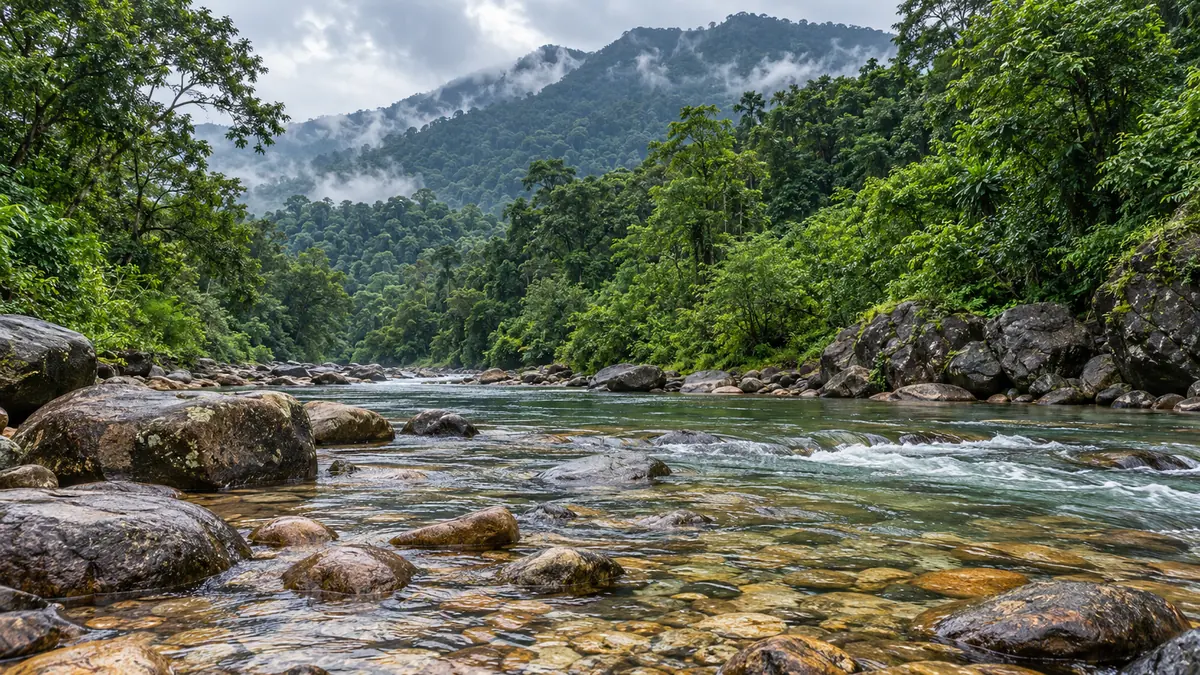
- River Bathing Ghats: Paved stone steps with safety railings are located 1.5 km west of the main temple entrance. Local auto-rickshaws provide frequent shuttle service for ₹30 per passenger.
- Safety Warnings: During the southwest monsoon (June to September), the Kumaradhara River swells with rapid mountain currents. Always adhere to local lifeguard instructions and remain within designated shallow enclosures.
- Changing Rooms: Separate changing cubicles are provided for men and women at the ghat. Avoid using synthetic soaps or detergents in the sacred stream to protect river biodiversity.
Pilgrims touring sacred water bodies and coastal shrines across the state frequently combine this ritual with a holy dip in the Arabian Sea, as described in our guide to Gokarna travel highlights.
Kumara Parvatha Trek: Trekking Beyond the Shrine
Behind the temple rises Kumara Parvatha (also known as Pushpagiri), the second-highest peak in Kodagu and Dakshina Kannada at an elevation of 1,712 meters. This challenging 13 km mountain trail is widely regarded as one of South India’s finest wilderness treks.
| Trek Metric | Parameter Value |
|---|---|
| Total Trail Distance | 22 km round trip from temple base to summit |
| Difficulty Rating | Strenuous (steep gradient with rocky boulders) |
| Forest Checkpost | Girigadde Forest Guard Station (Bhattara Mane) |
| Forest Department Permit | Mandatory online permit via Karnataka Eco-Tourism |
| Best Trekking Season | October to February (monsoon trekking strictly prohibited) |
Trekkers traditionally pay respects at Kukke Subramanya Temple before commencing their ascent at dawn. Camping on the summit is strictly forbidden by forest authorities to preserve sensitive shola grassland habitats. Outdoor enthusiasts exploring the Somwarpet ridgelines north of Pushpagiri can also hike down to the scenic gorge at Mallalli Falls.
How to Reach Kukke Subramanya Temple
Kukke Subramanya is well-connected by road and rail networks across southern Karnataka.
| Starting City | Road Distance | Typical Drive Time | Primary Highway Route |
|---|---|---|---|
| Mangaluru | 105 km | 2.5 hours | NH73 via Bantwal and Uppinangady |
| Madikeri (Coorg) | 75 km | 2.0 hours | SH88 / Sampaje Ghat via Panja |
| Hassan | 102 km | 2.5 hours | NH75 via Sakleshpur and Shiradi Ghat |
| Mysuru | 160 km | 4.0 hours | Via Hunsur, Kushalnagar, and Madikeri |
| Bengaluru | 280 km | 6.0 hours | NH75 via Kunigal, Hassan, and Sakleshpur |
Route Logistics by Transport Mode
| Mode of Transport | Terminal Details | Transit Instructions to Temple |
|---|---|---|
| By Train | Subrahmanya Road Railway Station (SBHR) | Located 12 km from town. Regular KSRTC shuttle buses and shared jeeps connect every train arrival to the temple entrance (20-minute ride). Major trains include the Panchaganga Express and Karwar Express. |
| By Bus | Subramanya KSRTC Bus Stand | Situated 500 meters from the temple gateway. Frequent direct Rajahamsa and Airavat AC sleeper buses connect directly to Bengaluru Majestic, Mysore, Mangaluru, and Dharmasthala. |
| By Air | Mangaluru International Airport (IXE) | Nearest airport, 115 km northwest. Pre-paid airport taxis take roughly 3 hours via the Bantwal highway. |
Pilgrims mapping wider regional journeys across Karnataka can consult route alternatives in our guide to the best places to visit in India. Train schedules can be confirmed directly through the official Indian Railways Catering and Tourism Corporation portal.
Dress Code, Temple Etiquette & Pilgrim Tips
To maintain the sanctity of the temple grounds, the management strictly enforces traditional South Indian temple customs.
- Men: Must remove shirts, vests, and modern jackets before entering the inner prakara. Clean dhotis or cotton pants are permitted. Jeans and shorts are prohibited in the pooja lines.
- Women: Saree, half-saree, or traditional salwar kameez with dupatta. Western wear such as jeans, skirts, and sleeveless tops are not allowed.
- Electronic Devices: Mobile phones, digital cameras, and smartwatches must be stored in secure cloakrooms available near the temple entrance. Photography is strictly prohibited inside all sanctum enclosures.
- Footwear Storage: Free footwear counters operate outside the main gate. Flagstone courtyards can heat up during sunny mid-afternoons, making morning visits more comfortable.
- Cash Availability: The town features several bank ATMs (SBI, Canara Bank, Karnataka Bank) near the car street, though keeping sufficient cash for pooja samagri and auto fares is strongly recommended.
This traditional dress code protocol closely resembles the strict dhoti requirements observed at darshan rules and rituals at Padmanabhaswamy Temple Trivandrum.
Frequently Asked Questions About Kukke Subramanya Temple
Can unmarried individuals perform Sarpa Samskara pooja?
Yes. Unmarried individuals of either gender can participate in Sarpa Samskara pooja to seek relief from Kala Sarpa Dosha or obstacles affecting matrimony and career.
How many days prior should I book Sarpa Samskara?
Because daily quotas are capped at around 100 to 120 slots, advance bookings should ideally be secured 2 to 3 months beforehand, especially for weekends, holidays, and auspicious lunar dates.
Is photography permitted inside Kukke Subramanya Temple?
Photography and videography are strictly prohibited inside the entire inner courtyard and sanctum sanctorum. Violators risk confiscation of their recording equipment by temple security.
How far is Dharmasthala Temple from Kukke Subramanya?
Dharmasthala is situated approximately 54 km northwest of Kukke Subramanya. Direct KSRTC express buses ply every 30 minutes between the two pilgrimage hubs, completing the journey in roughly 1 hour and 30 minutes, as detailed in our Dharmasthala Manjunatha Temple darshan and timings.
What is the best month to visit Kukke Subramanya?
The ideal pilgrimage period runs from September through March when post-monsoon weather remains pleasantly cool and dry. The annual temple car festival (Champa Shashthi) takes place in November or December, drawing grand chariot processions.