Virupaksha Temple Hampi: Timings, History, Architecture & Dress Code
Explore Virupaksha Temple Hampi! Learn about its history, stunning architecture, visiting timings, and dress code for a spiritual experience.
Virupaksha Temple Hampi Essentials
- Darshan Hours: 6:00 AM to 1:00 PM and 5:00 PM to 9:00 PM daily.
- Ticket Pricing: Free general entry; ₹25 for special darshan queue passes.
- Dress Code Requirements: Modest traditional attire covering shoulders and knees; footwear must be deposited at entry counters.
- Presiding Deity: Lord Virupaksha (Lord Shiva) and consort Goddess Pampa.
- Location: Hampi Bazaar, on the southern bank of the Tungabhadra River, Vijayanagara District, Karnataka.
Virupaksha Temple in Hampi stands as one of the oldest continuously functioning Hindu sanctuaries in southern India. Located within the boulder-strewn plains of the Tungabhadra basin, the sacred complex served as the principal royal shrine of the Vijayanagara Empire.
Pilgrims and architecture enthusiasts travel from across the globe to admire its towering Dravidian gateways, pillared corridors, and ancient rituals. Travelers touring Karnataka can also explore our guide to Omkareshwara Temple Coorg architecture and rituals to understand diverse regional styles.
Virupaksha Temple Hampi Timings, How To Reach, Dress Code and How To Reach
Virupaksha Temple opens every morning from 6:00 AM to 1:00 PM and reopens for evening darshan between 5:00 PM and 9:00 PM. General admission is free for all devotees, while a nominal ₹25 special darshan ticket provides expedited access to the inner sanctum.
Visitors must observe strict modesty standards by wearing clothing that covers shoulders, upper arms, and knees. Leather belts, bags, and shoes must be left at the designated shoe repository outside the main gateway tower.
| Service & Facility | Operational Hours | Tariff / Fee | Key Guidelines |
|---|---|---|---|
| Morning Darshan & Abhishekam | 6:00 AM - 1:00 PM | Free entry | Arrive before 7:00 AM for quiet prayer rituals |
| Evening Darshan & Aarti | 5:00 PM - 9:00 PM | Free entry | Main Mangala Aarti performed at 8:00 PM |
| Special Darshan Queue | Regular darshan slots | ₹25 per person | Available at the counter inside eastern courtyard |
| Camera Permit (Still Camera) | Temple open hours | ₹50 per camera | Photography prohibited inside the garbhagriha |
| Cloakroom & Shoe Counter | 5:30 AM - 9:30 PM | Nominal ₹5 per pair | Secure storage situated near the outer gopuram |
Travelers reaching Hampi can utilize rail connections terminating at Hospet Junction, situated 14 kilometers away. Domestic air travelers arrive via Jindal Vijayanagar Airport in Toranagallu, located 37 kilometers southwest, with connecting taxis readily available.
Regional bus schedules, certified heritage guides, and lodging details are maintained on the Karnataka Tourism Official Hampi Destination Guide.
Virupaksha Temple Hampi History and Dynasty Chronology
The roots of the Virupaksha sanctum reach back to the seventh century, beginning as a modest stone shrine dedicated to Lord Shiva and river goddess Pampa. As regional kingdoms recognized the sanctity of the riverside retreat, the Western Chalukyas and Hoysalas added stone mandapas.
During the fourteenth century, the founders of the Vijayanagara Empire chose the site to establish their imperial capital. King Deva Raya II expanded the sanctuary into a vast temple complex with assistance from his royal commander Lakkan Dandesha.
The golden era of the temple arrived under Emperor Krishnadevaraya in the early sixteenth century. To commemorate his royal coronation, Krishnadevaraya commissioned the soaring eastern gopuram and the ornate hundred-pillared Ranga Mandapa.
Detailed site records and architectural surveys are preserved by the Archaeological Survey of India Hampi Mini Circle. Despite the sack of the imperial capital following the Battle of Talikota in 1565, religious rituals never ceased at Virupaksha Temple.
Architectural Marvel: Dravidian Gopurams and Pinhole Optics
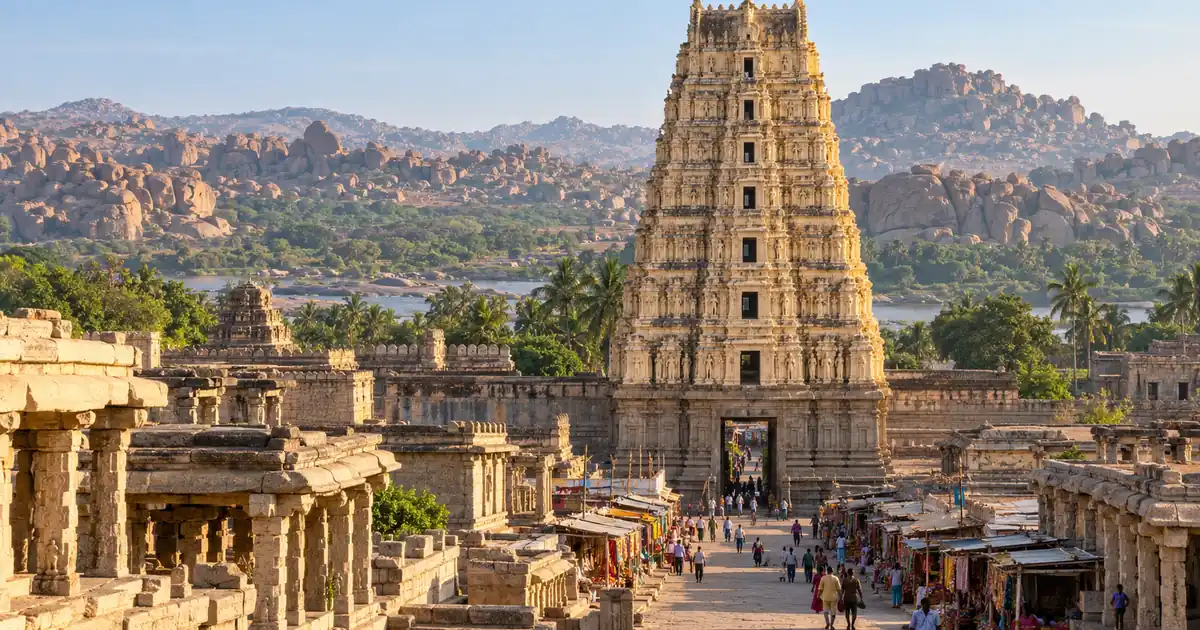
The temple complex exemplifies classical Dravidian architectural craftsmanship built primarily from locally quarried granite blocks. The eastern gateway tower rises nine tiers to an impressive height of 50 meters, overlooking the ancient Hampi stone chariot paths.
Within the central court, the pillared hall contains carved columns representing mythical Yali beasts, celestial musicians, and episodes from the Ramayana. The ceiling retains sixteenth-century tempera frescoes depicting the wedding procession of Shiva and Parvati.
A notable engineering curiosity sits inside a modest chamber behind the primary sanctum. Builders aligned an opening in the stonework so daylight projects an inverted shadow of the towering eastern gopuram onto the chamber wall, operating as a pinhole camera.
This enduring structural mastery parallels the Dravidian engineering observed at the historic Meenakshi Amman Temple in Madurai and the grand stone corridors of South India.
Religious Importance: Worship of Virupaksha and Pampa
The temple functions as the primary Shaivite power center of the Tungabhadra basin, venerating Lord Shiva as Virupaksha, meaning the one with oblique eyes. Legend states that Goddess Pampa performed severe penance on neighboring Hemakuta Hill to win Shiva as her divine consort.
Daily temple rites begin with morning mangala aarti and temple elephant rituals. Devotees offer prayers alongside Lakshmi, the resident temple elephant, who bestows gentle head blessings on pilgrims visiting the outer courtyard.
The annual chariot festival takes place during Chaitra (March or April), drawing thousands of devotees to pull the colossal wooden rath along Hampi Bazaar. Similar grand temple traditions can be discovered across southern pilgrimage hubs, including the Tirumala Tirupati Balaji pilgrimage guide.
The Hampi Connection: Hemakuta Hill and Sacred Ruins
Virupaksha Temple anchors the western end of the ancient Hampi Bazaar, an arcaded stone market street once renowned for international gem trading. Standing directly behind the temple complex is Hemakuta Hill, home to pre-Vijayanagara triple-chamber shrines and sweeping sunset viewpoints.
International historians recognize Hampi among the foremost open-air archaeological destinations globally. The historic landscape is documented in detail through the Incredible India Hampi Heritage Guide.
- Morning Itinerary: Attend morning aarti at 6:30 AM before exploring the quiet pillared courtyards and the pinhole optics chamber.
- Midday Exploration: Walk through the stone colonnades of Hampi Bazaar and ascend Hemakuta Hill for panoramic valley views.
- Afternoon River Crossing: Take a traditional round coracle boat ride across the Tungabhadra River to Anegundi.
- Evening Reflection: Return to the river ghats near Virupaksha for sunset prayers along the riverbanks.
Travelers looking for unique regional customs in Karnataka can also learn about the Kambala coastal buffalo racing festival.
Unique Experiences at Virupaksha Temple Hampi
Visitors to Virupaksha Temple encounter living traditions that set it apart from neighboring archaeological ruins in Hampi. The pinhole chamber demonstrates advanced knowledge of optics, fascinating students, historians, and pilgrims alike.
Interacting with the temple elephant provides a memorable moment for families and photographers. Morning visitors can watch the elephant take her daily ceremonial bath in the Tungabhadra River before entering the temple courtyards.
The river ghats adjacent to the temple serve as sacred bathing spots where pilgrims perform ancestral rites. Devotees touring South India often pair these riverside rites with visits to the sacred corridor of Rameshwaram Jyotirlinga.
Frequently Asked Questions About Virupaksha Temple Hampi
What are the daily darshan timings at Virupaksha Temple?
The temple opens daily from 6:00 AM to 1:00 PM and reopens from 5:00 PM to 9:00 PM. Visiting during the early morning hours provides a calm atmosphere for personal prayers and photography.
Is there an entry ticket required for Virupaksha Temple?
General entrance into the temple is free for all visitors. Those seeking faster access to the inner sanctum can purchase a special darshan pass for ₹25 at the courtyard ticket window.
What dress code is enforced inside the temple?
Devotees must wear traditional or modest clothing covering shoulders, chests, and knees. Shorts, sleeveless tops, and short skirts are strictly prohibited within the sanctum complex.
How does the inverted shadow inside the temple work?
A tiny aperture in the rear stone wall focuses sunlight to project an inverted image of the eastern gopuram onto the wall. This medieval pinhole optical effect demonstrates the architectural ingenuity of Vijayanagara builders.
What is the closest railway station to Virupaksha Temple?
Hospet Junction serves as the nearest major railway station, situated approximately 14 kilometers from Hampi. Regular government buses, auto-rickshaws, and private cabs connect Hospet with Hampi throughout the day.
When does Hampi host its grand annual cultural festival?
The monuments and boulder hills of Hampi come alive during Hampi Utsav, an annual cultural extravaganza organized by the Karnataka government featuring floodlit heritage stages, classical concerts, puppet shows, and fireworks.
Final Thoughts on Virupaksha Temple Hampi
Virupaksha Temple stands as a living bridge between medieval Vijayanagara majesty and active Hindu worship. While surrounding imperial palaces fell into ruined stone terraces, this riverside temple maintained continuous sacred rituals across more than a millennium.
A journey to Hampi remains incomplete without standing before its nine-tiered gateway tower and experiencing its peaceful morning aarti. To plan a broader exploration across the royal enclosures, riverside bouldering trails, and coracle routes, consult our comprehensive guide to the places to visit in Hampi. The harmony of ancient stone carving, river breezes, and timeless devotion makes it one of the most rewarding pilgrimage stops in southern India.