23 Best Places to Visit in Coorg: 1 to 3 Day Itinerary Guide
Plan your Coorg trip with 23 top places to visit, from Abbey Falls and Raja Seat to coffee estates, trekking trails, timings, entry fees, and itineraries.
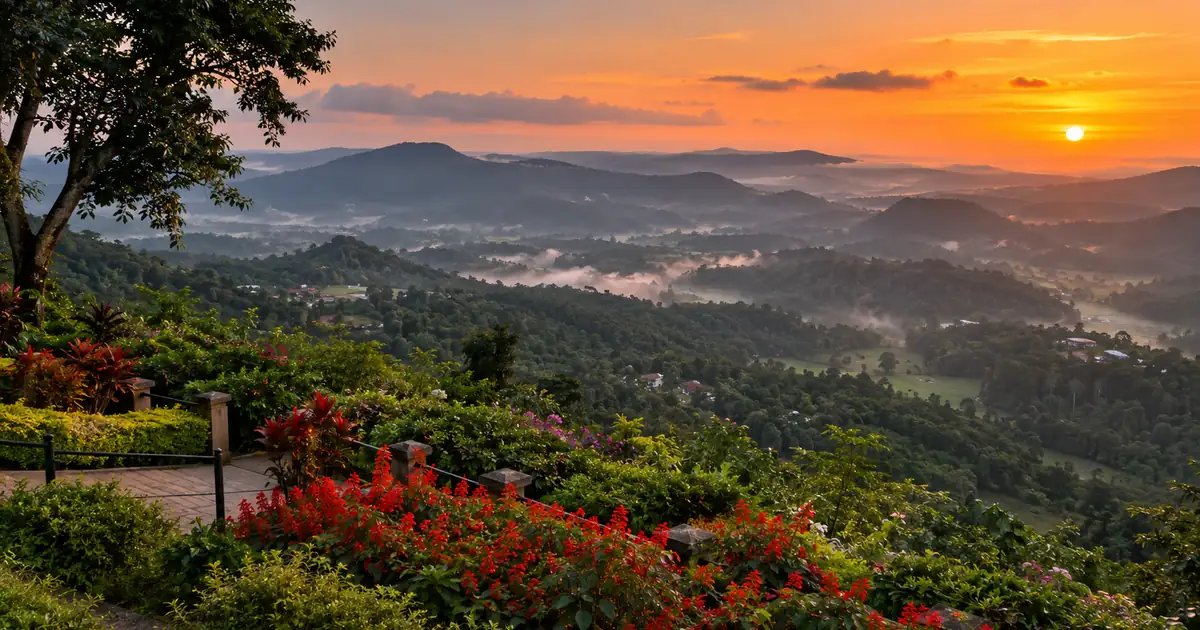
Kodagu, widely referred to as Coorg, spans 4,102 square kilometers across the eastern slopes of Karnataka’s Western Ghats. Known for producing high-grade robusta and arabica coffee, cardamom, and black pepper, this mountainous district balances forest trails, heritage fortifications, and sacred river sources.
Coorg Travel Essentials
- Madikeri serves as the administrative headquarters of Kodagu district, situated at an elevation of 1,170 meters in Karnataka’s Western Ghats.
- The primary travel season spans October through March, offering pleasant daytime temperatures between 15°C and 25°C suitable for plantation walks and sightseeing.
- Key regional landmarks include Abbey Falls, Namdroling Tibetan Monastery, Raja’s Seat sunset garden, and the peak of Tadiandamol.
- Rail connectivity centers on Mysuru Junction located 120 km east, while nearest international flights land at Kannur Airport 90 km southwest.
Travelers planning an extended Southern India holiday can pair these hill circuits with our Kerala destination guide across the border.
Visitor Essentials and Coorg Sightseeing Overview
The district divides naturally into three primary exploration zones: North Coorg around Somwarpet, Central Coorg around Madikeri, and South Coorg around Gonikoppal and Kutta. Spreading your itinerary by geographic cluster minimizes travel time along winding mountain roads.
| Attraction Name | Location / Distance | Timings | Entry Fee | Ideal Duration |
|---|---|---|---|---|
| Abbey Falls | 8 km north of Madikeri | 9:00 AM to 5:00 PM | ₹15 per adult | 1 to 2 hours |
| Raja’s Seat | Madikeri Town Center | 6:00 AM to 8:00 PM | ₹25 per adult | 1 to 2 hours |
| Namdroling Monastery | Bylakuppe (34 km east) | 9:00 AM to 6:00 PM | Free admission | 1.5 to 2 hours |
| Dubare Elephant Camp | 29 km east of Madikeri | 9:00 AM to 5:30 PM | ₹100 per person | 2 to 3 hours |
| Talakaveri Temple | Brahmagiri (44 km west) | 6:00 AM to 6:30 PM | Free admission | 2 hours |
| Tadiandamol Peak | Kakkabe (37 km south) | 6:00 AM to 5:30 PM | ₹250 permit fee | 5 to 6 hours |
| Nagarhole Safari | 88 km south of Madikeri | 6:00 AM to 6:00 PM | ₹300 (Bus) / ₹1,500 (Jeep) | 3 to 4 hours |
Public transit buses operate regularly between Madikeri and regional taluk towns. However, private cabs or self-drive vehicles offer greater flexibility for visiting secluded waterfalls and connecting with wider routes in our Karnataka travel guide. Travelers pairing Kodagu’s coffee estates with Karnataka’s highest mountain peak can also consult our comprehensive guide to places to visit in Chikmagalur.
Best Waterfalls to Visit in Coorg
Heavy monsoonal rains feed hundreds of forest streams across the Western Ghats, creating powerful cascades between July and December. Most waterfalls feature stone walking trails winding down through private coffee and spice estates.
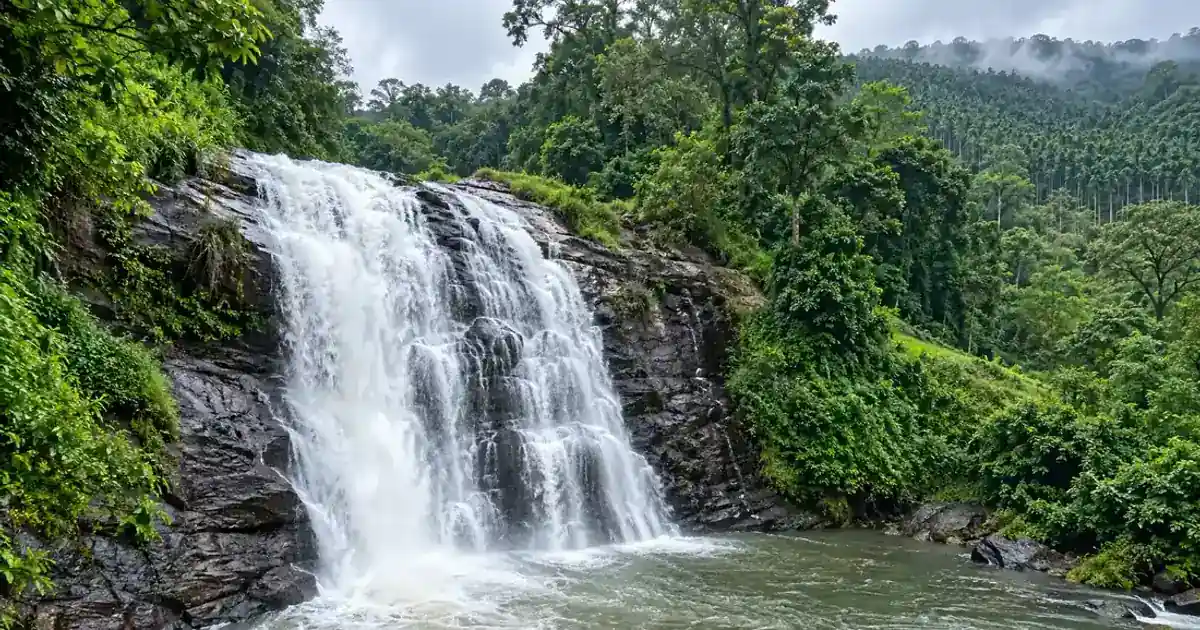
Abbey Falls
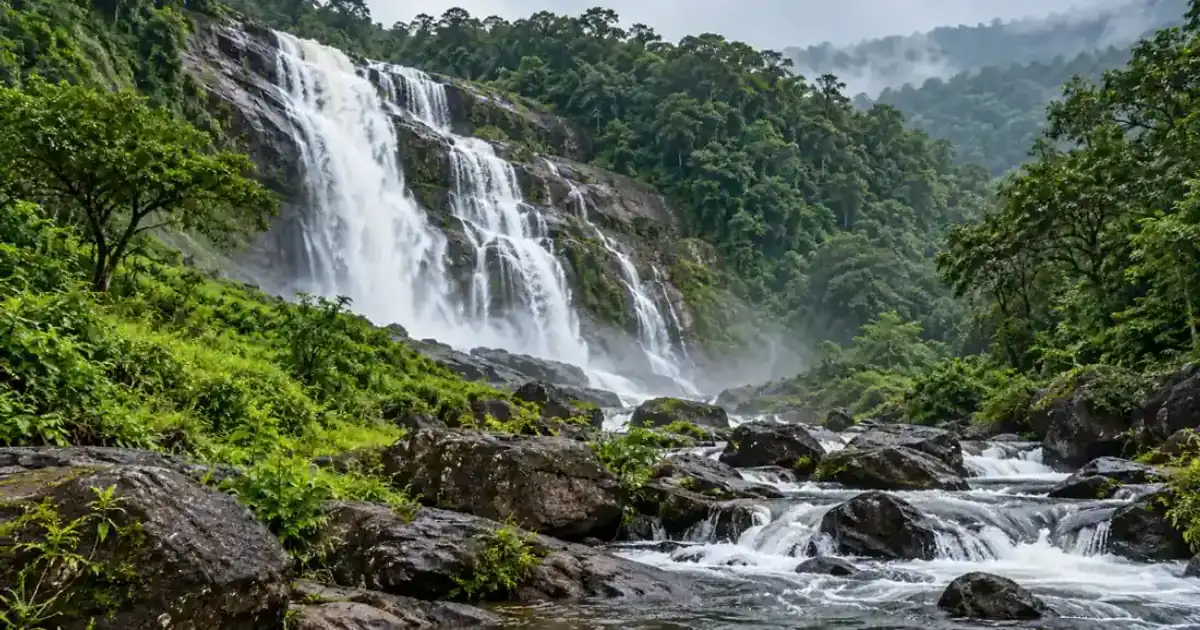
Abbey Falls drops approximately 21 meters into the Kaveri river basin, situated 8 km north of Madikeri. Visitors descend roughly 200 paved steps through thick cardamom, pepper, and coffee groves to reach a hanging footbridge opposite the cascade.
Detailed ticketing hours and transport tips are outlined in our Abbey Falls guide. Parking counters charge ₹50 for cars, and swimming in the plunge pool remains strictly prohibited due to submerged boulders.
Iruppu Falls
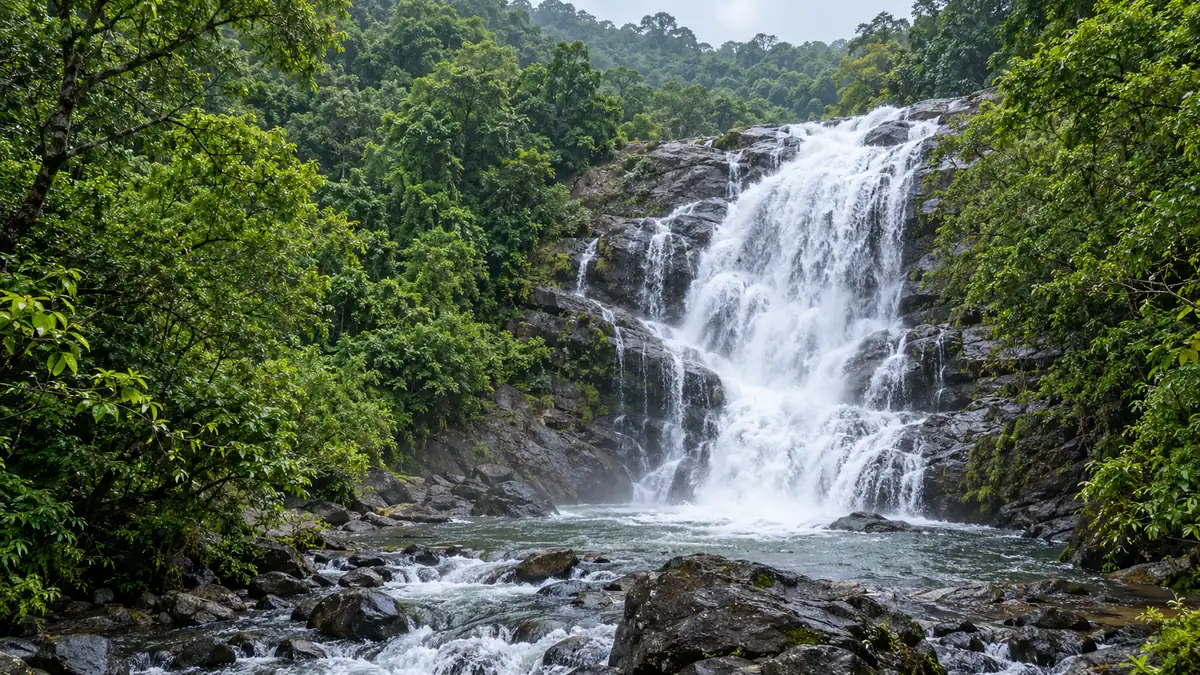
Iruppu Falls, also called Lakshmana Tirtha Falls, flows down the Brahmagiri range along the southern border of Kodagu. Pilgrims visit the adjacent Rameshwara Temple before hiking 1 km through moist deciduous forest trails up to the waterfall base.
The falls carry substantial religious significance during the annual Shivaratri festival. The site lies 80 km south of Madikeri and charges an entry fee of ₹50 per visitor.
Mallalli Falls
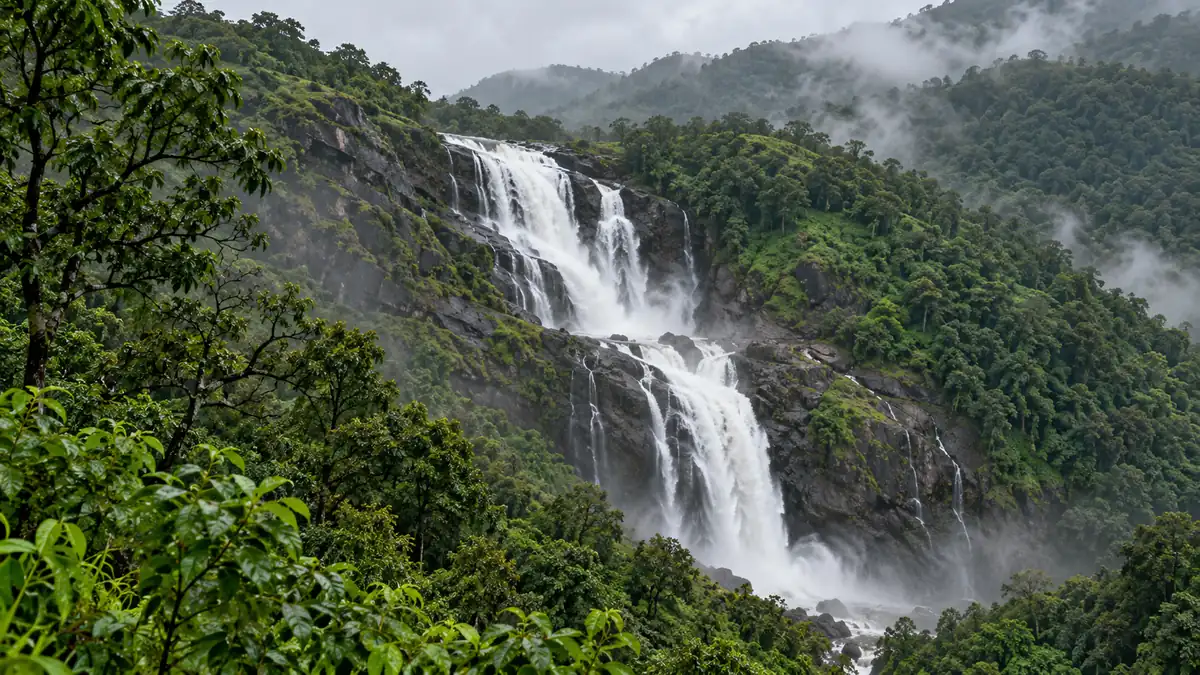
Mallalli Falls plunges over 60 meters down a jagged rock gorge near Somwarpet in northern Kodagu, fed by the Kumaradhara River. Reaching the base requires descending more than 400 concrete steps carved into the hillside.
The viewing platform provides dramatic vistas across the Pushpagiri hills. The entry fee costs ₹20 per visitor, with daily visiting hours running from 9:00 AM to 5:00 PM.
Chelavara Falls
Chelavara Falls is an attractive natural cascade located near Cheyyandane village, approximately 37 km southwest of Madikeri. The waterfall drops down a curved rock face resembling a tortoise shell, earning it the local Kannada name Emme Gundi.
Visitors should note that strong undercurrents make entering the deep water pool extremely dangerous. The surrounding estates offer pleasant, shaded walking trails along quiet hillside roads.
Historic Forts, Viewpoints, and Royal Landmarks in Madikeri
Madikeri was selected as the capital of the Haleri Rajas in 1681 under Muddu Raja. The town retains several important historical structures that document royal Kodava governance and subsequent British colonial administration.
Raja’s Seat Sunset Pavilion
Raja’s Seat is a manicured public garden located on a high ridge overlooking western valleys in central Madikeri. The kings of Kodagu historically spent their evenings here watching the sunset across the rolling mountain ranges.
The complex includes seasonal flower gardens, a children’s toy train track, and an evening musical fountain show operating between 6:30 PM and 7:30 PM. Review detailed access hours in our Raja’s Seat garden and musical fountain visitor guide.
Madikeri Fort and Palace Museum
Madikeri Fort was originally built as a mud fort in the late 17th century before being reconstructed in stone by Tipu Sultan and expanded by the British. The compound contains a two-story palace structure that now houses government offices and an archaeology museum.
Two life-sized mortar elephants stand near the entrance of the inner courtyard. The state archaeology museum displays ancient weapons, royal stone sculptures, and historic Kodava regalia.
Gaddige (Raja’s Tomb)
Gaddige features three imposing royal mausoleums constructed in 1820, dedicated to King Doddaveerarajendra and King Lingarajendra II. The tombs exhibit an uncommon Indo-Saracenic architectural design featuring central Islamic-style domes and corner minarets flanked by Nandi bull statues.
The site sits 1.5 km north of Madikeri bus station on an elevated plateau. Visiting hours run from 9:00 AM to 5:30 PM daily with a nominal entrance fee of ₹10.
Spiritual Landmarks and Cultural Shrines in Coorg
Spiritual sites in Kodagu reflect both ancient Shaivite worship and Tibetan Buddhist monastic settlements established during the mid-20th century. Visitors are expected to observe quiet decorum and remove footwear before entering sanctum areas.
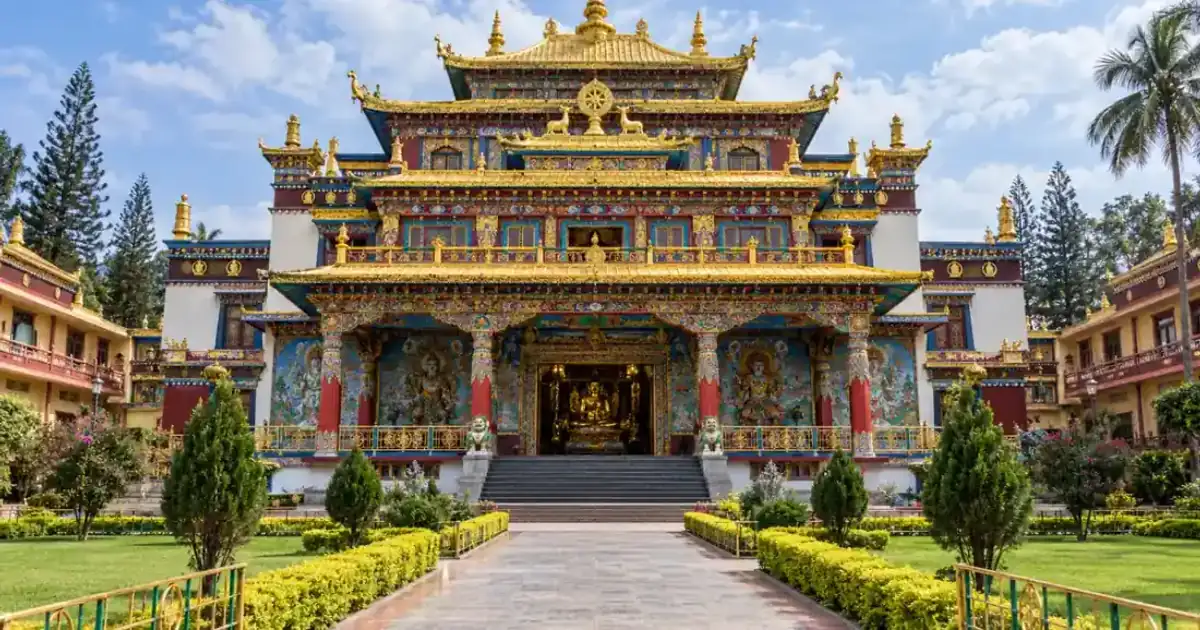
Namdroling Monastery (Golden Temple)
Namdroling Monastery in Bylakuppe represents one of the largest Tibetan Buddhist settlements outside Dharamshala, founded in 1963 by Penor Rinpoche. The main prayer hall enshrines three 18-meter gilded statues of Buddha Shakyamuni, Padmasambhava, and Amitayus.
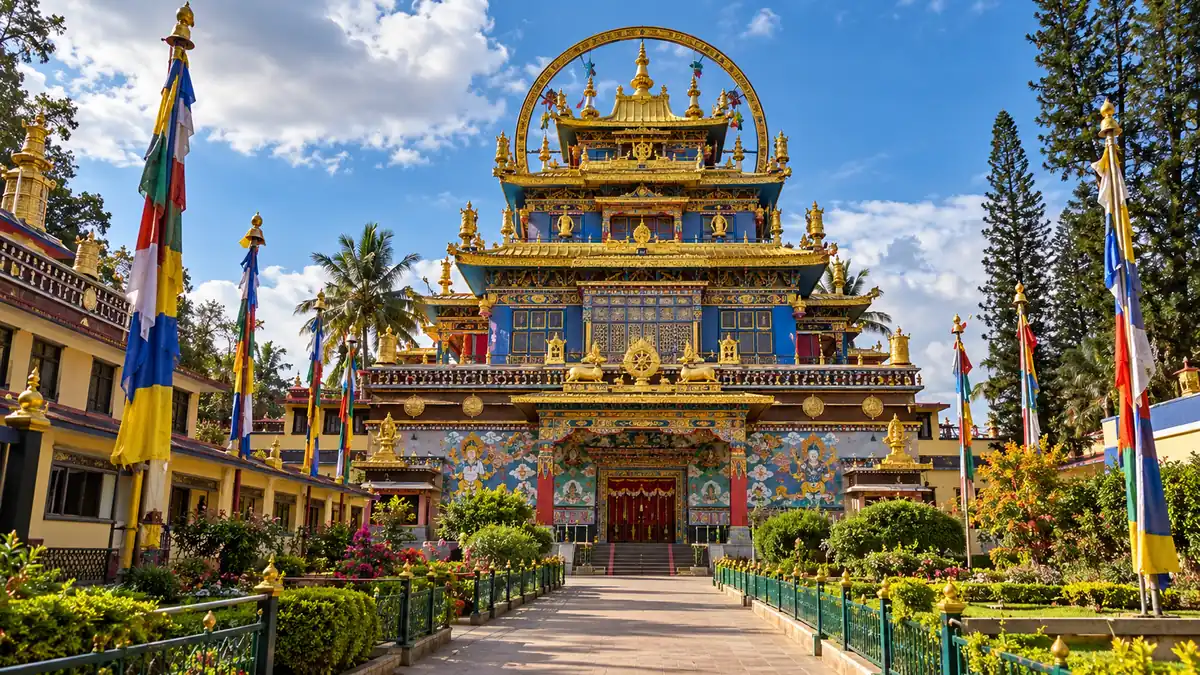
The walls are decorated with intricate thangka murals depicting Buddhist cosmology. Explore complete darshan timings and etiquette rules in our Namdroling Monastery Golden Temple guide.
Omkareshwara Temple
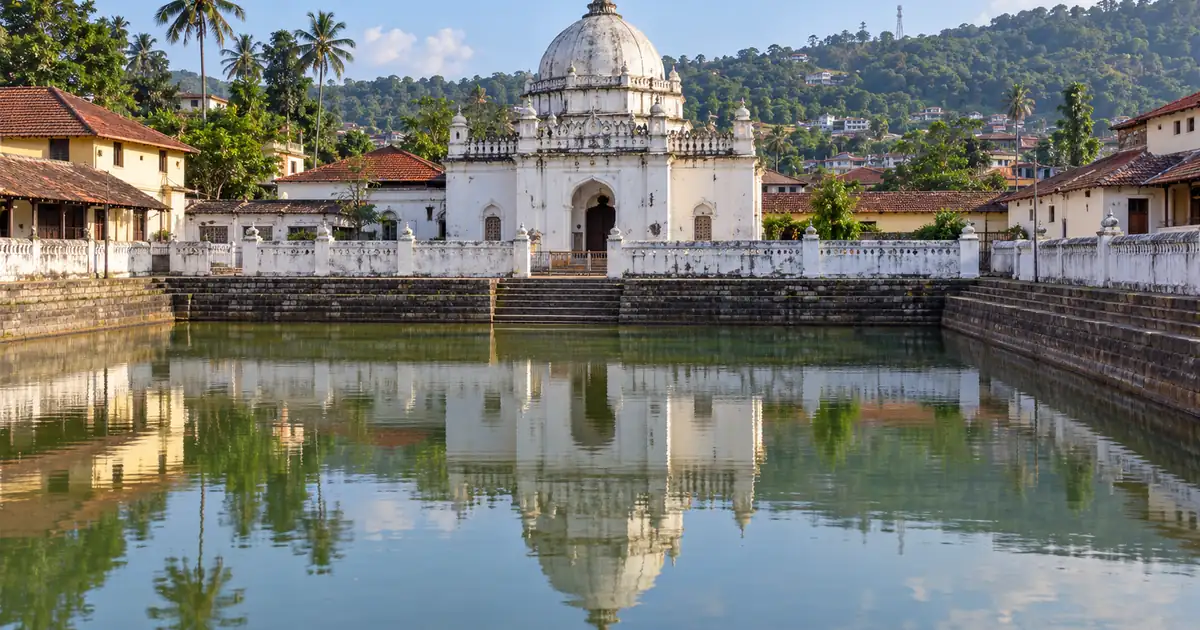
Built in 1820 by King Lingarajendra II, Omkareshwara Temple is dedicated to Lord Shiva and displays an architectural fusion of Islamic and Gothic traditions. The structure lacks a traditional gopuram, featuring instead a central dome, four surrounding turrets, and a large freshwater fish pond in the center courtyard.
A stone walkway encircles the central pond where devotees feed temple fish before prayers. The temple sanctum remains open daily from 6:30 AM to 12:00 PM and reopens from 5:00 PM to 8:00 PM.
Talakaveri and Bhagamandala
Talakaveri marks the holy birthplace of the sacred Kaveri River, resting on the slopes of the Brahmagiri hill at 1,276 meters altitude. Devotees visit the sacred Kundike spring tank and climb 365 steps to the windy Brahmagiri viewpoint summit.
Downhill at Bhagamandala, the Kaveri merges with the Kanika and subterranean Sujyothi rivers at the Triveni Sangam. Pilgrims bathe at the river junction before offering prayers at the ancient Sri Bhagandeshwara Temple complex.
Comprehensive district heritage initiatives and temple preservation records are cataloged on the Karnataka Tourism Official Kodagu Destination Guide.
Wildlife Reserves, Elephant Encounters, and Highland Treks
Kodagu features high biodiversity, supporting elephant corridors and tiger conservation across the Nilgiri Biosphere Reserve. Trekkers and wildlife enthusiasts can arrange permits for guided walks and vehicle safaris.
Dubare Elephant Camp
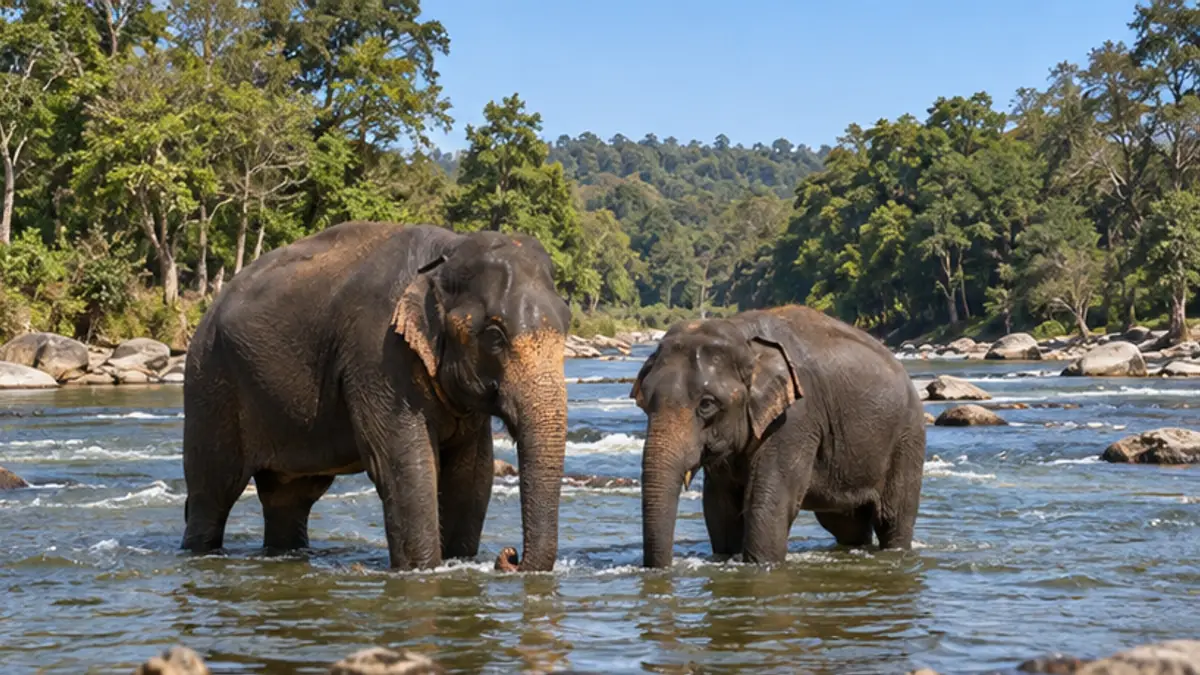
Dubare Elephant Camp sits along the banks of the Kaveri River, serving as a conservation and care facility for Asian elephants managed by Jungle Lodges and Resorts. Visitors cross the river by motorboat or seasonal footbridge to observe morning elephant bathing and feeding sessions.
Camp activities operate between 9:00 AM and 12:00 PM, and reopen for evening walks from 4:30 PM to 5:30 PM. The standard visitor entry ticket costs ₹100, with optional river rafting available during high-water monsoon months.
Nagarhole National Park (Rajiv Gandhi National Park)
Nagarhole National Park encompasses 643 square kilometers of dense teak forest, rosewood stands, and bamboo thickets along the southern boundary of Kodagu. The reserve protects significant populations of Bengal tigers, leopards, Asian elephants, dholes, and Indian gaurs.
The state forest department conducts twice-daily vehicle safaris from the Nanachi gate near Kutta. Visitors can review safari permits and eco-tourism schedules through the Karnataka Tourism Official Nagarahole National Park Guide. For dedicated vehicle booking logistics, zone allocations, and melanistic cat tracking along the river sector, read our Kabini safari booking and black panther zone guide.
Pushpagiri Wildlife Sanctuary
Pushpagiri Wildlife Sanctuary covers 102 square kilometers of montane evergreen forest in northern Kodagu, adjoining the Bisle Reserve. The sanctuary shelters rare avian species including the Malabar grey hornbill, white-bellied blue flycatcher, and Nilgiri wood pigeon.
Trekking routes through the sanctuary lead to the summit of Pushpagiri peak at 1,712 meters. Detailed trekking itineraries and check-post guidelines are provided in our Pushpagiri Wildlife Sanctuary trekking trails profile.
Tadiandamol Peak
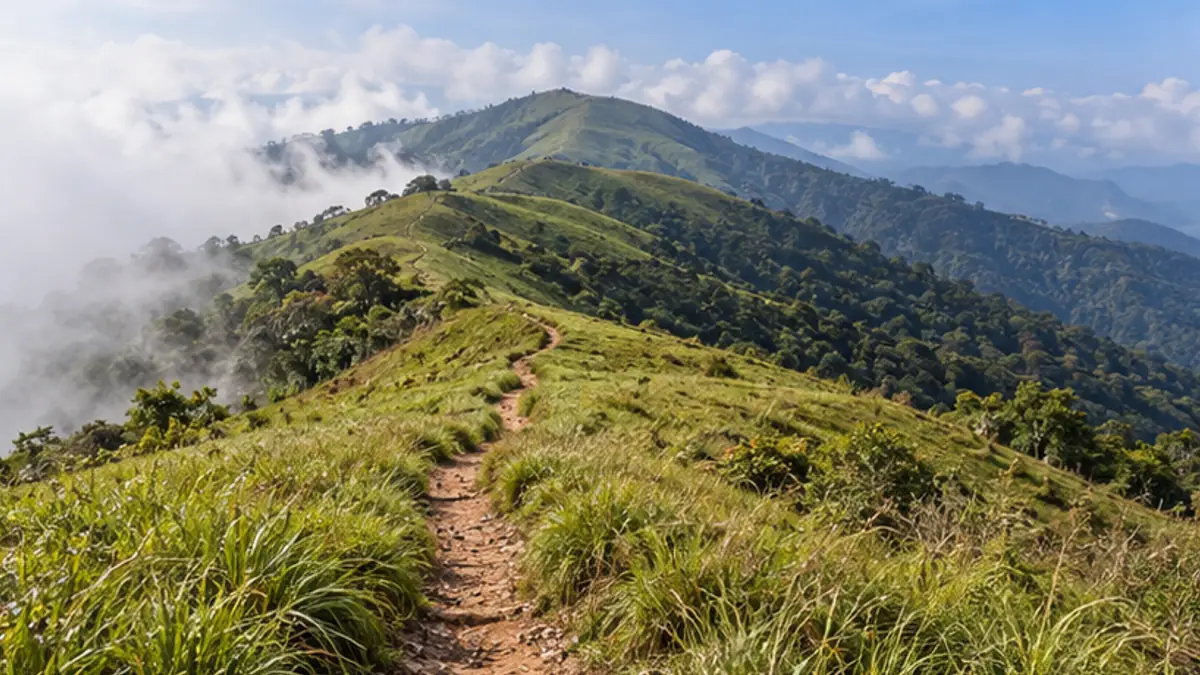
Tadiandamol reaches an altitude of 1,748 meters as the highest mountain summit in Kodagu district. The trekking trail begins near Kakkabe and passes Nalaknad Palace, a two-story royal hunting lodge built in 1792 by Doddaveerarajendra.
The 6 km trail climbs through shola grasslands and steep ridge paths to reach the summit stone. Forest department checkpoints register trekkers at the base and collect an entry permit fee of ₹250 per hiker.
Curated 1-Day, 2-Day, and 3-Day Coorg Travel Itineraries
Organizing your travel by regional clusters ensures adequate time for nature walks, plantation tours, and temple visits without rushing between distant valleys.
1-Day Itinerary: Madikeri Highlights Classic
- Morning (8:30 AM to 11:30 AM): Walk down to Abbey Falls early before peak crowds, followed by a visit to the historic stone quadrangle at Madikeri Fort.
- Afternoon (12:00 PM to 3:00 PM): Enjoy traditional Kodava cuisine in town and explore the unusual Indo-Saracenic sanctum at Omkareshwara Temple.
- Evening (3:30 PM to 7:00 PM): Tour a local coffee estate for spice tasting, concluding with sunset views and the musical fountain at Raja’s Seat.
2-Day Itinerary: Waterfalls, Monasteries and Sunsets
- Day 1: Execute the 1-day Madikeri central circuit covering Abbey Falls, Omkareshwara Temple, and Raja’s Seat.
- Day 2 Morning (8:30 AM to 1:00 PM): Drive east to Dubare Elephant Camp for riverside conservation walks, then tour the towering prayer halls of Namdroling Tibetan Monastery.
- Day 2 Afternoon (2:00 PM to 6:00 PM): Explore the deep canyon steps of Mallalli Falls or take a quiet estate walk in Suntikoppa before returning.
3-Day Itinerary: Complete Kodagu Wilderness and Heritage
- Day 1: Madikeri heritage circuit including Abbey Falls, Madikeri Fort museum, Gaddige tombs, and sunset at Raja’s Seat.
- Day 2: Cultural exploration east covering Namdroling Monastery Golden Temple, Dubare elephant riverfront, and spice shopping in Kushalnagar.
- Day 3: Drive south to hike the forested trails of the Iruppu Falls trek, followed by an evening wildlife safari in Nagarhole National Park.
Travelers can consult local district advisories and transport routes on the Kodagu District Administration Official Portal.
Frequently Asked Questions About Places to Visit in Coorg
Is 2 days enough for a Coorg trip?
Two full days provide adequate time to tour Madikeri’s primary monuments, Abbey Falls, Dubare Elephant Camp, and the Namdroling Tibetan Monastery at Bylakuppe. Travelers wishing to summit Tadiandamol peak or take safaris in Nagarhole should reserve 3 to 4 days.
Can Kukke Subramanya Temple be visited from Coorg?
Yes. Kukke Subramanya is located approximately 75 km northwest of Madikeri via the scenic Sampaje Ghat and Panja road. Many travelers combine a Kodagu holiday with pilgrimage rituals outlined in our Kukke Subramanya Temple guide.
What is the best time to visit Coorg?
The best travel season runs from October through March when clear skies and temperatures between 15°C and 25°C make outdoor sightseeing very pleasant. Monsoon months from June to September bring heavy downpours that revitalize waterfalls but occasionally cause road closures.
Which are the most famous waterfalls in Coorg?
Abbey Falls near Madikeri and Iruppu Falls in the Brahmagiri range represent the most popular waterfall destinations in Kodagu. Adventurous visitors also travel north to Somwarpet to explore the dramatic 60-meter descent of Mallalli Falls.
What is the difference between Madikeri and Coorg?
Coorg is the popular Anglicized name for Kodagu district, while Madikeri is the historic hill town that serves as its official administrative headquarters. Madikeri hosts the primary bus station, major hotels, and central landmarks including Raja’s Seat and Madikeri Fort.