Omkareshwara Temple Coorg: Timings, History & Architecture
Plan your visit to Omkareshwara Temple in Madikeri with updated darshan timings, Gothic-Islamic architecture facts, King Lingarajendra II history, and route.
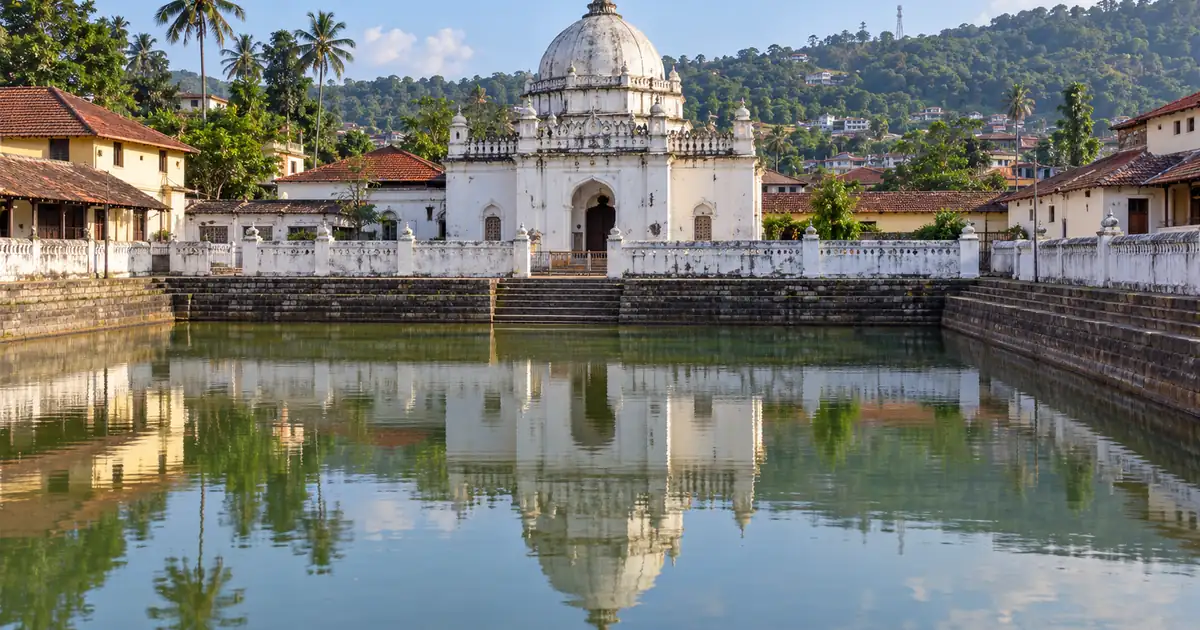
Omkareshwara Temple anchors the historic hill town of Madikeri in Karnataka, standing as one of the most distinctive Shaivite shrines in southern India. Commissioned in 1820 CE by King Lingarajendra II of the Haleri dynasty, the sanctuary is dedicated to Lord Shiva and houses a sacred lingam brought from the holy city of Kashi.
Temple & Darshan Essentials
- Daily Timings: Morning darshan operates from 6:30 AM to 12:00 PM, and evening darshan runs from 5:00 PM to 8:00 PM.
- Entry Charges: Entry and standard sanctum darshan remain completely free for all devotees throughout the week.
- Architectural Style: The exterior fuses Gothic turrets, central Islamic dome design, and traditional Hindu sanctum elements.
- Courtyard Pond: A square stone kalyani tank filled with sacred fish fronts the main temple entrance.
Historical Legend and Royal Penance of 1820 CE
Historical records and royal folktales narrate that King Lingarajendra II had the temple erected as an act of spiritual atonement. Royal chroniclers record that the king executed an innocent Brahmin for political intrigue, following which the tormented monarch experienced relentless nightmares caused by a vengeful spirit.
Travelers touring regional hill circuits frequently pair this royal site with places detailed in our guide to top places to visit in Coorg. Learned scholars advised the royal court that consecrating a Shiva lingam transported directly from the holy river ghats of Kashi would relieve the sovereign’s conscience. Detailed local archival entries are maintained on the Kodagu District Administration Omkareshwara Temple portal.
The king ordered a stone shrine constructed and installed a copper plaque by the main entryway detailing the founding of the temple. Following the consecration rituals, royal texts claim the torment ceased, establishing the site as a prominent sanctuary for prayer in Kodagu.
Architectural Synthesis: Gothic, Islamic, and Hindu Styles
The architectural profile of Omkareshwara Temple departs radically from traditional South Indian Dravidian stone temples, such as the grand pillared halls of Virupaksha Temple in Hampi. The structure features no towering gateway gopuram, adopting instead a central dome and four corner minarets resembling an Islamic dargah.
Visitors exploring diverse religious architecture in Kodagu can contrast this syncretic structure with the Tibetan murals at Namdroling Golden Temple in Bylakuppe. The exterior walls feature arched windows and Gothic-influenced stone moldings that reflect European stylistic influences active in 19th-century Mysore. Architectural conservation guidelines are outlined in the Karnataka Tourism official Omkareshwara Temple guide.
Central Dome and Minarets
A prominent circular dome crowns the center of the sanctum roof, flanked by four octagonal corner turrets. Bas-relief bands and circular vents line the stucco exterior, giving the building an appearance unique among Karnataka temples.
Inside, the sanctum sanctorum houses the holy Omkareshwara lingam mounted on a raised granite yoni base. A polished stone Nandi bull sits directly facing the doorway, adhering faithfully to traditional Shaivite temple geography.
The Sacred Kalyani and Fish Pond
A wide rectangular water reservoir, locally known as the temple kalyani, occupies the foreground before the stone steps. Stone steps line all four borders of the tank, where hundreds of freshwater carp swim beneath the surface.
A central pillared stone pavilion sits in the middle of the water, connected to the main bank by a walkway. Pilgrims purchase puffed rice packets from local stalls outside the gate to feed the temple fish before morning worship.
Darshan Timings, Daily Poojas, and Entry Guidelines
The temple opens its doors twice every day to accommodate morning rituals and evening assemblies. Morning worship runs from 6:30 AM to 12:00 PM, while the evening session begins at 5:00 PM and concludes with the night pooja at 8:00 PM.
Entry is completely free of charge, with no commercial queues or paid tickets required for viewing the lingam. Visitors must remove their shoes at designated racks near the pond before stepping onto the temple flagstones.
Priests perform the sacred Mahamangalarathi twice daily, first at 7:00 AM and again at 7:00 PM. Devotees participating in these rituals receive sacred ash vibhuti and holy water prasada from the officiants. Pilgrims planning a broader Shaivite and Naga worship tour across southern Karnataka can compare these timings with the two-day rituals in our Kukke Subramanya Temple guide.
| Event or Pooja | Timings | Cost | Notes |
|---|---|---|---|
| Morning Opening | 6:30 AM to 12:00 PM | Free (₹0) | General darshan and silent prayer |
| Morning Mahamangalarathi | 7:00 AM | Free (₹0) | Main morning lamp ceremony |
| Evening Opening | 5:00 PM to 8:00 PM | Free (₹0) | Evening lamp lighting and pond walk |
| Evening Mahamangalarathi | 7:00 PM | Free (₹0) | Concluding community prayer ceremony |
| Fish Feeding Puffed Rice | Operational hours | ₹10 to ₹20 | Available at external kiosks |
Distinction Between Coorg Omkareshwara and the Jyotirlinga
Travelers occasionally confuse Madikeri’s Omkareshwara Temple with the famous Jyotirlinga of the same name. The sacred island shrine of Omkareshwar Jyotirlinga in Madhya Pradesh sits on Mandhata Island in the holy Narmada River, representing one of the twelve divine Jyotirlinga pilgrimage stations.
Madikeri’s temple, while deeply revered across southern Karnataka, is an independent 19th-century royal shrine whose presiding deity bears the holy name Omkareshwara. State pilgrimage documentation on the Incredible India Karnataka heritage directory highlights both sites for their unique spiritual and architectural legacies.
Nearby Attractions Across Central Madikeri
Visiting Omkareshwara Temple takes roughly 45 minutes, allowing travelers to comfortably combine it with several nearby urban heritage destinations. The town center provides convenient transit options connecting old monuments within short driving intervals.
Travelers can easily pair this stop with a short 8-kilometer excursion out toward the rocky drop at Abbey Falls. Madikeri Fort sits just 1 kilometer away, showcasing colonial battlements, stone elephant statues, and an archaeological museum.
The royal tombs of the Kodava kings at Gaddige lie 1.5 kilometers northeast of the temple grounds. These sepulchral monuments mirror the Islamic dome style seen at Omkareshwara, offering further historical perspective on 19th-century Haleri craftsmanship.
How to Reach Omkareshwara Temple in Madikeri
Madikeri serves as the central administrative hub of Kodagu, maintaining frequent road transit to major Karnataka urban centers. The town features a well-developed network of local taxis and auto-rickshaws.
Evening travelers frequently conclude their town tour with panoramic views from the sunset pavilion at Raja’s Seat situated 1.5 kilometers south. Paved municipal streets link the temple directly to the central Madikeri bus depot.
Local Town Transit
Omkareshwara Temple rests near the center of Madikeri, approximately 1 kilometer east of the main bus terminal. A brisk walk from the town center takes roughly 10 to 12 minutes through residential lanes.
Auto-rickshaws stationed at the bus stand reach the temple gates in under 5 minutes for nominal metered fares. Taxis provide convenient door-to-door transit for travelers carrying baggage or traveling with elderly family members.
Road Routes From Major Hubs
Mysuru serves as the nearest primary railway hub, located roughly 120 kilometers east of Madikeri along State Highway SH88. The scenic road journey by state express bus or taxi takes approximately 3 hours across rolling plains and coffee hills.
Travelers departing from Bengaluru cover 260 kilometers along National Highway NH275 via Mandya, Mysuru, and Kushalnagar. Mangaluru International Airport functions as the closest commercial aviation center, sitting roughly 140 kilometers northwest along the Western Ghats.
Frequently Asked Questions About Omkareshwara Temple Coorg
Is the Omkareshwara Temple in Coorg one of the 12 Jyotirlingas?
No, the Omkareshwara Temple in Madikeri is not one of the 12 sacred Jyotirlingas. The Jyotirlinga of the same name is situated in Madhya Pradesh on the banks of the sacred Narmada River.
What are the darshan timings for Omkareshwara Temple in Madikeri?
The temple opens daily from 6:30 AM to 12:00 PM for morning rituals and reopens from 5:00 PM to 8:00 PM for evening darshan. The morning and evening Mahamangalarathi ceremonies take place at 7:00 AM and 7:00 PM respectively.
How much does it cost to enter Omkareshwara Temple?
General entry and sanctum darshan are completely free for all devotees throughout the week. Visitors can choose to purchase puffed rice packets for ₹10 to feed the fish swimming in the central tank.
Why does the temple architecture look like a mosque or dargah?
King Lingarajendra II designed the shrine in 1820 CE using a unique fusion of Gothic, Islamic, and Hindu architectural traditions. The complex features a central dome and four corner minarets while preserving a traditional inner Shiva sanctum, and pilgrims continuing down the ghats toward Dakshina Kannada often check Dharmasthala temple timings for their onward route.